Decadent Garlic Butter Steak Bites and Creamy Alfredo Rigatoni: A Perfect Weeknight Indulgence
Imagine a dish that combines two of the most beloved comfort foods into one magnificent meal: tender, seared steak bites and a velvety, rich Alfredo sauce clinging to every ridge of rigatoni pasta. This Decadent Garlic Butter Steak Bites and Creamy Alfredo Rigatoni recipe is exactly that. It is a celebration of bold flavors and satisfying textures, designed to impress your family or guests without demanding hours of labor. The aroma of garlic butter mingling with seared beef and creamy parmesan will fill your kitchen, promising a truly special dining experience.
This recipe is a masterclass in simplicity and decadence. You start by cutting a high-quality cut of beef, like sirloin or ribeye, into bite-sized cubes. Then, you sear them in a hot skillet with butter and garlic until they develop a deep brown crust, locking in all those savory juices. Meanwhile, you prepare a silky Alfredo sauce from scratch using heavy cream, fresh parmesan, and more butter. Tossing the al dente rigatoni into that sauce creates a pasta that is both hearty and luxurious. Finally, you combine the sizzling steak bites with the pasta, creating a dish that is far greater than the sum of its parts. It is a meal that feels special enough for a date night but is quick enough for a busy Tuesday.
What truly sets this pasta dish apart is the balance it achieves. The richness of the Alfredo sauce is perfectly cut by the savory, charred flavor of the steak. The tender, juicy steak provides a fantastic contrast to the soft, chewy pasta. Every single bite offers a new combination of flavors and textures. This Decadent Garlic Butter Steak Bites and Creamy Alfredo Rigatoni is more than just a recipe; it is an experience. It is the kind of meal that makes you close your eyes and savor the moment, and I am thrilled to share all the secrets to getting it perfect every single time.
Quick Recipe Highlights
- Flavor Profile: This dish boasts a robust, savory flavor from the seared steak and garlic, perfectly balanced by the rich, creamy, and slightly nutty taste of the Parmesan Alfredo sauce. A hint of black pepper and fresh parsley adds a final layer of freshness.
- Texture: For this recipe, expect a fantastic range of textures. The steak bites offer a satisfying, juicy bite with a crispy, browned exterior. The rigatoni pasta is tender but firm, providing a delightful chew, and the Alfredo sauce is luxuriously smooth and velvety.
- Aroma: As you cook, your kitchen will be filled with the intoxicating aroma of sizzling garlic and butter, mingled with the savory scent of searing beef. The creamy, cheesy fragrance of the Alfredo sauce adds a comforting, homey element to the overall sensory experience.
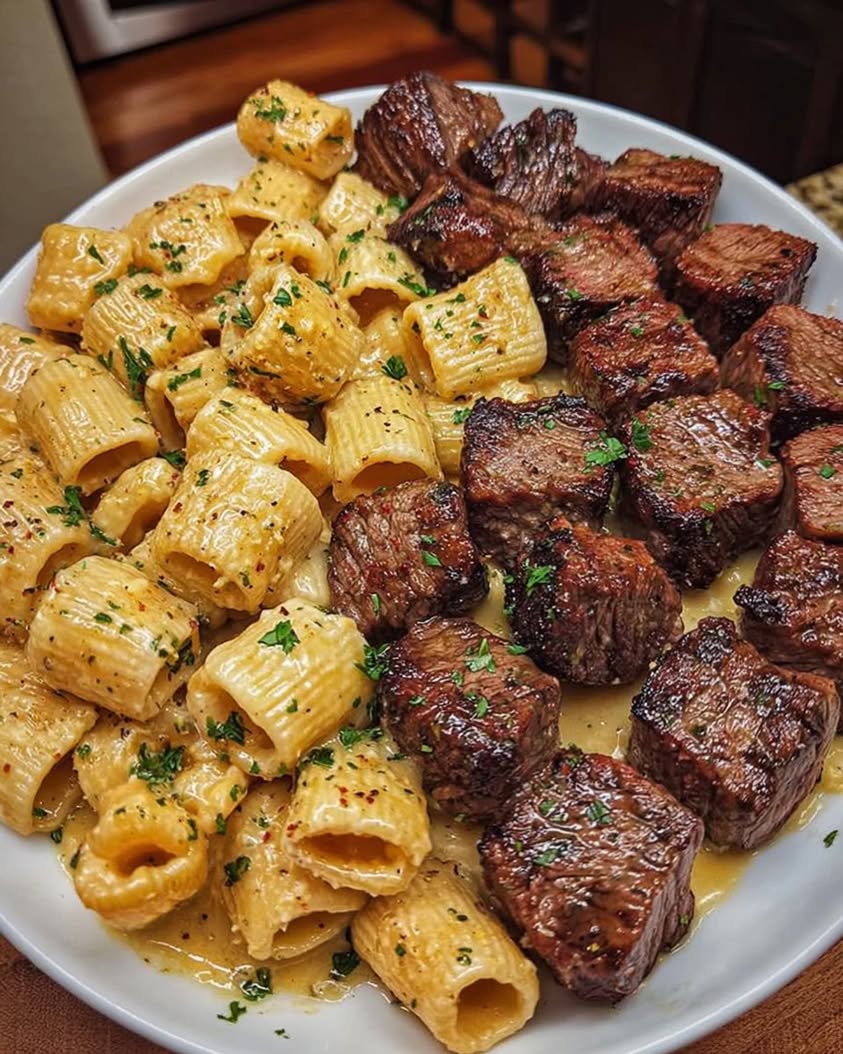
- Visual Appeal: Visually, this dish is stunning. The deep brown, caramelized steak bites contrast beautifully with the bright white rigatoni and pale, golden Alfredo sauce. A final sprinkle of fresh, green parsley adds a pop of color that makes the dish look truly professional and appetizing.
- Skill Level Needed: This recipe is surprisingly accessible for home cooks of all levels. It requires basic knife skills for cutting the steak and measuring ingredients. The key techniques, like searing meat and making a simple sauce, are fundamental and easy to master with a bit of attention.
- Special Equipment: You will need a large, heavy-bottomed skillet or cast-iron pan for searing the steak and cooking the sauce. A large pot is necessary for boiling the pasta. A sharp knife and cutting board are essential for preparing the beef and other ingredients.
Recipe Overview
- Difficulty Level: I have rated this recipe as Easy because the individual components are all straightforward. Searing steak is a basic skill, and a stovetop Alfredo sauce is one of the simplest sauces to master. The biggest challenge is timing, ensuring everything finishes at the same moment, but you can easily manage that by cooking the pasta first.
- Category: This dish perfectly fits into the categories of Comfort Food, Pasta Dinner, and Quick Gourmet Meal. It is the kind of hearty, satisfying meal you crave on a cold weeknight but is elegant enough for a special occasion or a dinner party.
- Cuisine: The inspiration for this dish comes from classic American and Italian-American culinary traditions. The Alfredo sauce is a beloved staple of Italian-American cuisine, known for its simplicity and richness. Pairing it with seared steak brings in a classic American steakhouse element, creating a fusion of familiar and beloved flavors.
- Cost: The cost of this recipe is moderate to low, depending on your choice of steak. Using a more affordable cut like sirloin or top round keeps the cost down. The other ingredients, like heavy cream, parmesan, and pasta, are all pantry staples and very budget-friendly, making this an excellent value for such a luxurious-tasting meal.
- Season: While you can enjoy this dish year-round, it is particularly wonderful in the fall and winter months. The rich, creamy sauce and hearty steak provide warmth and comfort when the weather turns cold. That said, it is also a fantastic choice for a spring or summer dinner if you pair it with a crisp side salad.
- Occasion: This recipe is incredibly versatile for any occasion. It is perfect for a romantic date night at home, a celebratory birthday dinner, or a simple but impressive family meal. It also travels well in a thermos for a luxurious work lunch.
Why You Will Love This Recipe
The primary appeal of this Decadent Garlic Butter Steak Bites and Creamy Alfredo Rigatoni lies in its incredible taste and satisfying texture. The combination of juicy, seared steak and a silky, rich Alfredo sauce is undeniably one of the most comforting and delicious pairings imaginable. Every bite offers a wonderful contrast between the savory, slightly charred steak and the smooth, creamy pasta. The garlic butter infuses the steak with a deep, aromatic flavor, while the parmesan adds a nutty, salty finish to the sauce. It is a flavor profile that appeals to almost everyone, making it a guaranteed crowd-pleaser.
Furthermore, this recipe is incredibly convenient and easy to prepare, which is a major advantage for busy home cooks. The entire dish comes together in under 45 minutes from start to finish, making it a perfect weeknight hero. There is no complex technique or long list of steps. You cook the pasta, sear the steak, and make the sauce, then toss everything together. This streamlined process means you can have a restaurant-quality meal on the table with minimal effort and cleanup. It is the definition of high reward for low effort.
From a nutritional standpoint, this dish offers a balanced mix of protein, carbohydrates, and fats. The steak provides a generous amount of high-quality protein and essential nutrients like iron and B vitamins. The pasta supplies energy-rich carbohydrates, and the cream and cheese contribute healthy fats and calcium. While it is a decadent meal, you can control the portions and ingredients to fit your dietary needs. Using a leaner cut of beef or choosing whole-wheat pasta are simple ways to adjust the nutritional profile without sacrificing flavor.
This recipe also holds tremendous social and entertaining value. It is a show-stopping dish that looks and tastes incredibly impressive, yet it is deceptively simple to pull off. It is the perfect meal to serve when you want to impress guests without being stuck in the kitchen all evening. The whole dish can be prepared in a single skillet after cooking the pasta, and you can serve it directly from the pan for a rustic, family-style presentation. Your guests will think you spent hours on it, but you will know the secret to its swift creation.
Finally, the cost-effectiveness and accessibility of the ingredients make this recipe a winner for any budget. You do not need expensive, hard-to-find items. Most of the ingredients, like pasta, garlic, butter, cream, and parmesan, are basic staples. The star ingredient, the steak, can be purchased on sale or from a budget-friendly cut, and you only need about a pound of it. This combination of factors ensures that you can enjoy a truly decadent and luxurious meal without breaking the bank, making it a smart and delicious choice for any home cook.
Historical Background and Cultural Significance
The story of this dish begins not in Italy, but in the United States, where Italian immigrants adapted their regional recipes to new ingredients and tastes. The Alfredo sauce we know and love today is a far cry from the original Roman dish, “Fettuccine al burro,” a simple mix of butter and parmesan. The Americanized version, popularized in the early 20th century, evolved with the addition of heavy cream to create the thick, silky sauce that has become synonymous with comfort food. This adaptation transformed a humble pasta dish into a rich, decadent staple of Italian-American cuisine.
The cultural importance of this dish lies in its role as a symbol of home-cooked comfort and family gatherings. It is the kind of meal that people often request for their birthday dinners or bring to potlucks to share some warmth. The combination of pasta and a creamy, cheesy sauce is a universally beloved concept, representing nourishment and indulgence. When you pair it with seared steak, you elevate it into a special occasion meal, further solidifying its place as a celebratory and heartwarming dish in American food culture.
The evolution of this recipe is a fascinating journey from a simple Roman pasta to a rich, creamy, and protein-packed American classic. The original version was made by the Roman chef Alfredo di Lelio, who simply tossed fettuccine with a lot of butter and parmesan. When this dish made its way to the United States, it was embraced and transformed. Chefs and home cooks began adding heavy cream to create a thicker, richer sauce, and they started pairing it with proteins like chicken, shrimp, and, of course, steak. This Decadent Garlic Butter Steak Bites and Creamy Alfredo Rigatoni is a direct descendant of that Americanized tradition.
Regional variations of Alfredo sauce and steak pairings are numerous across the United States. In the South, you might find it served with fried chicken or andouille sausage for a spicy kick. In the Midwest, it is often a base for a hearty casserole, including vegetables and shredded cheese. In coastal areas, you will see it paired with fresh seafood like lobster or crab. However, the combination of garlic butter steak bites and Alfredo is a particularly satisfying one. The rich, savory flavors of the beef complement the creamy sauce without overwhelming it, creating a perfect harmony that resonates across different regional palates.
Ingredient Deep Dive
Rigatoni pasta is a tubular shape known for its ridges and wide hollow center, making it an ideal vehicle for sauces. Historically, these large, ridged tubes originated in Southern Italy and are often used in hearty baked pasta dishes or with thick, chunky sauces. Its name comes from the Italian word “rigato,” meaning “ridged,” which perfectly describes its surface. These ridges are not just for show; they are designed to catch and hold the sauce, ensuring that every single bite of pasta is coated in the creamy Alfredo. This structural design is why rigatoni is a fantastic choice for this dish.
From a nutritional perspective, rigatoni is a good source of complex carbohydrates, providing sustained energy. When selecting rigatoni, look for a high-quality brand made from durum wheat semolina, which will give the pasta a firm texture and a slightly nutty flavor. Store dried pasta in a cool, dry, dark place in an airtight container, where it can last for years. For a healthier twist, you can substitute whole-wheat rigatoni for added fiber and a nuttier taste. Gluten-free rigatoni, made from rice or corn flour, is also an excellent alternative for those with dietary restrictions.
Steak, the star of this dish, provides a rich source of high-quality protein and essential nutrients like iron, zinc, and vitamin B12. Selecting the right cut is crucial for tenderness and flavor. For steak bites, I recommend sirloin or ribeye for their excellent marbling and tenderness. Sirloin is leaner and more affordable, while ribeye offers more fat for incredible flavor and juiciness. When shopping, look for steaks that are deep red with good marbling (the white flecks of fat within the muscle). This fat will render during cooking, keeping the steak bites moist and flavorful. Avoid steaks with a greyish tint or an off smell.
Proper storage of raw steak is essential for food safety. Keep it in the coldest part of your refrigerator, wrapped tightly in its original packaging, and use it within three to five days. For longer storage, you can freeze the steak for up to three months. Thaw it in the refrigerator overnight before cooking for best results. If you need a more affordable option, flank steak or top round can work, but they will require a quicker cooking time and careful slicing against the grain. Alternatively, for a faster meal, you can use pre-cut beef for stir-fry, though the quality might not be as high.
Heavy cream is the cornerstone of a luxurious Alfredo sauce, providing its signature rich and velvety texture. It is composed of at least 36% milk fat, which gives it the ability to thicken beautifully when combined with parmesan. When you select heavy cream, always check the expiration date and look for a carton without any bulging, which indicates spoilage. Once opened, use it within one to two weeks. Store it in the coldest part of the fridge, not in the door, to maintain its freshness. As a substitute, you can use half-and-half for a lighter sauce, but it will not be as thick or rich.
Understanding the difference between heavy cream and whipping cream is helpful. Heavy cream has a higher fat content (above 36%), while whipping cream has a lower fat content (around 30-35%). For this Alfredo sauce, heavy cream is preferred because it creates a more stable, luscious sauce that is less likely to curdle when you add the cheese. If you are feeling adventurous, you can make a dairy-free version by using full-fat coconut milk or a high-quality cashew cream. However, these will impart a different flavor profile, so I recommend sticking with traditional heavy cream for the authentic Alfredo experience.
Common Mistakes to Avoid
- Overcooking the steak is a common error that leads to tough, dry bites. To avoid this, use a meat thermometer to check for doneness. For medium-rare, aim for an internal temperature of 130-135 degrees Fahrenheit and remove the steak bites from the pan just before they reach it, as they will continue to cook from residual heat.
- Not patting the steak dry before searing is another frequent mistake. Excess moisture on the surface of the beef will steam instead of sear, preventing that crucial brown crust from forming. Always use paper towels to thoroughly pat the steak cubes dry before seasoning and adding them to the hot pan.
- Crowding the pan is a pitfall that can ruin your steak. When you put too many steak bites into the skillet at once, the temperature of the pan drops significantly. This causes the beef to steam rather than sear, resulting in a grey, unappetizing color and a lack of flavor. Sear the steak in batches to ensure each piece gets direct contact with the hot pan.
- Using low-quality Parmesan cheese will drastically affect the taste of your sauce. Pre-shredded or grated cheese often contains anti-caking agents that prevent it from melting smoothly, leading to a gritty sauce. Always buy a block of good-quality Parmigiano-Reggiano and grate it fresh yourself for the best flavor and texture.
- Adding cheese to a boiling sauce is a sure way to get a curdled, clumpy mess. The proteins in the cheese can seize and separate when exposed to high heat. Always remove your sauce from the heat before stirring in the grated Parmesan. The residual heat will be enough to melt it perfectly into a silky emulsion.
- Overcooking the pasta is a cardinal sin for this al dente recipe. Mushy pasta will not hold the sauce well and will create a stodgy dish. Cook your rigatoni for one to two minutes less than the package directions suggest, as it will continue to cook for a final minute in the hot sauce.
- Forgetting to season your pasta water is a missed opportunity to build flavor. The pasta itself absorbs the salty water as it cooks, seasoning it from the inside out. The water should taste like the sea, or at least be generously salted with about one to two tablespoons of salt per four quarts of water.
- Skipping the step of reserving pasta water is a lost chance to perfect your sauce. The starchy water is a magic ingredient that helps emulsify the sauce and makes it cling beautifully to the rigatoni. Before you drain the pasta, reserve about a cup of that liquid to thin the sauce to your desired consistency.
- Not letting the pan get hot enough before adding the steak is a critical error. You need a screaming hot skillet to create that initial sear. Heat your oil or butter until it shimmers and is on the verge of smoking before you add the steak bites. This high heat creates the Maillard reaction, which gives the steak its deep, complex flavor.
- Failing to rest the steak after searing is a common mistake. If you cut into the steak bites immediately, the juices will run out onto the cutting board, leaving you with dry meat. After searing, transfer the steak bites to a plate and let them rest for five minutes. This allows the juices to redistribute throughout the meat.
Essential Techniques
The technique of searing is essential for achieving the deep, caramelized flavor on your steak bites. Searing is a dry-heat cooking method where you cook food at a high temperature until a brown crust forms. This crust is a result of the Maillard reaction, a complex chemical process that creates hundreds of new flavor compounds. To master searing, you need a heavy-bottomed pan, a high smoke-point oil like avocado or canola, and a hot pan. Do not move the steak bites around in the pan once you place them; let them cook undisturbed for one to two minutes to form that crust before flipping.
A common pitfall is not having the pan hot enough. You can test the heat by flicking a drop of water onto the pan; it should sizzle and evaporate immediately. If the water just sits there, the pan is not ready. Visual cues for a perfect sear are a deep, mahogany brown color on the outside of the steak. If it is pale or grey, you have not seared it long enough. Patience is key here. Once you flip the steak bites, you will see the beautiful crust you have created, which is the foundation of the dish’s flavor.
Creating an emulsion is the core technique behind a smooth, creamy Alfredo sauce. An emulsion is a mixture of two liquids that normally do not combine, like fat and water. In this case, the fat in the cream and butter is emulsified with the water in the cream by the grated Parmesan cheese. The cheese acts as a stabilizer, with its protein molecules surrounding the fat droplets and preventing them from separating. To build a stable emulsion, you need to start with a base of melted butter, then add the cream and stir constantly over low heat. You must never let the sauce boil.
The key to success is to gradually incorporate the cheese. When you add the cheese, remove the pan from the heat. Stir the cheese in a little at a time, allowing each addition to melt completely before adding more. If you add the cheese too quickly or over high heat, the emulsion will break, and you will be left with a greasy, clumpy mess. Visual cues for a good emulsion are a sauce that looks smooth, glossy, and uniformly pale yellow. It should coat the back of a spoon easily and not look watery or grainy. If the sauce seems too thick, you can thin it with a splash of the reserved pasta water.
Pro Tips for Perfect Decadent Garlic Butter Steak Bites and Creamy Alfredo Rigatoni
For the most flavorful steak, season the cubes generously with salt and freshly ground black pepper at least 30 minutes before cooking. This dry brine allows the salt to penetrate the meat, seasoning it throughout and helping it retain moisture during searing. Do not skip this crucial step for the best results.
Use a high-quality, freshly grated nutmeg in your Alfredo sauce. A tiny pinch, no more than a quarter of a teaspoon, adds an earthy warmth and complexity that beautifully complements the rich cream and cheese. It is a secret ingredient that many home cooks overlook, but it makes a world of difference.
When making the Alfredo sauce, always use a whisk to stir it. A whisk is more effective than a spoon at incorporating the butter and cream and preventing lumps from forming as you add the cheese. It also helps to aerate the sauce, giving it a lighter, silkier texture.
To ensure your sauce is perfectly smooth, let the heavy cream come to room temperature before you start the sauce. If you add cold cream to a hot pan, it can cause the butter to seize, leading to a greasy or curdled sauce. Letting the cream warm up for 10 to 15 minutes on the countertop is a simple step that guarantees a better emulsion.
Consider adding a splash of dry white wine to the pan after searing the steak. Deglaze the pan with that wine, scraping up all the browned bits from the bottom. Then, reduce it before adding the cream. This adds a layer of acidity and complexity that balances the richness of the dish beautifully.
Do not oversauce the pasta. You want the sauce to coat every tube of rigatoni, but you do not want a pool of sauce at the bottom of the bowl. Use just enough to create a nice, clingy coating. You can always add a little more reserved pasta water if it seems too dry, or a bit more cream if it is too thick.
For the best presentation, reserve a few tablespoons of the cooked steak bites and a sprig of fresh parsley for the final garnish. This top layer of perfectly seared steak and bright green herb will make your dish look like it was plated at a professional restaurant, adding a final touch of elegance.
Finally, serve this dish immediately. Rigatoni and steak bites are at their absolute best when they are fresh and hot. As the pasta sits, it will absorb more sauce and become softer, and the steak will lose its ideal temperature. Have your serving plates or bowls ready so you can plate and serve right away for the best experience.
Variations and Adaptations
For a regional variation, consider a Cajun-style version. Season the steak bites with a generous amount of Cajun seasoning before searing. Then, stir a tablespoon of Cajun seasoning into the Alfredo sauce along with some sliced andouille sausage for added smoky heat and protein. This creates a spicy, flavorful twist that is popular in the Southern United States.
Seasonal adaptations are a fantastic way to keep this dish fresh. In the spring, add a cup of blanched asparagus spears and some fresh peas to the pasta during the last few minutes of cooking. In the fall, you can add roasted butternut squash cubes or sauteed mushrooms to the mix. These additions add texture and a seasonal flavor that complements the core components beautifully.
Dietary modifications are simple to implement without compromising on taste. For a low-carb or keto version, swap the rigatoni for zucchini noodles or shirataki noodles. The Alfredo sauce is naturally low in carbs, and the steak is perfect for a ketogenic diet. You can enjoy all the richness without the pasta.
For flavor variations, try adding a teaspoon of red pepper flakes for a gentle heat, or a tablespoon of lemon zest for a bright, citrusy note. A few tablespoons of sun-dried tomatoes add a sweet, tangy, and chewy element. You can also stir in some fresh herbs like basil, rosemary, or thyme for an earthy, fragrant finish.
Texture modifications can make the dish even more interesting. For a bit of crunch, serve the finished dish with a sprinkle of toasted panko breadcrumbs or crumbled bacon. For a softer texture, you can use a larger pasta shape like pappardelle or fettuccine instead of rigatoni, which will allow the sauce to cling to the broad, flat noodles.
Presentation alternatives are fun to experiment with. Instead of tossing the steak with the pasta, you can serve the steak bites on top of a bed of Alfredo rigatoni for a more elegant plated look. Alternatively, you can serve the components in a deconstructed fashion on a large platter, allowing guests to build their own bowls. A family-style serving from a large skillet is also very charming.
Serving and Presentation Guide
Plating this dish for maximum visual appeal is simple. Use a pair of tongs to twirl a generous portion of the Alfredo rigatoni into a neat nest in the center of a shallow bowl or a wide, rimmed plate. Place the garlic butter steak bites on top of the pasta nest, ensuring they are not hidden. This creates a beautiful height and allows the steak to be the star.
Garnishing ideas can elevate the dish from simple to stunning. A generous sprinkle of freshly grated Parmesan cheese over the top is a must. A few grinds of fresh black pepper will also enhance the flavor. A small handful of fresh, minced parsley adds a pop of color and freshness. Finally, a drizzle of a high-quality finishing oil, like a garlic-infused olive oil or a truffle oil, adds a layer of luxury.
Traditional accompaniments for this dish are simple and complementary. A fresh green salad with a light vinaigrette is the perfect choice to cut through the richness of the Alfredo sauce. The acidity of the dressing provides a wonderful contrast. A side of crusty garlic bread is also a classic choice for soaking up any extra sauce on the plate.
Modern serving suggestions include serving the rigatoni in individual cast-iron skillets for a trendy, rustic presentation. For a lightened-up version, you can serve the steak and sauce over a bed of sauteed spinach or arugula instead of pasta. This is a fantastic option for a low-carb meal that still feels indulgent.
Temperature considerations are crucial for the best dining experience. The pasta and sauce should be piping hot when served, and the steak bites should be hot as well. If the dish sits for too long, the sauce will thicken, and the steak will cool down. To maintain the ideal temperature, warm your serving bowls or plates in the oven at a low temperature (around 200 degrees Fahrenheit) before plating.
Portion control tips are helpful for managing this rich meal. A standard serving is about one cup of cooked pasta and about four to five ounces of cooked steak. If you are serving this as part of a multi-course meal, you can adjust your portion sizes to be smaller. The rich sauce and protein are very satisfying, so a reasonable portion should be more than enough.
Wine and Beverage Pairing
The richness of the Garlic Butter Steak Bites and the creamy Alfredo sauce calls for a wine that can stand up to its weight. A great option is a full-bodied red wine like a Cabernet Sauvignon or a Merlot. The tannins in these wines cut through the fat of the steak and the cream, while their dark fruit flavors complement the savory notes of the beef and garlic. A bottle from California or Washington State would be a fantastic choice.
If you prefer a white wine, look for a rich, oaked Chardonnay. The buttery, vanilla notes from the oak barrels harmonize beautifully with the buttery, creamy sauce. A white Burgundy from France is a classic pairing, but a well-made California Chardonnay is also a perfect partner. The wine should be full-bodied enough to not be overwhelmed by the dish.
For a non-alcoholic alternative, a sparkling water with a squeeze of fresh lemon is an excellent palate cleanser. The acidity and bubbles help to cut through the richness of the sauce, cleansing your palate between each bite. A crisp, chilled apple cider or a non-alcoholic red wine spritzer are also good options.
A rich and flavorful beverage pairing can also be a high-quality iced tea or a black tea with a splash of milk. The tannins in the tea work in a similar way to those in red wine, helping to balance the fat. A cold brew coffee would also be a surprisingly good pairing, particularly if you enjoy the flavor of coffee with a steak.
Storage and Shelf Life
Proper storage of leftover Decadent Garlic Butter Steak Bites and Creamy Alfredo Rigatoni is key to maintaining its quality. First, allow the dish to cool completely at room temperature, but do not leave it out for more than two hours. Then, transfer it to an airtight container. This will prevent the pasta from drying out and the sauce from absorbing odors from other foods in the fridge.
Temperature requirements for storing leftovers are important for food safety. Store the container in the refrigerator at a temperature of 40 degrees Fahrenheit or below. When stored properly, the leftover pasta dish will remain at its best quality for three to four days. I recommend using a glass container, as it does not absorb flavors or stain as easily as plastic.
Container recommendations are simple: choose a container that is just the right size for the portion you are storing. A container that is too large will leave a lot of air space, which can cause the sauce to thicken and the pasta to dry out. Sealing the container with a tight-fitting lid is essential to keep the dish fresh.
Signs of spoilage are important to watch for. If you notice an off smell, a sour taste, or any visible mold growth on the pasta, sauce, or steak, you must discard the entire dish. A slimy texture on the pasta is also a clear sign that it has gone bad. Do not rely on your sense of smell alone; if you have any doubts about the food’s safety, it is better to throw it away.
Reheating instructions can help you restore the dish to near its original glory. To prevent the sauce from breaking, reheat the pasta and steak gently. The best method is to use a skillet over medium-low heat. Add a splash of milk, cream, or reserved pasta water to the pan to help thin the sauce as it warms. Stir frequently and heat until it is steaming hot throughout. A microwave is not recommended, as it can overheat the sauce and make the steak tough.
Freezing guidelines are generally not recommended for this dish. The creamy Alfredo sauce has a high fat content and can separate and become grainy upon thawing. The texture of the pasta will also suffer, becoming mushy as it thaws and reheats. For the best quality, I recommend enjoying this dish fresh. If you must freeze it, freeze the steak bites separately from the pasta and sauce, and add the sauce to the thawed pasta before serving.
Make Ahead Strategies
A detailed prep timeline is the key to making this dish stress-free on a busy weeknight. Up to 24 hours before you plan to cook, you can cut the steak into cubes and season it with salt and pepper. Store the seasoned steak in a covered bowl in the refrigerator. This dry brine time will make the steak incredibly flavorful. You can also grate the Parmesan cheese and store it in a zip-top bag in the fridge.
Storage between steps is straightforward for the prepped ingredients. The seasoned steak will be fine in the fridge for up to a day. the Grated cheese should be brought to room temperature for about 15 minutes before you start the sauce to help it melt more smoothly. You can also chop the fresh parsley and have it ready to go.
The quality impact assessment is positive for most pre-preparation. The steak will actually benefit from the extra time to absorb the salt, becoming more tender and flavorful. The pre-grated cheese will not suffer in quality. However, I do not recommend cooking the pasta or the sauce ahead of time, as the texture will degrade significantly upon reheating.
Assembly tips for a quick final preparation are very helpful. On the day of cooking, you only need to boil the pasta and make the sauce, then sear the steak. Because the steak and sauce are cooked in the same pan, you can line up the final steps very efficiently. Have your measuring spoons and cups ready to go before you start cooking.
Reheating guidelines are not applicable for this make-ahead strategy, as the final dish is meant to be served immediately after cooking. The whole point of this method is to reduce the active cooking time on the day you serve it, allowing you to have a fresh, hot meal with minimal effort at the last minute.
Fresh element additions should be done at the very end. The parsley garnish is the only fresh element, and it should be added right before serving to retain its color and vibrancy. If you are adding any optional ingredients like fresh lemon zest or sun-dried tomatoes, add them just before the final toss to ensure they retain their individual flavors and textures.
Scaling Instructions
Halving this recipe is simple and requires no special calculations. To serve two people, simply use half of a pound of steak and half of the pasta. You will also need half of a cup of heavy cream and half of a cup of grated Parmesan. The cooking time for the steak will be the same, but you may need to use a slightly smaller skillet so that the steak pieces still get a good sear without being crowded.
Doubling or tripling this recipe for a Print
Garlic Butter Steak Bites & Creamy Alfredo Rigatoni
- Total Time: 45 minutes
- Yield: 4
Description
Tender bite-sized steak seared in garlic butter, served over a bed of creamy Alfredo rigatoni pasta. A rich and comforting meal perfect for a hearty dinner.
Ingredients
- 1 lb sirloin steak, cut into bite-sized pieces
- 3 tablespoons butter
- 4 cloves garlic, minced
- Salt and black pepper to taste
- 8 oz rigatoni pasta
- 1 cup heavy cream
- 1/2 cup grated Parmesan cheese
- 1/4 cup chopped fresh parsley
Instructions
- Cook rigatoni according to package directions; drain and set aside.
- Season steak bites with salt and pepper.
- In a large skillet over medium-high heat, melt 2 tablespoons butter. Add steak bites and cook until browned on all sides, about 4-5 minutes. Remove from skillet.
- Reduce heat to medium, add remaining butter and garlic. Cook for 1 minute until fragrant.
- Stir in heavy cream and Parmesan cheese, whisking until smooth and thickened, about 2-3 minutes.
- Add cooked pasta to the skillet and toss to coat in the sauce.
- Return steak bites to the skillet, toss everything together, and garnish with parsley before serving.
Notes
You can customize the seasonings to taste.
- Prep Time: 15 minutes
- Cook Time: 30 minutes
- Method: Main
- Cuisine: American