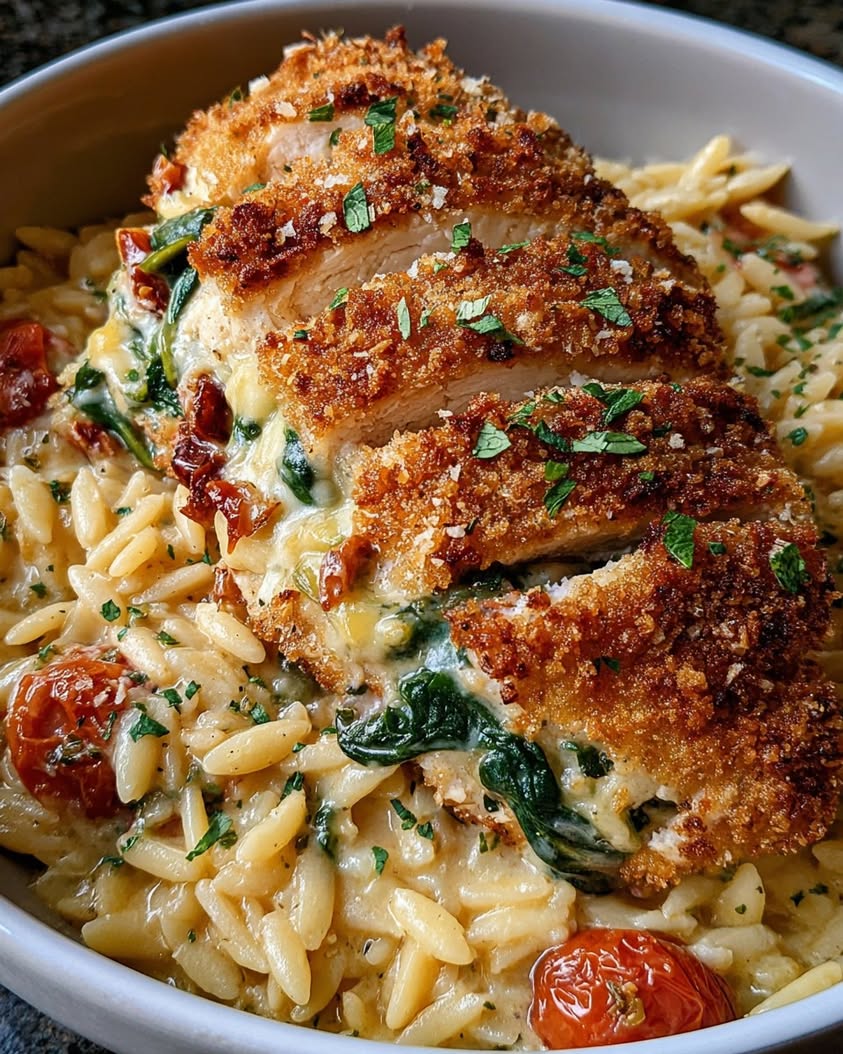
Crispy Feta and Spinach Stuffed Chicken with Orzo: A One-Pan Mediterranean Dinner Worth Craving
Crispy Feta and Spinach Stuffed Chicken with Orzo brings the sunny flavors of the Mediterranean straight to your weeknight table. Imagine golden, pan-seared chicken breasts split open to reveal a creamy, salty pocket of feta cheese and wilted spinach, then nestled into a bed of tender orzo that soaks up every drop of garlicky, lemony pan juice. This is the kind of dinner that looks impressive enough for guests yet comes together in about an hour with simple ingredients you likely already have on hand. The Crispy Feta and Spinach Stuffed Chicken with Orzo recipe balances rich, tangy filling with a crisp exterior and a bright, herb-flecked pasta that keeps every bite interesting.
What makes this stuffed chicken with orzo so appealing is the way it layers texture and flavor without demanding professional skills. You get the satisfying crunch of a well-browned crust, the creaminess of melted feta, and the chew of orzo all in one forkful. The filling comes together in minutes, and the orzo cooks right in the same skillet, which means fewer dishes and more time at the table. Home cooks across the United States have embraced this style of one-pan cooking because it delivers restaurant-quality results on a busy schedule. Whether you serve it for a cozy family dinner or a small weekend gathering, this Crispy Feta and Spinach Stuffed Chicken with Orzo earns its place as a repeat favorite.
The aroma alone sells the dish before the first plate reaches the table. As the chicken sears, garlic and oregano fill the kitchen, and when the orzo simmers in broth and lemon, the whole house smells warm and inviting. The finished plate glows with color: deep golden chicken, snowy feta flecks, vivid green spinach, and glossy orzo dotted with fresh parsley. If you have been searching for a reliable stuffed chicken breast recipe that feels special without being fussy, this Crispy Feta and Spinach Stuffed Chicken with Orzo delivers on every front, from prep to presentation to that first delicious bite.
Quick Recipe Highlights
- Flavor Profile: Salty, tangy feta plays against sweet seared chicken and bright lemon. Garlic and oregano add a warm Mediterranean backbone. Each bite finishes clean and savory rather than heavy.
- Texture: A crisp golden crust gives way to juicy meat and a creamy spinach-feta center. The orzo stays tender with a slight bite, and the pan sauce clings to every grain.
- Aroma: Garlic and oregano lead the way as the chicken sears. Fresh lemon zest and parsley lift the finish. The scent of warm broth and butter rounds out the kitchen.
- Visual Appeal: Golden-brown chicken sits atop glossy orzo with bright green spinach visible in the filling. A scatter of crumbled feta and parsley adds contrast. The dish looks rustic yet polished on a white platter.
- Skill Level Needed: You need comfort with butterflying chicken and basic pan-searing. The orzo step is forgiving and needs only occasional stirring. Beginners can succeed with careful timing and a good thermometer.
- Special Equipment: A large oven-safe skillet handles both searing and simmering. Toothpicks or kitchen twine secure the stuffed breasts. A meat thermometer ensures safe, juicy results.
Recipe Overview
- Difficulty Level: Intermediate fits because the recipe asks you to butterfly chicken breasts and manage a two-stage cook. None of the steps require advanced knife skills or pastry work. The payoff justifies the modest effort, and the process builds confidence quickly.
- Category: This works as a main course for dinner and doubles as meal-prep material. It suits weeknight cooking and weekend entertaining alike. Pair it with a simple salad for a complete plate.
- Cuisine: The dish draws on Greek and broader Mediterranean traditions where feta, spinach, lemon, and oregano appear often. Orzo, a rice-shaped pasta, ties the plate to Greek cooking. American home kitchens have adapted these flavors into one-pan comfort food.
- Cost: Four chicken breasts typically cost between eight and twelve dollars. Feta, spinach, and orzo add roughly five to seven dollars. Pantry staples like garlic, lemon, and broth round out the budget, keeping the total near fifteen to twenty dollars for four servings.
- Season: This recipe shines year-round because spinach stays available in every season. Spring and summer bring fresh spinach and a lighter feel. Cooler months welcome the warm, saucy orzo and cozy aromas.
- Occasion: Serve it for family dinners, casual date nights, or small dinner parties. It also works well for potlucks when you transport it in a covered dish. The presentation suits holiday tables without overwhelming the cook.
Why You’ll Love This Recipe
Taste and texture drive this dish from the first bite. The salty tang of feta cuts through the richness of seared chicken, and the spinach keeps the filling fresh rather than heavy. Meanwhile, the crust delivers a satisfying crunch that contrasts with the creamy center. The orzo underneath absorbs lemon, garlic, and chicken juices, so every grain carries flavor. Few dishes manage to feel both indulgent and bright at the same time, and this Crispy Feta and Spinach Stuffed Chicken with Orzo nails that balance.
Convenience matters on busy evenings, and this recipe respects your time. You butterfly and stuff the chicken in about twenty-five minutes, then let the pan do the rest. The orzo cooks in the same skillet, which means one pan to wash instead of three. Cleanup stays simple, and the active cooking time runs under twenty minutes. That efficiency makes this stuffed chicken breast recipe realistic for a Tuesday night, not just a special occasion.
Nutritional advantages give this meal extra appeal. Chicken breast supplies lean protein, and spinach adds iron, folate, and vitamin K. Feta contributes calcium along with its bold flavor, and orzo offers energy-rich carbohydrates in moderate portions. The recipe uses olive oil and controlled amounts of butter, so the fat content stays reasonable. Overall, the plate delivers a balanced mix of protein, vegetables, and grains that supports a healthy eating pattern without feeling like a compromise.
Social and entertaining value sets this dish apart. When guests sit down, a stuffed chicken breast looks like a project that took all afternoon. The golden crust and visible filling invite compliments, and the orzo makes the plate feel complete. Hosts can prep the chicken ahead and finish the dish while guests enjoy appetizers. That combination of wow factor and low stress makes this Crispy Feta and Spinach Stuffed Chicken with Orzo a reliable choice for gatherings.
Cost-effectiveness keeps the recipe in regular rotation. Chicken breasts rank among the most affordable proteins in U.S. supermarkets, and feta, spinach, and orzo stretch the budget further. The dish feeds four generously for about the price of two restaurant entrées. Because the ingredients are accessible and the technique is approachable, home cooks gain a dependable dinner they can scale for larger groups without breaking the bank.
Historical Background and Cultural Significance
The origin story of stuffed chicken reaches back centuries across the Mediterranean and Europe. Greek cooks have long combined feta and greens inside poultry, and Italian kitchens developed their own versions with spinach and ricotta. The idea of stuffing protein with cheese and vegetables grew from a practical goal: stretch a modest piece of meat while adding flavor. Orzo, known as kritharaki in Greece, has anchored Greek tables for generations, and pairing it with roasted or seared meats reflects that tradition.
Cultural importance shows up in how these flavors connect to family tables. In Greek households, spinach and feta appear in spanakopita and countless everyday dishes, and the combination signals comfort and hospitality. Orzo acts as a canvas for pan juices and brothy sauces, which makes it a natural partner for roasted chicken. This Crispy Feta and Spinach Stuffed Chicken with Orzo borrows those traditions and translates them for American kitchens without losing their spirit.
The evolution of the recipe followed the spread of Mediterranean ingredients into U.S. grocery stores. Feta moved from specialty shops to everyday dairy aisles, and orzo became a pantry staple for quick pasta sides. Home cooks began stuffing chicken breasts for weeknight dinners and adopting one-pan techniques popularized by modern food media. Over time, the dish settled into a recognizable format: feta-spinach filling, seared chicken, and lemony orzo cooking in the same skillet.
Regional variations abound, and each one adds its own character. Greek versions often lean on oregano, lemon, and olive oil, while Italian-inspired takes add sun-dried tomatoes or ricotta. Some cooks finish the dish with dill, others with mint or basil. In the American South, cooks might add a touch of cream to the orzo, and in California, fresh cherry tomatoes often join the pan. These variations show how a simple stuffed chicken recipe adapts to local tastes while keeping the feta and spinach core intact.
Ingredient Deep Dive
Chicken Breasts. Chicken breast became the backbone of American weeknight cooking during the twentieth century as poultry prices fell and home cooks sought lean protein. Selection matters here: look for evenly sized breasts about six to eight ounces each so they cook at the same rate. Check for a pink hue and firm texture, and avoid meat with a strong odor. Store raw chicken in the coldest part of the refrigerator and cook within one to two days of purchase. For substitutions, boneless thighs work well but need a few extra minutes of cooking time and a slightly higher safe internal temperature.
Nutritionally, chicken breast delivers high-quality protein with low saturated fat. It supplies B vitamins, particularly niacin and B6, along with selenium and phosphorus. These nutrients support muscle maintenance and energy metabolism. Because the meat is lean, the feta filling adds the richness that keeps the dish satisfying. Portion sizes of six ounces per person align with standard dietary guidance, and leftovers reheat well for lunches the next day.
Feta Cheese. Feta carries deep cultural significance in Greece, where it holds protected designation status and appears in everything from salads to pies. The cheese traditionally comes from sheep’s milk or a sheep-and-goat blend, which gives it a tangy, salty bite. Look for blocks packed in brine rather than pre-crumbled tubs, since blocks stay fresher and creamier. Store feta submerged in its brine in the refrigerator and use it within a week after opening. If you need a substitute, ricotta salata or a firm goat cheese offers similar salinity and crumble.
The nutritional profile of feta includes calcium, protein, and vitamin B12, though its sodium content runs higher than many cheeses. A little goes a long way, and this recipe uses just enough to flavor the filling without overwhelming the dish. Pair feta with spinach for a classic combination that delivers both taste and nutrition. People following low-sodium diets can rinse the feta briefly to reduce surface salt before crumbling it into the filling.
Spinach. Spinach traveled from Persian kitchens to Europe and eventually to American tables, and it now ranks among the most versatile greens in the produce aisle. For this recipe, mature bunches or bagged leaves both work; wilt the spinach first and squeeze out excess moisture so the filling stays firm. Choose leaves that look crisp and dark green, and avoid wilted or slimy patches. Store spinach in a breathable bag in the refrigerator and use it within three to four days. Frozen chopped spinach, well drained, makes a reliable substitute year-round.
Nutritionally, spinach packs iron, folate, vitamin K, and antioxidants like lutein. Cooking reduces volume dramatically, so a large handful wilts down to a few tablespoons, which means the dish delivers a concentrated dose of greens. The vegetable adds color and a mild earthy note that balances the salty feta. People watching oxalate intake may prefer kale or Swiss chard as a substitute, though both need slightly longer wilting time.
Orzo. Orzo, the small rice-shaped pasta, carries history from ancient grains through Greek and Italian kitchens. Its name means barley in Italian, reflecting its barley-like shape. Toasting the orzo in the skillet before adding liquid builds a nutty flavor and helps the grains stay distinct. Buy plain orzo and check the package date, since pasta can go stale over long storage. Keep it in an airtight container in a cool pantry. For gluten-free needs, rice-based orzo substitutes work with adjusted cooking times.
The nutrition of orzo mirrors other refined pastas: carbohydrates for energy, some protein, and minimal fat. Used in moderate portions, it rounds out the plate and soaks up the lemony pan sauce. Whole wheat orzo boosts fiber and adds a heartier texture. Cooks can also swap in couscous or farro for a different chew, though farro requires a longer simmer and more broth.
Lemon, Garlic, and Oregano. This trio carries the aromatic identity of the dish. Lemon supplies zest for brightness and juice for acidity, which cuts through the feta and butter. Garlic adds depth when it blooms briefly in the pan, and oregano brings the earthy, slightly peppery note familiar in Greek cooking. Choose firm lemons with thin skin, tight garlic bulbs with no soft spots, and oregano that smells potent when crushed. Dried oregano keeps well in a sealed jar away from light, and fresh oregano works as a finishing garnish when available.
Common Mistakes to Avoid
- Skipping the butterfly cut and pounding the chicken too thin. Uneven thickness leads to dry edges and raw centers. Take time to slice horizontally and pound to an even quarter-inch thickness so the meat cooks uniformly.
- Stuffing the chicken with wet spinach. Excess water inside the filling steams the crust and turns it soggy. Wilt the spinach, cool it, and squeeze it dry in a clean towel before mixing with feta.
- Overfilling the pockets. A generous mound looks appealing but spills into the pan and burns. Use about two tablespoons of filling per breast and secure the opening with toothpicks.
- Searing cold chicken straight from the fridge. Cold meat drops the pan temperature and prevents browning. Let the stuffed breasts rest at room temperature for fifteen minutes before searing.
- Crowding the skillet. Four breasts in a small pan steam instead of sear. Work in batches or use a wide oven-safe skillet so each piece has room to brown.
- Adding garlic too early in the orzo step. Garlic burns quickly and turns bitter. Stir it in after the orzo toasts and the liquid goes in, then simmer gently.
- Undercooking the orzo by adding cold broth. Cold liquid slows the simmer and throws off timing. Warm the broth before pouring it into the pan.
- Forgetting to rest the chicken. Slicing immediately releases juices onto the board instead of keeping them in the meat. Rest the breasts for five minutes before serving.
- Overlooking the meat thermometer. Color alone cannot confirm doneness. Cook the chicken to 165 degrees Fahrenheit at the thickest point and check the filling area as well.
- Adding lemon juice too early in the orzo. Acid slows starch absorption in pasta. Squeeze lemon in during the final minutes and add zest at the end for the brightest flavor.
Essential Techniques
Butterflying Chicken Breasts. This technique matters because it creates a pocket that holds the filling evenly and helps the meat cook at a uniform rate. Place your hand flat on the breast and slice horizontally with a sharp knife, stopping before you cut through the far edge. Open the breast like a book, then cover it with plastic wrap and pound gently to even thickness. The main pitfall is cutting all the way through, which destroys the pocket. Visual cues for success include a hinge that holds the two halves together and a surface that looks uniform across its width.
Drying and Seasoning the Surface. A dry surface promotes browning because moisture must evaporate before the crust can form. Pat the chicken thoroughly with paper towels, then season both sides with salt and pepper right before searing. If you season too early, salt draws moisture to the surface and works against you. The pitfall here is skipping the dry step when you are in a hurry. Look for a matte, slightly tacky surface as your cue that the chicken is ready for the hot pan.
Pan-Searing for a Crisp Crust. High heat and a well-heated skillet create the golden crust that gives this dish its name. Heat the oil until it shimmers, then lay the breasts in the pan away from you to avoid splatter. Resist the urge to move them; a good sear needs three to four minutes of stillness. The common pitfall is a pan that is not hot enough, which produces pale, steamed meat. Watch for a deep golden edge creeping up the sides, and listen for a steady sizzle as your signal to flip.
Deglazing and Building the Orzo Sauce. Deglazing lifts the browned bits that carry concentrated flavor. After removing the chicken, pour in a splash of broth or wine and scrape the pan with a wooden spoon. Add the orzo and toast it briefly, then pour in warm broth and let the grains absorb the liquid. The pitfall is a rushed simmer; orzo needs gentle, steady heat and occasional stirring. Visual cues include grains that plump and separate and a liquid that reduces to a glossy coating rather than a thin broth.
Testing Doneness and Resting. A meat thermometer removes guesswork and protects the juiciness of the finished dish. Insert the probe into the thickest part of the breast and confirm 165 degrees Fahrenheit. Resting for five minutes lets juices redistribute, so the first cut stays clean and moist. The common pitfall is slicing too soon or skipping the temperature check entirely. When you slice a rested breast, the juices should run clear with just a hint of pink-tinged broth from the feta, which is normal.
Pro Tips for Perfect Crispy Feta and Spinach Stuffed Chicken with Orzo
Use a skillet that moves from stovetop to oven, such as cast iron or a heavy stainless pan. This lets you finish the chicken under the broiler if the crust needs a boost while the orzo simmers. Just remember that the handle stays hot, so keep a towel nearby.
Chill the feta-spinach filling for ten minutes before stuffing. A slightly firm filling stays in the pocket more easily and resists spilling during searing. This small step pays off when you flip the chicken.
Toast the orzo until it smells nutty and looks lightly golden. This step builds flavor that plain boiled pasta cannot match. Keep the heat moderate and stir often so the grains toast evenly without scorching.
Add a pinch of red pepper flakes to the filling for gentle heat that complements the feta. The flakes bloom in the warm filling and give the dish a subtle kick. Adjust the amount to your taste and the audience.
Finish the orzo with a knob of cold butter and a squeeze of lemon off the heat. The butter emulsifies into the sauce and gives it a silky sheen. The lemon restores brightness that cooking can dull.
Use a sharp knife and a light hand when slicing the stuffed breasts for service. Sawing back and forth pushes the filling out and tears the crust. One clean, confident cut per slice keeps the presentation neat.
Season the orzo cooking liquid more aggressively than you think you need. The pasta absorbs salt as it simmers, and the chicken juices dilute the flavor further. Taste the broth before adding the orzo and adjust as it cooks.
Keep a small bowl of warm broth nearby to loosen the orzo if it tightens too quickly. A splash restores the saucy texture without watering down the flavor. Add it gradually and stir gently.
Variations and Adaptations
Regional Variations. Greek-inspired cooks often add dill and a sprinkle of crumbled feta over the finished orzo. Italian-leaning versions swap oregano for basil and add sun-dried tomatoes to the filling. Middle Eastern adaptations might include za’atar in the filling and toasted pine nuts on top. These tweaks keep the core technique intact while shifting the flavor profile toward a specific culinary tradition.
Seasonal Adaptations. Spring welcomes fresh spinach and a scatter of peas in the orzo. Summer invites cherry tomatoes and a squeeze of extra lemon. Autumn pairs well with roasted red peppers folded into the filling, and winter suits a heartier version with mushrooms added to the pan. Adjusting the produce keeps the dish interesting through the year.
Dietary Modifications. Gluten-free cooks can use rice-based orzo and confirm the broth is gluten-free. Dairy-free versions replace feta with a firm almond-based cheese and use olive oil instead of butter. Low-carb eaters can serve the chicken over cauliflower rice and skip the orzo entirely. Each change preserves the spirit of the dish while meeting specific needs.
Flavor Variations. Add smoked paprika to the chicken seasoning for a deeper, warmer crust. Stir a spoonful of harissa into the filling for a spicy North African edge. Finish the orzo with chopped olives and orange zest for a Sicilian accent. These options let you reinvent the Crispy Feta and Spinach Stuffed Chicken with Orzo without relearning the method.
Texture Modifications. Crush panko crumbs into the feta filling for a bit of crunch inside. Sprinkle toasted almonds over the finished dish for contrast. Swap in pearl couscous for a chewier base, or use toasted breadcrumbs on the chicken for an extra-crisp exterior. Texture tweaks keep the eating experience fresh.
Presentation Alternatives. Slice the chicken and fan it over the orzo for a restaurant-style plate. Serve the whole breasts on a platter with the orzo spooned around them for family-style dining. For a buffet, cut the chicken into medallions and arrange them on a bed of orzo with a lemon wedge on the side. Each approach suits a different setting.
Serving and Presentation Guide
Plating techniques matter more than most home cooks expect. Spoon a mound of orzo slightly off-center on a warm plate, then lean a sliced breast against it so the filling faces out. The warm plate keeps the dish hot through the meal. A shallow rim catches the pan sauce and keeps the presentation clean. These small choices make a simple weeknight dinner feel deliberate.
Garnishing ideas include crumbled feta, chopped parsley, lemon zest, and a crack of black pepper. A few fresh oregano leaves add a rustic touch, and a drizzle of olive oil gives the plate a glossy finish. Keep garnishes light so they accent the dish instead of burying it. A lemon wedge on the rim invites diners to add brightness to taste.
Traditional accompaniments include a simple Greek salad with cucumber, tomato, and olives. Warm pita bread works well for sopping up pan juices. A bowl of tzatziki adds a cool contrast to the salty feta. These sides echo the Mediterranean roots of the dish without competing for attention.
Modern serving suggestions might include charred broccolini, a shaved fennel salad, or roasted carrots with cumin. A crisp white wine or sparkling water with lemon rounds out the table. For a lighter meal, serve the stuffed chicken over arugula instead of orzo. The dish adapts to both casual and elevated settings.
Temperature considerations matter because the orzo cools faster than the chicken. Serve promptly after resting the meat, and warm the plates if you can. Avoid stacking the chicken directly over the orzo in a tall pile, since the steam softens the crust. Spread the components across the plate to preserve contrast.
Portion control tips keep the meal balanced. One six-ounce stuffed breast with about three-quarters cup of cooked orzo suits most appetites. Half portions work well for children or lighter eaters, and the leftovers make an excellent lunch. Serve extra vegetables on the side for volume without extra calories.
Wine and Beverage Pairing
Wine pairings favor bright, crisp whites that stand up to feta’s saltiness. A Greek Assyrtiko brings citrus and minerality that echo the lemon in the dish. Sauvignon Blanc works as an easy-to-find alternative with herbal notes that complement the spinach. For red drinkers, a light-bodied Pinot Noir or a chilled Beaujolais adds fruit without overwhelming the delicate chicken.
Non-alcoholic alternatives include sparkling water with lemon and fresh mint. A cucumber-lime cooler offers a refreshing counterpoint to the salty filling. Iced green tea with a hint of honey brings a gentle bitterness that cleanses the palate. These options keep the meal festive for guests who avoid alcohol.
Coffee and tea pairings rarely accompany this main course, but a light herbal tea makes a pleasant after-dinner sip. Chamomile or mint tea settles the palate after a savory meal. If you serve coffee, choose a medium roast that will not clash with the lingering garlic and lemon notes. Keep the service simple and warm.
Temperature considerations matter for both wine and alternatives. Serve whites well chilled and reds slightly below room temperature. Sparkling options should stay cold until pouring. For the dish itself, serve hot from the pan and keep the beverage cold to contrast the warm, savory flavors.
Serving suggestions include offering a pitcher of lemon water on the table for easy refills. Place wine glasses near the platter so guests can pour as they like. A small dish of extra lemon wedges encourages diners to brighten their plates. These touches make the meal feel relaxed and generous.
Storage and Shelf Life
Storage methods matter for both safety and flavor. Cool leftovers within two hours and transfer them to shallow airtight containers. Keep the chicken and orzo in separate containers if possible, since the pasta softens faster when stored under the meat. Label the containers with the date so you can track freshness at a glance.
Temperature requirements follow standard food safety guidance. Store leftovers in the refrigerator at or below 40 degrees Fahrenheit. Do not leave the dish at room temperature for long periods, especially in warm kitchens. These habits protect against bacterial growth and keep the food tasting good the next day.
Container recommendations include glass containers with tight lids, which resist staining and hold up in the microwave. If you plan to reheat in the same container, choose one rated for oven and microwave use. Avoid thin plastic that warps under heat. Press out excess air when sealing to slow oxidation.
Signs of spoilage include sour odors, slimy textures, and visible mold. The chicken should smell neutral and savory when reheated, not sharp. If anything looks or smells off, discard it rather than risk illness. When in doubt, throw it out.
Reheating instructions call for gentle heat to protect the crust and keep the meat moist. Reheat the chicken in a 350-degree Fahrenheit oven for ten to twelve minutes, or until heated through to 165 degrees. Warm the orzo in a skillet with a splash of broth to revive its texture. The microwave works in a pinch but softens the crust more quickly.
Freezing guidelines apply to both components with slight adjustments. Freeze the cooked chicken in individual portions wrapped tightly, and freeze the orzo separately in a flat container. Use within two months for best quality. Thaw overnight in the refrigerator before reheating, and expect the crust to lose some crispness after freezing.
Make Ahead Strategies
The prep timeline starts with the filling, which you can make up to two days ahead. Wilt the spinach, squeeze it dry, and mix it with feta, garlic, and seasoning, then refrigerate in a sealed container. Butterfly the chicken and store it separately, wrapped tightly, for up to one day. This split approach lets you assemble quickly on the day you cook.
Storage between steps keeps the work organized. Keep the filling and the chicken in separate containers until you are ready to stuff. Toast the orzo ahead if you like, then store it in a jar at room temperature. Any broth you plan to use should stay refrigerated until the cooking step begins.
Quality impact stays minimal when you plan ahead carefully. The filling actually improves overnight as the garlic and herbs meld. Raw stuffed chicken holds for a few hours in the refrigerator before cooking, though stuffing too far in advance raises food safety concerns. Stick to same-day stuffing and cook promptly.
Assembly tips include keeping toothpicks counted and ready in a small dish. Set up a station with the chicken, filling, and a spoon so the process runs smoothly. Have the skillet heating while you stuff the last breast. These small preparations shave minutes off the final push.
Reheating guidelines for made-ahead portions mirror the standard instructions. Warm the chicken gently and reheat the orzo with added broth. Add fresh elements like parsley and lemon zest after reheating to restore brightness. A quick drizzle of olive oil brings back the glossy finish.
Fresh element additions include parsley, mint, and lemon zest stirred in just before serving. A handful of baby arugula folded into the warm orzo adds color and a peppery bite. Keep these additions ready in small bowls so the final plate comes together in seconds.
Scaling Instructions
Halving the recipe works well for smaller households. Reduce the chicken to two breasts and cut the orzo to one-half cup. Use a medium skillet so the smaller batch still browns properly, and shorten the orzo simmer by a minute or two. The filling halves cleanly, and leftovers shrink to a single lunch portion.
Doubling or tripling the recipe requires a bit of planning. Cook the chicken in batches to avoid crowding, and keep finished pieces warm in a low oven. Use a larger skillet or a wide braising pan for the orzo, and add broth in stages as the pasta absorbs it. Stir more frequently in large batches to ensure even cooking.
Equipment adjustments make larger batches manageable. A roasting pan or large cast-iron skillet handles the volume, and a sheet pan warmed in the oven holds the seared chicken. Invest in a second meat thermometer for big gatherings, or use an instant-read model repeatedly. Keep hot pads and oven mitts close at hand.
Timing modifications follow from the batch size. Expect the searing stage to take twice as long when cooking two batches. The orzo may need five to eight extra minutes in a larger pan. Start the process thirty minutes earlier than usual so dinner lands on schedule.
Storage considerations for scaled batches include extra containers and freezer space. Plan for leftovers if you double the recipe, and freeze portions you cannot eat within three days. Label everything with dates and reheating notes so future meals stay easy. Generous batches make future weeknights simpler.
Nutritional Deep Dive
The macro breakdown for one serving of this Crispy Feta and Spinach Stuffed Chicken with Orzo runs roughly 45 grams of protein, 40 grams of carbohydrates, and 20 grams of fat. Those numbers include the chicken, feta, orzo, and cooking fats. Calories land around 520 per serving, which fits comfortably into most daily eating patterns. Adjust portions if you track specific targets.
Micronutrient analysis shows strong contributions of vitamin B6, niacin, and selenium from the chicken. Spinach adds vitamin K, folate, iron, and lutein, while feta supplies calcium and B12. Orzo provides small amounts of iron and B vitamins fortified during processing. Together, the plate covers a wide range of essential nutrients.
Health benefits include sustained energy from the protein-carbohydrate combination and bone support from calcium and vitamin K. The spinach contributes antioxidants that support eye and cell health. Protein supports muscle repair and satiety, which helps with appetite control. Enjoying a balanced meal like this supports long-term healthy eating habits.
Dietary considerations include sodium from the feta and broth, which people watching salt intake should note. Choose low-sodium broth and rinse the feta to reduce surface salt. Those with lactose sensitivity may tolerate feta better than creamier cheeses, though they should test individual tolerance. Gluten-sensitive diners need gluten-free orzo and confirmed gluten-free broth.
Portion analysis suggests one stuffed breast plus three-quarters cup orzo makes a satisfying adult meal. Active adults may add a second half breast or extra orzo. Children typically eat half a breast and a smaller scoop of pasta. Pairing with vegetables adds volume and nutrients without many calories.
Weight management tips include measuring the orzo rather than eyeballing portions and loading half the plate with vegetables. The chicken delivers high satiety per calorie, so the meal keeps hunger away for hours. Save larger servings for active days and lean on extra salad on quieter days. Balance over the week matters more than any single meal.
Dietary Adaptations
Gluten-Free. Swap the orzo for a certified gluten-free variety or an alternative like rice orzo. Confirm the broth, wine, and any spice blends are gluten-free. Clean your cutting board and utensils to avoid cross-contact. The chicken and filling naturally fit a gluten-free diet, so only the pasta step needs attention.
Dairy-Free. Replace the feta with a firm almond- or cashew-based cheese that crumbles well. Use olive oil instead of butter for searing and finishing the orzo. Skip the optional cheese garnish and lean on lemon zest and herbs for flavor. Check that the broth contains no dairy derivatives.
Vegan. This adaptation requires more changes since the star ingredient is chicken. Hearty portobello mushrooms or thick tofu steaks can replace the chicken, and a tofu-based feta alternative fills the pocket. Use vegetable broth and plant butter for the orzo. The method stays the same, and the flavors still shine.
Low-Carb. Serve the stuffed chicken over cauliflower rice or a bed of sauteed greens instead of orzo. Reduce the filling’s feta slightly if Print
Crispy Feta and Spinach Stuffed Chicken with Orzo
- Total Time: 45 minutes
- Yield: 4
Description
A delicious weeknight dinner featuring chicken breasts stuffed with a creamy feta and spinach mixture, coated in a crispy panko crust, and served alongside lemony orzo.
Ingredients
- 4 boneless, skinless chicken breasts
- 1 cup crumbled feta cheese
- 1 cup chopped fresh spinach
- 2 cloves garlic, minced
- 1/4 cup Greek yogurt
- 1 teaspoon dried oregano
- Salt and pepper to taste
- 1/2 cup all-purpose flour
- 2 large eggs, beaten
- 1 cup panko breadcrumbs
- 2 tablespoons olive oil
- 1 cup orzo pasta
- 2 cups chicken broth
- 1 lemon, zest and juice
- 2 tablespoons chopped fresh parsley
Instructions
- Preheat oven to 375°F (190°C). In a bowl, mix feta, spinach, garlic, Greek yogurt, oregano, salt, and pepper.
- Cut a pocket into each chicken breast and stuff with the feta mixture. Secure with toothpicks if needed.
- Set up three shallow dishes: one with flour, one with beaten eggs, and one with panko breadcrumbs. Season each with salt and pepper.
- Dredge each chicken breast in flour, then dip in egg, then coat with panko. Heat olive oil in a large skillet over medium-high heat and sear chicken until golden brown on both sides, about 3-4 minutes per side. Transfer to a baking sheet and bake for 15-20 minutes until cooked through.
- While chicken bakes, cook orzo: in a saucepan, bring chicken broth to a boil. Add orzo, reduce heat, and simmer until tender, about 10 minutes. Stir in lemon zest, lemon juice, and parsley. Season with salt and pepper.
- Serve chicken sliced over a bed of orzo.
Notes
You can customize the seasonings to taste.
- Prep Time: 15 minutes
- Cook Time: 30 minutes
- Method: Main
- Cuisine: American