Creamy Greek Chicken Flatbread with Tzatziki and Fresh Veggies: A Mediterranean Feast
Imagine a vibrant, flavor-packed meal that comes together in under 35 minutes. This Creamy Greek Chicken Flatbread with Tzatziki and Fresh Veggies delivers exactly that. It is a perfect fusion of juicy, herb-marinated chicken, cool and tangy tzatziki sauce, and a rainbow of crisp vegetables, all piled onto warm, soft flatbread. Consequently, you get a restaurant-quality dish that is surprisingly simple to make at home. Moreover, it is a fantastic way to bring the bright, sun-drenched flavors of the Mediterranean to your dinner table any night of the week.
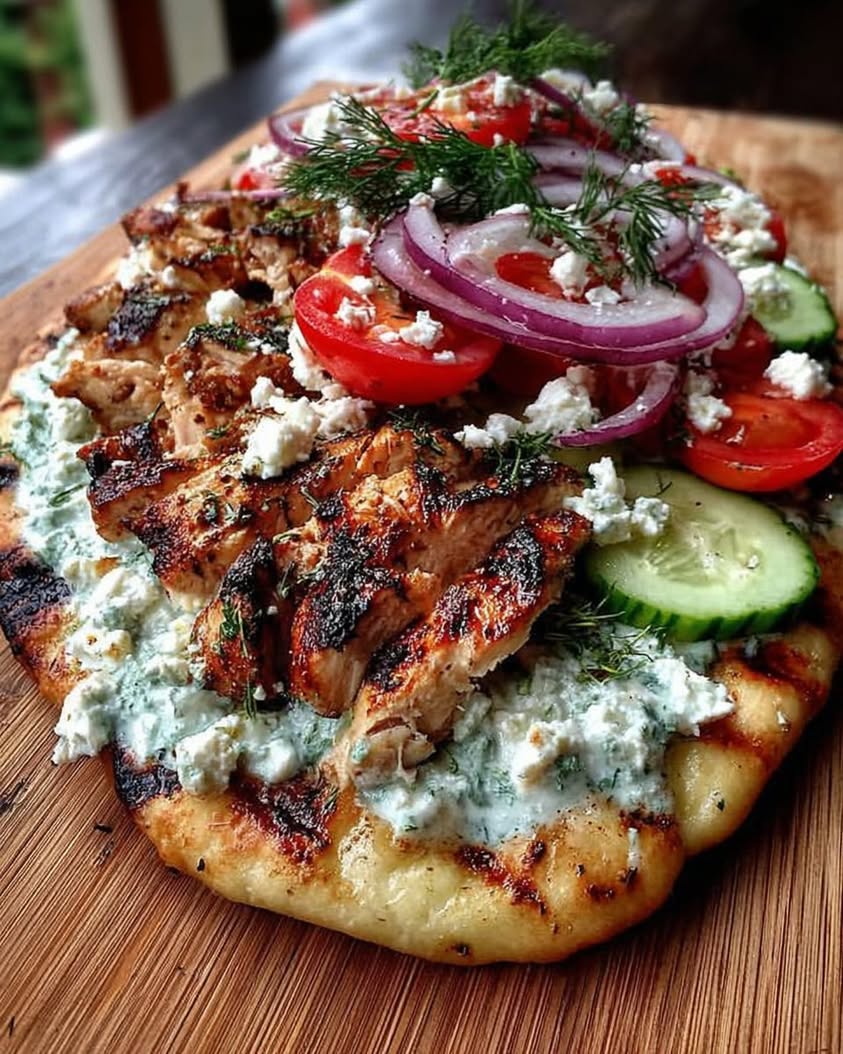
The magic of this recipe lies in its beautiful balance. First, the chicken is marinated in a zesty blend of lemon, garlic, and oregano, which infuses it with authentic Greek flavor. Then, it is seared to golden perfection. Meanwhile, the homemade tzatziki sauce, with its creamy Greek yogurt base and refreshing cucumber, provides a cooling counterpoint. Finally, the assembly is a joy: you layer the warm flatbread with the chicken, dollops of tzatziki, and a generous heap of fresh tomatoes, red onion, and more cucumber. The result is a handheld feast that is messy, delicious, and utterly satisfying.
This Creamy Greek Chicken Flatbread with Tzatziki and Fresh Veggies is more than just a quick dinner. It is a versatile meal solution. For instance, you can serve it as a casual family dinner, slice it into smaller pieces for a party appetizer, or even pack the components separately for a fantastic next-day lunch. Ultimately, it is a recipe that celebrates fresh ingredients and bold flavors without requiring hours in the kitchen. Let us dive into how you can create this Mediterranean masterpiece.
Quick Recipe Highlights
- Flavor Profile: This dish bursts with the classic flavors of Greece. You will taste the bright acidity of lemon, the earthy punch of oregano, and the aromatic presence of garlic. The tzatziki sauce adds a creamy, tangy, and cooling element that ties everything together beautifully.
- Texture: Every bite offers a delightful contrast. The flatbread provides a soft yet sturdy base, while the chicken is tender and juicy. The vegetables add a crucial fresh crunch, and the tzatziki sauce brings a smooth, creamy richness that coats everything perfectly.
- Aroma: As the chicken cooks, your kitchen will fill with the irresistible scent of sizzling garlic, lemon, and herbs. This aromatic base is complemented by the fresh, clean smell of the diced cucumbers and tomatoes, creating an inviting Mediterranean atmosphere.
- Visual Appeal: This flatbread is a feast for the eyes. The golden-brown chicken, white tzatziki, red tomatoes, and green cucumbers create a stunning, colorful presentation. It looks vibrant, fresh, and incredibly appetizing on any plate.
- Skill Level Needed: This is a beginner-friendly recipe. The techniques involve simple marinating, pan-searing, and assembling. No advanced culinary skills are required, making it an excellent choice for novice cooks or anyone seeking a stress-free, impressive meal.
- Special Equipment: You only need basic kitchen tools. A sharp knife, cutting board, mixing bowls, and a large skillet are essential. A box grater for the cucumber in the tzatziki is helpful but not strictly necessary if you prefer to chop it finely.
Recipe Overview
- Difficulty Level: We rate this recipe as “Easy” for several reasons. The steps are straightforward and logical, involving marinating, cooking, and assembling. There is no complex knife work or tricky techniques. Furthermore, most of the prep time is hands-off while the chicken marinates, allowing you to prepare other components.
- Category: This dish fits multiple meal categories wonderfully. It is a complete main course for dinner or lunch. Alternatively, you can easily adapt it into appetizers by using smaller flatbreads or pitas. It also works great for meal prep when you store the components separately.
- Cuisine: This recipe is firmly rooted in Greek and broader Mediterranean cuisine. It draws inspiration from classic Greek souvlaki and gyros, reimagined in a convenient flatbread format. The use of oregano, lemon, garlic, yogurt, and fresh vegetables is quintessentially Mediterranean.
- Cost: This is a very cost-effective meal. Chicken thighs or breasts are affordable protein options. The vegetables and herbs are inexpensive, especially when in season. Greek yogurt, a staple for tzatziki, is also budget-friendly. You can easily feed a family for less than the cost of takeout.
- Season: This recipe shines brightest in the late spring and summer months. This is when tomatoes and cucumbers are at their peak flavor and most affordable. However, it is a fantastic year-round dish because the ingredients are readily available in any season.
- Occasion: Its versatility makes it suitable for many occasions. It is perfect for a quick weeknight family dinner. Simultaneously, its impressive appearance makes it great for casual entertaining or game day gatherings. You can even prepare it for a refreshing summer picnic.
Why You’ll Love This Recipe
You will adore the incredible taste and texture of this Creamy Greek Chicken Flatbread. Each component plays a vital role. The marinated chicken is succulent and deeply flavorful, offering a savory foundation. The homemade tzatziki sauce is cool, tangy, and creamy, cutting through the richness of the meat. Then, the fresh vegetables provide a burst of juiciness and a satisfying crunch. Together, they create a harmonious bite that is both refreshing and deeply satisfying. This combination of warm, cool, soft, and crisp is what makes this flatbread so addictive and memorable.
The convenience factor is another major reason to love this recipe. From start to finish, it takes only about 35 minutes. The marinating time is flexible; you can do a quick 15-minute marinade or let it develop flavor for a few hours. Additionally, the cooking process is simple and fast, involving just one skillet for the chicken. This means minimal cleanup, which is always a win on busy nights. You can have a restaurant-quality, healthy meal on the table faster than you could get delivery.
Nutritionally, this dish is a well-balanced winner. It provides a good source of lean protein from the chicken and Greek yogurt. The vegetables contribute essential vitamins, minerals, and fiber. Using a whole-grain or low-carb flatbread can boost the fiber content even further. Compared to heavy, cheese-laden pizzas or sandwiches, this flatbread feels light yet filling. It is a meal that fuels your body without weighing you down, making it an excellent choice for health-conscious eaters.
This Creamy Greek Chicken Flatbread with Tzatziki and Fresh Veggies has fantastic social and entertaining value. It is interactive and fun to serve. You can set out all the components and let everyone build their own flatbread, catering to individual preferences. For a party, simply slice the assembled flatbreads into smaller wedges for easy finger food. The bright, colorful presentation is always a crowd-pleaser. It is a guaranteed conversation starter that feels special without requiring the host to be stuck in the kitchen all evening.
Finally, this recipe is wonderfully cost-effective and accessible. The ingredients are common and affordable at any standard grocery store. You likely have many of the pantry staples, like olive oil, lemon, and dried oregano, already on hand. There is no need for expensive specialty items. This accessibility means you can enjoy the vibrant flavors of a Greek taverna without the premium price tag. It is a delicious proof that eating well does not have to be complicated or expensive.
Historical Background and Cultural Significance
The roots of this dish lie in the ancient culinary traditions of Greece and the broader Eastern Mediterranean. The concept of wrapping seasoned meat and fresh vegetables in bread is centuries old. Specifically, it draws direct inspiration from the Greek gyro and souvlaki. Traditionally, souvlaki consists of small pieces of meat grilled on a skewer, often served with pita bread, tomatoes, onion, and tzatziki. Our flatbread version is a modern, deconstructed take on this classic street food, offering the same iconic flavors in a convenient, open-faced format.
Tzatziki sauce itself has a rich history. Its origins are often traced back to the influence of the Ottoman Empire, which introduced yogurt-based sauces to the region. The Greek version, known as tzatziki, is distinct for its use of strained yogurt, cucumber, garlic, and often dill or mint. It is more than just a condiment; it is a staple of the Greek table, served as a dip, a sauce for meats, and a cooling accompaniment to spicy dishes. Its inclusion in this recipe is non-negotiable, as it provides the authentic creamy element that defines the flavor profile.
The evolution of this recipe reflects modern eating habits and global fusion cuisine. While the traditional gyro is served in a folded pita, the use of a larger flatbread as a base allows for more generous toppings and easier sharing. This adaptation caters to contemporary preferences for customizable, shareable meals. The flatbread acts as a edible plate, making it perfect for casual dining. This evolution shows how classic dishes can be respectfully adapted to fit new contexts while preserving their soul.
Regional variations of this concept exist throughout the Mediterranean. In Turkey, a similar dish might feature doner kebab meat with a slightly different yogurt sauce called cacık. In the Middle East, shawarma wraps share the same principle of marinated meat, fresh veggies, and a creamy garlic sauce. Our Creamy Greek Chicken Flatbread with Tzatziki and Fresh Veggies honors the Greek iteration specifically, focusing on the lemon-oregano marinade and the dill-infused tzatziki that are hallmarks of Greek cuisine. It is a delicious tribute to a timeless culinary tradition.
Ingredient Deep Dive
Chicken Thighs or Breasts: Chicken is the protein cornerstone of this dish. Thighs are often preferred for their higher fat content, which keeps them incredibly juicy and flavorful during cooking. Breasts offer a leaner option but require careful attention to avoid dryness. From a nutritional standpoint, chicken is an excellent source of complete protein and essential B vitamins. For the best results, choose organic or free-range chicken if possible, as it tends to have better flavor and texture. Pat the chicken dry before marinating to ensure a good sear.
Greek Yogurt: This is the base for the iconic tzatziki sauce. Greek yogurt is strained, removing much of the whey, resulting in a thicker, creamier, and more protein-dense product than regular yogurt. It provides a tangy flavor and a rich texture without the need for mayonnaise or heavy cream. Nutritionally, it is packed with probiotics for gut health, calcium, and protein. Always use full-fat Greek yogurt for the most authentic flavor and luxurious mouthfeel. Low-fat versions can work but may result in a slightly thinner sauce.
Cucumber: Cucumber plays a dual role, providing crunch in the topping and moisture in the tzatziki. English or Persian cucumbers are ideal because they have fewer seeds and thinner skin, requiring no peeling. They are over 95% water, making them incredibly hydrating and low in calories. To prevent a watery tzatziki, it is crucial to grate or finely chop the cucumber and then squeeze out the excess liquid using a clean kitchen towel. This step ensures your sauce remains thick and creamy.
Fresh Dill: Dill is the classic herb for Greek tzatziki, offering a distinctive, grassy, and slightly anise-like flavor that is fresh and aromatic. It pairs perfectly with cucumber and yogurt. If you cannot find fresh dill, fresh mint makes a wonderful substitute, though it will alter the flavor profile. Dried dill is not recommended for the sauce, as it lacks the bright, fresh punch. For the best flavor, chop the dill just before adding it to the yogurt to preserve its volatile oils.
Flatbread: The flatbread serves as the edible canvas for all the ingredients. You can use store-bought naan, pita bread, or specific “flatbread” wraps. For a healthier twist, seek out whole wheat or grain-based options. To elevate the dish, briefly warm the flatbread in a dry skillet or oven before assembling. This makes it pliable, enhances its flavor, and prevents it from becoming soggy under the weight of the toppings. The choice of bread can completely change the character of the meal.
Common Mistakes to Avoid
- Skipping the Marinade Time: Even a short 15-20 minute marinade makes a significant difference. The acid in the lemon juice helps tenderize the chicken, and the herbs and garlic infuse flavor. Rushing this step results in bland, less tender chicken. Plan for at least a brief marination.
- Not Draining the Cucumber for Tzatziki: Forgetting to squeeze the grated cucumber is the number one reason for a watery, runny sauce. The excess moisture will dilute the yogurt, making it thin and causing it to slide off the flatbread. Take the extra minute to wring it out thoroughly.
- Overcooking the Chicken: Chicken, especially breasts, can go from juicy to dry very quickly. Use a meat thermometer and cook to an internal temperature of 165°F. Let the chicken rest for a few minutes before slicing to allow the juices to redistribute throughout the meat.
- Using Cold Tzatziki on Hot Chicken: While tzatziki is meant to be cool, taking it straight from the fridge can make the flatbread unpleasantly cold in spots. Let the tzatziki sit at room temperature for 10-15 minutes before assembling. This allows its flavors to bloom and prevents a temperature shock.
- Overloading the Flatbread: It is tempting to pile everything high, but an overstuffed flatbread is difficult to eat and can cause the base to tear or become soggy. Use a moderate, even layer of each component. You can always serve extra toppings on the side.
- Cutting the Vegetables Too Far in Advance: Diced tomatoes and cucumbers can release a lot of water and become mushy if cut hours ahead. For the best texture, chop your fresh vegetable toppings just before you are ready to assemble the flatbreads.
- Not Seasoning the Chicken Enough: Do not be shy with the salt in the marinade. Salt is crucial for enhancing the natural flavor of the chicken and the other herbs. Taste your marinade; it should be well-seasoned, as some will be left behind in the bowl.
- Using a Dull Knife to Slice the Chicken: Slicing the cooked chicken against the grain with a sharp knife ensures tender, easy-to-eat pieces. A dull knife will tear the meat, making it seem tougher. Let the chicken rest slightly so it firms up, making it easier to slice neatly.
Essential Techniques
Marinating for Flavor and Tenderness: Marinating is not just about adding flavor; the acid (lemon juice) begins to break down proteins on the surface of the chicken, resulting in a more tender bite. To master it, ensure the chicken is fully coated and use a non-reactive container like glass or ceramic. A common pitfall is marinating for too long in a highly acidic marinade, which can make the texture mushy. For this recipe, 30 minutes to 4 hours is the sweet spot. You will know it is working when the chicken smells fragrantly of garlic and herbs before it even hits the pan.
Pan-Searing for a Golden Crust: Achieving a beautiful golden-brown sear on the chicken adds crucial texture and flavor through the Maillard reaction. The key is to pat the chicken completely dry before it goes into the hot pan and to avoid overcrowding. Overcrowding steams the meat instead of searing it. Use a high-smoke-point oil like avocado or canola, and let the chicken cook undisturbed for several minutes to develop that crust. A perfect sear is visually evident: the chicken will release easily from the pan when it is ready to flip, showing a uniform, caramelized surface.
Preparing Tzatziki (Draining Cucumber): This technique is what separates a great tzatziki from a mediocre one. After grating the cucumber, place it in the center of a clean kitchen towel or several layers of cheesecloth. Gather the edges and twist tightly over the sink, squeezing with force until no more liquid drips out. The cucumber will look noticeably smaller and drier. This step prevents water from leaching out and thinning your sauce later, ensuring it stays thick, creamy, and clings perfectly to the flatbread and chicken.
Pro Tips for Perfect Creamy Greek Chicken Flatbread
1. Let the Tzatziki Rest: After mixing your tzatziki sauce, cover it and let it sit in the refrigerator for at least 30 minutes before serving. This resting time allows the garlic flavor to mellow and permeate the yogurt, and the dill flavor to infuse, resulting in a much more harmonious and developed taste.
2. Warm Your Flatbreads: Do not serve cold flatbread from the package. Briefly warming them in a dry skillet over medium heat for 30-60 seconds per side makes them pliable, brings out their aroma, and creates a slight barrier against sogginess from the toppings.
3. Slice Against the Grain: Always identify the direction of the muscle fibers in your cooked chicken and slice perpendicular to them. This shortens the fibers, making each piece much more tender and easier to bite through, especially important for a handheld meal.
4. Build in Layers: Start with a thin smear of tzatziki directly on the flatbread. This acts as a “glue” for the chicken. Then add the chicken, followed by more dollops of tzatziki, and finish with the fresh vegetables. This layered approach ensures every bite contains all the elements.
5. Use Fresh Lemon Juice: Avoid bottled lemon juice for the marinade. Freshly squeezed lemon juice has a brighter, cleaner acidity and more complex flavor that makes a noticeable difference in the chicken’s final taste.
6. Season as You Go: Taste and season each component. Season the chicken marinade well. Taste the tzatziki and add a pinch more salt if needed. A final light sprinkle of flaky sea salt and cracked black pepper over the assembled flatbread can elevate the entire dish.
Variations and Adaptations
Regional Variations: To explore other Mediterranean flavors, swap the Greek seasoning for a blend of cumin, paprika, and coriander for a Middle Eastern twist, using a tahini-yogurt sauce instead of tzatziki. For an Italian-inspired version, use a basil pesto as the sauce and top with mozzarella and balsamic glaze. The flatbread format is wonderfully adaptable to global flavor profiles.
Seasonal Adaptations: In summer, use heirloom tomatoes and fresh garden cucumbers. In fall, add roasted red peppers or caramelized onions for sweetness. During winter, incorporate hearty greens like sautéed spinach or kale. You can also use roasted butternut squash cubes as a chicken alternative for a seasonal vegetarian option.
Dietary Modifications: For a gluten-free version, use certified gluten-free flatbreads or large lettuce leaves as wraps. To make it dairy-free, substitute the Greek yogurt in the tzatziki with a thick, plain dairy-free yogurt made from coconut or almond. Ensure the flatbread is also dairy-free.
Flavor Variations: Add crumbled feta cheese for a salty, briny punch. Include kalamata olives or a spoonful of olive tapenade. For a spicy kick, add sliced pepperoncini or a drizzle of harissa paste to the tzatziki. A sprinkle of sumac over the finished flatbread adds a beautiful color and tangy, lemony note.
Texture Modifications: For extra crunch, add a handful of shredded romaine lettuce or thinly sliced bell peppers. For a warmer, meltier experience, sprinkle shredded mozzarella or crumbled feta over the hot chicken and let it melt slightly before adding the cold toppings.
Presentation Alternatives: Instead of one large flatbread per person, cut smaller pitas or flatbreads into quarters and create a platter of mini “flatbread bites” for parties. You can also deconstruct the dish into a salad by chopping the flatbread into croutons and tossing everything in a bowl.
Serving and Presentation Guide
Plating Techniques: For a casual family meal, serve each flatbread on a large plate or even a piece of parchment paper. For a more elegant presentation, use a wooden board or a large platter. Place the flatbread slightly off-center on the plate, allowing the colorful toppings to be the visual focus. If serving multiple flatbreads, arrange them overlapping slightly on a large serving tray.
Garnishing Ideas: A final garnish adds professionalism. A light drizzle of extra virgin olive oil over the top adds sheen and flavor. A sprinkle of fresh chopped dill, parsley, or mint brightens the dish visually and aromatically. A few whole kalamata olives or a lemon wedge on the side are both functional and decorative.
Traditional Accompaniments: In Greece, this type of meal might be served with a simple Greek village salad (horiatiki) on the side, featuring chunks of tomato, cucumber, onion, feta, and oregano. A bowl of olives, some warmed pita bread for dipping, or a small dish of hummus also make excellent complementary sides.
Modern Serving Suggestions: For a fun, interactive meal, set up a “build-your-own” flatbread station with bowls of the sliced chicken, tzatziki, and all the chopped vegetables. Include extra toppings like feta, olives, and different sauces. This is especially great for entertaining and accommodates various dietary preferences easily.
Temperature Considerations: The ideal eating experience involves contrasts. The flatbread and chicken should be warm, even hot. The tzatziki and fresh vegetables should be cool or at room temperature. This contrast is key to the recipe’s appeal. Assemble just before serving to maintain these distinct temperatures and prevent the flatbread from getting soggy.
Portion Control Tips: One medium-sized flatbread (about 8 inches) with a moderate amount of toppings is typically a satisfying single serving. If you are watching calories or carbs, you can use a smaller flatbread or even a large, sturdy lettuce leaf as a base. Remember, the vegetables are low-calorie, so load up on those to add volume and satisfaction.
Wine and Beverage Pairing
Wine Pairings: The bright acidity and herbal notes in this dish pair beautifully with crisp, dry white wines. A Greek Assyrtiko is the classic choice, with its citrus and mineral flavors that mirror the lemon and oregano. A Sauvignon Blanc from New Zealand or a dry Riesling also works wonderfully, as their acidity cuts through the creamy tzatziki. For red wine lovers, a light-bodied, chilled red like a Beaujolais or a Greek Xinomavro can complement the chicken without overpowering the fresh vegetables.
Non-Alcoholic Alternatives: Sparkling water with a squeeze of lemon or lime is a refreshing and simple pairing. For something more special, try a homemade cucumber-mint lemonade; the flavors directly echo the ingredients in the flatbread. Iced herbal tea, such as mint or chamomile, is another excellent choice that cleanses the palate between bites.
Coffee/Tea Pairing: While not a typical pairing for this meal, if serving for lunch, a glass of iced tea with lemon is perfect. A mint tea, served hot or cold, complements the dill in the tzatziki beautifully. After the meal, a strong Greek coffee would be an authentic and culturally appropriate way to finish.
Temperature Considerations: White wines and non-alcoholic sparklers should be served well-chilled, around 45-50°F. This cool temperature enhances their refreshing quality against the warm chicken. If serving a light red, chill it slightly, to about 55°F, to bring out its fruitiness and make it more palate-cleansing.
Serving Suggestions: Offer a variety of beverages if you are entertaining. Always have chilled water on the table. Present wine in appropriate glassware to elevate the experience—a stemmed glass for whites, a smaller glass for reds. For non-alcoholic options, use tall glasses with plenty of ice and fresh herb garnishes.
Storage and Shelf Life
Storage Methods: Store all components separately in airtight containers in the refrigerator for the best results. Keep the sliced chicken, tzatziki sauce, and chopped vegetables in their own containers. Assembled flatbreads do not store well and will become soggy. The flatbreads themselves can be kept in their original packaging or in a bread bag.
Temperature Requirements: Everything must be refrigerated at or below 40°F. The chicken and tzatziki are particularly perishable. Do not leave assembled flatbreads or any of the dairy-based components at room temperature for more than two hours to prevent bacterial growth.
Container Recommendations: Use glass containers with tight-fitting lids for the tzatziki and chicken. For the vegetables, a container with a vented lid or a partially sealed plastic bag can help maintain crispness by managing humidity.
Signs of Spoilage: Discard the chicken if it develops an off odor, a slimy texture, or any discoloration. Tzatziki that smells overly sour (beyond its natural tang), has visible mold, or has separated irreversibly should be thrown out. Vegetables that have become limp, slimy, or moldy are no longer good.
Reheating Instructions: Only reheat the chicken component. Gently warm it in a skillet over medium-low heat with a splash of water or chicken broth to prevent drying out, or microwave it in 30-second intervals until just warm. Do not reheat the tzatziki or assembled flatbread.
Freezing Guidelines: Freezing is not recommended for the completed dish or its major components. The cooked chicken can be frozen for up to 3 months in a freezer bag, but the texture may become slightly drier upon thawing. Tzatziki and fresh vegetables do not freeze well, as they will become watery and lose their texture when thawed.
Make Ahead Strategies
Prep Timeline: You can prep almost everything 1-2 days in advance. Marinate the chicken and store it in the fridge. Prepare the tzatziki sauce; its flavor improves overnight. Chop the vegetables for the topping, though tomatoes are best chopped the day of to prevent mushiness. This advance work turns active cooking time into a quick 15-minute assembly.
Storage Between Steps: Keep the marinating chicken in a sealed container or zip-top bag on the bottom shelf of the refrigerator. Store the tzatziki in a tightly sealed container. For the vegetables, store diced cucumbers and onions in one container, and wait to dice tomatoes until assembly day.
Quality Impact Assessment: Making the tzatziki ahead is highly beneficial for flavor. Making the marinade ahead is fine. Cooking the chicken ahead is possible, but freshly cooked chicken will have a better texture and juiciness. The fresh vegetable toppings suffer the most from being pre-cut, losing their crispness and releasing water.
Assembly Tips: When ready to serve, warm the flatbreads and the pre-cooked chicken (if using). Take the tzatziki out of the fridge 10-15 minutes prior to take the chill off. Chop any last-minute vegetables. Then, assemble in the recommended layers for the best texture and temperature contrast.
Reheating Guidelines: If you pre-cook the chicken, reheat it gently to avoid overcooking. A skillet with a tiny bit of oil or broth is best. You can also reheat it in a 300°F oven wrapped in foil until just warmed through. Never microwave the chicken on high power, as it can make it rubbery.
Fresh Element Additions: Even with extensive prep, always add a final touch of freshness right before serving. A new sprinkle of chopped herbs over the assembled flatbread, a final drizzle of olive oil, or a squeeze of fresh lemon juice can make a prepped dish taste freshly made.
Scaling Instructions
Halving the Recipe: Halving is straightforward for a smaller household. Simply divide all ingredient quantities by two. Use a smaller skillet for cooking the chicken to maintain proper heat distribution. The tzatziki sauce can still be made in the full batch if desired, as it keeps well and is delicious on other dishes.
Doubling or Tripling: For a crowd, multiply the ingredients consistently. The key adjustment is cooking the chicken. Do not overcrowd the pan; cook in multiple batches to ensure proper searing. You may need to use two skillets or cook in succession. Make the tzatziki in a large bowl, tasting as you go to ensure seasoning scales appropriately.
Equipment Adjustments: Scaling up requires planning. Ensure you have a large enough mixing bowl for the tzatziki and a large platter for serving. If cooking chicken in batches, have a baking sheet lined with foil ready to hold cooked chicken in a warm (200°F) oven while you finish subsequent batches.
Timing Modifications: Prepping vegetables will take longer when scaling up. The actual cook time for the chicken will increase linearly if cooking in batches—factor in about 15 minutes per batch. Assembling many flatbreads is faster if you set up an assembly line: flatbreads, chicken, tzatziki, then veggies.
Storage Considerations: When making a large batch, storage becomes more important. Have multiple airtight containers ready for leftovers. Remember, components are best stored separately. Label containers with the date if you are prepping more than a day ahead for a big event.
Nutritional Deep Dive
Macro Breakdown: A typical serving provides a balanced mix of macronutrients. The chicken and Greek yogurt are excellent sources of high-quality protein, essential for muscle repair and satiety. The flatbread contributes complex carbohydrates for energy. The olive oil and the fat in yogurt (if using full-fat) provide healthy fats. The vegetables add minimal calories but significant volume and fiber.
Micronutrient Analysis: This dish is rich in several key micronutrients. Tomatoes and red onions provide vitamin C and antioxidants like lycopene. Cucumbers offer hydration and vitamin K. Greek yogurt is a great source of calcium and probiotics. The herbs and garlic contribute various phytonutrients with anti-inflammatory properties.
Health Benefits: The Mediterranean diet principles evident here are linked to numerous health benefits, including improved heart health, better weight management, and reduced inflammation. The lean protein and fiber promote fullness, which can aid in weight control. The probiotics in yogurt support digestive health. The dish is generally low in added sugars and processed ingredients.
Dietary Considerations: This recipe can be adapted for many diets, but as written, it contains gluten (flatbread) and dairy (yogurt). It is naturally nut-free. The sodium content is controllable based on how much salt you add to the marinade and tzatziki. For a lower-carb option, the flatbread can be swapped out.
Portion Analysis: One flatbread with a moderate amount of each topping is a satisfying single portion. Be mindful of the amount of olive oil used in cooking and the portion size of the flatbread itself, as these are the most calorie-dense elements. Loading up on the vegetable toppings is a great way to increase volume without significantly increasing calories.
Weight Management Tips: To make this dish even more weight-conscious, use chicken breast instead of thigh, choose a low-carb or small whole-grain flatbread, measure the olive oil for cooking, and use a moderate hand with the tzatziki. The high protein and fiber content are inherently supportive of weight management goals by keeping you full longer.
Dietary Adaptations
Gluten-Free: Use certified gluten-free flatbreads, which are widely available. Alternatively, serve the chicken, tzatziki, and veggies over a bed of quinoa, rice, or a big salad. Ensure all other ingredients, like spices, are certified gluten-free to avoid cross-contamination.
Dairy-Free: Substitute the Greek yogurt with a thick, plain, unsweetened dairy-free yogurt. Coconut milk yogurt often provides the best texture and fat content for a creamy tzatziki. Be sure to still drain the cucumber well. Check that your flatbread is also dairy-free.
Vegan: Replace the chicken with marinated and grilled chickpeas, extra-firm tofu cubes, or sliced portobello mushrooms. Use a dairy-free yogurt for the tzatziki as described above. The vegetables and herbs remain the same, creating a vibrant and satisfying plant-based meal.
Low-Carb/Keto: Omit the flatbread entirely. Serve the chicken, tzatziki, and vegetables in a bowl. You can also use a large, sturdy lettuce leaf Print
Creamy Greek Chicken Flatbread with Tzatziki, Cucumbers, Tomatoes & Red Onion
- Total Time: 45 minutes
- Yield: 4
Description
A vibrant and easy Mediterranean-inspired flatbread topped with seasoned grilled chicken, fresh veggies, and a cool homemade tzatziki sauce.
Ingredients
- 2 boneless, skinless chicken breasts, sliced into strips
- 4 flatbreads or naan
- 1 cup Greek yogurt
- 1 cucumber, half grated and half thinly sliced
- 1 tablespoon fresh dill, chopped
- 1 clove garlic, minced
- 1 tablespoon lemon juice
- 1 cup cherry tomatoes, halved
- 1/2 red onion, thinly sliced
- 1 teaspoon dried oregano
- 2 tablespoons olive oil
- Salt and pepper to taste
Instructions
- Season chicken strips with oregano, salt, and pepper. Heat olive oil in a skillet over medium-high heat and cook chicken until golden and cooked through, about 6-8 minutes. Set aside.
- In a bowl, combine Greek yogurt, grated cucumber (squeezed dry), dill, garlic, lemon juice, and a pinch of salt. Mix well to make tzatziki.
- Warm flatbreads in a skillet or oven until lightly toasted.
- Spread a generous layer of tzatziki on each flatbread. Top with cooked chicken, sliced cucumber, cherry tomatoes, and red onion.
- Serve immediately, optionally garnished with extra dill or a drizzle of olive oil.
Notes
You can customize the seasonings to taste.
- Prep Time: 15 minutes
- Cook Time: 30 minutes
- Method: Main
- Cuisine: Greek