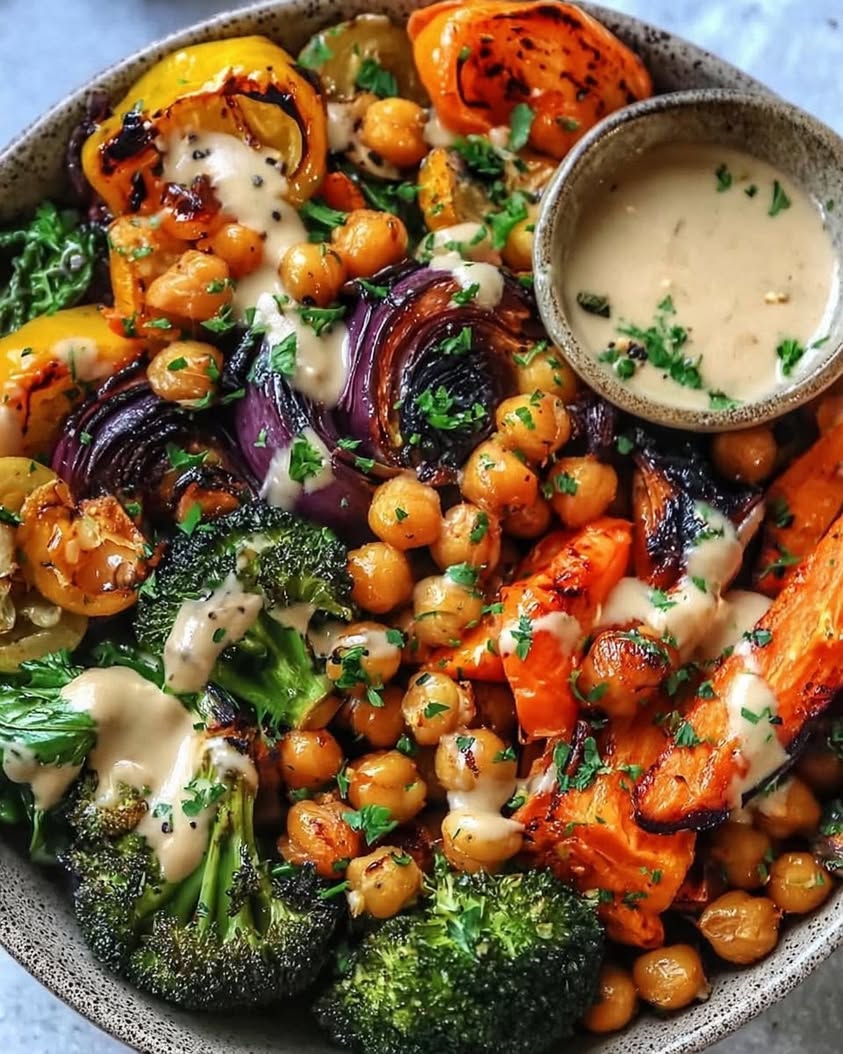
Roasted Veggie & Chickpea Bowls with Maple Dijon Tahini Dressing: A Flavor-Packed, Nourishing Meal
Imagine a vibrant, satisfying meal that comes together with minimal effort and delivers maximum flavor. These Roasted Veggie & Chickpea Bowls with Maple Dijon Tahini Dressing are exactly that. They are a celebration of simple, wholesome ingredients transformed by the magic of roasting. Consequently, you get a dish that is as beautiful to look at as it is delicious to eat. The combination of hearty roasted vegetables and crispy chickpeas creates a textural masterpiece. Meanwhile, the creamy, tangy, and slightly sweet dressing ties everything together perfectly.
This recipe is a fantastic solution for busy weeknights, meal prep, or even a casual dinner with friends. It is incredibly versatile, allowing you to swap vegetables based on what is in season or what you have on hand. Moreover, it is a complete meal packed with plant-based protein, fiber, and essential vitamins. The process is straightforward and relaxing. Essentially, you chop, toss, roast, and blend. The result is a nourishing bowl that feels both comforting and exciting. Ultimately, these Roasted Veggie & Chickpea Bowls are a testament to how easy and rewarding healthy eating can be.
Furthermore, the Maple Dijon Tahini Dressing is a game-changer. It elevates the entire dish from a simple bowl of veggies to a restaurant-quality experience. The nutty tahini base combines with the sharpness of Dijon and the warmth of maple syrup. This creates a complex flavor profile that complements the caramelized vegetables beautifully. Therefore, every bite is a harmonious blend of savory, sweet, and creamy elements. This recipe is not just food; it is a colorful, textural, and flavorful experience that will become a regular in your kitchen rotation.
Quick Recipe Highlights
- Flavor Profile: These bowls offer a masterful balance. You get the deep, caramelized sweetness from the roasted vegetables, the savory umami from the chickpeas, and the bright, creamy tang from the maple Dijon tahini dressing. Each component sings in harmony.
- Texture: The texture contrast is key. Expect tender-crisp roasted veggies, delightfully crispy and crunchy chickpeas, and a luxuriously smooth, creamy dressing. This combination makes every mouthful interesting and satisfying.
- Aroma: As the vegetables and chickpeas roast, your kitchen will fill with the warm, inviting scents of garlic, rosemary, and caramelizing onions. The dressing adds a final aromatic note of sesame from the tahini and a hint of sharp Dijon mustard.
- Visual Appeal: This dish is a feast for the eyes. The vibrant orange of sweet potatoes, deep green of broccoli, and red of onions create a stunning color palette. The creamy beige dressing drizzled over the top adds the perfect finishing touch.
- Skill Level Needed: This is a beginner-friendly recipe. The techniques involved—chopping, tossing, roasting, and blending—are fundamental. No advanced culinary skills are required, making it accessible for cooks of all levels.
- Special Equipment: You only need basic kitchen tools: a good chef’s knife, cutting board, two large baking sheets, and a blender or small food processor for the dressing. Parchment paper is highly recommended for easy cleanup.
Recipe Overview
- Difficulty Level: We rate this recipe as “Easy” for several reasons. First, the steps are sequential and simple: prep vegetables, season, roast, and make the dressing. There is no complicated timing or finicky techniques. Additionally, the roasting process is forgiving. Even if you slightly over or undercook a vegetable, the result is still delicious. This makes it a stress-free cooking experience perfect for any night of the week.
- Category: This dish fits beautifully into multiple meal categories. It is a stellar main course for a vegetarian or vegan diet. Alternatively, it works wonderfully as a hearty side dish alongside grilled chicken or fish. It is also ideal for meal prep, as the components hold up well in the refrigerator for several days.
- Cuisine: While not tied to one specific tradition, these bowls draw inspiration from Mediterranean and Middle Eastern cuisines. The use of chickpeas, tahini, and olive oil is classic to those regions. However, the preparation method and vegetable combinations have a modern, global fusion feel, making them a contemporary favorite.
- Cost: This is an incredibly cost-effective meal. The base ingredients—sweet potatoes, broccoli, onions, chickpeas—are typically affordable, especially in season. Tahini and maple syrup are pantry investments that last for many recipes. Overall, you can create four generous, restaurant-quality servings for a fraction of the cost of eating out.
- Season: This recipe is fantastic year-round but shines brightest in the fall and winter. Root vegetables like sweet potatoes are at their peak, offering the best flavor and value. Conversely, you can easily adapt it for spring and summer by using zucchini, bell peppers, or asparagus.
- Occasion: These bowls are wonderfully versatile for any occasion. They are quick enough for a Tuesday family dinner, elegant enough for a casual weekend lunch with guests, and portable enough for a packed work lunch. They are a true all-purpose, crowd-pleasing meal.
Why You’ll Love This Recipe
First and foremost, the taste and texture are utterly irresistible. The roasting process concentrates the natural sugars in the vegetables, creating deep, caramelized flavors that are far superior to steaming or boiling. The chickpeas become crispy little flavor bombs. Then, the maple Dijon tahini dressing adds a creamy, tangy, and slightly sweet element that brings everything together. Each forkful is a delightful contrast of soft, crunchy, and creamy. Consequently, you get a meal that is deeply satisfying on every sensory level, proving that healthy food does not have to be boring.
Secondly, the convenience factor is a major win. This recipe is a one-pan wonder, with most of the work done by your oven. After the initial chopping and tossing, you have hands-off time to prepare the dressing or simply relax. Moreover, it is an excellent meal prep champion. You can roast a big batch of vegetables and chickpeas on Sunday and assemble bowls quickly throughout the week. The components store and reheat beautifully. Therefore, this recipe is a practical solution for managing a busy schedule while still eating wholesome, homemade meals.
Nutritionally, these bowls are a powerhouse. They are packed with plant-based protein and fiber from the chickpeas, keeping you full and energized for hours. The variety of vegetables provides a broad spectrum of vitamins, minerals, and antioxidants. Using olive oil and tahini adds healthy fats that are essential for nutrient absorption and heart health. This meal supports gut health, stabilizes blood sugar, and contributes to overall well-being. Essentially, you are nourishing your body with every delicious bite without any sense of deprivation.
From a social perspective, these bowls are fantastic for entertaining. They are naturally vegan and gluten-free, easily accommodating various dietary restrictions without requiring separate meals. The vibrant, colorful presentation is always impressive. You can even set up a “bowl bar” with all the components and let guests build their own creations. This interactive element makes for a fun and relaxed dining experience. Furthermore, the recipe scales up effortlessly, making it perfect for feeding a crowd without stress.
Finally, the cost-effectiveness and accessibility are unbeatable. As mentioned, the core ingredients are inexpensive pantry staples or seasonal produce. You likely have many of the spices and oils already. Compared to ordering takeout or buying pre-made meals, this homemade version saves significant money. Additionally, it is highly adaptable based on what you have available. Don’t have broccoli? Use cauliflower. Out of sweet potato? Try butternut squash. This flexibility makes it a reliable go-to recipe that reduces food waste and fits any budget.
Historical Background and Cultural Significance
The concept of a “bowl meal” is ancient, yet recently popularized. Cultures worldwide have traditions of combining grains, vegetables, and proteins in a single vessel. For instance, the Middle Eastern meze platter often features hummus (made from chickpeas and tahini) alongside roasted vegetables. Meanwhile, the practice of roasting vegetables over fire is as old as cooking itself. This recipe is a modern fusion that respectfully borrows from these timeless traditions. It combines the ancient staple of chickpeas, a crop cultivated for over 7,000 years in the Middle East, with New World vegetables like sweet potatoes.
Chickpeas, also known as garbanzo beans, hold profound cultural significance. They are a cornerstone of diets across the Mediterranean, South Asia, and the Middle East. In these regions, they are celebrated not just as food but as a symbol of sustenance and resilience. Dishes like hummus and falafel have become global ambassadors for this humble legume. Our recipe honors this legacy by featuring chickpeas as the star protein, showcasing their versatility beyond being blended into a dip.
The evolution of this specific recipe mirrors broader food trends of the 21st century. There is a growing desire for meals that are healthy, visually appealing, and customizable. The “Buddha bowl” or “grain bowl” trend emphasized balanced, plant-forward eating. Our Roasted Veggie & Chickpea Bowl is a direct descendant of this movement. It omits the grain for a lighter feel, focusing instead on the vegetables and protein. The maple Dijon tahini dressing adds a contemporary twist, blending American and French condiments (maple syrup and Dijon) with Middle Eastern tahini.
Regional variations of this concept are endless. In the Mediterranean, you might find a similar bowl with olives, feta, and a lemon-oregano dressing. In Southeast Asia, the dressing could shift to a peanut-lime sauce with quick-pickled veggies. The beauty of the bowl format is its inherent adaptability. Our version provides a perfect, flavorful template. However, it encourages culinary exploration. You can travel the world through your spice cabinet and condiment shelf, using the basic technique of roasting to create countless regional interpretations right in your own kitchen.
Ingredient Deep Dive
Sweet Potatoes: Native to Central and South America, sweet potatoes have been a vital food source for millennia. They are incredibly rich in beta-carotene, which your body converts to vitamin A, essential for vision and immunity. They also provide a good dose of vitamin C, fiber, and potassium. When selecting, choose firm potatoes with smooth, unbruised skin. Store them in a cool, dark, well-ventilated place—not the refrigerator. For a substitution, try butternut squash or carrots for a similar sweet, roasty flavor and texture.
Chickpeas (Garbanzo Beans): As one of the earliest cultivated legumes, chickpeas are foundational to global cuisine. They are an excellent source of plant-based protein, fiber, iron, and folate. The fiber aids digestion and promotes a feeling of fullness. For this recipe, canned chickpeas are perfectly convenient. Be sure to rinse and drain them thoroughly, then pat them very dry with a towel. This step is crucial for achieving crispy roasted chickpeas. If you prefer, you can cook dried chickpeas from scratch. Store opened canned chickpeas in water in the fridge for up to 4 days.
Tahini: Tahini is simply ground sesame seeds, a paste used for centuries in Middle Eastern and Mediterranean cooking. It is a great source of healthy fats, calcium, and copper. When you open a new jar, the oil often separates. Stir it thoroughly until smooth and creamy. Quality varies; look for tahini made from 100% hulled sesame seeds with no added oils. It should taste nutty, not bitter. Store it in the refrigerator after opening. If you need a substitute for a nut-free version, sunflower seed butter can work, though the flavor will be different.
Broccoli: This cruciferous vegetable is a nutritional superstar, packed with vitamins C, K, and folate, along with compounds linked to reduced inflammation. It originated from wild cabbage cultivated in Italy. Choose broccoli with tight, dark green florets and firm stalks. Avoid any with yellowing florets. To store, keep it unwashed in a loose plastic bag in the refrigerator’s crisper drawer. For variations, cauliflower, Brussels sprouts, or broccolini are excellent alternatives that roast beautifully.
Maple Syrup: Pure maple syrup is the boiled-down sap of sugar maple trees, a tradition pioneered by Indigenous peoples of North America. It contains antioxidants and minerals like manganese and zinc. For cooking, always opt for “pure maple syrup,” not pancake syrup, which is primarily corn syrup and artificial flavor. The grade (usually Grade A Amber) is perfect for its balanced flavor. Store it in the pantry before opening and in the fridge afterward. For a vegan or lower-glycemic alternative, agave nectar or a pinch of date sugar can be used.
Common Mistakes to Avoid
- Crowding the Pan: This is the number one mistake in roasting. If the vegetables are piled on top of each other, they will steam instead of roast. Consequently, you will get soggy, steamed veggies instead of crispy, caramelized ones. Always use two baking sheets or roast in batches to ensure everything has space.
- Not Drying the Chickpeas: Skipping the step of rinsing, draining, and thoroughly patting the canned chickpeas dry is a recipe for disappointment. Excess moisture prevents crisping. Take the extra minute to dry them well with a clean kitchen towel for the best crunchy result.
- Using Old or Low-Quality Tahini: Tahini can go rancid or become bitter over time. Always taste your tahini before using it. If it smells off or tastes unpleasantly bitter, it will ruin your dressing. Invest in a good-quality brand and store it properly in the fridge.
- Neglecting to Preheat the Oven: Putting your pan into a cold oven drastically changes the cooking process. The vegetables will start to stew rather than immediately sear. Always ensure your oven is fully preheated to the correct temperature (425°F) before adding your baking sheets.
- Over-blending the Dressing: When making the maple Dijon tahini dressing, blend just until smooth and emulsified. Over-blending can sometimes cause the dressing to become too thick or even separate. A quick pulse in a small food processor or a vigorous whisk by hand is usually sufficient.
- Underseasoning the Vegetables: Vegetables need ample seasoning to shine. Do not be shy with the salt, pepper, and garlic powder before roasting. Seasoning before cooking draws out moisture and allows the flavors to penetrate, creating a much more flavorful final product.
- Mixing Wet and Dry Ingredients on the Pan: Toss your vegetables and chickpeas in oil and seasoning in a large bowl before spreading them on the baking sheet. Trying to drizzle oil and sprinkle spices directly on the pan leads to uneven coating and burning spices.
- Forgetting to Rotate the Pans: Most home ovens have hot spots. For even cooking and browning, rotate your baking sheets from top to bottom and front to back halfway through the roasting time. This simple step ensures everything cooks uniformly.
Essential Techniques
Uniform Chopping: Cutting your vegetables into similar-sized pieces is critical for even cooking. If some sweet potato cubes are huge and others are tiny, the small ones will burn before the large ones are tender. Aim for 1-inch pieces. This technique ensures that every vegetable on the tray finishes roasting at the same time, giving you a perfect mix of textures without any undercooked or burnt bits.
High-Heat Roasting: Roasting at a high temperature (425°F) is non-negotiable for this recipe. The high heat quickly caramelizes the natural sugars on the surface of the vegetables, creating that sought-after browned, flavorful exterior while keeping the interior tender. It also rapidly evaporates surface moisture on the chickpeas, leading to crispiness. A lower temperature would steam the vegetables and leave the chickpeas soft and chewy.
Emulsifying the Dressing: An emulsion is a stable mixture of two liquids that normally don’t mix, like oil and water (or in this case, oil and lemon juice/maple syrup). The tahini acts as an emulsifier. The key is to add the liquid ingredients to the tahini slowly while whisking or blending continuously. This process breaks the liquids into tiny droplets suspended in the tahini, creating a smooth, creamy, unified dressing that won’t separate immediately.
Patting Chickpeas Dry: This simple mechanical step has a huge impact. After rinsing, the chickpea skins are covered in a starchy film and water. Drying them with a towel removes this barrier. Consequently, when they hit the hot oven, the oil can directly contact the skin, and the surface moisture evaporates instantly. This allows the chickpeas to crisp up beautifully instead of steaming in their own moisture.
Pro Tips for Perfect Roasted Veggie & Chickpea Bowls
1. Use Parchment Paper: Lining your baking sheets with parchment paper prevents sticking and makes cleanup an absolute breeze. It also promotes more even browning on the bottom of the vegetables compared to foil.
2. Season in Stages: Season your vegetables and chickpeas generously with salt and spices before roasting. Then, taste and adjust the seasoning with a final pinch of flaky sea salt after they come out of the oven for a flavor boost.
3. Get Creative with Spices: While the recipe calls for garlic powder and rosemary, feel free to experiment. Smoked paprika, cumin, curry powder, or za’atar can completely transform the flavor profile of your bowls.
4. Warm Your Tahini: If your tahini is stone-cold from the fridge, let it sit at room temperature for 15 minutes before making the dressing. Cold tahini is very thick and harder to blend into a smooth emulsion.
5. Thin the Dressing as Needed: If your maple Dijon tahini dressing is too thick after blending, simply whisk in warm water, one tablespoon at a time, until it reaches a perfect drizzling consistency.
6. Add Freshness at the End: For a bright finish, garnish your assembled bowls with fresh chopped herbs like parsley or cilantro, a squeeze of fresh lemon juice, or a sprinkle of pomegranate seeds.
7. Don’t Toss Immediately: Let the roasted vegetables and chickpeas sit on the hot baking sheet for 5 minutes after removing them from the oven. This allows them to firm up slightly and makes them easier to handle.
8. Double the Dressing: The maple Dijon tahini dressing is so delicious you will want extra. Consider doubling the batch. It keeps well in the fridge for a week and is fantastic on salads, sandwiches, and grilled vegetables.
Variations and Adaptations
Regional Variations: Travel the world from your kitchen. For a Mediterranean twist, add kalamata olives, crumbled feta, and a lemon-oregano vinaigrette. For a Mexican-inspired bowl, use chili powder and cumin on the veggies, add black beans, and top with avocado and a cilantro-lime crema. An Asian fusion version could include sesame oil, soy sauce, and a ginger-scallion dressing.
Seasonal Adaptations: Embrace what is fresh. In spring, use asparagus, snap peas, and radishes. Summer bowls can feature zucchini, bell peppers, and cherry tomatoes. Fall is perfect for this recipe’s sweet potatoes and broccoli, or try adding cubed butternut squash. In winter, hearty roots like parsnips, carrots, and turnips work wonderfully.
Dietary Modifications: This recipe is naturally gluten-free and vegan. For a higher-protein version, add quinoa, farro, or a serving of grilled chicken or salmon. To make it nut-free, ensure your tahini is from a facility that doesn’t process nuts, or use sunflower seed butter in the dressing.
Flavor Variations: Change the dressing to change the entire dish. Try a creamy avocado cilantro dressing, a spicy peanut sauce, a simple lemon-tahini sauce, or a vibrant pesto. Each dressing will create a uniquely delicious bowl experience.
Texture Modifications: For extra crunch, add toasted nuts or seeds like pepitas, slivered almonds, or sunflower seeds. For creaminess, include slices of avocado or a dollop of dairy-free yogurt. For a chewy element, mix in some cooked farro or wheat berries.
Presentation Alternatives: Instead of a bowl, serve the components as a large, family-style platter. You can also use the roasted veggies and chickpeas as a filling for warm wraps or pitas with the dressing drizzled inside. For a deconstructed approach, serve the elements in separate small bowls for a fun, interactive meal.
Serving and Presentation Guide
Plating Techniques: Start with a warm, shallow bowl. Create a base with a small bed of greens like spinach or arugula if desired. Then, artfully arrange the different roasted vegetables and chickpeas in sections or gently mixed together. This showcases the beautiful colors and textures. Drizzle the maple Dijon tahini dressing generously over the top just before serving.
Garnishing Ideas: Garnishes add the final layer of flavor and visual pop. Excellent choices include fresh chopped herbs (parsley, cilantro, dill), a sprinkle of sesame seeds or everything bagel seasoning, a pinch of red pepper flakes for heat, or a few microgreens for elegance.
Traditional Accompaniments: While the bowl is a complete meal, traditional sides from its culinary inspirations pair beautifully. Warm pita bread or flatbread is perfect for scooping. A side of simple olives or a small salad of chopped cucumber and tomato with lemon would complement it nicely.
Modern Serving Suggestions: For a contemporary twist, serve the bowl with a side of kimchi for probiotic punch, or with a scoop of fermented vegetables like sauerkraut. A glass of sparkling water with lemon or a crisp white wine elevates the meal for a special occasion.
Temperature Considerations: These bowls are best served warm, with the vegetables and chickpeas fresh from the oven or gently reheated. The dressing can be at room temperature or slightly chilled. Avoid assembling the bowl too far in advance, as the warm vegetables can wilt any fresh greens and soften the crispy chickpeas.
Portion Control Tips: The recipe is designed to make four generous servings. For lighter appetites or as part of a larger spread, it can easily serve six. Use a measuring cup to portion the roasted mixture evenly if you are meal-prepping to ensure consistent servings throughout the week.
Wine and Beverage Pairing
Wine Pairings: The earthy, sweet, and tangy flavors in these bowls pair beautifully with versatile white wines. A Sauvignon Blanc, with its crisp acidity and herbal notes, cuts through the richness of the tahini. An unoaked Chardonnay offers a rounder body that complements the roasted vegetables. For a red option, choose a light-bodied, low-tannin Pinot Noir, which won’t overpower the dish and will harmonize with the earthy elements.
Non-Alcoholic Alternatives: Sparkling water with a twist of lemon or lime is a classic, refreshing choice. For something more special, try a tart cherry juice spritzer or a ginger kombucha. The effervescence and acidity cleanse the palate between bites of the creamy dressing and rich veggies.
Coffee/Tea Pairings: While not a typical pairing for dinner, a post-meal herbal tea can be lovely. A mint tea aids digestion after a fiber-rich meal. A light, floral green tea would also be a pleasant, cleansing finish without overwhelming the delicate flavors you just enjoyed.
Temperature Considerations: Serve white wines well-chilled (45-50°F) and light reds slightly cool (55°F). Non-alcoholic sparkling drinks should be ice-cold. The contrast between the cool beverage and the warm bowl is part of the enjoyable experience.
Serving Suggestions: Always serve wine in appropriate glassware to enhance its aroma and taste. For non-alcoholic options, a tall glass with ice and a garnish makes the meal feel more festive. Encourage sipping water throughout the meal as well, as the dish is flavorful and well-seasoned.
Storage and Shelf Life
Storage Methods: Store the components separately for best results. Place cooled roasted vegetables and chickpeas in an airtight container in the refrigerator. Store the maple Dijon tahini dressing in a separate sealed jar or container. This prevents the crispy chickpeas from becoming soggy and allows you to control how much dressing you add to each serving.
Temperature Requirements: All components must be stored in the refrigerator at 40°F or below. Do not leave the assembled bowls or any ingredients at room temperature for more than two hours.
Container Recommendations: Use glass containers with tight-fitting lids for the vegetables and dressing. They are non-porous and won’t retain odors. For the chickpeas, a container that allows a bit of air circulation can help maintain crispiness, though they will soften over time in the fridge.
Signs of Spoilage: Discard any components that develop an off smell, visible mold, or a slimy texture. The dressing may separate in the fridge; this is normal. Simply shake or stir it vigorously to re-emulsify. If it smells sour or fermented, it has likely gone bad.
Reheating Instructions: Reheat the roasted vegetables and chickpeas in a 350°F oven or toaster oven for 10-15 minutes until warmed through. This method helps re-crisp the chickpeas better than a microwave. The microwave is faster (1-2 minutes) but will steam them, softening the texture.
Freezing Guidelines: Freezing is not recommended for the fully assembled bowls or the roasted vegetables, as their texture becomes mushy upon thawing. The maple Dijon tahini dressing can be frozen for up to 2 months. Thaw in the refrigerator overnight and whisk vigorously to recombine.
Make Ahead Strategies
Prep Timeline: You can prep this entire meal 2-3 days in advance. Chop all the vegetables and store them in a sealed container or zip-top bag in the fridge. Rinse and drain the chickpeas, then store them covered in water in the fridge. Make the dressing and store it in a jar. On the day of serving, simply pat the chickpeas dry, toss everything with oil and spices, and roast.
Storage Between Steps: If pre-chopping, keep the different vegetable types together but separate from each other, as some (like broccoli) may release moisture. The dressing can be stored in the fridge for up to 5 days. The flavors often meld and improve over the first 24 hours.
Quality Impact Assessment: Pre-chopping vegetables has minimal impact on quality if done 1-2 days ahead. Making the dressing ahead improves the flavor. The only component that must be done close to serving is the roasting, as the crispy texture of the chickpeas and the caramelization on the veggies are best fresh.
Assembly Tips: For meal prep, assemble bowls in individual containers, but keep the dressing in a small separate container or at the bottom of a mason jar with the veggies on top. Add any fresh garnishes (like herbs) in a tiny baggie. Assemble just before eating to maintain ideal texture.
Reheating Guidelines: As noted, reheat the roasted components in the oven or toaster oven for best texture. If using a microwave, add a splash of water to the container and cover loosely to create steam, reheating in 30-second intervals.
Fresh Element Additions: Always add any fresh, delicate elements after reheating. This includes fresh herbs, a squeeze of lemon juice, avocado slices, or a sprinkle of seeds. These additions restore brightness and texture that can be lost during storage and reheating.
Scaling Instructions
Halving the Recipe: Halving is straightforward for a smaller yield. Simply divide all ingredient quantities by two. You can likely fit everything on one large baking sheet. Reduce the roasting time slightly, by about 5 minutes, and check for doneness early, as a less crowded pan may cook the vegetables a bit faster.
Doubling or Tripling: For a crowd, doubling or tripling works well. Multiply all ingredients accordingly. You will need multiple baking sheets—do not try to overcrowd. Roast in batches or use multiple oven racks, rotating the sheets top-to-bottom and front-to-back halfway through. The total time may increase by 5-10 minutes per batch due to the oven’s recovery time when the door is opened.
Equipment Adjustments: When scaling up, ensure you have enough large mixing bowls for tossing the vegetables. Use rimmed baking sheets lined with parchment. If your oven is small, roasting in batches is better than overcrowding. For the dressing, a standard blender or food processor can handle a double batch easily.
Timing Modifications: With larger batches, the prep time (chopping) will increase linearly. The active cooking time remains the same per batch, but the total hands-on time increases if you are roasting in succession. Plan accordingly and allow extra time if serving for a dinner party.
Storage Considerations: Scaling up is excellent for meal prep. Store the extra roasted veggies and chickpeas in multiple smaller containers for easy grab-and-go lunches. The dressing will last the same amount of time (about 5 days) regardless of batch size, so only make as much as you will use within that window.
Nutritional Deep Dive
Macro Breakdown: One serving of these Roasted Veggie & Chickpea Bowls provides a balanced macronutrient profile. It is rich in complex carbohydrates from the sweet potatoes and broccoli, offering sustained energy. The chickpeas and tahini contribute a significant amount of plant-based protein and healthy fats. The olive oil adds monounsaturated fats. This combination promotes satiety and stable blood sugar levels.
Micronutrient Analysis: This meal is a micronutrient powerhouse. Sweet potatoes deliver a huge dose of Vitamin A (as beta-carotene). Broccoli provides Vitamin C, Vitamin K, and folate. Chickpeas are a great source of iron, magnesium, and B vitamins. Tahini adds calcium and copper. Together, they support immune function, bone health, energy production, and antioxidant defense.
Health Benefits: Regularly consuming meals like this is linked to numerous health benefits. The high fiber content supports digestive health and a healthy gut microbiome. The antioxidants fight inflammation. The healthy fats support heart and brain health. The plant-based nature of the meal is associated with a lower risk of chronic diseases.
Dietary Considerations: This recipe is naturally gluten-free, dairy-free, vegan, and nut-free (check your tahini brand). It is suitable for many restrictive diets. However, those on a low-FODMAP diet may need to modify, as chickpeas and onions are high in FODMAPs. Substituting the onion and using canned chickpeas in smaller, drained amounts may work for some.
Portion Analysis: The recipe yields four generous, meal-sized portions. For those with smaller appetites or as part of a larger multi-course meal, it could serve six. The portion size is designed to be satisfying and filling due to the high fiber and protein content, helping to prevent overeating later.
Weight Management Tips: This bowl is an excellent choice for weight management. The fiber and protein promote fullness. The healthy fats provide satisfaction. To further reduce calories, you can slightly reduce the amount of olive oil used for roasting or use an oil spray. The dressing is calorie-dense, so controlling the amount drizzled is another way to manage intake.
Dietary Adaptations
Gluten-free: This recipe is naturally gluten-free as written. Always double-check that your spices and condiments (like Dijon mustard) are certified gluten-free if you have celiac disease or a severe sensitivity, as cross-contamination can occur in processing facilities.
Dairy-free: The recipe contains no dairy products. The creaminess comes entirely from the tahini, making it a perfect choice for those avoiding dairy due to lactose intolerance, allergy, or lifestyle choice.
Vegan: This is a 100% plant-based, vegan recipe. All ingredients are derived from plants. It is a fantastic source of complete nutrition for a vegan diet, providing protein, iron, calcium, and healthy fats.
Low-carb/Keto: This recipe is not low-carb or keto-friendly in its standard form due to the sweet potatoes and chickpeas. For a keto adaptation, replace the sweet potatoes with low-carb vegetables like cauliflower, zucchini, and bell peppers. Omit the chickpeas and add a keto protein source like tofu or tempeh. Replace the maple syrup in the dressing with a keto-friendly syrup.
Paleo: To make it Paleo, omit the chickpeas (legumes are not Paleo). Increase the volume of vegetables or add a Paleo protein like grilled chicken or shrimp. Ensure your Dijon mustard is Paleo-approved (no white wine or sulfites), and replace the maple syrup with a smaller amount of raw honey.
Low-FODMAP: For Print
Roasted Veggie & Chickpea Bowls with Maple Dijon Tahini Dressing
- Total Time: 45 minutes
- Yield: 4
Description
A vibrant, plant-based bowl featuring crispy roasted vegetables and chickpeas, served over quinoa and drizzled with a creamy, tangy-sweet maple Dijon tahini dressing.
Ingredients
- 1 large sweet potato, peeled and cubed
- 2 cups broccoli florets
- 1 red bell pepper, sliced
- 1 can (15 oz) chickpeas, rinsed and drained
- 2 tbsp olive oil
- 1 tsp smoked paprika
- 1/2 tsp garlic powder
- Salt and black pepper to taste
- 1 cup quinoa, rinsed
- 2 cups water or vegetable broth
- 1/4 cup tahini
- 2 tbsp maple syrup
- 1 tbsp Dijon mustard
- 1 tbsp lemon juice
- 2-3 tbsp water, to thin dressing
- Fresh parsley or cilantro for garnish
Instructions
- Preheat oven to 400°F (200°C). Line a baking sheet with parchment paper.
- In a large bowl, toss sweet potato, broccoli, bell pepper, and chickpeas with olive oil, smoked paprika, garlic powder, salt, and pepper. Spread evenly on the baking sheet and roast for 25-30 minutes, until tender and slightly crispy.
- While vegetables roast, combine quinoa and water or broth in a saucepan. Bring to a boil, reduce heat, cover, and simmer for 15 minutes. Remove from heat and let sit for 5 minutes, then fluff with a fork.
- In a small bowl, whisk together tahini, maple syrup, Dijon mustard, lemon juice, and enough water to reach a pourable consistency. Season with salt if desired.
- Assemble bowls by dividing quinoa among four bowls. Top with roasted veggies and chickpeas, drizzle with dressing, and garnish with fresh herbs.
Notes
You can customize the seasonings to taste.
- Prep Time: 15 minutes
- Cook Time: 30 minutes
- Method: Main
- Cuisine: American