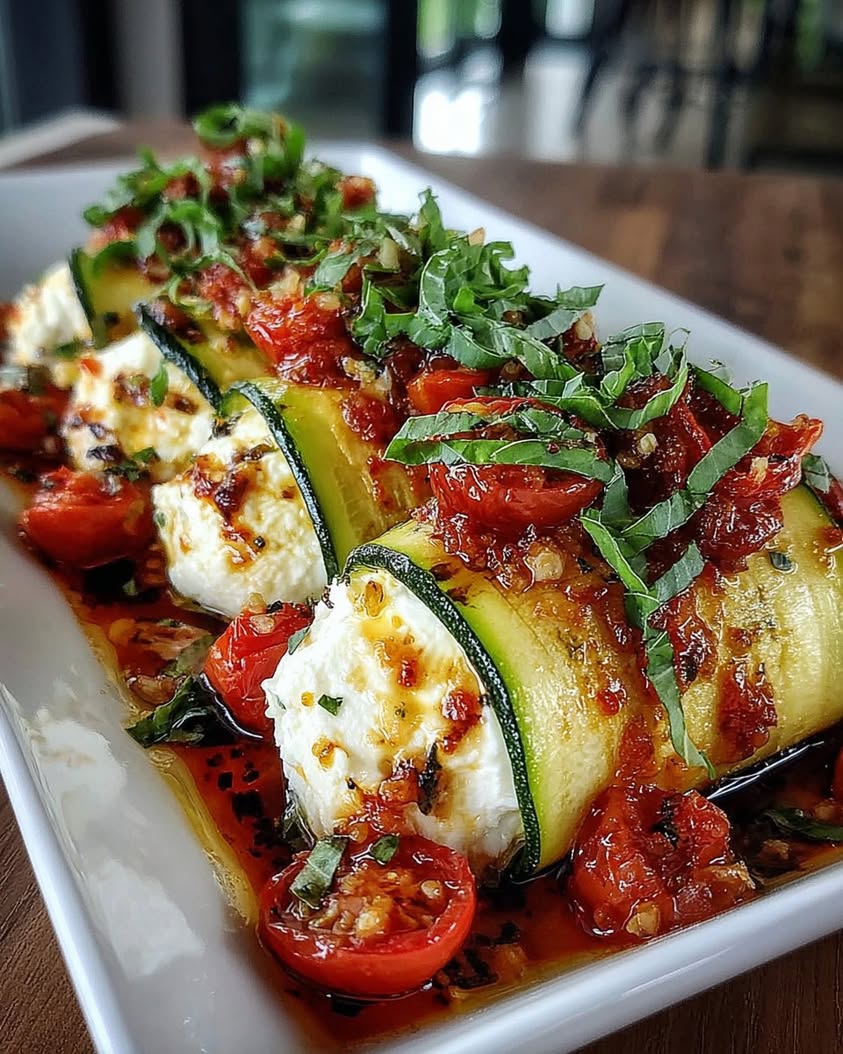
Creamy Burrata Stuffed Zucchini Rolls with Tomato Glaze: A Showstopping Summer Appetizer
Imagine the most elegant summer appetizer you can possibly bring to a dinner party. This Creamy Burrata Stuffed Zucchini Rolls with Tomato Glaze recipe is exactly that and so much more. Thin slices of fresh zucchini are grilled to perfect tenderness, then wrapped around a luscious filling of creamy burrata cheese, fresh basil, and a whisper of garlic. A vibrant, sweet-tangy tomato glaze finishes each roll, making it a dish that looks like it came from a Michelin-starred kitchen but comes together right in your home. This Creamy Burrata Stuffed Zucchini Rolls with Tomato Glaze is my go-to for impressing guests without spending all day in the kitchen.
When you take your first bite, the cool, rich burrata spills out and mingles with the smoky, tender zucchini and the bright tomato glaze. The contrast of temperatures and textures is pure perfection. The ingredients for this Creamy Burrata Stuffed Zucchini Rolls with Tomato Glaze are simple and fresh, which lets the quality of each component truly shine. You only need a few items from your local market to create this masterpiece. This Creamy Burrata Stuffed Zucchini Rolls with Tomato Glaze has become a signature dish in my home, requested for every summer gathering from casual backyard barbecues to formal holiday celebrations.
Quick Recipe Highlights- Flavor Profile: This Creamy Burrata Stuffed Zucchini Rolls with Tomato Glaze offers a symphony of flavors. The mild, slightly sweet zucchini provides a perfect canvas for the rich, milky burrata. The homemade tomato glaze adds a sweet acidity, while fresh basil and garlic bring herbaceous warmth. Each bite is balanced, complex, and deeply satisfying. The flavors feel both sun-drenched Italian and perfectly modern.
- Texture: The best part of this recipe is the textural interplay. The zucchini is tender but still holds its shape, offering a gentle bite. Inside, the burrata is incredibly creamy and almost liquid at its heart, creating a luxurious mouthfeel. The tomato glaze adds a light syrupy coating. It is soft, creamy, and luscious all at once.
- Aroma: As you prepare this dish, your kitchen fills with wonderful aromas. Grilling the zucchini brings out a smoky, nutty fragrance. Burrata itself has a clean, milky scent. The tomato glaze, simmering with garlic and herbs, smells rich, sweet, and savory. Together, these aromas promise a truly delicious meal.
- Visual Appeal: The presentation of these rolls is absolutely stunning. Bright green, char-marked zucchini spirals around a snowy white center of burrata. A glossy, deep red glaze drizzled over the top creates a beautiful contrast. Garnished with fresh green basil leaves and a sprinkle of red pepper flakes, this dish looks like edible art. It is a vibrant and elegant plate.
- Skill Level Needed: While the result looks gourmet, the actual technique is quite accessible. Anyone with basic knife skills can slice the zucchini thin enough. Grilling or pan-searing the strips is straightforward. The most delicate step is handling the burrata, but it is incredibly forgiving. This is a recipe that helps a home cook look like a professional chef with very little stress.
- Special Equipment: You do not need much special gear for this recipe. A good mandoline slicer is highly recommended for getting even, thin zucchini strips. A grill pan or a cast-iron skillet works perfectly if you do not have an outdoor grill. A small saucepan is necessary for making the tomato glaze. Tongs are essential for flipping the zucchini strips.
Recipe Overview- Difficulty Level: I rate this Creamy Burrata Stuffed Zucchini Rolls with Tomato Glaze as medium difficulty. The steps are not complicated, but there is some precision involved in slicing the zucchini evenly. Managing the burrata without breaking it completely requires a gentle touch. However, the recipe is very forgiving, and even imperfect rolls taste amazing. If you can slice a vegetable and use tongs, you can absolutely master this dish.
- Category: This recipe fits perfectly into several meal categories. It works wonderfully as an appetizer for a sit-down dinner party or a cocktail hour. You can also serve it as a light main course for lunch, paired with a crisp salad and some crusty bread. Because it is elegant and beautiful, it excels as a side dish for grilled meats or fish. It truly is a versatile addition to any menu.
- Cuisine: This dish is firmly rooted in the traditions of Italian cuisine. The use of fresh zucchini, basil, and tomatoes reflects the simplicity and flavor of summer cooking in Italy. Burrata, a cheese from the Puglia region, is the star of the show. The tomato glaze is reminiscent of a classic Italian passata or a quick agrodolce. This recipe honors those traditions while adding a modern, elegant twist.
- Cost: The cost for this recipe is surprisingly moderate for such a luxurious dish. Zucchini is one of the most affordable summer vegetables. High-quality burrata is the most expensive ingredient, but a little goes a long way, and it is widely available. Canned tomatoes and pantry staples like olive oil and garlic keep the cost down. You are getting a restaurant-quality appetizer for a fraction of the price.
- Season: This recipe is best enjoyed during the summer months when zucchini and tomatoes are at their peak. Summer zucchini are sweet, firm, and plentiful. Sun-ripened tomatoes make the best glaze with incredible natural sweetness. However, you can make this year-round using good-quality produce from the store. In colder months, the rich, creamy flavors offer a comforting taste of summer sunshine.
- Occasion: This dish is ideal for many special occasions. It is a showstopper for holiday gatherings like Easter, Fourth of July, or even Thanksgiving as a lighter starter. It is sophisticated enough for a romantic dinner for two. It also scales up beautifully for large family reunions or potlucks. Honestly, any day you want to feel a little fancy and impress your taste buds is a good occasion for this recipe.
Why You Will Love This Recipe
The taste and texture appeal of this Creamy Burrata Stuffed Zucchini Rolls with Tomato Glaze is truly unparalleled. The creamy, milky texture of the burrata is a pure indulgence. When it meets the slightly charred, tender zucchini, something magical happens. The tomato glaze adds a sweet and tangy burst of summer flavor that ties everything together. Every bite is a perfect combination of creamy, tender, and bright. It is the kind of dish that makes you close your eyes and savor the moment.
The convenience and preparation benefits of this recipe are a major bonus. The active prep time is only about 25 minutes, which is surprisingly quick for such an impressive result. You can even prepare the zucchini strips and the tomato glaze several hours ahead of time. Then, just before serving, you simply assemble the rolls. This makes it a perfect stress-free appetizer for entertaining when you want to spend time with your guests, not stuck in the kitchen. The simplicity of the steps is truly deceptive given the final result.
Nutritionally, this recipe is a fantastic choice for a balanced diet. Zucchini is low in calories, high in fiber, and packed with vitamins A and C. Burrata provides protein, calcium, and healthy fats that help keep you feeling full and satisfied. The tomato glaze adds lycopene, a powerful antioxidant. You get a beautiful balance of vegetables, dairy, and healthy fats. This is a dish that nourishes your body while pleasing your palate. It feels light but indulgent at the same time.
The social and entertaining value of this dish is immense. These rolls are a true conversation piece. They look so elegant that guests always ask for the recipe. They are perfect for a grazing table or passed around on a platter during a cocktail hour. Because they are served at room temperature, you have no last-minute stress about timing. Plus, the Creamy Burrata Stuffed Zucchini Rolls with Tomato Glaze recipe is unique, so you are offering something different from the usual hummus and crudites. It makes you look like a culinary hero.
Cost-effectiveness and accessibility are the final reasons to love this recipe. You can find all the ingredients at any standard grocery store. Zucchini is almost always affordable. Burrata can be found in the specialty cheese section of most markets. The tomato glaze uses canned tomatoes, which are a pantry staple. This means you are not hunting for obscure ingredients or spending a ton of money. You are getting maximum elegance and flavor from minimal investment. It is a true win for the home cook.
Historical Background and Cultural Significance
The origins of burrata are romantic and deeply rooted in Italian pastoral life. This cheese was first created in the early 20th century in the region of Puglia, the heel of Italy’s boot. Local dairymen needed a way to use leftover mozzarella curds. They stretched the curds into a pouch and filled it with fresh cream and shreds of leftover mozzarella. The name “burrata” comes from the Italian word “burro,” meaning butter, which describes its rich, buttery texture. It was a delicious solution born from thrift and creativity.
The cultural importance of this cheese in Italian gastronomy cannot be overstated. Burrata represents the pinnacle of Italian cheesemaking. It celebrates simplicity, freshness, and the art of transforming humble ingredients into something sublime. In Puglia, it is a source of immense regional pride. Today, it has become a global symbol of artisanal quality and has been elevated to a gourmet star. Chefs around the world now use it to add a touch of luxury to their dishes.
The recipe itself has evolved from a simple cheese appetizer to a versatile ingredient in modern cuisine. Initially, burrata was simply served on its own with olive oil and salt. Later, chefs started pairing it with tomatoes, basil, and balsamic vinegar in classic Caprese salads. The idea of stuffing vegetables with burrata, like these zucchini rolls, is a contemporary innovation. It takes the traditional concept of stuffed vegetables and gives it a modern, creamy, and elegant twist.
Regional variations of this concept appear throughout Italy and beyond. In Southern Italy, you might find similar rolls made with eggplant or peppers. Some versions use grilled slices of swordfish or prosciutto instead of zucchini. The tomato glaze might be replaced with a pesto or a simple balsamic reduction. Each variation reflects local tastes and available ingredients. This recipe, however, stands out for its light, vegetarian approach that highlights the beautiful interplay of summer vegetables and creamy cheese.
Ingredient Deep Dive
Burrata is the glorious heart of this recipe. Culturally, it is a symbol of Puglia and a testament to the beauty of simple, high-quality ingredients. Its history is one of resourcefulness, turning leftover curds into a treasure. Nutritionally, burrata is rich in calcium, protein, and healthy fats, though it is also high in calories, so portion control is wise. It provides a good source of phosphorus and vitamin B12, which are essential for bone health and energy metabolism.
When selecting burrata, always look for the freshest option available. Check the expiration date and choose the one with the furthest date out. The outer pouch should be intact and feel firm but give slightly when pressed. Avoid any that look deflated or have liquid leaking out. Store burrata in its own liquid in the refrigerator, and use it within a day or two for the best texture. The cream inside should be runny and flowing when you cut it open. Good quality makes all the difference here. For a substitution, you can use fresh buffalo mozzarella, but it will lack the same creamy center. For another creamy option, you can try stracciatella, which is essentially the filling of burrata without the outer skin.
Zucchini is the perfect vessel for this delicious filling. Its cultural significance is as a staple of summer cuisine across the Mediterranean and North America. It is incredibly versatile and mild-flavored, making it an ideal canvas for other flavors. Nutritionally, zucchini is fantastic. It is low in calories, high in water content, and a good source of vitamin C, vitamin A, and potassium. It also contains fiber, which aids in digestion and helps you feel full. This makes it a health-conscious choice for any appetizer.
When selecting zucchini for this recipe, look for medium-sized ones that are firm and feel heavy for their size. The skin should be shiny and free of blemishes or soft spots. Smaller, younger zucchinis are usually more tender and have fewer seeds, which is ideal for rolling. Store zucchini in a plastic bag in the refrigerator crisper drawer for up to a week. Do not wash them until you are ready to use them to prevent moisture from causing spoilage. If you need a substitute, yellow squash works perfectly here. Large cucumbers can work in a pinch, but they are much more watery and may not hold up as well to cooking.
Tomatoes are the base for the incredible glaze that finishes this dish. Beyond their culinary use, tomatoes have a rich history originating in South America before becoming a cornerstone of Italian cuisine. They are packed with the antioxidant lycopene, which is linked to reduced risk of heart disease and certain cancers. They also provide vitamin C, potassium, and vitamin K. Cooking tomatoes actually increases the bioavailability of lycopene, making the glaze not only delicious but also very healthy. The sweetness of the glaze comes from a simple caramelization of the tomatoes.
For the glaze, you can use either fresh, ripe tomatoes or high-quality canned San Marzano tomatoes. If using fresh, choose the ripest, reddest tomatoes you can find, like Roma or San Marzano varieties for their low water content and intense flavor. They should be fragrant and slightly soft to the touch. For canned, the best option is whole peeled San Marzano tomatoes imported from Italy, as they are sweet and less acidic. Store fresh tomatoes at room temperature for best flavor. Refrigeration can damage their texture. For the glaze, you can also use cherry tomatoes for a sweeter result. If you are in a hurry, a good quality jarred marinara sauce can substitute, but the homemade glaze is much better.
Common Mistakes to Avoid- Not salting the zucchini before grilling. This is a critical step that many people skip. Zucchini contains a lot of water. Salting it draws out the moisture, which helps it grill more evenly and prevents it from becoming mushy. It also seasons the zucchini from the inside out. Without this step, your rolls can become watery and sad.
- Slicing the zucchini too thick. If you cut the zucchini strips thicker than a quarter-inch, they will be difficult to roll and will not cook through properly. They will also be tough rather than tender. A mandoline slicer set to a thin setting is your best friend here. Consistency in thickness is key for even cooking and beautiful rolls.
- Overcooking the zucchini. The goal is to get nice char marks and soften the zucchini so it is pliable, not to cook it to mush. You only need about 2 to 3 minutes per side. Once you see grill marks forming, flip them. Overcooked zucchini falls apart when you try to roll it and tastes limp. You want some slight firmness left.
- Using cold burrata directly from the fridge. Cold burrata is firm and nearly impossible to spread. It will also not have that heavenly creamy texture when you bite into it. Always let your burrata sit at room temperature for at least 30 minutes before using. This allows the creamy center to soften and become luscious.
- Overfilling the zucchini rolls. It is tempting to add a large spoonful of burrata to each strip. This will cause the rolls to burst or become impossible to close. Use a modest amount, about a tablespoon per roll. This ensures a neat package and a perfect cheese-to-vegetable ratio in every bite you take.
- Forgetting to pat the zucchini dry after salting. After you salt the zucchini and it releases its water, you must pat it completely dry with paper towels. If you skip this step, your zucchini will steam rather than grill. The surface needs to be dry to achieve those beautiful brown, caramelized grill marks.
- Making the tomato glaze too thin. If you do not simmer the glaze long enough, it will be watery and run off the rolls instead of clinging to them. The glaze should be thick enough to coat the back of a spoon. Simmer it until it reduces by about half. Patience is a virtue here for a concentrated flavor.
- Skipping the garnish. Fresh basil and red pepper flakes are not just for decoration. The basil adds a bright, peppery freshness that cuts through the richness of the burrata. The red pepper flakes add a subtle heat that wakes up the palate. The garnish completes the dish and adds the final layer of flavor and visual appeal.
Essential Techniques
Salting and draining zucchini is a fundamental technique for this recipe and many other vegetable dishes. When you sprinkle salt on sliced zucchini, it draws out excess moisture through osmosis. This is important because the released water would otherwise make the final dish soggy. To master this, lay the zucchini slices on a paper towel-lined baking sheet. Sprinkle them evenly with salt and let them sit for about 10 to 15 minutes. You will see beads of water appear on the surface. After that, rinse them quickly to remove the excess salt, then pat them very dry with clean paper towels. This step guarantees perfectly grilled, not steamed, zucchini strips.
Grilling or searing the zucchini strips is the next crucial step. The goal is to create beautiful char marks and partially cook the vegetable so it becomes pliable enough for rolling. You want high heat for this. If you are using a grill pan, get it very hot over medium-high heat. Lightly brush the zucchini strips with olive oil. Place them in a single layer in the hot pan. Do not overcrowd the pan. Cook for about 2 to 3 minutes per side, until you see distinct grill marks and the zucchini has softened. The key visual cue is when the zucchini becomes slightly translucent and bends easily without cracking. This indicates it is ready to roll.
Assembling the rolls requires a gentle touch and a bit of finesse. First, lay a grilled zucchini strip flat on your work surface. Take a small amount of the burrata mixture, about a tablespoon, and place it at one end of the strip. Do not overfill. Then, carefully roll the zucchini strip around the filling, tucking the end under as you go. The roll should be snug but not tight enough to squeeze the cheese out. Place each finished roll seam-side down on your serving platter. This method keeps them closed and ensures they hold their beautiful shape when you serve them.
Making the tomato glaze is a simple reduction process that concentrates flavor. Start with high-quality canned tomatoes. Crush them by hand or blend them quickly for a smoother glaze. In a small saucepan, heat some olive oil and saute a clove of garlic. Add the crushed tomatoes, a pinch of salt, a pinch of sugar, and some fresh herbs like basil or oregano. Bring this to a simmer and then reduce the heat to low. Let it bubble gently for about 10 to 15 minutes, stirring occasionally. The glaze is ready when it has thickened to a syrupy consistency and has reduced by about half. It should coat the back of a spoon. The concentrated flavor is the secret to this whole dish.
Pro Tips for Perfect Creamy Burrata Stuffed Zucchini Rolls with Tomato Glaze
Always use a mandoline slicer for even zucchini strips. This is the number one tool that guarantees your success. Even thickness means even cooking, which means perfectly pliable strips every time. Hand-cutting is possible but much harder. The mandoline saves time and frustration. Just remember to use the guard for safety. Consistent slices also make for a much more professional-looking final presentation.
Let your burrata come to room temperature for at least 30 minutes before you start. This is non-negotiable for the perfect texture. Cold burrata is stiff and difficult to work with. Warm burrata is creamy, spreadable, and yields that gorgeous, liquid center when you cut into the roll. Plan ahead and take it out of the fridge while you prep the other ingredients. Your taste buds will thank you.
Do not skip the step of salting the zucchini. It may seem like an extra chore, but it is absolutely essential. This step removes the excess water, preventing your dish from becoming a watery, soggy mess. It also seasons the zucchini beautifully from the inside. Take the 15 minutes. Your rolls will hold their shape, and the flavors will be locked in where they belong.
Grill the zucchini strips over high heat for just a few minutes per side. You want nice char marks for flavor, but you do not want to cook them to death. They should become flexible enough to roll but still have some structure. Overcooking makes them fragile and prone to tearing. A hot pan and a short cook time are your best strategy for perfect, rollable strips.
Make the tomato glaze ahead of time. This glaze stores perfectly in the refrigerator for up to a week. Making it a day in advance actually deepens the flavors even more. This is a huge timesaver for entertaining. You can also serve it at room temperature or reheat it gently before serving. It’s one less thing to worry about on the day of your event.
Use a piping bag or a sturdy zip-top bag for the burrata filling. Cut a small corner off the bag. This makes filling the zucchini strips much easier, neater, and faster than using a spoon. You get uniform amounts of filling in each roll, and you avoid messy hands. It is a simple chef’s trick that makes a big difference in the final result.
Serve the rolls at room temperature. This is the ideal serving temperature for this dish. The burrata is at its creamiest, and the flavors of the tomato glaze are most vibrant. Do not serve them piping hot from the oven or ice cold from the fridge. Room temperature allows every ingredient to shine in its best state. This is a classic Italian approach to serving antipasti.
Garnish right before serving to keep the basil bright. Basil turns black and unappealing when it sits for too long. Wait until you are ready to walk the platter to the table before adding the fresh basil leaves and the red pepper flakes. This keeps your presentation fresh, vibrant, and restaurant-quality. That final touch of green against the red glaze makes all the visual difference.
Variations and Adaptations
Regional variations of this dish can be found all over Italy. In Sicily, you might find these rolls made with eggplant instead of zucchini. The eggplant is often breaded and fried before rolling. In the Amalfi Coast, chefs might add a few anchovy fillets to the filling for a salty, umami kick. Some versions in the north of Italy use a light bechamel sauce instead of the tomato glaze. Each region puts its own spin on the concept, but the creamy cheese and tender vegetable combination remains constant.
Seasonal adaptations are easy and fun to try. In the spring, you can substitute the zucchini with thin slices of asparagus or green beans. In the fall, roasted butternut squash strips make a wonderful autumnal version. You could also use grilled bell peppers when they are at their peak in late summer. The possibilities are endless, and each season brings new flavors and colors to the dish. Following the seasons keeps your cooking exciting and fresh.
Dietary modifications are also straightforward for this recipe. For a gluten-free meal, this recipe is naturally free of gluten, so no changes are needed at all. For a dairy-free version, you can replace the burrata with a high-quality vegan cheese alternative like a cashew-based ricotta or a creamy tofu-based spread. The texture will be different, but it can still be very delicious. For a lower-calorie option, you can use low-fat part-skim ricotta mixed with a little lemon zest and fresh herbs to mimic the creamy center.
Flavor variations can completely transform the dish. Add some chopped sun-dried tomatoes to the burrata filling for an intense burst of umami. Mix in some fresh pesto for a herby green twist. You could add a pinch of red pepper flakes directly into the cheese mixture for a subtle heat throughout. For a smoky flavor, add a little smoked paprika or chipotle powder to the tomato glaze. Each variation creates a whole new experience from the same basic structure.
Texture modifications can also bring a new dimension. For a crunchy element, sprinkle toasted pine nuts or breadcrumbs over the top before serving. Some people like to add a few arugula leaves inside the roll for a peppery crunch. For a softer texture, you can briefly poach the zucchini instead of grilling it. Each change creates a different mouthfeel and eating experience. Feel free to experiment and find your personal favorite texture combination.
Presentation alternatives can make the dish feel completely different. Instead of individual rolls, you can make a layered zucchini and burrata “tart” by overlapping the strips in a springform pan. You can also serve the components deconstructed, with grilled zucchini strips, a dollop of burrata, and a drizzle of glaze, letting guests assemble their own. This makes for a fun interactive appetizer. For a more elegant dinner party, stack two or three rolls on top of each other for height and drama.
Serving and Presentation Guide
Plating techniques for this dish can range from rustic to refined. For a casual gathering, arrange the rolls in a single layer on a large wooden board or a white platter. Drizzle the tomato glaze over the top in a freeform pattern. For a more formal presentation, place two or three rolls in the center of each plate, leaning against each other for support. Spoon the glaze around them and create a neat swoosh with the back of a spoon. Garnish each plate individually for a personal touch that looks like it came from a high-end restaurant.
Garnishing ideas are simple yet effective for this vibrant dish. The classic garnish is fresh basil leaves, either whole or thinly sliced into a chiffonade. A sprinkle of red pepper flakes adds a pop of color and a hint of heat. A few flakes of flaky sea salt, like Maldon, right before serving adds a satisfying crunch and a burst of saltiness. You can also add some micro greens for an even more refined look. Edible flowers like nasturtiums or borage add a beautiful, whimsical touch for special occasions.
Traditional accompaniments elevate this dish to a full meal. Serve the rolls alongside a simple green salad with a lemon vinaigrette. Some crusty, warm ciabatta or focaccia bread is perfect for sopping up any extra tomato glaze and creamy cheese. They pair wonderfully with a charcuterie board of cured meats like prosciutto or salami. Grilled or roasted vegetables, like asparagus or bell peppers, make a beautiful and complementary side dish. The rolls are versatile enough to fit into many different menus.
Modern serving suggestions for this dish can really impress your guests. You can serve the rolls on individual spoons as an elegant passed appetizer at a cocktail party. This is called an “amuse-bouche” and it feels very upscale. Another idea is to cut each roll into smaller bite-sized pinwheels and secure them with a toothpick for easy eating. For a modern, minimalist approach, serve a single roll on a long, narrow plate with a smear of glaze colored by a swirl of basil oil.
Temperature considerations are important for the perfect eating experience. These rolls are best served at room temperature, right after assembly. The burrata is at its creamiest, and the flavors are perfectly balanced. If you make them ahead and store them in the refrigerator, let them sit at room temperature for at least 20 minutes before serving. Do not reheat them, as the burrata will become rubbery, and the zucchini will become mushy. Room temperature is the sweet spot for this dish.
Portion control tips help you estimate how much to make. As an appetizer, plan for 2 to 3 rolls per person. If you are serving the rolls as a light main course, plan for 4 to 6 rolls per person, accompanied by a salad and bread. The rolls are rich and satisfying, so a smaller portion for an appetizer is usually perfect. This recipe as written yields about 12 to 16 rolls, which serves 4 people generously as an appetizer. Adjust the quantities accordingly for your specific needs.
Wine and Beverage Pairing
Wine pairings for this Creamy Burrata Stuffed Zucchini Rolls with Tomato Glaze recipe are a wonderful way to enhance the meal. A crisp, unoaked Italian white wine is a classic choice. Try a Vermentino from Sardinia or a Gavi from Piedmont. These wines have bright acidity, citrus notes, and a slight minerality that cut through the richness of the burrata. A light-bodied Pinot Grigio from Alto Adige is also an excellent and widely-available option.
For red wine lovers, a light and chillable red is the perfect match. A Frappato from Sicily is a fantastic choice. It is a light-bodied, fruity red wine with low tannins that is often served slightly chilled. A young Barbera or a Pinot Noir from California would also work beautifully. The key is to choose a wine with enough acidity to balance the creamy cheese and not too much tannin to overwhelm the delicate zucchini.
Non-alcoholic alternatives can be just as satisfying. A chilled sparkling water with a splash of elderflower cordial is a wonderfully elegant choice. The floral notes of the cordial complement the basil and tomato glaze. A good quality non-alcoholic Italian vermouth over ice is also a sophisticated and complex option. A simple iced tea made with lemon verbena or mint provides a refreshing and herbal counterpoint to the richness of the dish.
Temperature considerations for serving your beverage are as important as the wine itself. White wines should be well-chilled, to about 45 to 50 degrees Fahrenheit. The red wines recommended for this dish should be served slightly chilled, around 55 to 60 degrees Fahrenheit, which brings out their fruitiness and freshness. Non-alcoholic drinks should be served very cold. The cold temperature of the drink provides a refreshing contrast to the rich, creamy texture of the burrata and the warm flavors of the dish.
Serving suggestions for the beverage include providing a wine glass for each guest. For a more casual gathering, a stemless wine glass works well and is less likely to tip over. Decanting is not necessary for the light white and red wines recommended here. Just open the bottle, pour, and enjoy. For a perfect pairing experience, serve the wine alongside the rolls, not before. This allows you to taste the flavors of the dish and the wine together with each bite and sip.
Storage and Shelf Life
Storage methods for leftover rolls must be approached with care. The texture of the zucchini and burrata is best immediately. If you do have leftovers, store them in an airtight container. Place a piece of parchment paper or wax paper between layers of rolls to prevent them from sticking together. This careful layering helps preserve their shape. The tomato glaze should be stored separately in a small jar or container.
Temperature requirements for storage are straightforward. You must refrigerate any leftover rolls within two hours of making them. Keep them in the refrigerator at 40 degrees Fahrenheit or below. The burrata is a dairy product and can spoil quickly at room temperature. The tomato glaze should also be refrigerated. Do not leave the assembled rolls out on the counter for more than two hours for food safety reasons.
Container recommendations include using a shallow, wide container rather than a deep one. This prevents the rolls from being crushed under their own weight. Glass containers are excellent because they do not absorb odors or flavors. If you are using plastic, make sure it is BPA-free. A container with a tight-sealing lid is essential to prevent the rolls from drying out and to keep them from absorbing other odors in the refrigerator.
Signs of spoilage are important to recognize. If the burrata develops a sour or off smell, discard the rolls immediately. If the zucchini becomes excessively slimy or has a strong fermented odor, it is no longer safe to eat. Mold is an obvious sign of spoilage. The tomato glaze may develop mold on the surface if it is stored for too long. If any of these signs are present, do not take any chances. Food safety is always the priority.
Reheating instructions for these rolls are generally not recommended. The dish is designed to be served at room temperature. Reheating will make the burrata tough and rubbery, and it will cause the zucchini to become mushy and lose its structure. The only exception is if you want to warm the tomato glaze separately and spoon it over the cold rolls. This provides a temperature contrast that can be quite nice.
Freezing guidelines are not favorable for this specific recipe. Freezing zucchini changes its cellular structure, making it extremely watery and mushy upon thawing. The burrata will also become grainy and separated after it is frozen and thawed. The tomato glaze can be frozen on its own for up to three months, which is helpful for making that component ahead. Avoid freezing the assembled rolls for the best possible quality and texture.
Make Ahead Strategies
Prep timeline planning is the key to stress-free entertaining with this recipe. You can complete many steps a day ahead of time. The tomato glaze can be made up to three days in advance and stored in the refrigerator. The zucchini strips can be grilled the day before and stored in a sealed container in the refrigerator. The only step that should be done right before serving is the final assembly of the rolls. This split approach makes the dish incredibly convenient for parties.
Storage between steps requires some careful consideration. If you are grilling the zucchini a day ahead, let them cool completely to room temperature. Then, place them in a single layer between sheets of parchment paper in an airtight container. Do not stack them too thickly or they will stick together. The tomato glaze should be stored in a clean, sealed container like a mason jar. Both components must be kept in the refrigerator at all times.
Quality impact assessment is important when making things ahead. The tomato glaze actually improves in flavor after sitting overnight as the flavors meld together. The grilled zucchini is fine within 24 hours, but it will release a bit more moisture upon Print
Creamy Burrata Stuffed Zucchini Rolls with Tomato Glaze
- Total Time: 45 minutes
- Yield: 4
Description
Delightful zucchini rolls filled with creamy burrata cheese, baked and glazed with a rich tomato sauce. A perfect appetizer or light main course.
Ingredients
- 3 medium zucchinis, sliced lengthwise into thin strips
- 8 oz burrata cheese
- 1/2 cup ricotta cheese
- 1/4 cup grated Parmesan cheese
- 2 cloves garlic, minced
- 2 tablespoons fresh basil, chopped
- 1/2 teaspoon salt
- 1/4 teaspoon black pepper
- 1 cup tomato sauce
- 1 tablespoon olive oil
- 1 teaspoon dried oregano
Instructions
- Preheat oven to 375°F (190°C). Lightly grease a baking dish with olive oil.
- Grill or sauté zucchini strips in a skillet over medium heat until pliable, about 2 minutes per side. Set aside.
- In a bowl, combine burrata (torn into pieces), ricotta, Parmesan, garlic, basil, salt, and pepper. Mix until smooth.
- Spread about 1 tablespoon of cheese mixture onto each zucchini strip and roll up tightly.
- Place rolled zucchini seam-side down in the prepared baking dish. Spoon tomato sauce over the rolls and sprinkle with oregano.
- Bake for 20-25 minutes until bubbly and heated through. Garnish with additional basil if desired. Serve warm.
Notes
You can customize the seasonings to taste. For added heat, include red pepper flakes in the tomato glaze.
- Prep Time: 15 minutes
- Cook Time: 30 minutes
- Method: Main
- Cuisine: American