Cranberry Spinach Stuffed Chicken with Goat Cheese: A Weeknight Dinner That Feels Like a Special Occasion
If you have been searching for a dinner recipe that looks impressive but comes together without stress, this Cranberry Spinach Stuffed Chicken with Goat Cheese belongs in your rotation. Juicy chicken breasts get butterflied and filled with a creamy, tangy goat cheese mixture, then studded with sweet-tart dried cranberries and tender sautéed spinach. The result is a restaurant-quality plate you can serve on a Tuesday night or save for a holiday gathering. The flavors balance beautifully. The goat cheese brings a bright tang, the cranberries add a pop of sweetness, and the spinach lends an earthy depth that ties everything together.
What makes this Cranberry Spinach Stuffed Chicken with Goat Cheese stand out is how versatile it is. You can serve it over wild rice, alongside roasted vegetables, or simply with a crisp green salad. Because the filling comes together in one bowl and the chicken roasts in the oven after a quick sear, the whole process stays manageable. Home cooks of all skill levels can pull this off. Moreover, the recipe uses ingredients you can find at any grocery store, and most of them likely already live in your pantry or refrigerator. Consequently, you get a meal that feels elevated without a daunting ingredient list.
Furthermore, this dish delivers on nutrition as well as flavor. Lean chicken provides a solid protein base, goat cheese offers creaminess with less lactose than many other cheeses, and spinach brings iron and vitamins. Dried cranberries contribute natural sweetness and a chewy texture. As a result, you get a well-rounded main course that satisfies without weighing you down. Whether you are cooking for family, entertaining friends, or simply treating yourself, this Cranberry Spinach Stuffed Chicken with Goat Cheese recipe rewards you with a beautiful, aromatic, and deeply satisfying meal.
Quick Recipe Highlights
- Flavor Profile: Tangy goat cheese meets sweet-tart cranberries and savory garlicky spinach. The chicken absorbs these flavors as it roasts, creating a harmonious bite every time. A hint of thyme or rosemary deepens the overall taste.
- Texture: The chicken stays tender and juicy on the inside while the exterior gets a light golden sear. The filling is creamy and slightly chunky from the cranberries. Each bite offers a satisfying contrast between the soft cheese and the firm chicken.
- Aroma: As the chicken roasts, garlic and herbs fill your kitchen with warmth. The cranberries release a subtle fruity sweetness into the air. Meanwhile, the goat cheese adds a faint tanginess that signals something special is coming out of the oven.
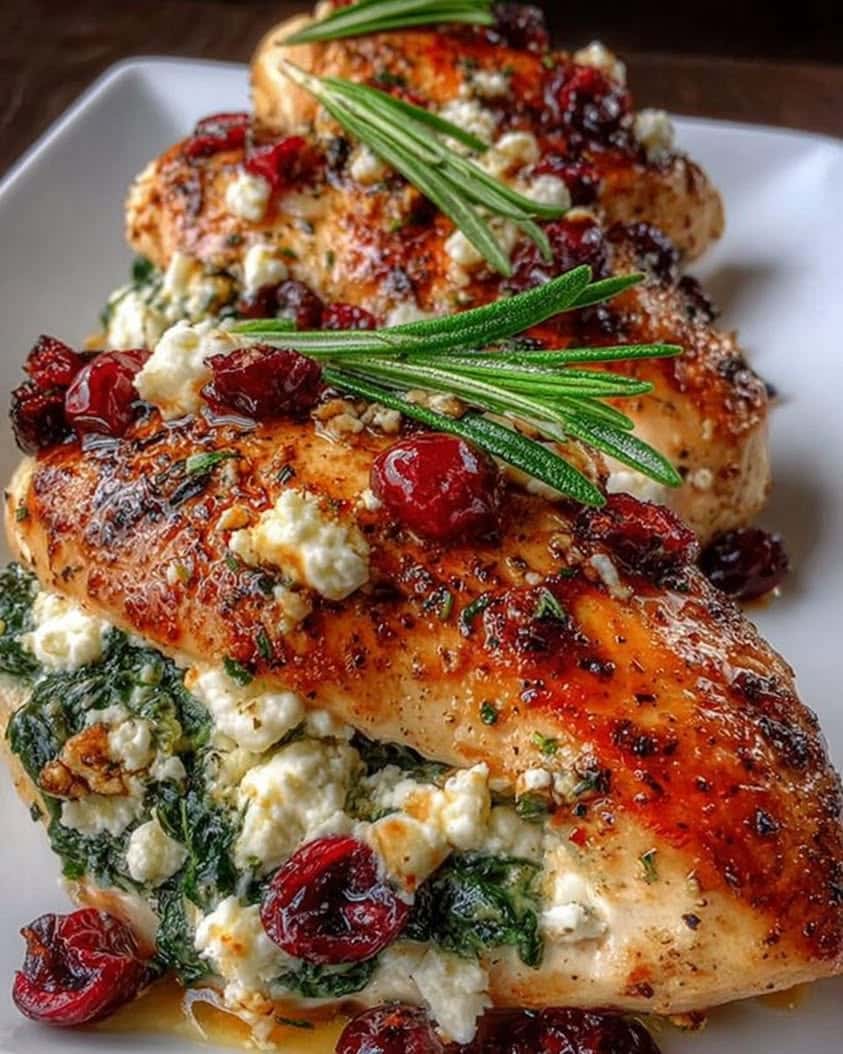
- Visual Appeal: The golden-brown chicken sits on the plate with a peek of green spinach and red cranberries showing through the slit. A sprinkle of fresh parsley or thyme on top brightens the presentation. The colors pop and make the dish look far more complicated than it actually is.
- Skill Level Needed: This recipe suits anyone who can handle a knife and a skillet. Butterflying chicken is straightforward once you see it done once. If you can fold a filling into a pocket and sear a piece of meat, you can master this dish.
- Special Equipment: You need a sharp chef’s knife, a cutting board, a mixing bowl, and an oven-safe skillet. Toothpicks or kitchen twine help hold the filling inside the chicken. A meat thermometer ensures perfectly cooked chicken every time.
Recipe Overview
- Difficulty Level: This recipe sits comfortably at easy to moderate. Butterflying chicken breasts requires a bit of knife skill, and searing them without losing the filling takes a gentle hand. However, the steps are simple and forgiving. Even if your chicken looks less than perfect going into the oven, it will taste wonderful coming out.
- Category: This dish works as a main course for dinner. It fits into the categories of weeknight meals, holiday entrées, and dinner party main dishes. You can also slice it cold for salads or sandwiches the next day.
- Cuisine: This recipe draws from American comfort food traditions with a Mediterranean influence. The goat cheese and spinach filling echoes Italian and Greek cooking, while the cranberries bring a distinctly North American touch. The combination reflects modern American home cooking, which freely blends global ingredients into new classics.
- Cost: The total cost for four servings runs approximately twelve to eighteen dollars, depending on where you shop. Chicken breasts are affordable, and goat cheese, though pricier than some cheeses, is used in modest amounts. Dried cranberries and frozen or fresh spinach keep costs low.
- Season: This dish shines in fall and winter when cranberries are in season and the flavors feel cozy. However, you can make it year-round because dried cranberries are available anytime. In spring and summer, pair it with lighter sides like a lemon vinaigrette salad.
- Occasion: Serve this Cranberry Spinach Stuffed Chicken with Goat Cheese for holiday dinners, anniversary meals, or casual family suppers. It works well for meal prep too. Because it reheats gently, it makes a great option for busy weeks.
Why You’ll Love This Recipe
First and foremost, the taste and texture of this Cranberry Spinach Stuffed Chicken with Goat Cheese will win you over. The combination of creamy goat cheese, sweet dried cranberries, and savory spinach creates layers of flavor that keep every bite interesting. The chicken itself stays moist thanks to the stuffing, which insulates the meat during roasting. Additionally, the searing step builds a golden crust that adds a satisfying chew. When you cut into the chicken, the filling spills out slightly, mingling with the pan juices. As a result, every forkful delivers a balance of tangy, sweet, and savory notes that feel intentional and refined.
Secondly, convenience sets this recipe apart from other stuffed chicken dishes. Many stuffed chicken recipes require pounding the meat thin, rolling it tightly, and babysitting it in the oven. This version simplifies the process. You butterfly the breasts, stuff them, and secure them with toothpicks. The oven does most of the work. Consequently, you can prepare the filling while the oven preheats, and the whole dish comes together in under an hour. For anyone juggling a busy schedule, this recipe offers a realistic path to a homemade dinner that does not taste rushed.
Thirdly, the nutritional advantages make this Cranberry Spinach Stuffed Chicken with Goat Cheese a smart choice for health-conscious eaters. Chicken breast is a lean protein source that supports muscle maintenance and keeps you full. Spinach adds fiber, vitamins A and C, and iron. Goat cheese, while rich, contains less lactose than cow’s milk cheese and offers calcium and protein. Dried cranberries provide antioxidants and natural energy. Therefore, this meal supports a balanced diet without sacrificing flavor or satisfaction.
Fourthly, the social and entertaining value of this dish cannot be overstated. When you serve Cranberry Spinach Stuffed Chicken with Goat Cheese to guests, they will assume you spent hours in the kitchen. The presentation looks elegant, and the flavors feel festive. Moreover, you can prepare the chicken ahead of time and bake it right before guests arrive. This lets you enjoy your own party instead of stressing over last-minute cooking. Whether it is a holiday dinner, a birthday celebration, or a casual get-together, this recipe rises to the occasion every time.
Finally, this recipe wins on cost-effectiveness and accessibility. You do not need specialty equipment or rare ingredients. Everything comes from a standard grocery store. The recipe scales easily for two people or a crowd. Additionally, leftovers taste great, which means you get two meals for the effort of one. For families watching their budget, this Cranberry Spinach Stuffed Chicken with Goat Cheese delivers value that stretches further than takeout or pre-made meals.
Historical Background and Cultural Significance
The origin of stuffed chicken recipes traces back centuries across many cultures. In Europe, cooks have stuffed poultry with bread, herbs, and cheese since medieval times. The technique served a practical purpose: stuffing stretched expensive meat further and added flavor to bland cuts. Italian cooks developed saltimbocca and involtini, while French chefs perfected ballotine and galantine. These traditions laid the groundwork for modern stuffed chicken breast recipes. Consequently, when you make this Cranberry Spinach Stuffed Chicken with Goat Cheese, you participate in a long culinary history of filling meat with complementary ingredients.
Goat cheese holds deep cultural importance in Mediterranean and Middle Eastern cuisine. Farmers in France, Spain, Greece, and Turkey have produced goat cheese for thousands of years. Unlike cow’s milk cheese, goat cheese was often the cheese of the common people because goats were easier to raise than cattle. In Provence, fresh chèvre became a staple. In Greece, feta, often made from goat milk, flavored countless dishes. Therefore, the goat cheese in this Cranberry Spinach Stuffed Chicken with Goat Cheese connects your dinner to ancient pastoral traditions that still thrive today.
Cranberries hold a special place in North American food culture. Indigenous peoples of the northeastern United States and Canada harvested wild cranberries for food, medicine, and dye long before European settlers arrived. They used cranberries in pemmican and for treating wounds. Later, settlers adopted the berry and integrated it into holiday meals, eventually creating the iconic cranberry sauce served at Thanksgiving. Consequently, dried cranberries in this recipe carry a story of survival, tradition, and celebration that spans generations.
Spinach originated in ancient Persia and traveled through India, China, and eventually Europe. By the Middle Ages, spinach had become a staple in Mediterranean cooking. Catherine de Medici reportedly loved spinach so much that she brought her own cooks from Florence to France, which is why dishes containing spinach are called “florentine.” The evolution of this Cranberry Spinach Stuffed Chicken with Goat Cheese reflects how ingredients from different continents can come together on one plate. Additionally, regional variations abound. In the American South, cooks might add pecans to the filling. In New England, maple syrup might replace some of the cranberry sweetness. On the West Coast, fresh goat cheese from local farms elevates the dish further.
Ingredient Deep Dive
Chicken Breasts: Chicken breasts serve as the canvas for this entire dish. Historically, poultry became a centerpiece of American dinners after World War II when commercial farming made chicken affordable for everyday families. Nutritionally, chicken breast offers a lean source of protein with minimal saturated fat. When selecting chicken, look for breasts that are similar in size so they cook evenly. Avoid meat with a grayish hue or a strong odor. Store chicken in the coldest part of your refrigerator and use it within two days of purchase. For substitutions, you can use boneless, skinless chicken thighs, though they require slightly longer cooking. Alternatively, turkey cutlets work well for a holiday twist on this Cranberry Spinach Stuffed Chicken with Goat Cheese.
Goat Cheese: Goat cheese, also called chèvre, brings a distinctive tang and creamy texture that defines this recipe. Cultures across the Mediterranean have made goat cheese for millennia because goats thrive in arid climates where cows struggle. Nutritionally, goat cheese provides calcium, protein, and healthy fats, and it contains less lactose than cow’s milk cheese, making it easier to digest for some people. When buying goat cheese, choose a log that feels soft but not crumbly, with a clean, milky aroma. Fresher goat cheese tastes milder, while aged versions develop a stronger bite. Store goat cheese wrapped in parchment paper inside an airtight container in the refrigerator for up to two weeks. If you need a substitute, cream cheese mixed with a squeeze of lemon juice comes closest, though feta also works if you crumble it finely.
Dried Cranberries: Dried cranberries add sweetness, chew, and a ruby-red color to the filling. Indigenous peoples of North America used cranberries for food and medicine long before Europeans arrived, and the berry became a Thanksgiving staple in the 19th century because of this Cranberry Spinach Stuffed Chicken with Goat Cheese recipe celebrates that heritage. Nutritionally, dried cranberries offer fiber, vitamin C, and antioxidants, though they often contain added sugar. When selecting dried cranberries, look for ones that are plump and soft rather than hard and shriveled. Check the label for added oils or excessive sugar. Store them in an airtight container in a cool, dark place for up to six months, or refrigerate them for longer shelf life. If you cannot find dried cranberries, dried cherries or raisins make acceptable substitutes, though the flavor profile changes.
Fresh Spinach: Spinach brings earthiness, color, and a wealth of nutrients to this Cranberry Spinach Stuffed Chicken with Goat Cheese. This leafy green originated in Persia and spread across Asia and Europe before landing in American kitchens. Nutritionally, spinach packs iron, calcium, vitamin K, and folate into very few calories. When choosing spinach, pick leaves that are vibrant green, crisp, and free of yellowing or slime. Baby spinach works best because it wilts quickly and has a milder flavor. Store spinach in a breathable bag in the refrigerator crisper drawer and use it within three to five days. For substitutions, kale or Swiss chard work well, though you should cook them slightly longer before stuffing.
Garlic and Shallots: Garlic and shallots form the aromatic backbone of the filling. Garlic has been cultivated for over five thousand years and appears in nearly every culinary tradition worldwide. Shallots offer a milder, sweeter onion flavor that complements the goat cheese without overpowering it. Nutritionally, both contain compounds that support heart health and immune function. Choose firm, heavy heads of garlic with tight skins and shallots that feel firm and dry. Store garlic and shallots in a cool, dark, well-ventilated spot away from potatoes, which release moisture that spoils them. If you lack shallots, use a small amount of red onion or the white part of a scallion.
Olive Oil and Butter: Olive oil and butter work together to sear the chicken and sauté the spinach. Olive oil provides a high smoke point and a fruity note, while butter adds richness and helps brown the chicken. Nutritionally, olive oil offers monounsaturated fats that support heart health, and butter provides vitamin A and flavor. Choose extra-virgin olive oil for the best taste and unsalted butter so you can control the seasoning. Store olive oil away from light and heat, and keep butter wrapped in the refrigerator. For a dairy-free option, substitute additional olive oil or a plant-based butter.
Fresh Herbs: Thyme and rosemary deepen the flavor of this Cranberry Spinach Stuffed Chicken with Goat Cheese. These herbs have grown wild in the Mediterranean for centuries and appear in countless European dishes. Nutritionally, herbs add antioxidants with virtually no calories. Select herbs with bright color and a strong aroma. Store them wrapped in a damp paper towel inside a plastic bag in the refrigerator. Dried herbs work in a pinch, but use about one-third the amount because their flavor is more concentrated. If you prefer, basil or oregano can substitute for a different but still delicious result.
Common Mistakes to Avoid
- Overstuffing the chicken: When you pack too much filling into each breast, the chicken cannot close properly, and the filling spills out during searing. Consequently, you lose the creamy interior that makes this Cranberry Spinach Stuffed Chicken with Goat Cheese so appealing. Use about two to three tablespoons of filling per breast and resist the urge to add more.
- Not drying the chicken: Moisture on the surface of the chicken prevents a good sear. Therefore, always pat the chicken dry with paper towels before seasoning and searing. This step takes seconds but makes a big difference in achieving that golden crust.
- Skipping the sear: Some cooks try to bake the stuffed chicken straight away, but searing first builds flavor and color. Moreover, searing helps seal the outside so the filling stays put. Do not skip this step. If you are short on time, sear the chicken in the morning and finish it in the oven at dinner.
- Using cold filling: Cold goat cheese filling does not spread evenly and can create hot spots during cooking. Let the filling sit at room temperature for ten minutes before stuffing. As a result, the filling distributes more smoothly and cooks more evenly.
- Overcooking the chicken: Chicken breast dries out quickly once it passes 165 degrees Fahrenheit. Therefore, use a meat thermometer and pull the chicken from the oven as soon as it reaches the target temperature. Let it rest for five minutes before slicing.
- Underseasoning the filling: Goat cheese and spinach need salt and pepper to wake up their flavors. Taste the filling before stuffing the chicken. If it tastes flat, add a pinch more salt, a squeeze of lemon, or a dash of red pepper flakes. Consequently, the final dish will taste balanced and complete.
- Forgetting to remove toothpicks: Toothpicks hold the chicken together during cooking, but they become a hazard on the plate. Therefore, count how many you insert and remove them all before serving. Alternatively, use kitchen twine and tie a knot you can easily spot.
- Crowding the pan: When you sear four chicken breasts in a pan that is too small, they steam instead of brown. Consequently, the chicken lacks color and texture. Work in batches or use a larger skillet. This Cranberry Spinach Stuffed Chicken with Goat Cheese deserves the extra space.
- Ignoring resting time: Slicing chicken immediately after it comes out of the oven causes the juices to run out and leaves the meat dry. Therefore, always rest the chicken for at least five minutes. During this time, the juices redistribute, and the meat becomes more tender.
- Using frozen spinach without draining: If you substitute frozen spinach for fresh, thaw it and squeeze out as much water as possible. Otherwise, the filling becomes watery and soggy, which undermines the texture of this Cranberry Spinach Stuffed Chicken with Goat Cheese.
Essential Techniques
Butterflying Chicken Breasts: Butterflying, also called spatchcocking when applied to whole birds, involves slicing a chicken breast horizontally without cutting all the way through. This technique creates a pocket for the filling (source). To master it, place your hand flat on top of the chicken breast and use a sharp knife to slice horizontally from the thickest side. Stop about half an inch from the opposite edge. Open the breast like a book. A common pitfall is cutting too far and creating two separate pieces. Visual cues for success include a breast that opens flat and evenly with a visible hinge. If you accidentally cut through, you can still proceed, but the filling may escape more easily. A little practice makes this technique second nature.
Searing Stuffed Chicken: Searing creates a flavorful crust through the Maillard reaction, which browns proteins and sugars. To master searing, heat your skillet over medium-high heat until a drop of water sizzles immediately. Add oil and butter, then place the stuffed chicken in the pan without moving it. Let it sear undisturbed for three to four minutes. A common pitfall is moving the chicken too soon, which prevents browning. Visual cues for success include a deep golden-brown surface and a slight release from the pan when you gently nudge it. Sear the second side for two to three minutes, then transfer the skillet to the oven to finish cooking.
Sautéing Spinach: Sautéing spinach quickly wilts the leaves while preserving their color and nutrients. To master this technique, heat olive oil in a skillet over medium heat, add garlic and shallots, and cook until fragrant. Add the spinach in batches and toss with tongs until wilted. A common pitfall is overcooking, which turns spinach mushy and dark. Visual cues for success include bright green leaves that have collapsed but still hold some structure. Remove the spinach from heat and let it cool slightly before mixing it with the goat cheese. This step ensures the filling tastes fresh and vibrant in your Cranberry Spinach Stuffed Chicken with Goat Cheese.
Testing Doneness with a Thermometer: A meat thermometer takes the guesswork out of cooking chicken. To master this technique, insert the probe into the thickest part of the chicken without touching bone or filling. Wait for the reading to stabilize. A common pitfall is relying on visual cues alone, which can lead to overcooking. Visual cues for success include a reading of 165 degrees Fahrenheit and juices that run clear when the chicken rests. If you do not own a thermometer, cut into the thickest part and check that the meat is white throughout with no pink. However, a thermometer remains the most reliable tool for this Cranberry Spinach Stuffed Chicken with Goat Cheese.
Pro Tips for Perfect Cranberry Spinach Stuffed Chicken with Goat Cheese
- Let the goat cheese come to room temperature before mixing the filling. As a result, it blends more easily with the spinach and cranberries, and the filling spreads without tearing the chicken.
- Chill the stuffed chicken for fifteen minutes before searing. This brief rest helps the filling set, which means less leakage during cooking. Consequently, your Cranberry Spinach Stuffed Chicken with Goat Cheese stays neat and intact.
- Use a cast-iron skillet for the best sear. Cast iron retains heat beautifully and transitions from stovetop to oven without issue. If you do not have cast iron, any oven-safe skillet works fine.
- Season the chicken on both sides and inside the pocket. This ensures every bite carries flavor. Do not rely on the filling alone to season the meat.
- Add a splash of white wine or chicken broth to the pan before transferring it to the oven. The liquid creates steam that keeps the chicken moist and forms a simple pan sauce you can spoon over the finished dish.
- Let the chicken rest before slicing. Five minutes makes a noticeable difference in juiciness. During this time, you can deglaze the pan and make a quick sauce.
- Toast the dried cranberries in a dry skillet for one minute before adding them to the filling. This step softens them slightly and intensifies their sweetness, which elevates the overall flavor of the Cranberry Spinach Stuffed Chicken with Goat Cheese.
- Double the filling recipe and freeze half for later. Then, next time you make this dish, you only need to butterfly and stuff the chicken, cutting the prep time in half.
Variations and Adaptations
Regional Variations: In the American South, cooks often add chopped pecans or walnuts to the filling for crunch and a deeper, nuttier flavor. Meanwhile, in New England, a drizzle of maple syrup in the filling complements the cranberries and echoes local traditions. On the West Coast, chefs might use fresh goat cheese from a local creamery and add a pinch of smoked paprika for warmth. Additionally, Italian-inspired versions swap the cranberries for sun-dried tomatoes and use ricotta instead of goat cheese. These regional twists show how this Cranberry Spinach Stuffed Chicken with Goat Cheese adapts to local tastes while keeping its core identity.
Seasonal Adaptations: During summer, replace the dried cranberries with fresh cherries or chopped peaches for a brighter, juicier filling. In spring, add chopped asparagus tips or peas to the spinach mixture. When fall arrives, roasted butternut squash cubes or diced apples bring a cozy, autumnal quality to the dish. Furthermore, winter calls for the original recipe with its warm, comforting flavors and festive colors. Therefore, you can enjoy this Cranberry Spinach Stuffed Chicken with Goat Cheese all year long by simply adjusting the produce you use.
Dietary Modifications: For a dairy-free version, substitute the goat cheese with a plant-based cream cheese or cashew cheese. If you follow a keto or low-carb diet, this recipe already fits well because it contains minimal carbohydrates. For a paleo approach, use almond flour as a thickener in the filling and skip any breadcrumbs. Additionally, if you avoid nightshades, simply omit any red pepper flakes. These modifications allow more people to enjoy this Cranberry Spinach Stuffed Chicken with Goat Cheese without compromising flavor.
Flavor Variations: Add a teaspoon of Dijon mustard to the filling for a sharp, tangy kick. Alternatively, mix in a tablespoon of honey or balsamic glaze for extra sweetness and depth. If you enjoy heat, sprinkle red pepper flakes or a minced jalapeño into the goat cheese mixture. For a smoky note, add a pinch of smoked paprika or a dash of chipotle powder. Each variation changes the personality of the dish while keeping the Cranberry Spinach Stuffed Chicken with Goat Cheese formula intact.
Texture Modifications: If you prefer a crunchier filling, add chopped toasted almonds, pecans, or walnuts. For a smoother texture, blend the spinach and goat cheese together before stuffing. Additionally, you can top the chicken with panko breadcrumbs mixed with melted butter and Parmesan for a crispy crust. These adjustments let you tailor the mouthfeel to your preferences without altering the core recipe.
Presentation Alternatives: Instead of serving whole breasts, slice the stuffed chicken into medallions and fan them over a bed of wild rice or polenta. You can also stuff smaller chicken cutlets and serve them as appetizers on toothpicks. For a family-style presentation, arrange the sliced chicken on a platter and spoon the pan sauce over the top. Consequently, this Cranberry Spinach Stuffed Chicken with Goat Cheese fits any table setting, from casual to elegant.
Serving and Presentation Guide
Plating Techniques: Place a scoop of wild rice, mashed potatoes, or creamy polenta in the center of each plate. Lean the stuffed chicken breast against the starch at an angle so the filling peeks out. Spoon a ribbon of pan sauce around the plate rather than over the chicken to keep the crust crisp. Add a small pile of sautéed greens or roasted vegetables on the side. Therefore, the plate looks balanced and intentional, and the Cranberry Spinach Stuffed Chicken with Goat Cheese becomes the clear star.
Garnishing Ideas: Sprinkle fresh chopped parsley, thyme, or chives over the chicken just before serving. A few extra dried cranberries scattered on the plate add color and echo the filling. For an elegant touch, add a small dollop of goat cheese mixed with honey on the side. Additionally, a sprinkle of toasted sliced almonds or crushed pistachios adds texture and visual interest. These small touches elevate the presentation of your Cranberry Spinach Stuffed Chicken with Goat Cheese without adding much effort.
Traditional Accompaniments: Classic pairings include wild rice pilaf, roasted Brussels sprouts, green beans almondine, or garlic mashed potatoes. A simple wedge salad with blue cheese dressing offers a cool contrast to the warm chicken. Furthermore, crusty bread helps soak up the pan juices. These familiar sides make the meal feel comforting and complete.
Modern Serving Suggestions: For a lighter meal, serve the chicken over a bed of quinoa, farro, or arugula tossed with lemon vinaigrette. You can also slice the chicken and serve it on a charcuterie board with crackers and fruit. Alternatively, nestle the chicken into a bowl of creamy risotto or cauliflower purée. These modern approaches give this Cranberry Spinach Stuffed Chicken with Goat Cheese a fresh, contemporary feel.
Temperature Considerations: Serve the chicken hot from the oven for the best flavor and texture. If you make it ahead, reheat gently in a 325-degree oven until warmed through. Avoid microwaving, which toughens the chicken and dries out the filling. Let the chicken rest for a few minutes after reheating so the juices redistribute. Consequently, the dish tastes almost as good as when it first came out of the oven.
Portion Control Tips: One stuffed chicken breast per person makes a generous main course. If you serve heavy sides, consider halving the breasts and serving them as medallions. For buffets, slice each breast into three or four pieces and arrange them on a platter. Therefore, guests can take as much or as little as they like, and your Cranberry Spinach Stuffed Chicken with Goat Cheese stretches further.
Wine and Beverage Pairing
Wine Pairings: A crisp Sauvignon Blanc pairs beautifully with the tangy goat cheese and earthy spinach. Its bright acidity cuts through the richness of the filling and cleanses the palate. Alternatively, a light-bodied Pinot Noir offers red fruit notes that complement the cranberries without overpowering the chicken. For a festive option, a dry rosé or a sparkling wine adds elegance to the meal. Therefore, choose a wine that balances acidity and fruit to harmonize with this Cranberry Spinach Stuffed Chicken with Goat Cheese.
Non-Alcoholic Alternatives: Sparkling water with a splash of cranberry juice and a squeeze of lime makes a refreshing pairing. Alternatively, an iced hibiscus tea offers tartness that mirrors the cranberries. For a warm option, serve a mug of apple cider or a ginger ale with a twist of orange. These drinks provide complexity and brightness without alcohol.
Coffee and Tea Pairings: If you enjoy coffee with dinner, a light roast with citrus notes complements the dish. For tea lovers, a cup of green tea with jasmine or a white peony tea offers a delicate contrast. Additionally, a chamomile tea soothes the palate after a rich meal. These pairings work especially well if you serve this Cranberry Spinach Stuffed Chicken with Goat Cheese for a cozy evening meal.
Temperature Considerations: Serve white wine and sparkling beverages well chilled, around 45 to 50 degrees Fahrenheit. Red wine tastes best slightly below room temperature, around 60 to 65 degrees. For non-alcoholic options, serve cold drinks over ice and warm drinks steaming hot. Consequently, the beverage temperature enhances the overall dining experience.
Serving Suggestions: Pour wine into stemmed glasses to concentrate the aromas. For non-alcoholic options, use pretty glassware with fresh fruit garnishes. Offer guests a choice so everyone feels included. Therefore, the beverage service becomes part of the hospitality, and this Cranberry Spinach Stuffed Chicken with Goat Cheese shines even brighter.
Storage and Shelf Life
Storage Methods: Allow leftover Cranberry Spinach Stuffed Chicken with Goat Cheese to cool to room temperature before storing. Place the chicken in an airtight container or wrap it tightly in aluminum foil. You can also slice the chicken and store it in individual portions for easy lunches. Moreover, keep the pan sauce separate if you have any, and store it in a small jar.
Temperature Requirements: Store leftovers in the refrigerator at or below 40 degrees Fahrenheit. Do not leave the chicken at room temperature for more than two hours, as bacteria multiply quickly in the danger zone. If you plan to freeze the chicken, wrap it tightly and freeze at zero degrees Fahrenheit. Therefore, proper temperature control keeps your Cranberry Spinach Stuffed Chicken with Goat Cheese safe to eat.
Container Recommendations: Use glass containers with locking lids for the best preservation. Glass does not absorb odors or stain, and it reheats evenly. If you prefer plastic, choose BPA-free containers designed for food storage. For freezing, wrap the chicken in plastic wrap first, then place it in a freezer bag. This double layer prevents freezer burn.
Signs of Spoilage: Discard leftovers if they develop a sour smell, a slimy texture, or a grayish color. Mold on the chicken or filling is another clear sign to throw it out. Additionally, if the chicken has been in the refrigerator for more than four days, err on the side of caution and discard it. Consequently, you protect yourself and your family from foodborne illness.
Reheating Instructions: Reheat leftovers in a 325-degree oven for ten to fifteen minutes, or until the internal temperature reaches 165 degrees Fahrenheit. Cover the chicken with foil to prevent it from drying out. If you use a microwave, place the chicken on a microwave-safe plate, cover it with a damp paper towel, and heat in thirty-second intervals. Therefore, your Cranberry Spinach Stuffed Chicken with Goat Cheese retains its moisture and flavor.
Freezing Guidelines: You can freeze this dish for up to three months. Wrap each stuffed chicken breast individually in plastic wrap, then place them in a freezer bag. Label the bag with the date so you know when to use it. When ready to eat, thaw the chicken overnight in the refrigerator and reheat in the oven. Avoid thawing at room temperature, which encourages bacterial growth.
Make Ahead Strategies
Prep Timeline: You can prepare the filling up to two days in advance and store it in the refrigerator. Butterfly the chicken breasts the night before and keep them covered in the fridge. On the day you plan to serve, stuff the chicken, sear it, and bake it. Consequently, the active cooking time on serving day drops to about thirty minutes.
Storage Between Steps: After stuffing the chicken, cover it and refrigerate for up to twenty-four hours before cooking. If you sear the chicken ahead of time, let it cool, then refrigerate it on a plate covered with foil. When you are ready to bake, transfer the chicken to an oven-safe skillet and finish it in the oven. Therefore, this Cranberry Spinach Stuffed Chicken with Goat Cheese fits even the busiest schedule.
Quality Impact Assessment: Make-ahead preparation slightly softens the crust, but the flavor remains excellent. The filling actually tastes better after a day because the flavors meld. However, if you sear the chicken too far in advance, the crust loses its crispness. Therefore, for the best results, stuff the chicken ahead but sear and bake it fresh.
Assembly Tips: When assembling ahead, use toothpicks that are easy to spot, such as colored ones. Place the stuffed chicken on a parchment-lined baking sheet for easy cleanup. If you stack the chicken, place parchment paper between layers to prevent sticking. Consequently, assembly becomes quick and stress-free.
Reheating Guidelines: Reheat the fully cooked chicken in a 325-degree oven until it reaches 165 degrees internally. Cover it with foil to trap moisture. If the chicken seems dry, add a splash of chicken broth to the pan. Therefore, the reheated Cranberry Spinach Stuffed Chicken with Goat Cheese tastes nearly as good as fresh.
Fresh Element Additions: Before serving reheated chicken, add a fresh garnish like chopped herbs, a squeeze of lemon, or a handful of fresh spinach. These small additions brighten the flavor and make the dish feel newly made. Additionally, a drizzle of olive oil or balsamic glaze adds a fresh finish.
Scaling Instructions
Halving the Recipe: To serve two instead of four, use two chicken breasts and halve the filling ingredients. Cook time remains the same because the thickness of the chicken does not change. However, use a smaller skillet to avoid crowding. Consequently, you get a perfectly portioned meal for two with minimal leftovers.
Doubling or Tripling: