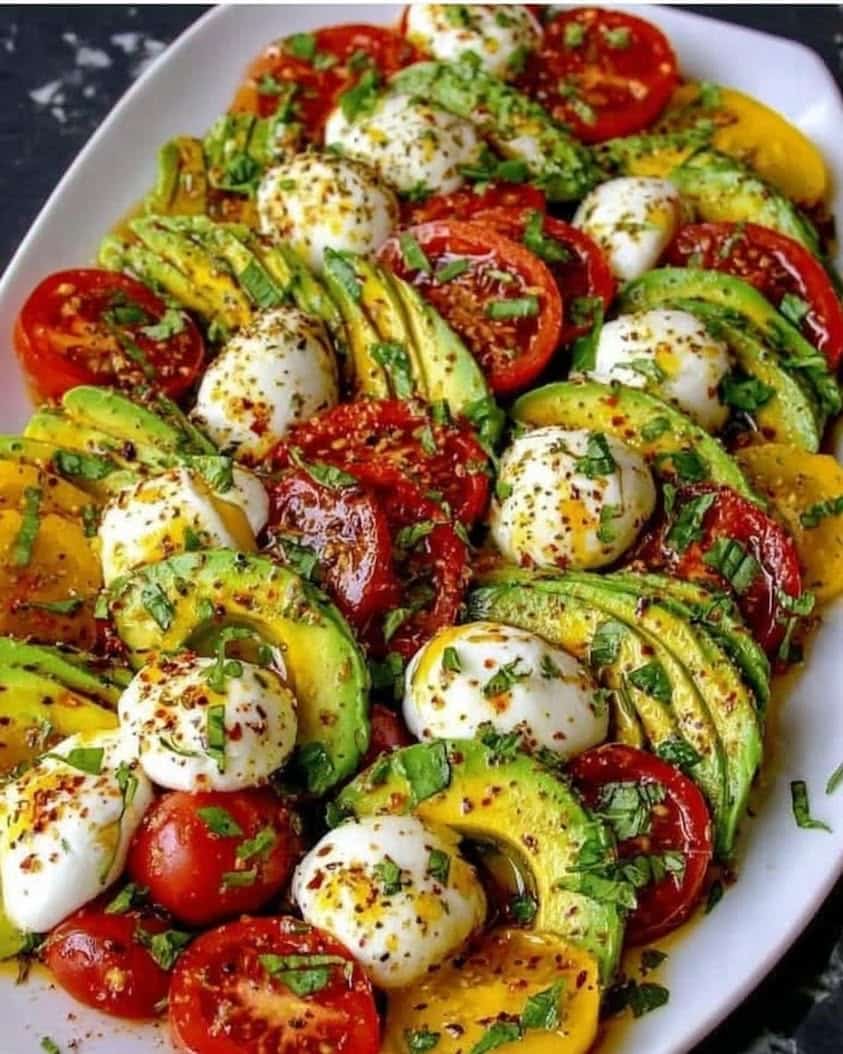
Cheesy Avocado Caprese Platter: The Ultimate Fresh Party Appetizer
If you need a show-stopping appetizer that comes together in minutes, this Cheesy Avocado Caprese Platter delivers everything you want on a single board. Imagine ripe tomatoes, creamy mozzarella, and buttery avocado arranged beautifully, then finished with a shower of fresh basil and a drizzle of balsamic glaze. The colors alone make people reach for their phones before they reach for a plate. This Cheesy Avocado Caprese Platter works because it celebrates fresh ingredients without demanding hours in the kitchen.
The flavors balance beautifully. Sweet tomatoes contrast with salty cheese, while avocado adds a rich, mild creaminess that ties everything together. A sprinkle of flaky sea salt and a crack of black pepper wake up every bite. Since you assemble rather than cook, the recipe stays stress-free even when you host a crowd. In fact, this Cheesy Avocado Caprese Platter looks impressive enough that guests assume you spent far more effort than you did. That quiet confidence makes it a favorite for both weeknight gatherings and holiday parties.
Beyond looks, the platter fits nearly any menu. Pair it with grilled chicken, pasta, or crusty bread and you have a complete spread. The ingredients stay affordable and easy to find at any grocery store. Because you serve it cold, the platter also travels well to potlucks and picnics. Give this Cheesy Avocado Caprese Platter fifteen minutes of your time, and you gain a reliable recipe you will return to all year long.
Quick Recipe Highlights
- Flavor Profile: Bright tomato sweetness meets milky mozzarella and peppery basil. Avocado softens the acidity, and balsamic glaze adds a tangy finish. Each bite tastes fresh and balanced.
- Texture: Creamy mozzarella and avocado contrast with juicy tomatoes. Flaky salt adds a gentle crunch. The combination feels satisfying without any heaviness.
- Aroma: Fresh basil carries the strongest note, followed by ripe tomato. A hint of garlic from the glaze rounds out the scent. The platter smells like a summer garden.
- Visual Appeal: Red, white, and green stack into a classic Italian palette. Avocado adds soft green tones and richness. The glossy glaze and dark pepper specks create a polished finish.
- Skill Level Needed: You need basic knife skills and a cutting board. No cooking techniques or special training apply here. Anyone can assemble this platter with confidence.
- Special Equipment: A large platter or wooden board works best. A sharp chef’s knife and a small whisk cover the rest. You likely own everything already.
Recipe Overview
- Difficulty Level: This recipe earns its easy rating because you assemble rather than cook. You only slice, layer, and drizzle. Timing stays flexible since nothing can burn or overcook. Even first-time hosts can serve it proudly.
- Category: It works as an appetizer, a side dish, or a light lunch. Serve it before the main course or alongside grilled proteins. Many people build a meal from the platter alone with bread on the side.
- Cuisine: The recipe draws on Italian caprese tradition, which pairs tomato, mozzarella, and basil. California cuisine influences the addition of avocado and the shared-platter format. The result blends old-world flavor with modern casual dining style.
- Cost: Fresh mozzarella costs about four to six dollars, and tomatoes run two to four dollars. Avocados add roughly three dollars, while basil and balsamic staple items cost little. A full platter feeds six for about fifteen dollars.
- Season: Summer is peak season because tomatoes and basil taste best. Late-summer farmers markets offer the sweetest fruit. The recipe still works in cooler months with greenhouse tomatoes and store-bought basil.
- Occasion: Serve it at cookouts, bridal showers, holiday gatherings, or game days. Its make-ahead nature suits busy hosts. The platter also shines at casual family dinners when you want something light.
Why You’ll Love This Recipe
Taste and texture drive this platter’s popularity. Ripe tomatoes bring natural sweetness and acidity, and fresh mozzarella adds a milky richness that softens the bite. Avocado contributes a buttery quality that makes each slice feel indulgent. Basil adds a peppery lift, and balsamic glaze delivers tangy depth. Because you season at the end with flaky salt, every element pops without overpowering the others. Few appetizers deliver this much flavor with so little effort.
Convenience makes this recipe a weeknight hero. You need fifteen minutes, one knife, and a board. There are no ovens to preheat and no pans to scrub. You can assemble the platter while chatting with guests. Cleanup takes minutes because everything happens on one surface. For busy hosts, that simplicity matters as much as the taste. This Cheesy Avocado Caprese Platter removes stress from entertaining and replaces it with genuine ease.
Nutritional advantages give the platter broad appeal. Tomatoes supply vitamin C and lycopene, and avocado offers heart-healthy fats. Fresh mozzarella contributes protein and calcium, while basil adds antioxidants. Olive oil and balsamic bring flavor without heavy sauces. Anyone watching their intake appreciates a dish that feels rich yet stays light. The platter suits low-carb, gluten-free, and vegetarian guests with minimal adjustments.
Social value sets this recipe apart. A shared platter invites people to gather and graze. Guests build their own bites and linger over conversation. The format feels generous and communal. Hosts love that the dish looks beautiful at the center of the table. Since everyone serves themselves, you never play waiter. That relaxed energy keeps parties moving and guests comfortable.
Cost-effectiveness rounds out the list of benefits. The ingredients stay affordable and widely available. You avoid expensive specialty items. A single platter feeds six people generously for the price of one restaurant appetizer. When you scale for bigger crowds, the per-person cost drops further. Hosting on a budget becomes possible without anyone noticing. This Cheesy Avocado Caprese Platter proves that great food does not need a big price tag.
Historical Background and Cultural Significance
Caprese salad traces its roots to the island of Capri in Italy. Legend ties the dish to the Italian flag, with red tomatoes, white mozzarella, and green basil. The salad gained popularity in the twentieth century as tourism grew on the Amalfi Coast. Its simplicity made it a natural fit for warm-weather dining. Over time, caprese became a symbol of fresh Mediterranean cooking around the world.
Cultural importance centers on the celebration of seasonal ingredients. Italians treat caprese as a summer dish because tomatoes peak in the heat. The recipe respects the quality of each component. Chefs and home cooks alike use it to showcase local produce. In the United States, caprese evolved into a staple of Italian-American menus. You find it in sandwiches, skewers, and platters because the flavor combination never fails.
The evolution of this recipe reflects modern entertaining trends. Shared boards and grazing platters became mainstream in the past decade. Home cooks wanted dishes that looked styled but required little technique. Adding avocado brought a California twist that resonated with health-conscious diners. The cheesy element, often a drizzle of burrata or torn mozzarella, deepened the richness. The result turned a classic salad into a party centerpiece.
Regional variations show how far the idea has traveled. In California, cooks add avocado and citrus. In the Midwest, people sometimes include pepperoni or prosciutto. Southern hosts might fold in peaches for extra sweetness. Across all versions, the core stays the same: fresh ingredients, simple assembly, and visual beauty. The Cheesy Avocado Caprese Platter sits comfortably within this proud lineage while speaking to modern American tastes.
Ingredient Deep Dive
Fresh mozzarella carries deep cultural roots in southern Italy. Cheesemakers have crafted mozzarella for centuries using fresh milk and traditional stretching methods. The cheese appears in countless Italian dishes and symbolizes artisan dairy. Nutritionally, mozzarella provides protein, calcium, and some vitamin B12. For selection, choose a ball packed in water or one labeled fresh, because low-moisture blocks lack the right texture. Store it in its liquid in the refrigerator and use within a few days. If dairy is not an option, use a high-quality plant-based mozzarella or unsalted firm tofu that you briefly marinate.
Avocado originated in Mexico and Central America, where people cultivated it for thousands of years. It became a modern superfood thanks to its creamy texture and healthy fats. The fruit delivers potassium, fiber, and monounsaturated fat that supports heart health. Pick avocados that yield slightly to gentle pressure and avoid soft spots. Ripen firm ones at room temperature for a day or two. Once cut, press plastic wrap against the surface and refrigerate. If you need a substitute, try mashed white beans or whipped ricotta for a similar creamy effect.
Tomatoes hold a special place in world cuisine after spreading from the Americas to Europe. Italian kitchens embraced them fully by the eighteenth century. They provide vitamin C, potassium, and lycopene, an antioxidant linked to heart health. Choose tomatoes that feel heavy and smell sweet at the stem. Skip any with soft spots or cracks. Store them at room temperature away from sunlight, never in the fridge, to protect flavor. When tomatoes are out of season, use cherry tomatoes, which taste reliable year-round.
Fresh basil carries cultural weight across Mediterranean and Asian cooking. It has symbolized hospitality and celebration for centuries. The herb supplies vitamins A and K along with aromatic oils that aid digestion. Look for bright, unwilted leaves with no dark spots. Keep stems in a glass of water at room temperature or wrap leaves in damp paper towels and refrigerate. If basil is unavailable, substitute arugula or baby spinach for a similar green bite.
Balsamic glaze brings sweetness and tang to the platter. The vinegar tradition dates back to northern Italy, where families aged balsamic for decades. A glaze concentrates those flavors into a syrupy drizzle. It adds a touch of sugar but also provides antioxidants. Buy a glaze with a short, clean ingredient list, or simmer balsamic vinegar and honey until reduced. Store the glaze in a cool cupboard. If you prefer, substitute honey, pomegranate molasses, or a reduced red wine vinegar.
Extra-virgin olive oil completes the platter. Olive oil production shaped Mediterranean culture long before modern times. The fat supports heart health and helps the body absorb fat-soluble vitamins. Choose a fresh-tasting oil bottled within the last year. Store it in a dark bottle away from heat. When in doubt, a mild oil pairs better with cheese than a bitter one. For a lighter option, use a good-quality avocado oil instead.
Common Mistakes to Avoid
- Using cold mozzarella straight from the fridge. Cold cheese loses its creaminess and tastes flat. Let it sit at room temperature for ten minutes before slicing. This small step transforms the texture.
- Slicing tomatoes too early. Cut tomatoes right before serving so they do not release water and make the platter soggy. You can slice mozzarella and drizzle it while keeping the tomatoes intact. This preserves freshness.
- Picking underripe avocados. Hard avocados taste bitter and lack creaminess. Buy them a day ahead and let them ripen at room temperature. A gentle squeeze should yield slightly.
- Skipping salt at the end. Flaky sea salt wakes up every ingredient. Without it, the platter tastes bland even with ripe produce. Season just before serving so nothing turns watery.
- Overdressing with too much balsamic glaze. A heavy hand drowns the fresh flavors and makes the platter look messy. Drizzle from ten inches above the board for thin, even lines. Guests can add more if they like.
- Using dried basil instead of fresh. Dried basil tastes dusty and lacks the peppery brightness. Fresh basil is essential here. If none is available, substitute fresh arugula rather than dried herbs.
- Assembling on a flat plate with no edges if the platter sits out. Juices will run off the plate onto the table. Choose a board with a subtle rim. Cleanup becomes much easier.
- Waiting too long to serve. Avocado browns and tomatoes soften after about an hour. Serve within thirty minutes of assembly for the best look. Keep components separate until the last moment.
- Ignoring olive oil quality. Bitter or stale oil ruins the delicate balance. Taste your oil before using it. Fresh, fruity oil complements the creamy cheese and sweet glaze.
- Crowding the platter. Overlap creates shadow and hides the colors. Leave small gaps so the eye can separate each ingredient. Crowding also causes handling challenges when guests serve themselves.
Essential Techniques
Slicing mozzarella correctly matters for both look and texture. A dull knife tears the cheese and smashes the layers. Use a sharp knife and slice at a steady angle, or cut the ball in half first and then into slices. Wipe the blade between cuts to keep slices clean. Creamy cheese should slide rather than smear. Master this step and every other element will sit cleanly on the platter.
Salting tomatoes just before serving is a classic technique. Salt draws out flavor and moisture together. Add it too early and the tomatoes release water and pool. Add it at the last minute and the seasoning brightens the fruit without runoff. Use flaky sea salt so it dissolves evenly across the surface. This timing rule protects both texture and the platter’s appearance.
Drizzling balsamic glaze from height gives elegant results. A steady stream from ten inches creates thin, even lines. Close to the surface, the glaze pours in thick clumps. Practice the motion over a smaller board first. Then move up to the full platter and work quickly so lines stay fresh. The technique takes seconds and lifts the platter’s visual quality.
Cutting avocado safely is another core skill. Cut lengthwise around the pit, twist the halves apart, and remove the pit with a spoon. Score the flesh in a grid and scoop with a large spoon. Alternatively, peel and slice on the cutting board. Handle slices gently because they bruise quickly. Practicing this method produces clean fans that stack easily on the platter.
Arranging ingredients with color contrast guides the eye. Group tomato slices near mozzarella and let avocado fan in another section. Scatter basil leaves rather than stacking them. Leave small gaps to separate colors. Step back to check the overall design before adding the glaze. A balanced layout makes this Cheesy Avocado Caprese Platter look professionally styled.
Pro Tips for Perfect Cheesy Avocado Caprese Platter
Choose tomatoes of a similar size so slices sit evenly. Uniform slices make the platter look intentional rather than chaotic. Mixing sizes can add interest, but keep each section consistent. Larger tomatoes work best for the outer edge of the board.
Pat mozzarella dry before slicing. Surface moisture dilutes the olive oil and glaze. A paper towel pass removes excess liquid in seconds. Dry cheese also clings to herbs more readily.
Give avocado a light brush of olive oil after cutting. The oil slows oxidation and adds shine. Do not overdo it because too much oil makes slices slippery. Use a pastry brush for even coating.
Toast small pieces of bread for serving. Guests need something sturdy to carry the layers. Toasted baguette slices or pita wedges work well. Keep them on the side so the platter stays tidy.
Warm the balsamic glaze if it has thickened in storage. A short microwave burst or a spoonful of warm water loosens it. Warm glaze drizzles more evenly. Let it cool slightly before using so it does not wilt the basil.
Add a few grinds of black pepper at the end. Fresh pepper sharpens the cheese and adds depth. Grind over the platter from a height for even coverage. Skip preground pepper, which tastes flat.
Serve the platter on a board with a rim for juice runoff. Wood or marble both work beautifully. A rim also helps when moving the platter. Place a small stack of napkins or plates nearby.
Keep a spare avocado half in reserve. Guests often take generous portions, and the platter can look sparse. Tuck a fresh half into the gap and the board looks new again. This small trick saves your presentation mid-party.
Variations and Adaptations
Regional variations allow your platter to reflect local tastes. In California, cooks add citrus segments and toasted pepitas for crunch. In the South, sliced peaches bring extra sweetness. Italian-American hosts sometimes include prosciutto or salami for a heartier spread. Try one twist at a time so the board still reads as caprese. Each region proves the recipe adapts without losing its identity.
Seasonal adaptations keep this Cheesy Avocado Caprese Platter relevant year-round. Summer calls for heirloom tomatoes and garden basil. In spring, use cherry tomatoes and fresh mint. Autumn hosts can add roasted grapes for a sweet contrast. Winter months work well with roasted cherry tomatoes and shaved parmesan. Each season offers a fresh angle on the same concept.
Dietary modifications suit many guests with small changes. Use vegan mozzarella for dairy-free and plant-based diets. For a keto version, skip the bread and lean on extra avocado and olive oil. Paleo diners appreciate the recipe as long as cheese stays out; substitute a nut-based cheese. Gluten-free guests need no changes since the platter contains no grains. Always tell guests about ingredients so they can choose safely.
Flavor variations add personality without extra work. Brushed honey over the glaze creates a sweet-savory bite. Crushed red pepper flakes bring gentle heat. A squeeze of lemon juice lightens the whole platter. Try basil pesto thinned with olive oil for an alternative drizzle. Each variation takes seconds and changes the mood of the board.
Texture modifications meet different preferences. Add toasted pine nuts or crushed pistachios for crunch. Torn bread croutons absorb juices and soften over time. A sprinkle of freshly cracked coriander adds subtle texture. Keep additions small so the platter stays clean and readable.
Presentation alternatives let you fit any gathering. Serve components in small bowls for a build-your-own station. Skewers turn the platter into grab-and-go bites. A large Print
Cheesy Avocado Caprese Platter
- Total Time: 45 minutes
- Yield: 4
Description
A fresh and creamy twist on the classic Caprese salad, featuring ripe avocados, mozzarella, and juicy tomatoes, all drizzled with a balsamic glaze and sprinkled with basil.
Ingredients
- 2 ripe avocados, sliced
- 8 oz fresh mozzarella balls (bocconcini), halved
- 3 large tomatoes, sliced
- 1/4 cup fresh basil leaves
- 2 tbsp extra virgin olive oil
- 2 tbsp balsamic glaze
- Salt and pepper to taste
Instructions
- On a large platter, alternate slices of avocado, mozzarella, and tomato.
- Tuck fresh basil leaves between the slices.
- Drizzle with olive oil and balsamic glaze.
- Season with salt and pepper to taste.
- Serve immediately.
Notes
You can customize the seasonings to taste.
- Prep Time: 15 minutes
- Cook Time: 30 minutes
- Method: Main
- Cuisine: American