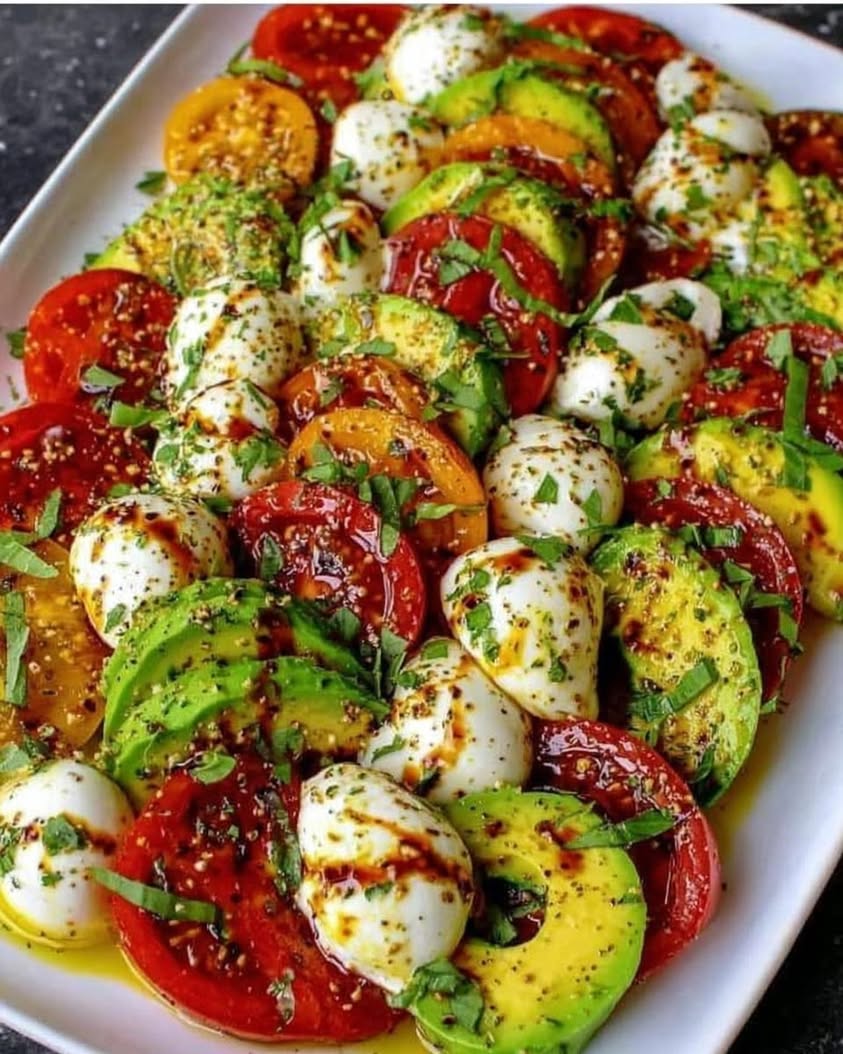
The Ultimate Cheesy Avocado Caprese Platter Recipe for Summer Gatherings
The Ultimate Cheesy Avocado Caprese Platter Recipe for Summer Gatherings
There is something magical about a platter that requires no cooking yet delivers a symphony of flavors. The Ultimate Cheesy Avocado Caprese Platter Recipe is exactly that kind of dish. It combines the richness of ripe avocados with the creaminess of fresh mozzarella and the sweetness of vine-ripened tomatoes. Every bite offers a burst of summer that feels both indulgent and refreshing. Furthermore, this recipe brings together textures that dance on your tongue, from the silky smoothness of avocado to the firm bite of cheese. This Cheesy Avocado Caprese Platter Recipe is designed for those who want maximum flavor with minimal effort.
When you build this platter, the goal is to create a visual feast as much as a culinary one. The vibrant reds of the tomatoes contrast beautifully with the deep green of fresh basil and the pale green of sliced avocado. A drizzle of high-quality balsamic glaze adds a touch of sweetness and a dark, glossy finish. The aroma of fresh basil mingles with the peppery notes of extra virgin olive oil, creating an inviting scent that draws everyone to the table. Because this is a no-cook recipe, it is perfect for hot summer days when turning on the oven feels impossible. This Cheesy Avocado Caprese Platter Recipe is your ticket to effortless entertaining.
The beauty of this platter lies in its simplicity. You do not need any special skills or fancy equipment. All you need is a sharp knife, a beautiful serving board, and the freshest ingredients you can find. The combination of flavors is classic Italian, but the addition of avocado gives it a modern, creamy twist that elevates the entire experience. Whether you serve it as an appetizer, a light lunch, or a side dish for grilled meats, this platter always delivers. This Cheesy Avocado Caprese Platter Recipe is versatile enough for any occasion, from backyard barbecues to elegant dinner parties.
Quick Recipe Highlights
- Flavor Profile: The combination of salty mozzarella, sweet tomatoes, and creamy avocado creates a balanced flavor profile. The balsamic glaze adds a tangy sweetness, while fresh basil introduces a peppery, aromatic note.
- Texture: You will experience a pleasing contrast of textures. The avocado is buttery and smooth, the mozzarella is firm and slightly springy, and the tomatoes offer a juicy burst when you bite into them.
- Aroma: The dominant aromas come from fresh basil and high-quality olive oil. These scents are herbaceous, slightly peppery, and immediately appetizing, especially when the ingredients are at room temperature.
- Visual Appeal: This platter is a visual masterpiece of red, white, and green, mirroring the Italian flag. The glossy balsamic glaze adds a professional finish, and the arrangement can be as artistic as you like.
- Skill Level Needed: This recipe is perfect for beginners because it requires no cooking techniques. The only skill needed is the ability to slice ingredients evenly, which improves with practice.
- Special Equipment: You only need a large serving platter or a wooden board, a good chef’s knife, and a small bowl for the glaze. No special gadgets are necessary for this simple recipe.
Recipe Overview
- Difficulty Level: The difficulty level is easy, and this choice is deliberate because the recipe involves only assembly. There is no heat involved, no timing to master, and no complicated techniques. Anyone can make this platter on their first attempt with beautiful results. The key is simply in the quality of the ingredients and the care you take in arranging them.
- Category: This dish fits into multiple categories. It works beautifully as an appetizer for a dinner party, a side salad for grilled chicken or steak, or even a light vegetarian main course for lunch. It also works as a snack platter for casual gatherings.
- Cuisine: The inspiration comes from the classic Italian Caprese salad, which traditionally features tomatoes, mozzarella, and basil. This version adds a California twist with the inclusion of avocado, which is not traditional but has become widely popular in modern American cuisine. The fusion of these elements represents a bridge between Italian simplicity and American creativity.
- Cost: The cost is moderate and depends heavily on the season. During summer, tomatoes and basil are abundant and inexpensive. Avocados can vary in price, but they are generally affordable. Fresh mozzarella is the most expensive component, but a little goes a long way. Overall, this platter is cost-effective for feeding a crowd.
- Season: The best season is undoubtedly summer. This is when tomatoes are at their peak sweetness and basil is lush and fragrant. Avocados are available year-round, but they are most flavorful during the spring and summer months. The platter is designed to highlight the best of the season.
- Occasion: This platter is perfect for casual summer parties, picnics, poolside gatherings, and holiday brunches. It also works for more formal occasions like birthday celebrations or anniversary dinners because the presentation is so elegant. It is a versatile dish that fits any gathering.
Why You Will Love This Recipe
The taste of this platter is nothing short of spectacular. The creamy avocado provides a rich, buttery base that complements the saltiness of the mozzarella perfectly. Each tomato slice adds a burst of sweet acidity that cuts through the richness. The balsamic glaze brings everything together with its tangy sweetness, while the basil leaves add a fresh, peppery finish. The flavor combination is so harmonious that each bite feels complete yet leaves you wanting more. You will love how the simple ingredients create such a complex and satisfying taste experience.
Convenience is a major factor in the appeal of this recipe. You can prepare the entire platter in fifteen minutes flat. There is no cooking, no boiling water, and no preheating an oven. You simply slice, arrange, and serve. This makes it the perfect option for busy weeknights when you need a quick meal or for impromptu gatherings when guests drop by unexpectedly. The cleanup is equally easy, as you only have a cutting board and a knife to wash. The convenience factor makes this Cheesy Avocado Caprese Platter Recipe a true lifesaver for entertaining.
The nutritional advantages of this platter are impressive. Avocados are packed with heart-healthy monounsaturated fats and fiber. They also provide potassium, vitamin K, and folate. Fresh mozzarella offers protein and calcium, while tomatoes are rich in lycopene, a powerful antioxidant. Basil contributes vitamin K and essential oils with anti-inflammatory properties. The olive oil adds additional healthy fats and polyphenols. This platter is naturally gluten-free and low in carbohydrates, making it suitable for many dietary preferences. You can feel good about serving this nutritious dish to your family and friends.
Social and entertaining value is where this platter truly shines. A beautiful platter encourages sharing and conversation. It creates a focal point on the table that draws people together. Guests can serve themselves, picking and choosing their favorite pieces. The interactive nature of the platter makes it ideal for parties where you want people to mingle. Furthermore, the colorful presentation impresses guests without requiring any cooking skills. This Cheesy Avocado Caprese Platter Recipe makes you look like a culinary pro with almost zero effort.
Cost-effectiveness and accessibility round out the reasons to love this recipe. Most ingredients are available at any grocery store year-round. The total cost for a crowd-sized platter is often less than ordering appetizers at a restaurant. You can easily adjust the portions based on your budget. If avocados are expensive, you can use a little less or substitute with another creamy element. The recipe is forgiving and flexible, which makes it accessible to cooks of all financial situations. This platter proves that you do not need expensive ingredients to create something spectacular.
Historical Background and Cultural Significance
The traditional Caprese salad, known as Insalata Caprese, originates from the island of Capri in Italy. According to popular legend, it was created in the 1950s to celebrate the colors of the Italian flag. The red tomatoes, white mozzarella, and green basil represented the tricolore. The simplicity of the dish reflected the Italian philosophy of using only the freshest, highest-quality ingredients. The original version used buffalo mozzarella, which has a higher fat content and a creamier texture than cow milk mozzarella. The salad quickly became a symbol of Italian summer cuisine and spread worldwide.
Cultural importance of the Caprese salad lies in its representation of Italian culinary values. Italians believe that great food comes from great ingredients, not from complex techniques. The Caprese salad embodies this philosophy perfectly. It is served at family gatherings, restaurant openings, and casual lunches. In Italy, the quality of the tomatoes and basil is paramount, and the dish is only made during tomato season. The ritual of slicing ripe tomatoes and fresh mozzarella is a celebration of summer abundance. This cultural reverence for simple, fresh food has made Caprese a beloved dish worldwide.
The evolution of the recipe has seen many variations over the decades. Chefs have added balsamic vinegar, pesto, grilled vegetables, and even fruit like peaches. The addition of avocado is a relatively recent innovation that has gained popularity in the United States and California particularly. This adaptation reflects the global fusion trend where traditional dishes are reinterpreted with local ingredients. The Cheesy Avocado Caprese Platter Recipe is a perfect example of this evolution. It honors the original concept while adding a modern twist that appeals to contemporary palates.
Regional variations of the Caprese concept are fascinating. In southern Italy, they often use cherry tomatoes and fresh oregano. In northern Italy, they might add a drizzle of aged balsamic from Modena. In the United States, you will find versions with grilled chicken, bacon, or even fried mozzarella. The avocado version is particularly popular in California and the Southwest. Some variations use burrata instead of mozzarella for an extra creamy texture. Others add arugula for a peppery bite. Each region puts its own stamp on the basic formula.
Ingredient Deep Dive
Fresh mozzarella is the heart of this Cheesy Avocado Caprese Platter Recipe. Mozzarella has a long history in Italian cuisine, dating back to the 12th century. It was traditionally made from buffalo milk in the Campania region. The cheese is known for its delicate, milky flavor and its elastic, stringy texture when melted. In this recipe, you use it fresh, so the texture is soft and creamy. Fresh mozzarella provides a good source of protein and calcium. It also contains probiotics if it is made from raw milk. When you select fresh mozzarella, look for balls that are firm but not hard. They should be stored in brine or whey to maintain moisture. The cheese should be white and free of any yellowing. You can substitute burrata for a richer, creamier experience, or use smoked mozzarella for a deeper flavor.
Avocados are the star addition that makes this recipe unique. Avocados originated in south-central Mexico around 10,000 years ago. They were domesticated by ancient Mesoamerican cultures and were considered a symbol of love and fertility. Nutritionally, avocados are a powerhouse of healthy monounsaturated fats. They are also rich in fiber, potassium, vitamin K, folate, and vitamins C and E. When selecting avocados for this recipe, you want them to be ripe but not mushy. A ripe avocado yields slightly to gentle pressure but does not feel soft. The skin should be dark green to almost black for Haas avocados. To speed up ripening, place them in a paper bag with a banana. To slow down ripening, store them in the refrigerator once they are ripe. If you cannot find ripe avocados, you can substitute a thick slice of grilled eggplant or roasted red pepper for a different texture.
Tomatoes are the other essential component of this classic combination. Tomatoes are native to western South America and were brought to Europe by Spanish explorers. They became a staple of Italian cuisine, although they were initially feared as poisonous. Today, tomatoes are one of the most consumed vegetables in the world. They are an excellent source of lycopene, an antioxidant linked to reduced risk of heart disease and cancer. They also provide vitamin C, potassium, and vitamin K. For this platter, select tomatoes that are firm but have a slight give when pressed. They should be deeply colored with a sweet fragrance. Avoid tomatoes that are pale or rock hard. Heirloom tomatoes with their varied colors and shapes are ideal for visual appeal. You can substitute cherry tomatoes or grape tomatoes for easier handling.
Fresh basil is the aromatic backbone of this Cheesy Avocado Caprese Platter Recipe. Basil has been cultivated for over 5,000 years, originally in India and other tropical regions of Asia. It has deep cultural and religious significance in many traditions. In Italian cuisine, sweet basil is the most commonly used variety. Basil is rich in vitamin K and contains essential oils like eugenol, which has anti-inflammatory properties. The antioxidants in basil help protect against cellular damage. When selecting basil, look for leaves that are bright green, crisp, and free of dark spots. The leaves should have a strong, sweet aroma. Store fresh basil at room temperature with stems in water, like a bouquet. Never refrigerate basil because cold temperatures cause the leaves to turn black. You can substitute Thai basil for a slightly spicier flavor or mint for a completely different profile.
Extra virgin olive oil and balsamic glaze are the finishing touches that elevate the dish. Extra virgin olive oil is a cornerstone of the Mediterranean diet. It is produced by pressing olives without chemical treatment, preserving its antioxidants and healthy fats. The best olive oils come from Italy, Spain, and Greece. For this recipe, you want a high-quality oil with a fruity, slightly peppery flavor. Balsamic glaze is made by reducing balsamic vinegar with sugar until it becomes thick and syrupy. Traditional balsamic vinegar from Modena is aged for years in wooden barrels. The glaze adds sweetness and acidity that balances the richness of the avocado and cheese. You can make your own glaze by simmering balsamic vinegar with a little honey until it reduces by half. Look for a balsamic glaze that is thick enough to drizzle but not overly sweet.
Common Mistakes to Avoid
- Using unripe avocados is a common error that leads to a disappointing texture. The avocado will be hard and flavorless. Always test your avocados before slicing. A ripe avocado yields slightly to pressure. If the avocado is hard, leave it on the counter for a day or two.
- Overcrowding the platter makes everything look messy and unappetizing. Each ingredient needs room to breathe and be visible. Spread the components out in a single layer or in small groupings. This also makes it easier for guests to pick what they want.
- Drizzling the balsamic glaze too early causes it to soak into the ingredients and become watery. Add the glaze just before serving. This keeps the drizzle distinct and glossy, which is more visually appealing and flavorful.
- Slicing the mozzarella too thick can make it difficult to eat and overpower the other ingredients. Aim for slices that are about a quarter-inch thick. This allows the cheese to meld with the other elements without dominating the bite.
- Neglecting to season the ingredients is a missed opportunity for flavor. Sprinkle a small amount of flaky sea salt and freshly ground black pepper on the tomatoes and avocado. This simple step enhances the natural flavors dramatically.
- Using cold ingredients straight from the refrigerator dulls their flavors. Let the mozzarella and tomatoes sit at room temperature for about thirty minutes before assembling. The avocado can be used immediately, but the tomatoes and cheese benefit greatly from tempering.
- Forgetting to pit the avocado correctly can lead to a frustrating mess. Cut the avocado in half around the pit. Twist the halves apart and carefully remove the pit with a spoon. Then scoop the flesh out in one piece for clean slices.
- Bruising the basil leaves by cutting them with a dull knife can ruin their appearance. Use a sharp knife or simply tear the leaves by hand. Tearing releases the oils more effectively and prevents the edges from turning brown.
Essential Techniques
Slicing avocado properly is a fundamental technique for this recipe. The goal is to create even, beautiful slices that hold their shape. First, cut the avocado in half lengthwise around the pit. Twist the halves apart and remove the pit with a spoon. Then, use a large spoon to scoop the entire half out in one piece. Place the avocado half flat side down on your cutting board. Slice it lengthwise into even strips about a quarter-inch thick. Alternatively, you can slice it while still in the skin by cutting through the flesh in a grid pattern and then scooping out the cubes. The key is to use a sharp knife to avoid crushing the delicate flesh. If the avocado is very ripe, be extra gentle to prevent it from turning into mush.
Arranging the platter for visual appeal requires a thoughtful approach. Start by selecting a large, flat platter or wooden board. Place small bowls of balsamic glaze and extra olive oil at the edges or in the center. Then, begin layering the ingredients. You can arrange them in rows, in concentric circles, or in a scattered rustic style. The most visually pleasing method is to alternate the colors. Place a slice of tomato, then a slice of mozzarella, then a slice of avocado, and repeat. Tuck basil leaves between the ingredients. Leave some space between each piece so the colors stand out. The goal is to create a pattern that looks deliberate and inviting, not cluttered.
Drizzling the glaze is the final step that adds a professional finish. Hold the bottle or spoon about six inches above the platter. Use a steady hand to create a zigzag pattern across the entire surface. Do not pour directly onto individual pieces because they can become soggy. Instead, drizzle over the board so guests can dip their pieces into the glaze. If you are using a thick balsamic reduction, you can also use a squeeze bottle for more control. The drizzle should be thin and even. If you accidentally pour too much, use a paper towel to blot the excess. The goal is to add flavor without overwhelming the natural taste of the ingredients.
Tearing fresh basil leaves is a technique that many home cooks overlook. Using a knife on basil can cause the edges to turn black and brown due to oxidation. Instead, gently tear the leaves by hand. Hold the leaf at the stem and rip it into smaller pieces. This method releases the aromatic oils more effectively and keeps the leaves green and attractive. For this recipe, you want the basil leaves to be large enough to be visible but small enough to fit on a single bite. Aim for pieces that are about the size of a silver dollar. Tear the basil just before you arrange it on the platter to prevent wilting.
Pro Tips for Perfect The Ultimate Cheesy Avocado Caprese Platter Recipe for Summer
Use room temperature ingredients for the best flavor expression. Take the mozzarella and tomatoes out of the refrigerator about thirty minutes before you plan to assemble the platter. Cold ingredients mute the flavors significantly. Room temperature ingredients release their full aromatic potential.
Choose the ripest tomatoes you can find for the sweetest flavor. Look for tomatoes that are deeply colored and have a sweet, earthy scent at the stem end. If they are not perfectly ripe, let them sit on the counter for a day. Never refrigerate tomatoes because it ruins their texture and flavor.
Slice the avocado right before serving to prevent browning. Avocado flesh oxidizes quickly when exposed to air, turning brown and unappealing. Squeeze a little lemon or lime juice over the slices if you need to prepare them a few minutes ahead of time. This simple trick preserves the bright green color.
Use flaky sea salt like Maldon or fleur de sel for finishing. The large, delicate crystals provide bursts of saltiness that enhance every bite. Table salt is too fine and dissolves quickly, missing the textural contrast. A light sprinkle of flaky salt elevates this Cheesy Avocado Caprese Platter Recipe to restaurant quality.
Double the balsamic glaze recipe and keep it on hand for other dishes. It works beautifully on roasted vegetables, grilled meats, and even ice cream. Making your own glaze gives you control over the sweetness and thickness. Store it in a squeeze bottle in the pantry for easy access.
Consider the size of your serving pieces when arranging the platter. If you are serving a crowd, make sure each component is bite-sized. Large slices of avocado are difficult to eat gracefully. Cut everything into manageable pieces so guests can easily pick them up with toothpicks or small forks.
Add a handful of arugula or microgreens for an extra layer of flavor and color. The peppery bite of arugula complements the creamy avocado and sweet tomatoes beautifully. Microgreens add a delicate, fresh garnish that looks professional. This addition adds volume to the platter without much cost.
Always taste the olive oil before drizzling it over the platter. High-quality olive oil should taste fruity, slightly bitter, and peppery at the back of the throat. If the oil tastes stale or rancid, it will ruin the entire dish. Invest in a good bottle of extra virgin olive oil for the best results.
Variations and Adaptations
Regional variations of this Cheesy Avocado Caprese Platter Recipe can transport your taste buds around the world. For a Mediterranean twist, add Kalamata olives, artichoke hearts, and roasted red peppers. For a Mexican-inspired version, replace the basil with cilantro and add a sprinkle of chili flakes and a squeeze of lime. A Greek variation could include feta cheese crumbles in place of the mozzarella and a drizzle of tzatziki sauce. These simple changes create entirely new flavor experiences while keeping the core concept intact.
Seasonal adaptations allow you to enjoy this platter year-round. In the spring, add fresh peas, edible flowers, and thin asparagus spears. In the fall, incorporate roasted butternut squash cubes, pomegranate seeds, and toasted pine nuts. Winter versions can feature oven-roasted cherry tomatoes, sun-dried tomatoes, and a sprinkle of warm spices like cinnamon and nutmeg. The base of avocado, cheese, and tomatoes remains constant, but the seasonal additions keep the dish fresh and exciting.
Dietary modifications are easy to implement for this platter. For a dairy-free version, substitute the mozzarella with thick slices of extra-firm tofu that has been marinated in olive oil, salt, and nutritional yeast. You can also use cashew cheese or a store-bought vegan mozzarella alternative. The avocado provides enough creaminess that the absence of dairy is not noticeable. For a low-sodium version, use fresh mozzarella that is labeled low-sodium and skip the added salt. Instead, use fresh herbs and cracked black pepper to provide flavor.
Flavor variations can completely change the profile of this dish. Try adding a drizzle of pesto for an intense herbaceous flavor. A sprinkle of crushed red pepper flakes adds heat. For a smoky taste, use smoked paprika or chipotle powder. A drizzle of honey adds sweetness that balances the acidity of the tomatoes and balsamic. You can also experiment with different vinegars like champagne vinegar or sherry vinegar in the glaze. Each variation creates a unique flavor profile that keeps this recipe interesting.
Texture modifications can make the platter more interesting. Add a crunchy element like toasted almonds, walnuts, or pumpkin seeds. Crushed croutons or crispy chickpeas add a satisfying crunch. You can also grill the avocado slices lightly for a smoky flavor and a firmer texture. Grilling the tomatoes adds a charred sweetness. These textures contrast with the soft, creamy elements and make each bite more dynamic.
Presentation alternatives can transform the platter into a different dish entirely. Instead of laying the ingredients flat, you can stack them into small towers. Place a slice of tomato, then a slice of mozzarella, then a slice of avocado, and top with a basil leaf. Secure with a toothpick for individual servings. This presentation is perfect for cocktail parties and formal events. You can also serve the components in individual jars for a portable lunch option. The versatility of this Cheesy Avocado Caprese Platter Recipe is one of its greatest strengths.
Serving and Presentation Guide
Plating techniques for this platter focus on color and symmetry. Start by selecting a platter that is large enough to hold all the ingredients without overcrowding. A white platter provides the best contrast for the vibrant colors. Arrange the ingredients in a repeating pattern of tomato, mozzarella, avocado, and basil. This repetition creates a sense of order that is visually pleasing. For a more rustic look, scatter the ingredients loosely and let them overlap naturally. The choice between structured and rustic depends on the occasion. Formal dinners call for structure, while casual gatherings suit rusticity.
Garnishing ideas can elevate the platter from simple to stunning. Edible flowers like nasturtiums, violets, or pansies add color and elegance. A light sprinkle of microgreens or shaved truffles adds a gourmet touch. Thinly sliced radishes or cucumber ribbons add a fresh crunch and visual interest. You can also add a few capers for a briny pop of flavor. The garnish should complement the existing flavors without overshadowing them. A light hand with garnishing is always better than overwhelming the dish.
Traditional accompaniments for this platter include crusty bread, crackers, or crostini. The bread provides a vehicle for the ingredients and adds a satisfying crunch. You can serve slices of toasted baguette, grissini breadsticks, or even pita chips for a different texture. For a low-carb option, use cucumber slices or endive leaves as the base. The accompaniments should be neutral enough to not compete with the flavors of the platter itself.
Modern serving suggestions include turning this platter into a full meal. Add grilled chicken, shrimp, or steak slices on the side for protein. Serve a bowl of soup alongside, like a cold gazpacho or a creamy tomato soup. You can also add a side of pasta salad or quinoa for a heartier meal. The platter can be the centerpiece of a larger spread or a light lunch on its own. Its versatility makes it adaptable to any meal setting.
Temperature considerations are crucial for optimal flavor. The avocado and tomatoes should be at room temperature for the best taste. The mozzarella should also be at room temperature but not warm. If you are serving this platter outdoors in hot weather, place the platter on a bed of ice to keep the cheese cool. Alternatively, serve the platter immediately after assembling to avoid the ingredients warming too much. The ideal serving temperature is cool but not cold.
Portion control tips are important for feeding a crowd. For a main course serving, plan for about half an avocado, two ounces of mozzarella, and one medium tomato per person. For an appetizer, these amounts can be halved. If you are serving other dishes, adjust the portions accordingly. It is better to have too much than too little because the leftovers can be used in salads or sandwiches the next day.
Wine and Beverage Pairing
Wine pairings for this Cheesy Avocado Caprese Platter Recipe should complement the creamy avocado and tangy tomatoes. A crisp, dry white wine like Pinot Grigio or Sauvignon Blanc works wonderfully. The acidity in these wines cuts through the richness of the avocado and cheese. An Italian Gavi or a Vermentino also pairs beautifully, enhancing the Mediterranean flavors. For red wine lovers, a light-bodied red like Pinot Noir or a Barbera offers enough acidity without overwhelming the delicate flavors. A sparkling wine like Prosecco or Cava adds a festive touch and cleanses the palate between bites.
Non-alcoholic alternatives are equally enjoyable with this platter. A sparkling water with a splash of fresh lemon or lime is refreshing and palate-cleansing. A cold-brewed iced tea with a hint of mint complements the basil and tomato flavors beautifully. For a more sophisticated option, try a non-alcoholic rosé or a sparkling elderflower cordial. These beverages provide complexity without alcohol and pair perfectly with the summer ingredients.
Herbal teas and infused waters can also complement the flavors. A chilled hibiscus tea adds a tart, floral note that matches the balsamic glaze. A cucumber mint water is incredibly refreshing and neutral, allowing the flavors of the platter to shine. For a warm beverage option, a cup of green tea with a touch of honey provides a gentle, complementary flavor. The goal is to choose a beverage that does not overpower the delicate balance of the dish.
Temperature considerations for beverages are simple. Serve all beverages well chilled, especially on a hot day. The cold temperature provides a contrast to the room-temperature ingredients on the platter. If you are serving wine, ensure it is at the proper serving temperature. White wines should be around 45 to 50 degrees Fahrenheit, while light reds can be slightly cooler than room temperature. Iced tea and sparkling water should be served with plenty of ice.
Serving suggestions for beverages include setting up a self-serve drink station. Provide a selection of wines, sparkling water, and non-alcoholic options so guests can choose. Include garnishes like lemon wheels, mint sprigs, and cucumber slices for the water. This adds a visual element to the drink station that complements the platter. A well-curated beverage selection turns a simple meal into an event.
Storage and Shelf Life
Storage methods for this platter require careful consideration because avocado browns quickly once cut. The best approach is to store the components separately if you have leftovers. Place leftover avocado slices in an airtight container with a squeeze of lemon juice. Cover the surface with plastic wrap directly on the avocado to prevent air exposure. Store the tomatoes and mozzarella together in a separate container. The basil should be stored at room temperature with stems in water. Assembled platters do not store well and should be eaten immediately.
Temperature requirements are strict for food safety. The platter should not sit out at room temperature for more than two hours. If the temperature is above 90 degrees Fahrenheit outdoors, this time reduces to one hour. After serving, promptly refrigerate any leftovers. The cheese and tomatoes are perishable and can spoil quickly. Discard any avocado that has turned brown or mushy, as this indicates oxidation and potential spoilage.
Container recommendations for storage include glass containers with tight-fitting lids. Glass does not absorb odors and is easy to clean. For the avocado, use a container that is just large enough to hold the slices. Adding a piece of onion to the container can also help prevent browning due to the sulfur compounds in the onion. For the cheese and tomatoes, a shallow container allows them to be arranged in a single layer, preventing them from getting crushed.
Signs of spoilage are important to recognize. Mozzarella that develops a sour smell or slimy texture should be discarded immediately. Tomatoes that become mushy or develop mold are unsafe to eat. Avocado that has turned dark brown or black with a stringy texture is past its prime. Basil that wilts or turns black is no longer usable. Trust your senses and when in doubt, throw it out.
Reheating instructions are not applicable for this dish because it is served cold or at room temperature. However, if you want to use leftover ingredients in another dish, you can grill the avocado slices or cook them into an omelet. The tomatoes can be roasted or used in a sauce. The mozzarella can be melted on pizza or in a casserole. The ingredients are versatile and can be repurposed.
Freezing guidelines are limited because freezing ruins the texture of fresh mozzarella, avocado, and tomatoes. These ingredients have high water content and will become watery and mushy upon thawing. It is not recommended to freeze any components of this platter. Instead, plan your portions carefully to avoid leftovers. If you have excess ingredients, use them in other recipes within a few days.
Make Ahead Strategies
Prep timeline is crucial for making this Cheesy Avocado Caprese Platter Recipe ahead of time. You can wash and dry the tomatoes and basil up to one day in advance. Store the tomatoes at room temperature and the basil in a glass of water. The balsamic glaze can be made up to a week ahead and stored in the refrigerator. The avocado should not be cut until the very last moment to prevent browning. The cheese can be sliced a few hours ahead and stored in the refrigerator under a damp paper towel to prevent drying.
Storage between steps requires careful planning. If you slice the cheese a few hours ahead, wrap it tightly in plastic wrap to prevent it from drying out. Keep the basil stems in water and store them away from direct sunlight. The tomatoes should remain whole until you are ready to assemble. Do not dress the ingredients with oil or vinegar until just before serving because they will release water and become soggy. This step is the most critical for maintaining the quality of the platter.
Quality impact assessment is important when making this dish ahead. The avocado will always be the limiting factor. It is possible to prepare everything else ahead and simply slice and add the avocado at the last minute. The tomatoes and cheese will hold up well for several hours if stored properly. The basil will wilt over time, so add it just before serving for the best appearance. The overall quality is highest when the platter is assembled within thirty minutes of serving.
Assembly tips for make-ahead preparation include arranging everything on the platter except the avocado and basil. Cover the platter tightly with plastic wrap and refrigerate. When you are ready to serve, remove the plastic wrap, add the sliced avocado and fresh basil, and then drizzle with oil and glaze. This method allows you to do most of the work ahead while preserving the fresh elements. It is a smart strategy for busy hosts.
Reheating guidelines Print
Cheesy Avocado Caprese Platter
- Total Time: 10 minutes
- Yield: 4
Description
A fresh and creamy twist on the classic Caprese salad, featuring ripe avocados, juicy tomatoes, fresh mozzarella, and a drizzle of balsamic glaze.
Ingredients
- 2 ripe avocados, sliced
- 3 large ripe tomatoes, sliced
- 8 oz fresh mozzarella cheese, sliced
- 1/4 cup fresh basil leaves
- 2 tablespoons balsamic glaze
- 2 tablespoons extra virgin olive oil
- Salt and pepper to taste
Instructions
- Arrange the avocado slices, tomato slices, and mozzarella slices on a large serving platter in an alternating pattern.
- Tuck the fresh basil leaves between the slices.
- Drizzle with olive oil and balsamic glaze.
- Season with salt and pepper to taste. Serve immediately.
Notes
You can customize the seasonings to taste. For extra flavor, add a sprinkle of flaky sea salt and red pepper flakes.
- Prep Time: 10 minutes
- Cook Time: 0 minutes
- Method: Appetizer
- Cuisine: Italian-American