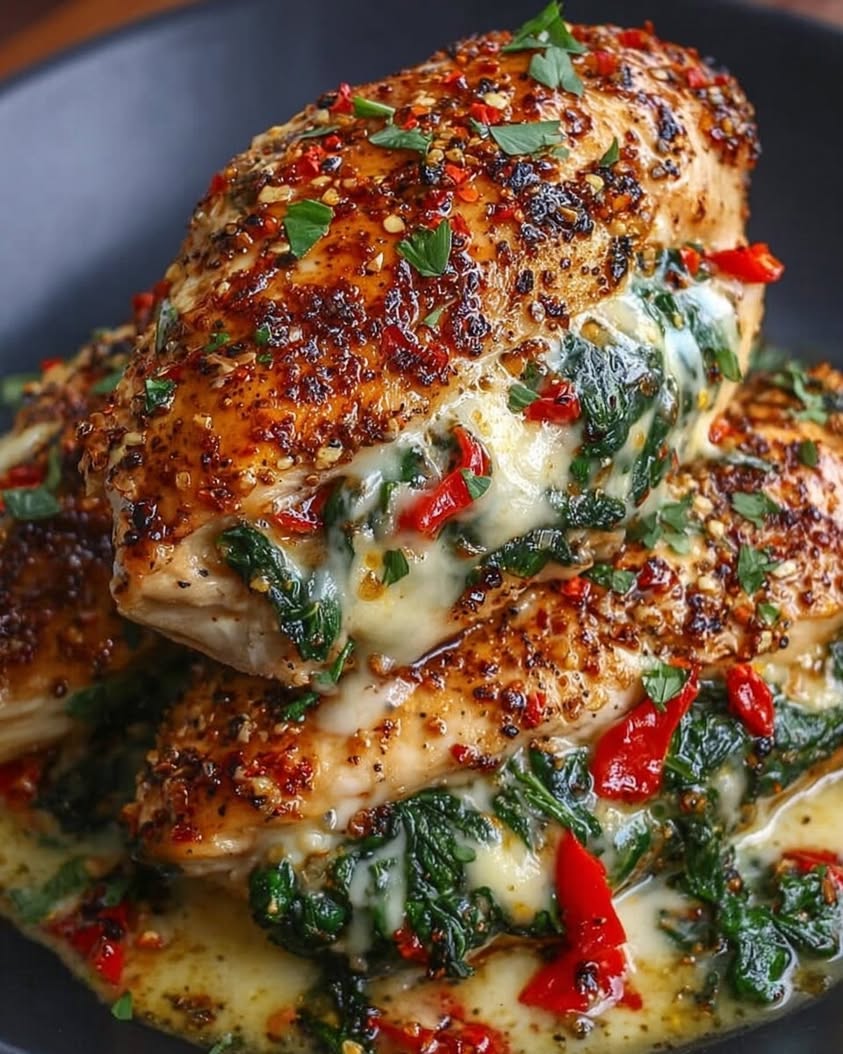
Roasted Red Pepper, Spinach, and Mozzarella Stuffed Chicken: A Restaurant-Worthy Dinner in Under an Hour
Imagine slicing into a perfectly golden chicken breast only to reveal a vibrant, cheesy center of roasted red peppers and fresh spinach. This roasted red pepper, spinach, and mozzarella stuffed chicken delivers all the elegance of a fine dining entree right from your own kitchen. The combination of sweet, smoky peppers, earthy spinach, and creamy mozzarella creates a filling that is both decadent and surprisingly wholesome. You get a complete package of flavor and nutrition in one tidy, beautiful package.
This recipe for juicy stuffed chicken with roasted red pepper, spinach, and mozzarella is designed for busy weeknights when you want something special without the fuss. The filling comes together in just a few minutes, and the chicken bakes quickly in the oven. Meanwhile, the entire process is straightforward enough for a beginner cook to master. Furthermore, the ingredients are easy to find, making this a reliable go-to meal whenever you need to impress your family or guests.
Quick Recipe Highlights
- Flavor Profile: This dish offers a beautiful balance of savory and sweet. The salty mozzarella and rich chicken pair perfectly with the smoky sweetness of the roasted red peppers. Fresh spinach adds a mild, earthy undertone that ties everything together.
- Texture: You get a satisfying contrast between the firm, juicy chicken exterior and the soft, creamy filling. The roasted peppers provide a slight tender bite, while the melted cheese creates a luscious, gooey center. Each bite is a textural experience.
- Aroma: The scent of garlic and oregano mingles with the sweet aroma of roasting peppers as the chicken bakes. A subtle hint of browning cheese fills your kitchen with an irresistible, comforting smell. It is the kind of aroma that brings everyone to the table.
- Visual Appeal: The golden-brown chicken is visually stunning when sliced open, revealing a bright ribbon of red and green against the white cheese. A simple garnish of fresh parsley adds a pop of color. This is a dish that looks far more complex than it actually is.
- Skill Level Needed: This is an excellent recipe for beginners and experienced home cooks alike. The main technique involves creating a pocket in the chicken breast, which is very simple to learn. With clear steps, you can achieve a professional result on your first try.
- Special Equipment: You only need a sharp knife to create the pocket, a cutting board, and a baking dish. A meat thermometer is highly recommended to ensure perfect doneness. No fancy gadgets are required for this recipe.
Recipe Overview
- Difficulty Level: I rate this recipe as easy because the steps are minimal and forgiving. Creating the pocket in the chicken is the only slightly tricky part, but it becomes intuitive after the first breast. The filling requires no cooking, and the oven does all the heavy lifting. This is a stress-free way to make an impressive main course.
- Category: This meal fits perfectly into the main course category for lunch or dinner. It works wonderfully as a hearty weeknight meal or a casual weekend dinner party dish. You can easily pair it with a simple salad or roasted vegetables for a complete plate.
- Cuisine: While inspired by Italian-American flavors, this recipe is a modern take on classic comfort food. The use of mozzarella, spinach, and roasted peppers is a staple in Italian cooking. However, the method of stuffing a chicken breast is a technique popularized in American home kitchens for its convenience and visual appeal.
- Cost: This is a very budget-friendly recipe. Chicken breast, fresh spinach, and mozzarella are all affordable and widely available. Roasted red peppers can be purchased jarred for a low cost or made at home from fresh peppers when they are in season. This meal delivers high value for a modest investment.
- Season: This dish is versatile and works well year-round. In the summer, you can use fresh garden peppers and basil for a brighter flavor. During the colder months, the warm, cheesy filling and hearty chicken provide deep comfort. It is a perfect transitional meal for any season.
- Occasion: This stuffed chicken is perfect for a family dinner, a small gathering, or a romantic date night at home. It looks elegant enough for a holiday meal but is simple enough for a Tuesday. Because it holds well, it is also a great option for meal prep.
Why You’ll Love This Recipe
The taste of this roasted red pepper, spinach, and mozzarella stuffed chicken is the primary reason you will fall in love with it. The sweet, charred flavor of the roasted peppers is a perfect counterpoint to the rich, creamy mozzarella. Additionally, the spinach adds a fresh, earthy depth that prevents the dish from feeling too heavy. Every single bite is packed with flavor, and the chicken itself stays incredibly juicy thanks to the moisture from the cheese and vegetables. This is not a dry, boring chicken dinner; it is a flavor explosion.
Convenience is another major selling point. You can have this entire meal on the table in about 40 minutes, and most of that time is hands-off baking. The prep work is minimal, requiring only a quick chop of the ingredients and a simple slice into the chicken. Moreover, this recipe uses common ingredients you might already have in your fridge and pantry. It is a fantastic solution for a busy weeknight when you want a home-cooked meal that tastes like you spent hours in the kitchen.
From a nutritional standpoint, this recipe is a winner. You get a solid serving of lean protein from the chicken breast, which helps keep you full and satisfied. Furthermore, the spinach is packed with iron, vitamins A and C, and fiber. The roasted red peppers are also an excellent source of vitamin C and antioxidants. By choosing a good quality part-skim mozzarella, you can enjoy the creamy, cheesy goodness while keeping the saturated fat content reasonable. This allows you to eat a truly delicious meal that supports your health goals.
Socially and entertainingly, this dish is a star. It is one of those recipes that looks incredibly impressive when served, yet it is surprisingly easy to execute. When you slice into the chicken at the table and reveal the colorful filling, your guests will be genuinely impressed. It feels like a special occasion meal without requiring a special occasion. You can easily double the recipe to feed a crowd, and it always gets rave reviews. It is a reliable, show-stopping recipe to have in your back pocket.
Finally, the cost-effectiveness of this meal cannot be overstated. Chicken breast is often on sale, and the other ingredients are very inexpensive. For a relatively small amount of money, you can create a restaurant-quality entree that serves four people. This makes it a fantastic choice for budget-conscious home cooks who do not want to sacrifice flavor or quality. You are getting maximum value and taste for your investment, making this a recipe you will return to again and again.
Historical Background and Cultural Significance
The concept of stuffing meat is an ancient culinary technique found across many cultures. From Roman dishes of stuffed dormice to Middle Eastern stuffed grape leaves, the method of filling a protein with flavorful ingredients has been used for centuries to stretch expensive ingredients and add flavor. Stuffed chicken, specifically, became popular in the United States in the mid-20th century as part of the trend toward more elaborate home cooking. It was a way to take a humble, affordable ingredient like chicken and turn it into something special for company.
Culturally, this specific combination of flavors pays homage to the Italian-American culinary tradition. Mozzarella cheese, roasted red peppers, and spinach are staples in many Italian kitchens. The technique of stuffing meats, known as “involtini,” is also a classic, though it often involves rolling thin slices of meat around a filling. This recipe simplifies that process by creating a pocket, making it more accessible for the everyday home cook. It represents a fusion of old-world flavors with modern, practical preparation methods.
Over time, this recipe has evolved to become a staple in the “healthy eating” food blog space. Early versions might have been heavier, using full-fat cheeses and cream. Today, many home cooks look for ways to lighten the dish without sacrificing flavor. This version strikes that balance perfectly, using part-skim mozzarella and nutrient-packed spinach. The evolution reflects a broader trend in home cooking toward meals that are both indulgent and nourishing.
Regionally, you can find variations of this dish across the United States. In the Northeast, you might find it served with a side of marinara sauce. In the South, a version might incorporate andouille sausage or pepper jack cheese for a kick. The beauty of this stuffed chicken recipe is its adaptability. The core technique of stuffing the breast remains the same, but the filling can be completely customized to reflect local tastes and available ingredients. This flexibility is what has allowed the dish to become a beloved classic in so many homes.
Ingredient Deep Dive
Chicken breast is the star of this dish and provides the lean protein base. Culturally, chicken is a universal protein, consumed in nearly every cuisine around the world for its mild flavor and adaptability. It is a symbol of comfort food in American culture, often associated with home-cooked Sunday dinners. Nutritionally, chicken breast is an excellent source of high-quality protein, which is essential for muscle building and repair. It is also low in fat, making it a staple for those managing their weight. When selecting chicken, look for breasts that are even in thickness for consistent cooking. They should be pink and moist, not slimy, with no off-putting odor. Store raw chicken in the coldest part of your refrigerator and use it within two days, or freeze it for up to six months. If you need a substitute, boneless, skinless turkey cutlets work very well, though they cook slightly faster. Thinly pounded pork loin is another excellent option.
Roasted red peppers bring a sweet, smoky depth to the filling. These peppers have a rich history in Mediterranean and Eastern European cooking, where they are preserved in oil or vinegar to enjoy year-round. They are a fantastic source of vitamin C, even more so than oranges, and are packed with antioxidants like beta-carotene. Jarred roasted red peppers are a convenient pantry staple, but you can roast your own for a fresher, smokier flavor. To select good jarred peppers, look for ones packed in water or a light brine rather than heavy oil. Once opened, store them in their liquid in the refrigerator and use them within a week. For a substitution, sun-dried tomatoes (rehydrated in hot water) offer a similar chewy texture and intense flavor. Fire-roasted tomatoes, drained well, can also work in a pinch.
Fresh spinach adds a vibrant green color and earthy flavor to the filling. Originating in Persia, spinach spread across the globe and became a staple in many cuisines, famous for its impressive nutrient density. It is loaded with iron, calcium, vitamin K, and folate. For this recipe, fresh baby spinach is ideal because it requires no chopping and wilts quickly. When selecting, look for leaves that are bright green and crisp, with no signs of yellowing or wilting. Store spinach unwashed in a bag in the crisper drawer, and use it within a few days. Frozen chopped spinach, thawed and squeezed completely dry, is a great substitute. Avoid canned spinach as it is too soft and watery for this application.
Mozzarella cheese provides the creamy, gooey element that makes this dish so satisfying. Originating from the Campania region of Italy, mozzarella was traditionally made from water buffalo milk. Today, cow’s milk mozzarella is more common and perfectly suited for this recipe. It is a good source of calcium and protein. For this recipe, a low-moisture, part-skim mozzarella block is the best choice because it melts beautifully without releasing too much water, which could make the filling soggy. When selecting, look for a block that is firm and white. Shred your own cheese for the best melting and texture, as pre-shredded cheese contains anti-caking agents that can affect the final result. If you need a substitute, provolone or even a mild cheddar can be used, though they will change the flavor profile significantly.
Common Mistakes to Avoid
- Cutting the pocket too deep or too shallow. You want a deep pocket to hold the filling, but you should not cut all the way through the chicken. A shallow pocket will not hold enough filling. Use your hand to feel the thickness of the breast as you cut.
- Overstuffing the chicken. If you add too much filling, it will spill out during cooking. The cheese will melt onto the pan rather than staying inside the chicken. Use a gentle hand and leave a little room for the cheese to expand.
- Not sealing the pocket properly. If you do not secure the opening with toothpicks, the filling will leak out during baking. This not only makes a mess but also creates dry, empty pockets in the chicken. Take the time to secure it well.
- Using pre-shredded mozzarella. This cheese is coated with starch and cellulose to prevent clumping, which also prevents it from melting smoothly into a creamy filling. Always shred your own block of mozzarella for the best texture.
- Skipping the searing step. Searing the chicken in a hot skillet before baking creates a beautiful golden-brown crust and adds deep flavor. If you skip this step, you lose a significant layer of taste and texture.
- Overcooking the chicken. Chicken breast can go from juicy to dry very quickly. Use a meat thermometer to ensure the internal temperature reaches exactly 165 degrees Fahrenheit. Remove the chicken from the oven as soon as it reaches that temperature.
- Not draining the roasted red peppers. Excess moisture from the peppers can make the filling watery. Pat them dry with a paper towel before chopping them. This simple step ensures a thick, cohesive filling.
- Using frozen spinach without drying it. Frozen spinach holds a lot of water. If you add it to the filling without squeezing it completely dry, it will release water as it bakes. This creates a soggy, unappealing texture.
Essential Techniques
Creating the pocket in the chicken breast is the most important technique to master. Place the chicken breast on a clean cutting board and hold it flat with your non-dominant hand. Using a sharp knife, carefully slice into the thickest side of the breast horizontally, cutting almost all the way through to the opposite side. You want to create a deep pocket, like a pita bread, without cutting the chicken into two separate pieces. The key is to use a gentle sawing motion and to stop about a half-inch from the edge. This creates a natural hinge that holds the filling securely. If you accidentally cut through the other side, do not worry; you can still use the chicken, but you will need to secure the opening more carefully with toothpicks. Visual cues for success include a clean, even cut and a pocket that is wide enough to easily accommodate a generous amount of filling.
Searing the chicken before baking is a crucial step for developing deep, savory flavor. Heat a tablespoon of olive oil in a heavy, oven-safe skillet over medium-high heat until it shimmers. Carefully place the stuffed and seasoned chicken breasts into the hot pan, leaving space between them so they brown rather than steam. Sear for about two to three minutes per side until a deep, golden-brown crust forms. This process, known as the Maillard reaction, creates hundreds of complex flavor compounds that cannot be achieved by baking alone. A common pitfall is moving the chicken too soon; if it resists when you try to flip it, it is not ready. Visual cues include a rich, caramelized color and a slight crispiness on the surface.
Checking for doneness with a meat thermometer guarantees perfectly cooked, juicy chicken every time. Insert the probe of an instant-read thermometer into the thickest part of the breast, making sure it goes into the center of the filling. Do not rely on visual cues like color or juices running clear, as these are not reliable indicators of a safe internal temperature. The chicken is perfectly cooked and safe to eat when the internal temperature reaches 165 degrees Fahrenheit. Overcooking, even by a few degrees, will quickly dry out the breast. The best practice is to remove the chicken from the oven when it hits 160 degrees, as the residual heat will carry the temperature up to the target while it rests.
Pro Tips for Perfect Stuffed Chicken
Pound the chicken breasts to an even thickness before creating the pocket. This ensures they cook evenly and quickly. Place the chicken in a zip-top bag and gently pound it to about 3/4-inch thickness using a rolling pin or meat mallet.
Season the inside of the pocket as well as the outside of the chicken. A pinch of salt and pepper inside the pocket adds flavor directly to the filling and ensures every bite is well seasoned.
Use a combination of toothpicks and string to secure the pocket if you are making a large batch. For four chicken breasts, wooden toothpicks are usually sufficient. For larger cuts, kitchen twine offers more security.
Let the chicken rest for at least five minutes after baking. This allows the juices to redistribute throughout the meat, preventing them from running out when you cut into the chicken. Resting also makes the cheese filling set slightly, improving its texture.
Make a simple pan sauce to serve over the chicken. After searing, deglaze the hot pan with a splash of white wine or chicken broth, scraping up the browned bits. Add a pat of butter and some fresh herbs for an easy, delicious sauce.
Do not overcrowd the pan when searing. If you add too many chicken breasts to the hot skillet, the temperature will drop, and the chicken will steam instead of sear. Sear in batches if necessary to maintain a beautiful crust.
Variations and Adaptations
Regional variations of this stuffed chicken are endless. In the American Southwest, you might swap the spinach for canned green chiles and use pepper jack cheese for a spicy kick. A Mediterranean version could incorporate crumbled feta cheese, sun-dried tomatoes, and Kalamata olives for a briny, tangy twist. Meanwhile, in the Pacific Northwest, you might use smoked salmon, cream cheese, and fresh dill for a completely different flavor profile. These regional adaptations show how versatile the base technique is.
Seasonal adaptations allow you to enjoy this recipe with the best produce of the moment. In the spring, you could use fresh asparagus spears, chopped and blanched, in place of the spinach. A summer version could include fresh basil leaves, sliced zucchini, and cherry tomatoes. For autumn, try a filling of sauteed mushrooms, caramelized onions, and shredded Gruyere cheese. This keeps the recipe fresh and exciting all year long.
Dietary modifications are easy to accommodate. For a gluten-free version, simply ensure all ingredients, including any seasonings or broths, are certified gluten-free. The recipe is naturally gluten-free as written. For a dairy-free adaptation, use a high-quality dairy-free mozzarella alternative that melts well. Nutritional yeast can also be added to the spinach mixture for a cheesy flavor. You can also make a low-carb or keto version by using full-fat mozzarella and adding a little extra olive oil to the filling for healthy fats.
Serving and Presentation Guide
Plating this dish is simple yet effective. Slice each chicken breast diagonally into two or three thick pieces to reveal the colorful center. Fan the slices out on a warm plate, overlapping them slightly. This creates a beautiful, restaurant-style presentation that highlights the stuffed interior. A clean, white plate offers the best contrast for the golden chicken and vibrant filling.
Garnishing adds the final touch of elegance. A sprinkle of fresh, chopped parsley or basil adds a bright green color and fresh herbal aroma. A light dusting of red pepper flakes can add a touch of heat and visual interest. For a more decadent finish, drizzle a small amount of high-quality balsamic glaze around the plate. This adds a touch of sweetness and acidity that complements the rich cheese.
Traditional accompaniments include a simple side salad with a lemon vinaigrette or a serving of roasted vegetables like asparagus or broccoli. Creamy mashed potatoes or soft polenta makes an excellent base to catch any juices from the chicken. For a lighter meal, serve it with a side of cauliflower rice or a simple green bean saute. The mild flavors of these sides allow the stuffed chicken to remain the star of the plate.
Wine and Beverage Pairing
A medium-bodied red wine pairs beautifully with this dish. A Chianti Classico or a Pinot Noir offers bright acidity that cuts through the creamy cheese. The subtle earthy notes in the wine also complement the spinach. A Barbera d’Asti is another fantastic choice, known for its high acidity and juicy fruit flavors that match the sweetness of the roasted peppers. Be sure to serve the wine slightly cool, around 60 to 65 degrees Fahrenheit, for the best experience.
For white wine lovers, a crisp and unoaked option works wonderfully. A Vermentino or a Pinot Grigio offers enough acidity to cleanse the palate between bites. The citrus and green apple notes in these wines do not overpower the delicate flavors of the chicken and filling. A dry Riesling from the Alsace region is also a stellar pairing, as its slight sweetness mirrors the sweetness of the peppers, creating a harmonious balance.
Non-alcoholic alternatives are also excellent. A sparkling water with a squeeze of lemon or lime provides a refreshing palate cleanser. A mocktail made with cranberry juice, a splash of soda water, and fresh rosemary is festive and pairs nicely with the savory flavors. For a warm option, a glass of iced tea with a hint of mint or a tart lemonade are both classic and satisfying choices that do not compete with the food.
Storage and Shelf Life
Proper storage is key to maintaining the quality of your leftover stuffed chicken. Allow the chicken to cool completely to room temperature before storing. Place the cooled chicken in an airtight container, separating layers with parchment paper if stacking. Stored this way, the chicken will remain fresh in the refrigerator for up to four days. The flavors often meld together overnight, making the leftovers even more delicious.
Temperature requirements are strict for food safety. Keep the chicken at a constant temperature below 40 degrees Fahrenheit in the refrigerator. If you are transporting the leftovers, use a cooler with ice packs to maintain this temperature. Any chicken left out at room temperature for more than two hours should be discarded to prevent the risk of foodborne illness. Investing in a good refrigerator thermometer can help you maintain the correct temperature.
Signs of spoilage are easy to spot. The chicken will develop a sour or off-putting smell. The texture may become slimy or sticky to the touch. Visually, you might see a change in color, such as the chicken turning grayish or the filling developing mold. If you notice any of these signs, it is safest to discard the leftovers. When reheating, always ensure the internal temperature reaches 165 degrees Fahrenheit to kill any potential bacteria.
Make Ahead Strategies
This recipe is excellent for make-ahead meal prep. You can prepare the filling up to two days in advance and store it in the refrigerator. Simply combine the chopped roasted red peppers, chopped spinach, shredded mozzarella, and seasonings. Keep the filling in a covered bowl until you are ready to use it. This reduces the active prep time on cooking day to just a few minutes.
You can also stuff the chicken breasts a day ahead. After stuffing and securing the pockets with toothpicks, place the raw, stuffed chicken breasts on a plate. Cover them tightly with plastic wrap and store them in the refrigerator. The next day, you can simply take them out, season, and sear them before baking. This makes the cooking process incredibly streamlined for a busy weeknight dinner.
Be aware that the quality of the filling is best when used within 24 hours of assembly. The spinach may release a small amount of moisture over time, but this is usually negligible. If you notice excess liquid in the bowl, drain it off before stuffing the chicken. The searing and baking steps will also help drive off any excess moisture. Do not prepare the chicken more than 24 hours in advance, as the texture of the raw chicken can degrade.
Scaling Instructions
Halving this recipe is very straightforward. Simply use two chicken breasts instead of four and halve all the ingredient amounts for the filling. The cooking time will remain roughly the same, as the thickness of the chicken is the primary driver. Be sure to use a smaller baking dish so the chicken fits snugly. Toothpicks are still recommended for securing the pockets.
Doubling or tripling the recipe is also easy to manage. For eight or twelve chicken breasts, the main challenge is the pan size. You will likely need to sear the chicken in batches to avoid overcrowding the pan. Use a large, high-sided baking sheet for the oven instead of a standard baking dish. The baking time may increase slightly due to the larger volume, so always rely on your meat thermometer for accuracy.
When scaling, consider your equipment. A standard 12-inch skillet can comfortably sear four chicken breasts. For eight, you will need to do two batches. For twelve, you might need a second pan or a very large electric griddle. Plan your timing accordingly. The oven time for a full sheet pan of twelve chicken breasts might need an extra five to ten minutes, so start checking the temperature at the 25-minute mark and adjust from there.
Nutritional Deep Dive
Macronutrient breakdown makes this dish a balanced choice. A single serving provides approximately 35 to 40 grams of high-quality protein, which supports satiety and muscle health. The fat content is moderate, around 12 to 15 grams, primarily from the mozzarella cheese and olive oil used for searing. Carbohydrates are very low, usually under 5 grams per serving, making this an excellent option for low-carb or keto diets. This macro profile makes it a filling meal that fits many dietary plans.
Micronutrient analysis reveals a wealth of vitamins and minerals. The spinach is a powerhouse of iron, vitamin K, and vitamin A, all crucial for blood health and immune function. The roasted red peppers provide a significant dose of vitamin C, an antioxidant that helps protect cells from damage and aids in iron absorption. The chicken is a good source of B vitamins, particularly B6 and B12, which are important for energy metabolism. Together, these ingredients create a nutrient-dense meal that supports overall wellness.
Portion analysis is straightforward. One stuffed chicken breast is considered a proper serving for an adult. This serving size provides a generous amount of protein and vegetables without being excessive in calories. For someone looking to manage their weight, this single serving is very satisfying and can be easily paired with a large portion of non-starchy vegetables. The high protein content also helps regulate appetite hormones, making you feel fuller for longer.
Dietary Adaptations
This recipe is naturally gluten-free, making it safe for those with celiac disease or gluten sensitivity. All the core ingredients are naturally free of gluten. However, you must check labels on any pre-made seasonings or jarred peppers to ensure they are processed in a gluten-free facility. Using fresh herbs and spices instead of seasoning blends is the safest route. The cooking method also avoids any risk of cross-contamination from flour or breading.
To make this recipe dairy-free, you need a good substitute for the mozzarella. Many plant-based mozzarella shreds now melt well and have a neutral flavor. Brands like Violife or Miyoko’s Creamery are excellent choices. You can also use a creamy, dairy-free ricotta made from almonds or tofu. The spinach and roasted peppers naturally add plenty of flavor, so the cheese substitute will not be left to carry the dish alone. Nutritional yeast can be added to the filling for a cheesy, umami flavor boost.
For a low-carb or keto adaptation, this recipe is already ideal. Use full-fat mozzarella cheese to increase the fat content. You can also add a tablespoon of cream cheese to the filling for extra creaminess and fat. Avoid any high-carb sides like pasta or bread; instead, serve the chicken over a bed of zucchini noodles or a simple green salad. The high protein and moderate fat content makes this a perfect meal for maintaining ketosis.
Troubleshooting Guide
If the filling leaks out during baking, the pocket was likely not sealed properly. Make sure you insert toothpicks at a slight angle, going through the top flap and out the bottom flap of the pocket. Use at least two toothpicks per breast to create a secure closure. If you have a particularly deep pocket, you can also fold the thin edge of the chicken over the opening as a natural seal.
If the chicken is dry, it has been overcooked. This is the most common issue with chicken breast. The solution is to use a meat thermometer every single time. Pull the chicken out of the oven the moment it hits 165 degrees Fahrenheit. Also, resting the chicken for five minutes allows the juices to redistribute back into the meat. Brining the chicken for 30 minutes before cooking is another foolproof way to ensure juiciness.
If the filling tastes bland, you forgot to season it. The cheese and spinach are quite mild on their own. Always season the filling mixture generously with salt, pepper, and garlic powder. The cheese also needs salt to draw out its flavor. A pinch of red pepper flakes or a dash of oregano can also elevate the taste. Taste the filling before stuffing the chicken and adjust the seasoning as needed.
Recipe Success Stories
Community feedback for this stuffed chicken has been overwhelmingly positive. Many home cooks share that it was the first time they successfully made a “fancy” dinner that their entire family loved. One reader mentioned that her picky-eater children, who usually dislike vegetables, ate the entire serving without complaint because the spinach was hidden inside the chicken. This feedback highlights the recipe’s universal appeal.
Several readers have shared their own successful variations. One home cook replaced the spinach with chopped kale and added a handful of sun-dried tomatoes for a more intense flavor. Another reader used a spicy smoked paprika and pepper jack cheese to make a south-of-the-border version. These adaptation stories show how the basic technique is a creative canvas. The recipe inspires confidence to experiment.
Photography tips have also been shared by the community. Many readers recommend using a sharp, serrated knife to slice the chicken for the cleanest cut. They also emphasize the importance of a clean plate and natural lighting for the best photos. A final tip is to drizzle a little of the pan juices over the sliced chicken before photographing to make it look glossy and appetizing. These shared tips help everyone create a more beautiful final presentation.
Frequently Asked Questions
Can I use chicken thighs instead of breasts? Yes, you can use boneless, skinless chicken thighs. They are more forgiving and stay juicier, but they are smaller. You will need to adjust the cooking time slightly, as thighs cook faster than breasts. Use a meat thermometer to check for doneness at 165 degrees Fahrenheit.
Do I have to use jarred roasted peppers? No, you can roast your own red bell peppers at home. Simply broil whole peppers until the skin is blackened, then place them in a bowl covered with plastic wrap to steam. After ten minutes, you can easily peel the skin off. Homemade peppers have a deeper, smokier flavor.
How do I keep the chicken from drying out? The best method is to use a meat thermometer and avoid overcooking. Also, do not skip the step of searing the chicken, as it creates a crust that helps seal in moisture. Resting the chicken for five minutes after baking is equally important.
Can I prepare this recipe without toothpicks? You can, but it is riskier. If you cut the pocket carefully and do not overstuff it, the filling may stay in place. However, I strongly recommend using toothpicks for security. Make sure to remind your guests they are there before serving.
What can I use instead of mozzarella? Provolone, fontina, or even a mild cheddar are great substitutes. For a more Italian flavor, use smoked mozzarella or scamorza. For a tangier taste, try crumbled feta or goat cheese, though these will change the texture.
Can I add other vegetables to the filling? Absolutely. Chopped mushrooms, artichoke hearts, or sun-dried tomatoes all work well. Just make sure to drain and dry any ingredients that might release water, like mushrooms or artichokes, to prevent a soggy filling.
Is this recipe keto-friendly? Yes, it is naturally low in carbohydrates. To make it strictly keto, use full-fat mozzarella and add a little cream cheese to the filling for extra fat. Serve it with a non-starchy side Print
Roasted Red Pepper, Spinach, and Mozzarella Stuffed Chicken
- Total Time: 45 minutes
- Yield: 4
Description
Juicy chicken breasts stuffed with a savory blend of roasted red peppers, fresh spinach, and melted mozzarella cheese, baked to golden perfection.
Ingredients
- 4 boneless, skinless chicken breasts
- 1 cup roasted red peppers, chopped
- 2 cups fresh spinach
- 1 cup shredded mozzarella cheese
- 2 cloves garlic, minced
- 1 tablespoon olive oil
- 1 teaspoon salt
- 1/2 teaspoon black pepper
- 1/2 teaspoon paprika
- 1/4 teaspoon red pepper flakes (optional)
Instructions
- Preheat oven to 375°F (190°C).
- Heat olive oil in a skillet over medium heat. Add garlic and spinach; cook until spinach wilts, about 2 minutes. Remove from heat and let cool slightly.
- In a bowl, combine the cooked spinach, chopped roasted red peppers, and shredded mozzarella. Mix well.
- Slice a pocket horizontally into each chicken breast, being careful not to cut all the way through. Season the outside with salt, pepper, paprika, and red pepper flakes.
- Stuff each chicken breast evenly with the spinach mixture and secure with toothpicks if needed.
- Place stuffed chicken breasts in a baking dish and bake for 25-30 minutes, or until chicken is cooked through and reaches an internal temperature of 165°F (74°C).
- Let rest for 5 minutes before serving. Remove toothpicks before eating.
Notes
You can customize the seasonings to taste.
- Prep Time: 15 minutes
- Cook Time: 30 minutes
- Method: Main
- Cuisine: American