Blueberry Breakfast Quesadillas: A Sweet and Savory Morning Treat
Imagine starting your day with a warm, gooey, and delightfully crispy creation that feels like a dessert but fuels you like a proper breakfast. That is the magic of these Blueberry Breakfast Quesadillas. This recipe masterfully combines the comforting familiarity of a warm tortilla with the bright, juicy burst of fresh blueberries and the creamy richness of melted cheese. Consequently, it transforms your morning routine into a special occasion without requiring any fancy skills or hours in the kitchen.
These Blueberry Breakfast Quesadillas are the ultimate solution for busy mornings, lazy weekends, or when you simply crave something deliciously different. They perfectly bridge the gap between sweet and savory, offering a satisfying meal that appeals to both kids and adults. Moreover, they are incredibly versatile, allowing you to use pantry staples and seasonal fruit to create a meal that feels both indulgent and wholesome. Ultimately, this dish proves that breakfast can be exciting, nutritious, and ready in mere minutes.
Quick Recipe Highlights
- Flavor Profile: These quesadillas deliver a beautiful harmony of sweet and savory notes. The natural sweetness of ripe blueberries pairs wonderfully with the subtle tang of cream cheese and the salty, savory punch of cheddar. A hint of cinnamon or a drizzle of maple syrup can elevate the flavor profile even further, creating a complex and satisfying taste experience.
- Texture: You get a fantastic textural contrast in every bite. The exterior tortilla becomes golden brown and delightfully crispy when cooked in butter, while the interior remains soft and pliable. Meanwhile, the blueberries soften and release their juices, creating little pockets of jammy fruit, and the cheese melts into a perfectly creamy, stretchy filling that binds everything together.
- Aroma: As these Blueberry Breakfast Quesadillas cook, your kitchen will fill with an irresistible fragrance. First, you will smell the nutty, toasty scent of browning tortillas and butter. Then, the warm, comforting aroma of cinnamon mingles with the sweet, floral notes of cooking blueberries. Finally, the savory scent of melting cheese ties the entire aromatic experience together, promising a delicious meal.
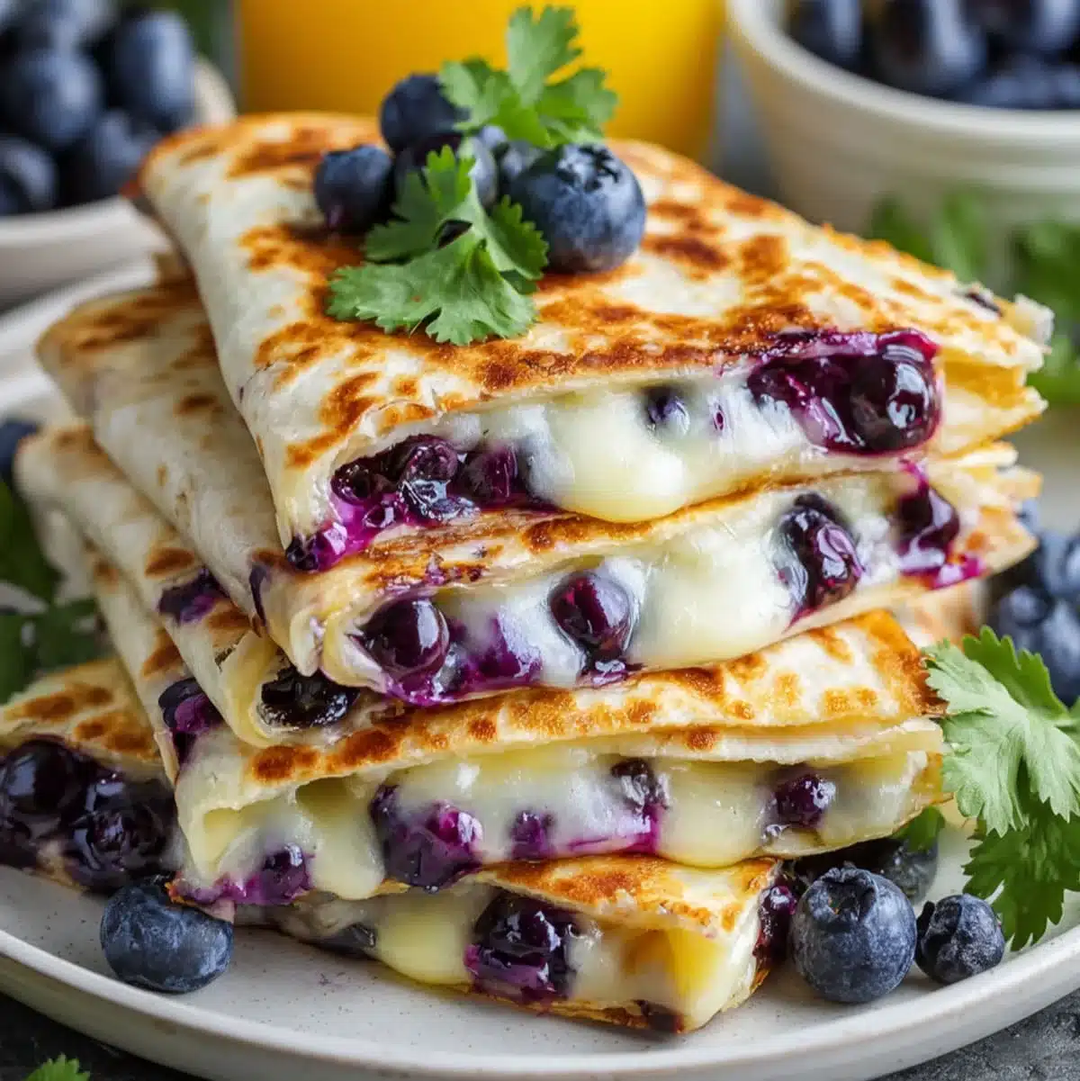
- Visual Appeal: These quesadillas are a feast for the eyes. The golden-brown, speckled tortilla shell gives way to a vibrant purple and blue filling when sliced. Strings of melted cheese stretch beautifully with each pull, and the whole presentation is bright and inviting. Serving them on a plate with a dusting of powdered sugar or extra berries makes them look restaurant-worthy.
- Skill Level Needed: This is a beginner-friendly recipe designed for success. The process involves simple assembly and basic stovetop cooking. If you can spread ingredients on a tortilla and cook something in a pan, you can absolutely master these Blueberry Breakfast Quesadillas. It is an excellent recipe for building kitchen confidence.
- Special Equipment: You need only a non-stick skillet or griddle and a spatula. A brush for butter is helpful but not essential. No special appliances or tools are required, making this recipe accessible to everyone, regardless of their kitchen setup.
Recipe Overview
- Difficulty Level: We have categorized this recipe as “Easy” for several compelling reasons. The steps are sequential and simple: assemble, cook, and serve. There is no complex knife work, precise baking, or advanced techniques involved. Furthermore, the ingredients are forgiving, and the cooking process offers visual cues, like golden-brown tortillas and melted cheese, that clearly indicate when the dish is done. Anyone, from a novice cook to a seasoned pro looking for a quick meal, can achieve perfect results.
- Category: This dish falls squarely into the breakfast and brunch category, but its versatility shines through. It makes for a fantastic quick breakfast, a leisurely weekend brunch centerpiece, or even a unique and satisfying dessert. Additionally, it can be served as a fun after-school snack or a light lunch. Its cross-category appeal is one of its greatest strengths.
- Cuisine: While inspired by the format of a traditional Mexican quesadilla, this recipe is a modern fusion creation. It borrows the cooking technique and structure from Mexican cuisine but incorporates classic American and European breakfast flavors like blueberries, cream cheese, and cinnamon. This cultural blend results in a uniquely delicious dish that feels both familiar and novel.
- Cost: This is an exceptionally cost-effective meal. The base ingredients—tortillas, cheese, and eggs—are typically inexpensive pantry staples. Fresh blueberries can be sourced affordably in season, and frozen blueberries work perfectly year-round. Cream cheese and cinnamon are used in small amounts, making their cost per serving negligible. Overall, you can create a restaurant-quality breakfast for a fraction of the price of eating out.
- Season: Blueberry Breakfast Quesadillas are truly a year-round recipe. They are perfect in summer when fresh, local blueberries are at their peak of sweetness and flavor. However, they are equally wonderful in fall and winter, offering a warm, comforting, and fruity escape from the cold. Using high-quality frozen blueberries ensures delicious results any month of the year.
- Occasion: This recipe is ideal for numerous occasions. It is a weekday lifesaver for a fast, hot breakfast. Conversely, it is a crowd-pleaser for weekend brunches with family or friends. Moreover, it is a special treat for holiday mornings like Mother’s Day or Christmas, and it is a fun, interactive meal to make with children.
Why You’ll Love This Recipe
You will adore the incredible taste and texture of these Blueberry Breakfast Quesadillas. Each bite delivers a symphony of flavors and sensations. The crispy, buttery tortilla gives way to a warm, creamy, and slightly tangy filling. Then, bursts of sweet, juicy blueberries provide a refreshing contrast. This combination of sweet and savory, crispy and creamy, is deeply satisfying and far more exciting than a bowl of cereal or plain toast. It feels like a decadent treat but is built on wholesome ingredients.
The convenience factor of this recipe is another major win. From start to finish, you can have a hot, homemade breakfast on the table in about twenty minutes. The assembly is straightforward—simply spread, sprinkle, and fold. The cooking time is brief, and the process is mostly hands-off once the quesadilla is in the pan. This makes it a realistic option for chaotic mornings when time is precious but you still want a proper meal.
Nutritionally, these quesadillas offer a balanced start to your day. They provide protein from the cheese and optional nuts, complex carbohydrates from the whole-wheat tortilla for sustained energy, and a dose of antioxidants and fiber from the blueberries. Compared to many sugary breakfast pastries, this dish has a better macro-nutrient profile and will keep you feeling full and focused for hours. You can easily adjust the ingredients to fit specific dietary needs, which we will explore later.
This recipe has fantastic social and entertaining value. Firstly, it is visually impressive when served, making you look like a kitchen hero with minimal effort. Secondly, it is easy to scale up to feed a crowd; simply use a larger griddle and make multiple quesadillas at once. Finally, it is a fun, interactive dish for brunch parties where guests can customize their own fillings before you cook them. It sparks conversation and creates a memorable dining experience.
Cost-effectiveness and accessibility are the final compelling reasons to love this dish. You do not need any expensive, hard-to-find ingredients. Everything can be purchased at a standard grocery store. Using frozen berries keeps the cost low and consistent throughout the year. Because the recipe is so simple, you are also less likely to make costly mistakes. It is a gourmet-feeling breakfast on a very modest budget, proving that eating well does not have to be expensive or complicated.
Historical Background and Cultural Significance
The story of the quesadilla begins in colonial Mexico. Its name derives from the Spanish word “queso,” meaning cheese. Historically, tortillas made from corn or wheat were a dietary staple. The practice of filling and folding a tortilla with other ingredients was a practical and portable way to create a meal. While savory fillings like cheese, squash, and mushrooms were traditional, the concept was always adaptable. The modern sweet breakfast quesadilla is a natural evolution of this versatile format, reflecting contemporary global fusion cuisine.
Culturally, the quesadilla holds significant importance as a comfort food and a symbol of culinary ingenuity in Mexican cuisine. It represents the clever use of simple, available ingredients to create something greater than the sum of its parts. The act of melting cheese inside a tortilla over a comal (griddle) is a foundational cooking technique passed down through generations. Adapting this technique to incorporate fruits like blueberries speaks to the dynamic, living nature of food traditions as they travel and merge with other cultures.
The evolution of the Blueberry Breakfast Quesadilla recipe is a direct result of modern pantry availability and culinary experimentation. Blueberries, native to North America, were not part of traditional Mexican cooking. However, as global trade made ingredients accessible worldwide, creative cooks began experimenting. The creamy texture of cheese proved to be a perfect foil for tart and sweet fruits. This particular recipe likely emerged from the American brunch scene, where combining breakfast staples in new ways is a celebrated pastime.
Regional variations of sweet quesadillas do exist, even within Mexico. For instance, in some regions, it is common to fill tortillas with sweetened pumpkin, cinnamon-spiced apples, or caramel. The Blueberry Breakfast Quesadilla fits neatly into this tradition of sweet-filled tortillas while using a fruit that is iconic in North American baking and breakfast culture. It is a beautiful example of how food migrates, adapts, and creates new traditions that feel both authentic and innovative.
Ingredient Deep Dive
Let us start with the foundation: the tortilla. Traditionally made from corn or wheat, the tortilla is one of the oldest prepared foods in the Americas, with evidence dating back thousands of years. For this recipe, a medium-sized flour tortilla works best as it is pliable and develops a lovely crisp exterior. Opt for whole-wheat tortillas for added fiber and a nuttier flavor. Store tortillas in a cool, dry place and always check for flexibility before using; if they seem dry, a quick pass over a gas flame or a few seconds in a microwave can revive them.
Blueberries are the star of the show. These small berries are nutritional powerhouses, packed with antioxidants like anthocyanins, which give them their deep blue color and are linked to cognitive and heart health benefits. They are also a good source of Vitamin C and fiber. When selecting fresh blueberries, look for firm, plump berries with a silvery bloom. For this recipe, frozen blueberries are an excellent and convenient alternative; there is no need to thaw them, as they will cook perfectly inside the quesadilla. Simply use them straight from the freezer.
The cheese blend is crucial for flavor and texture. Cream cheese provides a rich, tangy creaminess that complements the sweet berries. Meanwhile, a shredded cheese like cheddar, Monterey Jack, or a Mexican blend offers that iconic melt and stretch. Cheese is a great source of protein and calcium. For the best melt, shred your cheese from a block rather than using pre-shredded varieties, which often contain anti-caking agents that can hinder melting. Store cheese tightly wrapped in the refrigerator.
Butter is used for cooking and is non-negotiable for achieving that perfect golden-brown, crispy tortilla. It adds a rich, nutty flavor that oil cannot replicate. For a dairy-free version, a good plant-based butter or coconut oil can work. Always use unsalted butter so you can control the overall saltiness of the dish. A small amount goes a long way; just enough to coat the pan lightly is sufficient.
The supporting cast of flavor enhancers includes cinnamon and vanilla extract. Cinnamon, a spice made from the inner bark of trees, has a warm, sweet aroma and has been used for millennia both culinarily and medicinally. It pairs perfectly with fruit. Pure vanilla extract adds a subtle, floral depth that elevates the entire dish. A pinch of salt is also essential; it balances the sweetness and enhances all the other flavors, making the blueberries taste even bluerberry-er.
Common Mistakes to Avoid
- Overfilling the Quesadilla: This is the most common error. Using too much filling, especially wet ingredients, will cause it to spill out during cooking and prevent the tortilla from sealing properly. The result is a messy, difficult-to-flip quesadilla with a soggy center. Use a moderate hand; the filling should be an even layer, not a mound.
- Using a Cold Pan: Placing your quesadilla in a cold skillet means the tortilla will soak up the butter before it starts to cook, leading to a greasy, limp result instead of a crisp one. Always preheat your pan over medium heat for a minute or two before adding the butter and the assembled quesadilla.
- Cooking on Too High Heat: Impatience leads to high heat, which burns the tortilla before the cheese has a chance to melt fully. The exterior will be blackened while the inside is still cold. Medium to medium-low heat is ideal. It allows the tortilla to turn golden brown slowly and gives the cheese and blueberries time to warm through perfectly.
- Not Letting It Rest Before Cutting: Cutting into a quesadilla immediately after cooking releases all the hot, steamy filling, which can burn you and make the tortilla soggy. Let it rest on a cutting board for 1-2 minutes after cooking. This allows the cheese to set slightly, making for cleaner cuts and a better eating experience.
- Using Soggy or Wet Berries: If you are using fresh blueberries that you have washed, you must pat them completely dry with a paper towel. Excess moisture from wet fruit will steam inside the quesadilla, creating a soggy tortilla and preventing proper crisping. Frozen berries do not need to be thawed, as their moisture will cook off.
- Choosing the Wrong Tortilla Size: A tortilla that is too large will be difficult to manage in a standard skillet and may fold awkwardly. One that is too small will be overwhelmed by the filling. An 8-inch flour tortilla is typically the perfect size for a standard skillet and easy flipping.
- Skipping the Butter: While it might be tempting to use cooking spray to save calories, butter is key for flavor and browning. The milk solids in butter caramelize, giving the tortilla its signature flavor and beautiful color. For the best results, do not substitute it with a neutral oil.
- Flipping Too Early or Too Roughly: If you try to flip the quesadilla before the bottom has properly crisped and sealed, the filling will fall out. Wait until you see the bottom is golden brown and you can easily slide the spatula underneath. Then, use a confident, smooth motion to flip it in one piece.
Essential Techniques
The first essential technique is proper assembly and distribution. Spread your cream cheese in a thin, even layer across one half of the tortilla, leaving a small border around the edge. This border is crucial; it will seal when pressed during cooking. Next, sprinkle the blueberries and shredded cheese evenly over the cream cheese. Even distribution ensures every bite has a perfect balance of flavors and prevents bulky spots that can break the seal. Finally, fold the empty half of the tortilla over the filling, pressing down gently.
Mastering the pan-cook and flip is the next critical skill. Start with a preheated skillet over medium heat. Add the butter and swirl to coat the pan. Carefully place the folded quesadilla in the pan. Cook for 2-3 minutes without moving it, until the bottom is golden brown and crispy. You can gently lift a corner with your spatula to check. Then, slide the spatula fully underneath, hold the top with your other hand (or use a second spatula), and confidently flip it over in one smooth motion. Cook the second side until equally golden and the cheese is fully melted.
Controlling heat is a technique often overlooked. The goal is consistent, moderate heat that cooks the quesadilla through without burning the exterior. If your skillet is too hot, the tortilla will brown before the filling warms. If it is too low, the tortilla will become tough and chewy instead of crisp. Listen for a gentle sizzle when the quesadilla is in the pan—this is your audio cue that the heat is correct. Do not be afraid to adjust the burner up or down slightly as needed during cooking.
The final technique is the rest and cut. Once cooked, transfer the quesadilla to a cutting board. Let it sit for a full 1-2 minutes. This allows the molten cheese to cool slightly and set, which prevents a lava-like spill when you cut into it. It also allows the tortilla to finish crisping up from residual heat. Use a sharp chef’s knife or a pizza cutter to slice it into wedges. A clean, swift cut will give you beautiful, presentation-ready pieces without squishing the filling out the sides.
Pro Tips for Perfect Blueberry Breakfast Quesadillas
For an extra flavor boost, mix a little lemon zest or orange zest into the cream cheese before spreading it. The citrus brightens the blueberries and cuts through the richness beautifully.
If you want added crunch and nutrition, sprinkle a tablespoon of chopped nuts like pecans, walnuts, or almonds over the filling before folding. They toast lightly as the quesadilla cooks.
Prevent sticking and ensure easy flipping by using a well-seasoned cast-iron skillet or a reliable non-stick pan. A thin, flexible spatula is also your best friend for getting under the quesadilla cleanly.
To keep multiple quesadillas warm for serving, place them on a wire rack set over a baking sheet in a 200°F oven. This keeps the bottom crispy instead of steaming it soft on a plate.
For a fun presentation, serve the quesadilla wedges standing up in a circle rather than lying flat on a plate. Add a small bowl of maple syrup, yogurt, or extra berries for dipping in the center.
If your blueberries are very tart, toss them with a teaspoon of sugar or maple syrup before adding them to the quesadilla. This ensures a consistently sweet result.
For a more substantial protein punch, add a thin layer of cooked, crumbled breakfast sausage or bacon on top of the cream cheese before adding the berries and cheese.
Always taste your blueberries before using them. If they are bland, your quesadilla will be bland. A pinch of salt over the berries before closing the quesadilla can miraculously enhance their natural sweetness.
Variations and Adaptations
For regional variations, look to different fruit and cheese combinations. A Southern-inspired version might use peaches and sharp cheddar. A tropical twist could feature mango and coconut cream cheese with a sprinkle of macadamia nuts. A fall-themed quesadilla could use sautéed apples or pears with brie and a drizzle of honey.
Seasonal adaptations are easy and rewarding. In spring, use strawberries and rhubarb compote. In summer, mix blueberries with raspberries or blackberries. For autumn, try figs and goat cheese with a hint of thyme. In winter, use a spiced pear or cranberry-orange relish as the filling base.
Dietary modifications are straightforward. For gluten-free, use certified gluten-free tortillas. For dairy-free, use plant-based cream cheese and shreddable vegan cheese. For vegan, combine the dairy-free swaps with an egg replacer if the recipe includes it, though this base recipe is easily made vegan with the right cheese.
Flavor variations can take this recipe in countless directions. Add a smear of almond butter under the cream cheese. Incorporate spices like cardamom or nutmeg alongside the cinnamon. For a savory-leaning version, add fresh herbs like chives or thyme to the cheese mixture.
Texture modifications can add interest. For extra creaminess, add a dollop of ricotta or mascarpone. For more chew, include a sprinkle of old-fashioned rolled oats with the berries. For a crunchier exterior, brush the outside of the tortilla with melted butter and sprinkle with cinnamon sugar before cooking.
Presentation alternatives make the dish fun. Instead of folding one large tortilla, use small street-taco-sized tortillas to make mini quesadillas, perfect for appetizers or kids. You can also make a “quesadilla ring” by arranging filled tortilla wedges in a circle in a pie dish and baking until golden.
Serving and Presentation Guide
Plating techniques matter for visual appeal. Place the whole quesadilla slightly off-center on a plain, white plate to create a dynamic look. After slicing, fan the wedges out or stack them leaning against each other. Use negative space on the plate; do not overcrowd it. This makes the colorful filling the undeniable star of the show.
Garnishing ideas are simple but effective. A light dusting of powdered sugar adds a bakery-fresh touch. A dollop of Greek yogurt, sour cream, or crème fraîche on the side provides a cool, tangy contrast. Fresh mint leaves, a few extra whole blueberries, or a twist of lemon zest add pops of color and freshness.
Traditional accompaniments might include a side of fresh fruit salad or a simple green salad to balance the richness. For a heartier brunch, serve with a side of scrambled eggs or breakfast potatoes. A small cup of fruit smoothie or freshly squeezed orange juice completes the meal perfectly.
Modern serving suggestions embrace deconstruction. Serve the components separately for a DIY breakfast board: warm tortillas, a bowl of berry compote, small dishes of various cheeses, nuts, and spreads. This is interactive and allows everyone to build their perfect bite.
Temperature considerations are key. Blueberry Breakfast Quesadillas are best served immediately, straight from the pan, when the tortilla is at its crispiest and the cheese is luxuriously melted. If you must hold them, use the warm oven method described earlier. Avoid covering them with foil, as the steam will make them soggy.
Portion control tips are helpful. One 8-inch quesadilla is typically a satisfying single serving. For lighter appetites or as part of a larger brunch spread, you can cut one quesadilla into four wedges and serve two wedges per person alongside other items. Mini quesadillas are perfect for bite-sized portions at a party.
Wine and Beverage Pairing
For wine pairings, the sweet and savory nature of this dish calls for something versatile. A slightly off-dry Riesling is a fantastic choice; its acidity cuts through the cheese, and its hint of sweetness mirrors the blueberries. A sparkling wine like Prosecco or Cava also works wonderfully, as the bubbles cleanse the palate. For a red option, a light, low-tannin Beaujolais can complement the fruit without overwhelming it.
Non-alcoholic alternatives can be just as sophisticated. A sparkling elderflower cordial with soda water offers floral notes that pair beautifully with the berries. A tart cherry or pomegranate juice provides a deep, fruity counterpoint. For a creamy option, a chai latte or a dirty chai adds warm spices that echo the cinnamon in the quesadilla.
Coffee and tea pairings are a natural fit for breakfast. A medium-roast coffee with notes of berry or chocolate will enhance the fruitiness. For tea, a classic English Breakfast or Earl Grey provides a robust base. Alternatively, a fruity herbal tea like blueberry or wild berry hibiscus creates a harmonious flavor echo that is very satisfying.
Temperature considerations for beverages depend on the meal context. For a cozy weekend brunch, hot coffee or tea is ideal. For a summer morning on the patio, iced coffee, cold brew, or iced tea would be more refreshing. Chilled sparkling wines or juices should be served well-chilled, around 45-50°F.
Serving suggestions include offering a small carafe of maple syrup on the table for those who want extra sweetness. For coffee, provide cream and cinnamon sticks for stirring. For a brunch party, set up a beverage station with a few of these options in dispensers or pitchers, allowing guests to choose their perfect pairing.
Storage and Shelf Life
Storage methods for leftovers are simple but important. Allow any leftover quesadilla wedges to cool completely to room temperature. Do not store them while still warm, as condensation will form and make them soggy. Once cool, place them in a single layer in an airtight container, separating layers with parchment paper if stacking is necessary. Store in the refrigerator.
Temperature requirements are standard for dairy-based items. Refrigerated Blueberry Breakfast Quesadillas should be kept at or below 40°F. They are not suitable for sitting out at room temperature for extended periods due to the dairy and fruit content. For longer storage, freezing is an excellent option.
Container recommendations include shallow, airtight containers or heavy-duty resealable freezer bags. For the refrigerator, a container is best to prevent crushing. For the freezer, remove as much air as possible from the bag before sealing to prevent freezer burn. Label the container or bag with the date.
Signs of spoilage are easy to spot. Look for any off odors, a slimy texture on the tortilla or filling, or visible mold. The blueberries may darken slightly upon storage, which is normal, but any fuzzy growth is a clear sign to discard the item. When in doubt, throw it out.
Reheating instructions are crucial for restoring texture. The best method is to reheat in a skillet over medium-low heat to re-crisp the tortilla. You can also use an air fryer at 350°F for 3-4 minutes. Avoid the microwave if possible, as it will make the tortilla rubbery and soggy. If you must use a microwave, do so briefly and then finish in a toaster oven.
Freezing guidelines are straightforward. Assemble and cook the quesadillas as directed. Let them cool completely. Wrap each whole quesadilla or individual wedges tightly in plastic wrap, then in foil or place in a freezer bag. They will keep for up to 2 months. To reheat, thaw in the refrigerator overnight and then use the skillet or air fryer method mentioned above.
Make Ahead Strategies
Your prep timeline can be spread over a day or two. The night before, you can wash and thoroughly dry the blueberries, shred the cheese, and mix any spices into the cream cheese. Store each component in separate airtight containers in the refrigerator. This cuts your morning assembly time down to just a minute or two.
Storage between steps is simple with proper planning. Keep dairy products cold until the moment you are ready to use them. If you pre-mix the cream cheese with flavorings, ensure it’s in a sealed container. Pre-measuring all your ingredients into small bowls (mise en place) the night before turns cooking into a simple, stress-free assembly line in the morning.
Quality impact assessment is important. Pre-shredded cheese may save time but can affect melt quality. Pre-washing berries is fine if they are dried well, but avoid cutting or mashing them ahead of time. The tortillas themselves are fine at room temperature. Overall, most components can be prepped ahead with minimal impact on the final dish’s quality.
Assembly tips for make-ahead involve holding off on the final construction. Do not assemble the full quesadillas the night before, as the moisture from the filling will make the tortilla soggy. Instead, have all your components ready to go in the fridge so you can assemble and cook in under five minutes when you are ready to eat.
Reheating guidelines for fully made quesadillas are covered in the storage section. However, for make-ahead, it is better to prep components rather than the full cooked dish. If you must cook ahead, follow the freezing instructions and reheat from frozen or thawed using methods that restore crispness.
Fresh element additions are a great way to finish a make-ahead meal. Even if you prep everything else, consider adding a final garnish of fresh mint, a sprinkle of flaky sea salt, or a drizzle of honey or syrup after reheating. This adds a bright, fresh element that makes the dish taste newly made.
Scaling Instructions
Halving the recipe is straightforward. Use one 8-inch tortilla, 1 ounce of cream cheese, 1/4 cup of blueberries, and 1/4 cup of shredded cheese. All other ingredient amounts can be eyeballed as half of what you would normally use. The cooking time remains roughly the same, as you are still cooking one quesadilla. This is perfect for a solo breakfast.
Doubling or tripling the recipe for a crowd is easy but requires strategy. Use a large electric griddle or multiple skillets on the stove to cook several quesadillas at once. Keep the cooked ones warm in a 200°F oven on a wire rack. Do not overcrowd your cooking surface, as it lowers the pan temperature and leads to steaming instead of crisping.
Equipment adjustments are necessary when scaling up. A large griddle is the best tool for cooking multiple quesadillas simultaneously. If using skillets, you may need to use two burners. Have multiple spatulas ready. For very large batches, you can also bake assembled quesadillas on parchment-lined baking sheets in a 400°F oven for 10-12 minutes, flipping halfway through.
Timing modifications are minimal when scaling. The cook time per quesadilla remains 4-6 minutes total. The variable is how many you can cook at once. Plan for about 5 minutes of active cooking time per batch. If holding in a warm oven, they will stay in good condition for about 30 minutes before the tortilla may start to soften.
Storage considerations for scaled-up recipes are important. If you have leftovers from a large batch, follow the standard storage guidelines. However, it is often better to cook in successive batches as needed rather than cooking a huge quantity all at once, as the texture is best fresh from the pan.
Nutritional Deep Dive
The macro breakdown of one Blueberry Breakfast Quesadilla provides a balanced mix. Using a whole-wheat tortilla, it offers complex carbohydrates for energy, a moderate amount of protein from the cheese to promote satiety, and a reasonable amount of fat, primarily from the cheese and butter, which aids in nutrient absorption. The blueberries add minimal calories but significant fiber and micronutrients, making this a macronutrient-sound meal to start your day.
Micronutrient analysis reveals several key vitamins and minerals. Blueberries are famous for their antioxidant content, particularly vitamin C and manganese. Cheese contributes calcium for bone health, phosphorus, and vitamin B12. Using whole-wheat tortillas adds B vitamins, iron, and magnesium. The cinnamon provides small amounts of calcium, iron, and vitamin K. Together, they create a nutrient-dense package.
Health benefits are linked to the individual ingredients. The antioxidants in blueberries may support brain function and reduce oxidative stress. The calcium and protein in cheese support muscle and bone health. The fiber from the whole-wheat tortilla and berries promotes digestive health and helps regulate blood sugar levels. This combination can contribute to sustained energy and overall well-being.
Dietary considerations are important to note. This recipe contains gluten (from the tortilla) and dairy. It can be modified for specific needs as outlined in the adaptations section. For those without restrictions, it is a wholesome option, but portion awareness is key due to the calorie density of cheese and butter.
Portion analysis shows that one full 8-inch quesadilla is a satisfying single serving for most adults. Cutting it into four wedges allows for smaller portions, which can be paired with a side of fruit or yogurt for a more extended meal. The portion size is naturally self-limiting due to the structure of the tortilla, which helps prevent overeating.
Weight management tips include using light cream cheese, reducing the amount of shredded cheese slightly, and cooking with a minimal amount of butter or a light spray of oil. You can also load up on more blueberries for volume and fiber. Pairing one half of a quesadilla with a large side of scrambled egg whites or a green salad creates a high-volume, lower-calorie meal.
Dietary Adaptations
For a gluten-free adaptation, simply swap the flour tortilla for a certified gluten-free tortilla. Many brands made from corn, almond flour, or cassava flour work well. Ensure your other ingredients, like baking powder in the tortilla or pre-shredded cheese, are also certified gluten-free, as cross-contamination can occur.
A dairy-free version is easily achieved. Use a plant-based cream cheese alternative and a vegan shreddable cheese that melts well. Brands vary in quality, so you may need to experiment. For cooking, use a dairy-free butter or coconut oil. The result will be slightly different in flavor but still delicious.
To make this recipe vegan, follow the dairy-free adaptations above. That is essentially all that is required, as the base recipe contains no eggs or meat. Ensure your tortilla does not contain lard or dairy. You now have a completely plant-based, sweet and savory breakfast treat.
For a low-carb or keto adaptation, use a low-carb tortilla (often made with almond or coconut flour). Be mindful of the carb count in blueberries; you may want to reduce the quantity slightly and supplement with blackberries or raspberries, which are slightly lower in net carbs. Use full-fat cheeses and butter as directed.
A Paleo adaptation requires more significant changes. Use a grain-free tortilla made from almond or cassava flour. Omit the cream cheese or use a coconut milk-based alternative. Use a Paleo-compliant cheese substitute or simply omit the cheese and use mashed avocado for creaminess with the berries. Sweeten only with a touch of raw honey if needed.
For a Low-FODMAP adaptation, this recipe can be tricky due to the wheat tortilla and potential garlic/onion in some cheeses. Use a gluten-free, wheat-free tortilla. Stick to a lactose-free cream cheese or a small amount of a hard, aged cheddar, which is naturally low in lactose. Limit blueberries to a 1/4 cup serving, as larger amounts of fructose can be an issue.