Best Crunchy Asian Cabbage Salad Recipe: A Flavor Explosion in Every Bite
Are you searching for a side dish that steals the show? This Best Crunchy Asian Cabbage Salad Recipe is your answer. It delivers an unforgettable combination of textures and flavors that will have everyone asking for seconds. Furthermore, it comes together in under thirty minutes, making it the perfect solution for busy weeknights or last-minute potlucks.
The magic of this salad lies in its perfect balance. You get the cool, crisp bite of fresh cabbage and carrots. Then, you experience the savory crunch of toasted almonds and ramen noodles. Ultimately, everything gets coated in a rich, tangy sesame dressing that ties all the elements together beautifully. This dish is a guaranteed crowd-pleaser for any occasion.
Imagine a salad that is both refreshing and satisfying. This recipe achieves exactly that. It is light enough to serve alongside heavy mains, yet substantial enough to stand on its own as a light lunch. The vibrant colors from the purple cabbage, green onions, and orange carrots make it visually stunning on any table. Truly, this is a recipe you will return to again and again.
Quick Recipe Highlights
- Flavor Profile: This salad masterfully balances savory, sweet, tangy, and nutty notes. The dressing brings umami depth from soy sauce, a bright acidity from rice vinegar, and a subtle sweetness. Meanwhile, the toasted sesame oil and seeds add a warm, nutty finish that is utterly irresistible.
- Texture: The texture experience is central to this dish. You will enjoy the initial crispness of the shredded cabbage and carrots. Subsequently, you will encounter the satisfying crunch of the toasted almond slivers and the golden, crispy ramen noodles. This multi-layered crunch is what makes the salad so addictive.
- Aroma: Toasting the almonds and noodles fills your kitchen with a warm, nutty fragrance. After that, whisking the sesame dressing releases the aromatic oils of toasted sesame and fresh ginger. The overall scent is inviting and promises a flavorful meal.
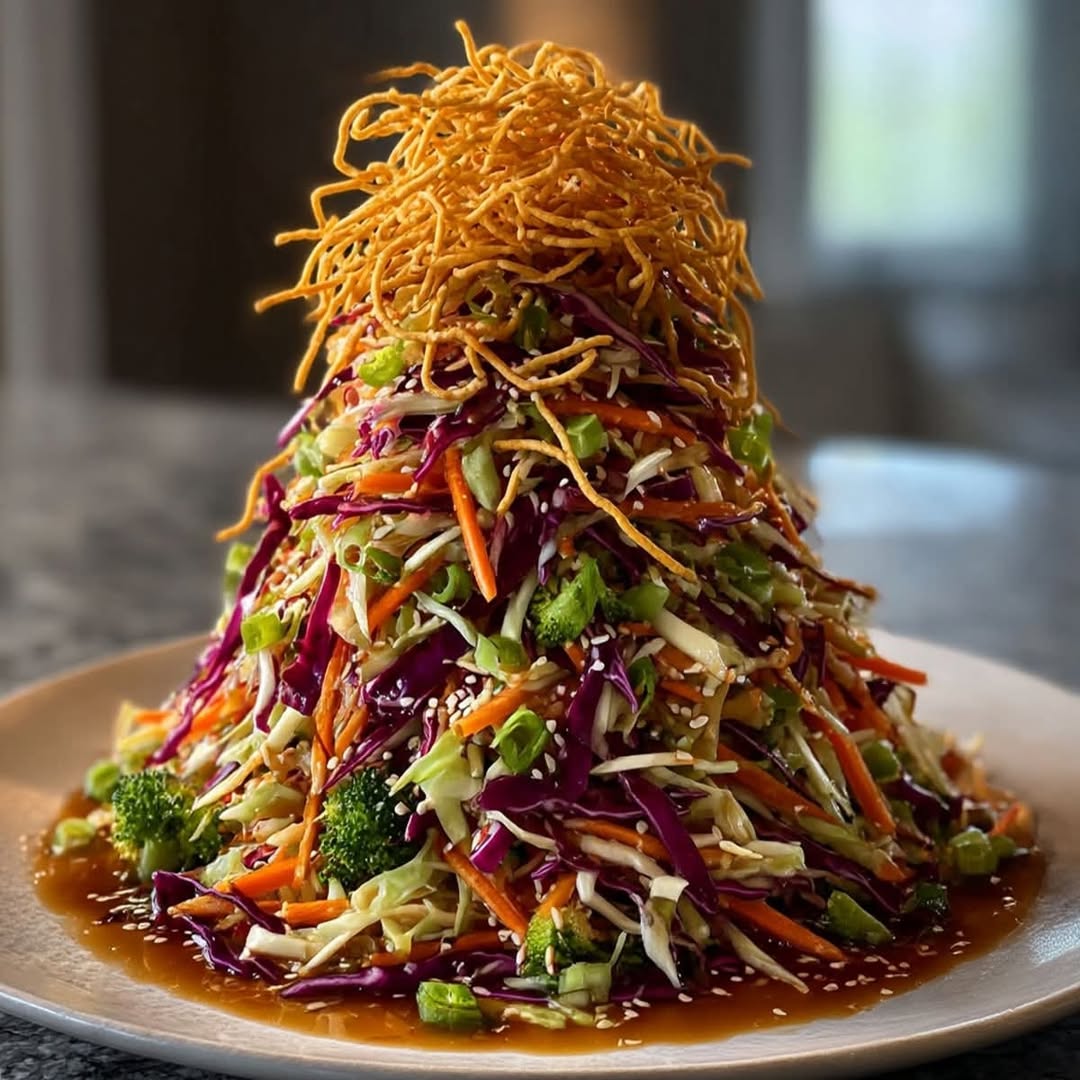
- Visual Appeal: The salad is a rainbow in a bowl. The deep purple of the red cabbage creates a stunning contrast with the bright orange carrots and green onions. The golden-brown toppings add a final touch of visual texture, making it as beautiful as it is delicious.
- Skill Level Needed: This recipe is perfect for beginners. It requires no special culinary skills, only basic knife work for chopping and the ability to whisk a dressing. There is no cooking involved for the main components, just simple toasting for the crunch elements.
- Special Equipment: You need only standard kitchen tools. A good chef’s knife and cutting board will handle the prep. Additionally, a large mixing bowl is essential for combining everything. A small skillet or toaster oven is helpful for toasting the almonds and noodles to perfection.
Recipe Overview
- Difficulty Level: We rate this recipe as “Easy” for several compelling reasons. First, it involves no complex techniques like braising or baking. Second, the ingredient list consists of simple, fresh items and pantry staples. Finally, the most technical step is toasting nuts and noodles, which is a very forgiving process. Anyone can achieve fantastic results on the first try.
- Category: This versatile dish fits multiple categories beautifully. It is an outstanding side salad for grilled meats like chicken, salmon, or steak. Conversely, it can be a main course for a light vegetarian lunch, especially with added protein like edamame or tofu. It also excels as a potluck or picnic dish because it travels well and serves a crowd.
- Cuisine: The recipe draws inspiration from various East Asian culinary traditions, particularly Japanese and Chinese flavors. The use of soy sauce, rice vinegar, sesame oil, and ginger creates a classic Asian-inspired profile. However, it is a modern fusion dish popularized in Western potluck culture, making it accessible and adaptable.
- Cost: This is an incredibly budget-friendly recipe. The base of cabbage and carrots is very inexpensive. Moreover, the dressing uses pantry condiments that offer a lot of flavor for a small cost. The most expensive items are the almonds and ramen noodles, but they are used sparingly as toppings. You can feed a large group for just a few dollars.
- Season: This salad is truly a year-round champion. In summer, its cool crispness is a refreshing counterpoint to barbecue. During fall and winter, it brings a much-needed burst of color and freshness to heavier holiday meals. It relies on sturdy vegetables that are always in season, making it a reliable go-to.
- Occasion: Its versatility makes it suitable for countless events. It is casual enough for a Tuesday family dinner yet impressive enough for a dinner party. It is a potluck superstar because it can be made ahead. Furthermore, it is a fantastic addition to holiday spreads like Thanksgiving or Fourth of July celebrations.
Why You’ll Love This Recipe
You will adore the taste and texture of this Best Crunchy Asian Cabbage Salad Recipe. Every forkful delivers a symphony of sensations. The cool, watery crunch of the cabbage meets the sweet shreds of carrot. Then, you get the buttery crunch of almonds and the salty crisp of golden noodles. All these textures are enveloped in a dressing that is tangy, savory, slightly sweet, and deeply nutty. It is a flavor combination that is simply moreish and impossible to stop eating.
The convenience of this salad is another major win. From start to finish, you can have it on the table in thirty minutes. There is no need to turn on the oven or stand over a hot stove for long. Most of the work is simple chopping and whisking. This makes it an ideal choice for those nights when you need something delicious and fast without resorting to takeout. It is the definition of minimal effort for maximum reward.
From a nutritional standpoint, this dish packs a healthy punch. Cabbage is a cruciferous vegetable loaded with vitamins C and K, fiber, and powerful antioxidants. Carrots add a big dose of vitamin A. Using heart-healthy oils like sesame and vegetable oil in the dressing adds good fats. By toasting the nuts and noodles, you enhance their flavor without needing to add excess oil or salt. It is a side dish you can feel good about serving.
For entertaining, this salad is a social superstar. It makes a huge bowl that can feed a crowd, which is perfect for parties and gatherings. Its bright, colorful presentation looks beautiful on a buffet table. Because it holds up well for hours, you can make it ahead of time and not be stuck in the kitchen when guests arrive. It consistently receives compliments and recipe requests, cementing your reputation as a host with great taste.
Finally, its cost-effectiveness and accessibility are unbeatable. The ingredients are humble and easy to find at any standard grocery store. You do not need any exotic or expensive items. This makes it a fantastic recipe for students, families on a budget, or anyone looking to stretch their grocery dollars without sacrificing flavor or quality. It proves that eating well does not have to be complicated or costly.
Historical Background and Cultural Significance
The exact origin of this specific Best Crunchy Asian Cabbage Salad Recipe is somewhat shrouded in potluck mystery. However, it is widely recognized as a classic of American mid-20th century community cooking. It likely emerged in the 1950s or 1960s, a time when packaged ingredients like instant ramen noodles became pantry staples. Home cooks, inspired by the growing interest in Asian flavors, began creating fusion dishes using accessible ingredients. This salad is a prime example of that inventive, cross-cultural home cooking tradition.
Culturally, it represents a beautiful adaptation. It takes flavors commonly associated with East Asian cuisines—soy, sesame, ginger—and presents them in a format familiar to the Western picnic or potluck table: the large, hearty chopped salad. It is not an authentic dish from any one country but rather a celebration of flavor fusion. It played a role in introducing many American families to ingredients like sesame oil and rice vinegar, paving the way for more diverse cooking.
The recipe has evolved significantly over the decades. The earliest versions likely relied heavily on the seasoning packet from the ramen noodles for flavor. Modern adaptations, like this one, often discard the high-sodium packet in favor of a homemade, balanced dressing. Additionally, contemporary versions might include more vegetables like edamame or bell peppers, or use different nuts like cashews or peanuts. The core concept remains, but the execution has been refined for today’s palate.
Regional variations abound across the United States. In some areas, it is known as “Chinese Chicken Salad” when topped with shredded rotisserie chicken. In the Midwest, it might include sunflower seeds instead of almonds. On the West Coast, you often find additions like mandarin orange segments or wonton strips. Some versions use broccoli slaw or kale as the base. This adaptability is a testament to the recipe’s foundational strength and enduring popularity.
Ingredient Deep Dive
Green and Red Cabbage: Cabbage has been a dietary staple for thousands of years across Europe and Asia. It is incredibly hardy and was valued for its ability to be stored through winter. Nutritionally, it is a powerhouse of vitamin C, vitamin K, and fiber, with notable anti-inflammatory properties. For the Best Crunchy Asian Cabbage Salad Recipe, choose heads that feel heavy for their size with crisp, tightly packed leaves. Store whole cabbage in the refrigerator’s crisper drawer for weeks. For a variation, savoy cabbage offers a more delicate texture, or you can use pre-packaged coleslaw mix for ultimate convenience.
Carrots: Carrots are believed to have originated in Central Asia. Initially cultivated for their aromatic leaves and seeds, the root we eat today was developed over centuries. They are famously rich in beta-carotene, which the body converts to vitamin A, essential for vision and immune health. Select firm, smooth carrots without cracks or soft spots. For this salad, shredding them on the large holes of a box grater or using a food processor creates the perfect texture. If you are out of fresh carrots, pre-shredded carrots from the produce section work in a pinch.
Sliced Almonds: Almonds have a history dating back to ancient Mesopotamia and are mentioned in the Bible. They symbolize hope and promise. They are an excellent source of healthy monounsaturated fats, vitamin E, magnesium, and protein. Toasting is non-negotiable for this recipe; it deepens their flavor and maximizes crunch. Always toast nuts in a dry skillet over medium heat, shaking frequently, until fragrant and lightly golden. For substitutions, try slivered almonds, chopped peanuts, cashew pieces, or sunflower seeds for a nut-free option.
Ramen Noodles (without the seasoning packet): Instant ramen was invented in Japan in 1958 by Momofuku Ando, revolutionizing quick meals worldwide. In this salad, we use the dried noodles purely for their crispy texture. They contain simple ingredients: wheat flour, oil, and salt. Crush the dry brick inside its package before opening for easy pieces. Toast them in the same skillet after the almonds, with a tiny bit of oil, until golden. For a gluten-free version, use crushed gluten-free ramen or rice noodles, or substitute with crispy chow mein noodles or wonton strips.
The Sesame Dressing: This dressing is the flavorful soul of the dish. Soy sauce provides salty umami depth; use low-sodium to control saltiness. Rice vinegar adds the essential bright, clean acidity. Toasted sesame oil is the star, offering an intense, nutty aroma—do not substitute with plain sesame oil. Fresh ginger and garlic add pungent, warming notes. The vegetable oil neutral base carries the other flavors, while sugar balances the acidity. For a richer flavor, substitute honey or maple syrup for the granulated sugar. Always whisk vigorously to emulsify the oils and liquids.
Common Mistakes to Avoid
- Not Toasting the Almonds and Noodles: Skipping the toasting step is the biggest mistake. Raw almonds and soft ramen noodles will make your salad bland and soggy. Toasting transforms them, unlocking deep, nutty flavors and creating the essential crunchy texture that defines the dish. Always take the extra five minutes for this crucial step.
- Using the Ramen Seasoning Packet: The seasoning packet is typically very high in sodium and MSG, and its powdered flavor will overpower the fresh, balanced dressing you are making from scratch. Discard it or save it for another use. Your homemade dressing will provide a far superior and cleaner flavor profile.
- Shredding the Cabbage Too Far in Advance: If you shred the cabbage hours before assembling and dressing the salad, it can start to wilt and release water, leading to a soggy base. For the crispiest texture, prep your cabbage within an hour of when you plan to serve the salad, or store it very tightly sealed in the fridge.
- Dressing the Salad Too Early: Pouring the dressing on the entire salad long before serving is a recipe for sogginess. The vinegar and salt will break down the cabbage, and the crunchy toppings will lose their crispness. Always dress the salad just before serving, or serve the dressing on the side for a make-ahead option.
- Not Balancing the Dressing Flavors: A good dressing needs balance. If yours tastes too sharp, add a pinch more sugar. If it’s too sweet, add a splash more rice vinegar. If the sesame flavor is weak, add a few more drops of toasted sesame oil. Always taste and adjust the dressing before tossing it with the salad.
- Using Bland or Old Sesame Oil: Toasted sesame oil is potent and perishable. If your bottle is old or was stored in a warm place, it may have lost its vibrant aroma. Always use a fresh, high-quality bottle and store it in a cool, dark cupboard to preserve its flavor. It makes all the difference.
- Overcrowding the Pan When Toasting: When toasting the almonds and noodles, do them in batches if necessary. Overcrowding the skillet will cause them to steam instead of toast, resulting in uneven browning and a chewy texture. They need space to allow moisture to escape and for even heat contact.
- Neglecting to Mix Thoroughly: This salad has many components that can settle. When you add the dressing, take the time to toss everything very thoroughly, lifting from the bottom of the bowl. This ensures every shred of cabbage and every crunchy bit gets coated in the delicious sesame dressing.
Essential Techniques
Toasting Nuts and Noodles: This technique is vital for developing flavor and texture. Toasting removes raw bitterness from nuts and transforms the ramen noodles from pale and soft to golden and crisp. Use a dry skillet over medium heat. Add the almonds first, as they take slightly longer. Shake the pan frequently for even coloring until they are fragrant and lightly browned. Remove them, then add the crushed noodles with a tiny drizzle of oil. Toss constantly until they turn a uniform golden brown. The key is constant attention; these items can burn in seconds once they reach the right temperature.
Shredding Cabbage Efficiently: Proper shredding ensures the right mouthfeel. First, remove any tough outer leaves. Cut the cabbage into quarters and cut out the hard core from each piece. Then, place a quarter flat-side down on your board. Using a sharp chef’s knife, slice thinly across the wedge to create fine shreds. For larger batches, a mandoline slicer on the thinnest setting works wonders, but use the guard for safety. The goal is thin, consistent ribbons that will hold the dressing well without being chunky.
Emulsifying the Dressing: An emulsified dressing coats the salad evenly instead of pooling at the bottom. In a bowl or jar, combine all liquid ingredients and seasonings. Whisk vigorously or shake the jar until the mixture becomes slightly thickened and uniform. The mechanical action breaks the oil into tiny droplets that suspend in the vinegar and soy sauce. If the dressing separates before use, simply give it another good shake or whisk. For best flavor, let it sit for 10 minutes after mixing to allow the garlic and ginger to infuse.
Pro Tips for Perfect Best Crunchy Asian Cabbage Salad
First, for the ultimate crispness, salt your shredded cabbage lightly about 15 minutes before assembling. Then, place it in a colander to drain. This process, called “kneading,” draws out excess water, resulting in an even crunchier texture that holds up better to the dressing.
Always toast your crunchy elements—the almonds and ramen—just before you plan to serve. This guarantees maximum crispness. If they sit for too long after toasting, especially in humid environments, they can soften. Alternatively, let them cool completely and store them in an airtight container until ready to use.
When making the dressing, use fresh garlic and ginger. The pre-minced versions in jars often contain preservatives and lack the bright, pungent flavor of the fresh ingredients. A microplane grater will give you a fine paste that disperses evenly throughout the dressing.
For a make-ahead strategy, prep all components separately. Store the dressed cabbage mixture (without toppings) in one container, the toasted almonds and noodles in another, and the dressing in a jar. Combine everything just before serving to preserve the signature crunch.
If you are doubling the recipe for a crowd, use the largest bowl you have, or mix in a very clean sink lined with a food-safe bag. This gives you the space needed to toss everything thoroughly without making a mess, ensuring even distribution of dressing and toppings.
For a more substantial meal, add proteins directly into the salad. Great options include shredded rotisserie chicken, cooked and shelled edamame, cubed baked tofu, or even leftover grilled shrimp. Add these when you toss the salad with the dressing.
To control sodium, use low-sodium soy sauce in the dressing. You can always add a tiny pinch of salt at the end if needed, but starting with less sodium allows the other flavors to shine and makes the dish healthier.
Variations and Adaptations
For regional twists, consider a Hawaiian-inspired version by adding chopped pineapple and toasted macadamia nuts. A Thai variation could use a dressing with lime juice, fish sauce, and a sprinkle of chopped cilantro and mint. In the American South, a spoonful of creamy peanut butter whisked into the dressing adds richness, topped with chopped peanuts.
Seasonal adaptations are easy. In spring, add snap peas and thinly sliced radishes. Summer calls for sweet corn kernels or diced mango. For fall, incorporate shredded Brussels sprouts or roasted sweet potato cubes. In winter, add segments of clementine or persimmon for a burst of sweetness and color.
Dietary modifications are straightforward. For gluten-free, use tamari instead of soy sauce and gluten-free ramen or rice noodles. For vegan, ensure the sugar is vegan-friendly (some refined sugar uses bone char) or use maple syrup. For nut allergies, replace almonds with toasted sunflower or pumpkin seeds.
Flavor variations can keep the recipe exciting. Add a teaspoon of chili crisp or sriracha to the dressing for heat. Incorporate a tablespoon of miso paste for deeper umami. Use black vinegar instead of rice vinegar for a more complex, smoky acidity. A dash of orange zest can brighten the entire profile.
Texture modifications can cater to preferences. For extra creaminess, add a few tablespoons of mayonnaise or Greek yogurt to the dressing. For more chew, include dried cranberries or chopped apricots. For additional fresh crunch, toss in bell pepper strips or jicama matchsticks.
Presentation alternatives can elevate the dish. Serve individual portions in lettuce cups or endive spears for a handheld appetizer. Layer the salad in a clear glass trifle bowl to showcase the colorful stripes. For a family-style feast, present it on a large, beautiful platter garnished with extra sesame seeds and green onions.
Serving and Presentation Guide
Plating techniques matter for visual appeal. For a family-style meal, use a wide, shallow bowl or a large platter. Mound the salad in the center, allowing the colorful ingredients to spill out naturally. Avoid over-packing or pressing down, which can make it look dense and wilt the cabbage. The goal is a light, abundant appearance.
Garnishing is the final touch of professionalism. A generous sprinkle of white and black sesame seeds adds visual contrast and reinforces the sesame flavor. Finely sliced green onions or fresh cilantro leaves scattered over the top provide a pop of green. For special occasions, add edible flowers like nasturtiums or borage.
Traditional accompaniments include simple grilled proteins. This salad pairs perfectly with teriyaki chicken skewers, ginger-soy glazed salmon, or grilled flank steak. It also complements other Asian-inspired dishes like potstickers, spring rolls, or hot and sour soup for a full menu.
Modern serving suggestions lean into its versatility. Pack it for a work lunch in a sealed container, keeping the dressing separate. Serve it as a topping for grain bowls alongside quinoa and baked tofu. For a party, offer it as a taco filling in crispy wonton shells for a fun, interactive appetizer.
Temperature considerations are simple. This salad is always served cold. Ensure all ingredients are chilled before assembling, especially if you are using a pre-dressed cabbage base. The contrast between the cool vegetables and the room-temperature toasted toppings is part of the experience. Do not let it sit in the sun or get warm.
Portion control is easy due to its bulk. A standard serving is about 1.5 to 2 cups per person as a side dish. As a main course, aim for 3 cups, especially if you have added protein. Remember, the volume will reduce slightly as the cabbage wilts under the dressing, so it is better to err on the side of generosity.
Wine and Beverage Pairing
Wine pairings should complement the salad’s vibrant acidity and umami notes. A crisp, dry Riesling is a classic choice; its slight sweetness balances the dressing’s tang and the heat from any added ginger or chili. Alternatively, a Pinot Gris or Sauvignon Blanc with its citrusy notes will mirror the rice vinegar’s brightness. For a red option, choose a light, chilled Beaujolais, which won’t overpower the salad’s delicate flavors.
Non-alcoholic alternatives can be just as sophisticated. Iced green tea with a hint of jasmine complements the Asian flavors beautifully. Sparkling water with a squeeze of lime or a slice of cucumber is refreshing and palate-cleansing. For a more complex mocktail, try a ginger beer with a splash of lime and a pinch of salt.
While not traditional coffee pairings, if serving this salad for lunch, a light roast coffee or a genmaicha (brown rice) tea would work well afterward. Their toasty, nutty notes can echo the flavors of the sesame and almonds without clashing. Avoid heavy, bitter coffees that could overwhelm the salad’s freshness.
Temperature is crucial for beverages. All drinks should be served well-chilled. White wines and non-alcoholic sparklers are best between 45-50°F. Iced teas should be cold but not watered down; use strong-brewed tea poured over plenty of ice. This ensures every sip refreshes the palate between bites of the flavorful, crunchy salad.
Serving suggestions include offering a variety. At a dinner party, set out a bottle of white wine and a pitcher of a signature non-alcoholic drink, like hibiscus iced tea or sparkling lemon-ginger water. Provide plenty of ice and clean glassware. Labeling the drinks can be a nice touch for guests, explaining why each pairs well with the meal.
Storage and Shelf Life
Storage methods depend on whether the salad is dressed. The undressed cabbage mixture (cabbage, carrots, green onions) can be stored in an airtight container in the refrigerator for 3-4 days. The toasted almonds and noodles must be stored separately at room temperature in a tightly sealed container or bag to prevent moisture from softening them. The dressing can be refrigerated in a jar for up to one week.
Once fully assembled and dressed, the salad’s shelf life shortens significantly. It is best consumed within 2-3 hours at room temperature. If refrigerated after dressing, it will keep for up to 24 hours, but expect the cabbage to soften and the crunchy toppings to lose most of their crispness. The flavors will still be good, but the texture will not be optimal.
Container recommendations are key. Use glass or hard plastic containers with tight-fitting lids. For the dressed salad, a container that is wide rather than deep helps prevent the bottom layer from becoming soggy under the weight of the top. For the dry toppings, a zip-top bag with the air pressed out is perfect.
Signs of spoilage are usually obvious. Look for an off or sour smell, which indicates bacterial growth. If the cabbage becomes excessively slimy or develops a murky liquid in the bottom of the bowl, it is time to discard it. The toasted elements, if they develop a stale or rancid odor, should also be thrown away.
This salad is not suitable for reheating, as it is meant to be served cold. There are no reheating instructions. If leftovers have become soggy, you can try reviving them by draining off excess liquid and adding a handful of fresh crunchy toppings, but this is a salvage operation, not a restoration.
Freezing is not recommended. The high water content in the cabbage means it will become mushy and watery upon thawing. The dressing may separate, and the crunchy toppings will be ruined. This is a fresh dish meant to be enjoyed immediately or within a day of assembly.
Make Ahead Strategies
A smart prep timeline makes entertaining stress-free. Up to two days ahead, shred the cabbage and carrots. Store them together in a sealed container lined with a paper towel to absorb moisture. Also, make the dressing and store it in the fridge. The day of your event, toast the almonds and noodles. Keep them in an airtight container at room temperature. Finally, one hour before serving, combine the cabbage mix with most of the dressing, toss, and refrigerate. Right before serving, add the crunchy toppings and give it a final toss with a little extra dressing if needed.
Storage between steps is crucial for quality. The cabbage mixture must be kept very cold and dry. The dressing should be shaken well before using. The toasted components must be kept absolutely dry and away from steam. Do not store anything on the stovetop or near the dishwasher where humidity can affect them.
Assessing the quality impact of make-ahead steps is important. Pre-chopping the vegetables has almost no negative impact if stored properly. Making the dressing ahead actually improves it, as the flavors meld. The only step that must be done close to serving is toasting the nuts and noodles and the final assembly. This strategy preserves 90% of the ideal texture and flavor.
Assembly tips for make-ahead include using the largest bowl you have. When you are ready to combine, add the chilled cabbage mix first, then pour about three-quarters of the dressing over it. Toss thoroughly. Let it sit for 5-10 minutes so the cabbage can absorb the flavors. Then, add almost all of the toasted toppings, reserving a handful for garnish on top. Toss once more gently to distribute.
If you must assemble the entire salad hours in advance, understand the trade-off. The flavors will still be excellent, but the crunch will soften. To mitigate this, use heartier greens like kale as part of your base, as they hold up better. Also, consider serving the crunchy toppings in a separate bowl for guests to sprinkle on their own portions, guaranteeing crunch in every bite.
Scaling Instructions
Halving the recipe is simple for smaller households. Use half a small head of each cabbage, one large carrot, and scale down all other ingredients proportionally. The dressing can be halved precisely. Toasting a small amount of almonds and noodles requires extra vigilance, as they can burn quickly in a nearly empty pan. The prep time remains similar, but the total yield will be about 3 generous side servings.
Doubling or tripling the recipe for a crowd is where this salad shines. For the vegetables, simply multiply the amounts. Use the largest mixing bowl you own, or mix in batches. For the dressing, it is easier to mix it in a large liquid measuring cup or a pitcher with a spout for easy pouring. When toasting the almonds and noodles, do so in multiple batches to avoid steaming. Do not overcrowd the pan.
Equipment adjustments are necessary when scaling up. You will need a very large serving bowl or even a clean, food-safe tub for mixing. Having two skillets can speed up the toasting process. For the dressing, a whisk may become inefficient; consider using an immersion blender or shaking it in a large mason jar to ensure proper emulsification in larger quantities.
Timing modifications are minimal. The prep time will increase linearly with the amount of vegetables to chop. The toasting time will increase because you must work in batches. Allow an extra 15-20 minutes for a doubled recipe. The actual “hands-off” time does not change, but the sequential tasks will take longer.
Storage considerations change when scaling. A large batch of dressed salad will create more liquid at the bottom. If making a huge batch for a party, consider serving it from a bowl with a perforated insert or placing it in a colander over a bowl to drain excess dressing that accumulates. For leftovers, store in several smaller containers rather than one gigantic one to maintain quality.
Nutritional Deep Dive
A macro breakdown of a typical serving reveals a well-balanced profile. The base of cabbage and carrots provides complex carbohydrates and fiber with very few calories. The almonds contribute healthy monounsaturated fats, plant-based protein, and more fiber. The dressing adds fats from the oils. Overall, it is a dish that is relatively low in calories but high in volume and satiety, making it excellent for weight management.
The micronutrient analysis is impressive. Cabbage is rich in vitamin C for immunity and vitamin K for bone health. Carrots deliver a huge dose of vitamin A in the form of beta-carotene, crucial for vision and skin health. Almonds provide vitamin E, a powerful antioxidant, and magnesium for muscle and nerve function. The sesame seeds and oil add trace minerals like copper and manganese.
Health benefits extend beyond basic nutrition. The high fiber content promotes digestive health and helps regulate blood sugar levels. The antioxidants in the colorful vegetables combat oxidative stress and inflammation. The healthy fats from nuts and seeds support heart health and help the body absorb fat-soluble vitamins from the vegetables themselves.
Dietary considerations are generally positive. The recipe is naturally vegetarian and can easily be made vegan. It is dairy-free and egg-free. The main considerations are gluten (from the ramen and soy sauce) and nuts. With simple swaps outlined in the adaptations section, it can fit into gluten-free, nut-free, and low-sodium diets quite successfully.
Portion analysis shows this is a nutrient-dense food. A 2-cup serving as a side is filling without being overly caloric, allowing room for a protein main course. As a main dish at 3+ cups with added protein like chicken or tofu, it becomes a complete, satisfying meal that covers multiple food groups: vegetables, healthy fats, and protein.
Weight management tips include leveraging the salad’s high volume. Its water and fiber content create a feeling of fullness, which can help prevent overeating of more calorie-dense foods. To keep it even lighter, you can reduce the oil in the dressing slightly or use a sugar substitute. Remember, the bulk of the calories come from the dressing and toppings, so you can adjust those to meet specific goals.
Dietary Adaptations
For a gluten-free version, the two culprits are soy sauce and ramen noodles. Substitute tamari (which is typically gluten-free, but always check the label) or coconut aminos for the soy sauce. For the crunch, use certified gluten-free ramen noodles, or substitute with crispy rice noodles or crushed gluten-free crackers. Ensure all other packaged ingredients, like the rice vinegar, are certified GF.
A dairy-free adaptation is simple, as the original recipe contains no dairy. No substitutions are needed. Always double-check labels on pre-packaged items like ramen noodles, as some may contain milk-derived ingredients, but this is rare. This salad is inherently friendly to a dairy-free lifestyle.
For a vegan Best Crunchy Asian Cabbage Salad Recipe, ensure the sugar is vegan. Some refined white sugar is processed with bone char. To be safe, use organic cane sugar, coconut sugar, or maple syrup. All other ingredients—vegetables, nuts, oils, vinegar, soy sauce—are plant-based. It is a naturally vegan-friendly dish.
A low-carb or keto adaptation requires more significant changes. Replace the ramen noodles with crushed pork rinds or toasted coconut flakes for crunch. Use a sugar substitute like erythritol or monk fruit in the dressing, or omit the sugar entirely. Be mindful of the carrot amount, as they contain more natural sugars than cabbage; you can reduce the quantity or replace them with sliced radishes.
For a Paleo version, omit the ramen noodles and soy sauce. Use coconut aminos instead of soy sauce. Ensure the sugar is coconut sugar or omit it. The rest of the ingredients—cabbage, carrots, almonds, sesame oil, vinegar—are Paleo-compliant. Add extra nuts or seeds to replace the volume from the omitted noodles.
A Low-FODMAP adaptation focuses on eliminating garlic and potentially the cabbage. Use garlic-infused oil (with the solids strained out) to capture flavor without the FODMAPs. Replace a portion of the cabbage with lettuce greens like butter lettuce or arugula. Ensure the serving size of almonds is within the Monash University recommended limit (about 10 almonds per serving).
Troubleshooting Guide
If your salad is soggy, the cause is likely dressing too early or not drying the cabbage. For future attempts, salt and drain the cabbage as a pro tip. For salvage, drain the entire salad in a colander to remove excess liquid. Then, add a fresh handful of Print
Best Crunchy Asian Cabbage Salad
- Total Time: 15 minutes
- Yield: 4
Description
A vibrant and refreshing salad featuring crisp cabbage, crunchy toppings, and a tangy Asian-inspired dressing that’s perfect for potlucks or a light meal.
Ingredients
- 4 cups shredded green cabbage
- 2 cups shredded red cabbage
- 1 cup shredded carrots
- 1/2 cup sliced green onions
- 1/2 cup chopped cilantro
- 1/2 cup slivered almonds, toasted
- 1/2 cup chow mein noodles
- 1/4 cup rice vinegar
- 2 tablespoons soy sauce
- 1 tablespoon sesame oil
- 1 tablespoon honey
- 1 teaspoon grated ginger
- 1 clove garlic, minced
Instructions
- In a large bowl, combine green cabbage, red cabbage, carrots, green onions, and cilantro.
- In a small bowl, whisk together rice vinegar, soy sauce, sesame oil, honey, ginger, and garlic until well blended.
- Pour the dressing over the cabbage mixture and toss until evenly coated.
- Just before serving, add toasted almonds and chow mein noodles, then toss gently to combine.
Notes
You can customize the seasonings to taste.
- Prep Time: 15 minutes
- Cook Time: 0 minutes
- Method: Side
- Cuisine: Asian