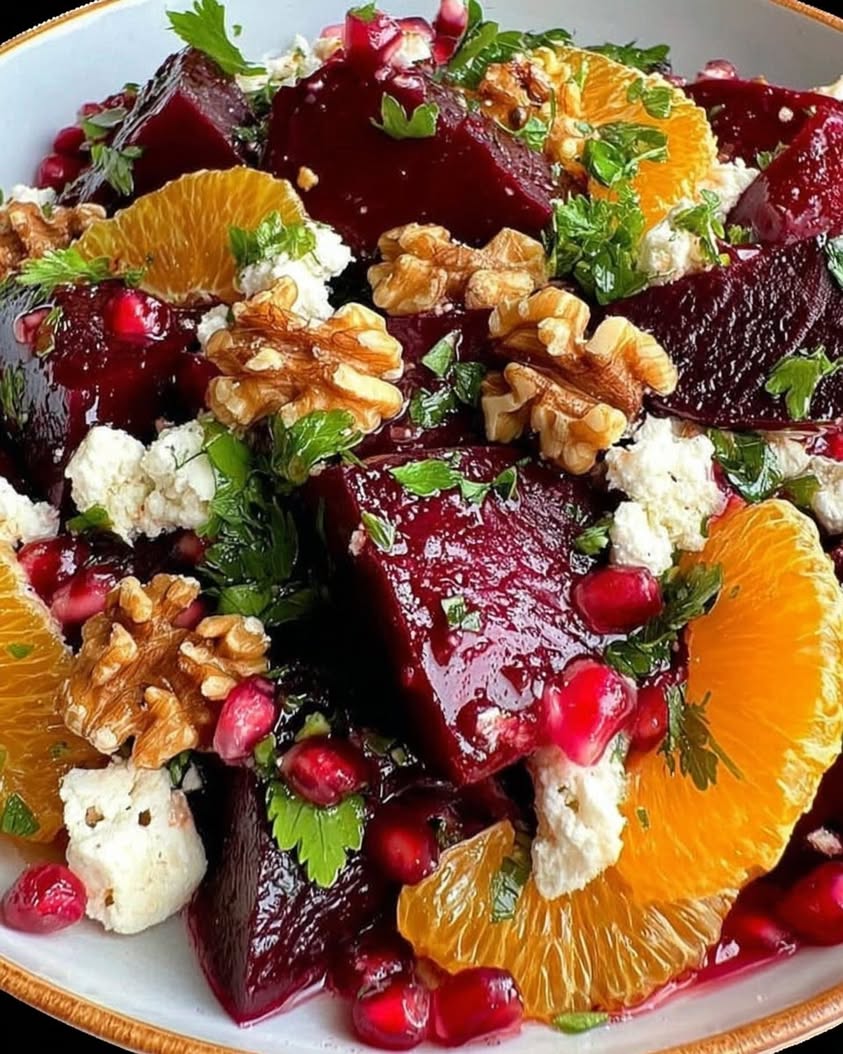
A Vibrant Ruby Beet & Citrus Salad with Feta and Walnuts Recipe: A Winter Stunner
You deserve a salad that feels like a celebration on a plate. This ruby beet & citrus salad with feta and walnuts delivers that experience with every single forkful. Picture this: tender, earthy roasted beets paired with bright, juicy segments of orange and grapefruit. Now add a generous sprinkle of creamy, salty feta and a handful of crunchy toasted walnuts. This ruby beet & citrus salad with feta and walnuts is not just a side dish, it is a main event that brings color and flavor to your winter table.
The magic of this ruby beet & citrus salad with feta and walnuts lies in the perfect balance of contrasts. The sweet, deep earthiness of the beets meets the tangy citrus. The creamy feta cuts through the sweetness, while the pomegranate arils pop with a burst of tart juice. Toasted walnuts add a satisfying crunch and a touch of warmth. We finish everything with a simple citrus vinaigrette that ties these bold flavors together. It is a dish that looks as stunning as it tastes, earning you serious praise with minimal effort.
People often think salads are boring or light. This ruby beet & citrus salad with feta and walnuts changes that perception completely. It is hearty enough to be a light lunch yet sophisticated enough for a holiday dinner party. The vibrant jewel tones of ruby red beets, deep blood orange, and bright pomegranate make it a visual masterpiece. Furthermore, you can prepare many components in advance, making your hosting duties a breeze. This is the kind of recipe you will turn to again and again throughout the citrus and beet season.
Quick Recipe Highlights
- Flavor Profile: This salad is a masterclass in sweet and tangy. The roasted beets provide a deep, caramelized sweetness, while the citrus segments and vinaigrette deliver a bright, zesty tang. The feta brings a sharp, salty finish that balances the sweetness perfectly.
- Texture: You will experience a wonderful variety of textures. The beets are tender yet firm, the citrus segments are juicy and soft, the walnuts offer a crunchy contrast, and the pomegranate arils provide a delightful little pop.
- Aroma: The main aromatic notes come from the roasting process. The beets release a sweet, earthy fragrance. The citrus vinaigrette adds a bright, invigorating scent of orange and lemon zest, creating a fresh and welcoming aroma.
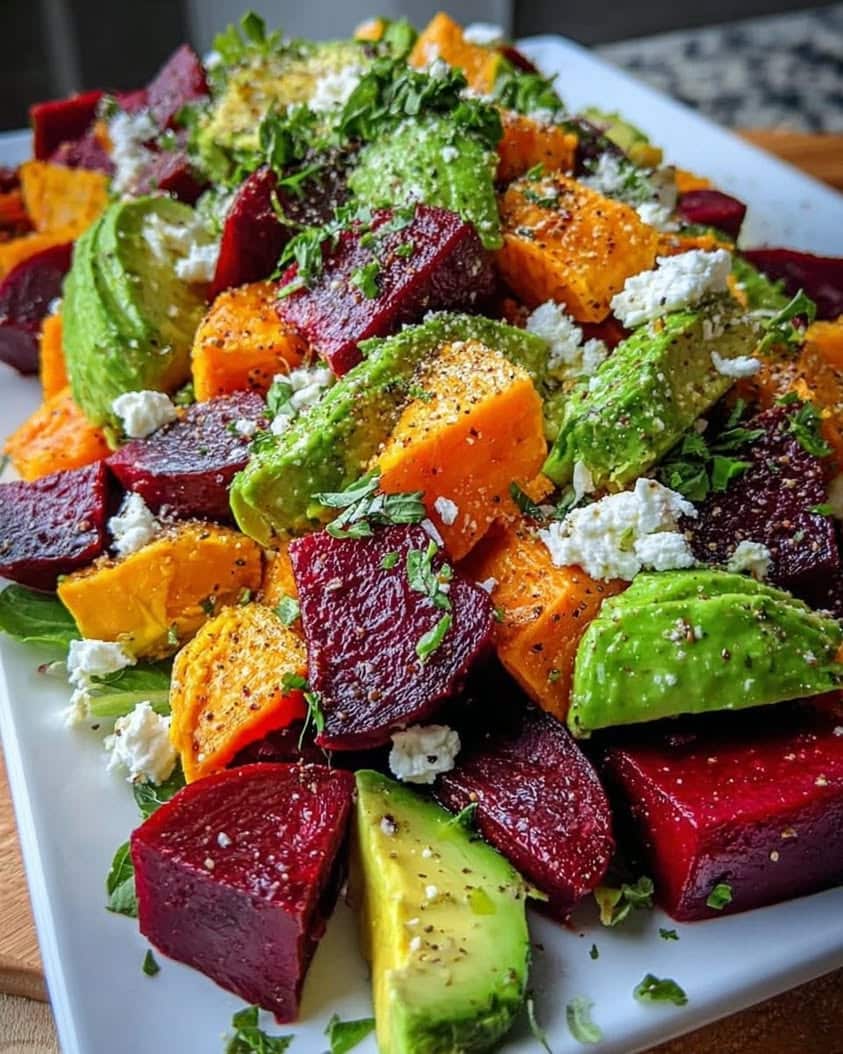
- Visual Appeal: This salad is a feast for the eyes. The deep ruby red of the beets and pomegranate contrasts beautifully with the pale orange and pink citrus segments. The white crumbles of feta and the dark brown walnuts complete a visually stunning dish.
- Skill Level Needed: This recipe is perfect for beginner and intermediate cooks. The main skills involve basic knife work for slicing citrus and chopping walnuts. Roasting beets is a simple, hands-off process that requires very little technique.
- Special Equipment: You will need a vegetable peeler for the beets, a sharp chef’s knife, a cutting board, a baking sheet, aluminum foil, and a mixing bowl for the dressing. A citrus zester is nice but not essential.
Recipe Overview
- Difficulty Level: We classify this ruby beet & citrus salad with feta and walnuts as Easy. The steps are straightforward and do not involve any complex cooking techniques like making a reduction or tempering eggs. The most time-consuming part is roasting the beets, but that is passive time. Assembly is simple layering and tossing, making it accessible for any home cook.
- Category: This dish fits perfectly into the Salad and Side Dish categories. However, its hearty nature and beautiful presentation allow it to function as a satisfying Light Lunch or Vegetarian Main Course. It also excels as an elegant Appetizer for a dinner party.
- Cuisine: While the combination of beets and citrus has roots in Mediterranean cuisine, this specific ruby beet & citrus salad with feta and walnuts is a modern American interpretation. It draws inspiration from Middle Eastern flavors with its use of pomegranate and walnuts and from Greek traditions with the feta cheese. The overall style is contemporary and globally inspired.
- Cost: The approximate cost for this salad is medium. Beets and oranges are generally affordable. Pomegranates and high-quality feta cheese can be a bit more expensive. Walnuts are also a pricier nut. Overall, you are looking at a cost similar to a restaurant-quality salad but made at home for less.
- Season: The best season for this salad is late fall through early spring. This is the peak season for both beets and citrus fruits like blood oranges, navel oranges, and grapefruit. Pomegranates are also in season during these cooler months, making this a perfect winter recipe.
- Occasion: This salad is incredibly versatile for many occasions. It is a star at Thanksgiving and Christmas dinners. It works beautifully for a New Year’s Day brunch or a Super Bowl party. It is also a sophisticated choice for a romantic Valentine’s Day dinner at home.
Why You Will Love This Recipe
The taste and texture appeal of this ruby beet & citrus salad with feta and walnuts is truly exceptional. You get a burst of sweet, tangy, and salty flavors all in one bite. The soft, roasted beet gives way to the juicy citrus segment. Then you encounter the creamy feta and the crunchy walnut. This variety keeps your palate engaged from start to finish. It is a far cry from a monotonous bowl of greens. Every single component plays a crucial role in creating a memorable experience.
Convenience is a major benefit of this recipe. You can roast the beets up to three days in advance and store them in the refrigerator. You can also prepare the citrus segments and make the vinaigrette a day ahead. When you are ready to serve, you simply arrange the ingredients and dress the salad. This assembly line approach minimizes stress when you are entertaining. It allows you to enjoy your own party rather than slaving away in the kitchen. This make-ahead capability is a lifesaver for busy weeknights too.
The nutritional advantages of this salad are fantastic. Beets are packed with fiber, folate, and manganese. They are also known for their powerful antioxidants called betalains, which support liver health. Citrus fruits provide a massive dose of Vitamin C, which boosts your immune system. Pomegranates are rich in antioxidants as well. Walnuts offer healthy omega-3 fatty acids and protein. Feta adds calcium. This recipe is not just delicious, it is a powerhouse of vitamins, minerals, and healthy fats.
This ruby beet & citrus salad with feta and walnuts has incredible social and entertaining value. Its stunning appearance makes it a conversation starter on any table. The jewel-toned colors look festive and luxurious. It pairs beautifully with a wide range of main courses, from roasted chicken to grilled fish. It also happens to be naturally vegetarian and gluten-free, making it a safe and welcome dish for guests with dietary restrictions. Serving this salad shows your guests you have put thought and care into the meal.
Finally, consider the cost-effectiveness and accessibility. Beets and oranges are among the most affordable produce items in the winter months. A single pomegranate provides enough arils for this whole salad. Feta cheese is relatively inexpensive compared to other specialty cheeses. While walnuts are a bit of a splurge, a little goes a long way. Compared to buying a similar salad at a fancy restaurant, making this at home saves you a significant amount of money while delivering equal or superior quality.
Historical Background and Cultural Significance
The origins of combining beets and citrus are ancient. Both ingredients have been cultivated for thousands of years in the Mediterranean region. Beets were originally grown for their leafy greens, and the root was used medicinally. Citrus fruits, like oranges, were brought to the Mediterranean from Asia through trade routes. We can trace salads similar to this ruby beet & citrus salad with feta and walnuts back to North African and Middle Eastern cuisine, where mixing sweet fruit with savory ingredients is a common culinary tradition.
The cultural importance of this combination lies in the concept of balance. In many Eastern traditions, balancing flavors like sweet, sour, and salty is a sign of a skilled cook. The beet provides the earthy sweet note, the citrus supplies the sour element, and the feta offers the salt. This harmony is deeply valued in Mediterranean and Middle Eastern food culture. It is not just about eating, but about creating a holistic sensory experience that nourishes the body and soul.
The evolution of this particular ruby beet & citrus salad with feta and walnuts is a modern story. In the past 20 years, American chefs have become fascinated with these bold, vibrant flavors. They have taken traditional combinations and refined them for contemporary palates. The addition of pomegranate and toasted walnuts is a very modern twist. This salad represents a fusion of old-world ingredients and new-world presentation, making it a staple on modern, health-conscious menus.
Regional variations of this salad are plentiful. In Greece, you might find a simpler version with just beets, oranges, and feta, dressed with olive oil. In Morocco, the salad might include cinnamon and orange flower water. In Turkey, cooks often add walnuts and a pomegranate molasses dressing. This version we have created is an American take, bringing together these various regional influences into a single, cohesive dish. Each variation honors the core balance of sweet and savory while adding its own unique local touch.
Ingredient Deep Dive
Let us start with the beets. Beets have a rich cultural significance, symbolizing earthiness and vitality. They have been a staple in Eastern European and Mediterranean diets for centuries. Nutritionally, beets are low in calories but high in fiber, potassium, and Vitamin C. The deep red color comes from betalains, which are powerful anti-inflammatory compounds. When selecting beets, look for firm, smooth globes with no soft spots. The greens should look fresh and vibrant if attached. Store beets in the crisper drawer of your refrigerator in a perforated bag, where they will keep for up to two weeks. Remove the greens before storing. An excellent substitution for red beets is golden beets, which have a milder, less earthy flavor and a beautiful yellow hue.
Citrus fruits are another key component. Both oranges and grapefruit bring a bright, acidic counterpoint to the sweet beets. In terms of cultural significance, citrus fruits have long been symbols of prosperity and good fortune in many cultures. Nutritionally, they are famous for high levels of Vitamin C and fiber. When selecting oranges, choose ones that feel heavy for their size, which indicates juiciness. For blood oranges, look for flesh that has some red streaks when cut. Grapefruit should be firm and slightly heavy. Store all citrus at room temperature if you plan to use them within a few days, or in the refrigerator for longer storage. A substitution for blood oranges is regular navel oranges, or you can use clementines for a sweeter taste.
Pomegranate arils provide a brilliant burst of tartness and color. The pomegranate is a fruit steeped in mythology, representing life, fertility, and abundance in Greek and Persian cultures. It is packed with antioxidants known as punicalagins, which are very beneficial for heart health. Look for pomegranates that are heavy for their size and have a deep, rich color. The skin should be firm and leathery. You can store whole pomegranates in a cool, dark place for up to two months. To extract the arils easily, cut the fruit in half and tap the skin side with a wooden spoon over a bowl of water. Dried cranberries or fresh raspberries are good seasonal substitutes.
Feta cheese adds a distinct salty creaminess. This brined curd white cheese originated in Greece and has a strong cultural connection to that region. It is a protected designation of origin (PDO) product in the EU. Feta is a good source of calcium and protein. It is lower in fat than many other cheeses. For the best flavor, purchase feta in a block that is stored in brine. Avoid pre-crumbled feta, which is often dry and less flavorful. When selecting, look for a moist, creamy block. Store feta in its brine in the refrigerator, and it will last for several weeks. For a dairy-free option, use a high-quality vegan feta alternative or crumbled firm tofu marinated in lemon and salt.
Walnuts bring a wonderful crunch and earthy nuttiness. Walnuts have a long history, dating back to ancient Persia, and they have always been a symbol of intelligence due to their brain-like shape. They are incredibly nutritious, being one of the richest plant sources of omega-3 fatty acids. When buying walnuts, look for raw, shelled walnuts in an airtight bag. Toast them yourself for the best flavor. Store them in a sealed container in the refrigerator or freezer to prevent the oils from going rancid. A substitute for walnuts is pecans, which have a similar texture and buttery flavor, or you can use almonds for a milder crunch.
Common Mistakes to Avoid
- Do not skip roasting the beets. Boiling them results in a waterlogged texture and diluted flavor, whereas roasting concentrates their natural sugars and creates a deeper, more complex taste profile for your ruby beet & citrus salad with feta and walnuts.
- Never dress the salad too early. The salt in the feta and the acid in the vinaigrette will draw moisture from the beets and make the whole salad watery and sad. Always add the vinaigrette right before serving.
- Be careful not to cut your citrus segments incorrectly. You want to remove all the white pith and membranes because they are bitter. Use a sharp knife and cut between the membranes to get clean segments for your salad.
- Do not forget to toast the walnuts. Raw walnuts are soft and can taste slightly bitter. Toasting them in a dry pan for a few minutes releases their oils and makes them wonderfully crunchy and aromatic.
- Avoid using pre-crumbled feta cheese. It contains starches and preservatives to prevent clumping, which results in a dry, crumbly texture that does not melt into the salad the same way a block of fresh feta does.
- Do not peel the beets before roasting. Leaving the skin on during roasting locks in moisture and makes the beets easier to peel once they are soft. You simply rub the skin off with a paper towel after cooking.
- Be careful not to overcook the beets. They should be tender when pierced with a fork but not fall-apart mushy. Overcooking will make them hard to slice neatly and ruin their texture in the salad.
- Do not skip the step of seasoning the dressing. A simple vinaigrette needs a pinch of salt and a crack of black pepper to bring out all the flavors. An under-seasoned dressing will make the whole salad taste flat.
- Avoid using under-ripe citrus. Under-ripe oranges and grapefruit are sour and lack sweetness. Look for fruit that gives slightly under gentle pressure and smells fragrant. This ensures the best flavor for your salad.
- Do not overload the salad with dressing. You want a light coating, not a pool of liquid at the bottom of the bowl. Add the dressing gradually and toss gently until everything is just lightly coated.
Essential Techniques
Roasting beets is the most critical technique for this ruby beet & citrus salad with feta and walnuts. To master it, start by preheating your oven to 400 degrees Fahrenheit. Scrub the beets clean but do not peel them. Trim the root end and any long greens, leaving about an inch of stem. Place each beet on a piece of aluminum foil large enough to wrap it completely. Drizzle with a little olive oil and a pinch of salt. Wrap the foil tightly around the beet to create a sealed packet. This steams the beets as they roast, ensuring perfectly tender results. Roast for 45 to 60 minutes, depending on the size. A common pitfall is roasting different size beets together, which leads to inconsistent cooking. Try to select beets of similar size, or cut larger ones in half. The visual cue for success is that a knife or fork slides into the center of the beet with very little resistance.
Segmenting citrus, or supreming, is another essential skill. This technique removes the bitter pith and membrane, leaving you with beautiful, bite-sized segments. Start by using a sharp chef’s knife to cut a small slice off the top and bottom of the fruit to create a stable base. Stand the fruit upright and cut the peel and pith away in curved strips, following the contour of the fruit. Once all the peel is removed, hold the fruit over a bowl to catch the juice. Cut along the side of a membrane segment to the center of the fruit. Then turn your knife and cut along the other side of the segment to release it. Repeat this process all the way around. The common pitfall is cutting too shallow or deep. You want to cut right next to the membrane, not through it. The visual cue of success is having clean, tear-drop shaped segments with no white pith attached.
Making a vinaigrette is a foundational culinary technique. For this recipe, a simple citrus vinaigrette is perfect. Start by zesting one of the oranges to capture the aromatic oils. Then squeeze the juice from one orange and one lemon into a bowl. Add the zest, a tablespoon of honey or maple syrup, and a generous pinch of salt and black pepper. The key is to whisk in the olive oil slowly, in a steady stream, while whisking constantly. This creates an emulsion, which is essentially a suspension of oil droplets in the acid. A common pitfall is adding the oil too quickly, which makes the dressing separate. If this happens, add a teaspoon of Dijon mustard to act as an emulsifier and whisk vigorously. The visual cue for success is a slightly thickened, opaque dressing that looks uniform and not separated into layers.
Pro Tips for Perfect Ruby Beet & Citrus Salad
Wear disposable kitchen gloves when handling raw beets to avoid staining your hands a deep red color. The pigment in beets is very strong and hard to wash off. Gloves save you from looking like you performed surgery after preparing this salad.
Use a microplane to zest one of the oranges directly into the vinaigrette. The citrus zest contains powerful aromatic oils that add a fresh, intense flavor that juice alone cannot provide. It will elevate the dressing significantly.
Chill your feta in the freezer for ten minutes before you want to crumble it. Cold feta crumbles much more cleanly and does not turn into a mushy paste. This ensures you get nice, distinct chunks of cheese in your salad.
Toast the walnuts in a dry skillet over medium heat for three to five minutes. Shake the pan frequently to prevent burning. You will know they are done when they are fragrant and have darkened slightly. Let them cool completely before adding them to the salad.
When arranging the salad on a platter, place the roasted beets and citrus segments in a single, overlapping layer. Do not pile them high. A flat, sprawling arrangement looks more elegant and ensures every bite gets a bit of everything.
Always add the pomegranate arils at the very end, right before serving. They are delicate and can release their juice if you toss them too vigorously. Sprinkling them on top as a final garnish keeps them intact and bright.
If you want a sweeter salad, add a splash of pomegranate molasses to the vinaigrette. This thick, syrupy ingredient adds a deep, fruity sweetness and a beautiful dark color. It is a perfect complement to the tangy citrus.
Variations and Adaptations
Regional variations for this ruby beet & citrus salad with feta and walnuts are delightful to explore. For a Mediterranean twist, add some chopped fresh mint and a sprinkle of dried oregano. For a Middle Eastern version, swap the feta for crumbled goat cheese and add a drizzle of tahini dressing. You can also sprinkle some zaatar spice over the top for a savory, herbal note. Another idea is to add a few slices of avocado for extra creaminess, which is a popular California-style adaptation.
Seasonal adaptations help you enjoy this salad all year round. In the spring, substitute the oranges with fresh, sweet strawberries and use golden beets. In the summer, use fresh peaches or nectarines instead of citrus. In the fall, swap the pomegranate for fresh figs and add a sprinkle of chopped sage. During the winter holidays, you can add a splash of Grand Marnier to the vinaigrette for a boozy, festive touch.
Dietary modifications are simple to implement. For a vegan version, use a plant-based feta or crumbled firm tofu that has been marinated in lemon juice and nutritional yeast. Replace the honey in the dressing with pure maple syrup. For a lower-sugar option, use less honey in the dressing and add more lemon juice. You can also reduce the amount of pomegranate arils if you are watching your sugar intake.
Flavor variations can change the entire character of the salad. Add a pinch of red pepper flakes to the vinaigrette for a subtle spicy kick. Include some sliced shallots or red onions for a sharper, more pungent flavor. If you want more herbs, add fresh dill or tarragon. For a more savory version, add some crumbled crispy bacon or pancetta on top.
Texture modifications can customize the mouthfeel. If you prefer a softer crunch, use pecans instead of walnuts and chop them roughly. For a creamier texture, add a dollop of Greek yogurt or labneh to the side of the platter. If you want a more substantial salad, add a cup of cooked quinoa or farro for extra fiber and protein.
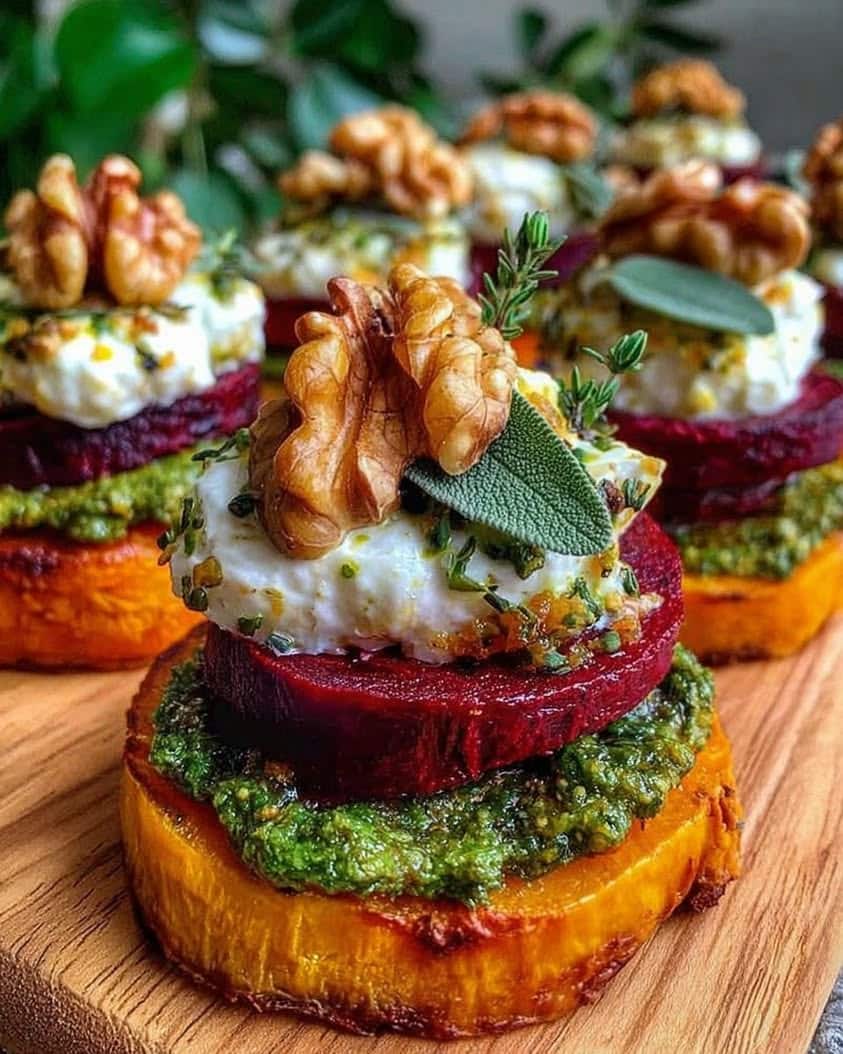
Presentation alternatives allow for more creativity. You can serve this salad in individual parfait glasses for a beautiful, layered appetizer. Another idea is to serve it on a large wooden board with the ingredients separated for a deconstructed look. You can also make beet and citrus carpaccio by slicing the beets and citrus very thinly and arranging them in a pinwheel pattern on a plate.
Serving and Presentation Guide
Plating techniques for this salad can elevate it from a home dish to a restaurant-quality masterpiece. Use a large, white platter for maximum color contrast. Spread the arugula or mixed greens as a bed. Then artfully arrange the beet slices and citrus segments in alternating rows or a circular pattern. This organized arrangement looks very intentional and beautiful. Do not just dump everything in a bowl. The visual presentation is half the appeal of this recipe.
Garnishing ideas add the final polish. After arranging the salad, crumble the feta cheese evenly over the top with your fingers. Sprinkle the toasted walnuts and pomegranate arils on top. Finish with a few small, whole mint or basil leaves for a pop of green. A final drizzle of olive oil or the citrus vinaigrette over the top makes it look glossy and inviting.
Traditional accompaniments to this salad include crusty sourdough bread for sopping up the dressing. It also pairs wonderfully with roasted lamb or chicken. For a lighter meal, serve it alongside a bowl of hearty lentil soup. In the Mediterranean style, it is often served as a meze dish alongside hummus and baba ghanoush.
Modern serving suggestions include using it as a filling for grain bowls. Base your bowl with quinoa or farro, then top with this salad. It also works well as a topping for crostini. Simply pile a little of the salad onto toasted baguette slices for an easy appetizer. You can also serve it as a side to a cheese board for a sophisticated twist.
Temperature considerations are important for the best eating experience. The beets should be at room temperature, not hot or cold. The citrus segments should be cold from the refrigerator. This contrast feels refreshing. The dressing should be at room temperature so it coats the beets and citrus easily. If the dressing is cold from the fridge, it will make the olive oil thick and hard to pour.
Portion control tips help you avoid waste. As a side dish, plan for about one cup of salad per person. As a main course, plan for about one and a half cups. This recipe makes about six generous side servings. If you are serving it as part of a large buffet, you can stretch it to eight servings by adding more greens to the base.
Wine and Beverage Pairing
Wine pairings for this dish should complement its sweet and tangy profile. A dry Riesling from Germany or the Finger Lakes region is an excellent choice. Its high acidity will match the citrus, and its subtle sweetness will echo the beets. Another fantastic option is a Spanish Albariño, which has bright citrus notes and a slightly saline finish that works wonderfully with the feta. For a red wine lover, a light, chilled Pinot Noir or a Beaujolais Cru is perfect. Avoid heavy, oaky reds that will overpower the delicate flavors.
Non-alcoholic alternatives are surprisingly versatile and delicious. A sparkling water with a splash of pomegranate juice and a squeeze of lime is a refreshing and beautiful pairing. Another excellent option is a good quality, unsweetened hibiscus iced tea. The tart, floral notes of hibiscus mirror the pomegranate and citrus beautifully. You can also make a simple orange and mint spritzer by muddling mint leaves with orange juice and topping with soda water.
Coffee and tea pairings can also work if you are serving this as a brunch dish. A light, floral Earl Grey tea with a hint of bergamot complements the citrus flavors nicely. For coffee, a bright, light-roast coffee with notes of fruit and floral undertones is a good choice. Avoid dark, bitter roasts that might clash with the sweetness of the salad.
Temperature considerations for beverages are simple. White wines, sparkling waters, and iced tea should be served well-chilled. Light red wines like Pinot Noir are best served slightly chilled, around 55 degrees Fahrenheit. This slight chill helps the wine cut through the fattiness of the feta and the sweetness of the beets.
Serving suggestions for drinks include offering a non-alcoholic option for designated drivers and children. Having both a still and a sparkling option is always a good idea. If you are serving wine, offer both a white and a red so guests can choose. Remember to have plenty of ice on hand for the non-alcoholic drinks.
Storage and Shelf Life
Storage methods for this salad require a bit of planning if you have leftovers. The key is to store the components separately. The undressed beets and citrus segments can be stored together in an airtight container in the refrigerator. The pomegranate arils and walnuts should be stored separately to keep them from getting soggy. The dressing should be kept in a jar in the fridge.
Temperature requirements are crucial for food safety. All components of this salad are shelf-stable for a few hours at room temperature, but should be refrigerated if not eaten within two hours. The feta cheese and citrus are particularly perishable and should be kept cold. Never leave the assembled salad out for longer than necessary.
Container recommendations include using glass containers with tight-fitting lids for the beets and citrus. This prevents them from absorbing odors from other foods in the refrigerator. The dressing can be stored in any clean jar or bottle. The walnuts should be stored in a separate, dry container at room temperature, or you can freeze them to extend their shelf life.
Signs of spoilage to watch for include a slimy texture on the beets or citrus. If the beets smell sour or fermented, they have gone bad. Citrus that becomes mushy or develops mold should be discarded. The pomegranate arils should look plump and bright. If they are shriveled or have a fermented smell, do not use them. The feta should not have any mold or a sour, ammonia-like smell.
Reheating instructions are not really applicable to this cold salad. However, if you want to serve it slightly warm in the winter, you can gently warm the roasted beets in a low oven or microwave before assembling. Never reheat the entire salad, as the greens will wilt and the feta will melt.
Freezing guidelines are straightforward: do not freeze this salad. The texture of the citrus segments, pomegranate arils, and feta will be completely ruined by freezing. The only component you can freeze is the raw walnuts, which freeze very well. The vinaigrette can also be frozen, but it will need to be vigorously shaken or whisked after thawing to re-emulsify.
Make Ahead Strategies
Prep timeline planning is the secret to stress-free hosting with this salad. Up to three days before serving, you can roast the beets as described. Allow them to cool, then peel and slice them. Store them in a covered container in the fridge. Up to one day before serving, you can segment the citrus and make the vinaigrette. Store the citrus segments and the dressing separately in the fridge.
Storage between steps is simple if you keep things organized. The sliced beets will keep well for up to three days. The citrus segments are best used within 24 hours, but they will hold for up to two days. The vinaigrette can be made a week in advance and stored in the fridge. The walnuts can be toasted three days ahead and kept in an airtight container at room temperature.
Quality impact assessment is important when making ahead. The beets actually improve in flavor after a day or two as the flavors meld. The citrus will lose some of its firmness but will still taste good. The pomegranate arils are best added fresh, as they can release juice and become soft if stored too long. The walnuts will remain crunchy if stored properly.
Assembly tips for the final serving include taking the beets and citrus out of the fridge about 30 minutes before you plan to serve. This allows them to come to room temperature, which helps the flavors shine. Assembly should take less than ten minutes. Lay out the greens, arrange the beets and citrus, crumble the feta, sprinkle the walnuts and pomegranate, and drizzle the dressing.
Reheating guidelines are only relevant if you plan to serve the beets warm. You can reheat the sliced beets in a microwave for about 30 seconds or in a low oven for 5 to 10 minutes. Then let them cool slightly before assembling the salad. Never reheat the entire salad.
Fresh element additions at the end are crucial. Even if you prep everything else, you should add the arugula or mixed greens, the pomegranate arils, and the feta right before serving. These elements are the most delicate and benefit from being as fresh as possible. This final step ensures the best texture and flavor.
Scaling Instructions
Halving the recipe is very straightforward. Simply divide all ingredient amounts by two. Use one large beet or two small ones instead of three. Use one orange and half a grapefruit. You will need half the amount of feta, walnuts, and pomegranate arils. The dressing recipe is also easily halved. This is perfect for a romantic dinner for two or a single lunch.
Doubling or tripling the recipe requires a bit more planning. You will need multiple baking sheets to roast the beets without overcrowding them. Overcrowding will cause them to steam instead of roast, affecting the texture. You will also need a very large platter or two separate platters for serving. The dressing can be made in a larger batch in a bowl or a jar.
Equipment adjustments are necessary for larger batches. If you are doubling, consider using your food processor to slice the beets quickly. A mandoline slicer is also very helpful for achieving even, thin slices. You will need a larger mixing bowl for the vinaigrette. For a very large batch, you can make the dressing in a blender for easier emulsification.
Timing modifications are minimal when scaling. The roasting time for beets remains the same regardless of the quantity. However, you may need to rotate the baking sheets halfway through to ensure even cooking. The prep time for segmenting citrus will increase proportionally. Plan for about 5 minutes per orange and 7 minutes per grapefruit.
Storage considerations for scaled recipes are important. Leftovers from a doubled batch should be stored using the same component-separation method. The dressing will keep for a week, the beets for up to three days. If you have too many leftovers, consider using the salad as a topping for grain bowls or as a wrap filling for lunch the next day.
Nutritional Deep Dive
Macro breakdown for a single serving of this ruby beet & citrus salad with feta and walnuts provides a balanced profile. You get about 350 calories. The majority of these calories come from healthy fats, which is about 25 grams total. You also get around 12 grams of protein from the feta and walnuts. The carbohydrate count is roughly 35 grams, with about 10 grams of fiber. This makes it a very satisfying and energy-dense meal component.
Micronutrient analysis reveals why this salad is a nutritional powerhouse. One serving provides over 50 percent of your daily recommended intake of Vitamin C. It is also a great source of folate, which is crucial for cell growth and metabolism. The beets offer a significant amount of manganese, which is important for bone health and blood clotting. Potassium content is also high, which supports healthy blood pressure.
Health benefits extend beyond simple vitamins. The betalains in beets have potent antioxidant and anti-inflammatory properties. They support liver detoxification and can help lower blood pressure. The omega-3 fatty acids in walnuts are excellent for brain health and reducing inflammation. Pomegranate arils contain unique compounds that are good for heart health and prostate health. This salad is a functional food that provides disease-fighting benefits.
Dietary considerations are very favorable for this recipe. It is naturally gluten-free, making it safe for those with celiac disease or gluten Print
Ruby Beet & Citrus Salad with Pomegranate, Feta & Toasted Walnuts
- Total Time: 1 hour
- Yield: 4
Description
A vibrant and refreshing salad featuring earthy roasted beets, bright citrus segments, juicy pomegranate arils, creamy feta cheese, and crunchy toasted walnuts, all tossed in a zesty citrus vinaigrette.
Ingredients
- 3 medium red beets, trimmed and scrubbed
- 2 oranges (such as navel or blood orange), peeled and segmented
- 1 grapefruit, peeled and segmented
- 1/2 cup pomegranate arils
- 1/2 cup crumbled feta cheese
- 1/3 cup walnut halves, toasted
- 2 tablespoons extra-virgin olive oil
- 1 tablespoon fresh lemon juice
- 1 tablespoon fresh orange juice
- 1 teaspoon honey or maple syrup
- Salt and freshly ground black pepper to taste
- 2 cups mixed baby greens (optional)
Instructions
- Preheat oven to 400°F (200°C). Wrap each beet in foil and roast for 45-60 minutes until tender. Let cool, then peel and cut into wedges or slices.
- While beets roast, toast walnuts in a dry skillet over medium heat for 3-4 minutes until fragrant. Set aside to cool.
- In a small bowl, whisk together olive oil, lemon juice, orange juice, honey, salt, and pepper to make the vinaigrette.
- Arrange mixed greens (if using) on a serving platter. Top with roasted beets, citrus segments, pomegranate arils, feta cheese, and toasted walnuts.
- Drizzle the vinaigrette over the salad just before serving. Toss gently if desired, and serve immediately.
Notes
You can customize the seasonings to taste. For extra flavor, add a sprinkle of fresh mint or dill. Beets can be roasted a day ahead and refrigerated.
- Prep Time: 15 minutes
- Cook Time: 45 minutes
- Method: Salad
- Cuisine: Mediterranean-inspired