The Perfect 20-Minute Balsamic Chicken Breast with Spinach and Tomatoes
Imagine a quick weeknight dinner that tastes like it took hours of effort. That is exactly what you get with this Balsamic Chicken Breast with Spinach and Tomatoes recipe. The magic happens when juicy chicken breast meets a rich, tangy balsamic glaze. Then, you add fresh spinach and sweet cherry tomatoes, and everything comes together in a single skillet. This dish is not just a meal. It is a celebration of simple, high-quality ingredients that work in perfect harmony. You will love how the balsamic vinegar reduces into a syrupy sauce that coats every bite of the chicken.
This recipe is designed for busy home cooks who crave bold flavor without the fuss. You do not need any special culinary training to pull this off. The process is straightforward and fast, making it a fantastic option for those nights when you are short on time but still want a nourishing dinner. The vibrant colors of the dish, from the deep green spinach to the bright red tomatoes, make it visually appealing. More importantly, the taste delivers every single time. This Balsamic Chicken Breast with Spinach and Tomatoes will quickly become a staple in your weekly meal rotation.
Let us talk about the flavor profile of this incredible dish. First, you get the savory, seared goodness of the chicken breast, which provides a perfect canvas. Then, the balsamic vinegar steps in with its sweet and tangy notes, creating a beautiful balance. Furthermore, the spinach adds an earthy, fresh element that softens as it wilts. Finally, the burst of acidity from the cherry tomatoes brightens up the entire plate. Each component plays a vital role, resulting in a wonderfully cohesive dining experience. You will find yourself reaching for seconds, and you will not feel guilty about it because this meal is also packed with nutrients.
Quick Recipe Highlights
- Flavor Profile: The flavor is a beautiful dance between savory and sweet. The balsamic vinegar provides a tangy, slightly sweet glaze that contrasts perfectly with the juicy, mild chicken. Then, the spinach adds an earthy backbone, and the tomatoes contribute a pop of bright acidity, creating a balanced and sophisticated taste.
- Texture: You will experience a delightful range of textures in every forkful. The chicken breast develops a golden, slightly crispy crust on the outside while remaining incredibly tender and moist inside. The spinach is soft and silky, and the tomatoes offer a satisfying burst of juiciness that breaks up the richness.
- Aroma: As you cook, the aroma is intoxicating and inviting. The balsamic vinegar fills your kitchen with a sweet, almost fruity fragrance as it reduces. This mingles with the savory scent of searing chicken and the fresh, green smell of wilting spinach, creating a mouthwatering preview of the meal to come.
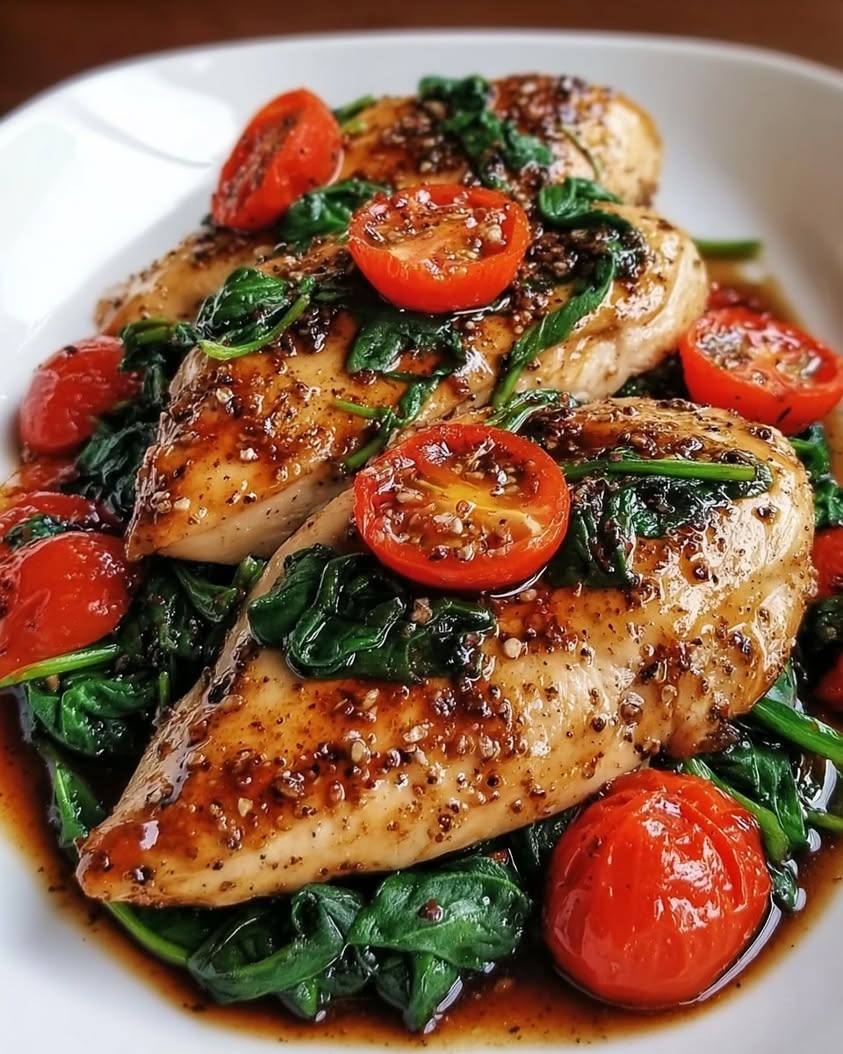
- Visual Appeal: On the plate, this dish is a feast for the eyes. The rich, mahogany-colored balsamic glaze glistens on top of the golden-brown chicken cutlets. The vibrant green of the wilted spinach and the bright red of the cherry tomatoes create a stunning contrast that looks elegant and appetizing.
- Skill Level Needed: This recipe is incredibly approachable for all skill levels. It uses fundamental cooking techniques like searing and pan-sauce making, but everything happens quickly and simply. Even a beginner cook can achieve fantastic results on their very first try, as the instructions are clear and the ingredients do the heavy lifting for you.
- Special Equipment: You only need basic kitchen equipment to prepare this meal. A large, heavy-bottomed skillet like a cast-iron or stainless steel pan is your best friend here. You will also need a sharp knife for trimming the chicken, a cutting board, and a pair of tongs for flipping the meat.
Recipe Overview
- Difficulty Level: I classify this recipe as easy because the techniques are fundamental and the ingredient list is short. You do not need to monitor complex temperatures or perform intricate steps. The entire cooking process happens in one pan, which simplifies cleanup and reduces the chance of making a mistake, making it perfect for a stress-free dinner.
- Category: This recipe fits beautifully into the dinner and main course categories. It is a complete meal in itself, especially when served with a side of crusty bread or over a bed of pasta. It also works wonderfully as a meal-prep lunch, as the flavors hold up well for a few days in the refrigerator.
- Cuisine: This dish is inspired by Italian and Mediterranean culinary traditions. The combination of balsamic vinegar, tomatoes, and fresh greens is a classic hallmark of northern Italian cooking. It emphasizes simplicity and letting the natural flavors of high-quality ingredients shine, which is a core principle of Mediterranean cuisine.
- Cost: The cost of this recipe is very reasonable and budget-friendly. Chicken breast is a widely available and often affordable protein. Balsamic vinegar, spinach, and cherry tomatoes are also everyday ingredients that you can find at any grocery store without breaking the bank, making this an excellent value for such a flavorful dish.
- Season: While you can make this Balsamic Chicken Breast with Spinach and Tomatoes all year round, it shines brightest in the summer and early fall. During these seasons, cherry tomatoes are at their peak sweetness and flavor. However, the ingredients are so readily available that you can enjoy this comforting dish regardless of the weather outside.
- Occasion: This recipe is versatile enough for both casual weeknight dinners and more formal gatherings. It is quick enough for a Tuesday night when you need to get dinner on the table fast. Yet, it is elegant enough to serve to guests at a small dinner party, especially when paired with a nice wine and a simple side dish.
Why You Will Love This Recipe
First and foremost, you will love the incredible taste and texture this recipe delivers. The balsamic vinegar creates a sweet and savory glaze that clings to every piece of chicken. It is not just a flavor on the surface. The tangy glaze penetrates the meat just enough to keep it from being bland. Furthermore, the spinach absorbs the pan juices, which makes it incredibly flavorful instead of watery. The tomatoes offer a burst of freshness that cuts through the richness of the glaze, creating a perfectly balanced bite every single time. This is not just a healthy meal.
The convenience of this recipe is another massive selling point. You can have this entire dish, from start to finish, on the table in just 20 minutes. That is faster than ordering takeout for many people. Moreover, clean-up is a breeze since everything is cooked in a single skillet. You do not have a sink full of pots and pans to wash. This means you can spend less time in the kitchen and more time relaxing with your family or doing something you enjoy. It is the perfect solution for those incredibly busy evenings.
From a nutritional standpoint, this recipe is a powerhouse. Chicken breast is a fantastic source of lean protein, which helps you feel full and satisfied. It also supports muscle growth and repair. Spinach is packed with iron, vitamins A and K, and antioxidants. Additionally, cherry tomatoes are rich in vitamin C and lycopene, a powerful antioxidant. This means you are fueling your body with a meal that tastes amazing and supports your overall health and wellness. You can feel good about serving this to your family.
This dish also excels in social and entertaining value. It looks and tastes like something you might order at a nice restaurant. When you serve this Balsamic Chicken Breast with Spinach and Tomatoes to guests, they will be impressed by the elegant presentation and the complex flavors. Yet, you can pull it off effortlessly without spending the entire evening in the kitchen. This gives you more time to actually enjoy the company of your friends and family, which is what entertaining is truly all about.
Finally, this recipe is incredibly cost-effective and uses accessible ingredients. Unlike some gourmet recipes that call for obscure or expensive items, this one uses staples you can find in any supermarket. Balsamic vinegar and cherry tomatoes are common pantry items for many cooks. This means you can create a restaurant-quality meal without making a special trip to a specialty store or spending a lot of money. It demonstrates that you do not need a huge budget to eat well.
Historical Background and Cultural Significance
The story of this dish is deeply rooted in the traditions of the Emilia-Romagna region of Italy. This area is the historic home of balsamic vinegar, specifically the Aceto Balsamico Tradizionale di Modena. For centuries, families have been making this dark, complex vinegar by cooking down grape must and aging it in a series of wooden barrels. The vinegar was a prized possession, often given as a dowry or a gift to mark special occasions. Our recipe is a modern, everyday adaptation of this ancient ingredient.
Balsamic vinegar holds immense cultural importance in Italian cuisine. It is not just a condiment. It represents a tradition of patience, craftsmanship, and respect for natural ingredients. The slow aging process transforms simple grape juice into something magical. In this recipe, we are using a more accessible balsamic vinegar, but we are still honoring that tradition. We are using it to elevate a simple pan-seared chicken breast into something truly special. This demonstrates how a little bit of culture can transform a weeknight meal.
The recipe has evolved significantly from its humble origins. Originally, traditional balsamic vinegar was used sparingly, often just drizzled over strawberries or aged Parmesan cheese. However, as global cuisine expanded, chefs began experimenting with it in savory applications. The idea of using it as a glaze for meat, particularly chicken, became popular in the late 20th century. The addition of spinach and tomatoes is a more modern, health-conscious twist that adds color, nutrients, and flavor complexity. This evolution shows how traditional ingredients can find new life in contemporary cooking.
Regional variations of this basic concept are common throughout Italy and the world. In Tuscany, you might find a similar dish made with a Chianti wine reduction instead of balsamic. In the south, cooks might add capers and olives for a briny kick. In the United States, we have embraced the convenience and bold flavor of this dish, often serving it over pasta or with a side of roasted potatoes. Each variation is a testament to the versatility of the core idea, demonstrating how a simple technique can be adapted to local tastes and pantry items.
Ingredient Deep Dive
Balsamic vinegar is the star of this dish, and its history is as rich as its flavor. This vinegar has been produced in Italy since the Middle Ages and was initially used as a medicinal tonic. Over time, it became a culinary treasure. The traditional version is aged for 12 to 25 years and costs a fortune. For this recipe, a high-quality grocery store balsamic works perfectly. When you buy it, look for one that is made in Modena and has a thick, syrupy consistency. It should have a balance of sweetness and acidity. Store it in a cool, dark cabinet and it will last for years. You can substitute it with a good balsamic glaze or even a combination of red wine vinegar and a pinch of sugar if you need a quick replacement.
Chicken breast is the main protein, and it is a staple in healthy cooking worldwide. It is lean, versatile, and cooks quickly, making it perfect for weeknight meals. Chicken is an excellent source of high-quality protein, which is essential for building and repairing tissues. It is also a good source of B vitamins, which help your body convert food into energy. When you are shopping, look for chicken breasts that are plump and uniform in thickness for even cooking. I often recommend buying them on sale and freezing them individually. Just wrap each breast tightly in plastic wrap and then put them all in a freezer bag. For a richer flavor, you can substitute with chicken thighs, though the cook time will be slightly longer.
Fresh spinach is a nutritional powerhouse that adds a wonderful earthy flavor and beautiful green color to the dish. It is native to Persia but is now grown and eaten all over the world. Spinach is incredibly rich in iron, calcium, and vitamins A, C, and K. It also contains antioxidants that help protect your body from damage. When you are at the store, look for leaves that are vibrant green and crisp, not limp or yellow. Baby spinach is the best choice for this recipe because it is tender and wilts quickly. You can store it in the refrigerator in its original bag or in a container with a damp paper towel to keep it fresh for longer. If you do not have spinach, you can absolutely use kale or Swiss chard, though you will need to cook them a few minutes longer.
Cherry tomatoes provide a burst of sweetness and acidity that cuts through the richness of the balsamic glaze. These little gems are a modern variety that was developed in the 1970s. They are essentially a small, sweet version of the standard tomato. Cherry tomatoes are packed with vitamin C and lycopene, a powerful antioxidant that is good for your heart. When you buy them, choose ones that are firm, glossy, and heavy for their size. Avoid any that are soft or have wrinkled skin. Store them on the counter at room temperature for the best flavor, not in the fridge. If you cannot find cherry tomatoes, grape tomatoes or even a chopped Roma tomato will work as a substitute.
Garlic and olive oil are the unsung heroes of this recipe. Garlic adds a pungent, savory base flavor that is essential to Mediterranean cooking. It has been used for thousands of years, both for its flavor and its medicinal properties. Garlic is good for your immune system and can help lower blood pressure. For the best flavor, buy fresh garlic cloves and mince them yourself. Pre-minced garlic from a jar will not give you the same aromatic punch. Olive oil is the cooking fat of choice here. It adds a fruity, peppery flavor and helps you achieve that beautiful golden sear on the chicken. Use a good quality extra-virgin olive oil for the best results. Store it in a cool, dark cupboard.
Common Mistakes to Avoid
- Overcooking the chicken is the most common mistake people make. You are looking for an internal temperature of 165 degrees Fahrenheit. Using a meat thermometer takes the guesswork out of this process. If you do not have one, cook until the juices run clear and the meat is no longer pink in the center.
- Not patting your chicken dry before seasoning is a mistake you should avoid. Moisture is the enemy of a good sear. Pat the chicken breasts thoroughly with paper towels before you add any seasoning. This simple step ensures you get a beautiful, golden-brown crust.
- Using a pan that is too small will cause you problems. If the chicken is crowded in the pan, it will steam instead of sear. This prevents that lovely brown crust from forming. Use a large skillet that gives each piece of chicken some space to breathe.
- Adding the spinach all at once can make it difficult to wilt evenly. You should add the spinach in handfuls, letting each batch wilt down before you add the next. This ensures that all the spinach gets coated in the pan juices and cooks properly.
- Forgetting to let the chicken rest after cooking is a big mistake. You should let the chicken rest for at least five minutes after you take it out of the pan. This allows the juices to redistribute throughout the meat, resulting in a much more tender and flavorful final product.
- Using low-quality balsamic vinegar will impact the final flavor. A cheap balsamic vinegar can be thin and overly acidic. It will not reduce into a nice, syrupy glaze. Spend a little extra on a decent bottle for a much better result.
- Adding the tomatoes too early will make them mushy. You want the tomatoes to just heat through and slightly blister, not cook down into a sauce. Add them during the last minute or two of cooking for the best texture.
- Not seasoning the spinach is a subtle but important mistake. The spinach itself is quite mild. You should season it with a little salt and pepper, or even a pinch of red pepper flakes, to bring out its flavor and make it more delicious.
Essential Techniques
The first and most important technique here is how to properly sear a chicken breast. Searing is not just about cooking the meat. It is about creating a flavorful, caramelized crust on the outside that adds texture and depth of flavor. To master this, start with a hot pan and a thin layer of hot olive oil. Place the chicken in the pan and do not touch it for a solid 4 to 5 minutes. The chicken will naturally release from the pan when it is ready to be flipped. If you try to move it too early, it will stick and tear. A common pitfall is not getting the pan hot enough, which leads to steaming and a pale, unappetizing chicken. The visual cue for success is a deep, golden-brown crust on the bottom of the chicken.
The second essential technique is reducing the balsamic vinegar into a glaze. This process concentrates the flavor and thickens the vinegar into a syrupy consistency that clings to the chicken beautifully. Why is this important? Because a raw balsamic vinegar is too sharp and thin to serve as a sauce. To master it, once you have removed the chicken from the pan, add the balsamic vinegar directly to the hot pan. Let it come to a simmer and cook for 2 to 3 minutes, scraping up any browned bits from the bottom of the pan. A common pitfall is boiling it for too long, which can make it bitter. The visual cue for success is when the vinegar has reduced by about half and coats the back of a spoon.
Finally, you need to master the art of wilting spinach in a hot pan. This technique is quick and transforms a large pile of raw leaves into a tender, flavorful side dish in minutes. The key is to use high heat and work quickly. Once the spinach hits the hot pan, it will start to shrink almost immediately. Use your tongs to toss it constantly so that all the leaves come into contact with the heat and the pan juices. A common pitfall is overcooking the spinach until it becomes mushy and releases all its water. The visual cue for success is when the spinach is bright green and just barely wilted, which should take less than a minute.
Pro Tips for Perfect Balsamic Chicken Breast with Spinach and Tomatoes
- For the most tender chicken, consider brining the breasts for 30 minutes before you cook. A simple brine of salt and water helps the meat retain moisture during cooking. Even a quick brine makes a noticeable difference in texture.
- Use a meat thermometer to check for doneness. This is the single best way to ensure your chicken is cooked perfectly every time. The internal temperature should read 165 degrees Fahrenheit in the thickest part of the breast.
- Do not overcrowd the pan when you sear the chicken. Cook the chicken in batches if you need to. Overcrowding lowers the pan temperature and causes the chicken to steam, which prevents that beautiful golden crust from forming.
- Add a pat of butter to the pan with the balsamic vinegar. This adds a touch of richness and helps the glaze become silky and smooth. It also helps the sauce cling better to the chicken.
- Crush a clove of garlic with the back of your knife and add it to the pan while the chicken is searing. This infuses the oil with a subtle garlic flavor without burning the garlic itself. Remove the clove before you add the vinegar.
- Use high-quality balsamic vinegar. The flavor of the glaze is directly related to the quality of the vinegar you use. A better vinegar will have a more complex, less harsh flavor and a thicker consistency.
- Let the pan reheat before you add the spinach. After you remove the chicken and make the glaze, give the pan a few seconds to get hot again. This high heat will wilt the spinach in seconds, not minutes.
Variations and Adaptations
Regional variations of this dish are fun to explore. For a Tuscan-inspired twist, add a few slices of sun-dried tomatoes and some white beans to the pan with the spinach. This adds a heartier texture and a deeper, more concentrated tomato flavor. You can also use a splash of red wine instead of balsamic vinegar for a completely different but equally delicious sauce. If you are in a hurry, you can use a pre-made balsamic glaze from the store, which will save you the step of reducing the vinegar yourself.
Seasonal adaptations are a great way to keep this recipe fresh all year long. In the spring, swap the cherry tomatoes for roasted asparagus spears. In the fall, add some sliced mushrooms and a handful of fresh sage leaves with the spinach. During the winter, you can use canned diced tomatoes and roasted butternut squash for a more hearty and comforting meal. These simple swaps allow you to cook with what is freshest and most flavorful at any given time of the year.
Dietary modifications are very easy to make with this recipe. To make it gluten-free, simply serve it alongside quinoa or roasted potatoes instead of pasta or bread. For a dairy-free version, skip the optional butter in the glaze and just use olive oil. To make it low-carb or keto, you can serve the chicken and vegetables over a bed of cauliflower rice or zucchini noodles. The dish itself is naturally packed with flavor, so you will not miss the carbs.
Flavor variations can completely transform this dish. For a spicy kick, add a pinch of red pepper flakes when you add the tomatoes. For an herby version, toss in a handful of fresh basil or oregano right before you serve the dish. For a creamier texture, you can stir in a tablespoon of heavy cream or cream cheese at the very end to create a blush sauce. Each of these variations keeps the core of the recipe the same but changes the final flavor profile significantly.
Serving and Presentation Guide
Plating this dish is simple but impactful. First, create a bed of the wilted spinach on the plate. Then, place a juicy chicken breast right in the center of the spinach. Next, spoon the blistered cherry tomatoes and any remaining balsamic glaze from the pan over the top of the chicken and around the plate. This creates a beautiful, restaurant-quality presentation with very little effort. The dark green of the spinach contrasts perfectly with the rich brown of the chicken and the bright red of the tomatoes.
Garnishing ideas can elevate the dish even further. A few fresh basil leaves or a sprinkle of freshly grated Parmesan cheese adds a pop of color and flavor. You can also drizzle a little more high-quality olive oil on top for a glossy finish. A sprinkle of flaky sea salt, like Maldon salt, adds a nice crunch and a burst of saltiness that complements the sweet balsamic glaze. These simple touches make the dish feel special without adding much work.
Traditional accompaniments for this dish include crusty Italian bread or a side of pasta. The bread is perfect for sopping up any leftover balsamic glaze on the plate. A side of garlic mashed potatoes or creamy polenta also works wonderfully. For a lighter meal, you can serve it with a simple arugula salad dressed with lemon juice and olive oil. The possibilities are endless, and each side dish changes the character of the meal in a different way.
Temperature considerations are crucial for the best dining experience. You should serve this dish hot, right after you have finished cooking it. The spinach will start to release its liquid and become watery if it sits for too long. The chicken is also best enjoyed fresh from the pan, while the crust is still crispy and the interior is at its most tender. Reheating leftovers is possible, but the chicken will not be as juicy, and the spinach will be much darker and softer.
Wine and Beverage Pairing
When it comes to wine pairing for this Balsamic Chicken Breast with Spinach and Tomatoes, you have several excellent options. The tangy balsamic glaze and the sweet tomatoes call for a wine that can stand up to acidity. A medium-bodied red wine, such as a Chianti or a Montepulciano dAbruzzo, is a classic Italian choice. These wines have enough fruit to match the sweetness of the tomatoes and enough acidity to cut through the richness of the balsamic. A Pinot Noir is another fantastic choice, as its earthy notes complement the spinach beautifully.
For those who prefer white wine, a dry Italian white like a Verdicchio or a Soave works surprisingly well. These wines have a crisp acidity that cleanses the palate and a subtle fruitiness that does not overpower the chicken. A Sauvignon Blanc from New Zealand or California can also work, especially if you enjoy a more herbaceous flavor profile. The key is to choose a wine that is not oaked, as oak can clash with the acidity of the balsamic vinegar.
If you are looking for non-alcoholic alternatives, there are many delicious options. A simple sparkling water with a squeeze of lemon or lime is a refreshing and palate-cleansing choice. You can also make a mocktail by combining sparkling water with a splash of pomegranate or cranberry juice and a sprig of rosemary. The slight sweetness and tartness of the juice echo the flavors in the dish. For a warm beverage, a mug of herbal tea, like a chamomile or a mint tea, can be a soothing end to a meal.
Storage and Shelf Life
Proper storage is key to maintaining the quality of your leftover Balsamic Chicken Breast with Spinach and Tomatoes. You should allow the dish to cool completely to room temperature before you store it. Then, place the chicken, spinach, and tomatoes in an airtight container. The spinach will release some liquid, so it is a good idea to store the components separately if you can. If you store them together, it is not a problem, but the spinach will be slightly wetter when you reheat it.
The ideal storage temperature is in the refrigerator at 40 degrees Fahrenheit or below. Your leftovers will stay good for up to three to four days. I do not recommend leaving the dish out at room temperature for more than two hours. This is a food safety rule that is important to follow. When you are ready to eat your leftovers, the best way to reheat them is in a skillet on the stovetop. You can add a tiny splash of water or chicken broth to help rehydrate the spinach and chicken.
I do not recommend freezing this particular dish. The spinach and tomatoes have a high water content, and they become mushy and watery when you freeze and thaw them. The chicken breast can also become dry and stringy. If you want to make a freezer-friendly meal, I would suggest cooking just the chicken in the balsamic glaze and freezing that separately. Then, you can add fresh spinach and tomatoes when you are ready to serve the dish. This is a much better approach for preserving the quality of the final meal.
Make Ahead Strategies
You can absolutely use make-ahead strategies to save time on a busy weeknight. The best way to do this is to prepare the components ahead of time. You can trim and season the chicken breasts the night before. You can also wash and dry the spinach and cut the cherry tomatoes in half. Then, store everything in separate containers in the refrigerator. When you are ready to cook, all you have to do is take the ingredients out of the fridge and start searing the chicken. This cuts your active prep time to almost nothing.
Another great make-ahead strategy is to cook the entire dish and then store it. As I mentioned, it will keep well in the refrigerator for three to four days. This makes it an excellent choice for meal prepping on a Sunday. You can portion it out into individual containers for easy lunches throughout the week. When you reheat it, consider adding a tiny splash of water or broth to the pan to help the spinach steam and become tender again. The flavor will still be fantastic.
The quality of the dish does take a small hit when you make it fully ahead. The spinach will not be as bright green or as firm as it is when you cook it fresh. The chicken will also not have the same crisp crust. However, for the convenience factor, it is a trade-off that many people are happy to make. If you are having guests, I always recommend cooking this dish fresh. But for a weekday lunch, the make-ahead version is still incredibly delicious and satisfying.
Scaling Instructions
Halving this recipe is very straightforward. You will use one large chicken breast and cut it in half horizontally to create two cutlets. You will need about half the amount of spinach and tomatoes. The cook time will be roughly the same, but you should keep an eye on the chicken to make sure it does not overcook. The balsamic glaze will reduce faster because there is less volume, so watch it closely. This is a perfect way to cook a dinner for two people.
Doubling or tripling the recipe is also easy, but you must pay attention to your equipment. Do not try to cook all the chicken in one pan at the same time. You will need to sear the chicken in batches to avoid overcrowding. Once all the chicken is seared and you have set it aside, you can deglaze the pan with the balsamic vinegar. You might need to add a little extra vinegar if the pan is very dry. The rest of the process remains the same, but you will need a larger pile of spinach, which you can add in handfuls.
Storage considerations change when you scale this recipe up. You will likely have more leftovers, so you will need more airtight containers. The dish will still only last for three to four days in the refrigerator. Plan to eat your leftovers within that time frame. If you are scaling up for a large party, I suggest cooking the chicken and making the glaze, but adding the spinach and tomatoes just before you serve the meal. This ensures that the vegetables remain vibrant and have the best texture possible.
Nutritional Deep Dive
This Balsamic Chicken Breast with Spinach and Tomatoes is a nutritionally balanced meal. The macro breakdown is excellent for anyone looking to eat healthy. A single serving contains a high amount of lean protein from the chicken breast, which is great for satiety and muscle building. The carbohydrates come primarily from the tomatoes and the small amount of sugar in the balsamic vinegar, and they are relatively low. The fat content comes from the olive oil used for searing, which is mostly heart-healthy unsaturated fat.
On a micronutrient level, this dish is a powerhouse. The spinach is loaded with iron, which is essential for carrying oxygen in your blood. It is also an excellent source of vitamin K for bone health and vitamin A for eye health. The tomatoes are rich in vitamin C, which supports your immune system, and lycopene, a powerful antioxidant. The balsamic vinegar also contains some beneficial antioxidants from the grapes. This meal is a fantastic way to get a wide variety of essential vitamins and minerals in a single, delicious plate of food.
The health benefits of this dish go beyond just its nutrients. The high protein content helps keep your blood sugar stable and prevents energy crashes. The combination of protein and fiber from the vegetables promotes a feeling of fullness, which can help with weight management. The healthy fats from the olive oil support brain health and reduce inflammation. This recipe is a great example of how a simple, home-cooked meal can support your overall health and well-being in multiple ways.
Dietary Adaptations
For a gluten-free adaptation, this recipe is naturally very close to perfect. None of the core ingredients contain gluten. You simply need to be mindful of what you serve it with. Avoid pasta and opt for rice, quinoa, cauliflower rice, or roasted potatoes. You should also check your balsamic vinegar label, as some cheaper brands may be processed in facilities that handle wheat. However, most high-quality balsamic vinegars are naturally gluten-free. This makes it a safe and delicious choice for those with celiac disease or gluten sensitivity.
For a dairy-free adaptation, this recipe is already nearly dairy-free. The only potential dairy ingredient is the optional butter you might add to the glaze at the end. Simply omit the butter, and the dish is completely dairy-free. You can also use a dairy-free butter alternative if you want that richness. The olive oil provides plenty of flavor and helps create a beautiful crust on the chicken. This adaptation is very simple and does not change the character of the dish at all.
For a low-carb or keto adaptation, this dish is an excellent choice. The chicken and spinach are both very low in carbohydrates. The tomatoes and balsamic vinegar do contain some carbs and sugar, so you should be mindful of portion sizes. To make it even lower in carbs, you can reduce the amount of balsamic glaze you use or substitute a sugar-free balsamic vinegar. Serve it over cauliflower rice or a simple green salad to keep the carbs to a minimum. The high fat and protein content makes it very satisfying on a keto diet.
Troubleshooting Guide
One common texture issue is dry, tough chicken. This almost always happens because the chicken is overcooked. To fix this, you should use a meat thermometer to cook the chicken to exactly 165 degrees Fahrenheit, and then remove it from the heat immediately. Another cause can be cooking the chicken at too high a heat for too long, which dries out the exterior before the interior is cooked. A gentle medium-high heat is ideal for a good sear without burning.
Another issue is a bitter balsamic glaze. This happens if you reduce the vinegar for too long or if the pan is too hot. The sugars in the vinegar can burn, creating a bitter taste. To fix this, you should only reduce the vinegar until it is slightly thickened and coats the back of a spoon. If you do accidentally burn it, you must discard it and start over. There is no way to fix burned balsamic, Print
Balsamic Chicken Breast with Spinach and Tomatoes
- Total Time: 30 minutes
- Yield: 4
Description
Juicy chicken breasts are pan-seared and simmered in a tangy balsamic glaze with fresh spinach and cherry tomatoes for a quick and flavorful weeknight dinner.
Ingredients
- 4 boneless, skinless chicken breasts
- 2 tablespoons olive oil
- 3 cloves garlic, minced
- 1 cup cherry tomatoes, halved
- 4 cups fresh spinach
- 1/3 cup balsamic vinegar
- 2 tablespoons honey
- 1/2 teaspoon salt
- 1/4 teaspoon black pepper
- Fresh basil for garnish (optional)
Instructions
- Season chicken breasts with salt and pepper on both sides.
- Heat olive oil in a large skillet over medium-high heat. Add chicken and cook for 5-6 minutes per side until golden brown and cooked through. Remove chicken from skillet and set aside.
- In the same skillet, add minced garlic and cook for 30 seconds. Add cherry tomatoes and cook for 2 minutes until slightly softened.
- Add balsamic vinegar and honey to the skillet, stirring to combine. Let the sauce simmer for 2 minutes until slightly thickened.
- Add fresh spinach and cook for 1-2 minutes until wilted.
- Return chicken to the skillet, spooning the balsamic tomato spinach mixture over the top. Cook for 1 more minute to heat through.
- Garnish with fresh basil if desired and serve immediately.
Notes
You can customize the seasonings to taste. For a low-carb option, replace honey with a sugar-free sweetener.
- Prep Time: 10 minutes
- Cook Time: 20 minutes
- Method: Main
- Cuisine: American