Balsamic Chicken with Spinach and Tomatoes Easy One Pan Dinner
You will absolutely love this Balsamic Chicken with Spinach and Tomatoes Easy One Pan Dinner because it combines bold flavors with effortless cleanup. The tangy balsamic vinegar creates a rich, slightly sweet glaze that perfectly complements the juicy chicken breast. Fresh spinach wilts into the sauce, while cherry tomatoes burst with sweetness, making every bite incredibly satisfying. This dish feels elegant enough for a dinner party but is simple enough for a busy weeknight. The aroma of garlic and herbs fills your kitchen, promising a comforting meal that delights all the senses. You will find that this recipe delivers restaurant-quality flavor with minimal effort and common pantry ingredients.
This Balsamic Chicken with Spinach and Tomatoes Easy One Pan Dinner is versatile and forgiving, meaning it works wonderfully for both novice cooks and experienced home chefs. The cooking process is straightforward: you sear the chicken first, then build the sauce directly in the same skillet. This technique locks in moisture and ensures every piece of chicken absorbs the delicious balsamic reduction. The spinach wilts down significantly, so do not be shy when adding it to the pan. The tomatoes soften just enough to release their juices, creating a natural sauce that pairs beautifully with crusty bread, rice, or pasta. You can have this complete meal on the table in just over thirty minutes.
Quick Recipe Highlights
- Flavor Profile: This dish offers a perfect balance of tangy balsamic vinegar, savory garlic, and sweet roasted tomatoes. The spinach adds a mild, earthy note that rounds everything out nicely. A hint of red pepper flakes provides gentle warmth without overpowering the other ingredients.
- Texture: The chicken breast remains tender and juicy thanks to the quick sear and simmering method. The spinach becomes silky and soft, while the tomatoes retain a slight firmness with a burst-in-your-mouth quality. The sauce has a velvety consistency that coats each piece of chicken beautifully.
- Aroma: Your kitchen will smell inviting with the fragrance of sautéed garlic and the deep, sweet acidity of balsamic vinegar. Fresh basil or thyme adds herbaceous notes that complement the savory chicken. This aroma signals a comforting, home-cooked meal ready to enjoy.
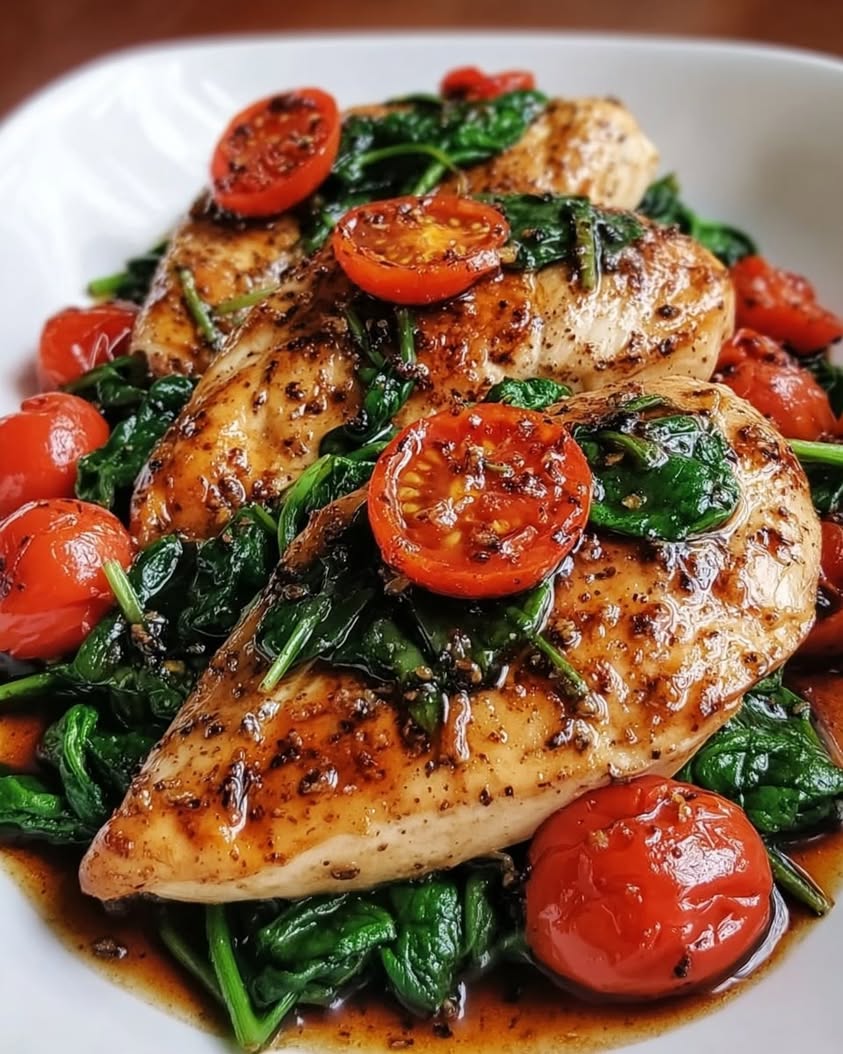
- Visual Appeal: The vibrant green spinach contrasts beautifully with the deep red tomatoes and golden-brown chicken. A drizzle of balsamic glaze adds a glossy sheen that makes the dish look professionally plated. Fresh herbs scattered on top provide a bright, finished appearance.
- Skill Level Needed: This recipe requires basic knife skills for chopping garlic and halving tomatoes. You also need to know how to sear chicken breast without burning it. If you can follow simple stovetop instructions, you can easily master this dish on your first attempt.
- Special Equipment: A large, heavy-bottomed skillet or cast iron pan works best for even heat distribution. You will need a sharp chef knife, a cutting board, and a wooden spoon or spatula. A meat thermometer helps ensure the chicken reaches a safe internal temperature of 165 degrees Fahrenheit.
Recipe Overview
- Difficulty Level: This recipe is rated easy because it uses straightforward techniques and common ingredients. You do not need to perform complex cooking methods like poaching or braising. The one-pan approach eliminates multiple steps, making the process stress-free and enjoyable for any home cook.
- Category: This dish fits perfectly into the main course category for lunch or dinner. It also works well as a high-protein meal prep option for the workweek. You can serve it alongside roasted vegetables, a fresh salad, or over your favorite grain for a complete meal.
- Cuisine: The inspiration draws from Italian and Mediterranean cooking traditions that emphasize fresh ingredients and bold flavors. Balsamic vinegar originates from Modena, Italy, where it has been crafted for centuries. This recipe pays homage to that culinary heritage while staying accessible for modern American kitchens.
- Cost: The ingredients are budget-friendly, with chicken breast often available at reasonable prices. Spinach and tomatoes are inexpensive produce staples found year-round. You likely already have balsamic vinegar, garlic, and olive oil in your pantry, which reduces your overall shopping list.
- Season: This dish shines in summer when fresh tomatoes and basil are at their peak flavor. However, you can enjoy it year-round using grocery store ingredients without sacrificing taste. The bright, acidic flavors also provide a welcome contrast to heavier winter meals.
- Occasion: This recipe suits casual weeknight dinners, meal prepping for the week, and even impressing guests at a dinner party. It is elegant enough for a romantic date night but quick enough for a family meal. You can also bring it to potlucks or serve it as part of a larger spread.
Why You Will Love This Recipe
The taste and texture appeal of this dish is undeniable because the balsamic reduction creates a complex sweet and sour profile. Each bite of chicken offers a caramelized exterior with a moist, tender interior. The spinach adds a pleasant earthiness, while the tomatoes provide bursts of acidity that cut through the richness. The combination of textures keeps your palate engaged from the first forkful to the last. You will appreciate how the flavors meld together without any one ingredient overwhelming the others. This harmony makes the dish feel both comforting and sophisticated.
Convenience and preparation benefits make this recipe a standout choice for anyone with a busy schedule. You only need one pan, which means less time washing dishes and more time enjoying your meal. The total hands-on time is minimal because most of the cooking happens while you prepare a side dish or set the table. You can also prep the ingredients in advance by mincing garlic and halving tomatoes ahead of time. This flexibility allows you to adapt the recipe to your specific timeline and energy levels. The simple steps ensure that cooking remains a pleasure rather than a chore.
Nutritional advantages are significant because this meal packs lean protein, vitamins, and minerals into one satisfying plate. Chicken breast provides high-quality protein with low saturated fat, supporting muscle health and satiety. Spinach delivers iron, vitamin K, and antioxidants that promote overall wellness. Tomatoes contribute lycopene and vitamin C, which boost immune function and skin health. You can feel good about serving this nourishing dish to your family without compromising on flavor. The moderate portion size also helps with weight management when paired with vegetables or whole grains.
Social and entertaining value is high because this dish looks and tastes impressive with minimal effort. Guests will assume you spent hours in the kitchen when you actually whipped it up in under forty minutes. The vibrant colors and aromatic sauce create an inviting presentation that feels special. You can easily double the recipe for larger gatherings without any extra hassle. The one-pan method also means you can focus on your guests instead of juggling multiple pots and pans. This recipe earns you praise without sacrificing your valuable time or energy.
Cost-effectiveness and accessibility are major draws because the ingredient list is short and affordable. Chicken breast is often on sale at grocery stores, and you can substitute chicken thighs for even more savings. Spinach and tomatoes are available year-round for reasonable prices. Balsamic vinegar, garlic, and olive oil are pantry staples that you likely already have. This recipe empowers you to create a restaurant-caliber meal without breaking your budget. You will also reduce food waste by using fresh produce that you can buy in small quantities.
Historical Background and Cultural Significance
Balsamic vinegar, the star ingredient in this dish, originated in the Emilia-Romagna region of Italy over a thousand years ago. Traditional balsamic vinegar comes from Trebbiano and Lambrusco grape must that ages for years in wooden barrels. This artisanal product was historically reserved for nobility and special occasions. The vinegar was considered a luxury item and a symbol of wealth. Today, commercial versions make this flavor accessible to home cooks everywhere. The evolution of balsamic vinegar from a rare delicacy to a pantry staple reflects changing food culture and global trade.
Chicken breast has a long history as a lean protein source across many cultures, including Italian and American cuisine. Italians often prepare chicken breast with simple sauces that highlight fresh herbs and quality olive oil. In the United States, chicken breast gained popularity as a health-conscious alternative to red meat. The combination of chicken with balsamic vinegar became fashionable in the late twentieth century as Mediterranean flavors spread. This fusion of ingredients represents the global exchange of culinary ideas. The resulting dish feels both timeless and modern at the same time.
The one-pan cooking method has deep roots in peasant cooking traditions where efficiency and resourcefulness were essential. Women would use a single pot or pan to cook entire meals to save fuel and minimize cleanup. This practical approach allowed families to combine ingredients in creative ways. The technique has experienced a resurgence in modern cooking because of its convenience and ability to develop flavor. One-pan meals now symbolize a return to simple, honest cooking that respects both time and ingredients. This recipe honors that tradition while adapting to contemporary tastes.
Regional variations of this dish appear throughout Italy and the Mediterranean region. In Southern Italy, cooks might add capers and olives for a briny twist. The northern regions often incorporate cream or cheese for a richer sauce. Greek variations might use lemon juice and oregano instead of balsamic vinegar. Each adaptation reflects local ingredient availability and cultural preferences. This recipe captures the essence of these traditions while remaining flexible for home cooks to customize. The versatility of the dish ensures its continued popularity across different culinary landscapes.
Ingredient Deep Dive
Chicken Breast: Chicken breast has been a dietary staple for centuries due to its mild flavor and lean protein content. It became particularly popular in the United States during the mid-twentieth century as part of the health food movement. Nutritionally, chicken breast provides about 31 grams of protein per three-ounce serving with minimal fat. It also supplies B vitamins, selenium, and phosphorus for energy and bone health. When selecting chicken breast, look for pink, moist flesh with no discoloration or strong odor. You can successfully substitute boneless skinless chicken thighs for a juicier result that is slightly more forgiving.
Balsamic Vinegar: Balsamic vinegar transforms from grape must into a complex condiment through years of aging in wooden barrels. Traditional balsamic vinegar requires at least twelve years of aging to develop its signature sweetness and thickness. The vinegar contains antioxidants that support cardiovascular health and may aid digestion. For this recipe, choose a quality commercial balsamic vinegar that balances sweetness with acidity. Store balsamic vinegar in a cool, dark place away from direct sunlight to preserve its flavor. If you do not have balsamic vinegar, you can substitute a mix of red wine vinegar and a small amount of honey or maple syrup.
Spinach: Spinach originated in ancient Persia and traveled along trade routes to become a global green leafy vegetable. It gained a reputation for its iron content, which was notoriously overestimated due to a decimal error. Nutritionally, spinach is packed with vitamin K, vitamin A, vitamin C, and folate. It also contains lutein and zeaxanthin that support eye health. Select spinach leaves that are crisp, dark green, and free from yellowing or wilting. Store spinach in the refrigerator in a breathable bag and use it within a few days for best quality. You can substitute kale, Swiss chard, or arugula for different flavor profiles.
Cherry Tomatoes: Cherry tomatoes originated in South America and were domesticated in Mexico before spreading worldwide. They offer a concentrated sweetness and acidity that larger tomatoes often lack. These small tomatoes are rich in lycopene, an antioxidant linked to reduced risk of certain cancers. They also provide vitamin C and potassium for immune and heart health. Choose cherry tomatoes that are firm, plump, and brightly colored with no blemishes or soft spots. Store them at room temperature for best flavor or in the refrigerator if you need them to last longer. Grape tomatoes work as a substitute, though they are slightly firmer when cooked.
Garlic: Garlic has been revered for thousands of years in both culinary and medicinal contexts across many cultures. Ancient Egyptians used garlic for strength and endurance, while Greeks and Romans valued it for its therapeutic properties. Garlic contains allicin, a compound with antimicrobial and heart-protective benefits. It also adds depth and aroma that enhances almost any savory dish. Select firm bulbs with tight, unbroken skin and no sprouting green shoots. Store garlic in a cool, dry, well-ventilated area away from sunlight. You can substitute one-eighth teaspoon of garlic powder per clove, though fresh garlic provides superior flavor.
Olive Oil: Olive oil is a cornerstone of Mediterranean cuisine with a history stretching back over four thousand years. It was valued by ancient civilizations for cooking, lighting, and religious ceremonies. Extra virgin olive oil contains healthy monounsaturated fats and polyphenols that reduce inflammation. It also provides vitamin E, an antioxidant that supports skin and immune health. Choose extra virgin olive oil in dark glass bottles to protect it from light degradation. Store olive oil in a cool, dark cabinet and use it within six months for peak flavor. You can substitute avocado oil or grapeseed oil for a neutral flavor, though you will miss the fruity notes.
Fresh Herbs: Fresh basil or thyme elevate this dish with bright, aromatic notes that complement the balsamic vinegar. Basil originated in India and became integral to Italian cuisine, especially in pesto and tomato dishes. Thyme has a long history in Mediterranean cooking and was used by ancient Egyptians for embalming. Both herbs provide antioxidants and anti-inflammatory compounds that support overall health. Select herbs with vibrant color, firm stems, and no yellowing or wilting leaves. Store fresh herbs upright in a glass of water or wrapped in damp paper towels in the refrigerator. Dried herbs work in a pinch, but use one-third the amount since they are more concentrated.
Common Mistakes to Avoid
- Overcooking the chicken breast is the most common mistake because it turns dry and tough quickly. Use a meat thermometer to ensure the internal temperature reaches exactly 165 degrees Fahrenheit. Remove the chicken from the pan as soon as it hits this temperature to prevent carryover cooking.
- Adding too much balsamic vinegar at once can make the sauce overly tart and thin. Start with the recommended amount and simmer it to reduce and concentrate the flavor. You can always add more if you prefer a stronger balsamic taste.
- Crowding the pan with too many ingredients prevents proper browning and steaming instead of searing. Cook the chicken in batches if necessary to maintain space between each piece. A single layer ensures that every surface caramelizes beautifully.
- Using low-quality balsamic vinegar that is thin and sour results in a lackluster sauce. Invest in a moderately priced bottle with good reviews for a balanced sweet and tangy profile. Traditional balsamic vinegar from Italy is ideal but not strictly necessary.
- Failing to pat the chicken dry before seasoning prevents a good sear and crust formation. Use paper towels to remove excess moisture from the surface of the chicken. This simple step makes a significant difference in texture and flavor.
- Adding spinach all at once can overwhelm the pan and cause uneven wilting. Add large handfuls gradually, allowing each batch to wilt before adding more. This technique ensures all leaves cook evenly without becoming mushy.
- Neglecting to season the chicken adequately leads to bland results even with a flavorful sauce. Season generously with salt and pepper on both sides before cooking. Remember that the sauce will also require salt to balance the acidity.
- Cooking on too high of heat can burn the garlic and balsamic vinegar, creating bitter flavors. Maintain medium heat for searing and reduce to low when adding garlic and vinegar. Patience is key for developing layers of flavor without scorching.
- Not allowing the sauce to reduce enough results in a thin, watery consistency that fails to coat the chicken. Simmer the sauce for a few minutes until it thickens slightly to your preference. The reduction also concentrates the flavor for a more intense result.
- Using cold chicken straight from the refrigerator contributes to uneven cooking. Let the chicken sit at room temperature for about fifteen minutes before cooking. This step helps the chicken cook more evenly and prevents the outside from burning while the inside remains raw.
Essential Techniques
Searing Chicken Breast: Searing creates a golden-brown crust that adds flavor through the Maillard reaction, which is the browning of proteins and sugars. To master this technique, heat your pan over medium-high heat with a thin layer of oil until it shimmers. Place the chicken in the pan and let it cook undisturbed for five to six minutes to allow a crust to form. A common pitfall is trying to move the chicken too early, which tears the crust and prevents browning. Visual cues include a rich golden color on the bottom and edges that release easily from the pan. This step locks in moisture and builds a foundation of flavor for the entire dish.
Deglazing the Pan: Deglazing lifts the browned bits stuck to the bottom of the pan after searing, adding depth to the sauce. After removing the chicken, add a splash of chicken broth or water to the hot pan and scrape with a wooden spoon. Do this while the pan is still hot to dissolve the flavorful fond easily. A common mistake is adding too much liquid, which dilutes the flavor instead of concentrating it. Look for the fond to dissolve into the liquid, creating a rich, dark mixture. This simple technique transforms what would be waste into the foundation of a delicious sauce.
Simmering the Sauce: Simmering allows the balsamic vinegar to reduce and thicken while infusing the sauce with garlic and herb flavors. Bring the liquid to a gentle simmer over medium-low heat, then lower the temperature to maintain small bubbles. Avoid boiling vigorously, which can make the sauce bitter and cause it to evaporate too quickly. A visual cue is when the sauce coats the back of a spoon and leaves a clear trail when you run your finger through it. This process concentrates the sweetness of balsamic vinegar and melds the ingredients together harmoniously.
Wilted Spinach Integration: Wilted spinach integrates into the sauce without becoming watery or stringy when added at the right time. Remove the pan from heat before adding the spinach to avoid overcooking and excess moisture release. Toss the spinach gently with tongs until it wilts from the residual heat and sauce. If you cook spinach on high heat for too long, it releases water and creates a watery sauce. Look for the leaves to turn vibrant green and reduce significantly in volume. This technique keeps the sauce thick and flavorful while incorporating nutritious greens seamlessly.
Pro Tips for Perfect Balsamic Chicken with Spinach and Tomatoes Easy One Pan Dinner
Use a meat thermometer to check the internal temperature of the chicken for perfect doneness every time. The safe temperature is 165 degrees Fahrenheit, but you can remove the chicken at 160 degrees and let it rest. Carryover cooking will bring it up to the safe zone while keeping the meat juicy.
Cut the chicken breast horizontally to create thinner cutlets if you have especially thick pieces. This adjustment ensures even cooking and reduces the total cooking time by several minutes. Thinner cutlets also absorb the sauce more effectively for better flavor distribution.
Add a tablespoon of butter at the end of cooking for a richer, silkier sauce that clings to the chicken. Butter adds a luxurious mouthfeel that balances the acidity of the balsamic vinegar. Swirl it into the sauce after you have removed the pan from heat to preserve its texture.
Toast some pine nuts or slivered almonds in a dry skillet and sprinkle them over the finished dish for added crunch. The nutty flavor complements the sweet balsamic and savory chicken beautifully. This garnish also adds visual appeal with its golden color and varied texture.
Deglaze the pan with a splash of dry white wine before adding the balsamic vinegar for extra complexity. White wine adds acidity and fruitiness that enhances the overall flavor profile. Let the wine reduce by half before proceeding with the recipe for optimal results.
Season the spinach with a pinch of salt and a squeeze of lemon juice just before serving to brighten the flavors. This simple addition prevents the greens from tasting flat and brings out their natural sweetness. Fresh lemon also cuts through the richness of the sauce.
Let the cooked chicken rest for five minutes before slicing to allow the juices to redistribute throughout the meat. Cutting into the chicken immediately releases those juices onto the cutting board instead of keeping them in the meat. Resting ensures every slice remains moist and tender.
Double the sauce ingredients if you prefer extra sauce for dipping bread or tossing with pasta. A saucier version works beautifully when serving over rice or quinoa. Just remember to adjust the simmering time to achieve the desired consistency.
Variations and Adaptations
Regional Variations: For a Mediterranean twist, add kalamata olives and capers along with the tomatoes and spinach for briny, savory notes. Greek-style variations often incorporate lemon zest and oregano for a bright, herbal flavor profile. You can also experiment with roasted red peppers or artichoke hearts for additional texture and taste. These adaptations honor different culinary traditions while keeping the core recipe intact. Each version offers a unique experience that broadens your repertoire.
Seasonal Adaptations: In summer, use freshly picked tomatoes and basil from your garden for unparalleled sweetness and aroma. During fall, substitute butternut squash cubes for tomatoes and sage for basil to create a warmer flavor profile. Winter adaptations can include sun-dried tomatoes reconstituted in warm water for concentrated tomato flavor. Spring offers tender asparagus spears or peas that add freshness and color to the dish. Seasonal swaps keep the recipe exciting and relevant throughout the year.
Dietary Modifications: For a dairy-free version, omit the optional butter and use only olive oil for cooking. This version already works for gluten-free diets as written, requiring no substitutions. To reduce fat content, use cooking spray instead of olive oil and opt for skinless chicken breast. You can also incorporate more vegetables like zucchini or bell peppers for increased volume without extra calories. These modifications make the recipe accessible to various dietary needs.
Flavor Variations: Add a teaspoon of Dijon mustard to the balsamic sauce for subtle heat and creamy texture that balances the acidity. Smoked paprika provides a smoky depth that transforms the dish into something entirely new. A pinch of red pepper flakes adds gentle heat that lingers pleasantly without overwhelming the palate. Try substituting fresh rosemary for thyme to create an earthier, more aromatic profile. Flavor variations keep the recipe fresh and allow you to tailor it to your mood.
Texture Modifications: For a crispier chicken exterior, dredge the breast in seasoned flour or cornstarch before searing. This coating creates a delicate crust that stays crunchy even after adding the sauce. Alternatively, you can grill the chicken separately and add it to the pan with the sauce for a smoky char. For a creamier texture, stir in a dollop of Greek yogurt or heavy cream at the end. These modifications change the mouthfeel while maintaining the dish character.
Presentation Alternatives: Serve the chicken and vegetables over a bed of creamy polenta for a hearty, soulful meal. For an elegant presentation, slice the chicken on a bias and fan it out on individual plates. Spoon the sauce and vegetables artfully around the chicken for a restaurant-quality appearance. You can also stuff the mixture into hollowed out bell peppers and bake for a fun twist. Presentation choices allow you to customize the dish for any occasion.
Serving and Presentation Guide
Plating Techniques: For a simple yet elegant presentation, place a scoop of cooked rice or couscous in the center of each plate. Arrange sliced chicken breast on top and spoon the spinach and tomato mixture around it. Drizzle remaining sauce over the chicken to create a glossy finish that looks appealing. Leave negative space on the plate to avoid a cluttered appearance. This technique showcases each element of the dish distinctly.
Garnishing Ideas: Fresh basil leaves or thyme sprigs add a pop of green color and herbal aroma to the finished dish. A light sprinkle of flaky sea salt, like Maldon, provides a satisfying crunch and flavor burst. Grated Parmesan cheese offers a salty, nutty finish that complements the balsamic sauce. Lemon zest adds bright yellow flecks and citrusy fragrance that lifts the entire plate. Garnishes turn a simple meal into a visually stunning creation.
Traditional Accompaniments: Serve this dish with crusty bread to soak up every last drop of the delicious sauce. A simple side salad with a light vinaigrette balances the richness of the main course. Roasted potatoes or steamed green beans provide additional substance and nutrition. These accompaniments round out the meal without overwhelming the main flavors. They also add variety in texture and taste to each bite.
Modern Serving Suggestions: For a low-carb option, serve the chicken and vegetables over cauliflower rice or zucchini noodles. This substitution reduces carbohydrates while maintaining the satisfying nature of the meal. You can also use the mixture as a topping for baked sweet potatoes or stuffed into lettuce wraps. Modern adaptations cater to current dietary trends without sacrificing flavor. They keep the recipe relevant for contemporary lifestyles.
Temperature Considerations: Serve the dish hot from the pan for the best flavor and texture experience. Allow the chicken to rest briefly before plating to prevent it from cooling down too quickly. If you are meal prepping, reheat individual portions in the microwave with a damp paper towel to maintain moisture. Avoid keeping the dish at room temperature for more than two hours for food safety. Proper temperature management ensures optimal enjoyment.
Portion Control Tips: Aim for about six ounces of cooked chicken per serving for a satisfying main course. The spinach and tomato mixture should fill about one-quarter of the plate for balanced nutrition. Use a food scale or measuring cups to ensure consistent portions when meal prepping. This approach helps with calorie management and prevents overeating. Portion control supports health goals without feeling restrictive.
Wine and Beverage Pairing
Wine Pairings: A medium-bodied red wine like Chianti Classico pairs beautifully with the tangy balsamic sauce and savory chicken. The wine acidity matches the vinegar, while its cherry notes complement the tomatoes. Alternatively, a smooth Merlot offers softer tannins that do not overpower the dish. For white wine lovers, a Pinot Grigio provides crisp acidity that cuts through the richness. These wines enhance the dining experience without competing with the flavors.
Non-Alcoholic Alternatives: Sparkling water with a splash of lemon or lime provides a refreshing palate cleanser that works well with the meal. Unsweetened iced tea with a hint of mint offers a light, herbaceous pairing that echoes the fresh herbs in the dish. For something more robust, try a kombucha with a fruity flavor that matches the sweetness of the tomatoes. These options keep the meal inclusive for guests who prefer not to drink alcohol.
Coffee and Tea Pairings: A lightly roasted coffee with bright acidity can work surprisingly well with the balsamic notes in the dish. Herbal teas like chamomile or lemon verbena provide a soothing finish that does not interfere with the flavors. For an after-dinner option, espresso with a small biscotti offers a classic Italian conclusion to the meal. These pairings add another layer to the dining experience.
Temperature Considerations: Serve red wine at slightly below room temperature, around 60 to 65 degrees Fahrenheit, for best flavor expression. White wine should be chilled to about 45 to 50 degrees Fahrenheit to maintain freshness. Non-alcoholic beverages should be served cold with plenty of ice for maximum refreshment. Proper serving temperatures enhance the drinking experience and complement the meal.
Serving Suggestions: Offer wine in stemmed glasses to allow the aromas to develop fully before tasting. Provide water glasses on the table for guests to hydrate between sips. Consider having a small pitcher of infused water with cucumber and mint for a refreshing option. These details show thoughtfulness and enhance the overall hospitality. They also encourage guests to relax and savor the meal.
Storage and Shelf Life
Storage Methods: Transfer leftover chicken and vegetables to an airtight container within two hours of cooking to prevent bacterial growth. Separate the chicken from the sauce if possible to maintain texture, though this is not strictly necessary. Refrigerate the container promptly and consume the leftovers within three to four days. This timeline ensures food safety and preserves flavor quality. Proper storage habits prevent waste and save money.
Temperature Requirements: Keep the refrigerator at or below 40 degrees Fahrenheit to slow bacterial growth and maintain freshness. Allow the dish to cool to room temperature before refrigerating, but do not leave it out for longer than two hours. Rapid cooling in shallow containers helps the food reach safe temperatures quickly. Temperature control is critical for preventing foodborne illness. Check your refrigerator temperature regularly with an appliance thermometer.
Container Recommendations: Use glass containers with tight-fitting lids for storing leftovers because they do not absorb odors or stains. Alternatively, BPA-free plastic containers work well but may discolor over time with tomato-based sauces. Avoid storing the dish in metal containers, which can react with the acidic balsamic vinegar. Choose containers that match the portion sizes you plan to reheat later. This approach reduces food waste and simplifies meal prep.
Signs of Spoilage: Discard leftovers if you notice a sour or off odor that seems different from the original dish. Mold growth, slimy texture on the chicken, or excessive liquid separation also indicates spoilage. Do not taste food that appears spoiled, as some bacteria cause illness without changing the flavor. Trust your senses and err on the side of caution when in doubt. Food safety should always be the priority.
Reheating Instructions: Reheat leftovers in a skillet over medium heat with a splash of chicken broth or water to restore moisture. Alternatively, use the microwave in thirty-second intervals, stirring between each, until heated through. Avoid overheating, which can dry out the chicken and make the spinach mushy. Reheat only the portion you plan to eat to maintain quality. Proper reheating ensures leftovers taste almost as good as the original meal.
Freezing Guidelines: This dish freezes well for up to three months when stored in a freezer-safe container with minimal air space. Let the dish cool completely before freezing to prevent ice crystals from forming. Thaw frozen leftovers in the refrigerator overnight for best results before reheating. The spinach texture may soften slightly after freezing, but the flavor remains intact. Freezing provides a convenient option for busy weeks or emergency meals.
Make Ahead Strategies
Prep Timeline: You can prep the ingredients up to two days in advance by mincing garlic, halving tomatoes, and washing spinach. Store each component separately in the refrigerator to maintain freshness and prevent cross-contamination. The chicken can remain in its original packaging or be seasoned and stored in a sealed bag. This timeline reduces the active cooking time to just fifteen minutes on the day of serving. Planning ahead makes weeknight cooking feel effortless.
Storage Between Steps: Keep prepped ingredients in airtight containers in the refrigerator to preserve their quality and prevent spoilage. Garlic and tomatoes should be used within two days for best flavor and texture. Spinach should be stored with a paper towel to absorb excess moisture and prevent wilting. This storage approach ensures that all components remain fresh and ready to use. Proper storage between steps protects your investment in time and ingredients.
Quality Impact Assessment: Prepping ingredients in advance has minimal impact on the final dish quality because the cooking process is straightforward. The only concern is that pre-cut garlic may lose some aromatic potency over time. Tomatoes and spinach hold up well for a day or two of advance preparation. The overall flavor and texture remain excellent when you follow the recipe as directed. Make-ahead strategies work beautifully for this recipe.
Assembly Tips: When you are ready to cook, simply remove the prepped ingredients from the refrigerator and proceed with the recipe as written. No additional steps are necessary because all components are ready to use. This assembly approach streamlines the cooking process and reduces stress. You can also sear the chicken and prepare the sauce up to a day ahead, then reheat gently before serving. This level of preparation is ideal for entertaining.
Reheating Guidelines: For best results, reheat make-ahead components in a skillet rather than the microwave to preserve texture. Add a splash of broth or water to restore the sauce consistency if it has thickened. Heat over medium-low heat until the chicken reaches 165 degrees Fahrenheit and the sauce bubbles gently. Avoid high heat, which can cause the sauce to separate or burn. Reheating carefully ensures the dish tastes freshly made.
Fresh Element Additions: Add fresh spinach or fresh herbs after reheating the sauce to maintain their bright color and texture. This step prevents the greens from becoming overcooked and gray. You can also squeeze fresh lemon juice over the dish just before serving for a burst of acidity. Fresh elements rejuvenate the dish and make it taste like you just prepared it. This simple touch elevates make-ahead meals to new heights.
Scaling Instructions
Halving the Recipe: To serve two people, cut all ingredient quantities in half and use a smaller skillet for even cooking. The cooking time for the chicken may reduce slightly because of thinner portions. Monitor the internal temperature carefully to avoid overcooking. The sauce will reduce faster in a smaller pan, so keep an eye on it. Halving the recipe works seamlessly without any issues.
Doubling or Tripling: When serving a crowd, double or triple the ingredients but do not overcrowd the pan. Cook the chicken in batches to ensure each piece sears properly without steaming. Use a larger skillet or Dutch oven to accommodate the extra volume. The sauce may take longer to reduce, so Print
Balsamic Chicken Breast with Spinach and Tomatoes
- Total Time: 35 minutes
- Yield: 4
Description
A quick and flavorful one-pan dish featuring juicy chicken breasts simmered in a tangy balsamic glaze with fresh spinach and cherry tomatoes.
Ingredients
- 2 boneless skinless chicken breasts
- 1 tablespoon olive oil
- 3 cloves garlic, minced
- 1/2 cup balsamic vinegar
- 1/4 cup chicken broth
- 1 teaspoon honey
- 2 cups fresh spinach
- 1 cup cherry tomatoes, halved
- Salt and pepper to taste
- Fresh basil for garnish (optional)
Instructions
- Season chicken breasts with salt and pepper on both sides.
- Heat olive oil in a large skillet over medium-high heat. Add chicken and cook until golden brown (about 5-6 minutes per side). Remove and set aside.
- In the same skillet, add garlic and sauté for 30 seconds until fragrant. Pour in balsamic vinegar, chicken broth, and honey. Stir and bring to a simmer.
- Return chicken to the skillet, reduce heat to medium-low, and cook for 5 minutes, basting the chicken with the sauce.
- Add cherry tomatoes and spinach to the skillet. Cook for 2-3 minutes until spinach wilts and tomatoes soften slightly.
- Serve chicken with the pan sauce and vegetables. Garnish with fresh basil if desired.
Notes
You can customize the seasonings to taste.
- Prep Time: 15 minutes
- Cook Time: 20 minutes
- Method: Main
- Cuisine: American