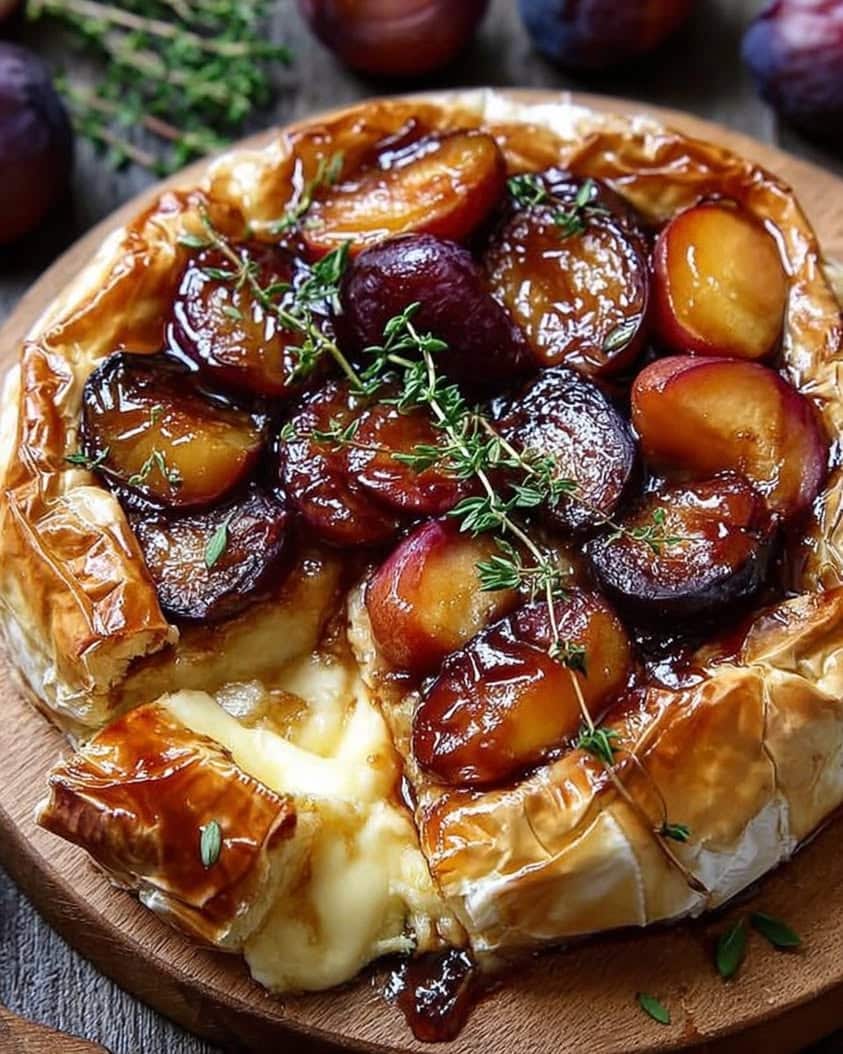
Baked Brie with Roasted Plums and Thyme: A Perfect Appetizer for Every Gathering
Baked Brie with Roasted Plums and Thyme brings together creamy cheese, sweet-tart fruit, and earthy herbs in one stunning dish. Therefore, this recipe delivers restaurant-quality elegance without any stress. The warm brie melts into a gooey center, while the roasted plums soften into jammy perfection. Meanwhile, fresh thyme adds a savory note that balances every bite. If you want an appetizer that looks impressive yet takes only 35 minutes, this Baked Brie with Roasted Plums and Thyme is your answer.
Moreover, this dish suits countless occasions, from holiday parties to cozy date nights. The combination of textures and flavors creates a memorable experience for your guests. In addition, the ingredients remain affordable and easy to find at any grocery store. Because the oven does most of the work, you can focus on enjoying your company. Consequently, Baked Brie with Roasted Plums and Thyme has become a favorite among home cooks across America.
Furthermore, this recipe requires minimal equipment and basic kitchen skills. Even beginner cooks can master it on the first try. The plums caramelize beautifully, and the thyme infuses the cheese with subtle depth. As a result, your kitchen will smell absolutely divine. Whether you serve it at a dinner party or a casual gathering, this Baked Brie with Roasted Plums and Thyme always earns rave reviews.
Quick Recipe Highlights
- Flavor Profile: This recipe balances creamy, buttery brie with the sweet-tart brightness of roasted plums. Additionally, fresh thyme contributes an earthy, slightly peppery undertone. Together, these elements create a harmonious blend of sweet and savory notes.
- Texture: The brie develops a soft, molten interior once baked, while the exterior stays slightly firm. Meanwhile, the roasted plums become tender and jammy. Consequently, each bite offers a delightful contrast between creamy and succulent textures.
- Aroma: As the brie warms, it releases a rich, earthy fragrance that fills the room. The plums add a fruity sweetness to the air, and the thyme contributes a fresh, herbal note. Therefore, this dish builds anticipation before it even reaches the table.
- Visual Appeal: The golden-brown puff pastry or exposed brie wheel creates an inviting centerpiece. Moreover, the deep ruby color of the roasted plums contrasts beautifully with the pale cheese. A sprinkle of fresh thyme leaves adds a pop of green that completes the presentation.
- Skill Level Needed: This recipe demands only basic kitchen competence. If you can operate an oven and slice fruit, you can make this dish. Furthermore, the forgiving nature of the ingredients means small mistakes rarely ruin the outcome.
- Special Equipment: You need a baking sheet, parchment paper, and a small skillet or baking dish for the plums. Additionally, a sharp knife helps you score the brie rind if desired. However, no specialty tools are required beyond these basics.
Recipe Overview
- Difficulty Level: This recipe earns an easy rating because it involves minimal chopping and no complex techniques. The oven handles the cooking, and the ingredients require little preparation. Furthermore, the entire process takes just 35 minutes from start to finish. Consequently, even novice cooks can serve this dish with confidence.
- Category: Baked Brie with Roasted Plums and Thyme works as an appetizer, a cheese course, or even a light dessert. You can serve it as a starter before a main meal or as part of a grazing board. Additionally, it functions beautifully as a brunch item alongside fresh bread and fruit.
- Cuisine: This recipe draws from French culinary traditions, particularly the classic baked brie preparations of Provence. However, the addition of roasted plums and thyme reflects a modern American fusion approach. The combination of fruit and cheese has deep roots in European cooking. Meanwhile, home cooks in the United States have embraced this style for its simplicity and elegance.
- Cost: The total cost for this recipe ranges between $12 and $18, depending on your location and cheese quality. A wheel of brie typically costs $6 to $10, while plums add another $3 to $5. Thyme, honey, and pantry staples contribute minimal additional expense. Therefore, this dish offers excellent value for its impressive presentation.
- Season: Late summer and early fall represent the ideal seasons for this recipe because plums reach peak sweetness. However, you can find quality plums year-round in most U.S. supermarkets. During the holidays, this dish fits seamlessly into festive menus. Consequently, Baked Brie with Roasted Plums and Thyme works beautifully in any season.
- Occasion: This recipe suits dinner parties, holiday gatherings, wine nights, and romantic evenings. Moreover, it makes a stunning contribution to potlucks and cheese boards. Because it looks sophisticated yet requires little effort, hosts love serving it. Therefore, you can bring this dish to nearly any social event.
Why You’ll Love This Recipe
The taste and texture of Baked Brie with Roasted Plums and Thyme create an unforgettable sensory experience. The creamy, rich brie melts into a silky pool that coats your tongue. Meanwhile, the roasted plums deliver bursts of sweet-tart juice that cut through the cheese’s richness. Additionally, the thyme adds an herbal freshness that prevents the dish from feeling too heavy. Each element complements the others perfectly, and the result feels both indulgent and balanced.
Convenience and preparation benefits make this recipe a go-to for busy hosts. You need only 10 minutes of active prep time before the oven takes over. Furthermore, the ingredient list stays short and simple, so you can shop quickly. Cleanup requires just a baking sheet and a small pan. Because the recipe scales easily, you can double it for larger crowds without extra stress.
Nutritional advantages exist alongside the indulgence in this dish. Brie provides protein, calcium, and vitamin B12, which support bone health and energy metabolism. Plums contribute fiber, vitamin C, and antioxidants that promote overall wellness. Moreover, thyme offers small amounts of iron and manganese. Therefore, Baked Brie with Roasted Plums and Thyme delivers more than just great taste.
Social and entertaining value sets this recipe apart from ordinary appetizers. The dramatic presentation encourages guests to gather around and dig in. Additionally, the shared experience of scooping melted cheese onto bread creates conversation and connection. Because it looks impressive, you earn compliments without revealing how easy it was. Consequently, this dish becomes a signature item you will want to make again and again.
Cost-effectiveness and accessibility round out the reasons to love this recipe. All ingredients come from standard grocery stores, and none require special ordering. Furthermore, the total cost per serving stays under three dollars. Compared to restaurant appetizers that cost far more, this homemade version delivers superior flavor at a fraction of the price. Therefore, Baked Brie with Roasted Plums and Thyme offers exceptional value.
Historical Background and Cultural Significance
Baked brie traces its origins to French culinary traditions dating back centuries. In the region of Brie, located east of Paris, cheesemakers produced soft, creamy wheels that became renowned across Europe. Additionally, French cooks discovered that warming the cheese enhanced its texture and flavor. Consequently, baked brie emerged as a beloved preparation in French households and restaurants alike. Over time, this technique spread to other countries and inspired countless variations.
Cultural importance surrounds brie in France, where it holds protected designation status. The French government regulates how producers make authentic Brie de Meaux and Brie de Melun. Furthermore, brie appears at celebrations, holiday tables, and intimate gatherings throughout the country. Because of this cultural reverence, baked brie carries a sense of occasion wherever it appears. Therefore, serving this dish connects you to a rich culinary heritage.
The evolution of this recipe reflects broader trends in American home cooking. During the 1980s and 1990s, baked brie became a staple of dinner parties across the United States. Cooks wrapped the cheese in puff pastry and topped it with jams, nuts, or honey. Meanwhile, creative home chefs began experimenting with fresh fruits and herbs. Consequently, the combination of roasted plums and thyme emerged as a natural progression of these experiments.
Regional variations of baked brie appear throughout Europe and North America. In Provence, cooks often pair the cheese with lavender and honey. Italian versions incorporate sun-dried tomatoes and basil. Additionally, some American recipes feature cranberries and rosemary for a holiday twist. The version with roasted plums and thyme represents a modern approach that celebrates seasonal fruit. Therefore, this recipe honors tradition while embracing innovation.
Ingredient Deep Dive
Brie cheese serves as the star of this recipe and deserves careful selection. This soft-ripened cheese originated in France and carries centuries of artisanal tradition. Additionally, brie offers a buttery, earthy flavor that becomes even more decadent when warm. Nutritionally, it provides protein, calcium, and vitamin B12 in every serving. When shopping, look for a wheel with a creamy white rind and a slight give when pressed. Avoid brie that smells strongly of ammonia, as this indicates over-ripeness. Store brie in the refrigerator wrapped in parchment paper and use it within one week. For substitutions, Camembert works beautifully as an alternative with a similar texture and flavor profile. Additionally, triple-cream brie offers extra richness for those who want maximum indulgence.
Plums bring natural sweetness and bright acidity to balance the cheese. These stone fruits have been cultivated for thousands of years across Asia, Europe, and the Middle East. Furthermore, plums symbolize summer abundance in many cultures and appear in jams, tarts, and savory dishes. They deliver fiber, vitamin C, and antioxidants that support digestive and immune health. When selecting plums, choose fruit that feels firm but yields slightly to gentle pressure. Avoid plums with soft spots or wrinkled skin, as these signs indicate over-ripeness. Store plums at room temperature until ripe, then refrigerate them for up to five days. If plums are unavailable, nectarines, peaches, or cherries make excellent substitutes. Each alternative brings its own character while maintaining the sweet-tart balance.
Fresh thyme adds an herbal dimension that elevates this dish beyond simple fruit and cheese. This aromatic herb has roots in Mediterranean cooking and appears in cuisines from Greece to Morocco. Additionally, thyme carries cultural significance as a symbol of courage and purification in ancient traditions. Nutritionally, it provides iron, manganese, and small amounts of vitamin K. When buying thyme, look for bright green leaves without yellowing or wilting. Store fresh thyme in the refrigerator, wrapped loosely in a damp paper towel and placed in a plastic bag. Dried thyme works as a substitute, though you should use one-third the amount. Furthermore, lemon thyme offers a citrusy variation that pairs wonderfully with plums.
Honey contributes natural sweetness that enhances the roasted plums and complements the brie. This golden syrup has served as a sweetener and preservative for thousands of years across civilizations. Furthermore, honey carries cultural and religious significance in many traditions worldwide. It offers antioxidants and trace amounts of vitamins and minerals. When selecting honey, choose raw or unfiltered varieties for maximum flavor and nutritional benefit. Store honey at room temperature in a sealed container, where it keeps indefinitely. Maple syrup or agave nectar provide excellent substitutes for those following vegan diets. Each alternative brings distinct flavor notes while serving the same purpose.
Common Mistakes to Avoid
- Overbaking the brie ranks as the most frequent error home cooks make. When brie stays in the oven too long, it becomes runny and loses its structure. Therefore, check the cheese at the 15-minute mark and remove it once the center feels soft but not liquid.
- Using cold brie directly from the refrigerator leads to uneven heating. The outside may overbake while the center stays firm. Consequently, let the brie sit at room temperature for 20 to 30 minutes before baking.
- Cutting the brie too early causes the cheese to spill out rather than hold its shape. You should wait at least 5 minutes after removing it from the oven. During this resting period, the cheese firms up slightly and becomes easier to serve.
- Skipping the plum roasting step results in underwhelming flavor and texture. Raw plums lack the depth that roasting provides. Furthermore, roasting concentrates the natural sugars and creates a jammy consistency that contrasts beautifully with the brie.
- Overcrowding the baking sheet prevents proper caramelization of the plums. Each piece needs space to release moisture and develop color. Therefore, use a large enough pan or roast the plums in batches if necessary.
- Neglecting to score the brie rind limits flavor absorption. Scoring creates channels where honey and thyme can penetrate the cheese. Additionally, it allows steam to escape during baking, which prevents the brie from bursting.
- Using dried thyme in place of fresh reduces the aromatic impact significantly. Fresh thyme delivers a bright, complex fragrance that dried herbs cannot match. If you must substitute, add the dried thyme to the plums before roasting rather than sprinkling it on top.
- Choosing underripe or overripe plums compromises the final dish. Underripe plums stay tart and firm, while overripe ones turn mushy. Therefore, select plums that give slightly when pressed and smell sweet near the stem.
- Serving the dish cold ruins the intended experience. Baked Brie with Roasted Plums and Thyme should reach the table warm and gooey. Consequently, time your preparation so the dish arrives fresh from the oven when guests are ready to eat.
- Forgetting to pair the dish with appropriate accompaniments leaves guests without a vehicle for the cheese. You need bread, crackers, or fruit slices for scooping. Therefore, prepare these items before the brie finishes baking.
Essential Techniques
Scoring the brie rind ranks among the most important techniques for this recipe. This step involves making shallow cuts across the top surface of the cheese in a crosshatch pattern. Scoring allows honey, thyme, and plum juices to seep into the cheese during baking. Furthermore, it prevents the rind from trapping steam, which could cause the brie to rupture. To master this technique, use a sharp paring knife and cut only through the top rind, not the sides. You should see the creamy interior peek through the cuts. Common pitfalls include cutting too deeply and slicing through the bottom rind. Visual cues for success include a neat grid pattern with visible cheese beneath.
Roasting plums properly requires attention to temperature and timing. This technique transforms firm, tart fruit into soft, sweet, jammy pieces. Additionally, roasting concentrates the natural sugars and deepens the color. To master this technique, preheat your oven to 400 degrees Fahrenheit and toss plum wedges with honey, thyme, and a pinch of salt. Spread them in a single layer on a parchment-lined baking sheet. Common pitfalls include overcrowding the pan and roasting at too low a temperature. Visual cues for success include plums that glisten with caramelized juices and yield easily when pierced with a fork.
Selecting and preparing fresh thyme enhances the overall flavor of the dish. This technique involves stripping leaves from the woody stems and chopping them finely. Furthermore, fresh thyme releases more essential oils when you bruise or chop it. To master this technique, hold the top of a thyme sprig with one hand and slide your fingers down the stem with the other. The leaves will fall away easily. Common pitfalls include using stems, which remain tough and woody even after cooking. Visual cues for success include a pile of small, uniform leaves ready to scatter over the brie.
Achieving the perfect melt requires understanding how brie behaves in the oven. This technique involves baking the cheese until the center becomes soft and molten but not liquefied. Additionally, the rind should remain intact to hold everything together. To master this technique, bake the brie at 375 degrees Fahrenheit for 15 to 20 minutes. Common pitfalls include baking at too high a temperature, which causes the rind to split. Visual cues for success include a slightly puffed appearance and a gentle jiggle when you shake the pan.
Pro Tips for Perfect Baked Brie with Roasted Plums and Thyme
Choose a brie wheel that fits your serving dish snugly, because a proper fit prevents the cheese from spreading too thin. A wheel that sits flat and level in the dish bakes more evenly. Therefore, measure your dish before shopping for cheese.
Let the brie come to room temperature before baking, as this ensures even melting throughout. Cold cheese heats unevenly, which leaves a firm center surrounded by overdone edges. Consequently, set the brie on the counter 30 minutes before you plan to bake it.
Roast the plums on a separate baking sheet from the brie, because they release juices that could make the cheese soggy. Additionally, this separation allows you to control the cooking time for each component independently. Therefore, always use two pans for the best results.
Drizzle honey over the scored brie before baking, because the heat helps the honey seep into the cuts. Moreover, the honey caramelizes slightly, which adds a deeper sweetness. This small step makes a noticeable difference in flavor.
Scatter half the thyme over the plums before roasting and reserve the rest for garnish. This approach layers the herbal flavor throughout the dish. Furthermore, fresh thyme on top adds color and aroma when you serve it.
Serve the dish immediately after assembling, because brie firms up quickly as it cools. The ideal window for serving lasts about 10 minutes. Consequently, call your guests to the table before you pull the pan from the oven.
Pair the dish with crusty bread rather than soft sandwich slices, because sturdy bread holds up to the melted cheese. Additionally, toasted baguette slices offer a satisfying crunch. Therefore, choose your bread with texture in mind.
Add a pinch of flaky sea salt over the plums after roasting, because salt enhances sweetness and brings all the flavors into focus. Moreover, the textural contrast of salt crystals adds interest. This finishing touch takes the dish from good to exceptional.
Variations and Adaptations
Regional variations of this dish reflect local ingredients and culinary traditions. In France, cooks might use Brie de Meaux and pair it with figs instead of plums. Additionally, Italian versions incorporate prosciutto and balsamic glaze for a savory twist. Meanwhile, Spanish cooks might add Marcona almonds and sherry-soaked raisins. Therefore, you can adapt this recipe to reflect your favorite regional cuisine while maintaining the core technique.
Seasonal adaptations allow you to enjoy this dish year-round with the best available produce. In spring, substitute apricots or strawberries for plums and use fresh basil instead of thyme. During summer, peaches and rosemary create a delightful combination. Additionally, fall invites apples and sage, while winter calls for pears and cranberries. Consequently, Baked Brie with Roasted Plums and Thyme becomes a template for endless seasonal variations.
Dietary modifications make this recipe accessible to guests with various dietary needs. For a gluten-free version, serve the brie with gluten-free crackers or vegetable slices. Additionally, replacing honey with maple syrup creates a vegan-friendly option when paired with vegan cheese. Those avoiding dairy can use a plant-based brie alternative, though the texture will differ. Therefore, with small adjustments, nearly everyone can enjoy this dish.
Flavor variations let you customize the recipe to suit your preferences. Adding a drizzle of balsamic reduction introduces tangy complexity. Moreover, a sprinkle of crushed pistachios adds nutty crunch. For a spicy kick, include a pinch of red pepper flakes or a drizzle of hot honey. Each addition builds on the base recipe while creating something uniquely yours.
Texture modifications address different preferences and serving situations. If you prefer a firmer cheese, reduce the baking time by 5 minutes. Additionally, wrapping the brie in puff pastry creates a crispy exterior that contrasts with the creamy interior. For a lighter version, serve the cheese at room temperature with roasted plums on the side. Consequently, you can adjust the recipe to match any texture preference.
Presentation alternatives range from rustic to elegant, depending on your occasion. A cast-iron skillet presentation offers casual charm for backyard gatherings. Meanwhile, a white ceramic baking dish creates a refined look for formal dinners. Additionally, individual ramekins allow you to serve personal portions with consistent results. Therefore, choose a presentation style that fits your event and personality.
Serving and Presentation Guide
Plating techniques for Baked Brie with Roasted Plums and Thyme should highlight the contrast between the golden cheese and ruby plums. Place the brie in the center of a flat serving dish and arrange the plums around the perimeter. Additionally, tuck fresh thyme sprigs between the fruit pieces for visual interest. The arrangement should look abundant yet controlled. Consequently, your guests will admire the dish before they taste it.
Garnishing ideas elevate the presentation from simple to stunning. A drizzle of honey across the top adds shine and sweetness. Moreover, a sprinkle of chopped nuts introduces texture and visual appeal. Fresh thyme leaves scattered over the surface provide a pop of green. Therefore, take a moment to garnish thoughtfully before serving.
Traditional accompaniments include crusty baguette slices, water crackers, and apple wedges. These neutral vehicles allow the flavors of the brie and plums to shine. Additionally, cornichons and Dijon mustard offer tangy contrast. Therefore, build a small spread around the main dish to create a complete appetizer experience.
Modern serving suggestions might include crostini topped with brie and roasted plums, or endive spears filled with the cheese mixture. Furthermore, you can offer the dish alongside charcuterie for a substantial grazing board. A drizzle of aged balsamic adds a contemporary touch. Consequently, you can present this classic recipe in fresh, exciting ways.
Temperature considerations matter greatly for this dish. Baked Brie with Roasted Plums and Thyme tastes best when served warm, around 100 to 110 degrees Fahrenheit. At this temperature, the cheese flows beautifully but does not burn your guests. Additionally, the plums remain warm and jammy. Therefore, plan your timing so the dish reaches the table promptly after baking.
Portion control tips help you serve the dish efficiently. Each guest typically enjoys 1 to 2 ounces of brie with a spoonful of plums. Moreover, providing individual plates with pre-scooped portions prevents crowding. For buffet-style service, place the dish at the center of the table with serving utensils nearby. Consequently, guests can serve themselves with ease.
Wine and Beverage Pairing
Wine pairings for Baked Brie with Roasted Plums and Thyme should balance the richness of the cheese with the acidity of the fruit. A crisp Sauvignon Blanc offers bright citrus notes that cut through the creaminess. Alternatively, a dry Riesling provides floral and stone fruit flavors that echo the plums. Additionally, a light Pinot Noir brings red berry notes and soft tannins that complement the dish. Therefore, choose a wine that refreshes the palate between bites.
Non-alcoholic alternatives can be just as satisfying with this recipe. Sparkling apple cider delivers sweetness and effervescence that mirrors the fruit. Moreover, a ginger ale with a squeeze of lime offers spicy warmth and brightness. Iced hibiscus tea provides tartness that pairs beautifully with the plums. Consequently, guests who avoid alcohol still enjoy a thoughtful beverage.
Coffee and tea pairings work surprisingly well with this appetizer. A light roast coffee with fruity notes echoes the plum flavors. Additionally, an herbal tea blend featuring thyme or chamomile complements the savory elements. For a warming option, chai tea with its spice profile adds depth. Therefore, consider offering a hot beverage alongside the wine options.
Temperature considerations affect how beverages interact with the food. White wines should be served well-chilled, around 45 to 50 degrees Fahrenheit. Red wines taste best slightly below room temperature, around 60 to 65 degrees. Additionally, sparkling wines should be ice cold for maximum refreshment. Consequently, proper serving temperatures enhance the pairing experience.
Serving suggestions for beverages include providing a variety of options so guests can choose their preference. Set up a small drink station near the appetizer table for convenience. Moreover, offer both still and sparkling water with lemon slices. Therefore, your guests feel pampered and cared for throughout the evening.
Storage and Shelf Life
Storage methods for leftover Baked Brie with Roasted Plums and Thyme require care to maintain quality. Transfer the cheese and plums to separate airtight containers once cooled. Additionally, refrigerate them promptly to prevent bacterial growth. The cheese keeps for up to three days, while the plums last up to five days. Consequently, you can enjoy the leftovers without waste.
Temperature requirements for storage should remain consistent at 35 to 40 degrees Fahrenheit. The refrigerator’s main compartment works well for this purpose. Moreover, avoid storing the dish near strong-smelling foods, as brie absorbs odors easily. Therefore, place the containers in a protected area of your refrigerator.
Container recommendations include glass containers with tight-fitting lids for best results. Plastic wrap alone does not provide adequate protection against air and moisture. Additionally, beeswax wraps offer an eco-friendly alternative that allows the cheese to breathe slightly. Therefore, invest in quality storage containers for optimal freshness.
Signs of spoilage include off-putting odors, discoloration, and mold growth beyond the edible rind. If the brie develops an ammonia smell, discard it immediately. Additionally, slimy textures or sour tastes indicate spoilage. Consequently, when in doubt, throw it out.
Reheating instructions for leftover brie require gentle heat to avoid overcooking. Place the cheese in a 300-degree Fahrenheit oven for 8 to 10 minutes. Alternatively, microwave individual portions in 15-second intervals. Moreover, reheat the plums separately to prevent sogginess. Therefore, you can enjoy the dish again without compromising texture.
Freezing guidelines for this recipe remain limited because brie does not freeze well. The texture becomes grainy and separates upon thawing. However, you can freeze the roasted plums for up to three months. Additionally, prepare fresh brie when you want to serve the dish again. Consequently, freezing works best for the fruit component only.
Make Ahead Strategies
Prep timeline for Baked Brie with Roasted Plums and Thyme allows you to work efficiently. You can roast the plums up to two days in advance and store them in the refrigerator. Additionally, score the brie and prepare the thyme a day ahead. On serving day, simply assemble and bake. Therefore, you reduce stress and focus on your guests.
Storage between steps requires proper refrigeration and separation. Keep the roasted plums in a sealed container and the brie wrapped in parchment. Moreover, store fresh thyme in a damp paper towel inside a plastic bag. Therefore, each component stays fresh until you need it.
Quality impact assessment shows that most elements hold up well when prepared ahead. The plums actually improve overnight as the flavors meld. However, the brie should remain whole until baking time. Additionally, fresh thyme loses some aroma after a day, so add a fresh sprinkle before serving. Consequently, strategic preparation preserves quality.
Assembly tips for make-ahead preparation include placing the scored brie in its baking dish ahead of time. Cover it with plastic wrap and refrigerate until ready to bake. When you are ready, remove the wrap, add honey and thyme, and place it in the oven. Therefore, the transition from refrigerator to oven takes only minutes.
Reheating guidelines for make-ahead dishes involve baking at 375 degrees Fahrenheit for 15 to 20 minutes. If the brie is cold from the refrigerator, add 5 extra minutes. Additionally, warm the plums separately or add them during the last 5 minutes of baking. Therefore, everything reaches serving temperature together.
Fresh element additions before serving enhance the make-ahead approach. Add fresh thyme leaves, a drizzle of honey, and flaky salt just before serving. Moreover, toasted nuts or fresh fruit slices provide last-minute texture. Consequently, the dish tastes freshly made even when partially prepared in advance.
Scaling Instructions
Halving the recipe works well when you need a smaller portion for an intimate gathering. Use a small brie wheel, around 4 ounces, and reduce the plums to 2 or 3 fruits. Additionally, bake the cheese for 12 to 15 minutes instead of the full time. Therefore, you can enjoy Baked Brie with Roasted Plums and Thyme without leftovers.
Doubling or tripling the recipe requires multiple baking dishes and staggered timing. Use separate brie wheels rather than one large wheel, because smaller wheels melt more evenly. Additionally, roast the plums in batches to avoid overcrowding. Consequently, you can serve a crowd without sacrificing quality.
Equipment adjustments for larger batches include using multiple baking sheets and serving dishes. Moreover, ensure your oven has enough rack space for even baking. If your oven runs hot, rotate the pans halfway through cooking. Therefore, plan your equipment needs before you start cooking.
Timing modifications for scaled recipes require attention to oven capacity. When baking multiple brie wheels, add 5 minutes to the total time. Additionally, roast plums in shifts if your pans cannot accommodate them all at once. Consequently, everything finishes at roughly the same time.
Storage considerations for scaled recipes involve having enough containers for leftovers. If you prepare a large batch, divide the components into smaller portions for easier storage. Moreover, label containers with dates to track freshness. Therefore, you can manage larger quantities without waste.
Nutritional Deep Dive
Macro breakdown for Baked Brie with Roasted Plums and Thyme reveals a balanced profile per serving. Each portion provides approximately 12 grams of protein, 18 grams of fat, and 15 grams of carbohydrates. Additionally, the dish delivers around 270 calories per serving. Therefore, it fits into a variety of dietary patterns when enjoyed in moderation.
Micronutrient analysis shows impressive contributions from the ingredients. Brie supplies calcium, vitamin B12, and riboflavin, which support bone health and energy production. Plums contribute vitamin C, vitamin K, and potassium for immune and cardiovascular function. Moreover, thyme adds iron and manganese. Consequently, this dish offers more than empty calories.
Health benefits of the ingredients extend beyond basic nutrition. The antioxidants in plums help combat oxidative stress and inflammation. Additionally, calcium from brie supports strong bones and teeth. Thyme contains compounds with antimicrobial properties. Therefore, Baked Brie with Roasted Plums and Thyme can be part of a balanced diet.
Dietary considerations for this recipe include its suitability for vegetarians, as it contains no meat. However, those with lactose intolerance should avoid brie or choose a lactose-free alternative. Additionally, individuals watching their sodium intake should moderate their portion size. Consequently, know your dietary needs before enjoying this dish.
Portion analysis suggests that a 1-ounce serving of brie with 2 tablespoons of plums provides a satisfying appetizer portion. This amount delivers richness without overwhelming the palate. Moreover, pairing the dish with vegetables or whole-grain crackers adds fiber and nutrients. Therefore, mindful portioning keeps the dish balanced.
Weight management tips include enjoying this dish as an occasional treat rather than a daily staple. The calorie density comes primarily from the cheese, so smaller portions help control intake. Additionally, filling your plate with vegetables and lean proteins alongside the brie balances the meal. Consequently, you can savor the dish without derailing your goals.
Dietary Adaptations
Gluten-free adaptation requires only that you serve the dish with gluten-free crackers or bread. The recipe itself contains no gluten ingredients, so no substitutions are needed for the brie or plums. Additionally, verify that your honey and thyme are free from cross-contamination. Therefore, this dish naturally suits gluten-free diets with appropriate accompaniments.
Dairy-free adaptation presents a challenge because brie is a dairy product. However, plant-based brie alternatives made from cashews or almonds offer a similar creamy texture. Additionally, these alternatives melt well and pair nicely with roasted plums. Consequently, those avoiding dairy can still enjoy a version of this dish.
Vegan adaptation requires both dairy-free cheese and a honey substitute. Use maple syrup or agave nectar in place of honey for the plums. Moreover, choose a vegan brie alternative that melts smoothly. Therefore, with a few swaps, this recipe becomes fully plant-based.
Low-carb adaptation involves serving the dish with low-carb crackers or vegetable slices. The brie and plums contribute some carbohydrates, but the amounts remain moderate. Additionally, reducing the honey drizzle lowers the sugar content. Consequently, this dish fits into a low-carb lifestyle with minor adjustments.
Keto adaptation requires more significant changes because plums contain natural sugars. Consider substituting blackberries or raspberries, which have lower carb counts. Additionally, skip the honey entirely and rely on the natural sweetness of the berries. Therefore, a keto-friendly version is possible with creative substitutions.
Paleo adaptation excludes dairy and refined sugars, so you would need a paleo-friendly cheese alternative. Additionally, use raw honey sparingly or omit it altogether. Serve the dish with paleo-approved crackers or vegetable slices. Consequently, those following paleo can adapt the recipe with some effort.
Low-FODMAP adaptation suits those with digestive sensitivities. Brie is generally low in FODMAPs, but plums contain sorbitol and may cause issues. Consider substituting grapes or strawberries, which are lower in FODMAPs. Therefore, with careful ingredient selection, this dish can fit a low-FODMAP diet.
Troubleshooting Guide
Texture issues with the brie often stem from incorrect baking time or temperature. If the cheese turns out too runny, reduce the baking time by 3 to 5 minutes next time. Additionally, ensure your oven temperature is accurate by using an oven thermometer. Consequently, you can achieve the perfect molten consistency with practice.
Flavor balance problems arise when the plums are too tart or the cheese too salty. Add a drizzle of honey to sweet Print
Baked Brie with Roasted Plums and Thyme
- Total Time: 30 minutes
- Yield: 4
Description
A warm, gooey baked brie topped with sweet roasted plums and fresh thyme, served with crusty bread or crackers. Perfect for a cozy appetizer or elegant dessert.
Ingredients
- 1 wheel (8 ounces) brie cheese
- 3 ripe plums, pitted and sliced
- 2 tablespoons honey
- 1 tablespoon fresh thyme leaves
- 1 tablespoon olive oil
- Pinch of salt
- Crusty bread or crackers, for serving
Instructions
- Preheat oven to 375°F (190°C).
- Place brie in a small baking dish or on a parchment-lined baking sheet.
- In a bowl, toss plum slices with honey, thyme, olive oil, and salt.
- Arrange plums around and on top of the brie.
- Bake for 15-20 minutes, until brie is soft and plums are tender.
- Let cool slightly, then serve warm with bread or crackers.
Notes
You can customize the seasonings to taste.
- Prep Time: 10 minutes
- Cook Time: 20 minutes
- Method: Appetizer
- Cuisine: French