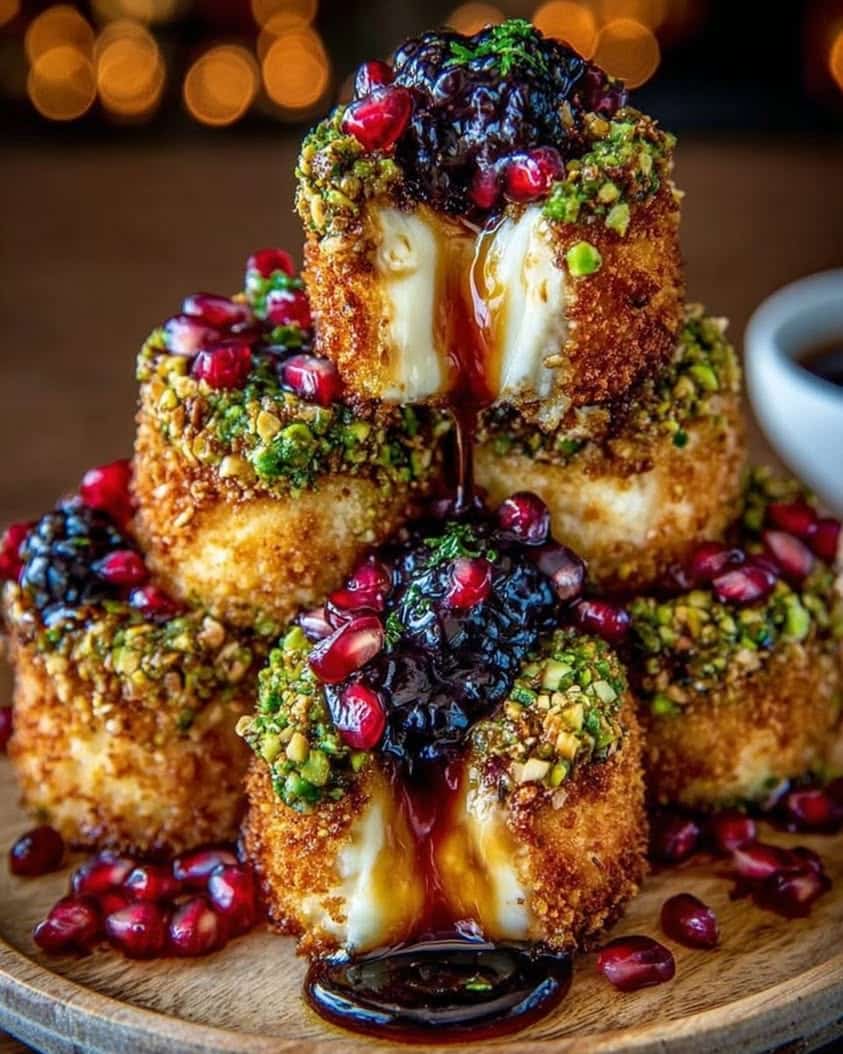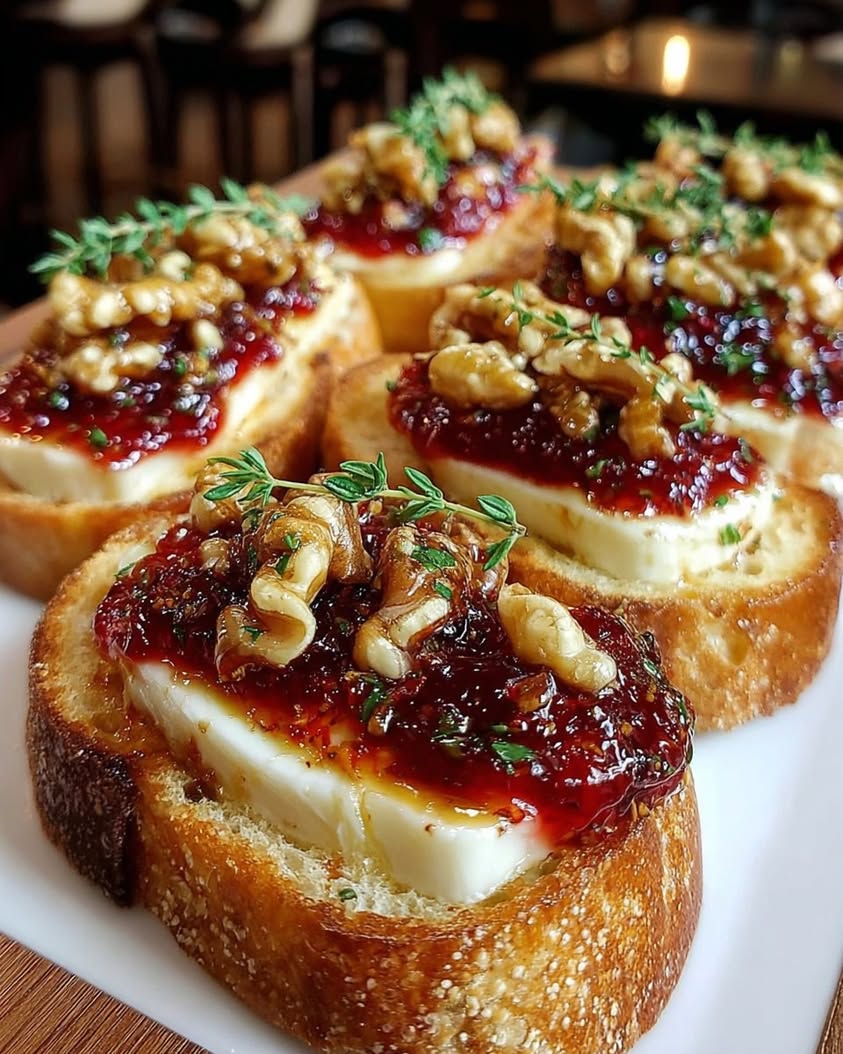
The Ultimate Brie Crostini Recipe with Strawberry Jam and Hot Honey
There are appetizers that simply fill space on a table, and then there are those that become the absolute center of attention. This toasted crostini with brie, rich strawberry jam, hot honey, walnut, and fresh thyme belongs firmly in the second category. I have crafted this recipe to be the perfect balance of sweet, savory, creamy, and crunchy, all piled onto a single, elegant slice of toasted bread. It is the kind of dish that feels incredibly sophisticated and restaurant-worthy, yet it comes together with minimal fuss in your own kitchen. The combination of warm, melting brie with the bright, fruity strawberry jam and the subtle kick of hot honey is simply unforgettable, making it a guaranteed crowd-pleaser for any gathering.
When you take a bite, the first thing you notice is the satisfying crunch of the perfectly toasted baguette. Then, the creamy, buttery texture of the brie melts into your mouth, coating your palate with its rich flavor. The sweet strawberry jam provides a burst of fruity brightness, which is immediately followed by the gentle heat from the hot honey that lingers just enough to keep things interesting. Finally, the toasted walnuts add a deep, nutty crunch, while the fresh thyme leaves offer a subtle, earthy aromatic note that ties everything together beautifully. This brie crostini recipe is more than just an appetizer; it is an experience, a symphony of textures and flavors that I am so excited to share with you today. You will find that this easy brie crostini recipe becomes your new go-to for parties and quiet evenings alike.
I love this recipe for its incredible versatility and its foolproof nature. Whether you are hosting a formal dinner party, a casual get-together with friends, or simply looking for a delicious weekend snack, these crostini with brie and strawberry jam fit the bill perfectly. The ingredients are simple and easy to source, and the preparation is straightforward, allowing even novice cooks to achieve spectacular results. Moreover, the flavor profile is universally appealing, combining classic pairings that everyone loves. The combination of brie and strawberries is a timeless one, and the addition of hot honey and walnuts elevates it to a whole new level of culinary delight. This is the kind of recipe that stays in your rotation for years, a reliable and impressive option that never fails to delight.
Quick Recipe Highlights
- Flavor Profile: This appetizer is a masterclass in balance. The sweet, fruity notes of the strawberry jam are beautifully offset by the savory, creamy richness of the brie. The hot honey introduces a gentle, fruity heat that builds slowly, while the walnuts add an earthy, bitter counterpoint and the thyme provides a fresh, peppery finish. It is a complex and harmonious flavor experience that is both comforting and exciting.
- Texture: The textural contrast is what makes this recipe truly special. Each bite offers the crispy, crunchy exterior of the toasted baguette, followed by the soft, gooey, and almost molten texture of the warm brie. The chunky strawberry jam provides a soft, gelatinous bite, and the walnuts offer a firm, brittle crunch. The fresh thyme leaves add a delicate, soft texture that completes the diverse mouthfeel.
- Aroma: As the crostini come together, the aromas are intoxicating. The warm, yeasty scent of the toasted bread fills the air, mingling with the rich, slightly sour aroma of the melted brie. The strawberry jam brings a sweet, sugary perfume, while the hot honey adds a deep, floral note. The walnuts release a toasty, nutty fragrance, and the fresh thyme contributes a clean, herbaceous aroma that signals freshness.
- Visual Appeal: These crostini are a feast for the eyes. The golden-brown toasted bread provides a beautiful base for the pure white, creamy brie. A generous spoonful of glistening, ruby-red strawberry jam sits on top, creating a striking color contrast. The drizzle of amber hot honey catches the light, and the chopped walnuts and vibrant green thyme leaves add texture and a pop of color, making each piece look like a small, edible work of art.
- Skill Level Needed: This recipe is wonderfully accessible to cooks of all levels. It requires no advanced culinary techniques, only basic knife skills for slicing the baguette and a watchful eye for toasting the bread to perfection. The assembly is simple and intuitive, making it a perfect starting point for beginner cooks who want to create an impressive dish without feeling overwhelmed.
- Special Equipment: You will only need basic kitchen equipment for this recipe. A sharp serrated knife is essential for slicing the baguette cleanly without crushing it. A baking sheet is needed for toasting the bread and melting the brie, and a small saucepan or microwave-safe bowl is useful for warming the jam and honey. No specialized gadgets or expensive tools are required.
Recipe Overview
- Difficulty Level: I rate this recipe as easy. The steps are straightforward and forgiving, making it a low-stress option for entertaining. The main tasks involve slicing, toasting, and assembling, none of which require precise techniques. There is very little that can go wrong, and even if the bread toasts a bit darker in one spot, it will still be delicious. This ease of preparation is a major part of its appeal for busy hosts.
- Category: This dish falls into the appetizer and starter category, but it is incredibly versatile. It can also be served as a light lunch or a satisfying snack. For a brunch spread, it pairs beautifully with fresh fruit and salads. It serves as the perfect finger food for cocktail parties, and it works just as well as an elegant first course for a formal sit-down dinner. Its versatility makes it a valuable recipe to have on hand.
- Cuisine: While the technique of toasting bread for crostini is distinctly Italian, the flavor profile is a modern, global fusion. The classic pairing of brie and berries has French roots, while the use of hot honey is a trend that has gained immense popularity in contemporary American cuisine. The addition of walnuts and thyme adds a rustic, Mediterranean touch, making it a truly international dish that transcends any single culinary tradition.
- Cost: The ingredients for this brie crostini recipe are generally affordable and accessible. A baguette is a low-cost staple, and a small wheel of brie is reasonably priced. Strawberry jam and walnuts are pantry staples for many. The only item that might be considered slightly more expensive is good-quality hot honey, but it can be made at home by infusing regular honey with chili flakes. Overall, it is a cost-effective way to create an elegant appetizer that tastes far more expensive than it is.
- Season: This recipe is most enjoyable from late spring through early fall. This is the peak season for fresh strawberries, and you can easily make your own jam or use fresh berries in a compote for an even brighter flavor. However, using a high-quality store-bought jam means you can enjoy these crostini all year round. In the colder months, the rich, warm flavors provide a comforting contrast to the chilly weather outside.
- Occasion: This recipe is perfect for a wide array of occasions. It is a star at holiday parties, festive gatherings, and summer barbecues. It makes a wonderful appetizer for a romantic dinner for two or a delightful addition to a picnic spread. It is also a fantastic choice for bridal showers, baby showers, and birthday parties. Ultimately, any occasion that calls for delicious, shareable food is a perfect opportunity to serve these crostini.
Why You Will Love This Recipe
The appeal of this toasted crostini with brie and strawberry jam lies in its perfect flavor harmony. You get the richness of the creamy brie, which is beautifully cut by the sweet and slightly tart strawberry jam. Then, the hot honey introduces a surprising warmth that enhances all the other flavors without overpowering them. The toasted walnuts add a savory, earthy depth, and the fresh thyme brings a subtle herbal lift. It is a complex taste sensation that hits every note, from sweet to savory to spicy, making each bite a new discovery. This is not your average appetizer; it is a thoughtful combination of ingredients that are truly greater than the sum of their parts.
Beyond the incredible taste, the convenience of this recipe makes it a winner. The entire process, from start to finish, takes under half an hour, which makes it a lifesaver for last-minute entertaining. You can prepare the components ahead of time, and simply toast and assemble when your guests arrive. There is no complicated cooking involved, no tricky sauces to master, and no elaborate plating requirements. This ease of preparation means you can spend less time in the kitchen and more time enjoying the company of your guests. Therefore, it is perfect for those who want to host without the stress, delivering a high-impact dish with minimal effort.
Furthermore, this recipe offers a fantastic nutritional profile for a party food. Brie is a good source of protein and calcium, important for bone health and muscle function. Walnuts are packed with heart-healthy omega-3 fatty acids and antioxidants. Strawberries are loaded with vitamin C and other beneficial antioxidants. While it is a treat, you can feel a little better knowing you are offering your guests something with real nutritional value, not just empty calories. Thus, it is a smarter choice for those who are mindful of their diet but still want to indulge in delicious, satisfying food.
From a social and entertaining perspective, these crostini are the ultimate crowd-pleaser. They have a beautiful, high-end presentation that looks like you have spent hours in the kitchen. The elegant combination of ingredients is a conversation starter. Moreover, they are the perfect finger food, meaning your guests can easily grab one and mingle without needing a plate and fork. This ease of eating makes them ideal for cocktail hours and standing receptions, helping to foster a relaxed and convivial atmosphere. When you serve these, you are not just providing food; you are elevating the entire experience of your gathering.
Finally, this recipe is remarkably cost-effective and accessible. It uses a short list of easy-to-find ingredients that are typically very affordable. A fresh baguette costs less than a specialty loaf, and a small brie is a budget-friendly way to add a gourmet touch. Therefore, you can create an appetizer that tastes like it belongs on a high-end restaurant menu, all without breaking the bank. This combination of affordability, ease, and incredible flavor is a rare find in the culinary world and a solid reason why this recipe deserves a permanent spot in your collection. You can create a gourmet experience at a fraction of the cost of dining out.
Historical Background and Cultural Significance
The foundation of this dish, the crostini, has a long and storied history in Italian cuisine. The word “crostini” translates to “little crusts” in Italian, and these small, toasted bread slices have been a staple of Italian appetizers for centuries. Originating in the Middle Ages, when cooks looked for ways to use up stale bread, crostini were simply toasted and rubbed with garlic and olive oil. Over the centuries, toppings evolved to include everything from simple tomatoes and herbs to rich pâtés and vegetables, making them a versatile and beloved part of the Italian antipasto tradition. They are a testament to the Italian philosophy of using simple, high-quality ingredients to create something greater than the sum of their parts.
Brie cheese, on the other hand, has a history steeped in French royalty and tradition. Named after the French region of Brie, where it has been produced since the 8th century, this soft-ripened cheese was famously known as the “King of Cheeses” and was enjoyed by monarchs and nobility. Its creamy, buttery texture and mild, earthy flavor made it a celebrated delicacy. The practice of pairing cheese with fruit, such as strawberries, also has deep roots, especially in French cuisine, where the contrast between creamy and sweet is highly prized. This historical pairing forms the basis of our modern crostini and is a true testament to the enduring appeal of simple, quality combinations.
The evolution of this recipe is a modern story of culinary innovation. While crostini and brie have ancient origins, the additions of hot honey, toasted walnuts, and fresh thyme are contemporary twists. Hot honey, a condiment made by infusing honey with chili peppers, saw a meteoric rise in popularity in the late 2010s, championed by chefs and foodies for its sweet-heat profile. Its addition here represents the modern American palate, which increasingly enjoys a kick of spice in unexpected places. Consequently, this recipe is a brilliant example of how traditional elements can be reinvented to create a dish that is both familiar and excitingly new.
Furthermore, the recipe reflects a broader trend in modern gastronomy toward globally inspired flavor combinations. By bringing together the Italian crostini, French brie, and the American trend of hot honey, this dish becomes a melting pot of cultures. It also highlights the importance of texture and contrast in contemporary cooking. Therefore, when you make this recipe, you are participating in a living, evolving culinary tradition. It is not a dish frozen in time but rather a vibrant and current creation that builds upon centuries of food history. You are taking part in a global culinary conversation that values boldness, creativity, and, above all, flavor.
Ingredient Deep Dive
The star of our show, the baguette, is a French bread icon that has become a global staple. Its cultural significance in France is immense, with strict laws governing its production, including being baked on the premises where it is sold and containing only flour, water, yeast, and salt. Nutritionally, it provides quick carbohydrates for energy, although it is not a significant source of vitamins or minerals. For this recipe, the ideal baguette is a traditional one, which has a crisp, crackly crust and a soft, airy interior, perfect for holding toppings. When selecting a baguette, look for one that feels firm and light for its size, with a good golden-brown color. To store it, keep it at room temperature in a paper bag for a day or two, though it is always best to toast it fresh to restore its crispness. A sturdy sourdough or ciabatta can be used as a more tangy substitute.
Brie cheese is the creamy heart of this appetizer, and its history is as rich as its flavor. Named after the Île-de-France region of France, Brie is a soft-ripened cheese known for its edible, bloomy rind and creamy interior. The cheese has been enjoyed since the 8th century and has a protected designation of origin in France, ensuring its authentic production methods. Nutritionally, brie is an excellent source of protein and calcium, and it also provides beneficial fats and vitamin B12. When selecting a brie, look for one that is slightly soft to the touch, indicating that it is ripe and will melt beautifully. It should have a pleasant, earthy aroma, and the center should be creamy and runny. Store it in the refrigerator, wrapped in its original paper, and let it come to room temperature before serving for the best flavor. For a more pungent flavor, try a Camembert, or for a firmer texture, use a young Gouda.
The sweet element of this recipe is the rich strawberry jam. Strawberries are a symbol of summer and have been cultivated for centuries, with evidence of their consumption dating back to ancient Rome. They were first bred into the large, sweet varieties we know today in the 18th century in France. Strawberries are an excellent source of vitamin C, manganese, and antioxidants, which are known for their anti-inflammatory and disease-fighting properties. When choosing a jam for this recipe, quality is key. Look for a jam or preserve with a high fruit content and a deep, red color, which indicates a more intense strawberry flavor. Store your jam in the refrigerator after opening to maintain its freshness. If you prefer, a good-quality strawberry compote, fig jam, or even a fresh strawberry basil salsa can be used instead.
Hot honey is the secret weapon in this recipe, bringing a sweet and spicy kick. The method of infusing honey with chili peppers is a recent culinary trend, although honey itself has been used as a sweetener for thousands of years. Sichuan honey, a specific type of hot honey from China, has been used in cooking for centuries, but the current Western craze began with small-batch producers in the United States. Nutritionally, honey provides antioxidants and is a natural source of energy, while the added chili peppers contain capsaicin, which is known to boost metabolism. You can find hot honey at most grocery stores or make it at home by simply simmering honey with dried chili flakes and straining it. It adds a unique depth of flavor that is hard to replicate with anything else, so it is worth seeking out for this recipe.
Toasted walnuts and fresh thyme are the finishing touches that elevate this dish from good to spectacular. Walnuts have been a valued food source since ancient times, with a history that traces back to Persia and the Mediterranean. They are one of the best plant-based sources of omega-3 fatty acids, which are essential for heart and brain health, along with being rich in antioxidants. Toasting them with a little salt brings out their natural nutty, earthy flavor and adds a necessary crunch. Fresh thyme, a classic herb in Mediterranean cooking, has been used for culinary and medicinal purposes for thousands of years. It contains vitamins A and C, along with various flavonoids. The earthy, slightly peppery flavor of fresh thyme is far superior to dried and is crucial for adding a fresh, aromatic lift to the rich and sweet flavors of the other ingredients.
Common Mistakes to Avoid
- Using low-quality or stale bread: The bread is the base of this crostini recipe, and using a stale or low-quality baguette will ruin the final texture and flavor. Always use a fresh, high-quality baguette that is firm enough to hold up to the toppings. Stale bread will not toast well and will result in a tough, dry crostini that is hard to enjoy.
- Slicing the baguette too thickly: The crostini should be small, one-bite or two-bite morsels. Slicing the baguette too thickly will make them difficult to eat and will throw off the balance of bread to toppings. I recommend slicing the baguette into even, thin slices, about a quarter to a half-inch thick.
- Over-toasting the bread: The goal is a crisp, golden-brown crostini, not a burnt, hard crouton. It is important to watch the bread closely in the oven, as it can go from perfectly toasted to burnt very quickly. You want the edges to be brown and the surface to be crisp but still have a slight give when pressed.
- Serving the brie cold: Brie that is straight from the refrigerator will not have that wonderful, melty texture that is essential for this recipe. It will be solid and rubbery, which detracts from the creamy experience. It is important to let the brie come to room temperature before assembling, or to warm it briefly in the oven on top of the toast.
- Overloading the crostini with too many toppings: While it might be tempting to pile on the toppings, it is important to exercise restraint. If you add too much, they will fall off and overwhelm the bread, turning the crostini into a messy fork-and-knife situation. Each slice should be balanced with a small slice of brie, a modest spoonful of jam, and a few walnuts.
- Not toasting the walnuts: Toasting the walnuts is a crucial step that should not be skipped. Raw walnuts can taste a bit bitter and have a mealy texture. Toasting them in a pan or oven transforms their flavor, making them nutty, sweet, and wonderfully crunchy, which adds the perfect textural contrast to the creamy cheese.
- Adding the honey before baking: If you are melting the brie on the crostini in the oven, you should wait to add the hot honey until after baking. If you add it before, the heat will break down the honey and make it too thin and runny, and it might even burn on the pan. Adding it after baking ensures the honey maintains its perfect viscosity and flavor.
- Chopping the walnuts too fine: The walnuts should be chopped into small, but discernible pieces, not ground into a powder. If they are too fine, they will not provide the satisfying crunch, and you will not be able to taste their unique flavor. A rough chop that yields pieces about the size of a small pea is ideal.
- Forgetting to taste and adjust seasoning: Since you are working with sweet and savory ingredients, it is important to taste a finished crostini and adjust the seasoning. It might need a touch of flaky sea salt to enhance all the flavors, or a bit more hot honey for additional heat. Trust your palate and make it perfect for your taste.
- Preparing too far in advance: Crostini are best enjoyed immediately after they are assembled. If you prepare them too far in advance, the bread will absorb moisture from the brie and jam and become soggy. For the crispiest, most delicious result, it is best to toast and assemble them right before you plan to serve.
Essential Techniques
Toasting the bread to perfect crispness is the foundational technique for a truly great crostini. The method involves brushing or drizzling the cut baguette slices with olive oil, which helps them become golden and crispy instead of just dry and pale. This process requires even slicing and a moderate oven temperature, typically around 375 degrees Fahrenheit. The bread is toasted until the edges are deeply golden and the surface is firm to the touch. The visual cue for success is a uniform, golden-brown color across the entire surface of the slice. A common pitfall is baking at too high a temperature, which causes the outside to scorch while the inside remains chewy. Mastering this step creates the sturdy, flavorful base that all the other components rely on.
Another key technique is properly melting the brie, either on or off the bread, to achieve that luscious, gooey texture. If you choose to melt the brie on the crostini, place a small slice of cheese on each toasted piece and return them to the oven for a few minutes, just until the cheese begins to slump and soften. The visual cue is watching the brie lose its firm, sliceable shape and begin to look creamy and slightly puffed. This technique requires a vigilant eye, as brie melts quickly and can turn into a mess if left in the heat for too long. The goal is not to melt the cheese into a puddle but to soften it until it is warm and spreadable. This gentle heating process amplifies its creamy texture and rich, buttery flavor.
Creating a balanced and well-composed crostini is an assembly technique that involves layering flavors and textures thoughtfully. You begin with the sturdy, toasted bread as the foundation. Then, you should place the brie, which acts as a rich, savory base to anchor the sweeter ingredients. The strawberry jam is then spooned over the cheese, allowing it to stay in place. A sprinkling of toasted walnuts adds a crunchy, textural element, and finally, the hot honey is drizzled on top with a finishing touch of thyme. Each layer is intentionally chosen to complement the last, from the creamy base to the crisp and aromatic garnish. A common pitfall is placing the jam on the bread first, which can soak into the toast and make it soggy.
Finally, knowing how to toast walnuts correctly is a simple yet essential technique that maximizes their flavor and texture. Toasting can be done in a dry skillet over medium heat or in the oven on a baking sheet. The walnuts should be stirred frequently to ensure they toast evenly and do not burn, which can happen quickly due to their high oil content. The visual cue for perfectly toasted walnuts is a deepened color and a fragrant, nutty aroma that fills the kitchen. You will know they are done when they are a shade or two darker and smell wonderfully aromatic. This process not only enhances their natural flavor but also makes them significantly crunchier, which is a necessary contrast to the soft cheese and jam.
Pro Tips for Perfect Brie Crostini
First, always slice your baguette with a serrated knife. A serrated knife will cut through the crust without crushing the soft interior of the bread. This ensures you get clean, even slices which hold their shape during toasting. A sharp, non-serrated knife will tend to squash the bread, creating an uneven surface that doesn’t toast uniformly.
Second, do not skip the step of brushing the bread with olive oil. This not only promotes even browning and a golden color but also adds a subtle layer of flavor and helps create a barrier against moisture from the toppings. Without this step, the crostini will be dry and lack the rich, savory note that olive oil imparts.
Third, you can make the brie easier to slice by placing it in the freezer for about 20 minutes. Chilled brie is firmer and much easier to cut into neat, even slices without it sticking to your knife or breaking apart. This simple trick saves frustration and ensures you get a clean slice of cheese on each crostini.
Fourth, warm the jam and honey together before assembling the crostini. This makes them more fluid and easier to spread or drizzle. Warm jam also clings to the brie better and releases its aromatic flavors more intensely. This is a small step that makes a noticeable difference in the final taste of the dish.
Fifth, for maximum efficiency, toast the baguette slices while the oven is still hot after baking the walnuts or melting the brie. This helps you manage the oven in a single window of time and ensures all parts of the dish come together at the same time, keeping everything warm and ready to serve. A well-planned workflow makes the process seamless.
Sixth, add the fresh thyme at the very end. The heat from the crostini will gently release the essential oils from the thyme, but adding it too early will cause it to wilt and lose its fresh, vibrant flavor. Therefore, the final garnish should be right before serving to ensure the herb is at its peak, adding both flavor and a vivid hint of color.
Variations and Adaptations
Exploring regional variations, you might find that in the South of France, where brie is popular, a similar crostini might be made with a local honey instead of a sweet strawberry jam, utilizing seasonal fruits like figs or apricots. In Italy, you might see the crostini topped with a mild, creamy cheese like stracchino and a bitter honey or a fruit mostarda. The use of hot honey is a distinctly modern American touch, reflecting a nationwide love for sweet and spicy foods. In the American South, for example, hot honey is often paired with fried chicken, and its use on this French-inspired appetizer showcases the innovative spirit of American cuisine.
For seasonal adaptations, you have a world of possibilities. During the summer, use fresh strawberries in a home-made compote by simmering them with a little sugar and lemon juice until thick and glossy. This will provide an even brighter and more vibrant flavor than store-bought jam. In the fall, trade strawberries for a spiced apple or pear butter, which will pair beautifully with the walnuts and thyme. During the winter holidays, a tart cherry jam is an excellent choice, its deep red color and festive flavor making the crostini feel even more special and celebratory.
For dietary modifications, making this recipe gluten-free is easily accomplished by using a high-quality gluten-free baguette or crackers. To make it vegetarian, simply ensure the brie is made with vegetable rennet, as some varieties use animal rennet. Since the recipe already contains no meat, it is naturally vegetarian-friendly. There are also vegan-brie alternatives made from cashews that melt beautifully, making this recipe adaptable for a vegan diet. This flexibility ensures you can cater to various dietary needs without sacrificing the delicious spirit of the recipe.
When it comes to flavor variations, consider swapping the strawberry jam for other fruit preserves such as fig, blackberry, or raspberry. A savory twist could be achieved by using a tomato and red pepper jam instead, which would create a more robust and complex flavor profile. For a more herby flavor, try adding a sprig of rosemary or a small sage leaf in addition to or in place of the thyme. Experimenting with different flavor pairings is a fantastic way to make this recipe your own and discover a taste that you and your guests will love.
For texture modifications, you can change the nut component. Instead of walnuts, you can use candied pecans or hazelnuts for a different flavor and crunch. To make the crostini even crunchier, you could use a slice of toasted sourdough instead of a baguette. You might also add a handful of pomegranate seeds or a few thin slices of fresh, crisp apple for a different kind of sweetness and a burst of juicy texture. Texture is just as important as flavor, so do not be afraid to adapt.
Presentation alternatives are also worth considering. Instead of making small, individual crostini, you could create a large, shareable “bruschetta board.” To do this, you could toast the entire loaf in the oven, slice it in half lengthwise, and then top it with the brie, jam, and other ingredients before slicing. For a more elegant presentation, you can arrange the crostini on a beautiful platter and garnish the entire board with extra honey and fresh thyme sprigs for a rustic yet refined look.
Serving and Presentation Guide
Mastering the art of the perfect plate is easy with this recipe. The individual crostini are best arranged in a single, overlapping layer on a beautiful serving platter. This layering allows guests to see the beautiful colors and textures of the toppings. Placing them on top of a bed of fresh arugula or bitter greens adds an elegant splash of green and a peppery note. For a beautiful, rustic presentation, choose a wooden or slate board that complements the golden-brown of the toast and the creamy white of the brie.
Garnishing plays a crucial role in elevating the visual appeal of this dish. After drizzling the hot honey, you can glaze the crostini with a few extra, small fresh thyme leaves. A delicate sprinkle of flaky sea salt is also recommended, as it intensifies the sweet and savory flavors by providing small salty bursts. You can also add a few nasturtium petals for a pop of unexpected color. The goal is to use fresh ingredients as the final touch, making the dish look vibrant and freshly made.
Regarding traditional accompaniments, a glass of Champagne or a crisp white wine like Sauvignon Blanc is a classic pairing. When served as an appetizer, these crostini are excellent alongside a fresh green salad with a light vinaigrette. They also pair beautifully with other board elements, such as cured meats, marinated olives, and fresh fruit. Consequently, they are a natural component of a sophisticated charcuterie and cheese board. They bring their own unique, elegant profile to any spread.
Modern serving suggestions include serving these at brunch alongside a mimosa bar or a basket of fresh fruit. You can also present them as the foundation for an elegant crostini bar. Have the toasted bread, bowls of warm brie, various jams, hot honey, and nuts on display so that guests can build their own creations. This interactive and personalized approach is a fantastic way to get everyone involved and ensures that every guest gets exactly what they want.
Temperature is of the utmost importance for the perfect eating experience. The bread should be warm and crisp, the cheese creamy and at room temperature or gently melted, the jam at least room temperature but preferably warm so its flavors are unlocked. The crostini should be served soon after assembly to retain that crisp crunch from the toasting process. Never serve them cold, as the bread will be hard and the cheese will lack the wonderful, creamy texture that makes this recipe so special.
Wine and Beverage Pairing
When it comes to wine, the classic choice for this creamy, sweet, and slightly spicy dish is a dry, off-dry bubbly wine. A Brut Champagne or a dry Prosecco has the perfect balance of acidity and effervescence to cut through the fat of the brie and the sweetness of the jam, cleansing the palate between each bite. The fine bubbles also provide a delicate textural contrast to the rich crostini. For a still white wine, a Sauvignon Blanc or a dry Riesling is an excellent option for its crisp, citrusy notes that complement the fruit, and the freshness will beautifully highlight the thyme.
For those who prefer a light red wine, a Pinot Noir is a fantastic choice. Its light body, low tannins, and bright red berry flavors align beautifully with the strawberry jam, while its earthy undertones mirror the thyme and walnuts. Avoid big, heavy, or very oaky reds, as they will overpower the delicate flavors of the dish. For a sweeter pairing, a Vouvray from the Loire Valley, made from Chenin Blanc, offers notes of honey and quince, which would mirror and amplify the sweet honey and fruit flavors in the recipe.
For non-alcoholic alternatives, a sparkling water with a splash of elderflower cordial or pomegranate juice is a beautiful choice. The sharp, effervescent quality of the sparkling water will cleanse the palate, while the distinct floral notes of the cordial will not compete with the food. Another great option is a high-quality, unsweetened sparkling apple cider, especially during the fall months. This provides a warming spice feel that will pair nicely with the toasted walnuts and crushed herbs.
If you are serving these crostini after dinner, an herbal tea such as chamomile or mint is a soothing choice that will not overpower the taste of the dish. For a stronger, more robust option, an Earl Grey or a smoky Lapsang Souchong can be an interesting contrast to the sweetness. If you serve with coffee, a medium-roast, single-origin coffee with low acidity will complement the chocolate notes in a toasted walnut and not compete with the sweet and savory flavors of the appetizer.
For serving considerations, all beverages should be served cold, with the exception of coffee or tea. The chilled temperature of white wines, sparkling wines, and other beverages provides the ideal contrast to the warm crostini and helps to balance the rich flavors on the palate. Therefore, make sure your drinks are properly chilled to enhance the overall dining experience.
Storage and Shelf Life
Storing assembled crostini is not recommended because they will inevitably become soggy as the compound butter and jam soak into the bread. Consequently, you should store the components separately if you have leftovers. Use a paper towel to gently blot any excess moisture from the baking tray. The best method is to store the individual elements in airtight containers in the refrigerator to preserve their quality and extend their life.
Regarding temperature requirements, the toasted baguette slices are best stored in a paper bag at room temperature for a day or two, but they are never as crisp as they are immediately after toasting. The brie should be re-wrapped in its original paper and stored in the warmest part of the refrigerator, inside the vegetable drawer. The strawberry jam, once opened, must be kept in the refrigerator. The hot honey does not require refrigeration and is best kept in a cool, dark place. The walnuts should go in an airtight container in the pantry to protect them from absorbing moisture.
Container recommendations are critical for maintaining the quality of leftover components. The brie needs to be kept in an airtight container to prevent it from absorbing odors from other foods in the fridge. A glass container is ideal for the jam under a tight-fitting lid. The toasted bread will stay crispest in a container with a loose lid that allows air to circulate. Following these guidelines will ensure that all the components are ready to use for another round of crostini.
It is important to learn the signs of spoilage. For brie, any sharp ammonia-like smell or significant discoloration of the rind or the interior is a sign that it has gone bad. If you see fuzzy mold growing beyond the white rind, it is time to discard it. The jam, if it develops a yeasty smell or any visible mold on its surface, should be discarded. The walnuts will become rancid if they develop a bitter, paint-like smell. When in doubt about any ingredient, it is always best to throw it out to avoid any risk of foodborne illness.
Since these are not good reheated once assembled, the best way to handle leftovers is to refresh the individual components. You can re-crisp the toast in a 350 Print
Toasted Crostini with Brie, Rich Strawberry Jam, Hot Honey, Walnut, and Fresh Thyme
- Total Time: 25 minutes
- Yield: 4
Description
A delightful combination of creamy brie, sweet-tart strawberry jam, spicy hot honey, crunchy walnuts, and aromatic fresh thyme atop crispy toasted baguette slices. Perfect as an elegant appetizer or a sophisticated snack.
Ingredients
- 1 baguette, sliced into 1/2-inch thick rounds
- 2 tablespoons olive oil
- 8 oz brie cheese, rind removed and sliced thinly
- 1/2 cup rich strawberry jam
- 1/4 cup hot honey
- 1/3 cup walnut pieces, toasted and chopped
- 2 tablespoons fresh thyme leaves
- Salt and black pepper to taste
Instructions
- Preheat oven to 400°F (200°C). Arrange baguette slices on a baking sheet and brush both sides with olive oil. Sprinkle lightly with salt and pepper.
- Bake the bread for 5-7 minutes, then flip and bake another 3-5 minutes, until golden and crisp. Remove from oven and let cool slightly.
- Spread each crostini with a generous layer of brie, then top with a spoonful of strawberry jam.
- Drizzle hot honey over each crostini, then sprinkle with chopped walnuts and fresh thyme leaves.
- Serve immediately while crostini are warm and crisp.
Notes
You can customize the seasonings to taste. For a milder heat, use regular honey mixed with a pinch of cayenne.
- Prep Time: 15 minutes
- Cook Time: 10 minutes
- Method: Appetizer
- Cuisine: American