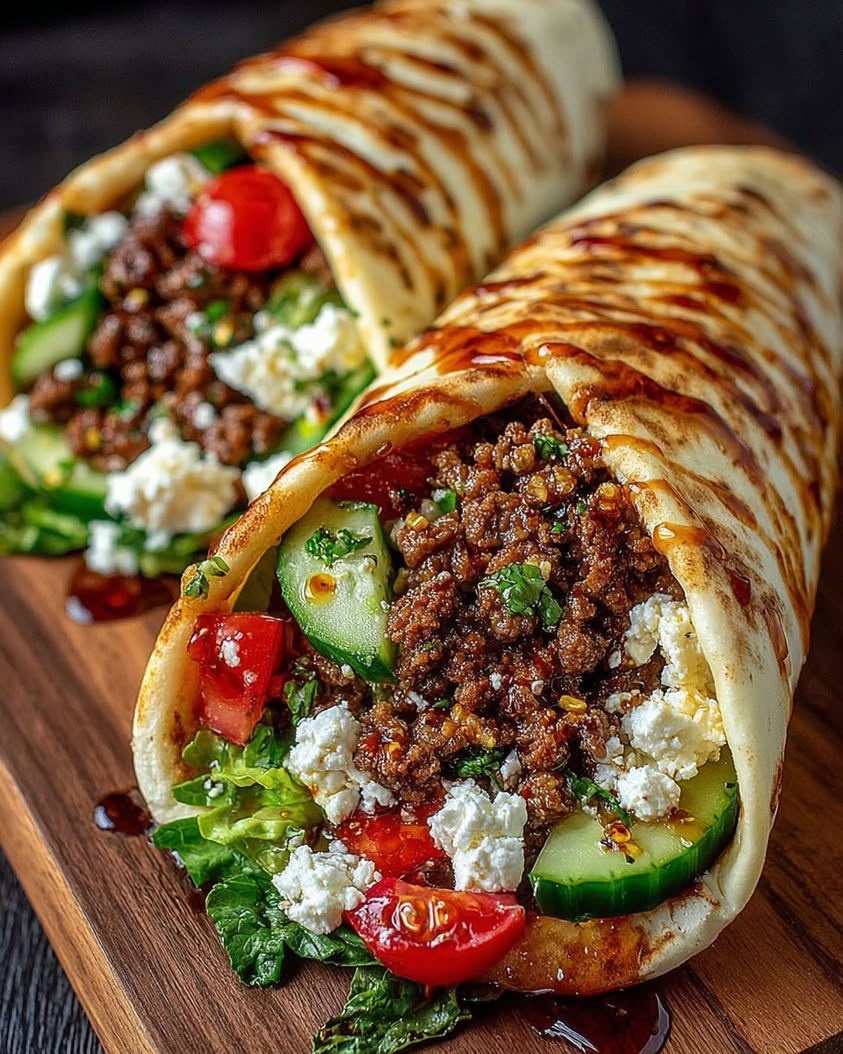
Greek Beef Wraps with Roasted Garlic Feta Sauce and Hot Honey: A Modern Mediterranean Masterpiece
There are few things more satisfying than sinking your teeth into a perfectly crafted wrap, and this recipe for Greek Beef Wraps with Roasted Garlic Feta Sauce and Hot Honey delivers that experience in every single bite. The combination of juicy, seasoned beef, creamy and tangy feta sauce, and the unexpected sweet heat of hot honey creates a flavor profile that is nothing short of extraordinary. This is not just another weeknight dinner idea; it is a culinary adventure that brings the vibrant spirit of Mediterranean street food directly into your home kitchen.
What truly sets these Greek Beef Wraps apart is the careful attention to texture and temperature. The warm, spiced beef contrasts beautifully with the cool, luscious feta sauce, while the hot honey adds a glossy, sticky finish that caramelizes and clings to every ingredient. The fresh vegetables provide a delightful crunch, and the warm pita or flatbread wraps it all together into a cohesive, handheld masterpiece. Furthermore, this recipe is wonderfully approachable for home cooks of all levels, making it an ideal choice for a fun family dinner or an impressive spread for guests.
As you gather your ingredients, you will soon realize that the whole is truly greater than the sum of its parts. Roasting the garlic transforms it into sweet, nutty morsels that blend seamlessly into the feta, creating a sauce that is simultaneously indulgent and bright. The hot honey, which is so simple to make, elevates the entire dish by adding a layer of complexity that keeps you coming back for more. Indeed, this recipe for Greek Beef Wraps is destined to become a favorite, and it is my sincere pleasure to guide you through every step to achieve wrap perfection.
Quick Recipe Highlights
- Flavor Profile: This is a symphony of sweet, savory, tangy, and spicy elements. The robust, smoky beef pairs with the salty, creamy feta, while the hot honey provides a subtle cinnamon and chili warmth that ties everything together beautifully.
- Texture: Expect a delightful contrast of textures, from the tender and juicy beef to the smooth and creamy sauce, crisp vegetables, and soft, warm pita bread. Every bite offers a pleasing crunch and a satisfying chew.
- Aroma: The concentrated aroma of herbs and spices fills the air as the beef sears, accompanied by the sweet, nutty scent of roasting garlic. The final drizzle of honey adds an inviting touch of floral sweetness to the cooked dish.
- Visual Appeal: These wraps are a feast for the eyes, featuring the vibrant char on the beef, the snowy white and flecked green feta sauce, the jewel-toned tomatoes and cucumbers, and the golden drizzle of hot honey. They are naturally beautiful and appetizing.
- Skill Level Needed: This recipe is perfect for confident beginners and busy home cooks alike. It requires basic knife skills and simple cooking techniques, yet the impressive final result will make you look like a culinary professional.
- Special Equipment: You will need a standard skillet or grill pan for the beef, a small saucepot for the honey, and a food processor or blender to create the silky smooth feta sauce. A baking sheet is also handy for roasting the garlic.
Recipe Overview
- Difficulty Level: I have rated this recipe as medium difficulty due to the multi-component nature of the dish. However, do not let that discourage you, as each of the three main elements, the beef, the sauce, and the hot honey, is straightforward to prepare. The real work lies in coordinating the timing to have everything warm and ready simultaneously.
- Category: This dish fits perfectly into the categories of quick dinner, lunch, or even an appetizer. It is a versatile main course that is substantial enough to be a complete meal on its own, especially when served with a side of Greek salad or lemon potatoes.
- Cuisine: The cuisine is a modern fusion, rooted in traditional Greek recipes and flavors. It borrows the classic elements of gyros and souvlaki, but adds a contemporary twist with the spicy-sweet hot honey, which reflects a broader trend in modern American and fusion cooking.
- Cost: The overall cost is moderate, making it an accessible meal for most budgets. The beef, typically sirloin or ribeye, is the most expensive component. However, ingredients like feta, pita, and fresh vegetables are relatively inexpensive, balancing out the total price to a reasonable cost per serving.
- Season: While this is a fantastic meal year-round, I find it is particularly enjoyable during the spring and summer months. The fresh, vibrant flavors and the grilled nature of the beef go hand-in-hand with warmer weather, outdoor dining, and casual get-togethers.
- Occasion: These Greek Beef Wraps are perfect for a wide range of occasions. They are on the table fast enough for a satisfying midweek dinner, yet impressive and delicious enough to serve at a weekend barbecue or a casual dinner party. They are guaranteed to please a crowd.
Why You’ll Love This Recipe
First and foremost, the flavor combination in these Greek Beef Wraps is simply unrivaled. The savory beef is enhanced by a thoughtful blend of Mediterranean spices, which creates a rich and hearty base. Then, the creamy feta sauce cuts through the richness with its bright, tangy, and salty notes, cleansing the palate and preparing it for the next sensation. Finally, the hot honey arrives with a whisper of heat and a burst of sweetness, creating a complex and memorable taste experience that you will crave long after the meal is over.
From a convenience standpoint, this recipe is a winner. While it involves several components, each is incredibly simple, and you can easily prepare many of the elements ahead of time. The feta sauce and hot honey can be made a day or two in advance, and the beef can be marinated to save time later. According to a recent survey, over sixty percent of home cooks prefer meals with make-ahead components, and this recipe fits that need perfectly, allowing you to get a gourmet dinner on the table without being chained to the stove.
Nutritionally, these wraps offer a fantastic balance of essential nutrients. The beef provides a generous amount of protein and iron, which is vital for energy and muscle health. The feta sauce, made with Greek yogurt and feta, adds a boost of calcium and probiotics, and the fresh vegetables contribute a healthy dose of vitamins, antioxidants, and dietary fiber. This is a meal that is both delicious and beneficial for your body, proving that you do not have to sacrifice health for flavor.
Beyond the personal enjoyment, these wraps are fantastic for social and entertaining value. Because everyone can customize their own wrap with the various toppings, it encourages an interactive dining experience. Your guests can choose the amount of sauce and hot honey they prefer, making it a personalized meal for everyone. Furthermore, the vibrant colors and beautiful presentation will make you the star of any gathering, from a soccer-team dinner to an elegant backyard party.
Finally, this recipe is incredibly cost-effective and accessible. It uses common, easy-to-find ingredients that are likely already in your pantry or available at any local grocery store. Moreover, it is a fantastic way to use up leftover roasted garlic or a block of feta that needs a home. The recipe is also highly forgiving, so you can adjust the spice level, sweetness, or ingredients to match your specific preferences and dietary needs without compromising the final, delicious result.
Historical Background and Cultural Significance
The story of this dish begins with the classic Greek gyro, a beloved street food that has been enjoyed for generations. The term “gyro” literally means “turn” or “revolution,” referring to the vertical rotisserie on which the traditional meat is cooked. This cooking method, which dates back to the Byzantine era, involves stacking seasoned meat and slow-roasting it so that the outer layer becomes crispy and juicy, and the inner layers stay tender and flavorful. The gyro was traditionally served with tomatoes, onions, and tzatziki sauce, all wrapped in a warm pita.
The cultural significance of street food in Greece cannot be overstated. These portable, delicious meals are not just about sustenance; they are a social experience, a way of bringing people together and connecting with centuries of culinary tradition. The preparation and sharing of food is deeply woven into the fabric of Greek hospitality, or “filoxenia,” which values welcoming guests warmly. When you serve a recipe like this, you are participating in that spirit of generosity and warmth.
Our recipe is an evolution of that classic. While a gyro traditionally uses tzatziki, this version opts for a whipped feta sauce, which has become increasingly popular in modern Greek-American cooking. Furthermore, the use of hot honey is a nod to contemporary flavor trends, popularized in the United States, that embrace the delightful contrast of sweet and spicy. This evolution of the recipe showcases how traditional cuisines adapt and grow, incorporating new ingredients and ideas from different cultures to create something new and exciting.
Interestingly, regional variations of the wrap abound across Greece and the Mediterranean. In some regions, it is served with different cuts of meat, preparations, or sauces. For instance, you might find a similar wrap in Turkey, known as a dürüm, which uses lavash bread. The essence of this recipe lies in its core ingredients: high-quality meat, fresh herbs, and a tangy, creamy sauce. It is a testament to the power of simplicity and the enduring appeal of these core Mediterranean flavors, whatever the precise combination.
Ingredient Deep Dive
Let us start with the star of the show, the beef. Beef has been a significant part of the human diet and the Mediterranean culinary tradition for centuries, symbolizing strength and prosperity. For this recipe, I recommend using a tender cut like sirloin, ribeye, or flank steak. These cuts are flavorful and become beautifully tender when sliced against the grain after cooking. They are also relatively quick to cook, making them perfect for a weeknight. When selecting your beef, look for a well-marbled piece with a rich, even color. For storage, keep it refrigerated and use it within a few days, or freeze it for up to three months in a sealed container.
The roasted garlic is an ingredient that provides a deep, sweet, and nutty flavor that raw garlic simply cannot match. Roasting the whole bulbs transforms their sharp bite into a mellow, savory spread that adds incredible depth to the feta sauce. Garlic has been prized for its culinary and medicinal properties since ancient times, particularly in the Mediterranean region. When choosing garlic, select bulbs that are firm, heavy for their size, and have no signs of sprouting. Store them in a cool, dark, and dry place. If you are ever in a pinch, you could use high-quality jarred roasted garlic, though the flavor won’t be quite as robust.
Feta cheese is the cornerstone of Greek cuisine. This brined curd cheese is traditionally made from sheep’s milk or a mixture of sheep and goat’s milk, giving it a uniquely tangy and salty flavor that is unlike any other cheese in the world. For this sauce, the feta is blended with Greek yogurt and a little olive oil to create a luxurious and creamy texture. When purchasing feta, look for it in blocks, preferably stored in brine, as it will be creamier and more flavorful than pre-crumbled varieties. To store feta, keep it submerged in its brine or a light saltwater solution in an airtight container in the refrigerator for up to a month.
Hot honey, the unexpected star, is a brilliant addition that offers the perfect balance of sweet and heat. While I offer a quick homemade version in this recipe, you can also find fantastic store-bought options. The sweetness comes from honey, a natural sweetener produced by bees and used by humans for over eight thousand years, which is rich in antioxidants. The heat is typically derived from chili peppers, which contain capsaicin, a compound that provides a warming sensation. If you need to substitute it, you can heat honey with a pinch of cayenne pepper or a few slices of fresh chili. A dash of hot sauce can also be used in a pinch to perk up the sauce.
Common Mistakes to Avoid
- A major mistake is overcooking the beef, which will result in a tough and dry texture that ruins the entire wrap experience. Always aim for medium-rare to medium, and remember that you will want to let it rest after cooking to allow the juices to redistribute.
- Another common error is skip resting the meat process, which is just as important as the cooking itself. Cutting the steak immediately after it comes off the heat will cause all the precious juices to escape onto the cutting board, leaving the meat dry and flavorless.
- Do not blend the feta sauce for too long. The friction from the food processor can cause the sauce to heat up, which can make the Greek yogurt lose its body and become thin and watery. Blend just until the mixture is smooth, which should only take about a minute.
- Using cold ingredients in the feta sauce will not allow it to come together properly and will also lower the temperature of your final wrap. Always ensure your feta is somewhat at room temperature or use warm roasted garlic so the sauce emulsifies to a beautiful, creamy consistency.
- You should avoid using a skimpy amount of seasoning on the beef. Just salt and pepper is not enough; the combination of oregano, cumin, and coriander is what gives the beef that characteristic Mediterranean flavor that you are aiming for.
- An issue can be adding the hot honey too early. If the honey is added over high heat, it will burn and become bitter. The best approach is to remove it from the heat and stir in the chili, or conversely, cook it over very low heat.
- It is a mistake to prepare the wraps too far in advance. No one enjoys a soggy pita. To avoid this, set up a “wrap bar” and let people assemble their own just before eating. This keeps all the components fresh and crunchy.
- Do not make the mistake of skipping the acid. The lemon juice or vinegar in the sauce and the honey is essential. Its acidity cuts through the richness of the meat and cheese, providing a brightness that balances the richness of the dish.
- Also, do not forget to warm the pita bread. A cold, stiff pita will simply crack when you try to roll it. Warming it softlyens it and makes it pliable, adding to the overall textural pleasure.
- Lastly, avoid pre-slicing the cucumber on the same board where you cut the beef. It is a small thing, but food safety matters. Use separate boards or wash them thoroughly to prevent the raw beef juices from contaminating the fresh vegetables.
Essential Techniques
The first essential technique is roasting garlic. The goal is to transform the garlic’s pungent bite into a mellow, sweet paste. To do this, slice the top off the garlic head, exposing the cloves, and then drizzle it with a tablespoon of olive oil. Wrap the whole head in foil and roast in a 400°F oven for about 40 minutes. The visual cue for doneness is that the cloves should be deeply golden and soft enough that you can easily spear them with a knife. This technique is all about patience, and the reward is a complex, savory flavor that is a cornerstone of this recipe.
Another key technique in preparing this dish is searing the beef. To achieve a beautiful, caramelized crust on the outside while keeping the inside juicy, you must start with a piping hot pan. Slice your steak into evenly sized pieces or strips so they cook evenly. Once you place the beef in the hot pan, resist the urge to move it around. Let it sit, untouched, for a few minutes. This allows the Maillard reaction to occur, creating the rich, brown crust that is loaded with flavor. Once you see a nice color on one side, flip and repeat. It is a simple technique but one that is often rushed, so let your pan be your guide.
Making a smooth sauce is a technique that can be tricky. The key to achieving a silky-smooth sauce, like my Roasted Garlic Feta Sauce, is the process of emulsification. When blending your feta, garlic, and yogurt, it helps to add the olive oil in a slow, steady stream. This process allows the oil to be broken up into tiny droplets that are suspended within the water-based yogurt, creating a creamy, stable mixture. Do not overwhelm your food processor; work in batches if necessary. Always add the liquid at the end to help it swirl together perfectly.
Finally, the technique of slicing beef against the grain is arguably the most important for ensuring tenderness. Meat is composed of long muscle fibers, and “the grain” refers to the direction these fibers run. If you cut parallel to the grain, you will be left with long, chewy pieces of meat. However, if you cut perpendicular to the fibers, you effectively shorten these strings, making each piece much easier to chew and more enjoyable to eat. Before slicing, let the meat rest, then take a look at the surface and identify the lines of the muscle fibers, then cut across them. This simple step can be the difference between a great wrap and a mediocre one.
Pro Tips for Perfect Greek Beef Wraps
When you make your hot honey, do not rush the process. The best flavor comes from a gentle simmer. By heating the honey with a few chili slices, you allow the honey to infuse with the chili’s heat and the subtle floral notes of the honey to bloom. Just remember to watch it closely, as honey can bubble up and burn quickly. It is an amazing, simple way to add a professional finish to your wraps.
Marinating the beef is a step that you should never skip if you can help it. Even a short 15-minute marinade in olive oil, garlic, oregano, lemon, and pepper will make a huge difference in the final flavor and tenderness of the meat. If you have the time, marinate it for up to 4 hours to let the flavors truly penetrate the beef. This creates a far more complex-tasting and juicy filling for your Greek Beef Wraps.
For the best results, I recommend grilling or using a cast-iron pan for your beef. A cast-iron skillet holds heat more consistently than non-stick pans, which means you will get a much better sear on your beef. In fact, using a heavy-bottomed pan is a pro tip that many home chefs use. A good sear, as previously mentioned, builds flavor and texture that is crucial to the overall success of the recipe.
Do not be afraid to season your beef generously, especially if you are using a thicker cut like a sirloin. The spice rub, which includes oregano, garlic powder, and a touch of cumin, is what gives the beef its distinctive Greek flavor profile. Adjust the amounts to your taste, but do not be shy with it. The seasoning is your chance to make the dish taste bold and restaurant-quality.
Warm your pitas and keep them warm until it is time to serve. You can warm them in a dry skillet for a few seconds a side, or wrap them in a clean kitchen towel and place them in the oven at a low setting. The warmth makes them pliable, prevents cracking, and also enhances their flavor, making them the perfect vessel for the hearty fillings.
Finally, consider your toppings. This recipe is a beautiful canvas for customization. A sprinkle of fresh dill or mint adds another layer of flavor. You might also consider adding sliced red onion, Kalamata olives, or a bit of crumbled extra feta on top. These little pops of flavor and texture ensure every bite is as good as the last.
Variations and Adaptations
For regional variations, one might look at how the dish spices the meat. In some parts of the Mediterranean, a more pronounced cinnamon and allspice flavor is used in lamb or beef preparations. You can experiment by adding half a teaspoon of ground cinnamon and a pinch of ground allspice to the beef marinade for a warmer, more aromatic profile. Another variation is to use a combination of ground lamb and beef, which adds a distinct richness and is more historically accurate.
Seasonal adaptations are easy to make with this flexible recipe. In the summer, use ripe, juicy heirloom tomatoes and fresh cucumbers from your garden or the farmer’s market. In the colder months, I enjoy charring some bell peppers and onions to add a smoky, sweet flavor and a hearty warmth to the wrap. You could also swap the fresh herbs for a pinch of dried oregano or thyme to suit the season.
For dietary modifications, the recipe is very accommodating. To make it dairy-free, you can simply omit the feta sauce and replace it with a thick, store-bought vegan tzatziki or a creamy hummus. For a gluten-free version, be sure to select gluten-free pita bread or use large, crisp lettuce leaves for a low-carb wrap option. These swaps ensure that everyone can enjoy the meal without compromising on flavor.
Flavor variations are a playground for your own creativity. If you enjoy a smoky flavor, add a teaspoon of smoked paprika to your beef marinade. Alternatively, you can stir a tablespoon of harissa paste into the feta sauce to bring a North African flair. For those who like extra heat, you can drizzle the final wraps with extra hot honey or even add some chili flakes to the vegetable mix, giving the entire dish a fiery, addictive kick.
Texture modifications can also change the dining experience. Instead of using a steak, you could swap in some ground beef or lamb, cook it in the skillet until crispy and crumbled, and then mix in the spices. This changes the texture from chewy slices to a more crumbly, hearty filling. Additionally, you could add a handful of crushed, toasted pine nuts or walnuts to the wrap for a nutty crunch.
Presentation alternatives offer great value. Instead of wrapping the fillings in a pita, consider building them over a bed of mixed greens as a Greek Beef Wrap salad. You could also serve the components in a bowl, allowing each person to build their own bite using crispy tortilla chips or flatbread pieces, turning the meal into a fun, shareable appetizer for a party.
Serving and Presentation Guide
When it comes to plating, there is a trick to making the wrap look incredibly appetizing. A classic half-wrap presented cut on the diagonal is a stunning presentation technique. To do this, place the filled pita on a cutting board and slice it in half diagonally with a sharp knife. Then, stand the halves upright in a shallow bowl or on a plate, so the beautiful layers of ingredients become visible. This simple plating skill instantly adds a professional touch.
Garnishing is your final opportunity to elevate the dish. A sprinkle of chopped fresh parsley and a pinch of flaky sea salt on the hot honey drizzle will do wonders for the overall look and taste. You can also add a dollop of the feta sauce on the side for dipping and a few extra cucumber slices to the plate. This adds color, texture, and a hint of restaurant-style finesse to the presentation.
Traditional accompaniments that work brilliantly here are a crisp Greek salad, some lemon potatoes, or a bowl of marinated olives. These Classic Greek side dishes complement the wrap’s flavors perfectly. For a more modern serving suggestion, you could serve them alongside a simple arugula salad dressed in a lemon vinaigrette. The peppery arugula is a wonderful contrast to the rich and sweet flavors of the wrap.
Temperature considerations are crucial for this dish. The beef and pita should be hot and fresh, while the feta sauce and vegetables are best served cold or at room temperature. This hot-cold contrast is highly desirable and makes for a more exciting eating experience. It is also more practical for a meal, as you never want the sauce to wilt the fresh crunch of the lettuce.
Portion control tips are simple. One wrap is a generous serving for lunch or dinner. If you are serving this to a family, I recommend preparing one extra wrap to account for a hungry appetite or two, as it is rare for someone to eat just one and stop. This ensures everyone has enough to get their fill and be satisfied.
Wine and Beverage Pairing
When selecting a wine to pair with these Greek Beef Wraps, look for something that can stand up to the bold flavors and provide a refreshing contrast. For a red wine, a fruity and light-bodied option like a Pinot Noir or a Beaujolais is an excellent choice. These wines do not overpower the dish, and their bright acidity helps to balance the richness of the beef and feta while complimenting the sweet heat of the honey.
A white wine option would be a Greek Assyrtiko. This crisp, dry white wine with high acidity and citrus notes is traditionally served with Greek cuisine. Its minerality cuts through the creamy feta, and its bright acidity complements the savory beef and tangy yogurt. For a more aromatic option, a dry Rosé works beautifully. The floral red fruit notes of a rosé pair perfectly with the sweet and spicy elements in the honey.
For non-alcoholic alternatives, you have a variety of wonderful choices. A classic Greek-style lemonade with plenty of fresh mint is an incredibly refreshing palate cleanser. Additionally, a sparkling water with a splash of lime and a cucumber slice will keep the dining experience light. These options help to cut through the calories and fats of the meal.
When it comes to coffee and tea pairings, this is a meal that works well with a cool, strong iced tea, perhaps with a sprig of mint or lemon. For a dessert pairing, a warm cup of Greek mountain tea or a fragrant Chamomile tea would be a soothing way to end the meal. These options are subtle and do not clash with the spicy Mediterranean flavors of the meal.
Storage and Shelf Life
Proper storage is essential for enjoying leftovers and ensuring your food remains safe and delicious. The various components of this dish should be stored separately in airtight containers. The cooked beef, feta sauce, and hot honey can be refrigerated for up to three days. However, it is best to store the fresh vegetables, like tomatoes and cucumbers, separately to prevent them from making everything else soggy. The feta sauce can actually be stored for a few days, and the flavor often becomes more developed.
Temperature requirements are straightforward: all leftovers must be refrigerated promptly, ideally within two hours of cooking. To keep the feta sauce safe, ensure your refrigerator is set below 40°F. The cooked beef should also be refrigerated promptly to avoid the risk of foodborne illness. Always let the ingredients cool slightly after cooking before placing them into the refrigerator so they do not raise the internal temperature of your fridge.
Container recommendations are for glass or BPA-free plastic containers. A tight-fitting lid is essential for storing the feta sauce to prevent it from absorbing odors from other foods in your fridge. For the beef, it is helpful to use a container that holds it in a single layer, so it cools faster and maintains its texture. Be sure to seal the hot honey in a well-sealed glass jar or a small container to prevent it from getting sticky and messy.
Signs of spoilage to watch out for include any off-putting or sour smells, a change in color or texture of the beef, and the presence of mold. The feta sauce may separate as it sits, but this is often a reversible change, so simply stir it well. In contrast, hard crystals in the honey are not a sign of spoilage, they are a sign of good quality. If everything looks and smells okay, your leftovers should be fine to eat for a day or two.
Reheating instructions for the beef are important to preserve its texture. The best way to reheat the beef is in a skillet over medium-high heat for a couple of minutes a side to warm it through and re-crisp the edges. Alternatively, you can microwave it in 30-second increments, but you will end up with a softer texture. Warm your pita separately, perhaps on the stovetop. The feta sauce should be used cold, so you will not need to reheat it at all. Just spoon it generously onto your wraps.
Freezing guidelines suggest that the cooked beef can be frozen for up to 2-3 months. Wrap it tightly in plastic wrap and then in a freezer-safe bag to protect it from freezer burn. It is not recommended to freeze the entire assembled wrap, as the fresh vegetables will become watery and mushy upon defrosting. You can also freeze the feta sauce in a freezer-safe container for a month, though the texture may change slightly upon thawing, so be sure to think ahead.
Make Ahead Strategies
To make this recipe stress-free, you can plan your prep timeline effectively. About a day ahead, you can make the feta sauce and the hot honey, and store them in the refrigerator. The sauce will stay fresh for up to 3 days, and the honey is even more forgiving. Also, while the beef is marinating, you can chop the vegetables and store them in a separate container in the fridge. This easy prep allows you to get ahead and handle other aspects of your meal.
Storage between steps is your best friend here. Keeping the braised beef, freshly made sauce, and spicy honey in separate containers prevents cross-contamination of flavors and textures. Even if you are preparing them the same day, it is a good idea to separate them while they cool down. This practice maintains the integrity of each component and guarantees the best final result.
In terms of quality impact, making the sauce and honey ahead of time barely impacts quality. In fact, many argue that the flavors in the feta sauce meld and deepen beautifully over 24 hours. The beef, however, is always better when it is cooked fresh after resting in its marinade, so that is the one component I would prioritize cooking right before serving.
For assembly tips, the best approach is to set up a buffet or a “wrap bar” on the counter. This way, everyone can warm their pita, pile on the beef, and add as much or as little of the toppings and sauce as they like. This method is both functional and fun, especially for families. Everyone is much more likely to eat their fill when they have control over their own wrap.
Reheating guidelines apply mostly to the beef. The key is to reheat it gently to avoid drying it out. Try a low heat in the oven or skillet. If you are using the microwave, add a splash of water and cover with a damp paper towel to create some steam. The other components, like the feta sauce, honey, and vegetables, are best served straight from the fridge or at room temperature, depending on their nature.
Fresh element additions can be made at serving time to bring the dish back to life. The most crucial elements to add at the very last moment are the crunchy, fresh garnishes like cucumbers, tomato, and any fresh herbs. Just before serving, give the beef one final taste and season with a pinch of salt and pepper, ensuring all the flavors are vibrant and present.
Scaling Instructions
If you need to halve the recipe to serve just two people, it is remarkably easy to do so. Halve all the ingredients for the beef marinade, the feta sauce, and the hot honey. You will likely have extra feta sauce, but that is a good thing since it is so versatile. When halving, the cooking time for the beef might be reduced slightly, especially if you are searing it in a single batch. This ensures you are not accidentally overcooking a smaller amount of meat.
Doubling or tripling the recipe for a larger crowd requires just a bit of planning. You will likely need to cook the beef in batches to avoid steaming it, which prevents a good sear. Make sure you have a large enough skillet or use a griddle to accommodate more beef at once. The sauce and honey can be easily doubled in your food processor, so that setup will not be an obstacle at all for your Greek Beef Wraps.
Equipment adjustments are necessary when scaling up. If you are tripling the recipe, you may not have enough space on the stovetop for a single pan. Use two pans to sear the beef simultaneously. For the feta sauce, a standard 14-cup food processor can handle the doubled amount, but you should blend it in batches to ensure everything is blended and smooth.
Timing modifications are important, especially for the beef. If the beef is layered in a single pan, the cooking time may take longer, and you run the risk of it boiling rather than searing. The best approach is to work in batches, allowing each piece of beef to come into full contact with the hot pan, which yields a better crust and keeps the meat juicy. Also, remember to let the larger quantity of beef rest for a longer period before slicing, so the juices are evenly distributed.
For storage considerations, the leftover components can be stored in larger containers. The beef will keep in the refrigerator for 3-4 days, but it can easily be repurposed for other meals. The feta sauce is perfect for spreading on sandwiches or using as a pasta sauce later. The hot honey is a pantry staple that can be used for drizzling over many other dishes, ensuring nothing goes to waste.
Nutritional Deep Dive
The Greek Beef Wraps typically contain a healthy balance of macronutrients. The beef provides a significant amount of protein, which is essential for building and repairing tissues. Moreover, you get complex carbohydrates from the pita, and beneficial fats from the olive oil, feta, and beef. This combination of protein, carbs, and fats makes for a balanced meal that will keep you feeling full and energized for hours.
In terms of micronutrients, this dish is dense with vital vitamins and minerals. Beef is an excellent source of iron, zinc, and B vitamins, which are crucial for energy metabolism. The feta and Greek yogurt are packed with calcium, which is critical for bone health. The fresh tomatoes and cucumbers supply vitamins A and K, as well as antioxidants like lycopene and beta-carotene, making this meal both good for you and good for them.
The health benefits from this meal are plentiful. The protein and fiber from the vegetables aid Print
Greek Beef Wraps with Roasted Garlic Feta Sauce & Hot Honey
- Total Time: 55 minutes
- Yield: 4
Description
Juicy seasoned beef, fresh veggies, and a creamy roasted garlic feta sauce are wrapped in warm pita and finished with a drizzle of spicy hot honey for a perfect balance of savory, tangy, and sweet heat.
Ingredients
- 1 lb ground beef
- 1 teaspoon dried oregano
- 1 teaspoon ground cumin
- 1/2 teaspoon smoked paprika
- 1/2 teaspoon salt
- 1/4 teaspoon black pepper
- 2 tablespoons olive oil, divided
- 1/2 cup crumbled feta cheese
- 1/4 cup Greek yogurt
- 1 head roasted garlic (about 6-8 cloves, mashed)
- 2 tablespoons lemon juice
- 2 tablespoons fresh dill, chopped
- 4 large pita breads
- 1 cup cherry tomatoes, halved
- 1/2 cup sliced cucumber
- 1/4 cup sliced red onion
- 1/4 cup kalamata olives, sliced
- 2 tablespoons honey
- 1 tablespoon hot sauce (e.g., sriracha)
Instructions
- Preheat oven to 400°F (200°C). Wrap the garlic head in foil with a drizzle of olive oil and roast for 30 minutes until soft. Set aside to cool.
- In a small bowl, mix together the honey and hot sauce to make the hot honey. Set aside.
- In a large skillet, heat 1 tablespoon of olive oil over medium-high heat. Add the ground beef, oregano, cumin, paprika, salt, and pepper. Cook, breaking up the meat, until browned and cooked through, about 8 minutes. Remove from heat and keep warm.
- In a medium bowl, combine the roasted garlic cloves (mashed), feta cheese, Greek yogurt, lemon juice, and fresh dill. Mix well to form a creamy sauce. Season with salt and pepper to taste.
- Warm the pita breads in a dry skillet or in the oven for a few minutes until pliable.
- To assemble each wrap, spread a generous spoonful of the feta sauce on the pita. Top with a portion of the cooked beef, then add cherry tomatoes, cucumber, red onion, and olives. Drizzle with the prepared hot honey.
- Fold the pita over the filling and serve immediately, with extra sauce on the side if desired.
Notes
You can customize the seasonings to taste. For a milder sauce, reduce the hot sauce. You can also substitute chicken or lamb for the beef.
- Prep Time: 15 minutes
- Cook Time: 40 minutes
- Method: Main
- Cuisine: Mediterranean