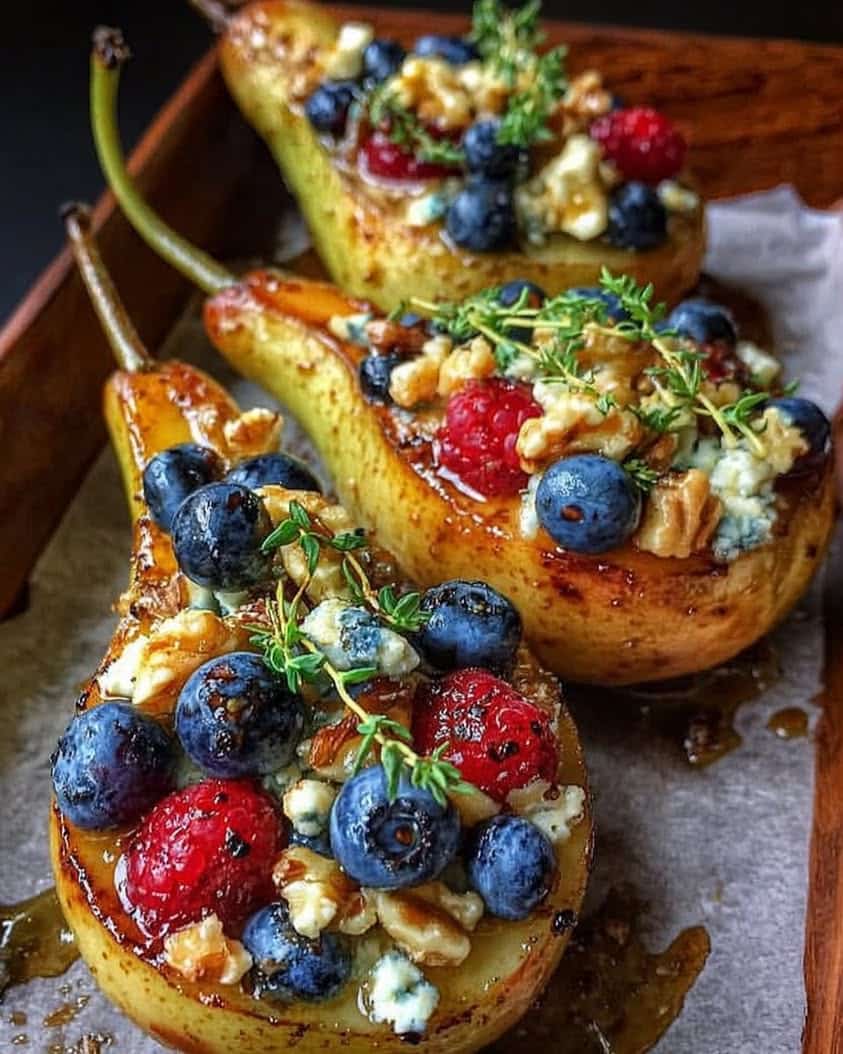
Baked Pears with Berries, Honey, Walnuts & Blue Cheese: A Sweet-Savory Fall Dessert
Welcome to a dessert that elegantly walks the line between sophistication and comfort. If you are searching for an unforgettable finale to a fall dinner party, or simply a cozy treat for a quiet evening at home, look no further than this recipe for Baked Pears with Berries, Honey, Walnuts & Blue Cheese. This dish is a symphony of textures and temperatures, where the tender, caramelized sweetness of ripe pears meets the tart pop of juicy berries, all grounded by the earthy crunch of walnuts and the creamy, pungent bite of blue cheese.
This is not just a dessert; it is an experience. The warmth of the baked pear softens the sharpness of the cheese, creating a luxurious, savory-sweet custard-like texture that melts in your mouth. Meanwhile, a generous drizzle of honey adds a floral nectar that binds all the elements together. I have crafted this guide to ensure your Baked Pears with Berries, Honey, Walnuts & Blue Cheese turn out perfectly every time. We will walk through every step, ingredient, and technique needed to master this impressive-looking yet surprisingly simple dessert.
Furthermore, we will delve into the historical roots of this beloved combination, explore various adaptations to suit your dietary needs, and answer all your burning questions. The recipe is designed for home cooks of all skill levels, focusing on clear instructions and practical tips. By the end of this post, you will feel confident and inspired to create a dessert that is both elegant and deeply satisfying. So, let us preheat the oven and begin our culinary journey into this deliciously layered dish that is perfect for the autumn season.
Indeed, the beauty of this dessert lies in its simplicity and the high-quality ingredients. The bake time allows the pears to become incredibly soft and to absorb the surrounding flavors. The result is a dish that is more significant than the sum of its parts, offering a sophisticated palate experience that balances richness, acidity, and sweetness. Let us dive deeper into what makes this recipe exceptional, starting with a quick overview of its key attributes.
Quick Recipe Highlights
- Flavor Profile: This dessert is a masterclass in sweet-savory balance. The bright, floral honey and caramelized pear provide a gentle sweetness that is immediately complemented by the earthy, tangy berries. The blue cheese introduces a sharp, salty, and slightly funky note that cuts through the sugar, creating a complex taste that is both bold and refined.
- Texture: You will experience a wonderful interplay of textures here. The baked pears become fork-tender and almost melting in the center, while the walnuts provide a hearty, satisfying crunch. The berries may burst and soften, and the blue cheese transforms into a creamy, spreadable delight that coats every bite.
- Aroma: The scent of this baking dish is pure autumn comfort. As the pears roast, their sweetness intensifies, and the honey caramelizes, releasing fragrant notes of toffee and fruit. The earthy aroma of walnuts becomes toasted and nutty, and the blue cheese adds a distinct, pungent smell that promises a savory depth.
- Visual Appeal: Presentation is beautiful with minimal effort. The golden, juicy pear halves are nestled in a dark, glossy syrup from the berries and honey. In the center, the creamy blue cheese provides a stark white contrast, while the deep reds and purples of the berries and the rustic brown of the walnuts create a rich, autumnal palette.
- Skill Level Needed: This is a wonderfully accessible recipe. It requires only basic knife skills for coring and slicing the pears. The oven does the heavy lifting, and the assembly is straightforward. It is simple enough for a weeknight dessert yet elegant enough to impress dinner guests, as there is very little room for error.
- Special Equipment: You only need a handful of basic kitchen tools. A sturdy baking dish that fits the pears comfortably is essential. A melon baller or a small teaspoon is perfect for coring the pears, and a good chef’s knife will make slicing them cleanly a breeze.
Recipe Overview
- Difficulty Level: I have rated this dish as “Easy” because the ingredients are simple to prepare and the baking process is hands-off. There is no complex technique involved, and the ingredients are forgiving. The most challenging part might be waiting for them to bake without peeking, as the smell is incredibly enticing. It’s perfect for novice cooks and seasoned chefs alike.
- Category: This dish comfortably sits in several categories, including dessert, brunch, and even a light, savory appetizer. It pairs beautifully with a crisp green salad for a light lunch or serves as the unexpected, showstopping end to a multi-course meal. Its versatility makes it a valuable recipe to have in your collection.
- Cuisine: This recipe draws inspiration from classic European flavor pairings, particularly those found in French and Italian cooking. The combination of fruit, nuts, and strong cheese is a hallmark of those culinary traditions. This particular dish is a modern, rustic interpretation of those classic flavors, making it a wonderful example of contemporary American home cooking.
- Cost: The overall cost is moderate, varying mostly with the choice of cheese. Blue cheese can range from budget-friendly crumbles to high-end artisanal varieties. Pears and berries are generally affordable, especially when they are in season. The honey and walnuts are pantry staples for many, contributing to the dish being a relatively economical yet luxurious-feeling option.
- Season: This dessert is synonymous with autumn and early winter, the prime season for ripe pears. It is the perfect way to utilize the abundant harvest of fall. However, you can certainly enjoy this dish year-round by substituting seasonal fruits or relying on high-quality frozen berries when fresh are not available.
- Occasion: This recipe is perfect for a variety of occasions. It is a stunning finale for Thanksgiving, a sophisticated addition to a holiday brunch, or a romantic dessert for two. It is equally suited for a cozy family night in or a festive dinner party, proving that this is a versatile and dependable recipe for many special moments.
Why You’ll Love This Recipe
The primary reason you will fall in love with these Baked Pears with Berries, Honey, Walnuts & Blue Cheese is the incredible taste. As the pears bake, their natural sugars concentrate and caramelize, intensifying their sweetness. This is perfectly balanced by the salty, savory creaminess of the blue cheese. The berries burst with a tart juiciness that brightens the overall flavor, and the honey adds a floral depth that ties everything together. The walnuts add a final, nutty crunch that completes this spectacular flavor profile. Moreover, every single bite offers a slightly different combination, making the experience dynamic and exciting.
Convenience is another huge selling point, as this is a dessert that comes together with minimal fuss. There is no complicated pastry dough or delicate custard to contend with in this recipe. The process is simple: prepare the fruit, arrange it in a baking dish, top with the remaining ingredients, and pop it in the oven. This is a fantastic hands-off recipe that allows you to prepare the savory meal, relax with your guests, and then simply pull a stunning dessert out of the oven when you are ready for it. This ease of preparation makes it a practical choice for busy weeknights and stress-free entertaining, as the clean-up is also a breeze.
Nutritionally, this dessert is a more mindful option than many traditional desserts. Pears are an excellent source of dietary fiber, which aids in digestion and promotes satiety. Walnuts are packed with healthy omega-3 fatty acids, which are excellent for your heart health. Berries are antioxidant powerhouses, loading your body with vitamins and phytonutrients. Even the blue cheese contributes calcium and protein. Therefore, you can feel good about indulging your sweet tooth with this recipe, as it offers a variety of health benefits to accompany its decadent flavor.
Socially and emotionally, food is a way to connect, and this dessert is a conversation starter. Its unique flavor combination is intriguing and is guaranteed to get people talking. It is a dish that shows a level of culinary curiosity and care, without requiring the cook to toil for hours. Serving something elegant and unexpected creates a memorable experience for your guests, fostering a warm and convivial atmosphere. It becomes more than a meal or dessert; it becomes a shared moment of discovery, comfort, and connection that elevates any gathering into a special event.
From a cost-effective and accessibility standpoint, the ingredients in this recipe are mostly easy to source and store well. Pears and walnuts are widely available, and blue cheese can be found in almost any grocery store. The recipe is also highly adaptable, using ingredients you might already have on hand. Compared to elaborate desserts that require specialty equipment or rare ingredients, this recipe is incredibly economical, offering a high return on investment for the cost and effort involved. These ingredients are also quite shelf-stable, allowing you to stock up and have a delicious dessert possible at a moment’s notice.
Historical Background and Cultural Significance
The pairing of fruit, nuts, and strong cheese is not a modern invention; it is a tradition that stretches back to ancient times in European culinary history, specifically in the farming cultures of France and Italy. In these regions, pastries and elaborate sweets were often reserved for the very wealthy, as they required large amounts of sugar and refined flour that were expensive. In contrast, the common people would enjoy simple yet elegant pairings of the food they had on hand: fresh fruits from the trees, raw nuts gathered in the fall, and aged cheeses that preserved milk for the winter months. This dish is a direct descendant of that rustic, honest tradition. It reflects a time when people understood the natural harmony of these ingredients without needing to alter them much. The combination of sweet, nutty, and salty flavors provided a satisfying and nourishing end to a meal, a tradition that feels both ancient and supremely modern today.
Culturally, the pear and blue cheese pairing is a classic one, especially in Italy where gorgonzola and pears are a beloved combination. Port wine poached pears with stilton cheese are a traditional Christmas dessert in Britain. In France, poached pears with roquefort are often served as a sophisticated salad or cheese course component. This widespread cultural importance shows that the combination isn’t just a happy accident of flavor. It is a well-established culinary principle, respected across borders for its ability to create a perfectly balanced bite where the earthy, salty, and funky elements of the cheese are beautifully tempered by the sweet, delicate flavor of the pear.
Over time, this classic pairing has evolved to satisfy a more modern dessert palate. Chefs and home cooks began to add elements of acidity and texture to cut through the richness. This is likely where the berries and nuts entered the equation. Berries, particularly tart raspberries and blackberries, provide a bright, acidic counterpoint that cleanses the palate between bites. Toasted walnuts add a welcome layer of earthy bitterness and robust crunch, giving the dish its now-signature textural complexity. The innovation lies in baking the pears, a method that concentrates their sugars and creates a warm, comforting dessert that is a unique addition to the traditional presentation, making it a contemporary classic.
Today, the recipe is a staple of seasonal American cooking, especially in the fall. It showcases a preference for seasonal produce and bold, contrasting flavors that is characteristic of modern cuisine. Unlike its medieval-inspired ancestors, this dish can be a star in a Thanksgiving spread or a simple fall weeknight. Regional variations exist, with pecans substituted for walnuts in the South, or a drizzle of pomegranate molasses in Middle Eastern-inspired renditions. The fundamentals remain the same, but the ability to adapt the dish to local ingredients is a testament to its robust and enduring character. It continues to be a reliable, impressive dessert that bridges the gap between a rustic countryside meal and an elegant, restaurant-quality dish.
Ingredient Deep Dive
The Pear: The pear has been a symbol of affection and health for thousands of years. Originating in Western Asia and Europe, pears were brought to America by early European settlers. They have long been praised not only for their sweet, floral favor but also for their commendable nutritional profile. A medium pear is a fantastic source of dietary fiber, containing about 6 grams, which is crucial for a healthy digestive system. Also, pears are rich in vitamin C, vitamin K, and potassium. When selecting pears for this recipe, choose ones that are ripe but still firm. Anjou or Bosc pears are excellent baking choices, as they hold their shape beautifully when cooked. Give them a gentle squeeze near the stem; they should yield slightly to the pressure without feeling mushy. Store unripe pears at room temperature to let them ripen, and then move them to the refrigerator to extend their shelf life for up to a week.
If you cannot find a good pear, there are a few substitutions that can work. Firm apples, like Honeycrisp or Granny Smith, can be used in their place. They will take about ten minutes longer to bake and will have a slightly different flavor profile, but the result will still be delicious and comforting. For a more exotic flavor, you could try quince, which is a close relative of the pear, but it requires much longer to cook and often needs to be pre-poached. Stick to a firm pear variety for the best, most reliable results. The pears are the star of the show, so using good quality fruit is the most important step.
The Blue Cheese: Blue cheese is a distinguished family of cheeses that are created using cultures of the mold Penicillium. This mold gives the cheese its characteristic blue, grey, or green veins and its sharp, tangy, and often salty flavor, making it a perfect partner for sweet fruits. This type of cheese has a noble history, with legends dating back to the caves of Roquefort, France. Nutritionally, it is enriched with calcium and protein, and due to its strong flavor, a little goes a long way. When choosing blue cheese, you should look for a variety that is creamy and slightly crumbly. A good gorgonzola, roquefort, or a domestic Point Reyes Blue will melt beautifully on top of the warm pears.
It is best to buy blue cheese in a block and crumble it yourself, as pre-crumbled versions can have a bit of a dry texture. If you are not a fan of the strong flavor, you can substitute it with a milder cheese. A creamy goat cheese or feta is a good choice, but they will not have the same pungent, melting quality. For a melty, savory alternative, a small amount of brie or camembert could be used. The cheese should be brought to room temperature before crumbling to allow its flavors and textures to fully develop. This will ensure it softens nicely on the hot pear and incorporates well into each bite.
The Berries: Berries are celebrated for their vibrant colors, juicy texture, and intense antioxidant content. Raspberries and blackberries are often used for their tart flavor and their ability to hold their shape when baked. A cup of berries is a low-calorie, high-fiber food that packs a massive amount of vitamin C and antioxidants. These compounds are known to help neutralize harmful free radicals in the body, reducing oxidative stress and inflammation. When selecting fresh berries, choose those that are bright, plump, and dry. Avoid any containers with signs of juice stains or mold. Berries are highly perishable and should be stored in the refrigerator in a single layer on a paper towel to absorb excess moisture. They are best used within a few days of purchase.
If fresh berries are unavailable or out of season, you can confidently use frozen berries. They will release more juice during baking, which creates a lovely, extra-saucy texture that is wonderful to soak up with a side of ice cream. There is no need to thaw them in this recipe; just sprinkle them on frozen. For a change of pace, you could use chopped strawberries, which will sweetly soften and become almost jam-like. In the fall, you could even try cranberries, but be sure to add an extra tablespoon of honey to balance their sharp, tart bite. Berries are also incredibly versatile and can be swapped to match the season.
The Walnuts: Walnuts are one of the oldest tree foods known to humans, dating back to 7000 B.C. They are the only nut that contains a meaningful amount of alpha-linolenic acid (ALA), a plant-based omega-3 fatty acid that is particularly important for heart health. Walnuts are also rich in copper, folic acid, phosphorus, vitamin B6, manganese, and vitamin E. Their earthy flavor and high oil content make them a perfect substitute for olive oil in some baking applications. When shopping, try to buy whole walnut halves rather than pre-chopped pieces, as they tend to be fresher and have less rancid oil. A good walnut should look plump and have a slightly sweet, nutty aroma; if they smell musty or like paint thinner, they are rancid and should be tossed.
For this recipe, toasting the walnuts is highly recommended. Toasting enhances their nutty fragrance and gives them a crispier texture. Store them in an airtight container in the freezer, where they can keep for up to a year without turning rancid. They are perfect for this dish as they add a robust crunch that counters the soft, tender texture of the pear. If you or your guests have a nut allergy, pepitas (pumpkin seeds) or sunflower seeds are a wonderful and safe alternative. These seeds will provide a similar textural crunch and a slightly different, but equally delicious, earthy flavor profile. Using them will make the dessert inclusive and just as tasty.
The Honey: Honey is a natural sweetener created by bees from the nectar of flowers. Its flavor, color, and aroma vary dramatically depending on the source of the flowers, making it a culinary ingredient with infinite complexity. Historically, honey was the primary sweetener for all of humanity before refined sugar became widely available. It is packed with antioxidants, trace enzymes, minerals, and vitamins, offering a sweeter, more complex taste than standard sugar. For this recipe, I recommend using a high-quality, raw, or local honey. A floral honey, like orange blossom or lavender, enhances the floral notes of the pear. A richer, darker honey, like buckwheat honey, can add a molasses-like depth that is interesting but might overpower the more delicate berries.
Store honey in a cool, dry place in your pantry, away from sunlight. It does not need to be refrigerated. If your honey has crystallized, you can easily return it to a liquid state by placing the closed jar in a bowl of warm water. If you are vegan, or if you simply want a change, you can substitute the honey with pure maple syrup or agave nectar. Maple syrup will add a lovely, distinctive smoky sweetness that pairs delightfully with the walnuts, making your Baked Pears with Berries, Honey, Walnuts & Blue Cheese even more autumnal and comforting.
Common Mistakes to Avoid
- Using Unripe, Rock-Hard Pears: This is the most common pitfall. Unripe pears are starchy and lack sweetness. They will not soften adequately in the oven, leaving you with a crunchy, flavorless dessert. To avoid this, check for ripeness by pressing gently near the stem; the flesh should have a slight give. If they are still hard, leave them on the counter for a day or two until they ripen.
- Overcrowding the Baking Dish: Arranging the pears too closely together in a crowded dish will cause them to steam instead of caramelize. This will prevent them from browning and concentrating their sugars. Choose a baking dish that allows the pears to sit in a single layer with a little space between each piece, which will promote even cooking and caramelization.
- Overcooking the Pears: You want the pears to be tender, but not so soft that they fall apart and turn into mush. The baking time is a guide; the size and ripeness of your pears will affect the timing. Begin checking them at the 20-minute mark. They are done when a knife easily pierces the thickest part of the pear without resistance, but they still hold their shape.
- Under-Toasting the Walnuts: Raw, untoasted walnuts can taste slightly bitter and overly soft. Toasting them in a dry skillet or oven is a crucial step that brings out their nutty, buttery flavor and satisfying crunch. Toasting requires just a few minutes of your attention but makes a significant difference in the final texture of the entire dish.
- Adding the Blue Cheese to Early: If you add the blue cheese at the very beginning and leave it in the oven for 30 minutes, it will completely melt and possibly burn, turning bitter and dry on the top. To preserve its distinct flavor and creamy texture, it is much better to add the cheese during the last 10 minutes of baking or even just after you remove the dish from the oven.
- Skimping on the Honey: You can be generous with the honey. It does not just add sweetness; it creates a glaze that helps the toppings stick and caramelize. The honey is essential for balancing the sharp, salty flavor of the blue cheese. Ensuring every pear piece has a little drizzle will guarantee a perfect sweet-savory balance in every mouthful.
- Forgetting to Compensate for Oven Hotspots: All ovens are different and may cook unevenly. Not rotating the baking dish halfway through the baking time can lead to some pears being perfectly soft while others remain firm. Simply turning the dish 180 degrees when you add the blue cheese will help ensure everything cooks evenly and caramelizes uniformly.
- Serving It Straight from a Cold Dish: This dessert is highly temperature-sensitive. Serving it on a cold plate can make the honey seize up and the cheese harden. Serve the dessert on warm plates so the blue cheese and honey remain velvety and luxurious. This simple step will elevate the entire dining experience.
Essential Techniques
Selecting and Ripening Pears: To master this recipe, you must first master the art of choosing the right pear. A pear is unique because it ripens from the inside out. Therefore, checking only the skin texture is unwise. The best test is the “neck test,” where you press gently on the stem end. If it gives ever so slightly, the pear is ripe and will have a sweet, juicy flavor. If it is rock hard, it is not ready yet. Place unripe pears in a paper bag at room temperature to speed up the ripening process, as the ethylene gas they emit gets trapped. This helps them ripen perfectly for even baking and the best flavor possible.
Halving and Coring Pears: Proper preparation is key. After washing, the pear is cut in half from top to bottom. A small melon baller or a sturdy measuring spoon is then used to scoop out the core and the seeds from the middle of each half. However, you should also check for any stringy bits of the seed canal that might extend down the center. The technique is simple: use a generous scooping motion to create a clean, round cavity in the center of each pear half. This will leave you with a neat place to fill for baking, ensuring the toppings have a home to sit in and the pear cooks evenly.
Toasting Walnuts: This is a quick process that dramatically improves the flavor of the nuts. To toast them, spread the walnuts evenly over a dry baking sheet, and place them in a preheated 350°F oven for about 5 to 7 minutes. Keep a close eye on them, as a minute too long can cause them to burn, making them bitter and ruining the entire dish. You will know they are done when they become fragrant and have darkened slightly in color. Toasting the walnuts brings out their natural oils and gives them a crisp texture that is perfect for sprinkling on top of the baked pears.
Layering Ingredients for Optimal Baking: The way you assemble the dish matters greatly in this recipe. Placing the pear halves cut-side-up in the baking dish ensures the tops will caramelize. Then, the berries should be nestled around the pears, not just on top. The berries will release their juice into the bottom of the dish, mixing with the honey to create a beautiful syrupy sauce. Drizzling the honey over the pears and the berries ensures it caramelizes and glazes the fruit. This layering method means the pears baste in the juices as they bake, becoming more flavorful and moist rather than drying out.
Knowing When the Pears are Perfectly Baked: You should rely on visual and tactile cues rather than a strict timer. The pears are done when they look soft, slightly translucent, and have taken on a golden, caramelized hue. A small knife inserted into the thickest part of the pear should glide in without any resistance. This indicates that the pears have softened completely and are ready. Meanwhile, the juices should be bubbling at the edges of the dish, and the berries will have burst, creating a jammy texture. Once these visual cues are present, you can remove the dish from the oven with confidence.
Pro Tips for Perfect Baked Pears with Berries, Honey, Walnuts & Blue Cheese
First, use a mixture of berry types if you have them. Combining raspberries and blackberries is a great start. Tossing in a handful of fresh blueberries adds a touch of extra sweetness. So, a diverse berry mix creates a more layered and complex sauce. Second, consider using vanilla bean paste or a quality vanilla extract. Stirring a half-teaspoon of vanilla into the honey drizzle adds a wonderful aromatic warmth that beautifully enhances the fruit’s flavors. Third, the key to a perfect bite is ensuring the blue cheese is evenly distributed so that every pear half gets some.
Fourth, you can easily make this ahead of time. You can halve and core the pears and toss them with a little lemon juice to prevent browning. You can also toast the walnuts. Store these prepared elements separately in the refrigerator for up to two days. At baking time, just assemble and bake as directed, adding a few extra minutes to the total cook time. Fifth, a light sprinkle of sea salt over the finished dessert, just before serving, will elevate all the flavors. The salt enhances the sweet, salty, and nutty notes, making them more pronounced. Use a flaky sea salt, as it will provide a subtle textural crunch, too.
Sixth, if you are making this for a larger crowd, the baked pears can easily be served warm over a bed of creamy Greek yogurt or vanilla ice cream. A scoop of mascarpone cheese whisked with a little honey also works beautifully. This transforms the dish from a simple dessert into a show-stopping sundae. Seventh, the type of honey you choose truly matters. Do not just use the stuff that looks like corn syrup. Spend a little extra on raw, unfiltered honey. Its complex floral flavors will directly impact the final taste of the dessert, adding a sophisticated depth that is worth the extra pennies.
Variations and Adaptations
Regional Variations: Across the globe, this dish is customized based on what grows locally. In the Southern United States, for instance, pecans are a natural substitute for walnuts. Their slightly sweeter, buttery flavor pairs exceptionally well with bourbon, which is sometimes added to the honey drizzle. in the Mediterranean, you might see pistachios used, their vibrant green color providing a lovely visual contrast against the cream and red berries. In England, walnuts might be replaced with hazelnuts, and a very sharp cheddar or stilton could substitute for the blue cheese. The specific, local ingredients vary, but the spirit of the dish remains identical.
Seasonal Adaptations: This recipe is a beautiful template for all seasons. While pears are a fall and winter staple, you can repurpose the cooking method throughout the year. In the summer, swap the pears for halved peaches or nectarines, adding fresh raspberries and blueberries. The baking time will be shorter, so watch the fruit carefully. In the spring, halved apricots or plums work perfectly. This flexibility is what makes this such a valuable recipe. It allows you to always use the freshest fruit that is at its peak, ensuring your dessert is always flavorful and vibrant no matter the time of year. Each season offers a new opportunity to experience this dessert.
Dietary Modifications: This recipe is wonderfully easy to adapt to almost any dietary need. For a gluten-free version, there is no need to change anything, because the dish is naturally gluten-free. For a dairy-free alternative, simply omit the blue cheese. To compensate for the lost richness and umami flavor, you can increase the toasted walnuts and add a sprinkle of nutritional yeast for a savory, cheesy note. For a completely vegan version, replace the blue cheese with a crumbled firm tofu that has been marinated in lemon juice and miso paste for a tangy, savory flavor. Swap the honey with maple syrup or agave nectar.
Flavor Variations: The basic flavor palette here is sweet, tart, and savory. You can easily introduce new flavors to make it your own. A teaspoon of freshly grated orange or lemon zest added to the honey glaze will brighten the fruit with a citrusy aroma. A small pinch of ground cardamom or cinnamon would add a welcome layer of warming spice. For a more savory twist, add a sprig of fresh rosemary or thyme to the baking dish. The herbs will infuse their aromatic oils into the cooking fruit, creating a subtle and fragrant complexity that is absolutely divine. You can also use a balsamic glaze drizzled on top after baking for an extra tangy flavor.
Texture Modifications: If you are looking to change the texture of the dish, consider how you prep your toppings. To add more crunch, toast the walnuts for an extra couple of minutes and toss them in a little maple syrup before toasting to create a candied crust. If you prefer a smooth, silky sauce, puree half of the berries with a little honey before baking. This will create a thicker, more luxurious base for the pears. To add another textural element, sprinkle some pomegranate seeds or a crumble made from oats and butter over the top before baking. Be creative with your toppings to make the dish your own signature recipe.
Presentation Alternatives: There are many ways to present this dish beyond the standard. For a rustic look, serve the pears warm in a shallow bowl with a generous scoop of the warm berry sauce spooned over. Top with the walnuts and cheese. Plating it individually is elegant; place a pear half on a plate, spoon over the sauce, and drizzle with a little balsamic glaze or extra honey. For a brunch or buffet setting, this could be served in a large cast-iron skillet, straight from the oven to the table. Its rustic beauty makes it a stunning centerpiece that invites guests to serve themselves family-style.
Serving and Presentation Guide
Plating techniques for this dish are simple but impactful. If you are serving individual plates, start by spooning a pool of the beautiful berry syrup onto the center of the plate. This creates a colorful base for the dessert. Place a warm pear half on top, cut side up. Then, arrange the walnuts and blue cheese over the pear. Finish with an extra drizzle of honey, making sure it cascades down the side of the pear into the syrup. This creates an appealing, restaurant-quality presentation that is both modern and rustic. Allow the elements to remain visible, showing off the beautiful texture and color contrast.
Garnishing ideas are practically limitless. A few sprigs of fresh mint or thyme add a pop of green color and a vibrant, fresh fragrance that contrasts beautifully with the sweet, warm flavors. For a more autumnal look, a light dusting of cinnamon over the top will add a beautiful speckle and an inviting aroma. A sprinkle of flaky sea salt is not just a garnish; it is a flavor enhancer. If you are serving the pears with ice cream or whipped cream, that is its own indulgence. A small twist of orange peel can be expressed over the top to make a beautiful, aromatic garnish.
Traditional accompaniments for this dish can help elevate it from a dessert to a full experience. A dollop of crème fraîche is a classic partner, providing a tangy, rich counterpoint to the sweet fruit. In the fall, a scoop of vanilla bean ice cream is an extremely comforting and delicious addition. For a more sophisticated occasion, a wedge of extra blue cheese on the side can be offered for those who want an even stronger cheese flavor that they can control. A simple, buttery shortbread or biscotti on the side adds a lovely textural crunch, and is perfect for savoring the remaining sweet syrup in the bowl.
Modern serving suggestions often include turning the dessert into a parfait or a trifle. Crumble the baked pears and layer them in a glass with Greek yogurt, a sprinkle of granola, the berry sauce, and a crumble of blue cheese. This makes for an excellent breakfast or a grab-and-go dessert. The dish can also be served warm as a topping for pancakes or waffles during a holiday brunch, creating a luxurious and unique topping. It works delightfully over a bowl of creamy, steel-cut oatmeal. The flexibility of the recipe means it can be used in countless delicious ways.
Temperature considerations are important when serving this dish. It is best enjoyed warm or at room temperature, but never straight from the refrigerator, as the flavors and textures will be muted and hard. Once it rests for 5 minutes after baking, all the components are at their most cohesive and delicious stage. The blue cheese will be meltingly soft, the pears will be juicy, and the honey will be glossy. This dessert is a Print
Baked Pears with Berries, Honey, Walnuts & Blue Cheese
- Total Time: 45 minutes
- Yield: 4
Description
A warm and elegant dessert or appetizer featuring juicy pears baked with a medley of berries, drizzled with honey, topped with crunchy walnuts and creamy blue cheese. Perfect for autumn evenings or festive gatherings.
Ingredients
- 4 ripe but firm pears (such as Bosc or Anjou), halved and cored
- 1 cup mixed berries (fresh or frozen, such as blueberries, raspberries, or blackberries)
- 1/4 cup honey, plus extra for drizzling
- 1/2 teaspoon ground cinnamon
- 1/4 teaspoon ground nutmeg
- 1 tablespoon unsalted butter, cut into small pieces
- 1/2 cup walnuts, roughly chopped
- 1/2 cup blue cheese, crumbled
- Fresh mint leaves for garnish (optional)
Instructions
- Preheat oven to 375°F (190°C). Lightly grease a baking dish large enough to hold the pear halves in a single layer.
- Arrange the pear halves cut-side up in the baking dish. In a small bowl, mix the berries with 2 tablespoons of honey, cinnamon, and nutmeg. Spoon the berry mixture over the pears, dividing evenly.
- Dot the pears and berries with the butter pieces. Drizzle the remaining 2 tablespoons of honey over the top.
- Bake for 25-30 minutes, or until the pears are tender and easily pierced with a fork. Remove from oven and let cool for 5 minutes.
- Sprinkle the walnuts and blue cheese over the warm pears. Drizzle with additional honey if desired, and garnish with fresh mint leaves. Serve warm.
Notes
You can customize the seasonings to taste. For a less sweet version, reduce the honey. If blue cheese is too strong, try goat cheese or ricotta salata. Serve with a dollop of Greek yogurt or vanilla ice cream for extra indulgence.
- Prep Time: 15 minutes
- Cook Time: 30 minutes
- Method: Dessert
- Cuisine: American