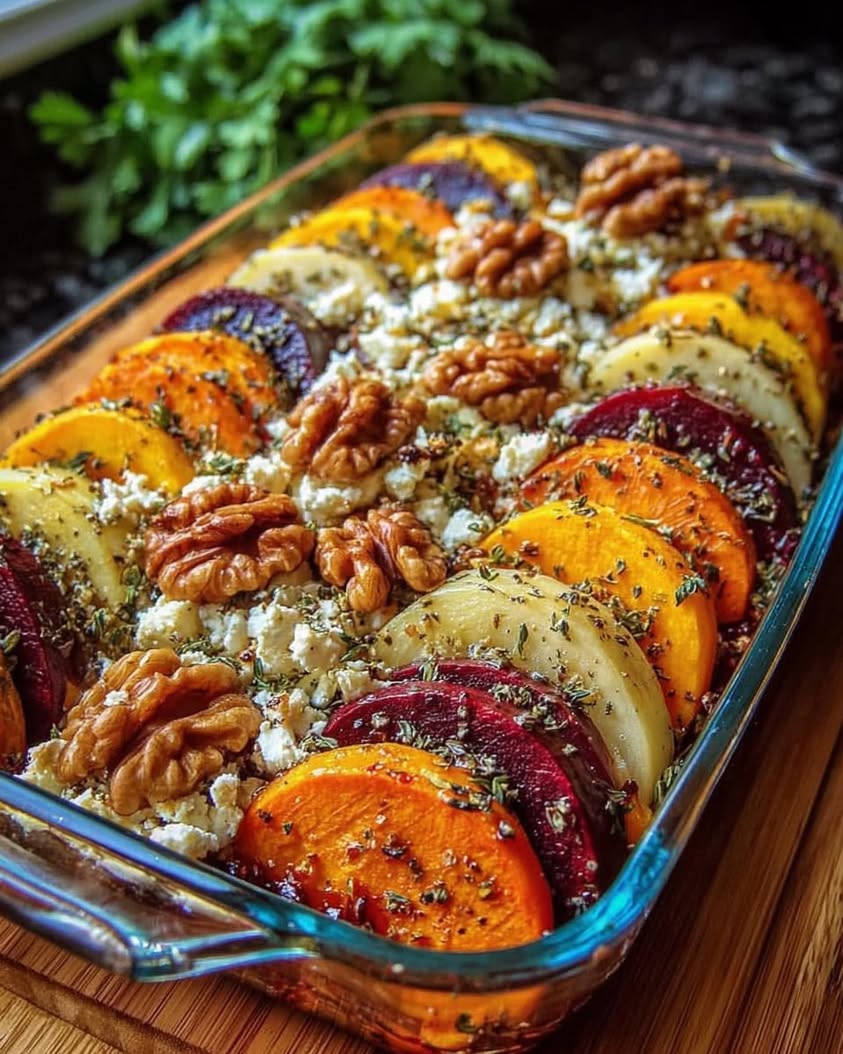
Mediterranean Layered Beet, Sweet Potato & Feta Gratin with Walnuts: A Vibrant Side Dish
This Mediterranean Layered Beet, Sweet Potato & Feta Gratin with Walnuts is not your ordinary vegetable casserole. It is a symphony of earthy sweetness, tangy saltiness, and a satisfying crunch that transforms humble root vegetables into a show-stopping centerpiece. You will find that the vibrant layers of ruby-red beets and golden sweet potatoes create a stunning visual, while the creamy feta and toasted walnuts add complexity and texture. This dish elevates the classic gratin into something truly special, perfect for holiday feasts or a memorable weekday dinner.
Imagine the aroma of roasting root vegetables mingling with fragrant thyme and a hint of garlic. The sweet potatoes caramelize as they bake, becoming tender and luscious. The beets retain a slight firmness, offering a beautiful contrast in both color and bite. Then, you get a generous sprinkle of salty, creamy feta cheese that melts into the crevices, and a final topping of crunchy walnuts that provide a nutty finish. This Mediterranean Layered Beet, Sweet Potato & Feta Gratin with Walnuts is a celebration of simple ingredients prepared with care, promising a flavor experience that feels both rustic and refined.
This recipe is incredibly forgiving and adaptable, making it a fantastic choice for both novice and experienced home cooks. You do not need any special techniques or expensive equipment. The key is in the layering and the quality of your ingredients. The result is a gratin that is deeply satisfying, surprisingly healthy, and guaranteed to impress your guests. Get ready to fall in love with vegetables all over again.
Quick Recipe Highlights
- Flavor Profile: You will experience a beautiful balance of sweet and earthy notes from the beets and sweet potatoes. The tangy, salty feta cuts through the sweetness perfectly, while the walnuts add a toasty, nutty depth. A hint of garlic and fresh thyme ties everything together.
- Texture: The layers of sliced sweet potatoes and beets soften as they bake, creating a tender base. The feta becomes creamy and slightly melted throughout the dish. Finally, the walnut topping provides a delightful, crunchy contrast with every single bite.
- Aroma: Expect a warm and inviting aroma of roasting sweet potatoes and beets, enhanced by aromatic garlic and earthy thyme. The toasted walnuts will release a rich, nutty scent as the dish finishes baking.
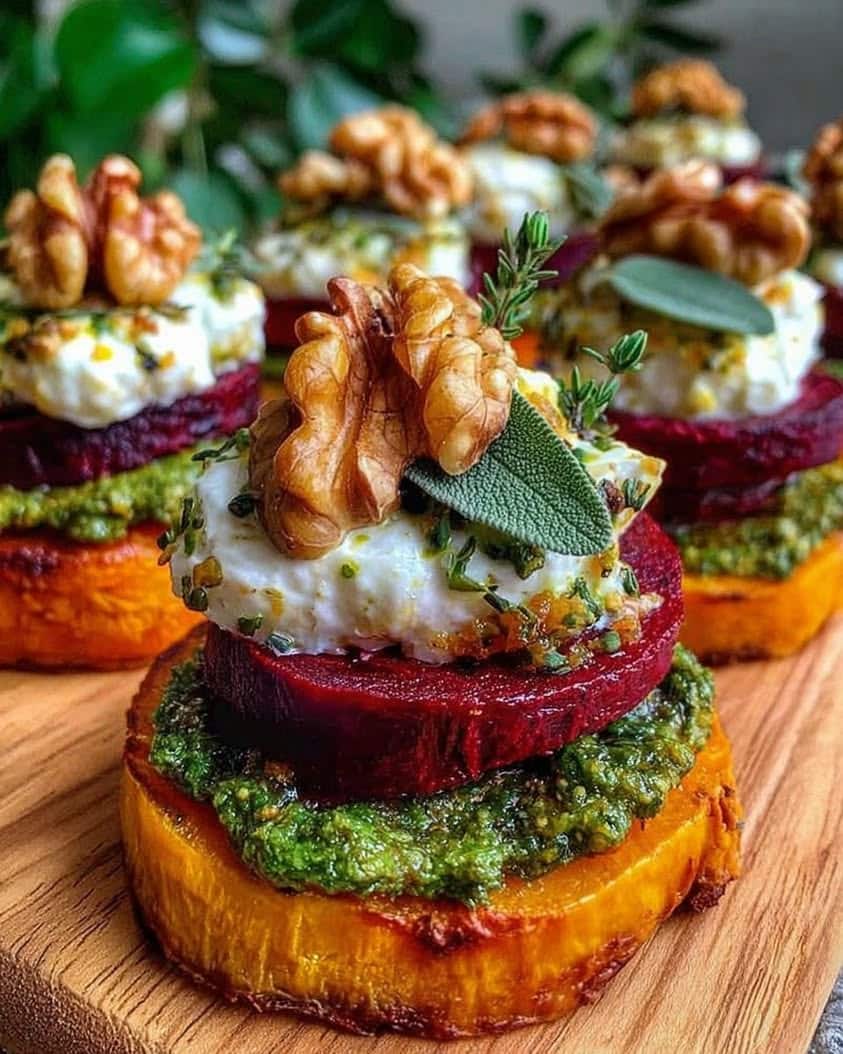
- Visual Appeal: The striking contrast of deep red beets and bright orange sweet potatoes creates a stunning layered effect. The white crumbles of feta and brown, crunchy walnuts scattered on top add texture and an artistic finish. It is a dish that looks as incredible as it tastes.
- Skill Level Needed: This dish requires basic knife skills for slicing the root vegetables evenly. The rest of the process involves simple layering and mixing. Anyone comfortable with basic prep work can master this Mediterranean gratin.
- Special Equipment: You will need a sharp chef’s knife and a mandoline slicer for the most even vegetable slices. A standard 9×13-inch baking dish is perfect for the recipe. A small skillet for toasting the walnuts is also helpful.
Recipe Overview
- Difficulty Level: This recipe is rated as medium difficulty primarily due to the need for uniform slicing of the root vegetables. A mandoline is your best friend here for achieving even thickness, which ensures they all cook through at the same time. The assembly is incredibly straightforward, making it accessible for a confident beginner who takes their time with the slicing.
- Category: This dish works beautifully as a vegetarian main course, but it truly shines as a sophisticated side dish. It is hearty enough to stand alone for a light dinner with a simple salad. You can also serve it alongside roasted chicken, lamb, or a firm white fish for a more complete meal.
- Cuisine: While this dish is named Mediterranean for its key ingredients like olive oil, feta, and walnuts, it has roots in classic French gratins and casseroles. The core technique of layering vegetables and baking them with cheese is a beloved European tradition. We are simply giving it a bright, sun-drenched Mediterranean twist with the specific flavor pairings.
- Cost: The overall cost for this gratin is relatively low, as it predominantly uses affordable root vegetables and pantry staples. Feta cheese and walnuts are the more expensive components, but you do not need a large quantity of either. You can easily serve eight people for a fraction of the cost of a meat-based main dish.
- Season: This gratin is perfect for the fall and winter months when root vegetables are at their peak and sweetest. The warm, hearty nature of the dish is comforting on a cold evening. However, you can enjoy it year-round as beets and sweet potatoes are generally available in most grocery stores.
- Occasion: This impressive yet uncomplicated dish is ideal for holiday gatherings like Thanksgiving, Christmas, or Easter. It is also a wonderful choice for a special Sunday roast dinner or a potluck where you want to stand out. For a simpler occasion, it makes a fantastic meal prep option for lunches throughout the week.
Why You’ll Love This Mediterranean Layered Beet, Sweet Potato & Feta Gratin with Walnuts
The primary reason you will adore this gratin is the incredible harmony of tastes and textures. The sweetness of the roasted sweet potatoes is a perfect counterpoint to the earthy, slightly mineral flavor of the beets. Then, the salty, tangy feta cheese introduces a creamy element that coats every layer. The toasted walnuts provide a necessary crunch that prevents the dish from feeling one-note. Every single forkful offers a different combination of these elements, making it endlessly interesting and highly addictive.
Convenience is another major advantage of this recipe. The preparation is simple, involving mostly slicing and layering. You can assemble the entire gratin a day in advance, which is a huge lifesaver for busy holiday cooking. When you are ready to serve, you simply pop it in the oven. This makes it a stress-free option for entertaining, as you can focus on your guests and other dishes while this beauty bakes away.
This dish is also a powerhouse of nutrition, allowing you to indulge in something decadent-tasting that is actually good for you. Sweet potatoes are loaded with vitamin A and fiber, while beets are known for their anti-inflammatory properties and high folate content. Walnuts provide healthy omega-3 fatty acids. Feta adds a dose of protein and calcium. You get a complete, satisfying dish that nourishes your body from the inside out without sacrificing an ounce of flavor.
From a social perspective, this Mediterranean Layered Beet, Sweet Potato & Feta Gratin with Walnuts is a guaranteed crowd-pleaser. Its vibrant colors are naturally Instagrammable and will instantly draw people to the table. It looks like you have spent hours creating something complex, when in reality, the process is quite manageable. Your guests will be impressed by the sophisticated layering and the surprising flavor combinations. It is a dish that makes you look like a culinary rockstar.
Finally, this recipe is incredibly cost-effective and uses readily available ingredients. A few root vegetables, a block of feta, a handful of walnuts, and some pantry herbs are all you need. There are no exotic or expensive specialty items required. You can often find beets and sweet potatoes on sale, making this an even better value. It proves that you can create a restaurant-quality dish right in your own kitchen without spending a fortune on groceries.
Historical Background and Cultural Significance
The gratin, a culinary technique involving topping a dish with breadcrumbs, cheese, or a sauce and browning it in the oven, is a cornerstone of French cuisine. The term comes from the French word “gratter,” meaning “to scrape” or “to grate,” referring to the crust that forms on top. While the classic potato gratin, known as Gratin Dauphinois, hails from the Dauphiné region of France, the concept of layering vegetables and baking them is a universal one found in many cultures. Our version here takes inspiration from this classic French technique but replaces the heavy cream and gruyère with a lighter, brighter Mediterranean flavor profile.
Beets and sweet potatoes both have deep histories in the Mediterranean region. Beets have been cultivated in the Mediterranean since ancient times, used for their leaves and roots in various preparations. Sweet potatoes, while originating in Central and South America, have become a staple in many Mediterranean and Middle Eastern cuisines after their introduction to Europe. Feta cheese is a protected designation of origin product from Greece, known for its salty, tangy character that has defined Greek cuisine for centuries. Walnuts, native to the Mediterranean and Central Asia, have been a symbol of wisdom and fertility and are a key ingredient in many regional dishes, from sauces to desserts.
This Mediterranean Layered Beet, Sweet Potato & Feta Gratin with Walnuts represents a modern evolution of the classic gratin. It moves away from the heavy, creamy versions of Northern Europe and embraces the lighter, vegetable-forward approach of the Mediterranean diet. This shift reflects a global culinary trend towards healthier, more vibrant dishes that do not compromise on flavor. By combining these culturally significant ingredients in a classic French cooking method, we create a fusion dish that respects both traditions while offering something fresh and new.
Regional variations of this layered vegetable bake are endless. In Greece, you might find a “tourlou” or “briam,” which is a similar tray-baked vegetable dish often with eggplant, zucchini, and potatoes, seasoned with olive oil and herbs. In Turkey, a dish called “imam bayildi” shows a similar philosophy of roasting vegetables with olive oil. In this recipe, we are embracing the specific flavors of feta, beets, and walnuts, which are cornerstones of Eastern Mediterranean and Middle Eastern cooking. This variation is a testament to how a simple technique can be endlessly adapted to create new and exciting flavor combinations.
Ingredient Deep Dive
Beets are the star of the show, providing a deep magenta color and a sweet, earthy flavor that is uniquely their own. In ancient cultures, people prized beets for their medicinal properties, using them to treat everything from fevers to digestive issues. Nutritionally, they are a powerhouse rich in folate, manganese, and fiber. The deep red pigment comes from betalains, powerful antioxidants known for their anti-inflammatory effects. When choosing beets, look for firm, smooth specimens with fresh, unwilted greens if still attached. Store them in a plastic bag in the refrigerator for up to three weeks. You should avoid beets that feel soft or have blemishes.
Sweet potatoes bring a beautiful golden hue and a creamy sweetness that balances the earthiness of the beets perfectly. This root vegetable is a fantastic source of beta-carotene, which the body converts into vitamin A, supporting eye health and immune function. They are also high in fiber, vitamin C, and potassium. When selecting sweet potatoes, choose ones that are firm and heavy for their size with smooth skin. Avoid any that show signs of sprouting or soft spots. Store them in a cool, dark, and well-ventilated place, never in the refrigerator, as cold temperatures can alter their flavor. You can substitute them with regular potatoes or parsnips for a different flavor profile.
Feta cheese provides the creamy, salty, and tangy element that defines this Mediterranean dish. Traditionally made from sheep’s milk or a combination of sheep’s and goat’s milk, true feta is brined and has a crumbly yet creamy texture. It is a good source of calcium and protein. When buying feta, purchase it in a block packed in brine for the best flavor and texture. Look for cheese that is white and has a clean, milky aroma. Store the block in its brine in the refrigerator, and it will keep for several weeks. For a milder flavor, you can substitute feta with fresh goats cheese or even a mild, crumbled mozzarella.
Walnuts add the essential crunch and a toasty, buttery note that elevates this gratin. Walnuts are one of the best plant-based sources of omega-3 fatty acids, which are crucial for brain health and reducing inflammation. They also contain a variety of antioxidants. For the best flavor, always toast your walnuts before adding them to the dish. This simple step releases their natural oils and deepens their nutty taste. You should store walnuts in an airtight container in the refrigerator or freezer to prevent them from going rancid. Pecans or almonds can be used as an alternative if you want to experiment with a different crunch.
Common Mistakes to Avoid
- Slicing the vegetables unevenly is a major pitfall. If your sweet potato and beet slices are different thicknesses, they will not cook at the same rate. Thin slices will become mushy, while thick slices will remain hard and undercooked. Use a mandoline slicer to ensure every slice is a uniform thickness, ideally about 1/8 inch.
- Overcrowding the baking dish with too many layers can steam the vegetables instead of roasting them. Although you want a full dish, be careful not to pack it too tightly. The vegetables need some space for steam to escape and for hot air to circulate, which promotes caramelization and softening.
- Skipping the step of toasting the walnuts is a common oversight that leads to a less flavorful dish. Raw walnuts can taste a little bitter and dusty. Toasting them in a dry skillet for a few minutes until fragrant transforms their flavor, making them rich, nutty, and much more aromatic.
- Using pre-crumbled feta cheese is a mistake. The anti-caking agents added to pre-crumbled feta prevent it from melting and blending smoothly into the dish. Always buy a block of feta in brine and crumble it yourself. You will get a much creamier and more flavorful result.
- Forgetting to oil the baking dish is a small but crucial oversight. The natural sugars in the sweet potatoes and beets can cause them to stick to the bottom and sides of the pan. A generous coating of olive oil or non-stick spray prevents this and makes cleanup much easier.
- Baking the gratin covered for the entire time will prevent the top from browning and becoming crispy. The dish needs time uncovered to allow the top layer of vegetables and walnuts to roast and develop a lovely golden-brown crust. Follow the recipe timings for covered and uncovered baking.
- Overcooking the gratin to the point where the feta evaporates or becomes rubbery is a concern. Feta should melt into creamy pockets, not disappear or turn into hard, salty chunks. Bake the dish only until the vegetables are tender when pierced with a fork, which is usually the optimal time.
- Skipping the resting time after baking is a common mistake. The gratin needs about 10 minutes to set out of the oven. This period allows the juices to redistribute and the layers to settle slightly. Cutting into it immediately will result in a runny, sloppy mess that falls apart.
- Using the wrong size baking dish will affect cooking time. A dish that is too small will create insanely thick layers that take forever to cook. A dish that is too large will result in a thin, dry layer. Stick to the recommended 9×13-inch dish for best results.
- Under-seasoning the layers is a frequent error. Potatoes and beets are relatively bland on their own and can absorb a surprising amount of salt and pepper. Season each layer of vegetables as you build the gratin to ensure the final dish is flavorful all the way through.
Essential Techniques
Mastering the art of even slicing is crucial for this Mediterranean Layered Beet, Sweet Potato & Feta Gratin with Walnuts. Using a mandoline slicer is the most reliable method to achieve perfectly uniform slices. The thickness of your slices directly impacts the cooking time and the final texture. A consistent slice, around 1/8 inch, ensures the sweet potatoes and beets become tender at the same moment. If your slices vary, some vegetables will be undercooked while others are disintegrating. Take your time, use the guard provided with the mandoline, and you will have a perfectly layered gratin every time.
Layering the vegetables strategically is another important technique. You are not just throwing them into the dish; you are creating a beautiful cross-section when the gratin is cut. Start with a layer of overlapping sweet potato slices, then a layer of overlapping beet slices. Repeat this pattern until you have used all the vegetables. This creates a checkerboard-like effect when you cut into the finished dish. It also ensures that every portion has a balance of both vegetables and the flavors they bring.
Toasting the walnuts is deceptively simple but entirely transformative. You heat a dry, heavy-bottomed skillet over medium heat. Add the chopped walnuts in a single layer and cook, shaking the pan frequently, for 2 to 3 minutes. You will know they are done when they become fragrant and turn a shade darker. The key is to watch them carefully, as they can burn very quickly from being perfectly toasted. Once done, immediately transfer them to a plate to stop the cooking process. This simple technique unlocks the nutty, buttery potential of the walnuts.
The final technique is knowing when the gratin is perfectly baked. You cannot rely on time alone because different ovens and vegetable sizes affect this. The best test is to insert the tip of a sharp paring knife into the center of the gratin. It should slide in with little to no resistance. If you feel any hard resistance, the vegetables need more time. The top should also be lightly golden and bubbly around the edges from the feta. Trust your senses over the timer, and you will achieve a perfect texture.
Pro Tips for Perfect Mediterranean Layered Beet, Sweet Potato & Feta Gratin with Walnuts
To prevent the dish from drying out, cover it with aluminum foil for the first 40 minutes of baking. This traps steam and gently cooks the vegetables through. Remove the foil for the final 15-20 minutes. This allows the top layer to caramelize and brown beautifully, and the walnut topping to become crunchy without burning.
Use a large, sharp knife or a cleaver to cut the beets and sweet potatoes in half horizontally before slicing them into rounds. This creates semi-circles that are easier to handle and layer neatly in the baking dish. It also reduces the overall size of the slices, making them easier to eat.
Do not soak the sliced potatoes or beets in water, as you might with regular potatoes for French fries. This removes the starch that helps the layers stick together. Simply wash the vegetables before slicing, and do not rinse them afterward.
For an even richer flavor, substitute a tablespoon of the olive oil with butter to drizzle over the layers. The milk solids in the butter will brown and add a deeper, nuttier taste to the finished gratin. This is a classic French technique that adds a layer of complexity.
If you want a slightly sweeter gratin, add a thinly sliced red onion or shallot between the layers. The sweetness of the caramelized onion will complement the natural sugars in the roots. You can also add a pinch of red pepper flakes for a subtle kick.
Always taste your feta before you crumble it. Some feta brands are much saltier than others. If your feta is very salty, use less of it in the recipe or balance it with less added salt on the vegetable layers. This ensures the final dish is well-seasoned and not overpowering.
Let the gratin rest for at least 10 minutes before serving. This is not just an idle suggestion. This resting period is essential for the structure of the dish. It allows the natural juices to be reabsorbed into the vegetables, making it easier to cut and portion cleanly without everything running apart.
For the most consistent results, use room temperature ingredients. Cold feta and cold eggs (if you use them) can create uneven cooking. Let your feta block sit on the counter for about 20 minutes before you crumble it. This simple step promotes a more even melt.
Variations and Adaptations
From a regional perspective, you can adapt this gratin to different Mediterranean cuisines. A Greek version would include a layer of sliced eggplant and zucchini in addition to the root vegetables, creating a “briam” style bake. A Turkish spin might use a generous amount of fresh dill or mint in the layers. For an Italian flair, substitute the feta with a creamy ricotta salata or provolone and add a layer of sun-dried tomatoes.
Seasonal adaptations are easy and welcome. In the spring, you can incorporate thinly sliced fennel and asparagus tips. In the summer, swap the sweet potatoes for a mix of yellow squash and zucchini. In the fall, add cubes of butternut squash or parsnips to the layers. The base technique of layering root vegetables with cheese and nuts is incredibly flexible to whatever is fresh and in season.
For dietary modifications, a vegan version is quite simple. Replace the feta cheese with a high-quality vegan feta, or use a creamy cashew cheese sauce. You can also use nutritional yeast flakes for a cheesy, nutty flavor. To keep it dairy-free but not vegan, a crumbly, firm goat cheese is an excellent substitute for feta if you can tolerate goat milk.
Flavor variations can be explored by changing the herbs. While thyme is classic, you can use fresh rosemary for a piney, earthy note. A sprinkle of smoked paprika will add a subtle, smoky depth. For a sweeter version, a pinch of cinnamon or nutmeg can be added to the sweet potato layers. A dash of balsamic vinegar drizzled over the top before baking can add a tangy, sweet complexity.
Texture modifications are also fun to play with. For a creamier gratin, you can pour a thin layer of heavy cream or plain Greek yogurt between the vegetable layers. For a crunchier topping, add panko breadcrumbs or crushed cornflakes to the walnut mixture. For a more rustic texture, you can chop the vegetables into large chunks instead of slicing them into perfect rounds.
Presentation alternatives can make this dish suitable for any occasion. For individual servings, you can layer the ingredients in single-serving ramekins or mini cast-iron skillets. This makes for a stunning and personal presentation. For a large party, you can use a large baking dish and serve it straight from the oven, allowing guests to help themselves to a heaping portion of the beautiful layers.
Serving and Presentation Guide
When you are ready to plate this gratin, the key is to let it rest first. Use a large, sharp spatula to lift out a generous portion, ensuring you get a clean cross-section of the beautiful layers. Place it in the center of the plate. The vibrant orange and red layers against the white of the plate will immediately draw the eye. You want to create a sense of height and structure on the plate.
Garnishing can elevate the visual appeal even further. A fresh sprinkle of chopped parsley or chives adds a pop of green that contrasts beautifully with the red and orange. A light drizzle of high-quality extra virgin olive oil over the top adds shine and a fresh, peppery finish. You can also add a light crack of black pepper or a few sea salt flakes right before serving.
Traditional accompaniments for this Mediterranean bake are simple. A crisp, green salad with a lemony vinaigrette is a perfect contrast to the rich, creamy gratin. It also works wonderfully alongside roasted chicken or lamb. For a truly traditional experience, serve it with a side of warm, crusty bread to soak up any of the delicious pan juices.
Modern serving suggestions include pairing it with a light grain like quinoa or farro for a complete vegetarian meal. You can also fluff it up into a bowl with some roasted chickpeas and a dollop of tzatziki. For a more deconstructed approach, you can serve it as a component of a larger mezze platter alongside olives, hummus, and grape leaves.
Temperature considerations are important. This gratin is best served warm, not piping hot. The resting time after baking is crucial for this. If you are serving it at a buffet, you can use a warming tray to keep it at the ideal temperature. Avoid letting it cool down completely and then trying to reheat it, as it can dry out or become soggy.
Portion control tips are simple. For a side dish, one serving is about a 3-inch by 3-inch piece, similar to a generous brownie square. For a main course, you can double that portion. This gratin is quite hearty and filling, so you do not need a mountain to make a satisfying meal. The layers themselves are a feast for the eyes and the palate.
Wine and Beverage Pairing
When you are serving this Mediterranean Layered Beet, Sweet Potato & Feta Gratin with Walnuts, wine pairing is a delight because the flavors are so versatile. A crisp, unoaked white wine like a Sauvignon Blanc is a fantastic choice. Its high acidity and grassy notes will cut through the richness of the feta and the sweetness of the vegetables. A dry, aromatic white like a Vermentino or a Greek Assyrtiko also works beautifully, echoing the Mediterranean origin of the dish. These wines will cleanse the palate after each bite.
For red wine lovers, a lighter-bodied red is the way to go. A Pinot Noir from California or Oregon offers bright red fruit flavors and a soft tannin structure that will not overwhelm the vegetables. A Beaujolais-Villages or a Chianti are also excellent choices. The key is to choose a red that is low in tannins and high in acidity to complement the sweetness and earthiness of the dish.
For non-alcoholic alternatives, a sparkling water with a squeeze of lemon or a splash of elderflower syrup is a lovely, refreshing choice. The bubbles will help cleanse the palate. A classic lemonade or a hibiscus iced tea would also pair well, offering a tart counterpoint to the gratin’s sweetness. The acidity in these drinks mirrors that of a good white wine.
A cold, crisp beer can also be a fantastic partner. A Belgian witbier with its hints of coriander and orange peel will echo the Mediterranean flavors. A dry, farmhouse-style saison would also be great. For a maltier option, a lighter pale ale or a pilsner offers a clean, crisp finish that is very refreshing against a rich, cheesy dish.
Storage and Shelf Life
Storing your leftover gratin properly is essential for maintaining its quality. Allow the dish to cool completely to room temperature before covering it. You should not leave it out for more than two hours for food safety reasons. Once cooled, cover the baking dish tightly with plastic wrap or aluminum foil. You can also transfer the leftovers to an airtight container. Properly stored, the gratin will last in the refrigerator for 4 to 5 days.
For the best quality, you should keep the container in the coldest part of your refrigerator, which is usually the back of the bottom shelf. Avoid storing it in the door, where the temperature fluctuates. The gratin will still taste great after several days, though the walnut topping may lose some of its crunch. You can address this when you reheat it.
Signs of spoilage include an off or sour smell, visible mold, or a slimy texture on the vegetables. If you notice any of these, it is best to discard the leftovers immediately. The high moisture content of the vegetables can create an environment for bacteria to grow if left for too long or stored improperly. Always use your best judgment.
Reheating instructions are straightforward for the best results. The oven is the best method to restore the texture. Place the gratin in a 350-degree Fahrenheit oven for 15 to 20 minutes, or until it is heated through and the top begins to crisp up again. You can also reheat individual portions in a skillet with a lid over medium-low heat. Avoid the microwave, as it will make the vegetables mushy and the feta rubbery.
Freezing guidelines: This gratin freezes well, making it an excellent meal prep option. Assemble the gratin completely but do not bake it. Instead, cover it tightly with a layer of plastic wrap, followed by a layer of aluminum foil. It will keep in the freezer for up to three months. When you are ready to bake it, you can thaw it overnight in the refrigerator, or bake it from frozen, adding about 15 to 20 minutes extra to the cooking time.
Make Ahead Strategies
You can prepare this Mediterranean Layered Beet, Sweet Potato & Feta Gratin with Walnuts entirely in advance, which is a major advantage for entertaining. The entire assembly process can be done up to 24 hours before you plan to serve it. After you have layered all the vegetables and the crumbled feta, cover the dish tightly with plastic wrap and store it in the refrigerator. This allows the flavors to meld together beautifully overnight.
You should store the walnut topping separately in an airtight container at room temperature. If you add the walnuts to the assembled dish in the refrigerator, they will absorb moisture and become soft. You only need to sprinkle them on top right before the dish goes into the oven. This simple step ensures the walnuts stay perfectly crunchy.
The quality impact is minimal. In fact, many people argue that the gratin tastes even better the next day after the flavors have had time to get acquainted. The vegetables will release a bit of moisture overnight, but this is not a problem. You will simply need to cover the dish with foil for the first part of baking to allow them to steam and soften properly.
For assembly tips, it is best to prepare all your vegetables and crumble your feta before you start layering. This makes the process smooth and fast. You can also slice your vegetables up to two days in advance and store them in separate bags in the refrigerator. Just be aware that sliced beets will bleed color into other ingredients if they touch.
Reheating guidelines for a make-ahead gratin are the same as for freshly baked leftovers. If you are preparing it a day in advance and baking it later, simply remove it from the refrigerator while you preheat your oven. Give it a few minutes to take the chill off before baking. Follow the same covered and uncovered baking times as the original recipe.
Fresh element additions can be a nice finishing touch. A sprinkle of fresh herbs like dill or parsley right before serving adds a bright, fresh element that contrasts with the long-baked richness. A drizzle of a good quality olive oil or a squeeze of lemon juice after it comes out of the oven can also bring new life to a dish that was prepared ahead of time.
Scaling Instructions
If you want to halve this recipe, it is very easy to do. Simply divide all the ingredients in half. You will need a smaller baking dish, such as an 8×8-inch square dish or a 9-inch round pie plate. The layering pattern remains the same. Your cooking time will likely decrease slightly because the gratin is shallower. Check for doneness at the 35-minute mark.
For doubling or tripling the recipe, you will need to use multiple baking dishes or a large, deep roasting pan. You cannot simply put double the ingredients into a 9×13-inch dish, as the layers will be too thick and will not cook through. Use two separate 9×13-inch dishes if you have them. The cooking time will increase slightly for a single dish with more volume, but using two separate dishes keeps the time similar.
Equipment adjustments are necessary when scaling. A larger roasting pan may require you to increase the baking time by 10-15 minutes to ensure the center is fully cooked. Always use a knife test to check for doneness. If you are using multiple dishes, rotate them halfway through the baking time to ensure even browning.
Timing modifications are the main variable. When halving the recipe, check the dish about 15 minutes earlier than the original recipe suggests. When doubling the recipe and using a single large pan, expect the vegetables to take up to 20 minutes longer. Always rely on the knife test and visual cues rather than the timer alone.
Storage considerations for scaled recipes are straightforward. If you double the recipe and make a huge batch, store the leftovers in multiple smaller containers for easier reheating. This prevents you from having to reheat a massive block of gratin every time you want a small portion. Smaller portions cool down faster and reheat more evenly.
Nutritional Deep Dive
This Mediterranean Layered Beet, Sweet Potato & Feta Gratin with Walnuts is a nutrient-dense dish that packs a powerful health punch. A single serving provides a generous amount of complex carbohydrates from the sweet potatoes and beets, which provide sustained energy. The fat content comes primarily from the heart-healthy olive oil and walnuts, which are rich in monounsaturated fats and omega-3s. The protein is modest but includes the complete proteins from the feta cheese.
The micronutrient analysis is impressive. Sweet potatoes are one of the richest sources of beta-carotene, a precursor to vitamin A. Beets are loaded with folate and manganese. Walnuts are a top source of copper and magnesium. The feta provides calcium and phosphorus for bone health. You get a wide spectrum of vitamins and minerals in every single bite.
Health benefits extend beyond basic nutrition. The combination of antioxidants from the beets and walnuts helps fight oxidative stress and inflammation in the body. The fiber from the root vegetables supports healthy digestion and promotes feelings of fullness. The omega-3s from walnuts are crucial for brain function and heart health. This is a dish that supports your long-term wellness goals.
Dietary considerations are positive for many people. This recipe is naturally gluten-free, making it suitable for those with celiac disease or gluten sensitivity. It is also a great option for vegetarians. The fat content is moderate and comes primarily from beneficial sources. It is a balanced meal component when paired with a lean protein.
Portion analysis is key for weight management. A reasonable serving of this gratin is a 3-inch by 3-inch square. This portion provides around 300-350 calories, depending on the exact amount of oil and feta used. The high fiber and moderate protein content contribute to satiety, meaning you will feel satisfied for longer. It is a rich and indulgent dish, so portion control helps you enjoy it without overdoing it.
Dietary Adaptations
For a gluten-free adaptation, this recipe is essentially already there Print
Mediterranean Layered Beet, Sweet Potato & Feta Gratin with Walnuts
- Total Time: 1 hour 5 minutes
- Yield: 4
Description
A vibrant, hearty gratin featuring earthy beets, sweet potatoes, tangy feta, and crunchy walnuts, all baked to golden perfection with Mediterranean herbs.
Ingredients
- 2 medium beets, peeled and thinly sliced
- 2 medium sweet potatoes, peeled and thinly sliced
- 1 cup crumbled feta cheese
- 1/2 cup chopped walnuts
- 1 cup heavy cream
- 2 cloves garlic, minced
- 1 teaspoon dried oregano
- 1/2 teaspoon dried thyme
- Salt and black pepper to taste
- 2 tablespoons olive oil
Instructions
- Preheat oven to 375°F (190°C). Lightly grease a 9×13-inch baking dish with olive oil.
- Layer half of the beet and sweet potato slices in the dish, overlapping slightly.
- Sprinkle half of the feta, walnuts, oregano, thyme, garlic, salt, and pepper over the vegetables.
- Repeat with remaining beet and sweet potato slices, then top with remaining feta, walnuts, and herbs.
- Pour heavy cream evenly over the layers. Drizzle with olive oil.
- Cover tightly with foil and bake for 35 minutes. Remove foil and bake for another 10-15 minutes until vegetables are tender and top is golden and bubbly.
- Let rest for 5 minutes before serving.
Notes
You can customize the seasonings to taste.
- Prep Time: 15 minutes
- Cook Time: 50 minutes
- Method: Main
- Cuisine: Mediterranean