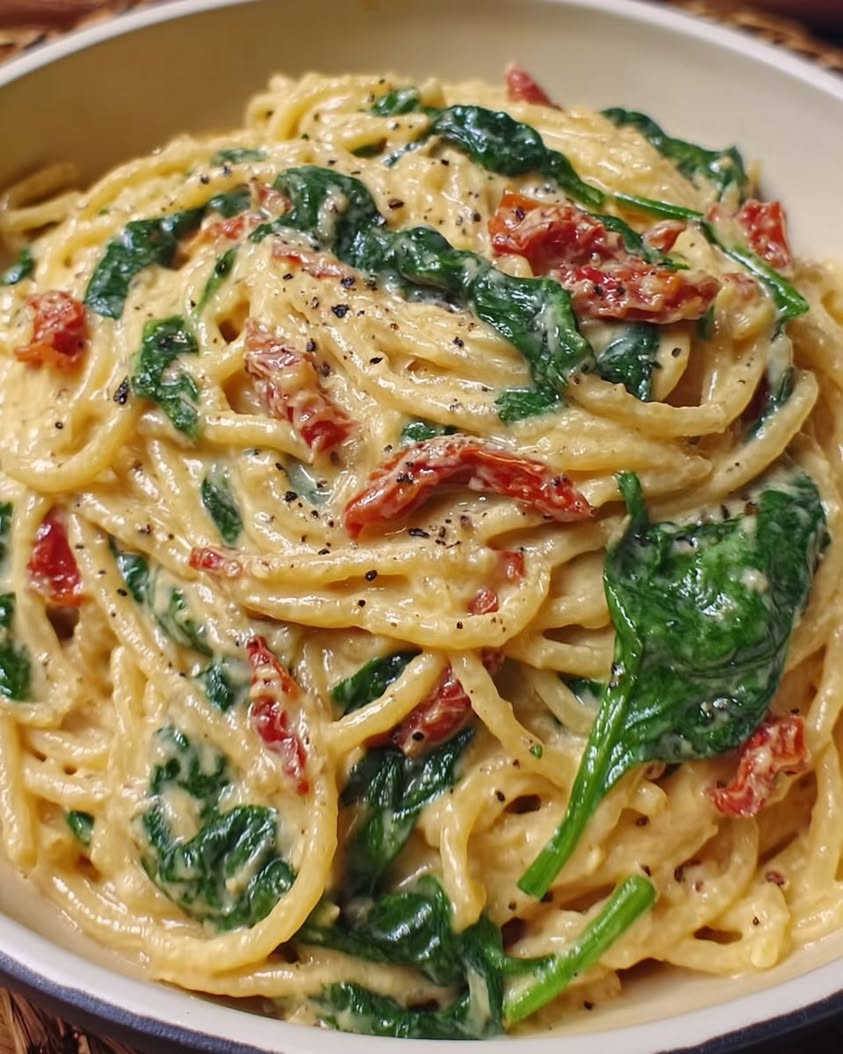
The Best One-Pan Spaghetti and Spinach with Sun-Dried Tomato Cream Sauce
This one-pan spaghetti and spinach with sun-dried tomato cream sauce delivers restaurant-quality flavor in under thirty minutes. Imagine twirling tender spaghetti around your fork, each strand coated in a velvety cream sauce studded with tangy sun-dried tomatoes and tender spinach. The best part is that this recipe does not require draining pasta or dirtying multiple pots. You will cook everything together in a single skillet, which means less cleanup and more time enjoying dinner.
The sun-dried tomatoes bring a sweet and tangy intensity that perfectly balances the rich cream and savory Parmesan cheese. Fresh spinach adds bright color and a subtle earthiness that complements the pasta beautifully. This spaghetti and spinach with sun-dried tomato cream sauce combines convenience with gourmet appeal, making it perfect for busy weeknights or casual dinner parties. The aroma of garlic sizzling in olive oil mingling with sun-dried tomatoes will fill your kitchen and draw everyone to the table.
What makes this recipe truly special is its versatility. You can serve it as a hearty main dish or pair it with crusty bread and a simple salad for a complete meal. The creamy sauce clings to every strand of pasta, creating a luxurious texture that feels indulgent without being heavy. Whether you are cooking for your family or hosting friends, this spaghetti and spinach with sun-dried tomato cream sauce will become a staple in your recipe rotation.
Quick Recipe Highlights
- Flavor Profile: This dish offers a harmonious blend of tangy sun-dried tomatoes, savory Parmesan, rich heavy cream, and aromatic garlic. The sweetness of the tomatoes balances the salty cheese, while the cream provides a smooth backdrop for all the flavors.
- Texture: Al dente spaghetti provides a satisfying chew, while the spinach wilts into tender ribbons. The sauce is luxuriously creamy but not too thick, coating each strand evenly without feeling gluey or heavy.
- Aroma: The moment you start cooking, the fragrance of sautéed garlic and sun-dried tomatoes fills the air. As the cream simmers, it releases a warm, nutty scent that pairs wonderfully with the fresh spinach.
- Visual Appeal: The deep red of sun-dried tomatoes contrasts beautifully with the vibrant green of fresh spinach. The creamy sauce has a pale golden hue, and the Parmesan adds little flecks of white throughout the dish.
- Skill Level Needed: This recipe requires basic knife skills and simple stovetop techniques. You do not need any advanced culinary training, so beginners can tackle it with confidence while experienced cooks will appreciate the efficiency.
- Special Equipment: A large skillet or Dutch oven with a lid is essential for the one-pot cooking method. You will also need a wooden spoon or spatula for stirring and a measuring cup for liquids.
Recipe Overview
- Difficulty Level: We rated this recipe as easy because it uses straightforward techniques and common ingredients. The one-pan method eliminates the need to boil pasta separately or juggle multiple pots. Even if you have never made a cream sauce before, the step-by-step process is forgiving and hard to mess up.
- Category: This dish falls under main course pasta recipes, but it can also work as a hearty side dish if served alongside grilled chicken or fish. It is perfect for lunch or dinner and pairs well with a light starter like a simple green salad.
- Cuisine: This recipe draws inspiration from Italian-American cooking traditions, combining classic Mediterranean ingredients like sun-dried tomatoes and Parmesan with the convenience of one-pot cooking. The use of heavy cream adds a modern twist that appeals to American palates.
- Cost: This is a budget-friendly meal that uses affordable pantry staples like dried pasta and canned sun-dried tomatoes. Fresh spinach is relatively inexpensive, and you only need a small amount of cream and cheese. The total cost per serving is around three to four dollars.
- Season: This spaghetti and spinach with sun-dried tomato cream sauce works well year-round. In winter, the rich cream sauce provides comfort and warmth. In summer, the bright sun-dried tomatoes and fresh spinach offer a lighter feel despite the creamy base.
- Occasion: This recipe shines as a quick weeknight dinner when you need something satisfying without spending hours in the kitchen. It also works nicely for casual get-togethers, potlucks, or date nights where you want to impress without stressing.
Why You Will Love This Recipe
The taste and texture of this spaghetti and spinach with sun-dried tomato cream sauce are absolutely captivating. The sun-dried tomatoes deliver bursts of intense flavor that wake up your taste buds, while the cream creates a silky coating on every strand of pasta. The spinach adds a gentle bitterness that cuts through the richness, creating a beautifully balanced dish. Each bite combines the chew of al dente pasta with the softness of wilted greens and the slight chunkiness of the tomatoes. This combination is both comforting and exciting, making it a meal you will crave repeatedly.
Convenience is the heart of this recipe, and that is what makes it so appealing for busy home cooks. You only need one pan, which means minimal dishes to wash after dinner. The cooking process is straightforward and requires about half an hour from start to finish. You do not need to boil water separately or wait for a pot to come to a rolling boil. The pasta cooks directly in the sauce, absorbing all the delicious flavors as it softens. This one-pan method saves time, energy, and effort while delivering exceptional results.
Nutritionally, this dish offers a respectable balance of macronutrients. The spaghetti provides complex carbohydrates for sustained energy, while spinach contributes iron, vitamin K, and antioxidants. Sun-dried tomatoes are packed with lycopene, a powerful antioxidant linked to heart health. The cream and Parmesan add calcium and protein, making the meal more satiating. You can easily adjust the portion sizes to fit your dietary goals, and the high vegetable content helps you meet your daily greens target without feeling like you are eating a salad.
Socially and entertainingly, this recipe is a winner because it looks and tastes like something you would order at a nice restaurant. Guests will be impressed that you made such a beautiful dish from scratch, but they will never guess how little effort it actually required. The creamy sauce and colorful ingredients make for an attractive presentation that photographs well. You can serve it family-style in the center of the table or plate individual portions for a more formal setting. This spaghetti and spinach with sun-dried tomato cream sauce is a conversation starter that brings people together.
Cost-effectiveness and accessibility are two more reasons to love this recipe. The ingredients are all widely available at any grocery store, and most are items you might already have in your pantry. Sun-dried tomatoes come in jars or bags and keep for months, so you can always have them on hand. Fresh spinach is available year-round, and dried pasta is one of the most affordable pantry staples. You are getting a gourmet experience for a fraction of the cost of takeout or restaurant dining. Plus, the leftovers reheat beautifully, giving you another meal with zero additional effort.
Historical Background and Cultural Significance
The combination of pasta with tomatoes and cream has roots in both Italian and American culinary traditions. In Italy, sun-dried tomatoes have been used for centuries as a way to preserve the summer harvest. The drying process concentrates their flavor and extends their shelf life, making them a valuable ingredient in regions like Sicily and southern Italy. Cream sauces gained popularity in Northern Italy, particularly in regions like Emilia-Romagna, where dairy farming is more common. The fusion of these regional traditions created dishes that highlight the best of both worlds.
In the United States, Italian-American immigrants adapted traditional recipes to use locally available ingredients. Heavy cream became more common in pasta sauces during the mid-twentieth century, leading to the development of creamy tomato-based sauces that are now staples in Italian-American cuisine. Sun-dried tomatoes gained popularity in the 1980s and 1990s as Mediterranean flavors became trendy in American cooking. This particular combination of spaghetti, spinach, and sun-dried tomatoes in a cream sauce represents a modern interpretation of those culinary traditions.
The evolution of this recipe reflects broader changes in home cooking. Busy lifestyles have driven demand for faster, more convenient meals that still deliver authentic flavors. The one-pan cooking method emerged as a solution for home cooks who wanted to minimize cleanup without sacrificing taste. By cooking the pasta directly in the sauce, this recipe reduces water usage and energy consumption while maximizing flavor absorption. This innovation represents a shift toward smarter, more efficient cooking techniques that align with contemporary values of sustainability and convenience.
Regional variations of this dish exist across Italy and the United States. In southern Italy, cooks might use fresh tomatoes instead of sun-dried and skip the cream for a lighter sauce. In northern Italy, you might find versions that include pancetta or mushrooms for added depth of flavor. American versions often incorporate more garlic, more cheese, and a richer cream base. Some variations add protein like grilled chicken or shrimp to make the dish more substantial. This flexibility is part of what makes the spaghetti and spinach with sun-dried tomato cream sauce so enduringly popular and adaptable to different tastes.
Ingredient Deep Dive
Spaghetti is the traditional pasta choice for this dish, with its long, thin strands that perfectly capture the creamy sauce. Culturally, spaghetti is one of the most recognizable pasta shapes worldwide, originating in southern Italy. Nutritionally, it provides carbohydrates for energy along with small amounts of protein and fiber. When selecting spaghetti, look for pasta made from durum wheat semolina for the best texture and cooking performance. Store dried pasta in a cool, dry place in an airtight container, where it will keep for up to two years. You can substitute other long pasta shapes like linguine or fettuccine if needed.
Sun-dried tomatoes are the star ingredient that gives this sauce its distinctive tangy sweetness. The drying process concentrates the tomatoes natural sugars and umami flavors while removing most of the moisture. Culturally, sun-dried tomatoes have been used in Mediterranean cuisine for centuries as a preservation method. They are rich in lycopene, vitamin C, and antioxidants that support overall health. When selecting sun-dried tomatoes, choose ones packed in olive oil for extra flavor and softer texture, or rehydrate dry-packed ones in warm water before using. Store opened jars in the refrigerator and use within a few weeks for best quality.
Fresh spinach adds color, nutrients, and a mild earthy flavor that complements the richness of the cream. Spinach originated in Persia and spread across the Mediterranean, becoming a staple in Italian cooking. It is packed with iron, calcium, vitamin K, and folate, making it one of the most nutrient-dense leafy greens available. When buying fresh spinach, look for crisp, bright green leaves without any yellowing or wilting. Store unwashed spinach in a sealed bag in the refrigerator crisper drawer and use within three to five days. Baby spinach works best for this recipe because it is tender and requires minimal prep.
Heavy cream forms the luxurious base of the sauce, providing richness and body that coats the pasta beautifully. Dairy products have been central to Northern Italian cuisine for centuries, with cream used in classic sauces like Alfredo and carbonara. Heavy cream contains fat-soluble vitamins and provides a source of energy, but it is also calorie-dense, so use it mindfully. When selecting heavy cream, look for brands without added stabilizers or gums for the smoothest texture. Store heavy cream in the coldest part of the refrigerator and use it within a few days of opening. You can substitute half-and-half for a lighter sauce or coconut cream for a dairy-free version.
Parmesan cheese adds salty, nutty depth that enhances the overall flavor profile of the sauce. Authentic Parmigiano-Reggiano from Italy is aged for at least twelve months and has a crystalline texture that melts beautifully. Nutritionally, Parmesan provides protein and calcium in a concentrated form. When buying Parmesan, look for wedges rather than pre-shredded options, which contain anti-caking agents that affect melting. Store Parmesan wrapped in wax paper inside a loosely sealed bag in the refrigerator, where it will keep for several weeks. Pecorino Romano or aged Grana Padano make excellent substitutes if needed.
Garlic is an aromatic powerhouse that brings pungent, savory notes to the sauce. Garlic has been used in Mediterranean cooking for thousands of years and is celebrated for both its flavor and health benefits. It contains allicin, a compound linked to immune support and heart health. When selecting garlic, choose firm, plump bulbs with tight skins and no sprouting. Store garlic in a cool, dark place with good air circulation, not in the refrigerator. Use fresh garlic cloves rather than pre-minced versions for the best flavor intensity. You can adjust the amount to suit your taste preferences.
Common Mistakes to Avoid
- Overcooking the pasta is a frequent error with one-pan methods because the noodles continue absorbing liquid as they sit. Monitor the pasta closely during the last few minutes of cooking and test it frequently to achieve al dente texture.
- Using too much liquid creates a watery sauce that will not cling properly to the spaghetti. Start with the recommended amount of broth and cream, then add more only if the pasta seems too dry during cooking.
- Adding the spinach too early causes it to overcook into a mushy, unappealing mess. Stir in the fresh spinach during the final two minutes to preserve its bright color and tender texture.
- Skimping on salt for the pasta water results in bland noodles even with a flavorful sauce. Season the cooking liquid generously so the spaghetti absorbs seasoning from the inside out.
- Using low-quality Parmesan cheese that comes pre-shredded and contains anti-caking agents prevents smooth melting. Grate your own Parmesan from a wedge for the best texture and flavor.
- Burning the garlic because the heat is too high creates a bitter taste that ruins the entire dish. Sauté garlic over medium-low heat and stir constantly to avoid scorching.
- Not stirring the pasta frequently enough during cooking leads to sticking and clumping. Give the pan a good stir every few minutes to ensure even cooking and prevent the noodles from adhering to the bottom.
- Adding the cream too early causes it to separate or curdle when exposed to high heat. Stir in the cream toward the end of cooking and keep the heat at a gentle simmer.
- Using dry-packed sun-dried tomatoes without rehydrating them first results in tough, leathery chunks. Soak them in hot water for ten minutes before adding them to the recipe.
- Failing to adjust seasoning at the end of cooking leaves the dish tasting flat. Taste the finished sauce and add salt, pepper, or red pepper flakes as needed to brighten the flavors.
Essential Techniques
Mastering the one-pan pasta cooking method is the most important technique for this recipe. You will cook the spaghetti directly in the sauce rather than boiling it separately and draining it. This approach allows the pasta to absorb the flavorful liquid as it softens, creating a more cohesive dish with deeper flavor. Start by adding the uncooked spaghetti to the simmering broth mixture, making sure the noodles are submerged as much as possible. Stir frequently during the first few minutes to prevent sticking. The pasta will gradually absorb the liquid, and the starch released from the spaghetti will help thicken the sauce naturally. Visual cues include the pasta becoming tender and the sauce reducing to a creamy consistency that clings to the noodles.
Properly blooming the sun-dried tomatoes in oil is another technique that maximizes their flavor contribution. Before adding other ingredients, sauté the sun-dried tomatoes in olive oil over medium heat for about two minutes. This brief cooking time allows the tomatoes to release their oils and soften slightly, which intensifies their sweetness and tanginess. Make sure to stir them occasionally to prevent burning. You will know they are ready when they look slightly plumped and the oil takes on a reddish hue. This step also infuses the cooking oil with tomato flavor, which then transfers to the rest of the dish as you build the sauce.
Creating a smooth cream sauce requires careful attention to temperature and technique. Always add the heavy cream to a gently simmering base rather than a vigorously boiling one. High heat can cause the cream to curdle or separate, resulting in a grainy texture. Once you add the cream, stir continuously and keep the heat at medium-low. The sauce should bubble gently around the edges of the pan but not roll aggressively. You will know the sauce is ready when it thickens slightly and coats the back of a spoon. If the sauce seems too thin, let it simmer for another minute or two without the lid. If it thickened too much, add a splash of reserved pasta liquid or broth to adjust the consistency.
Wilted spinach technique requires speed and precision to achieve the best texture. When you add the fresh spinach to the hot pasta and sauce, stir it in gently but thoroughly. The residual heat from the pan and sauce will quickly wilt the leaves. This process takes less than two minutes, so watch carefully to avoid overcooking. The spinach should turn bright green and reduce significantly in volume while still maintaining some structure. If you cook it beyond this point, the spinach will release excess water and turn slimy. Remove the pan from heat as soon as the spinach is fully wilted to prevent further cooking.
Pro Tips for Perfect The Best One-Pan Spaghetti and Spinach with Sun-Dried Tomato Cream Sauce
Break the spaghetti in half before adding it to the pan to make stirring easier and ensure even cooking. Long strands of pasta can be difficult to submerge completely, especially in a skillet that is not extremely wide. Halving the strands also makes serving and eating more convenient, especially for kids who prefer shorter noodles.
Reserve some of the starchy cooking liquid before adding the cream in case you need to thin the sauce later. The starch in the water helps emulsify the sauce and gives it a silky texture. If the pasta absorbs too much liquid during cooking, a splash of this reserved liquid will restore the proper consistency.
Toast the garlic briefly before adding the sun-dried tomatoes to build a deeper foundation of flavor. A minute of sautéing in olive oil releases the garlic compounds that make the sauce aromatic. Be careful not to brown the garlic, as burnt garlic tastes bitter and will overpower the other ingredients.
Use full-fat heavy cream for the richest results, but you can lighten the sauce by substituting half-and-half if you prefer. Just note that lower-fat options will produce a thinner sauce that may not cling as well to the pasta. If you use half-and-half, consider adding an extra tablespoon of Parmesan to help thicken the mixture.
Grate your Parmesan cheese on a microplane for fine, fluffy shreds that melt instantly into the sauce. Pre-shredded cheese contains cellulose and other anti-caking agents that prevent smooth melting. The extra minute it takes to grate fresh cheese makes a noticeable difference in the final texture and flavor.
Add a pinch of red pepper flakes along with the garlic for a subtle kick of heat that brightens the entire dish. The mild spiciness balances the richness of the cream and adds complexity to the flavor profile. Start with a small amount and adjust to your heat tolerance.
Let the finished dish rest for two to three minutes before serving to allow the sauce to thicken slightly and coat the pasta more evenly. This brief resting period also lets the flavors meld together. Cover the pan loosely with the lid while it rests to keep everything warm.
Variations and Adaptations
Regional variations of this spaghetti and spinach with sun-dried tomato cream sauce highlight different culinary traditions. In Tuscany, cooks might add cannellini beans for extra protein and creaminess. In Sicily, capers and olives could join the sun-dried tomatoes for a brinier, more robust flavor profile. American versions often incorporate grilled chicken or shrimp to make the dish a complete one-pot meal. Each regional twist adds something unique while preserving the essential character of the creamy, tomato-forward sauce.
Seasonal adaptations allow you to enjoy this dish throughout the year with fresh, local ingredients. In spring, swap the spinach for fresh arugula or watercress for a peppery twist. Summer offers an abundance of fresh tomatoes that you can use alongside or instead of sun-dried varieties for a lighter sauce. Fall calls for adding roasted butternut squash or pumpkin for sweetness and seasonal flair. In winter, kale or Swiss chard can replace spinach for a heartier, more robust green that stands up to the creamy sauce.
Dietary modifications make this recipe accessible to a wide range of eaters. For a gluten-free version, use gluten-free spaghetti made from rice or corn flour, and adjust the cooking time according to the package directions. A dairy-free adaptation replaces heavy cream with full-fat coconut milk and uses nutritional yeast or dairy-free Parmesan alternative. The coconut milk adds a subtle tropical note that pairs surprisingly well with the sun-dried tomatoes, creating a unique and delicious fusion flavor.
Flavor variations let you customize the dish to your personal taste preferences. Add a tablespoon of tomato paste along with the garlic for an even richer tomato flavor. Incorporate fresh basil or oregano at the end for herbal brightness. Smoked paprika adds a subtle smoky depth that complements the sun-dried tomatoes beautifully. For a spicy version, increase the red pepper flakes or add a chopped fresh chili pepper. Mushrooms, particularly cremini or shiitake, add umami and a meaty texture that makes the dish more substantial.
Texture modifications can change the feel of the dish significantly. For a chunkier sauce, roughly chop the sun-dried tomatoes instead of dicing them finely. If you prefer a smoother sauce, blend the heavy cream with the sun-dried tomatoes before adding them to the pan. Adding toasted pine nuts or walnuts on top provides a satisfying crunch that contrasts with the creamy pasta. Roasted cherry tomatoes added at the end burst in your mouth with juicy sweetness and create an interesting textural contrast.
Presentation alternatives elevate the visual appeal for special occasions. Serve the spaghetti in a shallow bowl with a nest-like swirl using tongs, then spoon extra sauce over the top. Garnish with fresh basil leaves, a sprinkle of extra Parmesan, and a drizzle of good quality olive oil. For individual servings, twirl the pasta into individual portions using a fork and stand them upright in small bowls. You can also serve this dish in edible Parmesan bowls made by baking rounds of shredded cheese in the oven until golden and pliable.
Serving and Presentation Guide
Plating techniques for this spaghetti and spinach with sun-dried tomato cream sauce can transform a simple meal into an impressive presentation. Use tongs to lift a portion of pasta from the pan, letting excess sauce drip back into the skillet. Twist the pasta into a neat nest in the center of a shallow bowl or plate. Spoon additional sauce over the top, making sure the sun-dried tomatoes and spinach are distributed evenly. The height of the pasta nest creates visual interest and makes the dish feel more substantial and elegant.
Garnishing ideas add the perfect finishing touches that elevate both appearance and flavor. A sprinkle of freshly grated Parmesan cheese over the top adds saltiness and a professional touch. Fresh basil leaves torn into small pieces provide bright green contrast and herbal aroma. A light drizzle of extra virgin olive oil adds sheen and richness. Freshly cracked black pepper adds visual specks and a subtle heat that wakes up the taste buds. Toasted pine nuts or breadcrumbs add texture and make the dish more visually interesting.
Traditional accompaniments for this pasta dish include crusty bread for sopping up any remaining sauce. A simple green salad with lemon vinaigrette provides acidity that cuts through the richness of the cream. Garlic bread or focaccia works wonderfully as a side, adding more garlic flavor that complements the dish. In Italian tradition, pasta is often served as a first course, so you might follow it with a simple protein like grilled fish or chicken. Roasted vegetables like asparagus or broccoli make excellent side dishes that round out the meal nutritionally.
Modern serving suggestions take this classic dish in fresh directions. Serve the pasta in individual cast iron skillets for a rustic, Instagram-worthy presentation. Add a poached egg on top for a trendy brunch-style dish that adds richness and protein. Serve smaller portions as a starter for a dinner party, garnished with microgreens and edible flowers for visual flair. For a family-style meal, bring the entire skillet to the table and let everyone serve themselves, which encourages conversation and sharing.
Temperature considerations are important for the best eating experience. This spaghetti and spinach with sun-dried tomato cream sauce is best served hot, right after cooking. If the dish cools too much, the sauce thickens and the pasta becomes less appealing. Keep the skillet covered between servings to retain heat. If you need to reheat leftovers, add a splash of milk or broth to restore the sauce to its original creamy consistency. The dish should not be served cold, as the cream sauce solidifies and loses its velvety texture.
Portion control tips help you serve the right amount for different appetites. A standard serving of pasta is about two ounces dry weight, which equals roughly one cup cooked. For this recipe, one serving of the complete dish is about one and a half cups. If you are serving the pasta as a main course, one quarter of the recipe per person is appropriate. As a side dish, one sixth of the recipe is sufficient. Use a kitchen scale or measuring cups to portion accurately, especially if you are tracking calories or macronutrients.
Wine and Beverage Pairing
Wine pairings for this spaghetti and spinach with sun-dried tomato cream sauce should complement the creamy richness and tangy tomato flavors. A medium-bodied white wine like Pinot Grigio or Gavi offers crisp acidity that cuts through the cream while standing up to the sun-dried tomatoes. For red wine lovers, a lighter red like Chianti or Dolcetto works beautifully, with its bright fruit and moderate tannins that do not overpower the dish. A dry rosé from Provence provides a versatile middle ground that pairs with both the cream and the tomatoes. The key is to choose wines with enough acidity to balance the richness without being too heavy or tannic.
Non-alcoholic alternatives offer delicious options for those who do not drink wine. Sparkling water with a squeeze of lemon provides acidity that mimics wine and cleanses the palate between bites. A simple spritzer made with club soda and a splash of cranberry or pomegranate juice adds festive color and tartness. Iced tea with a hint of lemon or peach works well, especially if it is unsweetened to avoid clashing with the savory dish. San Pellegrino or other Italian sparkling mineral water is a classic choice that pairs with the Italian-inspired flavors of the pasta.
Coffee and tea pairings are less common with pasta but can work for specific occasions. If you are serving this dish for a lunch or brunch, a light green tea like Sencha offers grassy notes that complement the spinach. For dinner, an herbal tea like chamomile or mint can be soothing after the rich meal. Coffee is not a traditional pairing for pasta, but a small espresso after the meal can cleanse the palate and aid digestion. Avoid sweetened beverages that might clash with the savory flavors of the sauce.
Temperature considerations for beverages should match the warmth of the dish. White wines should be served chilled but not ice cold, around 45 to 50 degrees Fahrenheit. Red wines benefit from being slightly cool, around 55 degrees, especially if you are serving them with creamy pasta. Non-alcoholic beverages should be served cold or at room temperature, depending on personal preference. Avoid serving any beverage too cold, as extreme cold numbs the taste buds and reduces your ability to appreciate the complex flavors of the dish. Always have the beverage slightly warmer than refrigerator temperature for the best tasting experience.
Serving suggestions for beverages can enhance the overall dining experience. Present wine in stemware appropriate to the varietal, with white wines in narrower glasses to preserve their aromatics. For non-alcoholic drinks, use nice glassware that makes the occasion feel special. Consider offering a wine flight with small pours of two or three different wines so guests can experiment with pairings. For casual meals, simply placing the bottle on the table with appropriate glasses is perfectly acceptable. The goal is to make the beverage pairing feel intentional and thoughtful without becoming overly fussy or complicated.
Storage and Shelf Life
Storage methods for leftover spaghetti and spinach with sun-dried tomato cream sauce require careful handling to maintain quality. Allow the pasta to cool completely at room temperature before refrigerating, but do not leave it out for more than two hours. Transfer the cooled pasta to an airtight container and press a piece of plastic wrap directly onto the surface of the sauce to prevent a skin from forming. Store the container in the refrigerator at 40 degrees Fahrenheit or below. The dish will keep for three to four days when stored properly. Label the container with the date so you remember when it was made.
Temperature requirements are critical for food safety and quality preservation. The pasta must be kept consistently cold to prevent bacterial growth. Do not leave the dish at room temperature for extended periods, especially if the room is warm. When refrigerating, place the container in the coldest part of the refrigerator, typically the back of the bottom shelf. Avoid storing the pasta in the refrigerator door, where temperatures fluctuate more. If you are transporting leftovers, use a cooler with ice packs and consume them within a few hours.
Container recommendations focus on materials that preserve flavor and prevent odors. Glass containers with tight-fitting lids are ideal because they do not absorb odors or stains. BPA-free plastic containers with snap-on lids also work well and are lighter for transport. Avoid using metal containers, as the acidity from the tomatoes can react with the metal and create an off flavor. Choose containers that are just large enough to hold the pasta without too much empty space, which allows excess air to dry out the sauce. Portion the leftovers into individual servings for easy reheating later.
Signs of spoilage indicate when the dish should be discarded. The most obvious sign is a sour or off odor coming from the container. If you see mold growing on the surface of the sauce or pasta, throw the entire container away immediately. Changes in texture, such as the sauce becoming watery or the pasta turning slimy, also suggest spoilage. If the dish has been refrigerated for more than four days, it is safer to discard it even if it looks fine. Always trust your sense of smell and sight when evaluating leftover pasta that has been stored in the refrigerator.
Reheating instructions are important for restoring the dish to its original creamy texture. Transfer the desired portion to a skillet or saucepan and add a tablespoon of milk, cream, or pasta water to loosen the sauce. Reheat over medium-low heat, stirring frequently, until the pasta is hot throughout. Avoid using high heat, which can cause the cream sauce to break or become grainy. If you are using a microwave, place the pasta in a microwave-safe bowl, cover it with a damp paper towel, and heat in thirty-second intervals, stirring between each. The pasta may absorb more liquid during storage, so adjust the sauce consistency as needed.
Freezing guidelines for this dish require some adjustments because cream sauces can separate when thawed. The pasta itself freezes reasonably well, but the sauce may become grainy upon thawing. If you plan to freeze the dish, consider undercooking the pasta slightly and using a stabilizer like a teaspoon of cornstarch mixed into the cream. Place the cooled pasta in freezer-safe containers or heavy-duty freezer bags, removing as much air as possible. Freeze for up to three months. Thaw the pasta overnight in the refrigerator and reheat using the stovetop method with added liquid to restore the sauce consistency.
Make Ahead Strategies
Prep timeline planning helps you streamline the cooking process for busy days. You can chop the garlic and dice the sun-dried tomatoes up to a day in advance and store them together in a sealed container in the refrigerator. Measure out the broth and heavy cream and keep them in separate containers for easy access. Wash and dry the spinach, then store it in a paper towel lined bag in the crisper drawer. Having these ingredients prepped and ready reduces the cooking time to about fifteen minutes on the day you plan to serve the dish.
Storage between steps requires careful handling to maintain freshness and food safety. If you prep the garlic and sun-dried tomatoes a day ahead, keep them in the refrigerator at all times. Do not combine wet and dry ingredients until you are ready to cook, as pre mixing them can alter the texture. The spinach should be washed but not cut until right before cooking to prevent bruising and wilting. Keep all prepped ingredients separate in clearly labeled containers so you do not confuse them with other items in your refrigerator.
Quality impact assessment of make ahead strategies reveals that some steps tolerate advance preparation better than others. The garlic and sun-dried tomatoes retain their quality well for up to twenty four hours. The spinach loses very little quality if washed and dried in advance. However, you should not cook the pasta ahead of time and then finish it later, as the noodles will become mushy and the sauce will break. The best approach is to do all the prep work in advance but cook the dish fresh on the day you plan to serve it.
Assembly tips for make ahead scenarios focus on efficiency and organization. Set all your prepped ingredients on the counter in the order they will be added to the pan. Have your skillet, utensils, and serving dish ready before you start cooking. Measure the olive oil into a small bowl and have the broth measured in a liquid measuring cup. This mise en place approach ensures you can cook the entire dish in under fifteen minutes without stopping to hunt for ingredients. The assembly process itself takes less time when everything is already prepared and within reach.
Reheating guidelines for the fully cooked dish are the same as for leftovers, but with a few additional considerations. If you made the pasta earlier in the day, reheat it within a few hours for the best quality. The sauce may have thickened during storage, so add extra liquid when reheating. Reheat the pasta in a skillet rather than a microwave for better texture control. The spinach will lose some of its bright green color upon reheating, but the flavor will remain intact. Expect the texture to be slightly softer than freshly cooked pasta, but still delicious.
Fresh Print
Spaghetti & Spinach with Sun-Dried Tomato Cream Sauce
- Total Time: 30 minutes
- Yield: 4
Description
A creamy, tangy pasta dish with fresh spinach and rich sun-dried tomatoes, perfect for a quick weeknight dinner.
Ingredients
- 8 oz spaghetti
- 2 tbsp olive oil
- 3 cloves garlic, minced
- 1/2 cup sun-dried tomatoes in oil, drained and chopped
- 1 cup heavy cream
- 1/2 cup grated Parmesan cheese
- 4 cups fresh spinach
- Salt and black pepper to taste
- Red pepper flakes (optional)
Instructions
- Cook spaghetti according to package directions until al dente. Drain, reserving 1/2 cup pasta water.
- While pasta cooks, heat olive oil in a large skillet over medium heat. Add garlic and cook for 1 minute until fragrant.
- Stir in sun-dried tomatoes and cook for 2 minutes. Pour in heavy cream and bring to a simmer.
- Add Parmesan cheese and stir until melted. Season with salt, pepper, and red pepper flakes if using.
- Add fresh spinach and cook, stirring, until wilted, about 2 minutes.
- Toss cooked spaghetti with the sauce, adding reserved pasta water a little at a time if needed for consistency. Serve immediately.
Notes
You can customize the seasonings to taste.
- Prep Time: 10 minutes
- Cook Time: 20 minutes
- Method: Main
- Cuisine: Italian-American