Baked Lemon-Garlic Cod with Butter Sauce: Easy One-Pan Dinner Recipe
This Baked Lemon-Garlic Cod with Butter Sauce recipe delivers a restaurant-quality dinner with minimal effort. You will love how the bright citrus notes mingle with savory garlic and rich butter. It creates a truly unforgettable meal that comes together in under 30 minutes. This recipe is perfect for busy weeknights when you want something special without spending hours in the kitchen. The fish stays incredibly moist and flaky because the butter sauce protects it during baking. Each bite offers a balanced combination of tangy lemon, aromatic garlic, and creamy butter. You will find yourself reaching for this recipe again and again for its simplicity and spectacular results.
Imagine coming home after a long day and having a wholesome, elegant dinner ready in less than half an hour. That is exactly what this Baked Lemon-Garlic Cod with Butter Sauce recipe offers. The preparation requires only a few fresh ingredients and one baking dish. You can have the entire meal assembled in ten minutes flat. The oven does most of the work for you, which means you can relax while dinner cooks. The aroma of lemon and garlic will fill your kitchen and make everyone eager to sit down at the table. This recipe is truly a game-changer for anyone who loves seafood but thinks it requires too much fuss.
Quick Recipe Highlights
- Flavor Profile: The combination of bright lemon juice, pungent garlic, and velvety butter creates a harmonious and balanced taste experience. The natural sweetness of the cod complements the savory notes perfectly. A hint of fresh parsley adds a subtle earthiness to finish the dish.
- Texture: The cod fillets emerge from the oven with a tender, flaky interior that practically melts in your mouth. The butter sauce maintains a silky consistency that coats each piece of fish beautifully. You get a slight golden crust on the edges where the butter caramelizes.
- Aroma: As the fish bakes, your kitchen will fill with the inviting scent of roasted garlic and fresh lemon. The butter adds a rich, comforting background note that makes your mouth water. Herbs like parsley or thyme contribute a gentle, green fragrance that signals freshness.
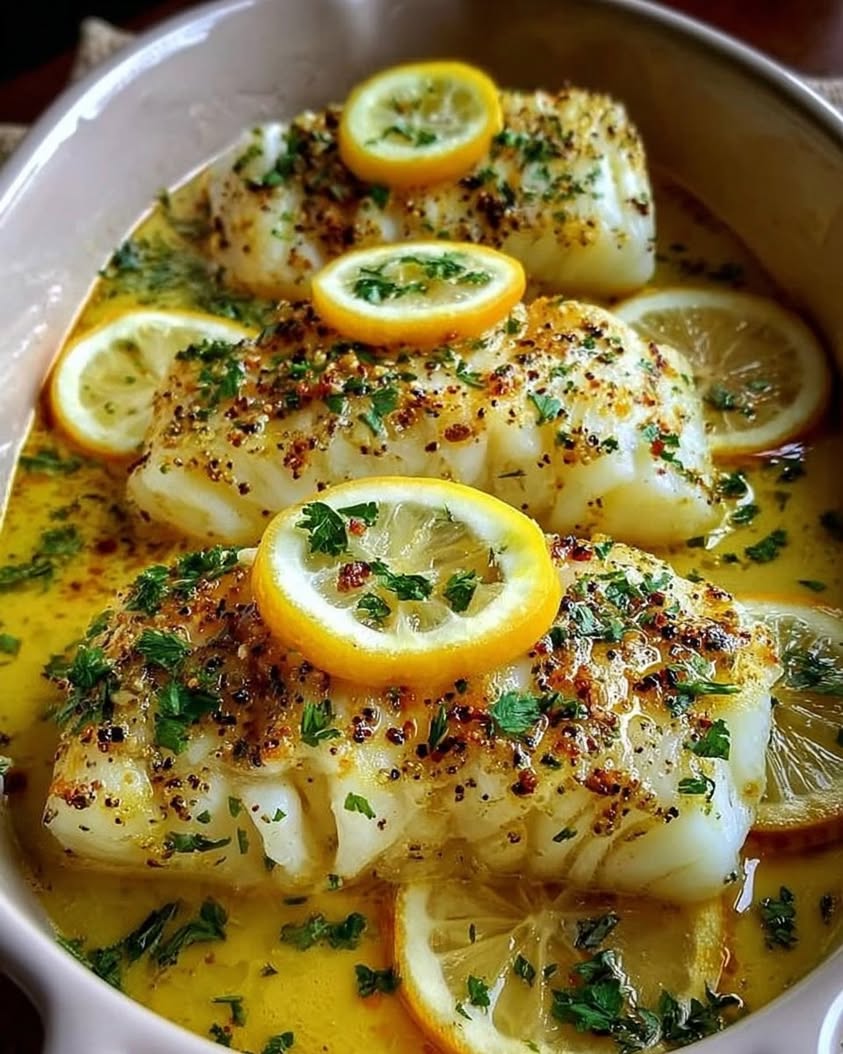
- Visual Appeal: The golden-brown edges of the cod contrast beautifully with the pale, flaky white flesh. Glistening butter sauce pools around the fillets, catching the light and making the dish look elegant. A sprinkle of fresh herbs and lemon slices adds a pop of vibrant color that looks impressive on any plate.
- Skill Level Needed: This recipe is designed for absolute beginners and seasoned cooks alike. There are no complicated techniques like searing or deglazing involved. You only need basic knife skills for mincing garlic and slicing lemons to succeed here.
- Special Equipment: A standard 9×13-inch baking dish is all you need for this one-pan meal. You will also need a small bowl for mixing the butter sauce and a knife for preparing the aromatics. No special gadgets or expensive tools are required.
Recipe Overview
- Difficulty Level: This recipe earns an easy difficulty rating because it requires no advanced cooking techniques. The entire process involves mixing a simple butter sauce and pouring it over seasoned fish. Even if you have never cooked fish before, you can follow this recipe with confidence and success. The forgiving nature of baked cod means slight variations in timing still produce excellent results.
- Category: This dish fits perfectly into the main course category for lunch or dinner. It also works well as a light, protein-rich meal when paired with a simple salad. You can easily adapt it for a special occasion brunch by adding roasted vegetables on the side.
- Cuisine: The recipe draws inspiration from Mediterranean cooking traditions that emphasize fresh, simple ingredients. Lemon and garlic are staples in Greek, Italian, and Spanish cuisines for preparing seafood. The generous use of butter adds a comforting, European touch that makes the dish feel indulgent yet approachable. This fusion of flavors creates a universally appealing meal that transcends cultural boundaries.
- Cost: Cod is generally an affordable fish option, especially when purchased frozen or on sale. The other ingredients like lemon, garlic, and butter are pantry staples that cost very little. You can expect to spend approximately 12 to 15 dollars total for four generous servings. This makes the recipe significantly cheaper than ordering similar dishes at a restaurant.
- Season: While this dish is delicious year-round, it shines brightest during the spring and summer months. Fresh lemons are at their peak during these seasons, offering the brightest flavor and most juice. Lighter meals like this one also feel more appropriate when temperatures rise and appetites wane.
- Occasion: This Baked Lemon-Garlic Cod with Butter Sauce recipe works beautifully for weeknight family dinners. It is elegant enough to serve to dinner guests without making you feel stressed or overwhelmed. You can also prepare it for a romantic date night at home with minimal cleanup afterward.
Why You Will Love This Recipe
The taste of this Baked Lemon-Garlic Cod with Butter Sauce is simply extraordinary. You get that perfect balance of bright acidity from the lemon and savory depth from the garlic. The butter ties everything together with its rich, creamy texture that feels luxurious on your tongue. Each forkful of flaky cod delivers a burst of flavor that makes you close your eyes and savor the moment. The fish itself is mild and sweet, which means it absorbs all those wonderful flavors without competing with them. You will be amazed at how such simple ingredients can create something so delicious. The final result tastes far more complex than the minimal effort suggests.
Convenience is another major reason to love this recipe. You only need one pan for the entire cooking process, which means cleanup is incredibly fast and easy. The prep time is minimal because there is no chopping of many vegetables or complex sauce making required. You can literally have this Baked Lemon-Garlic Cod with Butter Sauce in the oven within ten minutes of deciding what to cook for dinner. While the fish bakes, you have plenty of time to prepare a simple side dish or set the table. The hands-off cooking method gives you freedom to relax or attend to other tasks. This recipe proves that fast food can be both healthy and gourmet.
Nutritionally speaking, this dish offers impressive benefits that support a healthy lifestyle. Cod is a lean source of high-quality protein that helps build and repair muscle tissue. It also contains important nutrients like vitamin B12, selenium, and omega-3 fatty acids that support brain health and reduce inflammation. The butter provides fat-soluble vitamins A, D, E, and K, which your body needs for proper functioning. Lemon juice adds a boost of vitamin C that supports your immune system. This balanced meal keeps you feeling satisfied without weighing you down. You can feel good about serving this nourishing dish to your family.
From a social perspective, this recipe is a fantastic choice for entertaining guests. It looks impressive on the plate with its beautiful golden color and glossy butter sauce. Your guests will think you spent much more time and effort than you actually did. The inviting aroma that fills your home creates a warm, welcoming atmosphere that everyone appreciates. You can easily double the recipe to feed a larger crowd without any extra hassle. Since the cooking time remains the same, you will not be stuck in the kitchen while your guests enjoy themselves. This dish makes you look like a culinary hero with minimal actual work involved.
Cost-effectiveness and accessibility are final compelling reasons to try this recipe. Cod is widely available at most grocery stores and often goes on sale for very reasonable prices. The supporting ingredients are items you likely already have in your kitchen. This means you can create a special meal without a special trip to a fancy market. Compared to ordering similar fish dishes at restaurants, homemade Baked Lemon-Garlic Cod with Butter Sauce saves you significant money. You get restaurant-quality results at a fraction of the cost. This makes it possible to enjoy gourmet seafood dinners as often as you like.
Historical Background and Cultural Significance
Cod has a long and storied history as one of the most important food fish in human civilization. For centuries, cod fishing drove exploration and trade across the North Atlantic. European settlers relied heavily on cod for sustenance during long sea voyages and harsh winters. The fish became a cornerstone of cuisines from Portugal to Scandinavia to New England. Its firm white flesh and mild flavor made it adaptable to countless preparation methods. This universal appeal continues today with cod remaining a beloved ingredient worldwide. The use of lemon and garlic to season fish reflects ancient Mediterranean cooking traditions that predate recorded history.
The combination of lemon and garlic holds significant cultural importance in many cuisines around the world. In Greek cooking, these two ingredients form the base of countless seafood dishes and sauces. Italian cuisine similarly relies on the pairing for everything from simple grilled fish to complex stews. Spanish cooks have used lemon and garlic with fish for generations in their coastal regions. The bright acidity of lemon cuts through the richness of butter and fish fat beautifully. Garlic adds depth and complexity that transforms simple ingredients into memorable meals. This timeless pairing represents culinary wisdom passed down through many generations.
The evolution of this recipe reflects broader changes in home cooking over recent decades. As people became busier, they demanded recipes that delivered great results with minimal effort. One-pan meals like this Baked Lemon-Garlic Cod with Butter Sauce emerged as a solution to that need. Cooks discovered that baking fish with a simple butter sauce produced consistently excellent results. The technique spread through cookbooks, magazines, and eventually online platforms like this one. Modern cooks have refined the method by adding fresh herbs and adjusting seasoning ratios. Yet the core principle of letting quality ingredients shine through simple preparation remains unchanged.
Regional variations of baked cod with lemon and garlic appear in many culinary traditions globally. In Portugal, cooks might add piri piri peppers for heat alongside the lemon and garlic. French versions often incorporate white wine and shallots into the butter sauce. Caribbean adaptations might include lime juice and Scotch bonnet peppers for a tropical twist. Asian-inspired variations can feature ginger, soy sauce, and sesame oil alongside the core ingredients. Each culture puts its own spin on the basic formula while honoring the fundamental pairing. This versatility explains why the recipe remains so popular across different continents and cuisines.
Ingredient Deep Dive
Cod has been treasured as a food source since ancient times due to its abundance and versatility. Norse explorers and Basque fishermen built thriving economies around cod fishing in the North Atlantic. The fish became so valuable that it was often called the beef of the sea. Nutritionally, cod provides an excellent source of lean protein with minimal saturated fat. It is particularly rich in selenium, a mineral that acts as a powerful antioxidant in your body. Cod also contains significant amounts of vitamin B12, which supports nerve function and red blood cell formation. When selecting cod, look for fillets that are moist, firm, and have a mild sea breeze scent. Avoid any fish that smells overly fishy or has discolored patches on the surface. For storage, keep fresh cod in the coldest part of your refrigerator and use it within one to two days. You can also freeze cod for up to three months in airtight packaging. If cod is unavailable, you can substitute haddock, pollock, or halibut with excellent results.
Lemons originated in Southeast Asia and have been cultivated for thousands of years across the Mediterranean region. They became symbols of purity and friendship in various cultures throughout history. The high vitamin C content in lemons made them crucial for preventing scurvy on long sea voyages. Today we value lemons for their bright, acidic flavor that enhances countless dishes. Nutritionally, lemons provide a good dose of vitamin C along with flavonoids that support heart health. The citric acid in lemon juice also helps your body absorb iron from other foods you eat. When choosing lemons, select ones that feel heavy for their size and have smooth, thin skin. Heavier lemons contain more juice, which is exactly what you want for this recipe. Store lemons at room temperature for up to a week or in the refrigerator for longer freshness. You can substitute lime juice for lemon juice, though the flavor profile will shift slightly toward tropical notes. For a milder citrus flavor, consider using Meyer lemons when they are in season.
Garlic has been used for both culinary and medicinal purposes for over 5,000 years across many civilizations. Ancient Egyptians valued garlic so highly that they buried it with their pharaohs. The Greeks and Romans used garlic to enhance strength and treat various ailments. Modern science confirms that garlic contains allicin, a compound with powerful antimicrobial properties. Garlic also supports cardiovascular health by helping to maintain healthy blood pressure levels. When selecting garlic, look for bulbs that are firm and heavy with tight, unbroken skins. Avoid bulbs that feel soft or have started to sprout green shoots. Store garlic in a cool, dark, dry place with good air circulation, never in the refrigerator. Fresh garlic provides the best flavor for this recipe, but you can substitute one teaspoon of garlic powder per clove if needed. Roasted garlic offers a sweeter, milder alternative that works beautifully in this dish.
Butter has been a fundamental cooking fat for thousands of years across European and Asian cuisines. The process of churning cream to make butter was likely discovered by accident and then perfected over generations. Butter adds richness, flavor, and texture to dishes that no other fat can quite replicate. Nutritionally, butter provides fat-soluble vitamins A, D, E, and K2 in a highly bioavailable form. It also contains butyrate, a fatty acid that supports gut health and reduces inflammation. For this recipe, choose unsalted butter so you can control the sodium level yourself. High-quality European-style butter with higher fat content will produce a richer sauce. Store butter in the refrigerator for up to several months or freeze it for longer storage. You can substitute ghee for a nuttier flavor that also works for those avoiding dairy. Olive oil offers a dairy-free alternative that changes the character of the dish while remaining delicious.
Common Mistakes to Avoid
- Overcooking the cod is the most common mistake people make with this recipe. Fish continues to cook after you remove it from the oven, so pull it out when it is just opaque and flaking easily. Use a meat thermometer to check for an internal temperature of 145 degrees Fahrenheit for perfect results every time.
- Using too much butter can make the sauce greasy rather than silky and luxurious. Stick to the recommended amount and pour only enough to create a shallow pool around the fish. You can always add more butter later if the sauce seems too thin.
- Skipping the fresh lemon zest is a missed opportunity for deeper citrus flavor. The zest contains essential oils that provide a more intense lemon taste than juice alone. Always zest your lemon before juicing it to capture all that aromatic goodness.
- Forgetting to pat the cod dry prevents proper browning and seasoning adherence. Use paper towels to remove excess moisture from the fish before adding any seasonings. Dry fish allows the butter sauce to cling better and creates a nicer finished texture.
- Baking the cod without any spacing between fillets leads to steaming rather than baking. Leave at least an inch of space between each piece of fish for proper heat circulation. Crowded fish will release too much moisture and end up swimming in liquid rather than baking nicely.
- Adding garlic too early in the process can cause it to burn and turn bitter. Mix the garlic into the melted butter just before pouring it over the fish. This ensures the garlic cooks gently in the oven without scorching.
- Using bottled lemon juice instead of fresh lemons significantly reduces the flavor quality. Bottled juice contains preservatives and lacks the bright, vibrant taste of fresh-squeezed lemons. Always use fresh lemons for the best results in this recipe.
- Serving the fish immediately without letting it rest causes the juices to run out onto the plate. Let the cod rest for two to three minutes after baking so the juices redistribute evenly. This simple step keeps your fish moist and flavorful.
- Seasoning the fish only on top leads to uneven flavor throughout the fillet. Season both sides of the cod with salt and pepper for balanced taste in every bite. The underside of the fish needs flavor too.
- Neglecting to check the thickness of your cod fillets can lead to uneven cooking. Thicker pieces need more time while thinner ones cook faster. Arrange similar-sized fillets together and adjust cooking time based on the thickest piece.
Essential Techniques
Mastering the technique of properly seasoning fish makes a significant difference in your final dish. Start by patting the cod fillets completely dry with paper towels to remove surface moisture. This step allows the salt and pepper to adhere better and promotes even browning during baking. Season both sides of each fillet generously with kosher salt and freshly ground black pepper. The salt not only adds flavor but also helps the fish retain moisture as it cooks. Let the seasoned fish rest for about five minutes before adding the butter sauce. This brief rest allows the salt to begin penetrating the flesh for deeper seasoning. You will notice a visible difference in the texture and appearance of properly seasoned fish.
The technique for making the butter sauce requires attention to temperature and timing for the best results. Melt the butter gently in a small saucepan over low heat or in a microwave-safe bowl in short bursts. You want the butter just melted, not hot or bubbling, before adding the other ingredients. Stir in the minced garlic, lemon zest, and lemon juice gently until everything is well combined. The garlic should be evenly distributed throughout the sauce without clumping together. Pour this mixture over the seasoned cod fillets, making sure each piece gets an equal share. The sauce should pool slightly around the fish but not completely submerge it. This technique ensures the cod bakes rather than poaches, which gives you that desirable flaky texture.
Knowing how to tell when your cod is perfectly cooked is a crucial skill for seafood success. The fish will change from translucent to opaque white as it cooks through completely. Check for flakiness by gently pressing the thickest part of a fillet with a fork. If the flesh separates easily into clean, distinct flakes, the fish is ready to come out of the oven. An instant-read thermometer inserted into the thickest part should read 145 degrees Fahrenheit. Remember that the fish will continue to cook from residual heat after you remove it from the oven. Pull the cod out when it is just barely opaque in the center for the most forgiving texture. Overcooked cod becomes dry, tough, and less enjoyable to eat.
Pro Tips for Perfect Baked Lemon-Garlic Cod with Butter Sauce
For the most flavorful results, use freshly squeezed lemon juice rather than any bottled alternative. The bright, lively taste of fresh lemons elevates the entire dish in a way that bottled juice cannot match. Roll your lemons firmly on the counter before cutting to release more juice from the fruit.
Consider adding a splash of dry white wine to the butter sauce for extra depth and complexity. A crisp Sauvignon Blanc or Pinot Grigio works wonderfully with the lemon and garlic flavors. The alcohol will cook off during baking, leaving behind only the delightful wine notes behind.
Arrange fresh herb sprigs like thyme or rosemary on top of the fish before baking for infused flavor. The herbs will release their aromatic oils into the butter sauce as the fish cooks. Remove the woody stems before serving for a cleaner presentation on the plate.
Place lemon slices underneath the cod fillets to prevent sticking and add extra citrus flavor. The lemon slices create a natural barrier between the fish and the baking dish. They also release their juices into the sauce, making it even more delicious and aromatic.
Use room temperature butter for easier mixing with the other sauce ingredients. Cold butter will not blend smoothly with the lemon juice and garlic. Let your butter sit out for about 15 minutes before starting the recipe for the best consistency.
Check your cod fillets for any remaining pin bones by running your fingers gently over the surface. Remove any bones you find with clean tweezers or fish pliers for a more pleasant eating experience. This simple step prevents any unpleasant surprises during your meal.
Reserve some fresh parsley for sprinkling over the finished dish just before serving. The bright green color and fresh flavor provide a beautiful contrast to the golden fish. Adding herbs at the end preserves their vibrant color and fresh taste.
Let the baked cod rest for exactly three minutes before serving to allow the juices to settle. This brief resting period makes the fish more moist and flavorful. Use this time to plate your side dishes and prepare the table.
Variations and Adaptations
Regional variations of this Baked Lemon-Garlic Cod with Butter Sauce recipe appear in cuisines around the world. In the Mediterranean, cooks often add capers and kalamata olives for a briny, salty twist. The addition of sun-dried tomatoes provides a sweet and tangy contrast to the rich butter sauce. Greek versions might include oregano and a sprinkle of crumbled feta cheese on top before baking. These regional twists demonstrate the incredible versatility of this basic cooking method.
Seasonal adaptations allow you to enjoy this recipe throughout the year with fresh local ingredients. During spring, add fresh asparagus spears around the fish for a complete one-pan meal. Summer versions benefit from cherry tomatoes and zucchini slices that roast alongside the cod. Fall and winter calls for root vegetables like fennel wedges or thinly sliced potatoes. Each season offers new opportunities to customize this adaptable dish.
Dietary modifications make this recipe accessible to people with various food preferences and restrictions. For a dairy-free version, substitute the butter with high-quality extra virgin olive oil or coconut oil. The olive oil version takes on a distinctly Mediterranean character that is equally delicious. Those following a low-FODMAP diet can use garlic-infused oil instead of fresh garlic cloves. The infused oil provides the garlic flavor without the problematic fructans that can cause digestive issues.
Flavor variations can dramatically change the character of this dish while keeping the same basic method. Try adding a teaspoon of Dijon mustard to the butter sauce for a tangy, slightly spicy kick. Smoked paprika adds a warm, smoky depth that pairs beautifully with the mild fish. For heat lovers, a pinch of red pepper flakes or a dash of hot sauce transforms the dish completely. These small adjustments let you create a new recipe every time you cook.
Texture modifications can make the dish more interesting and satisfying to eat. For a crispy topping, mix breadcrumbs with melted butter and sprinkle them over the fish before baking. The breadcrumbs will turn golden and crunchy during baking, providing a delightful contrast to the tender fish. Alternatively, you can add a handful of slivered almonds for nutty crunch and elegant presentation. These texture additions elevate the dish from simple to spectacular.
Presentation alternatives allow you to adapt this recipe for different occasions and settings. For a casual family dinner, serve the cod directly from the baking dish with plenty of sauce spooned over each portion. For entertaining, transfer the fillets to individual plates and drizzle the sauce artfully around them. You can also serve the fish on a bed of sautéed spinach or creamy polenta for a more substantial meal. The versatility of presentation makes this recipe suitable for any dining situation.
Serving and Presentation Guide
Plating this Baked Lemon-Garlic Cod with Butter Sauce beautifully requires attention to composition and color. Start by placing the cod fillet slightly off-center on the plate for visual interest. Spoon some of the butter sauce over the top and let it cascade naturally down the sides of the fish. Leave some of the plate exposed to create negative space that makes the dish feel elegant. The golden fish against a white plate creates a striking contrast that looks professional and appetizing. Remember that people eat with their eyes first, so take an extra moment to arrange the plate nicely.
Garnishing ideas can elevate your presentation from simple to stunning with minimal effort. A sprinkle of fresh chopped parsley or chives adds bright green color and fresh flavor. Thin lemon slices or curls of lemon zest provide visual interest and reinforce the citrus theme. For special occasions, edible flowers like nasturtiums or pansies create a gorgeous, garden-fresh look. The garnish should complement the dish without overwhelming the main ingredients. Choose garnishes that add both visual appeal and a hint of additional flavor.
Traditional accompaniments pair naturally with the bright, buttery flavors of this cod recipe. Steamed white rice or fluffy couscous makes an excellent base for soaking up the delicious butter sauce. Roasted or steamed asparagus provides a classic side that matches the elegance of the fish. A simple green salad with lemon vinaigrette echoes the citrus notes in the main dish. These traditional pairings have stood the test of time for good reason and always satisfy diners.
Modern serving suggestions can refresh the classic dish for contemporary tastes and presentations. Serve the cod over creamy cauliflower puree for a low-carb alternative to traditional starches. Quinoa or farro add nutty flavor and chewy texture that complements the tender fish beautifully. Zucchini noodles or spaghetti squash provide a vegetable-forward option that is both healthy and satisfying. These modern accompaniments keep the dish feeling fresh and current.
Temperature considerations are crucial for serving this dish at its absolute best. The cod should be served hot, right after its brief resting period has ended. The butter sauce will begin to congeal as it cools, so serve immediately for the best texture. Warm your serving plates in the oven for a few minutes before plating to help maintain the temperature. Cold plates will cool your carefully prepared food much faster than you expect.
Portion control tips help you serve the right amount for different appetites and occasions. A standard serving size is one medium cod fillet, typically weighing about six ounces before cooking. For hearty eaters, you can offer two smaller fillets or one large one per person. Children and lighter eaters may only need a four-ounce portion along with generous sides. Remember that fish cooks quickly, so it is better to prepare slightly more than you need rather than not enough.
Wine and Beverage Pairing
Wine pairings for this Baked Lemon-Garlic Cod with Butter Sauce should complement the bright citrus and rich butter notes. A crisp Sauvignon Blanc with its grassy, citrusy character matches the lemon flavors beautifully. Unoaked Chardonnay offers a nice balance of acidity and body that stands up to the butter sauce. For a splurge, a well-chilled Sancerre from the Loire Valley provides elegant mineral notes that enhance the fish. These white wines bring out the best in the delicate cod and vibrant sauce. Serve your white wine well-chilled but not ice-cold to allow the flavors to express themselves fully. A temperature around 45 to 50 degrees Fahrenheit is ideal for most white wines.
Non-alcoholic alternatives provide excellent pairing options for those who prefer not to drink wine. Sparkling water with a squeeze of fresh lemon echoes the citrus notes in the dish perfectly. A homemade lemonade or limeade with a hint of fresh herbs like mint or basil offers a refreshing complement. Iced green tea with a touch of honey and lemon provides a subtle, sophisticated pairing that works surprisingly well. These non-alcoholic options prove that you do not need alcohol to have a complete, satisfying meal experience.
If you prefer red wine, choose a lighter-bodied option that will not overpower the delicate fish. A Pinot Noir from Oregon or Burgundy offers earthy, fruity notes that pair surprisingly well with cod. The key is to choose a red wine with high acidity and low tannins for the best match. Chill the red wine slightly, about 55 degrees Fahrenheit, to make it more refreshing with the fish. Serve the red wine in slightly larger glasses to allow it to breathe and open up.
Beer pairings offer another delicious option for accompanying this seafood dish. A Belgian witbier with its citrus and coriander notes complements the lemon and garlic flavors. A light, crisp pilsner provides a clean, refreshing contrast that cleanses the palate between bites. For something more adventurous, a sour ale or gose with its tart, salty character echoes the lemon in the dish. Serve all beers well-chilled for the most refreshing experience possible.
Storage and Shelf Life
Proper storage of leftover Baked Lemon-Garlic Cod with Butter Sauce ensures you can enjoy it again later. Allow the fish to cool completely at room temperature before transferring it to storage containers. Place the cooled cod in an airtight container and pour any remaining butter sauce over the top. The sauce helps keep the fish moist during storage and prevents it from drying out. Store the container in the coldest part of your refrigerator, which is typically the back of the bottom shelf. Properly stored leftover cod will maintain its quality for up to three to four days.
Temperature requirements are critical for food safety when storing cooked seafood. Your refrigerator should maintain a consistent temperature of 40 degrees Fahrenheit or below. Never leave cooked fish at room temperature for more than two hours total. If the room temperature is above 90 degrees Fahrenheit, that time reduces to just one hour. Always check the temperature of your refrigerator with a separate appliance thermometer for accuracy. These safety precautions protect you and your family from foodborne illness.
Container recommendations focus on protecting the delicate fish from drying out and absorbing other odors. Glass containers with tight-fitting lids work excellently for storing cooked fish. Plastic containers are also fine but ensure they are labeled food-safe and BPA-free. Avoid using metal containers, which can react with the acidic lemon sauce and create off-flavors. Fill the container as full as possible to minimize air exposure, which causes spoilage. Press a piece of plastic wrap directly onto the surface of the fish before sealing the lid for extra protection.
Signs of spoilage in cooked cod are usually easy to identify and should not be ignored. A sour or ammonia-like smell indicates the fish has started to spoil and should be discarded immediately. Any slimy texture on the surface of the fish is another clear sign of spoilage. Discoloration, such as yellowing or gray patches, also means the fish is no longer safe to eat. When in doubt, always throw it out to avoid the risk of food poisoning. Your health is not worth the gamble of eating questionable leftovers.
Reheating instructions focus on restoring the fish to its original moist, flaky texture without overcooking. The best method is to reheat the cod gently in a covered skillet over low heat with a splash of water or extra butter. You can also reheat it in the microwave at 50 percent power in 30-second intervals until just warm. Avoid high heat, which will toughen the fish and make it dry and unpleasant. The goal is to warm the fish through without continuing to cook it further.
Freezing guidelines allow you to preserve your cooked cod for longer storage when needed. Wrap the cooled fish tightly in plastic wrap, then place it in a freezer-safe bag or container. Squeeze out as much air as possible before sealing to prevent freezer burn. Frozen cooked cod will maintain its best quality for up to three months. Thaw frozen cod in the refrigerator overnight before reheating for the best results. Expect some texture degradation after freezing, but the flavor will still be quite good.
Make Ahead Strategies
The prep timeline for this recipe allows you to get ahead on components without sacrificing quality. You can prepare the butter sauce up to two days in advance and store it in the refrigerator. Make sure to bring the sauce back to room temperature before using it over the fish. You can also zest and juice your lemons a day ahead and store them in separate containers. Mince the garlic and store it covered in olive oil for up to three days in the refrigerator. These advance preparations make dinner assembly nearly instant on busy nights.
Storage between steps requires careful planning to maintain the quality of your ingredients. Keep the prepared butter sauce tightly covered to prevent it from absorbing other refrigerator odors. Store lemon zest in a small container with a tight lid, as it loses its volatile oils quickly when exposed to air. Minced garlic should be covered with oil to prevent oxidation and loss of flavor. Label everything with dates so you know exactly how long each component has been stored.
The quality impact of making components ahead is generally positive for this recipe. The flavors in the butter sauce actually meld and deepen slightly after a day in the refrigerator. Fresh lemon juice is best used within a day but will still be acceptable for up to two days. Garlic loses some of its pungency over time, so you might want to add a fresh clove if making the sauce too far ahead. Overall, the convenience of advance preparation outweighs any minor quality changes.
Assembly tips for make-ahead preparation focus on keeping components separate until baking time. Season the cod fillets with salt and pepper just before you are ready to put them in the oven. Seasoning too far in advance can draw too much moisture out of the fish. Pour the butter sauce over the fish right before baking to prevent the fish from sitting in acid too long. The lemon juice can begin to cook the fish if left to marinate for extended periods.
Reheating guidelines for fully cooked make-ahead portions focus on gentle warming methods. Place the cod in a covered baking dish with a little extra butter or water to create steam. Warm it in a 300-degree Fahrenheit oven for about 10 minutes or until heated through. You can also use a covered skillet over low heat with a tablespoon of water. The goal is to bring the fish to serving temperature without further cooking it. Check the internal temperature to ensure it reaches at least 165 degrees Fahrenheit for food safety.
Fresh element additions can revive make-ahead components and make them taste freshly prepared. Squeeze a little fresh lemon juice over the reheated fish just before serving. Add a sprinkle of fresh herbs like parsley, chives, or dill for brightness and color. A final pat of butter melted over the top adds richness and shine. These small touches make reheated fish taste almost as good as the original preparation.
Scaling Instructions
Halving this Baked Lemon-Garlic Cod with Butter Sauce recipe is straightforward and requires only simple adjustments. Use a smaller baking dish, such as an 8×8-inch pan, to accommodate fewer fillets. Reduce the butter, lemon juice, lemon zest, and garlic by exactly half for balanced flavor. The cooking time will remain similar, but start checking for doneness a few minutes earlier. Smaller batches often cook slightly faster because there is less thermal mass in the dish. You can also use a single large fillet cut into two portions for a simpler presentation.
Doubling or tripling this recipe works well for feeding a crowd or meal prepping for the week. Use a larger baking dish or divide the ingredients between two dishes for even cooking. Increase the butter, lemon juice, lemon zest, and garlic proportionally for the scaled-up recipe. Be careful not to overcrowd the baking dish, as this can lead to steaming rather than baking. Arrange the fillets in a single layer with space around each piece for proper heat circulation. You may need to add a few extra minutes to the cooking time for a larger volume of fish.
Equipment adjustments for scaled-up batches ensure you have the right tools for success. For double batches, a half-sheet pan works beautifully for accommodating more fillets. Triple batches might require two baking dishes to Print
Baked Lemon-Garlic Cod with Butter Sauce
- Total Time: 25 minutes
- Yield: 4
Description
This quick and elegant Baked Lemon-Garlic Cod with Butter Sauce combines delicate flaky cod fillets with a bright, velvety lemon-garlic butter sauce. It’s a simple, healthy dish that feels gourmet.
Ingredients
- 4 (6-ounce) cod fillets
- 2 tablespoons olive oil
- 1 teaspoon salt
- 1/2 teaspoon black pepper
- 2 tablespoons unsalted butter
- 4 cloves garlic, minced
- 1/4 cup low-sodium chicken broth
- 2 tablespoons fresh lemon juice
- 1 teaspoon lemon zest
- 1 tablespoon chopped fresh parsley
- Lemon slices for garnish
Instructions
- Preheat oven to 400°F (200°C). Lightly grease a 9×13-inch baking dish.
- Pat cod fillets dry, brush with olive oil, and season both sides with salt and pepper.
- Place fillets in prepared baking dish. Bake for 12-15 minutes, until fish flakes easily with a fork.
- While cod bakes, melt butter in a small saucepan over medium heat. Add garlic and cook until fragrant, about 1 minute.
- Stir in chicken broth, lemon juice, and lemon zest; bring to a gentle simmer. Cook 2 minutes.
- Remove sauce from heat. Stir in parsley. Taste and adjust seasoning.
- Pour warm butter sauce over baked cod fillets. Garnish with lemon slices and extra parsley. Serve immediately.
Notes
You can customize the seasonings to taste. For a richer sauce, add an extra tablespoon of butter. If cod is unavailable, halibut or tilapia work well.
- Prep Time: 10 minutes
- Cook Time: 15 minutes
- Method: Main
- Cuisine: American