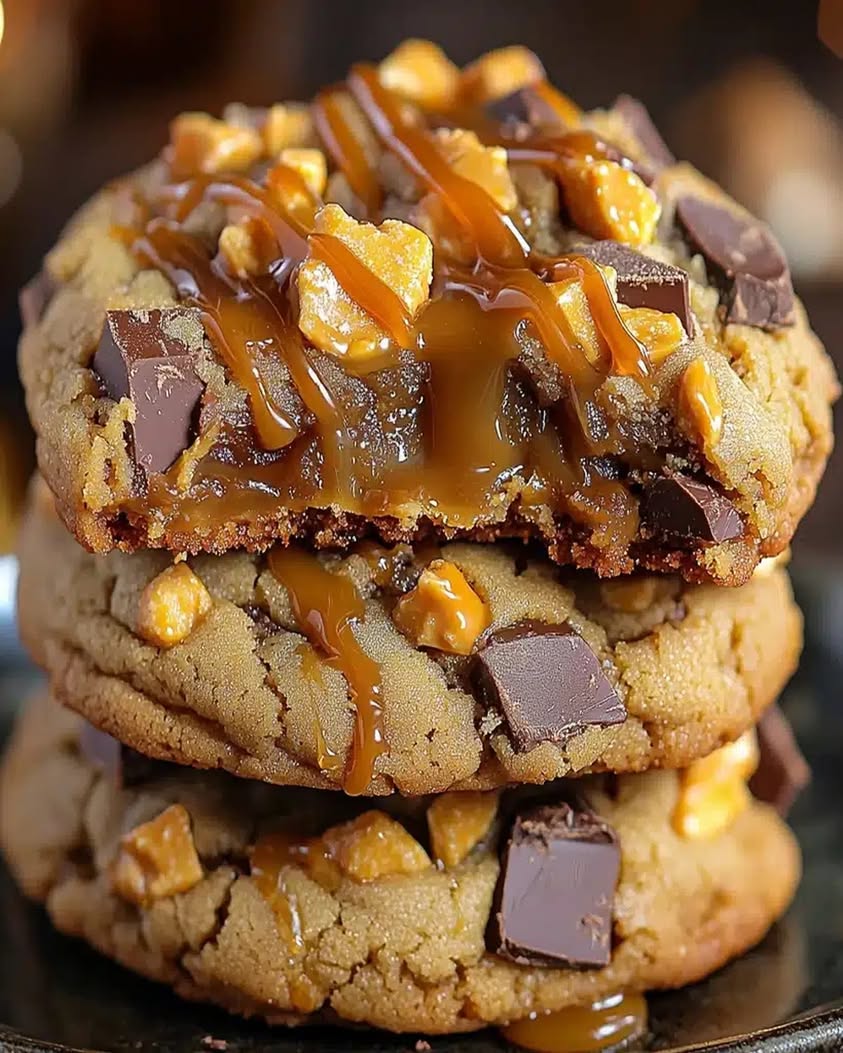
Ultimate Chewy Butterfinger Caramel Cookies: A Candy Bar in Cookie Form
Imagine a cookie that perfectly captures the magic of your favorite candy bar. This recipe for the ultimate chewy Butterfinger caramel cookies does exactly that. Consequently, every bite delivers a symphony of textures and flavors. You get a soft, chewy cookie base that acts as the perfect canvas for pockets of gooey caramel and crispy bits of Butterfinger candy. Ultimately, these cookies are a nostalgic treat transformed into a shareable dessert.
The secret to these incredible cookies lies in the balance. The dough is rich and buttery, providing a tender chew. Meanwhile, the chopped Butterfinger bars add a signature crispy, peanut buttery crunch that is impossible to resist. Additionally, the soft caramel pieces melt into delightful pockets of sweet, sticky goodness. This combination creates a cookie that is far greater than the sum of its parts. Without a doubt, they will become a new favorite in your baking rotation.
Baking these cookies is a joyful experience. The aroma of toasting peanut butter candy and brown sugar will fill your kitchen. Furthermore, watching the caramel bits melt and bubble slightly at the edges is pure baking bliss. These ultimate chewy Butterfinger caramel cookies are perfect for parties, cookie swaps, or a well-deserved treat. They are surprisingly simple to make, yet they deliver a professional bakery-quality result that will impress everyone.
Quick Recipe Highlights
- Flavor Profile: These cookies boast a deep, butterscotch-like flavor from the brown sugar base, complemented by the distinct peanut butter taste of Butterfinger and the rich, buttery sweetness of melted caramel. The overall taste is complex and deeply satisfying.
- Texture: The texture is a masterful contrast: a supremely chewy cookie crumb gives way to crispy, crunchy Butterfinger pieces and surprise pockets of molten, gooey caramel that pull apart in strings. It is a textural adventure in every single bite.
- Aroma: As they bake, your kitchen will smell of caramelizing sugar, toasted peanuts, and warm butter. The scent is unmistakably sweet, nutty, and incredibly inviting, promising the delicious treat to come.
- Visual Appeal: These cookies bake to a gorgeous golden-brown color with craggy tops. The melted caramel creates shiny, amber pools on the surface, while the orange-brown flecks of Butterfinger are visible throughout, making them look as decadent as they taste.
- Skill Level Needed: This is a beginner-friendly recipe. The process uses the classic creaming method for cookie dough. The most advanced technique is simply folding in the candy pieces. Anyone comfortable with a hand mixer or stand mixer can achieve perfect results.
- Special Equipment: No special tools are required. You will need standard baking sheets, parchment paper or silicone mats, a mixer, and basic measuring tools. A kitchen scale for precise flour measurement is helpful but not mandatory for success.
Recipe Overview
- Difficulty Level: This recipe is rated easy. The steps are straightforward and follow classic chocolate chip cookie methodology. The primary tasks are creaming butter and sugar, mixing dry and wet ingredients, and folding in add-ins. There is no intricate shaping or advanced pastry techniques required for success.
- Category: These cookies fall squarely into the dessert category. They are a sweet treat perfect for after-dinner indulgence, afternoon snacks with coffee or milk, or as a featured item on a dessert platter. They are a quintessential baked good meant for enjoyment.
- Cuisine: This is a modern American recipe. It builds upon the foundational American chocolate chip cookie but incorporates popular mass-produced candy, a trend beloved in contemporary U.S. baking. It represents a fun, innovative twist on a classic comfort food.
- Cost: The cost is moderate, primarily driven by the candy ingredients. Butterfinger bars and soft caramel pieces are the main splurge. Basic pantry items like flour, sugar, butter, and eggs form the affordable base. Overall, it is a cost-effective way to create a gourmet-style cookie.
- Season: These cookies are fantastic year-round. They are cozy and comforting in fall and winter. Conversely, they are a hit at summer picnics and barbecues. The combination of peanut butter and caramel feels especially fitting for autumn, but their appeal is truly universal.
- Occasion: They are incredibly versatile for events. Bake them for holiday cookie trays, birthday parties, bake sales, or potlucks. They also make a wonderful “just because” gift packaged in a cute box or tin. Basically, they are suitable for any gathering that calls for a stellar dessert.
Why You’ll Love This Recipe
First and foremost, the taste and texture are absolutely phenomenal. The ultimate chewy Butterfinger caramel cookies deliver a multi-sensory experience. You experience the initial chew of the cookie, then the crisp crunch of the candy, followed by the luxurious pull of melted caramel. This combination is deeply satisfying and keeps you coming back for another bite. Furthermore, the flavors of brown sugar, peanut butter, and caramel meld together perfectly. They create a harmonious blend that is nostalgic yet excitingly new.
Another significant benefit is the sheer convenience of this recipe. You likely have most of the base ingredients in your pantry already. Moreover, the process is uncomplicated and forgiving. The dough comes together quickly, and there is no need for chilling, which means you can go from craving to eating in under 30 minutes. This makes it an ideal recipe for spontaneous baking or last-minute guests. Additionally, the cookies freeze beautifully, both as dough balls and after baking. Therefore, you can always have a ready-to-bake or ready-to-eat treat on hand.
While these are an indulgent dessert, they offer some nutritional perspective. For instance, using real butter and eggs provides protein and essential fats. Peanuts in the Butterfinger offer a minuscule amount of protein and fiber. Of course, these are treats to be enjoyed in moderation. However, knowing exactly what goes into your cookies—without preservatives—is a advantage over store-bought versions. You control the quality of every single ingredient.
The social and entertaining value of these cookies cannot be overstated. They are guaranteed crowd-pleasers. Bringing a plate of these ultimate chewy Butterfinger caramel cookies to any event will make you an instant hero. They spark conversation and nostalgia. People love identifying the familiar candy bar flavors in a new form. They are also a fantastic project to bake with kids, as the process is simple and the reward is immediate and delicious.
Finally, these cookies are cost-effective and accessible. Creating a bakery-style cookie at home is far more economical than buying a small batch from a specialty shop. The ingredients are easy to find at any standard grocery store. You do not need any exotic or hard-to-source items. This accessibility ensures that anyone can recreate this decadent treat. Ultimately, this recipe delivers maximum deliciousness with minimal fuss and reasonable cost.
Historical Background and Cultural Significance
The story of this cookie is inherently tied to the history of its star ingredient: the Butterfinger bar. Introduced by the Curtiss Candy Company in 1923, Butterfinger was famously advertised with the slogan “Nobody better lay a finger on my Butterfinger!” Its unique flaky, crunchy texture and peanut buttery flavor made it an American classic. Consequently, bakers began incorporating chopped candy bars into cookies and brownies as a way to add texture and flavor. This practice represents a broader trend in American home baking of using convenient, pre-made ingredients to elevate simple recipes.
Culturally, the act of baking cookies is deeply rooted in American tradition, often associated with home, warmth, and generosity. The chocolate chip cookie, invented in the 1930s, set the standard. Recipes like the ultimate chewy Butterfinger caramel cookies are a direct evolution of that tradition. They reflect a modern, playful approach to baking where familiar commercial candy is repurposed into homemade delights. This fusion of mass-produced candy and from-scratch dough speaks to a culture that values both convenience and craft.
The recipe has evolved alongside baking science and ingredient availability. The pursuit of the perfect “chewy” cookie texture led to a better understanding of ingredient ratios—specifically, the role of brown sugar, melted butter, and slightly underbaking. Meanwhile, the introduction of soft caramel bits or “chips” in the baking aisle, as opposed to having to chop up chewy caramels, made recipes like this more accessible. This evolution demonstrates how consumer products and baking knowledge develop in tandem, creating new opportunities for home bakers.
Regional variations of candy-stuffed cookies are plentiful across the United States. In some areas, you might find cookies with Snickers or Milky Way. Others might use local peanut butter cups or toffee bars. The concept remains the same: a beloved candy bar chopped and embedded in cookie dough. The ultimate chewy Butterfinger caramel cookies are a specific iteration that highlights a particularly iconic candy. This adaptability allows the base recipe to be a template for endless personalization based on regional candy preferences or simple nostalgia.
Ingredient Deep Dive
All-purpose flour is the structural backbone of these cookies. It provides the necessary gluten to give the cookies shape and a tender chew. When measuring flour, the spoon-and-level method is crucial to avoid dense, dry cookies. Simply spoon the flour into your measuring cup and level it off with a knife. For the best results, consider weighing your flour; 125 grams per cup is the standard. If you need a gluten-free adaptation, a 1:1 gluten-free flour blend can work, but the texture may be slightly more crumbly.
Butter is responsible for flavor, tenderness, and aiding in the spread of the cookie. Use unsalted butter to control the salt content in your recipe. The butter should be softened to room temperature, meaning it is pliable but not melted. This allows it to properly cream with the sugars, trapping air that helps with leavening. European-style butter with a higher fat content will yield an even richer flavor and tender texture. For dairy-free cookies, a high-quality plant-based butter that bakes well can be substituted.
Brown sugar, especially dark brown sugar, is the secret to the deep flavor and chewy texture. The molasses in brown sugar is hygroscopic, meaning it attracts and retains moisture. This results in a softer, chewier cookie that stays fresh longer. The molasses also contributes warm, caramel-like notes that pair perfectly with the Butterfinger and caramel pieces. In a pinch, you can make your own brown sugar by mixing one tablespoon of molasses into one cup of white sugar. Light brown sugar can be used for a milder flavor.
The star ingredients, Butterfinger bars and soft caramels, define this recipe. Butterfinger bars are made from a layered, flaky peanut butter core covered in chocolate. Chopping them yourself ensures you get a variety of chunk sizes for the best texture. Pre-chopped candy pieces can sometimes be found but chopping fresh is superior. For the caramel, soft caramel bits designed for baking are ideal as they hold their shape slightly but melt into perfect pockets. Alternatively, you can chop soft caramel squares, but dust them with flour to prevent sticking.
Common Mistakes to Avoid
- Using melted butter: This is a critical error. Melted butter will cause the cookies to spread too thin and become greasy and crispy instead of thick and chewy. Always use room-temperature, softened butter for the creaming method.
- Over-measuring the flour: The most common cause of dry, cakey cookies is packing too much flour into the measuring cup. Always spoon flour into the cup and level it off. For accuracy, use a kitchen scale.
- Overmixing the dough after adding flour: Once the flour is incorporated, mix only until no dry streaks remain. Overmixing develops more gluten, leading to tough cookies. Fold in the candy and caramel by hand with a spatula.
- Using hot baking sheets: Placing dough balls onto a warm baking sheet causes them to start spreading prematurely, leading to uneven baking and thin edges. Always use cool, room-temperature baking sheets for each batch.
- Overbaking: These cookies continue to set on the hot baking sheet after removal from the oven. They are done when the edges are set and golden but the centers still look soft and slightly underdone. They will firm up perfectly as they cool.
- Not letting the cookies cool on the sheet: Transferring cookies immediately to a rack can cause them to break, especially with the molten caramel centers. Let them cool on the baking sheet for 5-10 minutes to set before moving them.
- Chopping the candy too finely: You want noticeable chunks of Butterfinger for that signature crunch. If you chop it into dust, you will lose the textural contrast. Aim for pea-sized pieces and some smaller bits.
- Storing cookies while still warm: Placing warm cookies in an airtight container creates steam, which makes the cookies soggy and can cause the caramel to make everything sticky. Ensure cookies are completely cool before storing.
Essential Techniques
Creaming butter and sugar is the foundational technique for perfect cookies. This process involves beating room-temperature butter with granulated and brown sugars until the mixture becomes light, pale, and fluffy. The goal is to incorporate tiny air bubbles into the fat. These air bubbles expand in the oven, acting as a leavening agent to give the cookies lift and a tender crumb. To master it, ensure your butter is truly at room temperature (about 65-67°F). Beat on medium speed for 2-3 minutes until the mixture noticeably lightens in color. A common pitfall is using butter that is too warm or not beating long enough.
Properly incorporating eggs is the next crucial step. Add eggs one at a time, beating well after each addition. This allows the emulsion of fat and water to stabilize, creating a smooth, cohesive batter. If you add both eggs at once, the mixture may look curdled or separated. If this happens, don’t panic. Simply add a tablespoon of your measured flour and continue mixing; it will usually come back together. The mixture should be smooth and glossy before you proceed to adding the dry ingredients.
The “muffin method” of mixing dry and wet ingredients is key to texture. This means you whisk your dry ingredients (flour, baking soda, salt) together in a separate bowl first. Then, you add them all at once to the wet ingredients. Mix on low speed just until the flour is incorporated. The moment you no longer see dry flour, stop mixing. Overmixing at this stage is the primary cause of tough, dense cookies. The dough will be thick and may have some dry-looking patches; that’s okay.
Folding in add-ins by hand is the final technique. Once the dough is mixed, switch to a sturdy spatula. Add the chopped Butterfinger and caramel pieces. Use a folding motion to evenly distribute them without overworking the dough. This gentle method preserves the tender texture you worked to create. An indicator of success is seeing the candy and caramel pieces uniformly scattered throughout the dough without any areas of bare dough.
Pro Tips for Perfect Ultimate Chewy Butterfinger Caramel Cookies
First, chill your dough for 30 minutes if you have time. While not mandatory, this short chill solidifies the butter fat, preventing excessive spread. Consequently, your cookies will be slightly thicker and chewier. This step is especially helpful on a warm day or if your kitchen is hot.
Second, use a cookie scoop for uniformity. A medium-sized scoop (about 1.5 tablespoons) ensures all your cookies are the same size. Therefore, they will bake evenly. It also creates nice, rounded dough balls for a professional look.
Third, line your baking sheets with parchment paper or silicone mats. This prevents sticking without added grease. Importantly, it also promotes even browning on the bottom and makes cleanup an absolute breeze.
Fourth, slightly underbake your cookies. Remove them from the oven when the edges are golden and set but the centers still look soft and puffy. They will continue to cook from residual heat on the hot pan, resulting in the perfect chewy texture.
Fifth, press a few extra candy pieces on top of each dough ball before baking. This guarantees a beautiful, bakery-style appearance with visible chunks of Butterfinger on the surface after baking. It enhances both visual appeal and crunch.
Sixth, let the cookies cool completely on the baking sheet. The caramel centers are molten hot and need time to set. Moving them too soon can cause breakage and messy caramel spills. Patience here is rewarded with perfect cookies.
Seventh, store cookies with a piece of bread. Place a slice of fresh bread in your airtight cookie container. The cookies will draw moisture from the bread, staying soft and chewy for days longer than usual.
Eighth, freeze unbaked dough balls for future treats. Scoop the dough onto a tray, freeze solid, then transfer to a bag. You can bake frozen dough balls straight from the freezer, adding a minute or two to the bake time.
Variations and Adaptations
For exciting flavor variations, consider swapping or adding different mix-ins. Try using chopped Snickers bars for a nougat and caramel twist. Alternatively, add a cup of semi-sweet chocolate chips to the dough for a triple-threat cookie. For a salty-sweet kick, fold in 3/4 cup of pretzel pieces along with the candy. You could also add a teaspoon of instant espresso powder to the dry ingredients to deepen the chocolate and caramel flavors without making the cookies taste like coffee.
Seasonal adaptations are fun and festive. During the holidays, use red and green soft caramel bits or white chocolate chips for a colorful look. In fall, add a teaspoon of pumpkin pie spice to the dry ingredients. For a Halloween treat, use orange and black sprinkles on the dough balls before baking. You can also shape the dough into a log, roll it in coarse sugar, slice, and bake for a festive cookie slice appearance.
Dietary modifications are straightforward with a few smart swaps. For gluten-free cookies, use a reliable 1:1 gluten-free flour blend. To make them dairy-free, use plant-based butter and ensure your caramel bits are dairy-free (check labels carefully). For a vegan version, use plant-based butter, a flax egg, and vegan caramel. Note that Butterfinger bars contain dairy, so you would need to substitute a vegan peanut butter candy or just use extra vegan caramel and chocolate chips.
Texture modifications allow you to customize the eating experience. If you prefer a crispier cookie, use all granulated sugar instead of brown sugar and bake for 1-2 minutes longer. For a cakier texture, add an extra 1/4 cup of flour and 1/4 teaspoon of baking powder. If you adore extra gooey caramel, use double the amount of caramel bits. For maximum crunch, increase the chopped Butterfinger by 50%.
Serving and Presentation Guide
Plating techniques can elevate these humble cookies. For a casual gathering, pile them high on a rustic wooden board or in a simple ceramic bowl. For a more elegant presentation, place individual cookies on small dessert plates. Drizzle a tiny amount of melted caramel or chocolate over the plate before setting the cookie down. You can also dust them very lightly with powdered sugar or flaky sea salt immediately after baking for a professional finish.
Garnishing ideas add the final touch. A small sprinkle of flaky sea salt on top of each warm cookie enhances all the sweet flavors. Alternatively, drizzle cooled cookies with a simple chocolate or caramel glaze. For parties, place a mini Butterfinger bar piece or a single soft caramel on top of each cookie just before serving. A dollop of whipped cream or a scoop of vanilla ice cream alongside a warm cookie creates an incredible à la mode dessert.
Traditional accompaniments are simple and classic. A cold glass of milk is the perfect partner, cutting through the sweetness and complementing the peanut butter flavor. For adults, coffee or a dessert wine like a tawny port pairs beautifully. These cookies also stand up wonderfully to ice cream sandwiches; simply sandwich a scoop of vanilla or chocolate ice cream between two cookies and roll the edges in mini chocolate chips or more chopped candy.
Modern serving suggestions include deconstruction. Crumble a cookie over a bowl of vanilla ice cream or Greek yogurt. Use cookie crumbles as a topping for a milkshake or as a mix-in for homemade ice cream. You can also slightly warm a cookie and serve it with a bourbon caramel sauce for dipping. For a brunch twist, crumble cookies over pancakes or waffles in place of syrup.
Wine and Beverage Pairing
Wine pairings should complement the rich sweetness and peanut butter notes. A creamy, slightly sweet Sherry like an Oloroso or Cream Sherry works wonderfully. Its nutty characteristics mirror the Butterfinger. A late-harvest Riesling with its honeyed apricot notes can stand up to the caramel. For red wine lovers, a fruit-forward Zinfandel or a Port are excellent choices. The key is to choose a wine with enough body and sweetness to not be overwhelmed by the cookie’s intensity.
Non-alcoholic alternatives are just as important. Cold whole milk is the classic, nostalgic pairing. For a twist, try a vanilla or chocolate malted milkshake. Sparkling apple cider provides a crisp, effervescent contrast to the chewy, rich cookie. A chai tea latte, with its warm spices, complements the brown sugar and caramel flavors beautifully. Iced coffee, especially with a splash of cream, is another fantastic match.
Coffee and tea pairings are ideal for afternoon enjoyment. A medium-roast coffee with chocolate or nutty notes will enhance the cookie’s flavors. Avoid bitter, dark roasts that may clash. For tea, a strong black tea like English Breakfast or Assam holds its own. A rooibos tea, naturally sweet and nutty, is a caffeine-free option that pairs seamlessly. Chai tea, as mentioned, is a particularly harmonious choice.
Temperature considerations are crucial for the full experience. Serve beverages either very cold (milk, iced coffee) or piping hot (coffee, tea). The contrast in temperature to the room-temperature or slightly warm cookie heightens the sensory experience. For wine, serve fortified wines like Sherry or Port at cool room temperature. Ultimately, the goal is to choose a beverage that cleanses the palate and prepares you for the next delicious bite.
Storage and Shelf Life
Storage methods are simple but important for maintaining quality. Once completely cooled, store the cookies in an airtight container at room temperature. Place a sheet of parchment paper between layers if stacking to prevent sticking. Do not refrigerate, as this can dry them out and cause the caramel to harden unpleasantly. For the best texture, consume within 3-4 days. The cookies will remain safe to eat longer but will gradually lose their optimal chew.
Container recommendations focus on preventing moisture loss or gain. A cookie tin with a tight seal, a glass jar with a clamp lid, or a plastic storage container with a locking lid all work well. Avoid containers that are too large for the quantity of cookies, as excess air will speed staling. If your kitchen is very humid, adding a food-safe silica gel packet to the container can help prevent sogginess.
Signs of spoilage are rare but important to recognize. Because of the high sugar content, mold growth is unlikely. However, the cookies may become excessively hard or develop an off smell if stored improperly. If the butter goes rancid, you will notice a sour, unpleasant odor. Stale cookies lose their chew and become crumbly or overly hard. If any unusual discoloration appears, it is best to discard the batch.
Reheating instructions can revive day-old cookies. To restore a just-baked feel, warm a cookie in the microwave for 5-10 seconds. This will soften the caramel and make the cookie chewy again. Alternatively, place cookies on a baking sheet in a 300°F oven for 3-5 minutes. Be careful not to overheat, as the chocolate and caramel can burn. Reheated cookies are best eaten immediately.
Freezing guidelines allow for long-term storage. You can freeze baked cookies for up to 3 months. Place them in a single layer on a tray to freeze solid, then transfer to a heavy-duty freezer bag or airtight container. Thaw at room temperature for an hour or warm gently. You can also freeze unbaked dough balls for up to 3 months; bake from frozen, adding 1-2 minutes to the bake time.
Make Ahead Strategies
Prep timeline for maximum efficiency is easy to follow. You can prepare the cookie dough up to 3 days in advance. Simply mix the dough, cover the bowl tightly with plastic wrap, and refrigerate. The flavor actually deepens with a rest as the flour hydrates and the sugars dissolve. When ready to bake, let the dough sit at room temperature for 15-20 minutes to soften slightly before scooping and baking. This is a fantastic strategy for holiday baking or party prep.
Storage between steps is straightforward. If you scoop the dough balls in advance, arrange them on a parchment-lined baking sheet. Cover the entire sheet with plastic wrap and refrigerate for up to 2 days. For longer storage, freeze the dough balls on the sheet, then transfer to a freezer bag. This “ready-to-bake” method means you can have fresh, warm cookies with no prep work at a moment’s notice.
Quality impact assessment of make-ahead steps is positive. Refrigerating the dough often improves the cookies. The chilled fat melts more slowly in the oven, leading to less spread and a thicker, chewier cookie. The flavors also meld and intensify. The only potential downside is if the dough is too cold and difficult to scoop; a brief rest at room temperature solves this. Baked cookies freeze well but are best enjoyed within a month for peak freshness.
Assembly tips for pre-prepared dough are simple. If you’ve frozen dough balls, there’s no need to thaw. Space them slightly farther apart on the baking sheet as they may spread a bit more while the frozen center thaws in the oven. You may need to add 1-2 minutes to the baking time. Watch for the same visual cues: set edges and soft centers.
Scaling Instructions
Halving the recipe is simple for smaller batches. Precisely divide all ingredients by two. Use one large egg by beating it lightly, then using approximately 2 tablespoons (half of a large egg). The bake time may be slightly shorter, so start checking at 9 minutes. Halving works perfectly if you only want a dozen cookies. Ensure your mixing bowl isn’t too large for the smaller quantity, as the beater may not reach all the ingredients initially.
Doubling or tripling the recipe is great for crowds. Multiply all ingredients consistently. Use a very large mixing bowl or mix in batches to avoid overflow. You may need to cream the butter and sugar in two batches, then combine. When mixing dry ingredients, ensure your leavening (baking soda) is evenly distributed throughout the flour. Bake in batches, keeping the unused dough covered at room temperature. The bake time remains the same per batch.
Equipment adjustments for scaling are minor. For a double batch, you may want to use a stand mixer instead of a hand mixer for ease. Ensure you have enough baking sheets; having three allows you to have one in the oven, one cooling, and one being loaded. For a half batch, a medium bowl and a hand mixer are sufficient. No other special equipment is needed regardless of scale.
Timing modifications are generally not required. The bake time per batch remains 10-12 minutes regardless of how many batches you make. The only timing consideration is allowing baking sheets to cool completely between batches. Placing dough on a warm sheet causes premature spreading. Having multiple sheets or quickly running a cool sheet under cold water and drying it solves this issue.
Nutritional Deep Dive
Macro breakdown per cookie is typical for an indulgent dessert. One cookie contains approximately 220-250 calories, with the majority coming from carbohydrates and fat. You can expect about 12-14 grams of fat (from butter, peanut butter, and chocolate), 28-32 grams of carbohydrates (from sugars and flour), and 2-3 grams of protein (from eggs, peanuts, and flour). The high sugar content provides quick energy, while the fat contributes to satiety and mouthfeel.
Micronutrient analysis reveals small contributions from various ingredients. Eggs provide vitamins A, D, and B12. Peanuts in the Butterfinger offer a trace of niacin, magnesium, and vitamin E. Using whole grain flour would increase fiber and B vitamins, but all-purpose flour is typically enriched with iron and folic acid. Caramel provides primarily sugar with minimal other nutrients. These cookies are a treat, not a significant source of vitamins and minerals.
Health benefits are more about mental and emotional well-being than physical nutrition. Enjoying a homemade treat can reduce stress and provide comfort. Baking itself can be a mindful, rewarding activity. Sharing food strengthens social bonds. From a nutritional standpoint, the small amount of protein and fat can help blunt the blood sugar spike compared to a purely sugary snack, but they should still be consumed mindfully as part of a balanced diet.
Dietary considerations are important for those with restrictions. The recipe contains gluten (flour), dairy (butter, caramel, Butterfinger chocolate), eggs, and peanuts. It is not suitable for individuals with allergies to these ingredients without modification. The high sugar content may be a concern for diabetics. As with any dessert, portion control is key. Enjoying one cookie as a deliberate treat is different from consuming several mindlessly.
Dietary Adaptations
Gluten-free adaptation requires a 1:1 gluten-free flour blend. Look for a blend that contains xanthan gum, which replicates gluten’s binding properties. Measure by weight for the best results. The texture may be slightly more delicate or crumbly, but still delicious. Ensure all other ingredients, like baking soda, are certified gluten-free, as cross-contamination can occur.
Dairy-free adaptation involves substituting the butter and checking candy labels. Use a high-quality vegan butter stick that bakes well. Many soft caramel bits contain dairy; seek out brands that use coconut oil or other plant-based fats. Butterfinger bars contain dairy, so you would need to omit them or find a dairy-free peanut butter crisp candy alternative. Enjoy Life brand makes dairy-free chocolate chips that could be used instead.
Vegan adaptation builds on the dairy-free changes and replaces the egg. For each egg, use a flax egg (1 tbsp ground flaxseed mixed with 2.5 tbsp water, let sit 5 mins) or a commercial egg replacer. Ensure your sugar is vegan (some white sugar is processed with bone char). This version will be more cakey and may spread less, but will still be sweet and satisfying.
Low-carb or keto adaptation is challenging due to the foundational ingredients. A complete overhaul would be needed: almond flour or coconut flour for all-purpose, a sugar-free brown sugar substitute, sugar-free caramel syrup, and a sugar-free peanut butter crisp. The ratios would need significant experimentation, as almond flour behaves very differently. It’s often easier to find a dedicated keto cookie recipe that mimics these flavors.
Troubleshooting Guide
If your cookies spread too much and become flat, the butter was likely too warm or melted. Next time, ensure butter is cool room temperature, not greasy. Chilling the dough before baking also helps. Too little flour can also cause spread; double-check your measurement method. An old or expired baking soda will fail to provide lift. Finally, ensure your baking sheet is cool before placing dough on it.
If your cookies are too cakey or puffy, you may have used too much flour or overmixed the dough after adding flour. Measure flour carefully using the spoon-and-level method. Also, check that your baking soda is fresh. Using baking powder instead of soda by mistake will cause excessive puffiness. Ensure you are using large eggs, not extra-large or jumbo, as too much liquid can contribute to a cakey texture.
If the caramel hardens into unpleasantly chewy chunks instead of soft pockets, the caramel bits may have been the wrong type. Use “soft caramel bits” designed for baking, not traditional chewy caramels. Also, avoid overbaking; the caramel hardens as it cools if baked too long. Storing cookies in an airtight container with a piece of bread can help keep caramel soft over several days.
If the Butterfinger loses its crunch and becomes soggy, it may have been chopped too finely, exposing more surface area to moisture from the dough. Chop into hearty chunks. Also, ensure cookies are completely cool before storing in an airtight container. Trapped steam is the enemy of crunch. Adding a silica gel packet to the storage container can help absorb ambient moisture.
Recipe Success Stories
Community feedback on this recipe has been overwhelmingly positive. Many home bakers report that these cookies disappeared faster than any they’ve ever made. A common theme is nostalgia; people love the taste of Butterfinger in a new, shareable form. Several readers have mentioned successfully adapting the recipe for food allergies, using sunflower butter-based candy and dairy-free caramel with great results. The simplicity of the recipe is consistently praised, making it a go-to for busy parents and new bakers alike.
Variation successes from readers are inspiring. One baker added crisp bacon bits for a sweet-salty-smoky twist that was a hit at a football party. Another layered the dough in a skillet to make a giant cookie pie, served with ice cream. A creative parent used the dough to make cookie cups in a muffin tin, then filled them with peanut butter mousse. These stories show how a solid base recipe can become a springboard for incredible creativity in the kitchen.
Photography tips from successful bakers highlight a few key points. Natural light is best for capturing the gooey caramel pockets. A macro lens or close-up setting can beautifully highlight the texture contrast between the chewy cookie, crunchy candy, and molten caramel. Shooting a cookie broken in half to reveal the interior is always a winner. Styling with a simple glass of milk, a vintage plate, or on a rustic wooden table adds warmth. Many note that the cookies photograph best when slightly warm, as the caramel is shinier.
Frequently Asked Questions
Can I use a different candy bar instead of Butterfinger? Absolutely. This recipe is very adaptable. Chopped Snickers, Reese’s Peanut Butter Cups, or even chopped Print
Butterfinger Caramel Chewy Cookies
- Total Time: 45 minutes
- Yield: 4
Description
Chewy cookies packed with crispy Butterfinger pieces and gooey caramel pockets in every bite.
Ingredients
- 1 cup unsalted butter, softened
- 1 cup granulated sugar
- 1 cup brown sugar, packed
- 2 large eggs
- 1 teaspoon vanilla extract
- 3 cups all-purpose flour
- 1 teaspoon baking soda
- 1/2 teaspoon salt
- 1 cup Butterfinger candy bars, crushed into small pieces
- 1/2 cup soft caramel candies, chopped
Instructions
- Preheat oven to 350°F (175°C) and line baking sheets with parchment paper.
- In a large bowl, cream together the softened butter, granulated sugar, and brown sugar until light and fluffy. Beat in the eggs one at a time, then stir in the vanilla extract.
- In a separate bowl, whisk together the flour, baking soda, and salt. Gradually add the dry ingredients to the wet mixture, mixing until just combined.
- Gently fold in the crushed Butterfinger pieces and chopped caramel candies until evenly distributed throughout the dough.
- Drop rounded tablespoons of dough onto the prepared baking sheets, spacing them about 2 inches apart. Bake for 10-12 minutes, or until the edges are golden but the centers are still soft.
- Allow cookies to cool on the baking sheet for 5 minutes before transferring to a wire rack to cool completely.
Notes
You can customize the seasonings to taste.
- Prep Time: 15 minutes
- Cook Time: 30 minutes
- Method: Main
- Cuisine: American