Savory Breakfast Sausage and Cheese Casserole: An Easy Morning Feast
Imagine waking up to the incredible aroma of savory breakfast sausage and melted cheese wafting from your kitchen. This savory breakfast sausage and cheese casserole recipe delivers exactly that experience, transforming your morning into a special occasion. Moreover, it combines the hearty satisfaction of a classic breakfast with the effortless convenience of a make-ahead dish. Consequently, you get a golden, puffed masterpiece that is as beautiful on the table as it is delicious on the plate.
This savory breakfast sausage and cheese casserole is the ultimate solution for busy mornings and leisurely brunches alike. Essentially, it layers fluffy bread with rich sausage, sharp cheese, and a creamy egg custard. Then, after a night in the refrigerator, it bakes into a cohesive, flavorful dish that everyone loves. Therefore, whether you are feeding a hungry family on a weekday or hosting a weekend gathering, this recipe is your secret weapon for stress-free success.
The beauty of this dish lies in its perfect balance. For instance, the savory pork sausage provides a robust, peppery foundation. Meanwhile, the sharp cheddar cheese adds a tangy, gooey richness that binds everything together. Finally, the egg mixture soaks into the bread, creating a texture that is both tender and satisfyingly substantial. Ultimately, this savory breakfast sausage and cheese casserole is a guaranteed crowd-pleaser that makes mornings memorable.
Quick Recipe Highlights
- Flavor Profile: This casserole boasts a deeply savory and satisfying taste. The seasoned breakfast sausage delivers a peppery, meaty punch, perfectly complemented by the sharp, tangy notes of aged cheddar cheese. Additionally, subtle hints of onion and mustard powder in the custard round out the flavor profile beautifully.
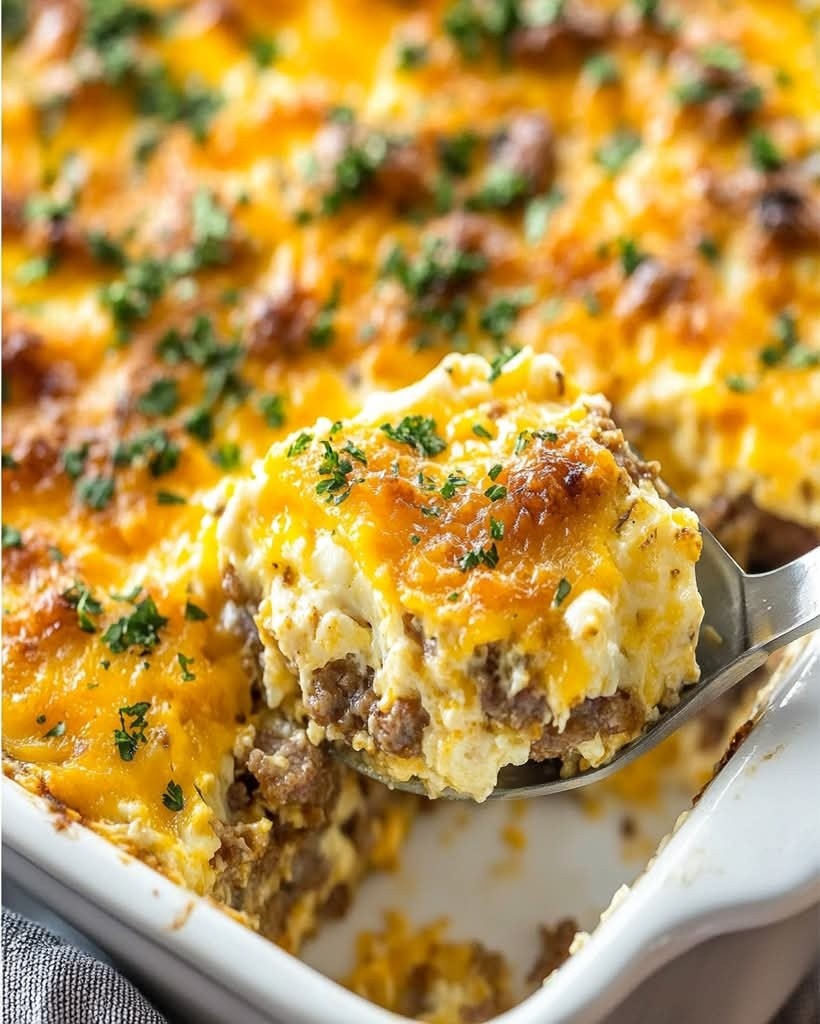
- Texture: You will enjoy a wonderful contrast in every bite. The top bakes to a beautifully golden, slightly crisp crust, while the interior remains incredibly tender and moist. Furthermore, the bread transforms into a soft, almost pudding-like consistency, studded with juicy sausage bits and pockets of melted cheese.
- Aroma: As it bakes, the kitchen fills with an irresistible fragrance. The scent of browning sausage and toasting bread mingles with the earthy aroma of baking eggs and the sharp, inviting smell of melting cheese. This combination is practically guaranteed to draw everyone to the table.
- Visual Appeal: This casserole presents beautifully straight from the oven. It puffs up impressively, showcasing a golden-brown, speckled top. When sliced, the interior reveals lovely layers of bread, sausage, and cheese, making it look as hearty and homemade as it tastes.
- Skill Level Needed: This recipe is perfect for beginners. It requires no advanced techniques, just simple mixing and layering. The most important skill is patience while it bakes to ensure the center is fully set.
- Special Equipment: You only need basic kitchen tools. A good skillet for browning sausage, a large mixing bowl, and a standard 9×13 inch baking dish are essential. A whisk for the eggs and a spatula for the sausage are also helpful.
Recipe Overview
- Difficulty Level: We rate this savory breakfast sausage and cheese casserole as easy. The steps are straightforward: cook sausage, layer ingredients, mix a simple custard, and bake. There is no intricate knife work or complex cooking methods involved. Even a novice cook can achieve excellent results by following the clear instructions.
- Category: This dish fits perfectly into the breakfast and brunch category. It is substantial enough to be a standalone meal. Additionally, it belongs to the family of baked egg dishes and stratas, making it ideal for special occasions and holiday mornings.
- Cuisine: The recipe has its roots in American home cooking and brunch culture. It draws inspiration from classic breakfast combinations found across the United States. While not tied to a specific regional cuisine, it embodies the hearty, comforting style of American family-style meals.
- Cost: This is a very cost-effective meal. Ingredients like bread, eggs, and milk are pantry staples. Breakfast sausage and block cheddar cheese are affordable protein sources. Overall, you can feed a crowd for a fraction of the cost of eating out.
- Season: This casserole is truly a year-round favorite. It is comforting and warming during chilly fall and winter months. Conversely, it is also perfect for spring holidays and relaxed summer brunches when you want to avoid cooking over a hot stove.
- Occasion: It is incredibly versatile for events. Obviously, it is a star for holiday breakfasts like Christmas or Easter. It is also ideal for weekend family brunches, potlucks, and overnight guests. Simply put, any gathering that calls for a satisfying, no-fuss meal.
Why You’ll Love This Recipe
First and foremost, the taste and texture of this savory breakfast sausage and cheese casserole are utterly irresistible. Each forkful delivers a harmonious blend of savory, peppery sausage and rich, creamy cheese. The egg custard soaks the bread thoroughly, creating a unified, tender bite that is neither soggy nor dry. Furthermore, the edges get delightfully crisp, offering a wonderful contrast to the soft interior. This combination of flavors and textures makes every single bite a deeply satisfying experience that will have everyone asking for seconds.
From a convenience standpoint, this recipe is a game-changer. You can prepare the entire casserole the night before, cover it, and let it rest in the refrigerator. Consequently, in the morning, you simply pop it in the oven. This hands-off approach means no frantic morning prep, giving you time to enjoy coffee or set the table. Moreover, it bakes unattended, filling your home with an amazing aroma. This make-ahead strategy is the ultimate key to a relaxed and enjoyable morning, whether on a busy weekday or a lazy Sunday.
Nutritionally, this casserole provides a balanced and substantial start to the day. It offers a great source of protein from both the eggs and the sausage, which helps keep you full and energized throughout the morning. Using whole milk adds calcium and creates a richer custard. You can easily adapt it by using whole-grain bread for added fiber or a leaner turkey sausage to reduce fat. Therefore, you get a hearty meal that fuels your body without compromising on incredible flavor.
The social and entertaining value of this dish cannot be overstated. It is designed to feed a crowd effortlessly, making it the centerpiece of any brunch gathering. Because it bakes in one dish, serving is simple and cleanup is minimal. Guests will be impressed by its homemade, comforting appearance and flavor. Ultimately, this savory breakfast sausage and cheese casserole fosters a warm, communal dining experience, encouraging people to gather, share, and enjoy a meal together.
Finally, this recipe is remarkably cost-effective and accessible. It utilizes inexpensive, easy-to-find ingredients available at any grocery store. You likely have many of the components like bread, milk, and eggs already in your kitchen. Compared to ordering breakfast for a group or buying pre-made options, making this casserole from scratch saves significant money. Additionally, it yields generous portions, providing leftovers for quick meals later in the week. This combination of affordability, ease, and delicious results makes it a perennial favorite.
Historical Background and Cultural Significance
The concept of combining bread, eggs, and meat in a baked dish has ancient roots, but the modern breakfast casserole is a distinctly American innovation. Early English bread puddings, often sweet, evolved into savory versions as colonists adapted to new ingredients. The practice of soaking stale bread in a custard was a practical way to prevent waste. Over time, as breakfast became a more substantial meal in American culture, these savory puddings incorporated local staples like pork sausage and cheddar cheese. Thus, the foundation for our beloved casserole was laid through necessity and culinary adaptation.
In American culinary culture, the breakfast casserole holds significant importance, particularly for communal dining. It became a staple for holiday mornings, church potlucks, and family reunions across the Midwest and South. Its ability to feed many people with minimal effort made it a cornerstone of hospitality. The dish represents a comforting, home-cooked tradition, often passed down through generations on handwritten recipe cards. Consequently, it evokes a strong sense of nostalgia and home for many people, symbolizing leisurely weekend mornings and special family time.
The recipe has evolved considerably from its simpler beginnings. Originally, these dishes might have used basic white bread, simple pork, and whatever cheese was available. Today, we see countless gourmet variations with artisanal breads, specialty sausages, and exotic cheeses. The addition of vegetables like peppers, onions, and mushrooms has also become standard. This evolution reflects broader food trends toward customization and elevated home cooking. However, the core principle—a hearty, baked, make-ahead egg dish—remains unchanged and continues to be beloved.
Regional variations of the savory breakfast sausage and cheese casserole abound across the United States. In the South, it might include spicy andouille sausage and a dash of hot sauce. A Southwestern version could feature chorizo, green chiles, and pepper jack cheese. In areas with strong dairy traditions, like Wisconsin, extra-sharp cheddar would be non-negotiable. Some families add a layer of hash browns for a heartier base. These regional twists showcase how a fundamental recipe adapts to local tastes and ingredients, ensuring its place as a versatile classic in American cuisine.
Ingredient Deep Dive
Breakfast Sausage: Breakfast sausage, typically made from ground pork seasoned with sage, black pepper, and other spices, is central to this dish’s flavor. Its history ties back to European sausage-making traditions adapted in America. Nutritionally, it provides protein, iron, and B vitamins, though opting for a leaner blend can reduce saturated fat. For the best results, choose a good-quality sausage with a flavor profile you enjoy. You can store raw sausage in the fridge for 1-2 days or freeze it for longer. For a substitution, try ground turkey sausage, chicken sausage, or even plant-based crumbles for a vegetarian twist.
Sharp Cheddar Cheese: Sharp cheddar cheese, originating from the English village of Cheddar, adds a crucial tangy depth and glorious meltability. Aged cheddar has a more concentrated flavor and less moisture, which prevents the casserole from becoming watery. It is a good source of calcium and protein. When selecting cheese, always buy a block and shred it yourself; pre-shredded cheese contains anti-caking agents that can hinder melting. Store cheddar tightly wrapped in the refrigerator. For variations, you can use Colby Jack for a milder taste, pepper Jack for heat, or Gruyère for a nutty, sophisticated flavor.
Bread (White or Wheat): The bread acts as the foundational starch, absorbing the custard and giving the casserole structure. Using slightly stale bread is a traditional technique to prevent sogginess, as it absorbs liquid more effectively without disintegrating. Whole wheat bread adds fiber and a nutty flavor. From a cultural standpoint, using up stale bread is an age-old practice against food waste. For best results, cube the bread and let it sit out for a few hours. You can use French bread, brioche for richness, or sourdough for tang. Gluten-free bread works well for dietary needs.
Eggs and Milk Custard: The mixture of eggs and milk forms the custard that binds the entire casserole together. Eggs provide structure, protein, and richness, while the milk (whole is recommended for creaminess) adds moisture and helps the eggs set gently. This combination is a classic in quiches and stratas. For optimal texture, whisk the eggs and milk thoroughly until completely homogeneous. You can use any percentage of milk, though lower-fat milk will yield a less rich result. For a dairy-free version, unsweetened almond or oat milk can be used successfully.
Common Mistakes to Avoid
- Using Fresh, Soft Bread: Fresh bread turns to mush when soaked in the custard. Always use day-old or slightly stale bread. Alternatively, you can cube fresh bread and toast it in a low oven for 10-15 minutes to dry it out. This step ensures the bread absorbs the liquid without becoming a pasty texture.
- Not Browning the Sausage Properly: Simply crumbling and cooking sausage until it’s no longer pink is not enough. You must brown it well to develop deep, savory flavors and render out excess fat. Proper browning creates fond in the pan, which adds immense taste. Drain the sausage thoroughly to prevent a greasy casserole.
- Using Pre-Shredded Cheese: Pre-shredded bags contain cellulose or potato starch to prevent clumping. These additives can make the cheese melt poorly and create a grainy texture. For the creamiest, smoothest melt, always buy a block of cheese and shred it yourself just before using. The difference in quality is significant.
- Skipping the Refrigeration Step: Assembling and baking immediately often leads to a dry, separated casserole. The refrigeration period, even for just 30 minutes, is crucial. It allows the bread to fully absorb the custard, resulting in a uniform, tender texture throughout. Overnight rest is ideal for flavor development and easy morning prep.
- Overbaking or Underbaking: Overbaking dries out the casserole and can make the eggs rubbery. Underbaking leaves a runny, unsafe center. The key is to bake until the top is golden brown and the center is firmly set. A knife inserted near the center should come out clean. Let it rest for 10 minutes before serving.
- Not Seasoning the Custard: Eggs and milk need seasoning. Relying solely on the sausage and cheese for flavor can result in bland bites. Always season your egg mixture adequately with salt, pepper, and any other dry spices like dry mustard or onion powder. Taste the mixture (it’s safe) and adjust seasoning.
- Pouring Custard Over Uneven Layers: If your bread and sausage are not evenly distributed, you will get pockets of dry bread or overwhelming meatiness. Take care to layer the ingredients uniformly in the baking dish. Gently press down the layers before pouring the custard to ensure even saturation.
- Using the Wrong Size Dish: A dish that is too small will cause the casserole to overflow while baking. A dish that is too large will result in a thin, overcooked layer. A standard 9×13 inch baking dish is perfect for this recipe’s volume. Always use the recommended size for proper depth and cooking time.
Essential Techniques
Proper Sausage Browning: Browning sausage is not just about cooking it through; it is about building flavor. Start by breaking the sausage into small crumbles in a cold skillet. Then, cook over medium heat, allowing the fat to render and the meat to develop a deep, caramelized color. Resist the urge to stir constantly; let it sit to form a flavorful crust. Drain the cooked sausage on paper towels to remove excess grease, which is essential for preventing a soggy, oily final dish.
Creating a Homogeneous Custard: The custard is the glue of the casserole. Crack your eggs into a large bowl and whisk them vigorously until the yolks and whites are completely blended and slightly frothy. Then, slowly stream in the milk while continuing to whisk. Finally, whisk in all your seasonings—salt, pepper, dry mustard. The goal is a perfectly smooth, uniform liquid with no streaks of egg white. This ensures every piece of bread gets coated evenly for a consistent texture.
Layering for Even Distribution: How you layer ingredients directly impacts every serving. First, spread the cubed bread evenly in the greased dish. Next, sprinkle the browned sausage crumbles uniformly over the bread. Then, distribute the shredded cheese evenly over the sausage. This method ensures each component is in every bite. Gently press down on the layers with your hands before pouring the custard to help it seep through to the bottom.
The Resting Period: After pouring the custard over the layered ingredients, you must let the casserole rest. Cover it and refrigerate for at least 30 minutes, preferably overnight. This pause is non-negotiable for success. It allows the bread to slowly absorb the egg mixture, which leads to a tender, cohesive texture instead of a dry top and soggy bottom. This step also melds the flavors together beautifully.
Pro Tips for Perfect Savory Breakfast Sausage and Cheese Casserole
Dry Your Bread: If you only have fresh bread, cube it and spread it on a baking sheet. Bake at 300°F for about 10-15 minutes to dry it out slightly. This mimics stale bread and provides the perfect texture for absorbing custard without disintegrating.
Brown in Batches: If browning a large amount of sausage, avoid crowding the pan. Cook in batches to ensure each piece gets proper contact with the hot surface for optimal browning and flavor development.
Season in Layers: Do not rely on one ingredient for all the seasoning. Add a pinch of salt and pepper to each component layer—the sausage while cooking, the custard mixture, and even a little over the cheese. This builds a more complex flavor profile.
Test for Doneness Accurately: Do not just rely on the timer or a golden top. Insert a knife or toothpick into the center of the casserole. If it comes out clean, the eggs are set. The center should also feel firm to a gentle touch, not jiggly.
Let it Rest Before Serving: After baking, let the casserole rest on the counter for 10-15 minutes. This allows the structure to set fully, making it much easier to slice into neat portions. It also lets the temperatures even out, so it is not scalding hot.
Customize the Custard: Add a tablespoon of Dijon mustard or a dash of hot sauce to the egg mixture for an extra flavor dimension. A teaspoon of onion powder or dried herbs like thyme can also elevate the overall taste.
Use a Glass or Ceramic Dish: These materials distribute heat more evenly than metal pans, which can sometimes cause the edges to over-brown before the center is done. If using metal, you may need to tent the edges with foil during baking.
Garnish for Freshness: Before serving, sprinkle with freshly chopped chives, parsley, or green onions. This adds a pop of color and a fresh, bright note that cuts through the richness of the sausage and cheese beautifully.
Variations and Adaptations
Regional Variations: Across the U.S., this casserole takes on local flavors. For a Southern twist, use spicy andouille sausage and add a cup of sautéed holy trinity (onions, celery, bell peppers). In the Southwest, substitute chorizo for breakfast sausage and mix in roasted green chiles and Monterey Jack cheese. A Midwest version might include cubed ham and Swiss cheese, while a coastal adaptation could feature crab meat and Old Bay seasoning.
Seasonal Adaptations: Tailor the add-ins to the season. In spring, fold in blanched asparagus tips and fresh herbs like dill. Summer calls for sweet corn kernels and sun-dried tomatoes. For fall, incorporate roasted butternut squash cubes and sage. Winter variations are hearty with sautéed mushrooms and spinach. These additions keep the recipe feeling fresh and appropriate all year round.
Dietary Modifications: This recipe is highly adaptable. For gluten-free, use your favorite gluten-free bread cubes. For dairy-free, use plant-based milk and a vegan cheese that melts well. To make it vegetarian, replace sausage with sautéed mushrooms, bell peppers, and onions, or use plant-based meat crumbles. For a lower-carb version, replace the bread with cubed cauliflower that has been roasted to remove moisture.
Flavor Variations: Experiment with different cheese and meat combinations. Try Italian sausage with mozzarella and marinara swirled in for a pizza-inspired bake. Use smoked gouda and ham for a deeper, smokier profile. For a holiday feel, add cooked, crumbled bacon and use a blend of sharp cheddar and Gruyère. A teaspoon of smoked paprika or a dash of Worcestershire sauce in the custard can also add wonderful depth.
Texture Modifications: If you prefer more texture, use a heartier bread like sourdough or a seeded multigrain. For a creamier interior, increase the milk by half a cup. To add a crunchy topping, reserve a handful of cheese and breadcrumbs, mix with melted butter, and sprinkle over the casserole for the last 10 minutes of baking.
Presentation Alternatives: For individual servings, assemble the casserole in greased muffin tins. Reduce the baking time to 20-25 minutes. This is perfect for grab-and-go breakfasts. You can also create a “deconstructed” version by baking the custard in a dish and serving it alongside toasted bread cubes, warm sausage, and cheese for a DIY brunch bar.
Serving and Presentation Guide
Plating Techniques: For a family-style presentation, place the entire baking dish on a trivet in the center of the table. Use a sharp knife or a square-edged server to cut neat portions directly from the dish. For individual plates, use a spatula to lift each square carefully, supporting it from underneath to keep it intact. Wipe the edges of the plate clean for a polished look.
Garnishing Ideas: A simple garnish elevates the visual appeal instantly. A sprinkle of fresh chopped chives or parsley adds a vibrant green contrast. Thinly sliced green onions or a light dusting of paprika also work well. For a special touch, add a few microgreens or edible flowers on the serving platter. A small dollop of sour cream or a drizzle of hot honey on the side can be both a garnish and a flavor enhancer.
Traditional Accompaniments: This hearty casserole pairs beautifully with lighter sides. A simple mixed green salad with a vinaigrette dressing balances the richness. Fresh fruit salad, berries, or melon slices offer a sweet, refreshing contrast. For a classic brunch spread, serve it alongside crispy hash browns or breakfast potatoes.
Modern Serving Suggestions: For a contemporary brunch, offer a selection of artisan hot sauces or flavored ketchups. Serve with avocado slices or a quick pico de gallo. A side of roasted tomatoes or sautéed kale provides a modern, healthy touch. Offering both regular and decaf coffee, fresh orange juice, and sparkling water completes the meal.
Temperature Considerations: This casserole is best served warm. It can sit at room temperature for up to 30 minutes after resting without issue. If it cools down, individual slices can be reheated gently in a microwave or toaster oven. Avoid serving it piping hot straight from the oven, as the flavors need a moment to settle and it will be too hot to eat.
Portion Control Tips: A 9×13 inch casserole typically yields 8 generous servings or 12 smaller, appetizer-sized portions. Use a ruler or the lines of your baking dish as a guide for even cutting. For buffets, consider pre-cutting the entire casserole to make serving faster and to ensure everyone gets an equal portion with all the delicious layers.
Wine and Beverage Pairing
Wine Pairings: The rich, savory flavors of sausage and cheese call for wines with good acidity to cut through the fat. A crisp, dry sparkling wine like Prosecco or Cava is a fantastic brunch choice. For still wines, consider a dry Riesling, a Sauvignon Blanc, or a light-bodied Pinot Noir. The key is to avoid overly oaky or tannic wines, which can clash with the eggs and cheese. A mimosa made with the sparkling wine and fresh orange juice is also a classic and perfect pairing.
Non-Alcoholic Alternatives: Freshly squeezed orange juice is a timeless partner, its sweetness and acidity complementing the savory dish. Grapefruit juice offers a more bitter, sophisticated contrast. For a creamy option, a vanilla or plain oat milk latte pairs wonderfully. Sparkling water with a squeeze of lime or a dash of bitters provides a refreshing, palate-cleansing option that doesn’t compete with the food.
Coffee and Tea Pairings: A medium-roast coffee is ideal—it’s strong enough to stand up to the hearty flavors but not so bitter that it overpowers. A dark roast can also work if you prefer bolder coffee. For tea lovers, a robust English Breakfast or Irish Breakfast tea with milk and sugar is a comforting match. An herbal chai tea latte also brings warm spices that harmonize with the sausage seasoning.
Temperature Considerations: Serve beverages at their ideal temperatures to enhance the meal. Juices should be well-chilled, coffee and tea served hot, and sparkling wines properly chilled. Having a carafe of ice water on the table is always recommended. The contrast between the warm casserole and a cool, crisp beverage is part of the enjoyable dining experience.
Serving Suggestions: Set up a beverage station so guests can help themselves. Include a carafe of coffee, an assortment of teas, a pitcher of juice, and chilled bottles of sparkling water. Provide appropriate glassware: wine glasses for mimosas, mugs for coffee, and tall glasses for juice. This self-serve approach allows everyone to choose their perfect pairing and keeps the host from being tied to the kitchen.
Storage and Shelf Life
Storage Methods: After the casserole has cooled completely to room temperature, cover the baking dish tightly with plastic wrap or aluminum foil. Alternatively, transfer individual portions to airtight containers. Proper storage is crucial to prevent the casserole from drying out or absorbing odors from the refrigerator. Always store it in the main body of the fridge, not in the door, where temperatures fluctuate more.
Temperature Requirements: This casserole must be refrigerated at or below 40°F (4°C). Do not leave it at room temperature for more than two hours, as the eggs and dairy create a perishable environment. When reheating, ensure the internal temperature reaches 165°F (74°C) to ensure food safety, especially if reheating more than once.
Container Recommendations: For whole casserole storage, the original baking dish covered tightly is fine for 1-2 days. For longer storage or for leftovers, glass or BPA-free plastic containers with tight-fitting lids are best. You can also wrap individual slices tightly in plastic wrap and then place them in a freezer bag for freezing. This portion-control method makes for easy grab-and-go meals.
Signs of Spoilage: Before consuming leftovers, always check for signs of spoilage. Discard the casserole if you notice an off or sour smell, significant discoloration (like grey or green patches), or visible mold growth. If the texture becomes excessively slimy or watery, it is also a sign it should not be eaten. When in doubt, throw it out.
Reheating Instructions: For best results, reheat individual portions in the microwave on medium power for 1-2 minutes, or until heated through. Cover with a damp paper towel to prevent drying out. For larger portions, reheat in a 350°F oven, covered with foil, for 15-20 minutes. You can also reheat in an air fryer for a crispier top. Always ensure the center is hot before serving.
Freezing Guidelines: This casserole freezes very well. Cool it completely, then wrap the entire dish or individual slices tightly in plastic wrap, followed by a layer of heavy-duty aluminum foil. Label with the date. Freeze for up to 2-3 months. Thaw overnight in the refrigerator before reheating. Note that the texture may be slightly softer after freezing and reheating, but the flavor will remain excellent.
Make Ahead Strategies
Prep Timeline: The ultimate make-ahead strategy is the full overnight assemble. The night before (or up to 24 hours in advance), cook the sausage, cube the bread, shred the cheese, and mix the custard. Assemble everything in the baking dish, cover tightly, and refrigerate. In the morning, simply bake as directed. You can also prep components 2-3 days ahead: cook and drain the sausage, store it in a container; cube the bread and keep it in a bag; shred the cheese and refrigerate.
Storage Between Steps: Store each prepped component properly to maintain freshness. Cooked, drained sausage can be refrigerated for 3-4 days. Cubed bread should be kept at room temperature in a paper bag or loosely covered container to stay dry, not in plastic where it can get soggy. Shredded cheese should be in an airtight container in the fridge. The egg-milk mixture can be mixed and stored in a sealed pitcher or jar in the fridge for 1 day.
Quality Impact Assessment: Making this casserole ahead actually improves its quality. The extended soaking time allows flavors to meld deeply and the bread to absorb the custard uniformly, resulting in a superior, more cohesive texture. The only potential downside is if the bread becomes too saturated, but using slightly stale or toasted bread prevents this. Overall, it is a recipe designed for advance prep.
Assembly Tips: When assembling ahead, pour the custard slowly over the layers. Use the back of a spoon to gently press down on any bread cubes that are not submerged. Ensure the custard is evenly distributed. Before covering and refrigerating, give the dish a gentle shake from side to side to help the liquid settle. This guarantees even coverage and perfect texture after baking.
Reheating Guidelines: If you bake the entire casserole ahead of time, let it cool, then cover and refrigerate. To reheat, cover with foil and bake at 325°F for 20-30 minutes, or until warmed through. You can also reheat individual slices in a toaster oven or air fryer for a quicker option and to restore a crispy top. Add a minute under the broiler for extra browning if needed.
Fresh Element Additions: If making ahead, consider adding some fresh elements after baking or reheating to brighten the dish. A sprinkle of freshly chopped herbs like parsley or chives added just before serving makes a big difference. A side of fresh fruit or a simple green salad added at mealtime provides a contrast that leftovers sometimes lack.
Scaling Instructions
Halving the Recipe: To make a smaller casserole for 4 people, simply divide all ingredient quantities in half. Use an 8×8 inch or 9×9 inch square baking dish. The prep steps remain the same. The baking time may be slightly reduced—start checking for doneness around the 35-minute mark. All other techniques, including the refrigeration step, are identical. This is perfect for smaller families or couples with planned leftovers.
Doubling or Tripling: Doubling the recipe is straightforward for feeding a crowd. Double all ingredients and mix the custard in a very large bowl or in batches. You will need two 9×13 inch dishes, or one very large roasting pan. Ensure the layers are not too deep; aim for no more than 2-3 inches of uncooked height. Baking time will increase, possibly by 10-20 minutes. Rotate the pans in the oven halfway through for even cooking. This is ideal for potlucks or big family gatherings.
Equipment Adjustments: When scaling, your equipment must match. For a halved recipe, a smaller dish prevents a thin, overcooked casserole. For a doubled recipe, using two standard dishes is safer than one enormous dish, which may not cook evenly. Ensure you have a skillet large enough to brown the increased amount of sausage without steaming it—cook in batches if necessary. A larger whisk and mixing bowl will also make the process easier.
Timing Modifications: While prep time scales linearly, baking time does not. A halved casserole in a smaller dish will bake faster, so check early. A doubled recipe in two dishes may bake close to the original time, but a single, deeper dish will take longer. Always rely on visual and tactile doneness cues—a golden-brown top and a firm center—rather than strictly following a multiplied time.
Storage Considerations: A larger batch means more leftovers. Plan your storage containers in advance. Consider freezing portions of a large batch immediately after cooling to preserve quality. Label everything clearly with the date. For a halved batch, leftovers will be minimal, so you might use a smaller container. Proper storage ensures you can enjoy the fruits of your scaling efforts for days to come.
Nutritional Deep Dive
Macro Breakdown: A typical serving of this savory breakfast sausage and cheese casserole provides a balanced mix of macronutrients. It is a good source of protein, primarily from the eggs, sausage, and cheese, which aids in muscle repair and satiety. The carbohydrates come mainly from the bread, offering energy. The fats, from the sausage, cheese, egg yolks, and milk, contribute to richness and help absorb fat-soluble vitamins. Using whole milk and regular sausage increases fat content, while leaner meats and lower-fat dairy can adjust this profile.
Micronutrient Analysis: This dish delivers several important vitamins and minerals. Eggs provide choline for brain health and lutein for eye health. Cheese and milk are excellent sources of calcium and phosphorus for strong bones. The sausage offers B vitamins, particularly B12, which is crucial for nerve function. Using whole-grain bread adds magnesium and fiber. Adding vegetables like spinach or peppers would significantly boost the vitamin A, C, and K content.
Health Benefits: When prepared with mindful ingredient choices, this casserole can be part of a healthy diet. Its high protein content promotes fullness, which can help with weight management by reducing snacking. The combination of protein Print
Savory Breakfast Sausage and Cheese Casserole
- Total Time: 45 minutes
- Yield: 4
Description
A hearty and flavorful breakfast casserole with savory sausage, melted cheese, and a creamy egg base, perfect for feeding a crowd or meal prepping.
Ingredients
- 1 pound breakfast sausage, cooked and crumbled
- 6 large eggs
- 1 cup whole milk
- 1 cup shredded cheddar cheese
- 1 cup shredded mozzarella cheese
- 1/2 cup diced onion
- 1/2 cup diced bell pepper
- 4 slices bread, cubed
- 1 teaspoon salt
- 1/2 teaspoon black pepper
- 1/2 teaspoon garlic powder
- 1 tablespoon chopped fresh parsley
Instructions
- Preheat oven to 350°F (175°C) and grease a 9×13-inch baking dish.
- In a large bowl, whisk together eggs, milk, salt, pepper, and garlic powder until well combined.
- Stir in cooked sausage, diced onion, bell pepper, bread cubes, and half of the cheddar and mozzarella cheeses.
- Pour mixture into the prepared baking dish and spread evenly.
- Top with remaining cheeses and sprinkle with fresh parsley.
- Bake for 30-35 minutes, or until the center is set and the top is golden brown.
- Let cool for 5 minutes before slicing and serving.
Notes
You can customize the seasonings to taste.
- Prep Time: 15 minutes
- Cook Time: 30 minutes
- Method: Main
- Cuisine: American