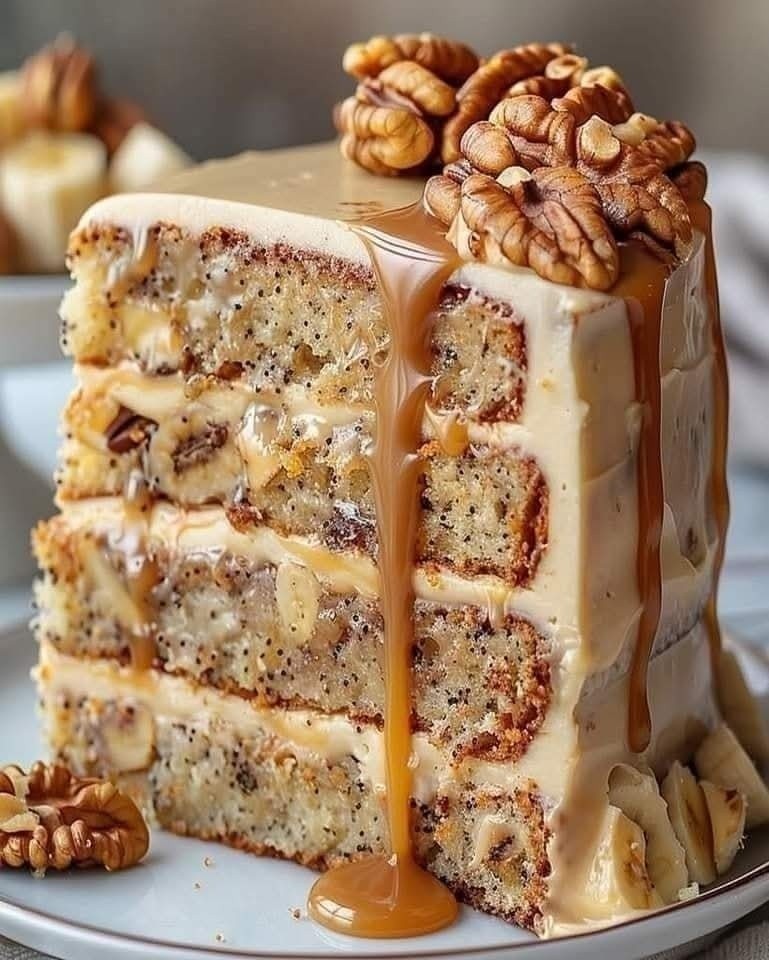
Luscious Walnut Banana Caramel Cake: An Irresistible Dessert Recipe
Imagine a dessert that perfectly captures the cozy essence of a home kitchen. This luscious walnut banana caramel cake recipe delivers exactly that feeling with every single bite. Moreover, it combines the familiar comfort of banana bread with the elegant decadence of a rich, moist layer cake. Consequently, you get a dessert that feels both nostalgic and special. The aroma alone, as it bakes, will fill your home with the warm scents of toasted nuts, ripe bananas, and sweet caramel.
This luscious walnut banana caramel cake truly stands out for its incredible texture and flavor harmony. For instance, the cake itself is incredibly tender, thanks to the natural moisture from the mashed bananas. Meanwhile, the crunchy walnuts provide a delightful contrast in every mouthful. Ultimately, the crowning glory is the homemade caramel sauce, which soaks into the cake and creates a sticky, irresistible topping. This recipe is perfect for anyone seeking a show-stopping dessert that is surprisingly straightforward to make.
Furthermore, this cake is a fantastic way to use up overripe bananas sitting on your counter. Instead of making another loaf of banana bread, you can transform them into this spectacular layered treat. The process is methodical and rewarding, leading to a beautiful result that impresses at potlucks, family dinners, or holiday gatherings. Let’s dive into the details of creating this unforgettable luscious walnut banana caramel cake.
Quick Recipe Highlights
- Flavor Profile: This cake masterfully balances the deep, molasses-like sweetness of caramel with the mellow, fruity notes of banana. Additionally, the toasted walnuts introduce a nutty, slightly bitter complexity that prevents the dessert from being overly sweet.
- Texture: Expect an exceptionally moist and dense crumb from the banana, punctuated by the satisfying crunch of walnut pieces in every slice. The caramel topping adds a luxurious, sticky-smooth layer that contrasts beautifully with the cake’s soft interior.
- Aroma: While baking, your kitchen will smell of warm, toasted nuts and sweet, ripe bananas. After adding the caramel, the scent deepens with rich, buttery notes that are utterly irresistible.
- Visual Appeal: The cake boasts a beautiful golden-brown crust from the caramel glaze, often with enticing cracks on the surface. When sliced, the interior reveals a speckled pattern of banana and walnut, making it look as delicious as it tastes.
- Skill Level Needed: This recipe is ideal for bakers with some foundational experience, as it involves making a caramel sauce from scratch. However, with clear instructions and careful attention, even ambitious beginners can achieve excellent results.
- Special Equipment: You will need basic baking tools like mixing bowls, a hand or stand mixer, and two 9-inch round cake pans. A candy thermometer is highly recommended for perfect caramel, but you can also use the cold water test method.
Recipe Overview
- Difficulty Level: We rate this luscious walnut banana caramel cake as intermediate. The primary reason is the homemade caramel component, which requires precise temperature control to avoid crystallization or burning. However, the cake batter itself is simple and forgiving, making the overall process very manageable with focus.
- Category: This dessert falls squarely into the category of celebration cakes and comfort food desserts. It is rich enough for birthdays and holidays yet familiar enough for a weekend family treat.
- Cuisine: The recipe draws inspiration from American home baking traditions, particularly Southern-style caramel cakes and classic banana bread. It is a fusion that celebrates accessible, wholesome ingredients turned into something extraordinary.
- Cost: The cost is quite reasonable, as it utilizes pantry staples like flour, sugar, and eggs. The bananas are often a “rescue” ingredient from being overripe. The most significant cost comes from real butter and walnuts, but they are essential for the authentic flavor and texture.
- Season: This cake is truly a year-round delight. It feels cozy and warming in the fall and winter. Conversely, it pairs wonderfully with summer ice cream or a cool glass of iced tea in the warmer months.
- Occasion: It is perfect for potlucks, bake sales, afternoon tea, or as a grand finale to a Sunday dinner. Its crowd-pleasing nature makes it a reliable choice for any gathering where you want to offer a homemade dessert.
Why You’ll Love This Recipe
First and foremost, the taste and texture of this luscious walnut banana caramel cake are simply unmatched. The moist banana cake provides a familiar, comforting base. Simultaneously, the crunchy walnuts add a necessary textural surprise that keeps each bite interesting. Ultimately, the rich, buttery caramel sauce ties everything together, creating a symphony of flavors that is neither too cloying nor too simple. This dessert satisfies a deep craving for something sweet, nutty, and profoundly satisfying.
From a convenience standpoint, this recipe offers significant benefits. For example, it uses overripe bananas that might otherwise go to waste, making it both economical and resourceful. Furthermore, the cake layers can be baked a day in advance and the caramel sauce can be prepared ahead of time. Consequently, you can assemble the final product with minimal stress on the day you plan to serve it. This make-ahead flexibility is a huge advantage for busy home bakers.
Nutritionally, while this is a dessert, it incorporates some beneficial ingredients. Bananas provide potassium and dietary fiber. Walnuts are an excellent source of omega-3 fatty acids and antioxidants. Using these whole ingredients is always preferable to highly processed dessert options. Of course, this cake is a treat to be enjoyed in moderation, but it’s comforting to know it contains real, recognizable foods.
The social and entertaining value of this cake is exceptionally high. It looks impressive and professionally made when presented on a cake stand. Moreover, its flavor profile appeals to a wide range of palates, from children to adults. Serving this luscious walnut banana caramel cake at a party invariably prompts recipe requests and compliments. It becomes a talking point and a memorable part of your hospitality.
Finally, this recipe is cost-effective and accessible. The ingredients are not exotic or difficult to find; you can purchase them at any standard grocery store. Compared to buying a specialty cake from a bakery, making it at home saves a considerable amount of money. Additionally, you control the quality of every component, ensuring there are no unnecessary preservatives or artificial flavors. This accessibility empowers you to create a luxurious dessert without a luxurious price tag.
Historical Background and Cultural Significance
The origin of this luscious walnut banana caramel cake is rooted in the practical, resourceful nature of home baking. Banana-based cakes and breads gained immense popularity in the United States during the Great Depression and both World Wars. During these times, housewives sought ways to use every scrap of food, including overripe bananas. Meanwhile, caramel sauces have a long history in American confectionery, often associated with Southern “praline” culture and old-fashioned candy making. The fusion of these two elements—banana cake and caramel glaze—represents an evolution of home baking toward more elaborate, celebratory treats.
Culturally, banana cake holds a special place as a comfort food dessert. It is often associated with grandmothers, family reunions, and church potlucks. The addition of caramel and walnuts elevates it from a simple snack cake to a “company-worthy” dessert. This transition mirrors a broader trend in home cooking where everyday ingredients are dressed up for special occasions. The cake symbolizes warmth, generosity, and the joy of sharing something made with care.
The recipe has evolved significantly from its humble beginnings. Originally, banana cakes were often dense, single-layer affairs. The modern version, like this luscious walnut banana caramel cake, frequently features multiple layers and sophisticated garnishes. The caramel sauce has also been refined; while early recipes might have used a simple boiled sugar syrup, contemporary versions emphasize the flavor of browned butter and a touch of cream. This evolution reflects greater access to ingredients and a desire for more complex flavor profiles in home kitchens.
Regional variations of this concept abound. In the American South, you might find a similar cake with pecans instead of walnuts. In other regions, bakers might add spices like cinnamon or nutmeg to the batter. Some versions forgo the layered structure entirely, opting for a bundt cake format with the caramel poured over the top. These variations highlight the recipe’s incredible adaptability. Ultimately, each baker can imprint their personal or regional touch on this classic framework, ensuring the luscious walnut banana caramel cake remains a dynamic and beloved dessert.
Ingredient Deep Dive
Ripe Bananas: The bananas are the soul of this cake. Culturally, using overripe fruit is a global practice in frugal cooking. Nutritionally, they provide potassium, vitamin B6, and fiber. For the best flavor and moisture, use bananas that are heavily speckled or even black on the outside; their starches have fully converted to sugars. You can store ripe bananas in the freezer (peeled) for months. If you must substitute, applesauce or pumpkin puree can provide moisture but will alter the signature banana flavor.
Walnuts: Walnuts have a history dating back thousands of years and are native to the Mediterranean and Central Asia. They add essential crunch and a slightly bitter note that balances the sweetness. They are a great source of plant-based omega-3s and antioxidants. Always select walnuts that smell fresh, not rancid. For the best texture, toast them lightly before adding to the batter to enhance their nutty flavor. Store walnuts in the freezer to prevent their oils from spoiling. Pecans or toasted almonds make suitable substitutions.
Granulated Sugar (for Caramel): Sugar’s history is intertwined with colonialism and trade. In this recipe, it is transformed through caramelization, a chemical process that creates hundreds of new flavor compounds. There are no nutritional benefits to refined sugar; it is purely for taste and texture. When making caramel, use a clean, heavy-bottomed saucepan to ensure even heating. A splash of lemon juice or corn syrup can help prevent crystallization. Store sugar in an airtight container in a cool, dry place. There is no direct substitute for dry sugar in caramel making.
Butter: Butter, a staple of European and American baking, adds richness and tenderizes the cake crumb. In the caramel, it contributes a creamy, rounded flavor. It provides fat-soluble vitamins like A and E. Always use unsalted butter to control the salt level in your recipe. For the caramel, cut it into pieces so it melts evenly and doesn’t shock the hot sugar. Butter should be stored wrapped in the refrigerator. For dairy-free versions, high-quality plant-based butter sticks can work, but results in caramel may vary.
All-Purpose Flour: Flour forms the structure of the cake. The development of refined white flour was a major milestone in baking history. It provides carbohydrates and some protein (gluten). For a lighter cake, sift your flour before measuring. To measure accurately, spoon it into the measuring cup and level it off. Store flour in a sealed container in a cool, dark place. For a gluten-free version, use a reliable 1:1 gluten-free flour blend that contains xanthan gum.
Common Mistakes to Avoid
- Using Underripe Bananas: This is the most common error. Green or just-yellow bananas lack the necessary sweetness and moisture. They will result in a bland, dry cake. Always wait for bananas to develop plenty of brown spots.
- Overmixing the Batter: Once you add the dry ingredients to the wet, mix only until just combined. Overmixing develops the gluten in the flour, leading to a tough, dense cake instead of a tender crumb.
- Not Toasting the Walnuts: Skipping the toasting step means missing out on deeper flavor. Raw walnuts can taste slightly bitter and lack the aromatic punch that toasted nuts provide. A quick bake in the oven makes a significant difference.
- Rushing the Caramel: Making caramel requires patience. Do not stir the sugar and water mixture once it begins to boil, as this can cause crystallization. Instead, gently swirl the pan to ensure even cooking and watch the color carefully.
- Adding Cold Cream to Hot Caramel: If your recipe calls for cream in the caramel, warm it slightly first. Adding cold cream can cause the hot sugar to seize and harden instantly, creating lumps that are difficult to melt.
- Underbaking the Cake Layers: Because this is a moist batter, a toothpick test is crucial. If you remove the cakes too early, the center may collapse. The cakes are done when a toothpick inserted comes out with a few moist crumbs, not wet batter.
- Assembling the Cake Before it Cools: Applying caramel to a warm cake will cause it to melt and soak in unevenly, potentially making the structure soggy. Always allow the cake layers to cool completely on a wire rack before frosting.
- Storing the Cake Airtight While Warm: Trapping steam from a warm cake in an airtight container creates condensation, which makes the top sticky and can promote mold. Let the cake cool fully before covering.
Essential Techniques
Caramelization: This is the process of heating sugar until it melts and turns a deep amber color, developing complex flavors. It is important because it transforms simple sugar into a rich, nuanced sauce. To master it, combine sugar and water in a clean pan and heat without stirring until it boils. Then, watch closely as the color changes from clear to gold to amber. A common pitfall is walking away, as it can burn in seconds. The visual cue for success is a deep golden-brown color that smells nutty, not acrid.
Creaming Butter and Sugar: This technique involves beating room-temperature butter and sugar together until light and fluffy. It is crucial because it incorporates air into the batter, which helps the cake rise and creates a tender texture. To do it well, ensure your butter is soft but not melted. Use a mixer on medium speed for 3-5 minutes until the mixture noticeably pales in color. A common mistake is not creaming long enough, resulting in a dense cake. Success looks like a homogeneous, aerated, and almost whipped mixture.
Folding in Dry Ingredients: After creaming, you must incorporate the flour mixture and bananas without deflating the air you just created. This technique preserves the cake’s lightness. Use a spatula and a gentle, sweeping motion from the bottom of the bowl up and over the top. Rotate the bowl as you go. The pitfall is aggressive stirring with the mixer. You have succeeded when no streaks of dry flour remain, but the batter is still voluminous.
Testing for Doneness: Properly determining when the cake is baked is essential to avoid a gummy center or dry edges. The toothpick test is the gold standard. Insert a toothpick or thin skewer into the center of the cake. It should come out with a few moist crumbs clinging to it, not wet batter. Another sign is the cake pulling away slightly from the sides of the pan. Relying solely on time is a mistake, as oven temperatures vary. The visual cue is a golden-brown top that springs back lightly when touched.
Pro Tips for Perfect Luscious Walnut Banana Caramel Cake
First, use a kitchen scale to measure your flour. Volumetric measuring with cups can lead to using too much flour, resulting in a dry cake. For consistent results, 120 grams per cup is a reliable standard.
Second, bring all your cold ingredients to room temperature before starting. Room-temperature eggs, butter, and milk emulsify better into the batter, creating a smoother, more uniform crumb structure.
Third, when making the caramel, have all your additions (butter, cream) measured and ready next to the stove. Caramel moves fast, and you won’t have time to measure once the sugar reaches color.
Fourth, add a pinch of salt to your caramel sauce. Salt is a flavor enhancer that will cut the sweetness and make the buttery, nutty notes of the caramel truly shine.
Fifth, for extra walnut flavor, toast a handful of walnuts until fragrant, then grind them into a fine meal and substitute it for 2-3 tablespoons of the flour in the recipe.
Sixth, if your caramel seizes or crystallizes, don’t panic. Add a few tablespoons of water, return it to low heat, and stir gently until the sugar crystals dissolve. Then, you can continue cooking it to the correct color.
Seventh, for a professional finish, use a cake turntable and an offset spatula to apply the caramel. Pour a generous amount on top and gently guide it over the edges for a beautiful, drippy effect.
Eighth, let the assembled cake rest for at least an hour before slicing. This allows the caramel to set slightly and the flavors to meld, giving you cleaner slices and a better eating experience.
Variations and Adaptations
Regional Variations: In the American South, pecans are the nut of choice and would be a fantastic substitute for walnuts. For a tropical twist, inspired by Caribbean baking, add a teaspoon of rum extract to the batter or a tablespoon of dark rum to the caramel. In Australia, you might find a version with macadamia nuts for a richer, buttery crunch.
Seasonal Adaptations: In the fall, incorporate warm spices like a teaspoon of cinnamon, half a teaspoon of nutmeg, and a quarter teaspoon of cloves into the dry ingredients. For a winter holiday version, decorate the finished cake with candied orange peel or a dusting of powdered sugar. In spring, serve it with a side of fresh strawberry compote.
Dietary Modifications: For a gluten-free cake, use a high-quality 1:1 gluten-free flour blend. To make it dairy-free, use plant-based butter and a thick, canned coconut milk in place of cream for the caramel. For a vegan version, use flax eggs, plant-based butter, and coconut milk, ensuring your sugar is vegan-certified.
Flavor Variations: Add a half-cup of chocolate chips to the batter for a banana-chocolate-caramel combination. Infuse the caramel with a teaspoon of vanilla bean paste or a tablespoon of bourbon after removing it from the heat. You could also layer a thin spread of peanut butter between the cake layers before adding the caramel.
Texture Modifications: For a cake with more textural contrast, reserve a quarter cup of the toasted walnuts and press them into the sides of the frosted cake. For a smoother cake, grind the toasted walnuts into a fine powder and add them to the flour mixture, eliminating the chunks but keeping the flavor.
Presentation Alternatives: Bake the batter in a 9×13 inch pan for a simpler sheet cake. Make cupcakes for easy individual portions, reducing the bake time to 18-22 minutes. For a stunning bundt cake, double the caramel recipe and pour half into the greased pan before adding the batter, then invert after baking for a glazed top.
Serving and Presentation Guide
Plating Techniques: For an elegant presentation, place the cake on a simple cake stand or a decorative plate. Use a sharp, thin-bladed knife dipped in hot water and wiped dry between each cut to achieve perfectly clean slices. Place each slice on a dessert plate with a small offset spatula to keep it intact.
Garnishing Ideas: A sprinkle of flaky sea salt on top of the caramel just before serving enhances all the flavors. Fresh banana slices, briefly dipped in lemon juice to prevent browning, make a beautiful and thematic garnish. A few extra whole or halved toasted walnuts arranged on top add visual appeal and hint at the interior.
Traditional Accompaniments: A dollop of freshly whipped cream is a classic and perfect pairing, as its lightness contrasts the rich cake. A scoop of high-quality vanilla bean ice cream slowly melting over a warm slice is a timeless combination. For a simpler touch, a glass of cold milk is always a winner.
Modern Serving Suggestions: Drizzle a little extra warm caramel sauce on the plate before placing the slice. Add a quenelle of bourbon-spiked whipped cream on the side. For a brunch presentation, serve a smaller slice alongside a cup of strong coffee.
Temperature Considerations: This cake is excellent at room temperature, where the caramel is soft and the cake is tender. It can also be served slightly warmed, which makes the caramel gooey and intensifies the aromas. Avoid serving it refrigerator-cold, as it will harden the caramel and mute the flavors.
Portion Control Tips: Because the cake is rich, a standard slice from a 9-inch round cake is satisfying. For larger gatherings, you can cut the cake into smaller, “petite” slices, allowing guests to enjoy a taste without committing to a large portion. This is especially helpful when serving multiple desserts.
Wine and Beverage Pairing
Wine Pairings: The sweet, nutty profile of this cake pairs wonderfully with dessert wines. A rich, nutty Oloroso Sherry or a Cream Sherry mirrors the caramel and walnut notes beautifully. A late-harvest Riesling with its honeyed apricot flavors can complement the banana without overpowering it. For a red wine option, a Banyuls from France, with its flavors of dried fruit and nuts, is a sophisticated match.
Non-Alcoholic Alternatives: A glass of cold, whole milk is a perfect classic pairing. For something more special, a homemade salted caramel milkshake doubles down on the theme. Sparkling apple cider provides a crisp, effervescent contrast that cleanses the palate between bites.
Coffee/Tea Pairings: A medium-roast coffee with notes of caramel and nuts will echo the cake’s flavors. A strong cup of black tea, like an English Breakfast or Assam, stands up well to the sweetness. For an herbal option, a rooibos tea with its natural sweetness and slight nuttiness is an excellent caffeine-free choice.
Temperature Considerations: Serve dessert wines slightly chilled, not ice cold, to allow their aromas to open up. Coffee and tea should be hot to provide a temperature contrast to the cake. Iced coffee or cold brew can be refreshing if serving the cake on a warm day.
Serving Suggestions: Offer a small pour of dessert wine in a proper wine glass. Present coffee in a carafe with cream and sugar on the side for guests to customize. For tea, provide a pot with an assortment of cups, allowing the ritual of pouring to be part of the dessert experience.
Storage and Shelf Life
Storage Methods: Once the caramel has fully set, you can store the cake. The best method is to place it under a cake dome or an inverted large bowl at room temperature. This protects it from dust and drying out while allowing it to breathe slightly. Do not wrap it tightly in plastic while still warm.
Temperature Requirements: This cake stores best at cool room temperature for up to 3 days. Refrigeration is not recommended as it will dry out the cake and harden the caramel. If your kitchen is very hot and humid, you may refrigerate it, but bring it to room temperature for at least an hour before serving.
Container Recommendations: A cake carrier with a lid is ideal. Alternatively, you can place the cake on a plate and cover it loosely with aluminum foil, tenting it so the foil does not touch the caramel topping. For individual slices, store them in a single layer in an airtight container.
Signs of Spoilage: Visible mold, an off or sour smell, or an excessively wet or slimy texture are clear signs the cake has spoiled. The bananas and dairy in the caramel make it perishable. If in doubt, it is safest to discard it.
Reheating Instructions: To refresh a slice, warm it in a microwave for 10-15 seconds. This will soften the caramel and make the cake taste freshly baked. You can also warm slices in a preheated 300°F oven for 5-7 minutes, placed on a parchment-lined baking sheet.
Freezing Guidelines: You can freeze the unfrosted cake layers tightly wrapped in plastic and then foil for up to 3 months. Thaw overnight in the refrigerator. The assembled cake with caramel does not freeze well, as the caramel will become unpleasantly grainy and weep upon thawing.
Make Ahead Strategies
Prep Timeline: You can break this recipe into stages over two days. On Day 1, bake the cake layers, let them cool completely, then wrap them tightly in plastic wrap. Also, prepare the caramel sauce, let it cool, and store it in a jar in the refrigerator. On Day 2, bring the caramel to room temperature or gently rewarm it until pourable, assemble the cake, and let it sit for an hour before serving.
Storage Between Steps: Wrapped cake layers can be kept at room temperature overnight or refrigerated for up to 2 days. The chilled caramel sauce will thicken significantly. To return it to a pouring consistency, place the jar in a bowl of warm water or gently reheat it in a saucepan over low heat, adding a teaspoon of cream if it seems too thick.
Quality Impact Assessment: Making components ahead often improves flavor, as it allows the banana flavor in the cake to deepen and mature. The caramel also benefits from resting, allowing its flavors to meld. The final assembled cake is best eaten within 8 hours of assembly for optimal texture, but it will still be delicious for days.
Assembly Tips: If the cake layers have domed during baking, use a serrated knife to level them before assembling. Place the first layer on your serving plate, add a thin layer of caramel, then top with the second layer. Pour the remaining caramel over the top, allowing it to drip down the sides decoratively.
Reheating Guidelines: Only reheat the caramel sauce, not the assembled cake. Gently warm the sauce in a heatproof bowl set over a pot of simmering water, stirring occasionally. Do not microwave it in short bursts, as it can easily overheat and separate.
Fresh Element Additions: Any fresh garnishes, like banana slices or whipped cream, should be added immediately before serving. If you plan to add a sprinkle of flaky sea salt, do it just before slicing to preserve its texture and visual appeal.
Scaling Instructions
Halving the Recipe: To make a smaller cake, simply divide all ingredient quantities by two. Use two 6-inch round cake pans and reduce the baking time to 25-30 minutes. The caramel recipe can be tricky to halve due to the small volume; it’s often easier to make the full batch and save half for another use, like ice cream topping.
Doubling or Tripling: For a larger crowd, double the ingredients to make a four-layer cake using four 9-inch pans. You may need to bake in batches unless you have multiple oven racks. Triple the recipe for a spectacular three-layer 9×13 inch sheet cake or a very tall layer cake. Ensure your mixing bowl is large enough to accommodate the increased volume.
Equipment Adjustments: When scaling up, you may need to use a larger stand mixer bowl or mix the batter in separate batches. For a doubled caramel recipe, use a larger, heavy-bottomed pot to give the sugar plenty of room to bubble without boiling over.
Timing Modifications: Cake layers may take slightly longer to bake when you have multiple pans in the oven, as they block airflow. Rotate the pans halfway through the baking time for even cooking. Start checking for doneness a few minutes before the original recipe time, but expect it may take 5-10 minutes longer.
Storage Considerations: A larger, multi-layer cake is more substantial and may need to be stored in the refrigerator if it will be kept for more than two days due to its size and the amount of caramel. Use cake pillars or supports if stacking more than three layers to prevent sliding.
Nutritional Deep Dive
Macro Breakdown: A typical slice of this cake is rich in carbohydrates from the flour, sugar, and bananas, providing quick energy. It contains a moderate amount of fat, primarily from the butter, eggs, and walnuts, which contribute to satiety and flavor. The protein content is relatively low, coming from the eggs, flour, and nuts. This is a dessert meant for enjoyment, not a primary source of nutrition.
Micronutrient Analysis: The bananas contribute a notable amount of potassium and vitamin B6. Walnuts add valuable manganese, copper, and magnesium, along with plant-based omega-3 fatty acids (ALA). Eggs provide choline and vitamin D. The caramel and refined flour offer little in terms of vitamins and minerals.
Health Benefits: The walnuts are the nutritional star, linked to improved heart health and cognitive function due to their antioxidant and healthy fat content. Bananas offer digestive fiber. Enjoying such a dessert mindfully, as part of a balanced diet, can contribute to psychological well-being and the social joy of sharing food.
Dietary Considerations: This standard recipe contains gluten, dairy, eggs, and nuts. It is high in refined sugar and saturated fat. Individuals managing diabetes, heart conditions, or food allergies should consume it cautiously or seek the adapted versions provided earlier.
Portion Analysis: One-twelfth of a 9-inch layer cake is a standard serving. This portion provides a satisfying taste of all the flavors without being excessive. Cutting the cake into smaller, sixteenths is an excellent strategy for offering a taste without a large calorie commitment, especially at buffets or parties with other sweets.
Weight Management Tips: If you are watching your weight, plan for this dessert. Enjoy a smaller slice as a planned treat, and balance it with lighter meals throughout the day. Savor each bite slowly to maximize satisfaction. Avoid keeping large leftovers readily accessible if you find it hard to resist.
Dietary Adaptations
Gluten-Free: Replace the all-purpose flour with a trusted 1:1 gluten-free baking blend that includes xanthan gum. Brands like Bob’s Red Mill or King Arthur Measure for Measure work well. Be careful not to overmix the batter, as some GF blends can become gummy. The result will be slightly denser but still delicious.
Dairy-Free: Substitute the butter with a high-quality, stick-form vegan butter (like Miyoko’s or Earth Balance). For the caramel, use full-fat, canned coconut milk in place of heavy cream. Ensure the vegan butter is very cold when added to the hot sugar to help the caramel emulsify properly.
Vegan: Follow the dairy-free steps and replace the eggs. For this recipe, flax eggs work best: mix 2 tablespoons of ground flaxseed with 5 tablespoons of water for each egg, let it gel for 10 minutes. Also, verify your sugar is vegan, as some white sugar is processed with bone char.
Low-Carb/Keto: This is a significant adaptation. Replace flour with almond flour and a small amount of coconut flour. Use a granulated erythritol/allulose blend for the cake and caramel. Bananas are high in carbs, so you would need to drastically reduce the quantity and perhaps supplement with banana extract, resulting in a very different product.
Paleo: Use almond flour and tapioca flour as the base. Substitute coconut sugar for granulated sugar and ghee or coconut oil for butter. The caramel can be made with coconut milk and coconut sugar. Note that this will create a darker, more molasses-like caramel flavor.
Low-FODMAP: This is challenging due to the bananas and wheat. A small serving might be tolerated in the elimination phase if made with gluten-free flour and just a tablespoon or two of banana for flavor. Consult a Monash University app for current serving size guidelines on ripe bananas.
Troubleshooting Guide
Cake is Dense and Gummy: This usually results from overmixing the batter after adding the flour, which over-develops gluten. It can also happen if the oven temperature is too low, preventing proper rise. Next time, mix dry ingredients only until just combined and use an oven thermometer to verify temperature.
Caramel is Grainy or Crystallized: Crystallization occurs when sugar crystals form on the side of the pan and fall in. To prevent, brush down the sides of the pan with a wet pastry brush as the sugar dissolves. If it happens, add a few tablespoons of water, dissolve the crystals over low heat, and try again.
Caramel Burned or Tastes Bitter: You cooked it too long or on too high heat. Caramel goes from perfect to burnt very quickly. Always use medium heat and watch it constantly once it starts to color. If it burns, you must discard it and start over, as the bitter flavor permeates the entire batch.
Cake Layers Stuck to the Pan: Proper preparation is key. Always grease the pans thoroughly with butter or baking spray, then line the bottom with a circle of parchment paper. Let the cakes cool in the pan for 10 minutes before running a knife around the edge and inverting onto a rack.
Caramel Sauce is Too Thick to Pour: It has cooled too much. Gently reheat it in a heatproof bowl set over a pot of simmering water, stirring occasionally. If it becomes too thin, let it cool slightly until it thickens to your desired consistency. You can also add a splash of warm Print
Luscious Walnut Banana Caramel Cake
- Total Time: 45 minutes
- Yield: 4
Description
A moist and decadent cake loaded with ripe bananas, crunchy walnuts, and a rich caramel glaze, perfect for any occasion.
Ingredients
- 3 ripe bananas, mashed
- 2 cups all-purpose flour
- 1 cup granulated sugar
- 1/2 cup unsalted butter, softened
- 2 large eggs
- 1/2 cup chopped walnuts
- 1/2 cup caramel sauce
- 1 tsp baking soda
- 1 tsp vanilla extract
- 1/2 tsp salt
Instructions
- Preheat oven to 350°F (175°C) and grease a 9-inch round cake pan.
- In a bowl, cream together butter and sugar until fluffy. Beat in eggs, mashed bananas, and vanilla extract.
- In another bowl, whisk flour, baking soda, and salt. Gradually mix into wet ingredients until just combined.
- Fold in chopped walnuts, then pour batter into prepared pan. Bake for 30-35 minutes or until a toothpick inserted comes out clean.
- Let cake cool for 10 minutes, then drizzle with caramel sauce before serving.
Notes
You can customize the seasonings to taste.
- Prep Time: 15 minutes
- Cook Time: 30 minutes
- Method: Main
- Cuisine: American