The Ultimate Roasted Veggie and Hummus Bowl Recipe for Easy Lunches
Imagine opening your lunch container to a vibrant, colorful feast that tastes as incredible as it looks. This roasted veggie and hummus bowl recipe delivers exactly that experience, transforming simple ingredients into a nourishing and deeply satisfying meal. Furthermore, it combines the rich, caramelized sweetness of oven-roasted vegetables with the creamy, savory depth of homemade hummus. Ultimately, this bowl is a celebration of texture and flavor designed for real life.
Busy weekdays demand recipes that are both effortless and rewarding. Consequently, this healthy lunch bowl requires minimal hands-on time. Simply chop your favorite vegetables, toss them with oil and spices, and let the oven work its magic. Meanwhile, you can whip up a quick batch of hummus or use your favorite store-bought brand. The result is a meal that feels gourmet but is incredibly simple to assemble, making it perfect for meal prep.
The beauty of this dish lies in its versatility. You can customize it based on the season, your dietary preferences, or what you have in your fridge. For instance, swap sweet potatoes for butternut squash in the fall or add crisp radishes in the spring. This roasted veggie and hummus bowl is more than a recipe; it’s a template for endless delicious, plant-based lunches that will keep you excited to eat well all week long.
Quick Recipe Highlights
- Flavor Profile: This bowl offers a beautiful harmony of savory, sweet, and earthy notes. The roasted vegetables develop a natural caramelized sweetness, which perfectly contrasts the creamy, garlicky, and slightly tangy hummus. A final drizzle of tahini or squeeze of lemon adds a bright, finishing note that ties everything together.
- Texture: You get a wonderful contrast of textures in every bite. Expect tender-crisp roasted vegetables with slightly charred edges against the ultra-smooth and creamy hummus base. Additionally, toppings like crunchy seeds or fresh herbs introduce another layer of mouthfeel, preventing any monotony.
- Aroma: As the vegetables roast, your kitchen will fill with the warm, inviting scents of garlic, paprika, and caramelizing onions. The nutty aroma of tahini in the hummus adds a deep, rich note. This combination creates an olfactory experience that promises a delicious meal before you even take a bite.
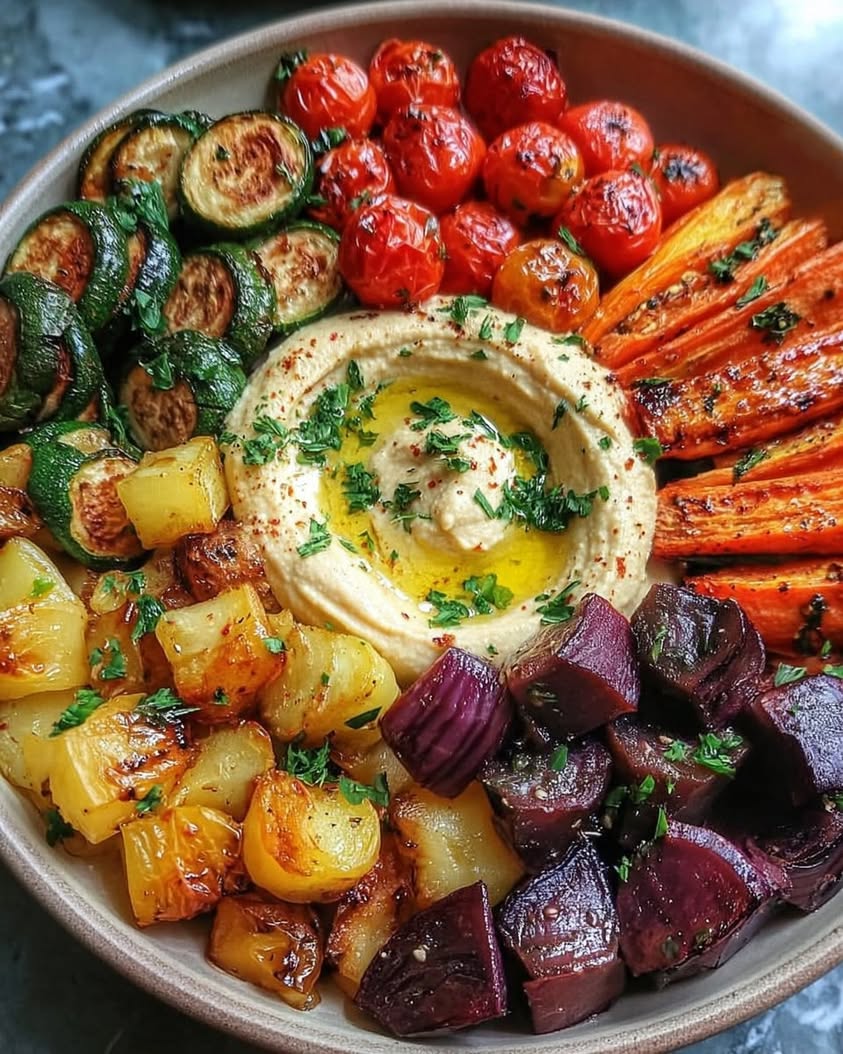
- Visual Appeal: This dish is a feast for the eyes with its rainbow of colors from the red bell peppers, orange sweet potatoes, and green zucchini. The vibrant vegetables arranged over a swirl of pale hummus create a stunning, restaurant-quality presentation that is incredibly Instagram-worthy.
- Skill Level Needed: This is a beginner-friendly recipe requiring only basic kitchen skills like chopping and stirring. There is no fancy technique involved; the oven does most of the work. Therefore, even novice cooks can achieve fantastic, consistent results with this method.
- Special Equipment: You need only a good baking sheet, a sharp knife, and a cutting board. A food processor or blender makes the hummus silky smooth, but you can absolutely use a fork and some elbow grease for a more rustic texture. No specialized tools are required.
Recipe Overview
- Difficulty Level: We rate this recipe as “Easy” because it involves straightforward techniques like chopping and roasting. There is no complex timing or advanced culinary methods. The steps are sequential and simple, making it nearly impossible to mess up. Even first-time cooks will find the process intuitive and the results impressive.
- Category: This dish falls squarely into the categories of lunch, meal prep, and plant-based mains. It’s substantial enough to be a full meal but also works beautifully as a hearty side dish or a shared appetizer plate. Ultimately, its flexibility is one of its greatest strengths for various dining occasions.
- Cuisine: While hummus has its roots in Middle Eastern cuisine, this bowl is a modern, global fusion creation. It takes inspiration from Mediterranean mezze platters and combines them with the convenience-focused “bowl food” trend popular worldwide. The result is a culturally blended dish that celebrates fresh, whole ingredients.
- Cost: This is a very budget-friendly meal, especially when you use in-season vegetables. Chickpeas, a primary ingredient in hummus, are an inexpensive source of plant-based protein. Making your own hummus from scratch is significantly cheaper than buying pre-made versions, allowing you to control quality and cost.
- Season: This recipe is fantastic year-round due to its adaptability. In colder months, use hearty root vegetables like sweet potatoes and carrots. During summer, opt for lighter options like zucchini, cherry tomatoes, and eggplant. Consequently, you can enjoy a seasonal roasted veggie and hummus bowl no matter the weather.
- Occasion: It’s perfect for weekday lunches, casual dinners, or healthy meal prep. Additionally, you can scale it up for a beautiful and effortless plant-based option at potlucks or gatherings. It’s a crowd-pleaser that caters to various diets without compromising on flavor.
Why You’ll Love This Recipe
First and foremost, the taste and texture combination is utterly addictive. The roasting process concentrates the vegetables’ natural sugars, creating deep, savory-sweet flavors with delightful crispy edges. Paired with the cool, creamy hummus, each bite is a perfect balance. Moreover, you can adjust the spices to your liking, adding smoky paprika, cumin, or a kick of chili flakes. This customizability ensures the roasted veggie and hummus bowl never gets boring.
From a convenience standpoint, this recipe is a true lifesaver. It requires minimal active cooking time, freeing you up to do other things while the vegetables roast. Furthermore, it’s an ideal candidate for meal prep. You can roast a large batch of vegetables and make a big container of hummus on Sunday. Then, you have the foundation for quick, assembly-only lunches all week. This strategy makes eating healthy during a busy schedule not just possible, but effortless.
Nutritionally, this bowl is a powerhouse. It’s packed with fiber from the chickpeas and vegetables, which aids digestion and promotes long-lasting fullness. Additionally, you get a healthy dose of vitamins, minerals, and antioxidants from the colorful produce. The healthy fats from olive oil and tahini support nutrient absorption and heart health. This roasted veggie and hummus bowl is a meal that truly fuels your body and satisfies your taste buds simultaneously.
For entertaining, this dish offers incredible social value. It’s visually stunning and allows guests to customize their own bowls with various toppings. It naturally accommodates vegan, gluten-free, and dairy-free diets, so you can serve a diverse group without stress. Presenting a beautiful platter of roasted vegetables alongside a bowl of hummus creates an interactive, shareable dining experience that feels special and thoughtful.
Finally, its cost-effectiveness and accessibility are major wins. The ingredients are humble, affordable, and easy to find at any standard grocery store. You don’t need expensive proteins or exotic items to create a meal that feels luxurious and satisfying. Learning to make a great roasted veggie and hummus bowl empowers you to eat well on a budget, reducing reliance on expensive takeout or pre-packaged meals.
Historical Background and Cultural Significance
The core component of this bowl, hummus, boasts an ancient and debated history. While its exact origin is contested, food historians generally trace its roots to the Levant region of the Middle East, encompassing modern-day Lebanon, Israel, Palestine, Syria, and Jordan. The word “hummus” itself means “chickpea” in Arabic. Early versions likely consisted of mashed chickpeas with tahini, lemon, and garlic—a simple, nutritious staple for nomadic and agricultural communities. This humble beginning laid the foundation for a dish now enjoyed globally.
Culturally, hummus holds significant importance across the Eastern Mediterranean and Middle East. It is more than just food; it’s a symbol of shared heritage, community, and hospitality. Traditionally served as part of a mezze spread, it encourages communal dining and sharing. The act of scooping hummus with warm pita bread is a social ritual. Consequently, introducing hummus into a modern bowl format like this roasted veggie and hummus bowl is a contemporary twist on a deeply traditional practice of combining simple, wholesome ingredients.
The evolution of the recipe into a “bowl” is a distinctly modern phenomenon, aligning with the global wellness and convenience food trends. While roasted vegetables have been a cooking method for millennia, their pairing with hummus as a composed meal-in-a-bowl gained popularity in recent decades. This format emphasizes balance, nutrition, and visual appeal. It represents a fusion of traditional Middle Eastern flavors with the contemporary desire for quick, healthy, and Instagrammable meals that are easy to customize.
Regional variations of the components are endless. In Greece, you might find hummus topped with plenty of paprika and olive oil. Lebanese hummus is often exceptionally smooth and creamy. Meanwhile, roasted vegetable combinations vary wildly by geography and season. An Italian-inspired version might include roasted tomatoes, artichokes, and rosemary. A North African twist could feature roasted carrots with cumin and harissa. This global adaptability proves that the concept of a roasted veggie and hummus bowl is a versatile canvas for countless culinary traditions.
Ingredient Deep Dive
Let’s start with chickpeas, the heart of hummus. Also known as garbanzo beans, they are one of the earliest cultivated legumes, with origins in the Middle East over 7,000 years ago. Nutritionally, they are a superstar, offering plant-based protein, ample fiber, iron, and folate. For the best hummus, use canned chickpeas for convenience, but don’t forget to rinse them. For ultra-smooth texture, some cooks peel the chickpeas or simmer them with a pinch of baking soda. You can substitute with white beans like cannellini for a different but delicious twist.
Tahini, made from ground sesame seeds, is the other essential hummus ingredient. It adds a rich, nutty flavor and creamy consistency. Originating in Persia, it’s a staple across Middle Eastern and Mediterranean cuisines. When selecting tahini, look for a brand with a runny consistency and no added sugar or oils; the ingredient list should just be sesame seeds. Stir the jar well before using, as natural separation occurs. Store it in the refrigerator after opening. If you’re out, a substitute like smooth almond butter or Greek yogurt can work in a pinch, though the flavor profile will change.
Sweet potatoes bring vibrant color and sweetness to your roasted veggie and hummus bowl. Native to Central and South America, they are now grown worldwide. They are an excellent source of beta-carotene (which converts to Vitamin A), Vitamin C, and potassium. Choose firm sweet potatoes without soft spots. For roasting, cut them into even, bite-sized pieces to ensure they cook at the same rate as other vegetables. You can easily swap them for butternut squash, carrots, or regular potatoes depending on your preference or what’s in season.
Bell peppers, especially red and yellow ones, add a juicy sweetness and brilliant color. They are members of the nightshade family and are packed with Vitamin C and antioxidants. Select peppers that feel heavy for their size with taut, glossy skin. Their natural sugars caramelize beautifully in the oven. For this bowl, you can use any color, though red and yellow are sweeter than green. Zucchini or eggplant make excellent seasonal substitutes, offering a similar texture when roasted.
Common Mistakes to Avoid
- Crowding the Baking Sheet: Overloading your pan steams the vegetables instead of roasting them. You want a single layer with space between pieces for proper caramelization and browning. If needed, use two sheets.
- Uneven Vegetable Sizes: Chopping vegetables into different sizes leads to uneven cooking. Some pieces will burn while others remain hard. Aim for uniform, bite-sized chunks for consistent results.
- Skipping the Preheating Step: Putting vegetables into a cold oven drastically affects texture. Always preheat your oven so the vegetables start cooking immediately, creating those desirable crispy edges.
- Underseasoning the Vegetables: Vegetables need ample seasoning before roasting. Don’t be shy with salt, pepper, and your chosen spices. Toss them thoroughly to ensure every piece is coated.
- Using Watery Hummus: If making hummus from scratch, add liquid (water or lemon juice) gradually. Adding too much at once can make your hummus runny. You can always add more, but you can’t take it out.
- Not Tasting as You Go: Always taste your hummus before serving. Adjust the seasoning with more salt, lemon, or garlic until it sings. Remember, flavors can mellow once chilled.
- Serving Immediately Without Resting: Letting the roasted vegetables cool for a few minutes after they come out of the oven allows them to firm up slightly and makes the bowl more enjoyable to eat.
- Neglecting Acid Balance: A final squeeze of lemon juice or drizzle of tangy sauce is crucial. It cuts through the richness of the hummus and roasted veggies, brightening the entire dish.
Essential Techniques
Uniform Chopping: This is the most critical technique for a perfect roasted veggie and hummus bowl. Consistent size ensures even cooking and caramelization. Use a sharp chef’s knife and take your time. For round vegetables like onions or bell peppers, first cut them in half to create a flat, stable surface. Then, proceed to dice. For sweet potatoes, slice them into planks, then batons, then cubes. Mastering this basic skill improves nearly every recipe you make.
High-Heat Roasting: Roasting at a high temperature (around 425°F) is non-negotiable. This method quickly caramelizes the natural sugars on the surface of the vegetables, creating complex flavors and a desirable tender-inside, crispy-outside texture. The Maillard reaction, a chemical process between amino acids and sugars, is responsible for this delicious browning. Avoid the temptation to constantly stir; let the vegetables sit in contact with the hot pan to develop those flavorful, browned spots.
Emulsifying Hummus: For ultra-creamy hummus, the key is proper emulsification. Start by processing the tahini and lemon juice alone for a minute until creamy. Then add the garlic and spices. Next, add the chickpeas while the processor is running. Finally, drizzle in ice-cold water very slowly. This gradual incorporation helps create a stable, smooth, and light emulsion, much like making mayonnaise. The result is a hummus that is fluffy and not pasty.
Pro Tips for Perfect Roasted Veggie and Hummus Bowl
First, toss your chopped vegetables with oil and seasoning in a large bowl, not directly on the sheet pan. This ensures every piece gets evenly coated for maximum flavor and prevents dry spots.
For easier cleanup and to prevent sticking, line your baking sheet with parchment paper. Alternatively, a silicone baking mat is a reusable option that works wonderfully.
Add fresh herbs like parsley or dill after roasting, not before. Delicate herbs will burn in the high heat of the oven, losing their vibrant color and fresh flavor.
If using canned chickpeas for hummus, reserve the aquafaba (the liquid in the can). You can use a tablespoon or two of this starchy water to help blend the hummus to a smoother consistency.
For a warm bowl, gently reheat the roasted vegetables for a minute or two before assembling. The contrast with the cool hummus is delightful, but no one wants completely cold roasted veggies.
Get creative with toppings to add crunch and flavor. Toasted pine nuts, pumpkin seeds, a sprinkle of za’atar, or a dollop of zhoug (herby green sauce) can elevate your bowl to new heights.
Variations and Adaptations
For regional variations, explore different global flavor profiles. A Greek-inspired bowl could include roasted tomatoes, red onions, and kalamata olives with hummus swirled with oregano. A Mexican twist might feature roasted corn, black beans, and peppers with a hummus spiked with lime and cilantro. An Indian version could use roasted cauliflower and chickpeas with curry powder, served with a cilantro-mint chutney. The basic framework of the roasted veggie and hummus bowl welcomes these cultural explorations beautifully.
Seasonal adaptations keep this recipe exciting all year. In spring, use asparagus, snap peas, and radishes. Summer bowls shine with zucchini, eggplant, and cherry tomatoes. Fall calls for Brussels sprouts, beets, and delicata squash. Winter is perfect for hearty roots like parsnips, turnips, and carrots. By rotating vegetables with the seasons, you ensure peak flavor, support local agriculture, and never tire of your healthy lunch routine.
Dietary modifications are straightforward. For a nut-free version, ensure your tahini is processed in a dedicated facility or substitute with sunflower seed butter. To make it soy-free, simply avoid any soy-based sauces in your toppings. For a lower-carb option, focus on non-starchy vegetables like cauliflower, broccoli, and peppers, and be mindful of your hummus portion. The recipe is naturally gluten-free and vegan, making it a safe and delicious choice for many dietary needs.
Serving and Presentation Guide
Plating is key to making your roasted veggie and hummus bowl look restaurant-worthy. Start by spreading a generous swoosh of hummus along one side of a shallow bowl or plate. This creates a creamy base and visual interest. Then, artfully arrange the roasted vegetables over and around the hummus, grouping colors and types together for impact. Avoid just dumping everything in the center; thoughtful placement makes the meal feel special.
Garnishing adds the final touch of freshness, texture, and flavor. A drizzle of high-quality extra virgin olive oil or tahini sauce adds shine. A sprinkle of fresh herbs like parsley, mint, or dill introduces color. For crunch, add toasted seeds (pumpkin, sesame) or nuts (pine nuts, slivered almonds). A dusting of paprika or sumac provides a pop of color and subtle spice. A final squeeze of lemon juice is non-negotiable for brightness.
Consider traditional accompaniments like warm pita bread, lavash, or crunchy pita chips for scooping. For a more substantial meal, add a side of cooked quinoa, farro, or brown rice. Stuffed grape leaves or a simple side salad of cucumber and tomato with lemon dressing also pair wonderfully. These additions turn your single bowl into a complete, satisfying feast that honors the mezze tradition of sharing multiple small dishes.
Wine and Beverage Pairing
For wine pairings, focus on crisp, acidic whites or light-bodied reds that won’t overpower the earthy, savory flavors of the bowl. A Sauvignon Blanc with its herbal notes and citrus acidity complements the fresh vegetables and lemon beautifully. Alternatively, a dry Riesling can handle the sweetness of the roasted veggies. If you prefer red, a chilled Gamay or a light Pinot Noir with low tannins works well. The goal is to choose a wine that refreshes the palate between bites.
Non-alcoholic alternatives are equally exciting. Sparkling water with a wedge of lemon or lime is a classic, cleansing choice. For something more complex, try a tart cherry juice spritzer or a ginger-lemonade. Iced herbal teas, like mint or hibiscus, offer refreshing flavors that won’t compete with the food. A simple, chilled cucumber-infused water also highlights the fresh, vegetal notes of the dish perfectly.
Storage and Shelf Life
Store components separately for the best results. Place cooled roasted vegetables in an airtight container in the refrigerator for up to 4 days. The hummus can be stored in a sealed container with a thin layer of olive oil on top to prevent drying out; it will last 5-7 days. Assembled bowls with all toppings will become soggy if stored, so only combine them right before eating.
For reheating, spread the roasted vegetables on a baking sheet and warm them in a 350°F oven for 5-10 minutes or until heated through. You can also use an air fryer for a quicker result that restores crispiness. Avoid microwaving if you want to retain texture, as it can make the vegetables soft and steamy. The hummus is best served cold or at room temperature; do not heat it.
Make Ahead Strategies
This recipe is a meal prep champion. Dedicate one hour on a weekend to wash, chop, and roast a large batch of 2-3 different vegetable combinations. While they roast, prepare a big batch of hummus from scratch. Let everything cool completely before storing in separate containers. This gives you the foundation for 4-5 effortless lunches. You can even portion the vegetables into individual containers to grab and go.
For optimal freshness, add any delicate elements just before serving. Keep toppings like fresh herbs, seeds, and sauces in small separate containers. Each morning, simply grab a container of veggies, a container of hummus, and your toppings. Assemble your roasted veggie and hummus bowl at work or right before you eat. This keeps the textures perfect and the flavors vibrant, as if you made it fresh.
Scaling Instructions
Halving the recipe is simple for a single serving. Use one small sweet potato, half a bell pepper, and a quarter of an onion. Reduce spices and oil proportionally. For the hummus, a standard can of chickpeas makes about 1.5 cups, so you may have extra, which is never a bad thing. Use a smaller baking sheet or simply crowd the vegetables a bit more since you’re using less volume.
Doubling or tripling for a crowd is easy. Use multiple baking sheets and rotate them in the oven halfway through cooking to ensure even roasting. For the hummus, you can easily double the ingredients in a standard food processor. If making a very large batch, you may need to blend it in two parts. Remember to season generously and taste as you scale up, as spice measurements aren’t always linear.
Nutritional Deep Dive
This roasted veggie and hummus bowl is a balanced meal rich in complex carbohydrates, healthy fats, and plant-based protein. The chickpeas and vegetables provide substantial dietary fiber, promoting digestive health and steady energy release. The olive oil and tahini contribute monounsaturated fats, which are beneficial for heart health. Furthermore, the variety of colorful vegetables ensures a broad spectrum of vitamins (like A, C, and K) and antioxidants that combat inflammation and support overall wellness.
For portion analysis, one serving provides a satiating meal that can keep you full for hours due to its fiber and protein content. It’s naturally moderate in calories but high in nutrient density, meaning you get a lot of nutritional bang for your caloric buck. For weight management, it’s an excellent choice as it helps control hunger. Just be mindful of added oils and high-calorie toppings like excessive nuts if you are closely monitoring intake.
Dietary Adaptations
For a gluten-free diet, this recipe is naturally compliant. Simply ensure that any accompaniments like pita bread or crackers are certified gluten-free. Many store-bought pita chips contain wheat, so read labels carefully or make your own from gluten-free tortillas.
For a keto or very low-carb adaptation, focus on above-ground vegetables like cauliflower, broccoli, zucchini, and bell peppers. Limit or omit starchy vegetables like sweet potatoes and carrots. For the hummus, you can make a lower-carb version using steamed cauliflower as the base instead of chickpeas, though the texture will be different.
For a Paleo version, replace the chickpeas in the hummus with a compliant alternative. A popular swap is using steamed and peeled zucchini or roasted eggplant as the base, blended with tahini, lemon, and garlic. Ensure your tahini is made from pure sesame seeds with no additives. Serve the “hummus” with a variety of roasted non-starchy vegetables.
Troubleshooting Guide
If your vegetables are soggy instead of crispy, the likely culprit is overcrowding on the pan. Steam gets trapped and softens the veggies. Next time, use two pans or roast in batches. Also, ensure your oven is fully preheated and you’re not opening the door frequently during cooking, which causes temperature fluctuations.
If your hummus is too thick or grainy, the solution is often more liquid and blending time. While the processor is running, slowly drizzle in more ice water, one tablespoon at a time, until it reaches your desired consistency. Blend for a full 2-3 minutes to achieve maximum smoothness. If using canned chickpeas, peeling them can also eliminate graininess.
If the overall bowl tastes bland, you probably underseasoned at multiple stages. Remember to generously salt the vegetables before roasting. Season the hummus well with salt, lemon, and garlic. Finally, finish the assembled bowl with a flaky finishing salt, another squeeze of lemon, and a drizzle of flavorful olive oil. Layering seasoning is key.
Recipe Success Stories
Readers consistently report that this roasted veggie and hummus bowl has become a weekly staple in their homes. Many love how it has helped them eat more vegetables without feeling deprived. One reader shared that her kids, who usually avoid veggies, devour the sweet, roasted carrots and peppers when dipped in the creamy hummus. It’s a win for the whole family.
Adaptation successes are common. A reader following a low-FODMAP diet successfully made the bowl by using garlic-infused oil instead of fresh garlic in the hummus and choosing FODMAP-friendly veggies like bell peppers and zucchini. Another added crumbled feta for a non-vegan version her husband loved. These stories highlight the recipe’s fantastic flexibility to meet diverse needs and tastes.
Frequently Asked Questions
Can I use frozen vegetables? Yes, but results will differ. Frozen vegetables release more water when roasting, so they won’t get as crispy. Pat them very dry after thawing, and expect a softer texture. They are a convenient backup, but fresh is preferred for optimal caramelization.
How long does homemade hummus last? Homemade hummus stored in an airtight container in the refrigerator will stay fresh for 5-7 days. Always give it a stir before serving. If you see any mold or detect an off smell, discard it immediately.
Can I make this bowl for dinner? Absolutely. It makes a fantastic light dinner. For a more substantial evening meal, consider adding a cooked grain like quinoa or farro to the bowl, or serve it with a side of warm, crusty bread.
What’s the best way to reheat roasted vegetables? To retain texture, reheat them in an oven or toaster oven at 350°F for 5-10 minutes. An air fryer is also excellent for restoring crispiness. The microwave will work in a pinch but tends to steam them, making them soft.
Can I freeze the roasted vegetables? You can, but the texture will become softer upon thawing and reheating. They are best used in soups, stews, or blended sauces after freezing, not for reconstituting as a crispy bowl component.
My hummus tastes bitter. What happened? Bitterness usually comes from old tahini or over-processed garlic. Taste your tahini alone; if it’s bitter, replace it. For garlic, try using roasted garlic instead of raw, or use less. A pinch of salt and extra lemon juice can also help balance bitterness.
What are some good protein additions? For extra protein, add a scoop of cooked lentils, a handful of spiced chickpeas roasted until crispy, or some crumbled falafel. Grilled chicken or shrimp also pair well if you’re not strictly plant-based.
Is there a way to make this oil-free? For oil-free roasting, use a silicone mat or parchment paper and roast the vegetables dry, seasoning them with spices and a splash of vegetable broth or lemon juice to prevent sticking. The hummus can be made without olive oil by using more aquafaba or water for blending.
Additional Resources
If you love this roasted veggie and hummus bowl, explore other bowl-based meals. A quinoa power bowl with black beans and avocado, a Mediterranean grain bowl with falafel, or a vibrant Buddha bowl with a peanut sauce are all fantastic options. The “bowl” format is a wonderful way to build balanced, visually appealing meals.
For technique guides, consider learning how to properly roast any vegetable, master the art of making silky dips, or knife skills for efficient chopping. These fundamental skills will make preparing this and countless other recipes faster, easier, and more enjoyable. Investing time in learning basics pays off every time you cook.
PrintRoasted Veggie and Hummus Bowl
- Total Time: 45 minutes
- Yield: 4
Description
A vibrant and nutritious bowl featuring roasted seasonal vegetables over creamy hummus, topped with fresh herbs and a zesty lemon-tahini drizzle.
Ingredients
- 2 cups mixed vegetables (such as bell peppers, zucchini, and cherry tomatoes), chopped
- 1 tablespoon olive oil
- 1 teaspoon garlic powder
- 1/2 teaspoon paprika
- Salt and black pepper to taste
- 1 cup prepared hummus
- 1/4 cup fresh parsley, chopped
- 2 tablespoons tahini
- 1 tablespoon lemon juice
- 1 tablespoon water
- Optional: pita bread or cooked quinoa for serving
Instructions
- Preheat the oven to 400°F (200°C). Toss the chopped vegetables with olive oil, garlic powder, paprika, salt, and pepper on a baking sheet.
- Roast the vegetables for 20-25 minutes, stirring halfway, until tender and slightly charred.
- While the vegetables roast, whisk together tahini, lemon juice, and water in a small bowl to create a drizzle. Adjust consistency with more water if needed.
- Spread hummus evenly into the bottom of four serving bowls. Top with the roasted vegetables.
- Drizzle the tahini sauce over the bowls and garnish with fresh parsley. Serve immediately, optionally with pita or quinoa.
Notes
You can customize the seasonings to taste.
- Prep Time: 15 minutes
- Cook Time: 30 minutes
- Method: Main
- Cuisine: American