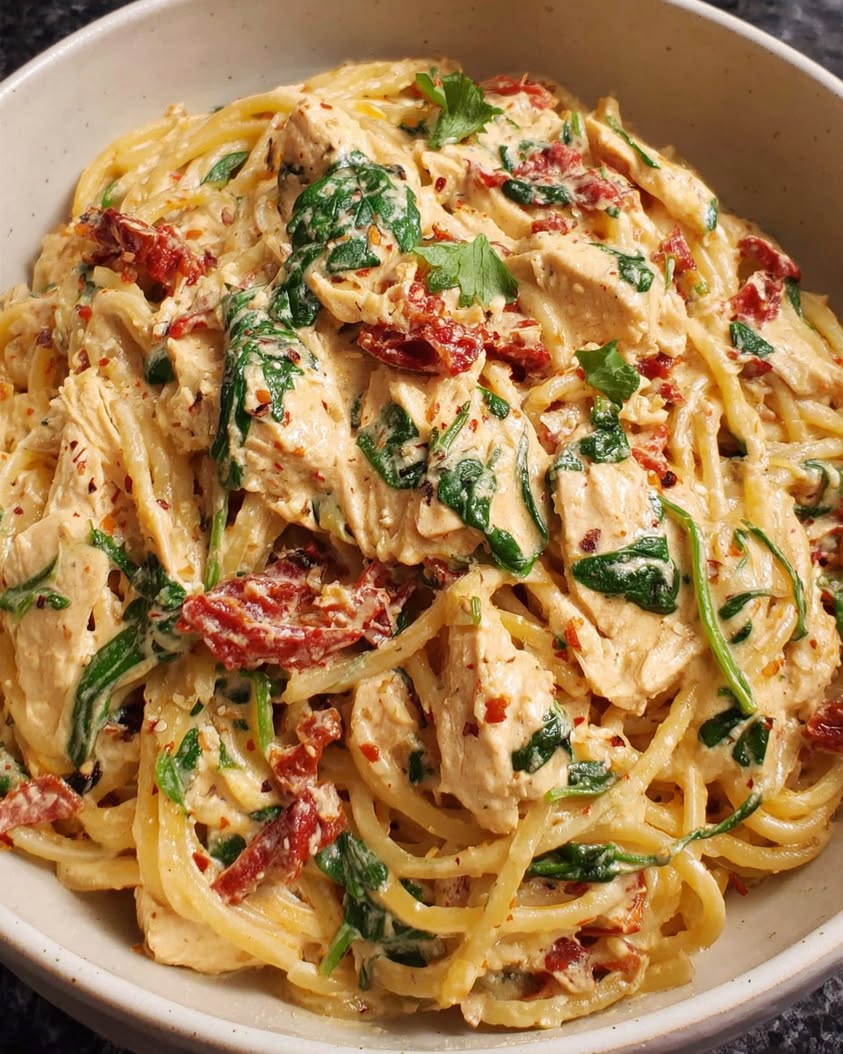
Creamy Sun-Dried Tomato Chicken Pasta with Spinach: A Restaurant-Quality Weeknight Wonder
Imagine a dish that perfectly balances rich, savory comfort with a bright, tangy kick. This Creamy Sun-Dried Tomato Chicken Pasta with Spinach delivers exactly that. It transforms simple pantry staples into a luxurious meal that feels special enough for a date night yet is simple enough for a busy Tuesday. The sauce is the true star, clinging to every strand of spaghetti and coating tender bites of chicken in a velvety, flavor-packed embrace.
Furthermore, the aroma that fills your kitchen while this cooks is absolutely intoxicating. The garlic and sun-dried tomatoes sizzle together, releasing their fragrant oils. Then, the cream and Parmesan melt into a silky sauce that promises pure indulgence. Meanwhile, fresh spinach wilts gently into the mix, adding a pop of color and a welcome earthy note. Ultimately, this recipe is a masterclass in building complex flavors with minimal effort, proving that a fantastic homemade pasta dish is always within reach.
Quick Recipe Highlights
- Flavor Profile: This dish boasts a sophisticated balance of tangy, savory, and creamy notes. The sun-dried tomatoes provide a concentrated sweet-tart punch, beautifully offset by the richness of cream and the salty umami of Parmesan. Garlic and Italian herbs build a classic, aromatic foundation that ties everything together.
- Texture: You get a wonderful contrast of textures in every bite. Al dente spaghetti provides a satisfying chew, while the pan-seared chicken offers juicy tenderness. The sauce itself is luxuriously smooth and clings perfectly to the pasta, and the wilted spinach adds a delicate, silky element.
- Aroma: The cooking process creates a deeply inviting scent. First, the garlic and herbs become fragrant in the pan. Next, the sun-dried tomatoes release their intense, Mediterranean aroma. Finally, the combination of simmering cream and melted Parmesan creates a warm, cheesy, and utterly comforting fragrance.
- Visual Appeal: This pasta is a feast for the eyes with its vibrant color palette. The creamy sauce has a lovely pale orange hue from the tomato oil, dotted with specks of red tomato and green spinach. It’s a rustic yet elegant presentation that looks stunning when garnished with extra Parmesan and fresh herbs.
- Skill Level Needed: This is a fantastic recipe for cooks of all levels. It requires basic techniques like boiling pasta, sautéing chicken, and building a simple pan sauce. There are no complicated steps or specialized skills needed, making it an excellent choice for building kitchen confidence.
- Special Equipment: You only need standard kitchen equipment. A large pot for the pasta, a large skillet or sauté pan for the sauce and chicken, and basic utensils like tongs and a wooden spoon are all you need. No fancy gadgets are required.
Recipe Overview
- Difficulty Level: We rate this recipe as “Easy” because it follows a straightforward, logical cooking process. The steps are sequential and forgiving. You cook the pasta, prepare the protein, and build the sauce in the same pan. Consequently, even a beginner can achieve impressive results by following the clear instructions.
- Category: This dish fits perfectly into several comforting categories. It is a complete one-pan pasta dinner, a creamy chicken pasta recipe, and a fantastic Italian-inspired weeknight meal. Moreover, it works beautifully for family dinners, casual entertaining, or meal prep.
- Cuisine: The recipe draws strong inspiration from Italian-American cuisine, utilizing classic flavors like garlic, Parmesan, and herbs. However, the use of sun-dried tomatoes and spinach adds a modern, Mediterranean twist. It’s a contemporary take on a beloved pasta format.
- Cost: This is a cost-effective meal that tastes far more expensive than it is. Chicken thighs or breasts, dried pasta, and sun-dried tomatoes are relatively affordable, especially when purchased in bulk. Using the oil from the tomato jar adds free flavor. Overall, it’s a restaurant-quality dish on a home-cook budget.
- Season: This creamy sun-dried tomato chicken pasta is truly a year-round favorite. It provides cozy comfort in the fall and winter. Conversely, the bright, tangy notes from the tomatoes feel fresh and appropriate for spring and summer evenings, especially when paired with a crisp salad.
- Occasion: Its versatility is a major strength. It’s quick enough for a standard weeknight dinner yet elegant enough for a casual dinner party with friends. Additionally, it makes excellent leftovers for lunch, and you can easily double the recipe for a crowd.
Why You’ll Love This Recipe
First and foremost, the taste and texture combination is simply irresistible. This creamy sun-dried tomato chicken pasta recipe delivers a restaurant-worthy experience in your own kitchen. Each forkful offers the perfect bite: al dente spaghetti coated in a luxuriously smooth sauce, juicy pieces of seasoned chicken, and silky spinach that melts in your mouth. The sun-dried tomatoes provide bursts of intense, tangy sweetness that cut through the richness of the cream, creating a beautifully balanced flavor profile. You won’t believe how such simple ingredients can create something so deeply satisfying and complex.
Next, let’s talk about convenience. This entire meal comes together in about thirty-five minutes, making it a superhero for busy weeknights. The process is streamlined and efficient. You can cook the pasta while you prepare the sauce and chicken, essentially multitasking for maximum efficiency. Furthermore, it uses mostly pantry staples and requires only one main cooking pan, which means less cleanup. This creamy sun-dried tomato chicken pasta proves that you don’t need to sacrifice flavor or quality for the sake of a quick, manageable dinner after a long day.
From a nutritional standpoint, this dish offers more than just empty calories. By incorporating fresh spinach, you add a significant dose of vitamins A, C, and K, along with iron and fiber. Using a moderate amount of cream and Parmesan creates richness without overdoing it, and you control the sodium level. Chicken provides lean protein to keep you full. Therefore, this isn’t just a decadent treat; it’s a reasonably balanced meal that fuels your body while delighting your taste buds.
This recipe also holds tremendous value for social and entertaining purposes. It is a guaranteed crowd-pleaser that looks impressive on the table. You can easily scale it up to feed a group without much extra effort. Serving a beautiful bowl of this creamy sun-dried tomato chicken pasta to friends or family feels generous and special. It sparks conversation and creates a warm, welcoming atmosphere, turning a simple meal into a memorable gathering centered around great food.
Finally, its cost-effectiveness and accessibility are major wins. You likely have many of the core ingredients—like garlic, pasta, and basic spices—already in your kitchen. Sun-dried tomatoes and fresh spinach are affordable and widely available. Compared to ordering similar pasta at a restaurant or buying a pre-made version, this homemade creamy sun-dried tomato chicken pasta saves you money and tastes infinitely better. It democratizes gourmet flavor, making an elegant, comforting dish accessible to home cooks on any budget.
Historical Background and Cultural Significance
The story of this dish is a modern tale of culinary fusion. While pasta with cream sauce has roots in Northern Italy, particularly in regions like Emilia-Romagna and Lombardy, the addition of sun-dried tomatoes is a more recent innovation. Sun-drying is an ancient preservation method used across the Mediterranean, but these tomatoes became a global pantry staple in the late 20th century. Their intense flavor offered a new way to add depth to quick sauces. Consequently, recipes like this creamy sun-dried tomato chicken pasta emerged from the blending of Italian-American pasta traditions with the broader, sun-soaked flavors of the Mediterranean pantry.
Culturally, this dish represents the evolution of weeknight cooking in the age of global ingredients. It reflects how home cooks integrate bold, convenient flavor boosters into familiar formats. The creamy pasta base is a comfort food archetype in many Western cultures, symbolizing home, warmth, and indulgence. By adding sun-dried tomatoes and spinach, the recipe modernizes that classic, infusing it with a perceived healthfulness and a punch of contemporary, vibrant flavor. It sits at the intersection of tradition and convenience, a signature of modern home cooking.
The recipe’s evolution is directly tied to ingredient availability. As jars of sun-dried tomatoes packed in oil became commonplace in grocery stores worldwide, creative cooks began experimenting. They discovered that the flavorful oil could be used as a cooking base, and the tomatoes themselves could be chopped into sauces for instant complexity. This creamy sun-dried tomato chicken pasta is a product of that experimentation—a “what’s in your pantry” recipe that turned out to be brilliant. It evolved not from a single chef but from the collective creativity of home cooks seeking fast, flavorful solutions.
Regional variations of this concept are endless. In different areas, you might find the cream replaced with mascarpone for extra richness or goat cheese for tang. Some versions might include artichoke hearts, kalamata olives, or roasted red peppers alongside or in place of the spinach. The protein could shift from chicken to shrimp, sausage, or even chickpeas for a vegetarian twist. The core idea—a creamy pasta punctuated by the sweet-tart intensity of sun-dried tomatoes—remains a versatile template. This particular version with chicken and spinach has become a standard because it balances flavor, texture, nutrition, and ease so effectively.
Ingredient Deep Dive
Sun-Dried Tomatoes: These are the flavor powerhouse of the dish. Historically, sun-drying tomatoes was a practical method of preservation in hot, sunny climates like Southern Italy and Greece. The process concentrates the tomato’s natural sugars and glutamates, creating an intense umami and tangy sweetness. Nutritionally, they are rich in lycopene, an antioxidant, and fiber. For the best results in your creamy sun-dried tomato chicken pasta, choose tomatoes packed in olive oil; the oil is infused with flavor and is perfect for sautéing. You can store an opened jar in the refrigerator for several weeks. If you only have dry-packed tomatoes, simply rehydrate them in hot water for 10 minutes before using.
Chicken (Thighs or Breasts): Chicken is the versatile protein anchor. Chicken thighs are often preferred for their higher fat content, which keeps them juicy and flavorful during quick cooking. Breasts offer a leaner option. From a nutritional standpoint, chicken is an excellent source of complete protein and B vitamins. For this recipe, ensure your chicken is cut into uniform, bite-sized pieces for even cooking. Pat it very dry with paper towels before seasoning; this is the key to achieving a golden sear instead of steaming. If you need a substitute, try turkey cutlets, large shrimp, or even cubed firm tofu for a vegetarian version.
Heavy Cream: Cream provides the luxurious, velvety texture that defines the sauce. It is a dairy product with a high butterfat content, which prevents it from curdling when heated and allows it to reduce into a thick, coating consistency. While rich, it also provides fat-soluble vitamins. For the best results in your creamy pasta sauce, use fresh, full-fat heavy cream or whipping cream. Avoid half-and-half or milk, as they are more likely to separate or become grainy when simmered. For a dairy-free version, full-fat coconut cream can work, though it will impart a subtle coconut flavor.
Fresh Spinach: Spinach adds color, nutrition, and a mild earthy flavor. It wilts down dramatically, so using a large volume is necessary. Spinach is a nutritional superstar, packed with iron, calcium, and vitamins A, C, and K. When selecting spinach for this dish, choose fresh, crisp leaves without signs of yellowing or sliminess. Baby spinach is ideal as it is tender and requires minimal prep. Always wash it thoroughly, even if the bag says “pre-washed.” To store, keep it dry in the refrigerator in its original bag or a container lined with a paper towel. As a substitute, kale or Swiss chard can be used, but they will require a slightly longer wilting time.
Parmesan Cheese: Parmesan, or Parmigiano-Reggiano, is the salty, nutty finishing touch. This hard cheese from Italy has a history dating back nearly 1,000 years. Its granular texture and complex flavor come from a long aging process. It melts beautifully into the warm sauce, adding body and umami. For the best flavor, always grate your own Parmesan from a block. Pre-grated cheese often contains anti-caking agents that can make your sauce grainy. Store a block of Parmesan wrapped in parchment paper and then foil in the refrigerator. As a substitute, Pecorino Romano offers a sharper, saltier flavor, while a vegetarian hard cheese can be used for dietary needs.
Common Mistakes to Avoid
- Overcooking the Pasta: This is a critical error. You must cook the spaghetti only until al dente, meaning it still has a slight bite. Remember, it will continue to cook slightly when tossed with the hot sauce. Mushy pasta ruins the texture of the entire dish. Always taste a piece a minute or two before the package’s suggested time.
- Not Reserving Pasta Water: The starchy, salty pasta water is liquid gold for your sauce. Before draining your spaghetti, scoop out at least one cup of the cooking water. You will need it to adjust the consistency of your creamy sun-dried tomato chicken pasta sauce, helping it become silky and cling perfectly to the noodles.
- Crowding the Pan with Chicken: If you add all the chicken pieces to the pan at once, they will steam instead of sear. You need space for moisture to evaporate. Cook the chicken in batches if necessary to ensure each piece gets a beautiful, flavorful golden-brown crust, which adds tremendous depth to the overall dish.
- Burning the Garlic: Garlic cooks very quickly and can turn bitter in seconds if burned. Add it to the pan only after you’ve removed the chicken and the pan has cooled slightly. Cook it just until fragrant, about 30 seconds to a minute, before adding the other sauce ingredients.
- Using Cold Cream or Cheese: Adding ice-cold heavy cream or grated Parmesan directly to a hot pan can cause the sauce to break or become grainy. Let these ingredients sit out for 10-15 minutes to take the chill off before incorporating them. This helps them melt and emulsify smoothly into the sauce.
- Overloading the Sauce with Spinach: While spinach wilts down, adding the entire mountain at once can cool the sauce and make it watery. Add the fresh spinach in two or three batches, stirring and allowing the first batch to wilt down before adding the next. This ensures even incorporation.
- Skipping the Seasoning Layers: Seasoning only at the end results in a flat-tasting dish. Instead, season in layers: salt and pepper the chicken before cooking, season the sauce as you build it, and finally, taste and adjust at the end. This builds a more complex and well-rounded flavor profile.
- Not Tossing the Pasta in the Sauce: Simply pouring sauce over cooked pasta on a plate leads to uneven distribution. The proper technique is to add the drained pasta directly to the skillet with the sauce. Toss everything together over low heat for a minute, allowing the pasta to absorb the flavors and the sauce to thicken.
Essential Techniques
Searing Chicken: Achieving a proper sear on the chicken is crucial for flavor development. The technique, known as the Maillard reaction, creates hundreds of new flavor compounds when proteins and sugars brown at high heat. To master it, ensure your pan is properly preheated and your chicken pieces are patted completely dry. Furthermore, do not move the chicken immediately after placing it in the pan; let it cook undisturbed for a few minutes to form a crust. A common pitfall is flipping too soon, which causes the meat to stick and tear. The visual cue for success is a golden-brown, caramelized exterior that releases easily from the pan when ready to flip.
Building a Pan Sauce: This is the heart of the recipe. After searing the chicken, you use the flavorful browned bits (fond) left in the pan as the foundation for your creamy sun-dried tomato chicken pasta sauce. The technique involves deglazing with a liquid—in this case, the oil and moisture from the tomatoes and garlic—to dissolve those bits. Then, you sequentially add ingredients (cream, cheese) while controlling the heat to create a smooth, emulsified sauce. The key is to simmer gently, not boil vigorously, to prevent the dairy from separating. Success is evident in a velvety, cohesive sauce that coats the back of a spoon.
Wilting Greens: Incorporating spinach properly ensures it doesn’t water down your dish. The technique relies on residual heat and gradual addition. After your sauce is made, you add the spinach in batches, stirring constantly. The heat from the sauce will wilt the leaves without requiring additional cooking liquid. This preserves the spinach’s vibrant color and delicate texture while allowing it to integrate seamlessly. A common mistake is dumping all the spinach in at once, which cools the sauce and can create a soggy, clumpy mess. Perfectly wilted spinach should be uniformly bright green and silky.
Finishing Pasta in the Sauce: This final step is what transforms separate components into a unified dish. Instead of saucing plated pasta, you combine the drained, al dente spaghetti directly with the sauce in the skillet. Tossing them together over low heat for a minute or two allows the pasta to absorb some of the sauce and its flavors. Moreover, adding reserved starchy pasta water helps the sauce adhere to each strand, creating a glossy, restaurant-quality finish. The visual cue is pasta that is evenly coated, with no pooling of sauce at the bottom of the pan.
Pro Tips for Perfect Creamy Sun-Dried Tomato Chicken Pasta
First, use the oil from the sun-dried tomato jar as your cooking fat. This oil is infused with incredible tomato and herb flavor, and it will give your entire sauce a deeper, more complex base note from the very beginning.
Second, grate your own Parmesan cheese from a block. Pre-grated cheese contains cellulose to prevent clumping, which can make your sauce grainy and prevent it from melting smoothly. Freshly grated Parmesan integrates perfectly.
Third, let your cooked chicken rest for a few minutes after removing it from the pan. This allows the juices to redistribute throughout the meat, ensuring every bite of chicken in your final pasta is juicy and tender, not dry.
Fourth, if your sauce seems too thick after adding the pasta, don’t hesitate to loosen it. Use the reserved pasta water, adding a splash at a time and tossing until you achieve a silky, flowing consistency that coats each strand beautifully.
Fifth, add a pinch of red pepper flakes with the garlic. This introduces a very subtle background heat that beautifully complements the sweetness of the tomatoes and the richness of the cream, adding another layer of flavor.
Sixth, finish the plated dish with a final drizzle of high-quality extra virgin olive oil and a crack of black pepper. This adds a fresh, fragrant note and a professional touch that elevates the presentation and taste.
Variations and Adaptations
Regional Variations: To travel through Italy with your taste buds, consider these twists. For a Tuscan feel, add cannellini beans and chopped rosemary. A Sicilian version might include capers, anchovies, and toasted breadcrumbs instead of Parmesan. In the style of Rome, you could substitute guanciale or pancetta for the chicken and use Pecorino Romano cheese for a sharper, saltier profile.
Seasonal Adaptations: Make this dish shine year-round. In spring, add fresh peas and asparagus tips with the spinach. For summer, use fresh cherry tomatoes in addition to the sun-dried ones and finish with fresh basil. In autumn, incorporate sautéed mushrooms and a touch of sage. Winter calls for heartier greens like kale or chard.
Dietary Modifications: This recipe is wonderfully adaptable. For a gluten-free creamy sun-dried tomato chicken pasta, use your favorite gluten-free spaghetti. To make it dairy-free, substitute the heavy cream with full-fat coconut cream and use a nutritional yeast or vegan Parmesan alternative. For a vegetarian version, omit the chicken and add roasted cauliflower or chickpeas for protein.
Flavor Variations: Experiment with different flavor profiles. Add a tablespoon of tomato paste for a deeper tomato essence. Stir in a spoonful of pesto at the end for a herbal burst. For a smoky note, use smoked paprika on the chicken. A splash of white wine to deglaze the pan before adding the cream adds wonderful acidity.
Texture Modifications: Play with the mouthfeel. Use a short pasta like penne or rigatoni to capture more sauce in its tubes. For extra creaminess, stir in a tablespoon of cream cheese or mascarpone with the Parmesan. To add crunch, top with toasted pine nuts or walnuts just before serving.
Presentation Alternatives: Serve family-style in a large, warm bowl for a casual feel. For individual plating, use tongs to twirl portions into nests. You can also deconstruct it: serve the creamy sun-dried tomato chicken and sauce over a bed of pasta, with the spinach arranged neatly on top for a modern restaurant look.
Serving and Presentation Guide
Plating Techniques: For the most appealing presentation, use a pair of tongs or a pasta fork to lift and twirl a portion of the creamy sun-dried tomato chicken pasta into a neat nest in the center of a shallow bowl or plate. This technique shows off the coated pasta and allows the colorful chicken and spinach to be visible on top. Avoid simply dumping it onto the plate, which can look messy.
Garnishing Ideas: Garnishes add the final touch of flavor and visual pop. A generous sprinkle of freshly grated Parmesan is essential. Then, add a scattering of chopped fresh parsley or basil for color and freshness. A light drizzle of the oil from the sun-dried tomato jar adds shine and intensifies the flavor. A final crack of black pepper completes the look.
Traditional Accompaniments: In Italy, a pasta course like this would typically be followed by a protein, but as a main dish, simple sides are perfect. A crisp, green salad with a lemony vinaigrette provides a refreshing contrast to the rich pasta. Garlic bread or a crusty baguette is essential for mopping up every last bit of the delicious sauce.
Modern Serving Suggestions: For a contemporary dinner party, consider serving smaller portions as a primo (first course). Alternatively, serve it in individual, warmed cast-iron skillets for a rustic yet elegant tableside presentation. Pairing it with a roasted vegetable side, like broccolini or Brussels sprouts, makes for a more substantial and balanced modern meal.
Temperature Considerations: Pasta is best served immediately, piping hot. Warm your serving bowls by rinsing them with hot water and drying them just before plating. This prevents the dish from cooling down too quickly. If you must hold it for a few minutes, keep it covered in the warm skillet over the lowest possible heat with a splash of pasta water to keep it moist.
Portion Control Tips: This recipe generously serves four. For lighter appetites or as part of a multi-course meal, it can easily serve five or six. Use a kitchen scale to divide the cooked pasta evenly if needed. Remember, a proper portion of pasta as a main course is typically around 2 ounces of dry pasta per person, which this recipe follows.
Wine and Beverage Pairing
Wine Pairings: The rich, creamy, and tangy profile of this pasta calls for wines with good acidity to cut through the fat. A crisp Italian white like Pinot Grigio or Vermentino is a classic choice. Alternatively, a light-bodied red with low tannins, such as a Valpolicella or a Beaujolais, works beautifully. For a more robust option, a Chardonnay with minimal oak can stand up to the sauce without overpowering it.
Non-Alcoholic Alternatives: Sparkling water with a twist of lemon or lime is always refreshing. For a more crafted option, try a tart cherry or pomegranate spritzer. An herbal iced tea, like lemon verbena or mint, complements the Mediterranean flavors. A high-quality ginger beer also provides a spicy-sweet contrast that cleanses the palate between bites.
Coffee/Tea Pairings: After the meal, an espresso or a strong dark roast coffee is a traditional Italian finish that cuts through the richness. For tea, consider an Earl Grey with its citrusy bergamot notes, which will echo the brightness of the sun-dried tomatoes. A peppermint tea can also be a soothing, digestive-friendly end to the meal.
Temperature Considerations: White wines and spritzers should be served well-chilled, between 45-50°F. Light reds are best served slightly cooler than room temperature, around 55-60°F. This slight chill emphasizes their fruit and acidity, making them more refreshing against the creamy dish. Always serve water at the table, ideally with ice, to cleanse the palate.
Serving Suggestions: Pour wine into appropriate stemware to enhance the aroma and tasting experience. For non-alcoholic drinks, use tall glasses for spritzers and elegant tumblers for iced tea. Always offer a choice of beverages to cater to different preferences, making the meal of creamy sun-dried tomato chicken pasta feel more complete and considerate.
Storage and Shelf Life
Storage Methods: Allow any leftovers of the creamy sun-dried tomato chicken pasta to cool completely to room temperature before storing. Do not leave it out for more than two hours. Transfer the pasta to an airtight container. You can store the entire dish together, though the pasta will continue to absorb sauce.
Temperature Requirements: Refrigerate leftovers promptly. The dish must be kept at or below 40°F (4°C) to prevent bacterial growth. In the refrigerator, it will keep safely for 3 to 4 days. For longer storage, freezing is an option, though the texture of the cream sauce may change slightly upon thawing.
Container Recommendations: Use shallow, airtight containers rather than deep ones. This allows the pasta to cool more quickly and evenly, which is safer. Glass containers are ideal as they don’t retain odors and allow you to see the contents. If using plastic, ensure it is BPA-free and designed for food storage.
Signs of Spoilage: Before consuming leftovers, check for any off odors, such as a sour or unpleasant smell. Look for visible mold, which can appear as fuzzy spots. If the sauce has separated irreversibly or the texture seems slimy, it is best to discard the dish. When in doubt, throw it out.
Reheating Instructions: The best way to reheat is on the stovetop. Place the pasta in a skillet or saucepan with a splash of water, milk, or broth. Gently warm it over medium-low heat, stirring frequently, until heated through. This helps reconstitute the sauce. You can also use a microwave, but heat in 30-second intervals, stirring between each, to avoid overheating and separation.
Freezing Guidelines: You can freeze this pasta for up to 2 months. Portion it into freezer-safe bags or containers, pressing out as much air as possible. Thaw overnight in the refrigerator before reheating. Note that the cream sauce may appear grainy or separated when thawed; vigorous stirring during reheating with a bit of added liquid will help bring it back together.
Make Ahead Strategies
Prep Timeline: You can prep several components up to two days in advance. Cube and season the chicken, storing it in a sealed container in the fridge. Grate the Parmesan cheese and store it separately. Chop the sun-dried tomatoes and measure out the cream and spices. This reduces your active cooking time on the day of serving to just about 20 minutes.
Storage Between Steps: Keep prepped ingredients in separate, clearly labeled containers in the refrigerator. The chicken should be kept on the bottom shelf to prevent cross-contamination. The pre-measured cream and grated cheese should be kept tightly sealed. The spinach should be washed and dried just before using, not in advance.
Quality Impact Assessment: Prepping the chicken and dry ingredients ahead has no negative impact on flavor. In fact, seasoning the chicken in advance allows the salt to penetrate, resulting in more flavorful meat. The only component that must be absolutely fresh is the spinach, as it wilts and can become slimy if pre-washed and stored for too long.
Assembly Tips: When ready to cook, bring your pre-measured cream and grated cheese to room temperature for 10-15 minutes. Start your pasta water boiling first. Then, follow the recipe as written, using your pre-prepped ingredients. The process will feel incredibly fast and streamlined, making weeknight dinner a breeze.
Reheating Guidelines: If you fully cook the dish a day ahead, follow the stovetop reheating instructions above. You may need to add a bit more liquid than for typical leftovers, as the pasta will have absorbed more sauce overnight. Gently reheating is key to preserving the texture of the chicken and the silkiness of the sauce.
Fresh Element Additions: If making ahead, consider holding back a final garnish. Add a fresh sprinkle of newly grated Parmesan and chopped herbs just before serving. You can also drizzle with a bit of fresh olive oil. This adds a bright, fresh element that makes the dish taste newly made.
Scaling Instructions
Halving the Recipe: To serve two, simply divide all ingredient quantities by two. Use a medium skillet instead of a large one. The cook times for the chicken and sauce will be slightly shorter, so keep a close eye on them. You will need less pasta water to adjust the sauce consistency—start with a quarter cup and add as needed.
Doubling or Tripling: For a crowd, multiply the ingredients consistently. The key is to use a very large pot for the pasta and cook the chicken in multiple batches to avoid steaming. You may need to make the sauce in a separate large pot or Dutch oven after all the chicken is cooked. Be mindful that simmering a large volume of cream sauce takes a bit longer to thicken.
Equipment Adjustments: Scaling up requires larger equipment. A Dutch oven is ideal for making a double or triple batch of the sauce. Ensure you have a colander large enough to drain a big batch of pasta. For serving, have a large, warm serving bowl ready to accommodate the entire recipe of creamy sun-dried tomato chicken pasta.
Timing Modifications: When doubling, the prep time will increase slightly due to cooking chicken in batches. However, the sauce and pasta cooking can still happen concurrently. Start the sauce process earlier, as it will take longer to come to a simmer and reduce in a larger pot. Keep the first batches of cooked chicken warm in a low oven.
Storage Considerations: If you have scaled up and have leftovers, cool the pasta quickly by spreading it on a baking sheet before transferring it to storage containers. This prevents the residual heat from creating condensation that can make the pasta soggy. Divide into meal-sized portions for easier reheating later in the week.
Nutritional Deep Dive
Macro Breakdown: A serving of this creamy sun-dried tomato chicken pasta provides a balanced mix of macronutrients. The pasta and sun-dried tomatoes offer complex carbohydrates for energy. The chicken is an excellent source of lean protein, essential for muscle repair and satiety. The heavy cream and Parmesan contribute healthy fats, which aid in nutrient absorption and provide a feeling of fullness. This combination makes for a satisfying and energy-sustaining meal.
Micronutrient Analysis: This dish is rich in several key vitamins and minerals. Spinach delivers a powerhouse of Vitamin K for bone health, Vitamin A for vision, and iron. Sun-dried tomatoes are concentrated sources of lycopene, a potent antioxidant. Chicken provides B vitamins, particularly niacin and B6, which support metabolism. Parmesan cheese adds calcium for strong bones and teeth.
Health Benefits: When consumed as part of a balanced diet, this recipe offers multiple benefits. The lean protein supports muscle health. The antioxidants from the tomatoes and spinach combat oxidative stress. The carbohydrates provide readily available fuel. Furthermore, the fats help your body absorb the fat-soluble vitamins (A, D, E, K) present in the dish, maximizing the nutritional benefit of your meal.
Dietary Considerations: For those monitoring specific intake, note that this is not a low-carb or low-fat dish. It contains gluten from the wheat pasta and dairy from the cream and cheese. The sodium content can be managed by using low-sodium broth (if added) and controlling the amount of added salt. It is, however, a balanced single-dish meal that covers multiple food groups.
Portion Analysis: The recipe yields four generous servings. A proper portion includes a balance of pasta, chicken, and sauce. If you are managing calorie intake, you can slightly reduce the amount of pasta per serving and increase the volume of spinach and chicken. Using a food scale to portion the finished dish can help with precise calorie control.
Weight Management Tips: To make this dish more weight-conscious, you can use half-and-half instead of heavy cream, though the sauce will be thinner. Increase the ratio of chicken and spinach to pasta to boost protein and fiber, which increase satiety. Always measure the oil used for cooking to control added fat. Enjoying a single, mindful portion as part of an active lifestyle is key.
Dietary Adaptations
Gluten-Free: Adapting this recipe for a gluten-free diet is simple. Substitute the regular Print
Spaghetti & Spinach with Sun-Dried Tomato Chicken Cream Sauce
- Total Time: 45 minutes
- Yield: 4
Description
A creamy and flavorful pasta dish featuring tender chicken, sun-dried tomatoes, fresh spinach, and a rich garlic-infused sauce, all tossed with spaghetti for a comforting meal.
Ingredients
- 8 oz spaghetti
- 2 boneless, skinless chicken breasts, cut into bite-sized pieces
- 1 cup sun-dried tomatoes in oil, drained and chopped
- 3 cloves garlic, minced
- 2 cups fresh spinach
- 1 cup heavy cream
- 1/2 cup chicken broth
- 1/2 cup grated Parmesan cheese
- 2 tbsp olive oil
- 1 tsp dried Italian seasoning
- Salt and black pepper to taste
Instructions
- Cook spaghetti according to package directions until al dente. Drain and set aside.
- Heat olive oil in a large skillet over medium-high heat. Season chicken with salt, pepper, and Italian seasoning, then cook until browned and cooked through, about 6-8 minutes. Remove chicken and set aside.
- In the same skillet, add garlic and sun-dried tomatoes. Sauté for 1-2 minutes until fragrant.
- Pour in chicken broth and heavy cream, stirring to combine. Bring to a simmer and cook for 5 minutes until slightly thickened.
- Stir in Parmesan cheese until melted, then add spinach and cooked chicken. Cook until spinach wilts, about 2-3 minutes.
- Toss the sauce with the cooked spaghetti until well coated. Serve immediately.
Notes
You can customize the seasonings to taste.
- Prep Time: 15 minutes
- Cook Time: 30 minutes
- Method: Main
- Cuisine: Italian-American