Grilled Flank Steak with a Balsamic Caprese Twist: A Summer Showstopper
Imagine the sizzle of a perfectly grilled flank steak meeting the bright, fresh flavors of a classic Caprese salad. This recipe for Grilled Flank Steak with a Balsamic Caprese Twist is exactly that culinary magic. It transforms a simple weeknight dinner into an impressive, restaurant-quality meal with minimal effort. The combination is nothing short of spectacular, offering a beautiful balance of savory, sweet, tangy, and herbal notes in every single bite.
Furthermore, this dish is a celebration of summer’s best produce. Juicy tomatoes, fragrant basil, and creamy mozzarella come together atop savory, char-kissed beef. A drizzle of syrupy balsamic glaze ties everything together, creating a glossy, flavorful finish. Ultimately, this Grilled Flank Steak with a Balsamic Caprese Twist is designed to be both stunning and straightforward, proving that you don’t need complicated techniques to create a memorable dining experience.
This recipe is perfect for anyone seeking a healthy, high-protein meal that doesn’t sacrifice flavor. Flank steak is a lean cut that cooks quickly, while the fresh topping adds vitamins and vibrant color. Whether you’re hosting a backyard barbecue or simply want to elevate your family dinner, this dish delivers on every front. It’s a versatile centerpiece that pairs beautifully with a variety of sides, from a simple green salad to grilled vegetables or crusty bread.
Quick Recipe Highlights
- Flavor Profile: This dish delivers a powerful umami punch from the grilled beef, balanced by the sweet acidity of ripe tomatoes and balsamic glaze. Fresh basil adds a peppery, aromatic lift, while the creamy mozzarella provides a mild, cooling contrast. Every element works in harmony to create a complex and satisfying taste experience.
- Texture: You get a wonderful contrast between the tender, slightly chewy grain of the thinly sliced flank steak and the juicy burst of fresh tomatoes. The creamy, soft mozzarella and the sticky, syrupy balsamic glaze add further layers of mouthfeel, making each forkful interesting and delightful.
- Aroma: The scent of charred beef and smoky grill marks immediately whets the appetite. As you assemble the dish, the herbal fragrance of fresh basil and the sweet-tart note of the reducing balsamic vinegar fill the air, creating an irresistible olfactory preview of the meal to come.
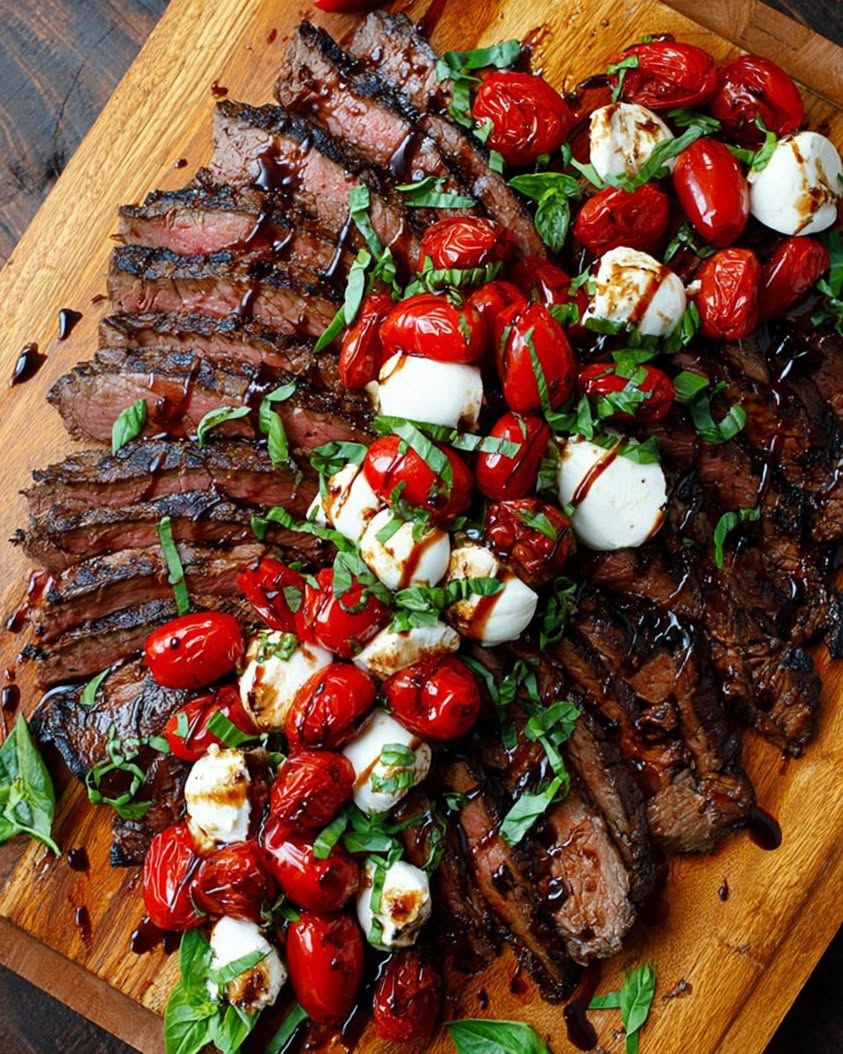
- Visual Appeal: This plate is a feast for the eyes with its striking red, white, and green color scheme—the colors of the Italian flag. The deep brown sear on the steak, the glossy red tomatoes, the white mozzarella, and the vibrant green basil make for a presentation that is both elegant and appetizing.
- Skill Level Needed: This is an accessible recipe for most home cooks. The key skills are managing a grill or grill pan to achieve a good sear and learning to slice the cooked steak against the grain. Otherwise, the assembly is simple and requires no advanced culinary techniques.
- Special Equipment: A grill (charcoal, gas, or indoor grill pan) is essential for achieving the characteristic flavor and marks. Additionally, a sharp chef’s knife for slicing the steak and tomatoes, and a small saucepan for reducing the balsamic glaze are recommended for best results.
Recipe Overview
- Difficulty Level: We rate this Grilled Flank Steak with a Balsamic Caprese Twist as “Easy.” The steps are sequential and simple: marinate, grill, slice, and assemble. The most critical technique—slicing against the grain—is easy to master with a quick visual guide. Consequently, even novice cooks can achieve fantastic results on their first attempt.
- Category: This recipe falls squarely into the main dish category, perfect for lunch or dinner. It’s a protein-centric meal that is substantial enough to stand alone but also designed to be complemented by sides. Additionally, it fits into “healthy eating” and “entertaining” categories due to its lean protein and impressive presentation.
- Cuisine: The dish is a beautiful fusion of American grilling traditions and Italian flavor principles. The use of flank steak is popular in American cuisine, while the Caprese salad (tomato, mozzarella, basil) is a classic Italian antipasto. The balsamic glaze adds a modern, gourmet touch that bridges both culinary worlds seamlessly.
- Cost: This is a moderately priced meal. Flank steak is typically more affordable than premium cuts like filet mignon. Fresh mozzarella, good balsamic vinegar, and ripe tomatoes are the other primary costs. Overall, you can feed four people a restaurant-quality meal for a fraction of the cost of dining out.
- Season: This recipe shines brightest in the summer and early fall. This is when tomatoes and basil are at their peak of flavor and abundance at farmers’ markets. Grilling is also a preferred cooking method in warmer weather, making this the ideal seasonal dish for al fresco dining.
- Occasion: It’s incredibly versatile for occasions. It’s casual enough for a weeknight family dinner yet elegant enough for a dinner party or date night at home. It’s also a fantastic option for holiday cookouts like Memorial Day or Labor Day, offering a more refined alternative to standard burgers and dogs.
Why You’ll Love This Recipe
First and foremost, the taste and texture combination is utterly addictive. The savory, meaty flavor of the grilled flank steak provides a robust foundation. Then, the cool, creamy mozzarella and acidic-sweet tomatoes cut through the richness perfectly. Finally, the basil and balsamic add pops of freshness and tangy sweetness that elevate the entire dish. Every component has a purpose, creating a balanced and memorable flavor profile that will have everyone asking for seconds.
From a convenience standpoint, this Grilled Flank Steak with a Balsamic Caprese Twist is a weeknight hero. The active hands-on time is remarkably short. While the steak marinates and rests, you can prepare the salad components and side dishes. Since flank steak cooks quickly over high heat, dinner is on the table in about 30 minutes total. This efficiency makes it perfect for busy schedules without compromising on a gourmet result.
Nutritionally, this meal is a powerhouse. Flank steak is an excellent source of high-quality protein, iron, and B vitamins, essential for energy and muscle health. Tomatoes provide vitamin C, potassium, and the antioxidant lycopene. Fresh basil offers anti-inflammatory properties, and mozzarella provides calcium and protein. Together, they create a meal that is satisfying, nourishing, and aligns with a balanced, whole-foods diet.
For social and entertaining value, this dish is a true showstopper. Its vibrant, colorful presentation is guaranteed to impress guests. Moreover, it feels special and indulgent while being surprisingly simple for the host to execute. You can slice the steak and arrange the platter family-style, encouraging sharing and conversation. It’s a recipe that makes you look like a culinary rockstar with minimal stress.
Finally, it’s cost-effective and accessible. Compared to dining out, preparing this Grilled Flank Steak with a Balsamic Caprese Twist at home saves significant money. The ingredients are readily available at most grocery stores year-round. Additionally, the recipe is forgiving and allows for substitutions, such as using cherry tomatoes or a different type of fresh cheese, making it adaptable to your budget and what’s available locally.
Historical Background and Cultural Significance
The story of this dish begins with two distinct culinary traditions. The Caprese salad, originating from the island of Capri in Italy, is a relatively modern invention, gaining popularity in the 1950s. It was created to showcase the simple, fresh ingredients of the region: mozzarella di bufala, ripe tomatoes, and basil. The colors deliberately mirror the Italian flag, representing a sense of national pride. This salad embodies the Italian culinary philosophy of “less is more,” where quality ingredients speak for themselves.
Meanwhile, grilling beef over an open flame is a practice as old as human civilization itself, but flank steak holds a particular place in American and Latin American cuisines. In the US, it became popular as an affordable, flavorful cut for family meals. In Argentina, it’s known as “vacio” and is a staple of the famous asado. The technique of marinating and quickly grilling this lean cut to medium-rare is a global practice that highlights its versatility.
The evolution of this recipe is a classic example of fusion cuisine. Creative home cooks and chefs began looking for ways to top grilled meats with fresh, vibrant flavors beyond standard sauces. Laying a Caprese salad over a hot steak was a natural and brilliant innovation. The heat from the steak slightly wilts the basil and warms the mozzarella, melding the flavors more intimately than a cold side salad. The addition of a balsamic reduction is a more recent gourmet touch, adding a sweet-and-sour complexity that enhances both the beef and the salad.
Regional variations of this concept abound. For instance, some versions might use a pesto drizzle instead of whole basil leaves. Others might incorporate grilled peaches or nectarines alongside the tomatoes for a sweeter twist. In different regions, the type of cheese might change—using feta for a saltier bite or burrata for extra creaminess. This adaptability is a testament to the solid foundation of the original concept, allowing it to be personalized and localized while maintaining its core appeal.
Ingredient Deep Dive
Flank Steak: This long, flat cut comes from the cow’s abdominal muscles, making it lean and flavorful with a distinct grain. Historically, it was a less prized cut, but its popularity soared due to its affordability and great flavor when cooked properly. It’s packed with protein, iron, zinc, and B vitamins. When selecting, look for a steak with bright red color and minimal silverskin. For storage, keep it in the coldest part of your refrigerator for up to 3 days or freeze for several months. If unavailable, skirt steak or hanger steak are excellent substitutes, though cooking times may vary slightly.
Fresh Mozzarella: Unlike low-moisture, shredded mozzarella, fresh mozzarella is soft, moist, and milky. Traditionally made from buffalo or cow’s milk, it’s a staple of Italian cuisine. It’s a good source of calcium and protein. Seek out balls packed in water (mozzarella di bufala or fior di latte) for the best texture and flavor. Store it in its water in the refrigerator and consume within a few days of opening. For a dairy-free version, consider a high-quality vegan mozzarella-style cheese or even creamy avocado slices.
Ripe Tomatoes: The star of summer gardens, tomatoes are technically a fruit rich in vitamins C and K, potassium, and the antioxidant lycopene. Their history traces back to South America. For this recipe, use the best tomatoes you can find—vine-ripened, heirloom, or beefsteak varieties have the best flavor and meaty texture. Avoid refrigerating them, as cold temperatures degrade their flavor and texture. Store at room temperature out of direct sunlight. In winter, cherry or grape tomatoes can be a sweeter, more reliable alternative.
Fresh Basil: This aromatic herb is central to Mediterranean cooking and is revered in many cultures for its medicinal and culinary properties. It contains antioxidants and anti-inflammatory compounds. Look for vibrant green leaves without black spots. The best way to store basil is like a bouquet of flowers: trim the stems and place them in a glass of water on the counter. For a different herbal note, fresh arugula or oregano can be used, though they will change the flavor profile significantly.
Balsamic Vinegar & Glaze: Traditional balsamic vinegar (Aceto Balsamico Tradizionale) is a aged, syrupy condiment from Italy, but for cooking, a good quality “condimento” or grocery store balsamic works. Reducing it into a glaze concentrates its sweet-tart flavor. It contains antioxidants from the grapes. A thicker, pre-made glaze is a convenient shortcut. Store balsamic vinegar in a cool, dark place. If you don’t have balsamic, a reduction of red wine vinegar with a touch of honey can mimic the sweet-sour effect.
Common Mistakes to Avoid
- Not Slicing Against the Grain: This is the most crucial step for tender flank steak. The grain refers to the long muscle fibers running through the meat. Slicing against (perpendicular to) these fibers shortens them, making the steak much easier to chew. Slicing with the grain will result in a tough, stringy texture no matter how perfectly you cooked it.
- Overcooking the Steak: Flank steak is best served medium-rare to medium. Because it is lean, it becomes tough and dry if cooked beyond medium. Use a meat thermometer and aim for an internal temperature of 130-135°F (54-57°C) for medium-rare. Remember, the temperature will rise a few degrees while resting.
- Using Cold Ingredients for the Topping: Placing ice-cold mozzarella and tomatoes straight from the fridge onto the hot steak can cool the meat down too quickly. For the best texture and flavor integration, let your cheese and tomatoes sit at room temperature for about 20-30 minutes before assembling.
- Skipping the Resting Time: Resting the grilled flank steak for 10 minutes after cooking is non-negotiable. This allows the juices, which have been driven to the center by the heat, to redistribute throughout the meat. If you slice immediately, all those flavorful juices will end up on your cutting board, leaving the steak dry.
- Using Low-Quality Balsamic: A harsh, overly acidic balsamic vinegar will ruin the balance of the dish. If making a glaze, start with a decent, moderately priced balsamic. Alternatively, invest in a good-quality, ready-made balsamic glaze (crema di balsamico) which is already sweet, thick, and perfect for drizzling.
- Cutting the Tomatoes Too Early: Slicing tomatoes too far in advance causes them to lose their precious juice and become watery. Always slice your tomatoes just before you are ready to assemble the dish to maintain their structure and fresh flavor.
- Not Preheating the Grill: A properly preheated grill is essential for getting a good sear and those attractive grill marks. It also helps prevent sticking. Preheat your grill (or grill pan) on high for at least 10-15 minutes before adding the steak.
- Forgetting to Pat the Steak Dry: Before marinating or seasoning, always pat the flank steak thoroughly dry with paper towels. A wet surface will steam instead of sear, preventing you from achieving that delicious, caramelized crust.
Essential Techniques
Slicing Against the Grain: This technique is the single most important factor for tender flank steak. After resting, examine the steak to see the direction of the long, parallel muscle fibers (the grain). Then, using a very sharp knife, slice perpendicularly across those fibers into thin strips, about 1/4 to 1/2-inch thick. Slicing this way shortens the tough muscle fibers, making each piece easy to chew. A common pitfall is misidentifying the grain, so take a moment to look carefully before you make your first cut.
Creating a Balsamic Glaze (Reduction): Reducing balsamic vinegar concentrates its flavor and thickens it into a syrup. Pour vinegar into a small saucepan and simmer over medium-low heat. Stir occasionally until it reduces by about half and coats the back of a spoon. Watch it closely, as it can burn quickly once thickened. The visual cue for success is a syrup that will slowly drip off a spoon. This process mellows the vinegar’s acidity and amplifies its natural sweetness, making it the perfect finishing sauce.
Achieving the Perfect Grill Sear: A proper sear creates the Maillard reaction, which develops complex, savory flavors and an appealing crust. Ensure your grill grates are clean, oiled, and screaming hot before the steak touches them. Place the steak down and do not move it for several minutes to allow a crust to form. Then, flip once. Avoid pressing down with a spatula, as this squeezes out juices. Perfect sear marks are dark brown, not black, and the steak should release easily from the grates when ready to flip.
Resting the Meat: Resting is not optional; it’s a critical step for juicy results. When meat cooks, its proteins tighten and push juices to the center. Resting for 10 minutes allows these proteins to relax and reabsorb the juices throughout the entire steak. Simply transfer the cooked steak to a cutting board, tent it loosely with foil, and let it sit. Skipping this step means those juices will flood out immediately upon slicing, leaving you with drier meat.
Pro Tips for Perfect Grilled Flank Steak with a Balsamic Caprese Twist
1. Score the Fat Cap: If your flank steak has a thick layer of fat on one side, score it lightly in a crosshatch pattern. This prevents the steak from curling up during grilling and helps render some of the fat.
2. Season Liberally: Flank steak is a thick cut, so don’t be shy with salt and pepper. Season it generously on all sides, pressing the seasoning into the meat at least 30 minutes before grilling, or even overnight in the refrigerator for deeper flavor penetration.
3. Use a Two-Zone Fire: If using a charcoal grill, pile the coals on one side for direct high heat and leave the other side empty for indirect heat. Sear the steak over the coals, then move it to the indirect side to finish cooking more gently if needed, preventing flare-ups and overcooking.
4. Invest in a Thermometer: The best way to guarantee perfect doneness is to use an instant-read meat thermometer. Check the temperature in the thickest part of the steak. For medium-rare, pull it off the grill at 130-135°F.
5. Warm Your Platter: To keep the assembled dish warm for serving, place your serving platter in a warm oven (turned off) or rinse it with hot water and dry it just before plating.
6. Finish with Flaky Salt: After assembling, add a final sprinkle of flaky sea salt (like Maldon) over the tomatoes and mozzarella. This enhances the individual flavors and adds a delightful textural crunch.
7. Let the Glaze Cool Slightly: Allow your balsamic reduction to cool for a minute or two before drizzling. A very hot glaze can melt the mozzarella more than desired. A warm, slightly thickened glaze will drape beautifully.
Variations and Adaptations
Regional Variations: Take inspiration from global flavors. For a Mexican-inspired twist, swap the Caprese for a Pico de Gallo (diced tomato, onion, jalapeño, cilantro, lime) and use a chili-lime marinade for the steak. For a Greek version, top the steak with a salad of diced cucumber, tomato, red onion, Kalamata olives, and crumbled feta cheese, dressed with olive oil and oregano.
Seasonal Adaptations: In winter, when tomatoes are lackluster, use roasted cherry tomatoes or even a warm tomato chutney. You could also substitute the fresh tomatoes for a sun-dried tomato pesto spread over the sliced steak before adding the cheese and basil. For fall, add slices of grilled pear or apple to the topping for a sweet contrast.
Dietary Modifications: For a Paleo or Whole30 version, omit the cheese and ensure your balsamic vinegar is sugar-free. Increase the fresh herbs or add avocado for creaminess. For a lower-fat option, choose a part-skim mozzarella or reduce the amount of cheese, focusing instead on extra tomatoes and basil.
Flavor Variations: Infuse the olive oil for drizzling with garlic or chili flakes. Add a sprinkle of toasted pine nuts or walnuts over the top for crunch. Incorporate other fresh herbs like mint or thyme into the basil mix for a more complex herbal note.
Texture Modifications: For a more integrated dish, chop the Caprese ingredients into a bruschetta-like mixture and spoon it over the steak. Alternatively, use burrata cheese instead of regular mozzarella; when sliced, its creamy center creates an incredible sauce over the warm meat.
Presentation Alternatives: Instead of a large platter, create individual plates for a more formal setting. You can also slice the steak and skewer it with alternating cherry tomatoes, small mozzarella balls (ciliegine), and basil leaves for elegant steak Caprese kebabs, drizzled with glaze.
Serving and Presentation Guide
Plating Techniques: For a family-style presentation, arrange the sliced grilled flank steak slightly overlapping in the center of a large platter. Artfully arrange the tomato and mozzarella slices in alternating patterns on top of and around the steak. Scatter whole basil leaves generously over everything. Finally, drizzle the balsamic glaze in zig-zags or a loose grid pattern over the entire platter.
Garnishing Ideas: Beyond basil, a few extra garnishes can elevate the look. Add a final drizzle of high-quality extra virgin olive oil. Sprinkle with microgreens or edible flowers for a restaurant-quality touch. A light grating of lemon zest over the top can add a bright, fragrant note that complements the balsamic.
Traditional Accompaniments: This dish pairs classically with simple, starchy sides that soak up the juices and glaze. A crusty baguette or garlic bread is perfect. A light pasta salad, orzo, or a simple arugula salad with lemon vinaigrette also work beautifully without competing with the main event.
Modern Serving Suggestions: For a low-carb meal, serve the steak and Caprese topping over a bed of zucchini noodles or a massive green salad. You can also stuff the sliced steak, tomatoes, mozzarella, and basil into a hoagie roll for an incredible steak sandwich, using the balsamic glaze as a condiment.
Temperature Considerations: Aim to serve this dish immediately after assembling. The goal is for the steak to be warm, gently warming the tomatoes and slightly softening the mozzarella without melting it completely. The basil should remain vibrant and fresh.
Portion Control Tips: A standard 1.5 to 2-pound flank steak typically serves 4-6 people, depending on appetites and sides. When slicing, aim for 4-6 ounce portions per person. The volume from the tomato and mozzarella topping adds visual bulk and satisfaction, making the protein portion feel generous.
Wine and Beverage Pairing
Wine Pairings: The rich umami of the beef and the acidity of the tomatoes and balsamic call for a versatile red wine with good acidity and moderate tannins. A Chianti Classico or Sangiovese from Italy is a perfect match, as their cherry and earthy notes complement the dish’s Italian elements. Alternatively, a Malbec from Argentina or a GSM blend (Grenache-Syrah-Mourvèdre) from the Rhône Valley offers ripe fruit that stands up to the steak without overpowering the fresh toppings.
Non-Alcoholic Alternatives: Sparkling water with a squeeze of lemon or lime provides a clean, palate-cleansing effervescence. For a more crafted option, try a tart cherry juice spritzer mixed with soda water and a basil leaf. Iced herbal tea, like a hibiscus or mint tea, can also mirror the sweet and tart notes of the balsamic glaze beautifully.
Coffee/Tea Pairings: While not a typical pairing for this meal, if serving for a late lunch, a glass of iced black tea with a hint of peach or lemon could work. After dinner, a dark roast espresso can complement the charred notes of the grilled flank steak, though it may clash with the fresh tomato and basil.
Temperature Considerations: Serve red wines slightly below room temperature, around 60-65°F (15-18°C). Chilled too much, they lose their aroma; too warm, they taste alcoholic. Non-alcoholic spritzers and iced teas should be thoroughly chilled to provide a refreshing contrast to the warm, savory dish.
Serving Suggestions: Always offer water on the table to cleanse the palate. If serving wine, pour a taste for yourself first to ensure it’s at the right temperature and hasn’t corked. For a crowd, consider offering both a red wine and a non-alcoholic option to cater to all guests.
Storage and Shelf Life
Storage Methods: Store leftover components separately for best quality. Place sliced, cooled steak in an airtight container. Keep the tomato and mozzarella salad in a separate container. The balsamic glaze can be stored at room temperature in a sealed jar. This prevents the tomatoes from making the steak soggy and the cheese from absorbing meat juices.
Temperature Requirements: All leftovers must be refrigerated promptly and kept at 40°F (4°C) or below. Do not leave the assembled dish at room temperature for more than two hours (one hour if the ambient temperature is above 90°F).
Container Recommendations: Use shallow, airtight containers to allow for rapid cooling. Glass containers are ideal as they don’t absorb odors and allow you to see the contents. For the Caprese salad, a container with a vented lid or a paper towel lining can help absorb excess moisture from the tomatoes.
Signs of Spoilage: Discard any meat that develops a sour or off odor, a slimy texture, or a grayish-brown color. Mold on cheese or tomatoes is a clear sign of spoilage. If the balsamic glaze develops an unusual smell or visible mold, it should be thrown out.
Reheating Instructions: Reheat the steak slices gently to avoid overcooking. The best method is in a skillet over medium-low heat with a splash of broth or water to create steam, just until warmed through. Alternatively, use the microwave at 50% power in short bursts. Do not reheat the tomatoes, mozzarella, or basil—add them cold to the reheated steak.
Freezing Guidelines: You can freeze the cooked and sliced flank steak for up to 3 months. Wrap it tightly in plastic wrap and then in foil or place in a heavy-duty freezer bag, removing as much air as possible. Thaw in the refrigerator overnight. The Caprese components do not freeze well and should be made fresh.
Make Ahead Strategies
Prep Timeline: You can prepare almost every component of this Grilled Flank Steak with a Balsamic Caprese Twist ahead of time. Marinate the steak up to 24 hours in advance. Make the balsamic glaze up to a week ahead and store it at room temperature. Wash and dry the basil, and slice the tomatoes and mozzarella a few hours before serving, storing them separately in the fridge.
Storage Between Steps: Keep the marinating steak in a sealed bag or container in the refrigerator. Store sliced tomatoes and mozzarella in separate containers, with a paper towel in the tomato container to absorb moisture. Bring the cheese to room temperature for 30 minutes before assembling.
Quality Impact Assessment: Pre-marinating enhances flavor. Making the glaze ahead has no negative impact. Slicing tomatoes more than 2-3 hours ahead will cause them to become watery and lose freshness, so this is best done close to serving time.
Assembly Tips: For a dinner party, grill the steak about 30 minutes before you plan to eat. Let it rest while you set the table and finish your sides. Slice the steak just before your guests sit down, then quickly assemble the platter with the pre-sliced tomatoes, mozzarella, and basil for a stunning, fresh presentation.
Reheating Guidelines: If you must grill ahead, reheat the whole, unsliced steak gently in a 250°F oven until just warm to the touch, then slice and assemble. This is preferable to reheating thin slices, which can easily overcook.
Fresh Element Additions: Always add the fresh basil and final drizzle of olive oil and balsamic glaze at the very last moment before serving. This ensures the basil stays bright and the glazes maintain their glossy appearance.
Scaling Instructions
Halving the Recipe: Halving this recipe for two people is straightforward. Use a 3/4 to 1-pound flank steak. Halve all other ingredients proportionally. Cooking time will be slightly less—check for doneness a few minutes early. Use a smaller skillet or grill area. The balsamic glaze can still be made with the full amount, as it keeps well, or simply reduce a smaller quantity in a tiny saucepan.
Doubling or Tripling: For a crowd, you can easily double or triple the recipe. You may need to grill the steaks in batches to avoid overcrowding the grill, which lowers the temperature and causes steaming. Keep cooked steaks tented with foil on a warm platter while finishing the others. Use multiple platters for assembly, or create a spectacular, long centerpiece platter with all the sliced steak and toppings arranged together.
Equipment Adjustments: When scaling up, ensure you have a large enough grill surface or plan a batch-cooking strategy. You may need a very large serving platter or several smaller ones. A bigger saucepan will be needed if making a large batch of balsamic glaze.
Timing Modifications: The prep time will increase linearly with the amount of ingredients (more tomatoes to slice, etc.). The cook time will only increase if you have to grill in batches. Factor in extra resting time to keep the first steaks warm while the others cook.
Storage Considerations: Leftovers will be more abundant when scaling up. Plan your storage containers accordingly. Remember that the Caprese topping does not keep as well once assembled, so encourage guests to take portions of steak and topping separately if there are likely to be lots of leftovers.
Nutritional Deep Dive
Macro Breakdown: A serving of this Grilled Flank Steak with a Balsamic Caprese Twist is an excellent source of high-quality protein, crucial for muscle repair and satiety. The fat content comes primarily from the olive oil and mozzarella, providing a mix of monounsaturated and saturated fats. Carbohydrates are minimal, coming mainly from the tomatoes and the natural sugars in the balsamic glaze, making this a naturally lower-carb meal option.
Micronutrient Analysis: This dish is rich in essential vitamins and minerals. Flank steak provides heme iron, which is easily absorbed, and B12 for nerve health. Tomatoes contribute vitamin C, potassium, and the antioxidant lycopene. Basil offers vitamin K, and mozzarella provides a significant amount of calcium for bone health.
Health Benefits: The lean protein supports metabolism and helps maintain muscle mass. Lycopene from tomatoes is linked to heart health and reduced cancer risk. The monounsaturated fats in olive oil are anti-inflammatory. Together, these ingredients support a balanced diet that can aid in weight management, provide sustained energy, and contribute to overall wellness.
Dietary Considerations: This recipe is naturally gluten-free. It can be adapted for dairy-free diets by omitting the cheese. For those on a low-sodium diet, be mindful of the salt used in seasoning the steak and opt for low-sodium mozzarella. The balsamic glaze contains sugars, so those monitoring sugar intake should use it sparingly.
Portion Analysis: A typical serving includes about 6 ounces of cooked steak, one medium tomato, and 1-2 ounces of mozzarella. This creates a balanced plate with a focus on protein and vegetables. The addition of the oil and glaze adds flavor and healthy fats without excessive calories when used in moderation.
Weight Management Tips: This meal is highly satiating due to its high protein and fiber (from tomatoes) content, which can help control hunger. To reduce calories slightly, you can use less olive oil in the marinade/drizzle, choose part-skim mozzarella, and be conservative with the balsamic glaze. Pairing it with a large side salad adds volume and nutrients with few calories.
Dietary Adaptations
Gluten-free: This recipe is naturally gluten-free as written. Always double-check your balsamic vinegar label, as very rare, low-quality brands might use a wheat-based thickener, but this is extremely uncommon. All other core ingredients—steak, tomatoes, cheese, basil, oil—are gluten-free.
Dairy-free: Omit the mozzarella cheese entirely. For creaminess, add sliced avocado or a dollop of dairy-free pesto. You can also use a store-bought vegan mozzarella alternative that melts well, though the flavor will differ. Ensure the balsamic glaze is made without any butter or cream additives.
Vegan: Replace the flank steak with a large, thick portobello mushroom cap or a slab of extra-firm, pressed tofu or tempeh. Marinate and grill as you would the steak. Use a vegan mozzarella or omit it in favor of extra vegetables like roasted peppers or artichoke hearts. The balsamic glaze is Print
Grilled Flank Steak with Balsamic Caprese Twist
- Total Time: 45 minutes
- Yield: 4
Description
A flavorful grilled flank steak topped with a fresh caprese-inspired salad and a tangy balsamic glaze, perfect for summer gatherings.
Ingredients
- 1.5 lbs flank steak
- 2 tbsp olive oil
- 2 cloves garlic, minced
- 1 tsp salt
- 1/2 tsp black pepper
- 1 cup cherry tomatoes, halved
- 8 oz fresh mozzarella balls (ciliegine)
- 1/4 cup fresh basil leaves, chopped
- 2 tbsp balsamic glaze
- 1 tbsp balsamic vinegar
Instructions
- Season the flank steak with olive oil, minced garlic, salt, and black pepper. Let it marinate at room temperature for 30 minutes.
- Preheat grill to medium-high heat. Grill the steak for 5-7 minutes per side for medium-rare, or until desired doneness. Let it rest for 10 minutes.
- While the steak rests, combine cherry tomatoes, mozzarella balls, and chopped basil in a bowl. Drizzle with balsamic vinegar and toss gently.
- Slice the rested steak thinly against the grain. Arrange on a platter and top with the caprese salad.
- Drizzle the balsamic glaze over the steak and salad before serving.
Notes
You can customize the seasonings to taste.
- Prep Time: 15 minutes
- Cook Time: 30 minutes
- Method: Main
- Cuisine: American