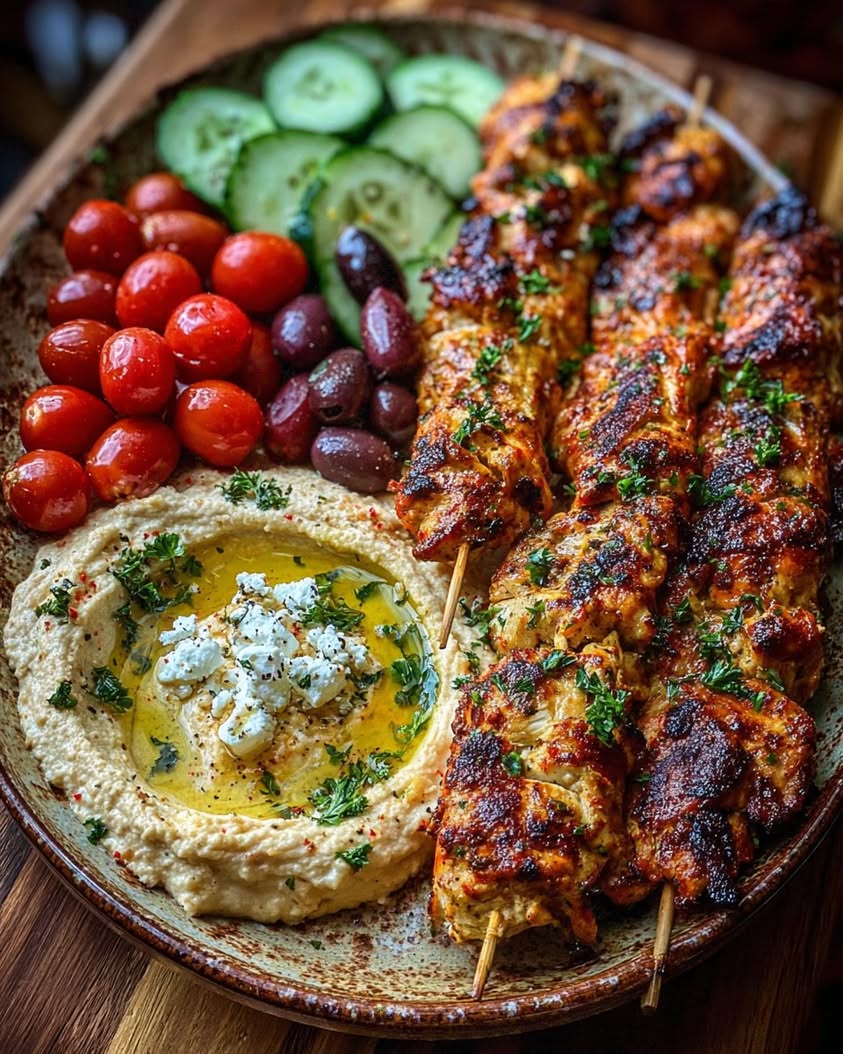
Mediterranean Chicken Skewers with Creamy Homemade Hummus Spread: A Flavorful Weeknight Feast
Imagine the sizzle of juicy chicken hitting a hot grill, infused with the vibrant, sun-drenched flavors of the Mediterranean. This recipe for Mediterranean Chicken Skewers with Creamy Homemade Hummus Spread brings that exact sensory experience straight to your kitchen. Furthermore, it transforms simple ingredients into a stunning, restaurant-quality meal that feels both celebratory and effortlessly healthy. The aroma alone, a heady mix of lemon, garlic, and earthy herbs, will have your family gathering in the kitchen long before dinner is ready.
These Mediterranean Chicken Skewers are more than just a meal; they are a transportive culinary journey. Each bite delivers a perfect harmony of tender, marinated chicken and the cool, creamy richness of homemade hummus. Consequently, this dish is a fantastic solution for busy weeknights, impressive enough for weekend entertaining, and a guaranteed crowd-pleaser at any summer barbecue. Ultimately, the combination of protein-packed skewers and a velvety, flavorful spread creates a balanced and deeply satisfying plate.
Mastering this recipe is surprisingly straightforward. The process involves a simple marinade, easy skewering, and quick cooking. Meanwhile, the hummus comes together in minutes with a food processor. Therefore, even novice cooks can achieve spectacular results. The final presentation, with golden-brown skewers artfully arranged over a swoosh of hummus and scattered with fresh herbs, is as beautiful as it is delicious. This meal proves that healthy, flavorful food does not require complicated techniques or hours in the kitchen.
Quick Recipe Highlights
- Flavor Profile: These Mediterranean Chicken Skewers deliver a bright, herbaceous punch from fresh oregano and parsley, balanced by the tang of lemon and the savory depth of garlic. The creamy homemade hummus spread adds a nutty, earthy base with a smooth, luxurious finish that complements the charred chicken perfectly.
- Texture: Experience a delightful contrast between the juicy, slightly charred exterior and tender interior of the chicken. The hummus provides an ultra-smooth and creamy counterpoint, while optional garnishes like chopped parsley or a drizzle of olive oil can add a fresh, textural pop.
- Aroma: As the skewers cook, they release an irresistible fragrance of grilling meat, smoky paprika, and aromatic herbs. The hummus contributes its own earthy, garlicky scent, creating a complex and inviting olfactory bouquet that promises a delicious meal.
- Visual Appeal: The presentation is vibrant and inviting. Golden-brown chicken skewers rest atop a pale canvas of hummus, creating striking visual contrast. Finally, a sprinkle of paprika, fresh herbs, and a lemon wedge adds bright spots of color that make the dish Instagram-worthy.
- Skill Level Needed: This is an accessible recipe for all skill levels. Basic knife work for chopping and the ability to operate a grill or grill pan are the primary requirements. The hummus is made in a food processor with a simple dump-and-blend method, making it foolproof.
- Special Equipment: You will need wooden or metal skewers and a food processor or high-powered blender for the hummus. A grill, grill pan, or broiler is essential for cooking the skewers and achieving those desirable char marks. Additionally, having a mixing bowl for the marinade is necessary.
Recipe Overview
- Difficulty Level: We rate this recipe as “Easy” because it breaks down into simple, manageable steps: marinating, skewering, and grilling. The techniques are fundamental, and the hummus requires no cooking. There is minimal multitasking, and the timeline is forgiving, making it perfect for a stress-free cooking experience.
- Category: This dish fits beautifully into multiple categories: a healthy main course, a perfect grilling recipe, and an excellent meal prep option. It’s substantial enough for dinner yet light enough for a satisfying lunch. The components also work wonderfully as part of a mezze platter for entertaining.
- Cuisine: This recipe draws direct inspiration from the broad and vibrant culinary traditions of the Eastern Mediterranean. It incorporates classic flavor profiles from Greek, Lebanese, and Turkish cooking, using ingredients like olive oil, lemon, garlic, and chickpeas that are staples across the region.
- Cost: This is a cost-effective meal. Chicken thighs offer great flavor and value, and pantry staples like spices, olive oil, and lemon form the marinade base. Canned chickpeas and tahini for the hummus are inexpensive, especially when compared to store-bought gourmet versions. Overall, it delivers high-end taste on a modest budget.
- Season: While fantastic year-round, these Mediterranean Chicken Skewers truly shine in spring and summer. The fresh, bright flavors pair perfectly with warm weather, and grilling outdoors becomes part of the fun. Conversely, they also bring a welcome taste of sunshine to cooler months when cooked on a stovetop grill pan.
- Occasion: This versatile dish suits almost any occasion. It’s a quick family dinner, a show-stopping centerpiece for a dinner party, or a standout item at a backyard barbecue. The recipe scales easily, and the make-ahead potential makes it a smart choice for entertaining without last-minute stress.
Why You’ll Love This Recipe
First and foremost, the taste and texture combination is utterly irresistible. The marinade, featuring lemon, garlic, and herbs, penetrates the chicken, ensuring every bite is bursting with flavor. The grilling process adds a subtle smokiness and beautiful caramelization. Paired with the cool, creamy, and garlicky homemade hummus spread, each mouthful offers a perfect balance of warm and cool, charred and smooth, tangy and rich. This symphony of sensations makes the meal deeply satisfying and memorable.
From a convenience standpoint, this recipe is a weeknight hero. The active hands-on time is minimal; most of the work is passive marinating. You can prepare the hummus and marinate the chicken ahead of time. Then, when you’re ready to eat, cooking the skewers takes just minutes. The cleanup is equally simple, especially if you use a grill. Consequently, you get a spectacular, healthy meal on the table with remarkable efficiency, freeing up your evening for more important things.
Nutritionally, this meal is a powerhouse. Chicken thighs provide high-quality protein and essential nutrients like iron and zinc. The homemade hummus spread, made from chickpeas, is an excellent source of plant-based protein, fiber, and healthy fats from tahini and olive oil. Together, they create a balanced plate that fuels your body, supports digestion, and keeps you full for hours. You control the ingredients, avoiding the excess sodium and preservatives often found in store-bought marinades and dips.
For social gatherings, these Mediterranean Chicken Skewers are a guaranteed hit. They are fun, interactive, and easy to serve. You can set up a DIY skewer station with various dips and salads. The vibrant presentation sparks conversation, and the familiar yet elevated flavors appeal to a wide range of palates. This dish fosters a communal, sharing atmosphere, making any meal feel like a special occasion.
Finally, the cost-effectiveness and accessibility are major wins. You likely have many of the marinade ingredients in your pantry already. Chicken thighs are an affordable cut, and canned chickpeas are a budget-friendly staple. By making your own hummus, you save money compared to premium store-bought brands. This recipe demonstrates how a handful of simple, accessible ingredients can be transformed into a meal that tastes luxurious without straining your grocery budget.
Historical Background and Cultural Significance
The concept of skewering and grilling meat over an open flame is ancient, with roots tracing back across many cultures surrounding the Mediterranean Sea. In the Eastern Mediterranean and Middle East, this practice evolved into what is widely known as kebabs. The word “kebab” is thought to have Persian origins, but the technique was perfected and popularized across the Ottoman Empire. These early skewers were a practical solution for cooking small pieces of meat quickly over scarce fuel, utilizing every part of the animal and infusing it with smoky flavor.
Culturally, skewered meats hold significant social importance. They are central to communal dining and celebration, from family gatherings to large public festivals. The act of sharing food from a common platter, often with bread used to scoop and share, reinforces social bonds. In many regions, the mastery of the grill is a point of pride, passed down through generations. The specific marinades, featuring local herbs, citrus, and yogurt or olive oil, became signatures of their respective regions, telling a story of local agriculture and taste.
The recipe evolved as ingredients traveled and cultures intermingled. The use of lemon and olive oil points strongly to Greek and Italian influences, while spices like cumin and paprika have roots in North African and Spanish cuisine. The inclusion of a creamy hummus spread as an accompaniment is a more modern, fusion-inspired twist that marries the protein-focused kebab with the chickpea-based staples of Levantine cuisine. This evolution reflects contemporary dining preferences for meals that are both flavorful and nutritionally complete.
Regional variations are vast. In Greece, you might find souvlaki marinated in lemon, oregano, and olive oil, often served with tzatziki. In Turkey, shish kebabs might use a wider array of spices and sometimes include vegetables on the skewer. Lebanese versions often feature a tangy marinade with sumac. Our Mediterranean Chicken Skewers with Creamy Homemade Hummus Spread draw from this rich tapestry, creating a accessible, crowd-pleasing version that honors the spirit of these traditions while simplifying the process for the home cook.
Ingredient Deep Dive
Boneless, Skinless Chicken Thighs: Chicken thighs are the ideal choice for skewers because their higher fat content keeps them incredibly juicy and flavorful during high-heat grilling. Historically, darker meat was more commonly used in many traditional cuisines before the modern preference for breast meat. Nutritionally, they provide iron, zinc, and B vitamins. Select thighs that are uniform in size for even cooking. For storage, keep them refrigerated and use within 1-2 days of purchase, or freeze for longer storage. Chicken breast can be substituted for a leaner option, but monitor cooking time closely to prevent dryness.
Extra Virgin Olive Oil: This is the liquid gold of the Mediterranean, central to the region’s cuisine and culture for millennia. It provides healthy monounsaturated fats and antioxidants. In the marinade, it carries fat-soluble flavors and helps create a beautiful sear. For the hummus, it adds richness and a peppery finish. Always choose a cold-pressed, high-quality oil for finishing and a more neutral oil for marinades if preferred. Store in a cool, dark place to prevent rancidity. Avocado oil can be used as a neutral substitute in the marinade.
Fresh Lemon Juice & Garlic: This dynamic duo forms the bright, aromatic backbone of the dish. Lemon juice, with its vitamin C, tenderizes the chicken and adds necessary acidity. Garlic, used in both the marinade and hummus, offers allicin, a compound with noted health benefits. Always use fresh lemon juice for the brightest flavor, not bottled. For the garlic, fresh cloves are non-negotiable for the hummus to achieve that authentic, pungent kick. In a pinch, a high-quality granulated garlic could work in the marinade, but never in the hummus.
Tahini & Canned Chickpeas: These are the heart of the creamy homemade hummus spread. Tahini, or sesame seed paste, has been a staple in Middle Eastern cooking for centuries. It provides essential creaminess, healthy fats, and a distinct nutty flavor. Chickpeas, one of the earliest cultivated legumes, are packed with protein and fiber. For the best hummus, use well-rinned canned chickpeas, or cook your own from dried. Select a tahini made from 100% hulled sesame seeds with a pourable consistency. Store tahini upside down in the pantry to prevent oil separation, and stir well before use.
Common Mistakes to Avoid
- Not Soaking Wooden Skewers: Forgetting to soak wooden skewers in water for at least 30 minutes before grilling is a critical error. Consequently, the exposed wood will catch fire and burn, causing your chicken to cook unevenly and potentially creating a hazardous situation. Always plan ahead for this simple but essential step.
- Overcrowding the Skewers: Pushing chicken pieces too tightly together on the skewer prevents hot air from circulating. This leads to steaming instead of grilling, and you will miss out on the desirable caramelized, charred exterior. Leave a small space between each piece to ensure even, high-heat cooking on all sides.
- Using Bottled Lemon Juice: Bottled lemon juice lacks the vibrant, fresh acidity of the real thing. It can impart a stale, metallic flavor to both the marinade and the hummus. Always squeeze fresh lemons for this recipe; the difference in brightness and overall flavor profile is dramatic and non-negotiable for authentic taste.
- Skipping the Marinating Time: Rushing the marinating process means the flavors won’t penetrate the chicken deeply. While 30 minutes is the minimum, 2-4 hours (or even overnight) is ideal for the most flavorful and tender results. Patience here is directly rewarded in the final taste and texture of your Mediterranean Chicken Skewers.
- Overcooking the Chicken: Chicken thighs are forgiving, but they can still dry out if left on the grill too long. Use a meat thermometer to check for an internal temperature of 165°F. Remember, the chicken will continue to cook slightly after removal from the heat, so pull it off just as it reaches temperature.
- Underseasoning the Hummus: Hummus requires bold seasoning to combat the natural blandness of chickpeas. Underseasoning results in a dull, pasty spread. Taste your hummus aggressively after blending, and don’t be shy with salt, lemon, and garlic. The flavors should be pronounced, as they will mellow slightly when paired with the savory chicken.
- Using Cold Ingredients for Hummus: Adding ice-cold chickpeas or tahini straight from the fridge can prevent your hummus from achieving a perfectly smooth, creamy emulsion. Let your canned chickpeas come to room temperature, and ensure your tahini is well-stirred and not chilled for the best texture.
- Not Preheating the Grill: Placing skewers on a grill that isn’t screaming hot is a recipe for sticking and uneven cooking. A properly preheated grill ensures those beautiful grill marks and helps the chicken release naturally. Preheat your grill or grill pan for a full 10-15 minutes before adding the food.
Essential Techniques
Marinating for Maximum Flavor: Marinating is not just about coating the chicken; it’s about allowing acids and seasonings to work their way into the meat. The acid in the lemon juice gently breaks down surface proteins, allowing the oil and herbs to penetrate. For mastery, ensure your chicken is in a single layer in a shallow dish, completely submerged in the marinade. A common pitfall is marinating in a reactive metal bowl, which can impart off-flavors; always use glass, ceramic, or a zip-top bag. Success is visible when the chicken has visibly absorbed the marinade’s color and smells intensely aromatic.
Creating the Perfect Hummus Emulsion: The goal is a silky-smooth, light, and creamy spread, not a grainy paste. The key technique is processing the hummus long enough. After blending your tahini and lemon juice into a paste, add the chickpeas and process for a full 3-5 minutes, scraping down the sides as needed. This extended blending time breaks down the chickpea skins and creates a stable, airy emulsion with the olive oil. The visual cue for success is a hummus that is pale, fluffy, and holds soft peaks when scooped.
Grilling Skewers for Optimal Char and Juiciness: Proper grilling requires high, direct heat and attentive turning. Place your pre-soaked skewers on the preheated grill and resist the urge to move them immediately. Allow them to sear for 3-4 minutes to develop a crust and release naturally. Then, turn them a quarter turn to create cross-hatch marks, repeating until all sides are cooked. The pitfall is constant flipping, which prevents proper browning. The chicken is done when it feels firm to the touch, has clear grill marks, and registers 165°F internally.
Pro Tips for Perfect Mediterranean Chicken Skewers
First, cut your chicken into uniform, 1.5-inch pieces. Consistent size is the single biggest factor in ensuring every piece cooks at the same rate, preventing some from being overcooked while others remain underdone.
For incredibly tender chicken, consider adding a tablespoon of plain Greek yogurt or a splash of white wine to your marinade. The enzymes and additional acidity provide an extra layer of tenderization.
When making the hummus, reserve some of the chickpea liquid (aquafaba). If your hummus seems too thick while blending, add this liquid a tablespoon at a time instead of water. It helps maintain flavor and improves the creamy texture.
Let your grilled Mediterranean Chicken Skewers rest for 5 minutes after cooking. This allows the juices, which have been driven to the center by the heat, to redistribute throughout the meat, ensuring every bite is moist.
If using a grill pan indoors, ensure your kitchen is well-ventilated. Furthermore, do not overcrowd the pan; cook in batches if necessary to avoid steaming the chicken and to achieve a proper sear.
For an extra flavor boost, brush the skewers with a little extra marinade during the last minute of grilling. However, discard any marinade that has touched raw chicken; always set a portion aside specifically for this purpose.
Warm your pita bread or flatbreads on the grill for the last minute of cooking. The slight char and heat make them the perfect vessel for scooping up hummus and chicken.
Finally, garnish with intention. A final drizzle of high-quality olive oil, a sprinkle of smoked paprika or sumac, and a handful of fresh chopped parsley or mint elevate the dish from homemade to restaurant-quality instantly.
Variations and Adaptations
Regional Variations: Explore the Mediterranean by tweaking the marinade. For a Greek twist, use more oregano and add a pinch of dried mint, serving with tzatziki instead of hummus. For a Turkish influence, incorporate a pinch of cinnamon and allspice into the marinade. A Lebanese version might include a teaspoon of sumac for its tangy, lemony note, paired with a garlic sauce (toum).
Seasonal Adaptations: In summer, add chunks of zucchini, bell pepper, or red onion to the skewers. In cooler months, serve the skewers over a bed of warm, spiced couscous or quinoa instead of with a cold spread. You can also roast root vegetables like sweet potato or carrot and blend them into the hummus for a seasonal, sweet variation.
Dietary Modifications: For a vegetarian version, substitute the chicken with large halloumi cheese cubes or firm, marinated tofu or tempeh. Use the same marinade and reduce cooking time slightly. For a pescatarian option, try using large, firm shrimp or chunks of swordfish, adjusting the grill time to prevent overcooking.
Flavor Variations: Introduce different flavor profiles to the marinade. Add a tablespoon of harissa paste for a spicy North African kick. Incorporate a spoonful of sun-dried tomato paste for a deeper, umami-rich flavor. For an herby green marinade, blend the olive oil with a large handful of fresh basil, parsley, and cilantro before mixing with the other ingredients.
Texture Modifications: For a chunkier, more rustic hummus, pulse the chickpeas in the food processor instead of running it continuously. Alternatively, for an ultra-decadent texture, peel the chickpeas by rubbing them in a kitchen towel before blending; this removes the skins and results in the smoothest hummus imaginable.
Presentation Alternatives: Instead of serving whole skewers, slide the chicken off onto a platter over the hummus for easy sharing. Create a “hummus bowl” by spreading the hummus in a wide bowl, topping with the grilled chicken pieces, and adding accompaniments like chopped cucumber, tomato, olives, and feta cheese for a deconstructed experience.
Serving and Presentation Guide
Plating Techniques: For individual plates, use the back of a spoon to create a wide, swooshing smear of hummus across the center of the plate. Carefully lay 1-2 grilled skewers diagonally across the hummus. This creates height, visual interest, and ensures every bite includes both components. For a family-style presentation, spread all the hummus on a large platter and artfully arrange all the skewers on top, leaning them against each other for a casual, abundant look.
Garnishing Ideas: Garnishes add the final layer of flavor and color. A drizzle of high-quality extra virgin olive oil is essential. Sprinkle with smoked paprika, sumac, or za’atar. Scatter with finely chopped fresh parsley, dill, or mint. Add a few whole chickpeas, a sprinkle of toasted pine nuts, or a crumble of feta cheese for additional texture and saltiness. Always include lemon wedges on the side for a fresh squeeze of acidity.
Traditional Accompaniments: Warm pita bread or flatbread is the classic and perfect tool for scooping. Complement the meal with a simple chopped salad like Israeli salad (diced cucumber, tomato, onion) or a fattoush salad with crispy pita chips. A side of tangy pickled vegetables, such as turnips or cucumbers, provides a bright, acidic contrast that cuts through the richness.
Modern Serving Suggestions: For a low-carb or grain-free option, serve the skewers and hummus with a platter of crisp raw vegetables like bell pepper strips, carrot sticks, and cucumber rounds. Alternatively, serve the chicken and hummus over a base of greens for a hearty salad, or stuff the components into a warm pita pocket with lettuce and tomato for a handheld meal.
Temperature Considerations: Serve the Mediterranean Chicken Skewers hot off the grill, while the hummus should be at cool room temperature. The contrast between the hot, juicy chicken and the cool, creamy spread is a key part of the experience. If the hummus is too cold, it will mute the flavors and feel dense.
Portion Control Tips: A standard serving is typically two skewers per person with about 1/3 to 1/2 cup of hummus. For a lighter meal or as part of a larger mezze spread, one skewer with a smaller portion of hummus is sufficient. Remember, the hummus is rich and filling, so a little goes a long way in terms of satisfaction.
Wine and Beverage Pairing
Wine Pairings: The bright acidity and herbal notes in these Mediterranean Chicken Skewers call for wines with similar characteristics. A crisp, dry Greek Assyrtiko or a Spanish Albariño are fantastic choices, as their citrus and mineral notes mirror the lemon in the dish. For red wine lovers, a light-bodied, low-tannin red like a Beaujolais Villages or a Greek Xinomavro works beautifully without overpowering the chicken. Rosé, particularly a Provençal style, is a versatile and celebratory match that bridges all the flavors seamlessly.
Non-Alcoholic Alternatives: Craft a refreshing homemade lemon-mint sparkler by muddling mint leaves with a touch of simple syrup, topping with sparkling water and a squeeze of lemon. Iced herbal teas, like hibiscus or Moroccan mint tea, offer tannic structure and floral notes that complement the meal. A classic, tart pomegranate juice or a cucumber-infused water also provides a clean, palate-cleansing effect.
Coffee/Tea Pairings: After the meal, a strong, sweet Turkish coffee is a culturally authentic and delightful choice. Its intense, cardamom-spiced flavor stands up to the lingering garlic and herbs. Alternatively, a cup of mint tea aids digestion and provides a soothing, aromatic finish to the dining experience.
Temperature Considerations: White, rosé, and non-alcoholic sparkling drinks should be served well-chilled. Light reds are best served slightly cooler than room temperature, around 55-60°F. Iced beverages should be cold but not diluted; use large ice cubes or frozen fruit to keep them cool without watering them down.
Serving Suggestions: Always offer water on the table to cleanse the palate. If serving wine, consider decanting lighter reds for a short time to open up their aromas. For a party, create a signature drink station with a large pitcher of a non-alcoholic option, allowing guests to help themselves and keeping the host free from constant refilling duties.
Storage and Shelf Life
Storage Methods: Store leftover cooked Mediterranean Chicken Skewers and hummus separately in airtight containers. Remove the chicken from the skewers before refrigerating to save space and ensure even cooling. The hummus should be stored with a thin layer of olive oil poured over the surface or pressed directly with plastic wrap to prevent it from drying out and forming a crust.
Temperature Requirements: Both components must be refrigerated promptly. Do not leave them at room temperature for more than two hours after cooking. The ideal refrigerator temperature is 40°F or below. For longer storage, both the cooked chicken and the hummus freeze well.
Container Recommendations: Use shallow containers for the chicken to allow it to cool quickly and evenly. Glass containers are ideal for the hummus as they don’t retain odors. For freezing, use heavy-duty freezer bags (squeeze out excess air) or freezer-safe containers, leaving a little headspace for expansion.
Signs of Spoilage: Discard the chicken if it develops an off or sour smell, a slimy texture, or any visible mold. Hummus that has spoiled may become excessively watery, develop an off (sometimes fermented) odor, or show signs of mold, especially around the edges. When in doubt, throw it out.
Reheating Instructions: Reheat chicken gently to prevent drying out. The best methods are in a covered skillet with a splash of water or broth over low heat, or in a 300°F oven until warmed through. You can also microwave it in 30-second intervals. Hummus is best served cold or at room temperature; do not heat it, as it can separate and become grainy.
Freezing Guidelines: Freeze cooked, cooled chicken pieces (off the skewer) for up to 3 months. Thaw overnight in the refrigerator before reheating. Hummus can be frozen for up to 2 months. Thaw in the refrigerator and stir vigorously when thawed; the texture may be slightly less creamy but will still taste great. It’s often best used as a spread in sandwiches after freezing.
Make Ahead Strategies
Prep Timeline: You can fully prepare this meal 1-2 days in advance. Day 1: Make the hummus and store it covered in the fridge. Cut the chicken, prepare the marinade, and combine them in a zip-top bag or container. Let it marinate in the refrigerator. Day 2 (or day of serving): Thread the marinated chicken onto soaked skewers and grill. This split workflow makes dinner assembly incredibly fast and stress-free.
Storage Between Steps: Keep the marinating chicken in the coldest part of your refrigerator, not in the door. Ensure the hummus container is tightly sealed. If preparing more than a day ahead, the hummus’s garlic flavor will intensify, which many people prefer. The chicken can safely marinate for up to 24 hours for optimal flavor penetration.
Quality Impact Assessment: Making the hummus ahead actually improves its flavor, as the ingredients have time to meld. The chicken benefits immensely from a longer marination, becoming more tender and flavorful. The only element that doesn’t hold well is the final grilling; cooked chicken is best served fresh, though leftovers are still excellent.
Assembly Tips: If you want to assemble skewers ahead of time, you can thread the marinated chicken onto soaked skewers and place them on a baking sheet lined with parchment paper. Cover tightly with plastic wrap and refrigerate for up to 8 hours before grilling. This is perfect for parties.
Reheating Guidelines: For make-ahead cooked chicken, reheat using gentle methods as described in the storage section. To serve, bring the hummus to cool room temperature for about 20 minutes before serving to soften its texture and wake up the flavors. Stir well and re-adjust seasoning with a pinch of salt or a squeeze of lemon if needed.
Fresh Element Additions: Always add fresh garnishes just before serving. Chop your herbs, slice your lemon wedges, and have your good olive oil ready. These last-minute additions provide a burst of freshness and vibrant color that can be lost if added too early, ensuring the final presentation is as appealing as the taste.
Scaling Instructions
Halving the Recipe: Halving is straightforward for small households. Use half of all ingredients. The marinating time can remain the same. You may need to use a smaller food processor bowl for the hummus, or simply make the full batch of hummus as it keeps well and is versatile for other meals. Cooking time on the grill may be slightly reduced since you’ll have fewer skewers to manage, but still rely on internal temperature.
Doubling or Tripling: For a crowd, doubling or tripling works perfectly. Use a very large bowl or multiple containers for marinating the chicken. You may need to process the hummus in batches unless you have a very large food processor. When grilling, cook in batches to avoid overcrowding the grill, which lowers the temperature and causes steaming. Keep cooked skewers warm on a sheet pan in a 200°F oven while you finish the rest.
Equipment Adjustments: Scaling up requires planning. Ensure you have enough skewers (soak plenty of wooden ones). You may need multiple grill pans or batches on an outdoor grill. For very large batches of hummus, a powerful commercial-style blender might be more effective than a standard food processor. Have large platters ready for serving.
Timing Modifications: The prep time will increase linearly when scaling up, mainly due to the time needed to cut more chicken and thread more skewers. Enlist help for this task. The actual cook time per batch remains the same, but the total cooking time will multiply based on your grill’s capacity. Plan your start time accordingly.
Storage Considerations: When making a large batch, have a plan for leftovers. Store components separately as advised. Consider if you have enough refrigerator space for the volume of marinating chicken and prepared hummus. For parties, it’s often better to have a little extra than to run out, as both the skewers and hummus make excellent next-day meals.
Nutritional Deep Dive
Macro Breakdown: A serving of these Mediterranean Chicken Skewers with hummus provides a balanced macronutrient profile. The chicken thighs are an excellent source of high-quality protein, essential for muscle repair and satiety. The hummus contributes complex carbohydrates and fiber from the chickpeas, along with healthy fats from the tahini and olive oil. This combination provides sustained energy release, avoiding the blood sugar spikes associated with more carbohydrate-heavy meals.
Micronutrient Analysis: This dish is rich in essential vitamins and minerals. Chicken provides B vitamins (especially B3 and B6), selenium, and phosphorus. Chickpeas are a great source of folate, iron, phosphorus, and copper. The olive oil, lemon, and garlic contribute antioxidants and anti-inflammatory compounds. The fresh herbs, though used in smaller quantities, add traces of vitamins A, C, and K.
Health Benefits: The Mediterranean diet pattern, which this recipe exemplifies, is consistently linked to improved heart health, better weight management, and reduced risk of chronic diseases. The monounsaturated fats from olive oil support healthy cholesterol levels. The fiber from chickpeas promotes digestive health and feeds beneficial gut bacteria. The lean protein aids in maintaining muscle mass, especially important as we age.
Dietary Considerations: This recipe is naturally gluten-free and dairy-free (provided the hummus ingredients are checked for cross-contamination). It is suitable for many eating patterns, including Mediterranean, Paleo (if legumes are included in your version), and Whole30 (with approved ingredients). It’s a balanced option for those managing diabetes due to its high protein and fiber content, which help regulate blood sugar.
Portion Analysis: A standard serving is satisfying without being overly heavy. The protein from the chicken and the fiber from the hummus work together to promote feelings of fullness, which can help prevent overeating. The fats involved are primarily the heart-healthy unsaturated kinds, making this a nutrient-dense choice that aligns with goals for maintaining a healthy weight.
Weight Management Tips: To make this dish even more weight-conscious, you can increase the Print
Mediterranean Chicken Skewers with Hummus Spread
- Total Time: 45 minutes
- Yield: 4
Description
Tender, marinated chicken skewers grilled to perfection, served with a creamy homemade hummus spread and fresh Mediterranean sides.
Ingredients
- 1.5 lbs boneless, skinless chicken breast, cut into 1-inch cubes
- 1/4 cup olive oil
- 3 cloves garlic, minced
- 1 lemon, juiced and zested
- 1 tsp dried oregano
- 1 tsp smoked paprika
- Salt and black pepper to taste
- 1 can (15 oz) chickpeas, drained and rinsed
- 2 tbsp tahini
- 2 tbsp fresh parsley, chopped
- Wooden or metal skewers (if wooden, soaked in water for 30 minutes)
Instructions
- In a bowl, whisk together olive oil, garlic, lemon juice, lemon zest, oregano, paprika, salt, and pepper. Add chicken cubes, toss to coat, and marinate for at least 30 minutes in the refrigerator.
- Thread the marinated chicken onto skewers, leaving a little space between pieces for even cooking.
- Preheat grill or grill pan to medium-high heat. Grill skewers for 10-12 minutes, turning occasionally, until chicken is cooked through and slightly charred.
- While chicken cooks, prepare hummus by blending chickpeas, tahini, 2 tbsp olive oil, and a pinch of salt in a food processor until smooth. Add water as needed for desired consistency.
- Serve chicken skewers hot with hummus spread, garnished with fresh parsley and extra lemon wedges on the side.
Notes
You can customize the seasonings to taste.
- Prep Time: 15 minutes
- Cook Time: 30 minutes
- Method: Main
- Cuisine: Mediterranean