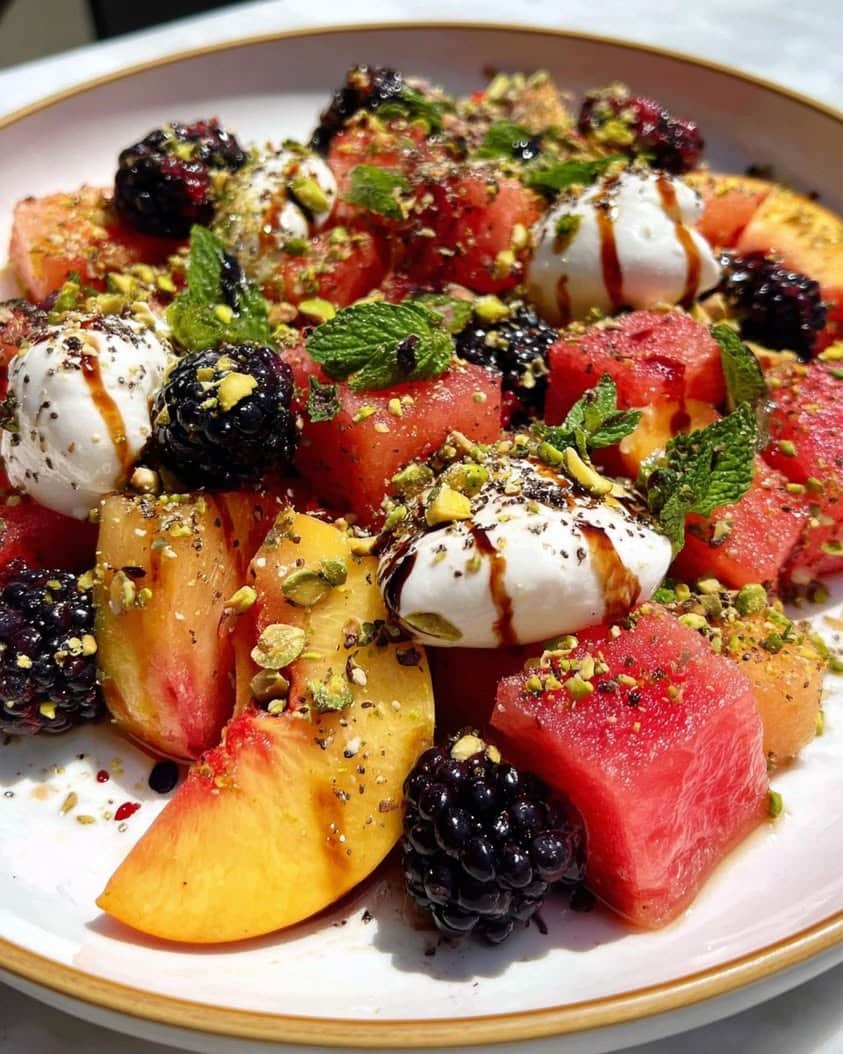
Watermelon Peach Blackberry Burrata Cubes with Balsamic Honey Drizzle: A Summer Caprese Reinvention
Imagine the most vibrant farmers market haul transformed into a single stunning dish that tastes like pure sunshine. That is precisely what this Watermelon Peach Blackberry Burrata Cubes with Balsamic Honey Drizzle delivers on every single plate. This recipe takes the beloved Caprese salad concept and gives it a playful, juicy twist that will absolutely redefine your summer entertaining game.
This Watermelon Peach Blackberry Burrata Cubes with Balsamic Honey Drizzle recipe is my go-to when I want something impressive without breaking a sweat. The combination might sound unconventional at first, but trust me when I say that the sweet, creamy, and tart elements create pure magic in your mouth. You get the refreshing crunch of watermelon cubes, the buttery softness of ripe peaches, the pop of tangy blackberries, and the luxurious creaminess of torn burrata cheese all brought together with a glossy balsamic honey drizzle.
What makes this Watermelon Peach Blackberry Burrata Cubes with Balsamic Honey Drizzle truly special is its incredible versatility. Whether you are hosting a casual backyard barbecue, planning an elegant dinner party starter, or simply craving a light and satisfying lunch, this dish fits every occasion perfectly. The preparation takes just fifteen minutes from start to finish, which means you can focus on enjoying your company rather than being stuck in the kitchen. Moreover, the vibrant colors of red, orange, purple, and white create a visual spectacle that will have everyone reaching for their phones before they even pick up their forks.
Quick Recipe Highlights
- Flavor Profile: This dish dances between sweet and savory with remarkable grace. The ripe watermelon and peaches provide natural sugary notes, while the blackberries add a pleasant tartness that keeps things interesting. The creamy burrata brings a mild, milky flavor that anchors all the fruitiness, and the balsamic honey drizzle adds a rich, tangy sweetness with subtle caramel undertones.
- Texture: You will experience a wonderful textural journey with every single bite. The watermelon cubes offer a satisfying crunch and burst of juice, the peaches provide a soft and velvety bite, and the blackberries give a delicate pop. The burrata, with its solid exterior and creamy, oozy center, adds a luscious, almost buttery mouthfeel that ties everything together beautifully.
- Aroma: The fragrance of this dish is fresh, fruity, and inviting. You will immediately notice the sweet perfume of ripe peaches and watermelon, followed by the earthy, slightly floral scent of fresh blackberries. The burrata contributes a subtle dairy aroma, while the balsamic honey drizzle adds a deep, caramelized sweetness with a hint of savory balsamic tang that is absolutely captivating.
- Visual Appeal: This recipe is a feast for the eyes before it ever reaches your lips. The bright red watermelon cubes contrast beautifully with the golden-orange peach pieces and the deep purple blackberries. The white, pillowy burrata sits proudly among the colorful fruit, and the dark balsamic honey drizzle creates an elegant marbled effect across the entire plate. Fresh mint leaves add a final pop of bright green color that makes everything look even more appetizing.
- Skill Level Needed: This recipe genuinely requires no culinary expertise whatsoever. If you can cut fruit into cubes and tear cheese with your hands, you possess all the skills necessary to create this stunning dish. It is completely no-cook, requiring zero heating, baking, or complicated techniques. That makes it perfect for beginner cooks, busy parents, and anyone who wants impressive results without any stress.
- Special Equipment: You will only need basic kitchen tools that you almost certainly already own. A sharp chef’s knife will make cutting the watermelon and peaches much easier, and a cutting board provides a safe surface for all your preparation. A small bowl is handy for whisking together the balsamic honey drizzle, and a beautiful serving platter or shallow bowl will showcase your creation beautifully.
Recipe Overview
- Difficulty Level: This Watermelon Peach Blackberry Burrata Cubes with Balsamic Honey Drizzle recipe rates as very easy, making it accessible to cooks of absolutely every skill level. There is no cooking involved whatsoever, and the only real technique you need is basic knife skills for cubing fruit. I specifically designed this recipe for effortless preparation so that anyone can create something genuinely impressive. The ingredient list is short, the steps are straightforward, and the entire process flows naturally from one simple task to another.
- Category: This dish works beautifully as a salad, a starter appetizer, or even a light main course. It shines brightest as a refreshing summer starter that wakes up the palate before a heavier meal, but it also satisfies wonderfully as a lunch on its own. You could easily serve it as a side dish alongside grilled chicken or fish, and it would complement those proteins perfectly. The versatility means you can adapt it to whatever role you need it to play in your meal plan.
- Cuisine: While this recipe takes inspiration from Italian Caprese salads, it represents a modern, creative fusion of Mediterranean flavors with classic American summer produce. The burrata cheese and balsamic vinegar pay homage to Italian culinary traditions, while the watermelon, peaches, and blackberries celebrate peak American summer harvest. This cross-cultural blend creates something entirely new and exciting while still feeling familiar and comforting.
- Cost: This dish ranks as budget-friendly, especially during peak summer months when all the fruits are in season and readily affordable. Watermelon costs very little per pound, and peaches are typically inexpensive during their summer harvest. Blackberries can be slightly pricier, but you only need a small amount. The burrata cheese is the most expensive component, but a single ball serves multiple people, making the per-serving cost quite reasonable. You can also use regular mozzarella or fresh mozzarella pearls as a less expensive alternative.
- Season: Summer is absolutely the best season for this recipe, and that is when all the key ingredients reach their peak ripeness and flavor. Watermelon and peaches are at their most sweet and juicy during the hottest months, and blackberries also hit their prime in mid-summer. The refreshing, cooling nature of this dish also makes it ideal for hot summer days when you want something light and hydrating. However, you can absolutely make variations of this dish during other seasons using imported fruits or creative substitutions.
- Occasion: This recipe suits a wide range of occasions, from casual cookouts to elegant dinner parties. It makes a stunning first course for a summer dinner party, showing off your culinary creativity right from the start. It also works wonderfully for potlucks and picnics, where it travels well and always draws compliments. You can even serve it as a refreshing side dish at a Fourth of July celebration or any summertime gathering that calls for something special and memorable.
Why You Will Love This Recipe
The taste experience of this Watermelon Peach Blackberry Burrata Cubes with Balsamic Honey Drizzle is genuinely unforgettable and keeps people coming back for more. Each component brings something unique to the table, yet they all work in perfect harmony. The sweet watermelon and peaches provide a burst of sunny flavor, the blackberries add a sophisticated tartness that cuts through the sweetness, and the burrata brings a rich creaminess that makes everything feel luxurious. The balsamic honey drizzle tops it all off with a complex sweetness that simulates the flavor of a gourmet dessert.
Convenience is another massive reason why you will fall head over heels for this Watermelon Peach Blackberry Burrata Cubes with Balsamic Honey Drizzle recipe. With only fifteen minutes of active preparation, you can go from raw ingredients to a stunning finished dish in less time than it takes to watch a single episode of your favorite show. There is zero cooking involved, which means no heat-generated mess, no multiple pots and pans to clean, and no risk of overcooking or burning anything. This convenience makes it perfect for busy weeknights, impromptu gatherings, and any time you want to create something special without much effort.
The nutritional profile of this dish gives you yet another compelling reason to make it again and again. Watermelon is incredibly hydrating and packed with vitamins A and C, while peaches provide fiber, vitamin C, and a host of beneficial antioxidants. Blackberries are nutritional powerhouses filled with fiber, vitamin K, and powerful plant compounds that support overall health. Even the burrata cheese contributes valuable protein and calcium, making this dish a genuinely balanced option that makes you feel good about what you are eating.
Socially and entertainingly, this recipe is an absolute showstopper that will elevate any gathering. The stunning presentation immediatley draws attention and impresses your guests with minimal effort on your part. People often hesitate when offered this dish because the combination sounds unusual, but the first taste always converts them into devoted fans. It becomes a talking point, something folks will ask for at every party and gathering. You will likely find yourself sharing the recipe endlessly, and seeing others recreate your success brings a wonderful sense of pride and joy.
From a cost perspective, this Watermelon Peach Blackberry Burrata Cubes with Balsamic Honey Drizzle recipe offers exceptional value for the impression it creates. The ingredients are seasonal, accessible, and affordable when purchased at the height of summer, making this an economical choice for feeding a crowd. Furthermore, the recipe naturally accommodates substitutions, allowing you to adapt based on what is available and affordable in your area. You can swap out expensive ingredients for budget-friendly alternatives without sacrificing much of the wonderful appeal.
Historical Background and Cultural Significance
The origin of this delightful recipe traces back to the classic Italian Caprese salad, which traditionally consists of sliced fresh mozzarella, tomatoes, and basil, dressed with olive oil and sometimes balsamic vinegar. That iconic dish originated on the island of Capri in the 1920s and was created to celebrate the colors of the Italian flag. Over the years, chefs and home cooks everywhere have experimented with variations, substituting different kinds of produce and cheeses to put their own unique stamp on the beloved concept.
Culturally, the Caprese salad has become a global symbol of simple, quality ingredients prepared beautifully. This Watermelon Peach Blackberry Burrata Cubes with Balsamic Honey Drizzle builds upon that legacy while taking it in an exciting new direction. By swapping tomatoes for sweet summer fruits and using creamy burrata instead of standard mozzarella, this dish embraces the same philosophy of celebrating fresh, seasonal ingredients while creating something entirely fresh and contemporary.
The evolution of this recipe represents a broader trend in modern cuisine toward creative ingredient pairing and fusion cooking. As chefs began experimenting with fruit and cheese combinations, they discovered that the sweetness of ripe fruit beautifully complements the creamy saltiness of certain cheeses. This particular combination of watermelon, peach, and blackberry with burrata emerged from that culinary curiosity, gaining popularity as more people shared their successful experiments through social media and food blogs.
Regional variations of this Watermelon Peach Blackberry Burrata Cubes with Balsamic Honey Drizzle recipe have started appearing across the United States and worldwide. Some cooks add fresh herbs like basil or mint for extra aromatic depth, while others incorporate toasted nuts for crunch. In some regions, people use local fruits like strawberries or nectarines when peaches are out of season. The fundamental concept remains the same, but each variation adds its own unique regional character and personal touch.
Ingredient Deep Dive
Watermelon has been cultivated for thousands of years, with origins traced back to Africa and evidence of its consumption in ancient Egypt. This refreshing fruit symbolizes summer across cultures and provides exceptional hydration with over ninety percent water content. Nutritionally, watermelon is rich in lycopene, a powerful antioxidant that gives it its red coloring, alongside vitamins A and C. When selecting watermelon, choose one that feels heavy for its size, has a creamy yellow spot on the underside, and produces a hollow sound when thumped. Also crucial to proper storage, the watermelon should be kept whole at room temperature until cut, then refrigerated in an airtight container for up to three days.
Peaches have a long and storied history dating back over eight thousand years to China, where they are considered symbols of longevity and immortality. These fuzzy stone fruits traveled along trade routes to Persia, then across the Mediterranean to Europe, and eventually to the Americas through Spanish explorers. Peaches provide fiber, vitamin C, and vitamin A, and they have a relatively low glycemic index for a sweet fruit, making them a smart choice for many diets. For selecting the best peaches, look for a sweet fragrance, slight give near the stem, and a creamy golden background color. Unripe peaches should ripen at room temperature, while ripe ones refrigerate well for about five days and are perfect in fruit salads.
Blackberries grow wild across temperate regions worldwide, and they have been foraged and enjoyed by humans since ancient times. These glossy berries carry significant cultural importance in many traditions, often associated with healing and protection due to their deeply pigmented juice. Nutritionally, blackberries are exceptional sources of fiber, vitamin C, vitamin K, and manganese, also containing powerful anthocyanins that give them their dark purple color. To ensure protection during selection, look for plump, deeply colored berries with no signs of mold or moisture. Refrigerate them unwashed in a single layer on paper towels, then wash only right before serving, and even store them for future use by freezing on a baking sheet before transferring to a freezer bag.
Burrata is a fresh Italian cheese from the Puglia region, crafted from cow’s milk and consisting of an outer shell of mozzarella filled with cream and soft curd. It translates to buttery in Italian, and this cheese first appeared in the early twentieth century as an innovative way to use up leftover mozzarella scraps. Nutritionally, burrata provides protein and calcium but is also high in fat due to its creamy center, which makes portion control wise. Selection requires choosing a fresh cheese that feels plump and has a slight give to the exterior, as burrata should always be eaten very fresh, ideally within a day or two of purchase. The cheese requires constant refrigeration at about forty degrees Fahrenheit and should never be frozen, as this destroys its delicate texture.
Balsamic Vinegar originates from Modena and Reggio Emilia in Italy, where it has been made for centuries using traditional methods. The authentic version requires aging grape must in wooden barrels for a minimum of twelve years to develop its complex, syrupy flavor. Nutritionally, balsamic vinegar contains small amounts of antioxidants and can aid digestion, but commercial varieties may have added sugars. For this recipe, choose a high-quality commercial balsamic that is thick, dark, and tangy-sweet, and check labels carefully to ensure no artificial colors or flavors. Store balsamic vinegar in a cool, dark cabinet away from direct sunlight to protect its flavor, where it will maintain quality for several years.
Common Mistakes to Avoid
- Cutting all the fruits into uneven sizes creates a messy presentation and inconsistent eating experience. Take the time to cut everything into similar one-inch cubes so each bite contains a balanced combination of all ingredients.
- Using overly ripe or underripe fruits will compromise the entire dish. Mushy watermelon and peaches break down quickly and turn the salad watery, while hard, tasteless fruit lacks the sweetness this recipe depends upon.
- Adding the balsamic honey drizzle too early causes the fruit to release more liquid and become soggy. Always drizzle it right before serving to maintain every component’s integrity and texture.
- Forgetting to dry the fruit after washing leads to excess moisture that dilutes the dressing and makes the dish watery. Pat all fruits dry with paper towels before cutting them into cubes.
- Chilling the burrata too much kills its beautiful, creamy texture and dulls its flavor. Remove the burrata from the refrigerator about thirty minutes before assembling the dish so it can come to room temperature.
- Overdressing the salad with too much balsamic honey drizzle can overwhelm the delicate fruit flavors. Start with less and always add more taste, remembering the fruit releases its own juice as you mix the salad.
- Preparing this dish far ahead of serving will result in wilted fruit and a watery mess. So, assemble everything within thirty minutes of eating, even if you prep the individual components separately in advance.
- Neglecting to taste the balsamic honey drizzle before using it is a major oversight because different balsamics vary greatly in sweetness and acidity. Adjust the ratio of vinegar to honey based on your taste and the specific ingredients you are using.
Essential Techniques
Mastering the art of cubing watermelon begins with the right approach and tools. Start with a clean, sharp chef’s knife and one stable cutting surface. First, slice the watermelon in half, then place it cut side down for stability. Cut off a thick slice, then trim away the rind carefully. Next, slice the watermelon flesh into even planks, then cut those into strips, and finally, rotate to make uniform cubes. This technique ensures consistent, beautiful cubes that look professional, and it also prevents the fruit from becoming crushed and ragged.
Cubing peaches requires a gentle touch to avoid bruising the delicate flesh. Begin by washing the peaches thoroughly, then cut them in half and twist to separate the two pieces. Remove the pit carefully, then use a paring knife to make vertical slices and then horizontal cuts in a grid pattern. Finally, run your knife along the bottom to release the cubes. This method preserves the peach shape and texture, while practicing this technique improves speed and confidence in the kitchen over time.
Whisking the balsamic honey drizzle is a simple but crucial step for the perfect flavor balance. Start with a small bowl and measure out your balsamic vinegar, then whisk in honey until fully dissolved and emulsified. The mixture should become slightly thick and glossy, coating the back of a spoon. Therefore, tasting the dressing is essential to adjust the sweet-tart balance according to your preferences and the specific vinegar you are using, creating a dressing that transforms the entire dish.
Pro Tips for Perfect Watermelon Peach Blackberry Burrata Cubes with Balsamic Honey Drizzle
Always taste your fruit before assembling this dish and adjust the total sweetness accordingly. If your watermelon or peaches are particularly sweet, you might want to reduce the honey in the drizzle. Conversely, if the fruit is underripe, a bit of extra honey will help mask any tartness and enhance the overall flavor profile.
For maximum flavor impact, tear the burrata into pieces rather than slicing it with a knife. Torn edges have more surface area, so they better catch and hold the balsamic honey drizzle and the little bits of fruit juice. Therefore, use your hands to gently pull apart the cheese into rustic, bite-sized chunks for the most flavorful result.
You can elevate the presentation with fresh aromatic herbs such as basil or mint. These herbs add a delightful freshness that complements the fruit and cheese beautifully. Simply scatter a few leaves over the top just before serving, and you will appreciate the aromatic depth they contribute to the dish.
Consider using a high-quality aged balsamic vinegar if you can find it, as the depth of flavor is far superior to standard supermarket varieties. Aged balsamic is naturally sweet and syrupy, so you might even be able to skip the honey entirely. This substitution creates a more sophisticated, complex taste that really impresses at dinner parties.
Toast some nuts or seeds to add a crunchy element to the dish, creating textural variation that enhances the eating experience. A sprinkle of toasted pistachios or almonds adds a satisfying crunch and a subtle nutty flavor that complements the creamy cheese and juicy fruits. Thus, you gain an extra layer of depth in both texture and taste.
For the best flavor development, let the assembled salad rest for about five minutes before serving. This brief resting period allows the flavors to meld and mingle, so each ingredient influences the others. The fruit releases a little juice that mixes with the drizzle, creating a natural potion in the bottom of the bowl that soaks into every piece.
Variations and Adaptations
Regional variations of this recipe can easily swap out certain fruits based on what grows best in different areas. In the Pacific Northwest, they might use juicy Rainier cherries instead of blackberries, while those in the Southwest could add grilled peaches for a smoky twist. You can absolutely adapt this dish to use whatever beautiful fruit is available at your local farmers market, making the recipe your own creation and celebrating your regional bounty.
Seasonal adaptations mean you can enjoy this concept all year round, even when summer fruits are unavailable. In fall, you might use crisp apples and pears with pomegranate seeds and dried cranberries to create a more autumnal flavor profile. For winter, citrus segments like blood oranges or grapefruit add a bright, refreshing note that brightens up any meal and provides a much-needed vitamin C boost.
Dietary modifications are straightforward for this recipe and accommodate various eating styles. The dish is naturally gluten-free and vegetarian, so it suits those dietary needs automatically and without any adjustments. For a vegan version, you can substitute creamy coconut-based mozzarella or marinated tofu cubes for the burrata, and add a drizzle for a different but still delicious and plant-based twist.
Flavor variations can completely change the character of this dish while keeping the basic structure intact. You might try adding a whisper of chili flakes for some heat, which creates a wonderful sweet and spicy combination that is surprisingly addictive. Alternatively, you can swap the blackberries for other berries like raspberries or strawberries, with each choice bringing its own unique flavor and texture to the dish.
Texture modifications can make this dish even more interesting and satisfying. Adding toasted pine nuts or slivered almonds provides a crunchy counterpoint to the creamy burrata and soft fruit. To achieve further variety as an enjoyable contrast, you could add a sprinkle of crispy prosciutto for a salty, savory element that will feel like a new dish entirely, pleasing those who love a sweet-savory blend.
Presentation alternatives allow this recipe to adapt to different occasions and venues. For individual servings, you can create elegant appetizers by threading fruit pieces and burrata onto small skewers and then drizzling the dressing on top. Alternatively, you could serve everything in clear glasses as individual parfaits, layering the ingredients so each component is visible. Also, for a more rustic feel, use a large wooden board.
Serving and Presentation Guide
Plating this dish on a large, rimmed platter works best to capture the beautiful juices and dressing. Begin by arranging the fruit cubes evenly across the platter, thinking about color distribution to create a visually pleasing pattern. Place the burrata pieces on top of the fruit, also intentionally distributing them so each serving gets some. Then, drizzle the balsamic honey generously over everything, allowing it to cascade down onto the fruit and pool slightly in the platter’s rim. Finally, garnishing with fresh mint or basil leaves creates the visual finishing touch that signals elegance.
The garnish should not only look good but also enhance the flavors you have already built. Chiffonade-cut basil or whole mint leaves add a pop of green and a fresh, aromatic note that beautifully complements the fruit and cheese. A pinch of flaky sea salt sprinkled over the top right before serving enhances all the other flavors, making them more vibrant and pronounced, so embrace the layering effect of flavors and aromas.
Traditionally, a Caprese style dish is served at room temperature so all the flavors and aromas can be fully appreciated. Cold temperatures can mute some of the delicate, nuanced flavors in both the fruits and the cheese. Therefore you should remove the ingredients from the fridge about thirty minutes before you plan to assemble and serve, letting the dish breathe and come into its own.
Modern serving suggestions have transformed this salad into a versatile culinary workhorse. For a more substantial meal, you can serve it atop a bed of arugula and top with a poached egg, fresh bread, crispy prosciutto, or grilled bread for a brunch or light dinner. The combination of the fruit’s sweetness and the salad’s peppery bite will make for a dinner that is both satisfying and memorable.
Temperature considerations are key to the success of this dish. Arrange the fruit and drizzle the dressing right before serving to maintain texture and prevent sogginess, as this dish is best enjoyed at room temperature. If you pre-cut your ingredients, keep them refrigerated and then let them sit at room temperature for twenty minutes before assembly, which avoids the palate-numbing effect of cold food while keeping everything safe.
Portion control is naturally built into the recipe, as a little goes a long way with such rich ingredients. This recipe provides four moderate servings, which are perfect when this dish is a side or starter. If you are serving it as a main course, however, you could easily feed two hungry people. For a buffet, this amount provides plenty for eight people, who will appreciate having a small taste of something special.
Wine and Beverage Pairing
Wine absolutely elevates this dish, and the right choice makes the flavors sing with even more brilliance. A crisp, dry Prosecco has gentle bubbles that cut through the creamy burrata and refresh the palate after each bite. Meanwhile, a dry Rosé with its light berry notes and refreshing acidity works beautifully to complement the sweetness of the fruit, especially when served well chilled. If you prefer white wine, look for a Sauvignon Blanc that offers a bright, citrusy profile without too much oak.
Non-alcoholic alternatives can be just as delicious and satisfying when paired with this dish. A sparkling water with a splash of elderflower cordial adds an elegant, floral note, mirroring the fresh fruit aroma found in the salad. You could also create a refreshing peach iced tea, which reinforces the peach flavor in the dish, or a simple lemonade, whose tartness balances the sweetness beautifully and cleanses the palate between bites.
Coffee and tea pairings might seem unusual, but certain selections work wonderfully with this Caprese-style recipe. A lightly sweetened cold brew coffee offers a bitter counterpoint to the sweet fruit. Meanwhile, a delicate white or green tea provides a subtle aromatic profile that does not overpower the flavors of the dish. These serve as the perfect conclusion to a summer lunch or a midday pick-me-up that complements your meal beautifully.
Serving suggestions for beverages always begin with chilling, since all your drinks should be ice-cold for a summer dish. Fill glasses with extra ice to ensure your pairing stays refreshing and cool. For a more festive option, you can turn your wine into a spritzer with a bit of club soda, creating a lighter, longer drink that will have you lingering longer over your meal and conversations.
Storage and Shelf Life
Storing leftover Watermelon Peach Blackberry Burrata Cubes with Balsamic Honey Drizzle requires a thoughtful strategy, as the fruit will continue to release moisture. Always store the ingredients separately if possible, keeping the fruit in one container, the burrata in another, and the drizzle in a small jar. This approach preserves the structural integrity of each component and ensures the leftovers remain palatable for future enjoyment.
Temperature requirements must be observed to maintain food safety, and your finished salad should never sit at room temperature for more than two hours. Any leftovers should be refrigerated promptly, ideally within an hour, in an airtight container. The balsamic honey drizzle does not require refrigeration due to its high acidity and sugar content, so you can keep it at room temperature in a cool, dark place.
Container recommendations focus on airtight options that protect the dish from absorbing other odors in the refrigerator. Glass containers work wonderfully as they do not hold onto smells and allow you to see the leftovers easily. Mason jars are great for storing dressing separately, while a container with a tight-fitting lid prevents the fruit from transferring its aroma to the cheese and keeps the whole salad from drying out.
Signs of spoilage are quite obvious and should always be heeded to avoid foodborne illness. If the fruit begins to look mushy or develops a fermented smell, it is time to discard it. Similarly, if the burrata develops a sour odor or a slimy texture, do not take risks, as the cheese has gone bad. Trust your sense of smell and sight; when in doubt, safely toss any questionable ingredients without hesitation.
Reheating instructions are essentially nonexistent for this dish because it should not be heated at all. The fruit transforms into a sloppy mess and the burrata completely loses its intended texture when heated. You should always enjoy this salad cold or at room temperature straight from the fridge, and use logic to decide if you should pull it out 15 minutes early, but never put it in a microwave.
Freezing guidelines are not recommended for this particular recipe, as the fresh ingredients do not withstand the freezing and thawing cycle well. Watermelon and peaches will turn into mush, blackberries will become transparent and lose their texture, and burrata will break down. Therefore, this is strictly a make-and-eat-fresh dish, so you should plan accordingly and enjoy it at its peak quality right after preparation.
Make Ahead Strategies
Your prep timeline can be optimized to save time without sacrificing quality for this salad. You can cut the watermelon and peaches into cubes up to a day in advance and store them in separate airtight containers in the refrigerator (add lemon juice to peaches to prevent browning). The balsamic honey drizzle can also be mixed several days ahead and kept in a sealed jar at room temperature. Therefore, the day of serving becomes a simple matter of assembly when your guests are on the way.
Storage between steps requires some simple but important logistics for best results. Keep the watermelon and peaches separated so their flavors and juices do not meld prematurely. Also, store your cut blackberries, unwashed, in a separate container lined with a paper towel to absorb excess moisture. This individual storage plan ensures each component stays fresh and distinct, ultimately making your final dish taste brighter and more vibrant in every bite.
Quality impact assessment shows that prepping ahead makes a difference but not necessarily a bad one. The fruit will release some juice, but that juice makes a delicious base for the dressing when you mix it together. The burrata is the one ingredient that should never be pre-cut and stored, so avoid preassembling the cheese. Therefore, always assemble all components no more than thirty minutes before serving to ensure the desired textural and flavor profile.
Assembly tips involve a simple process of layering and chilling for optimal results. Start by arranging your pre-cut fruit on your serving platter, then cover and refrigerate until you are ready to serve and eat. Tear the burrata and toss it with the fruit immediately before serving to maintain its creamy, spreadable texture. This method ensures you get the best of both worlds: cold fruit and the freshest possible cheese taste and texture.
Reheating guidelines simply do not apply here, so you should plan on serving this dish chilled or at room temperature. If you are making it ahead for a party, your best bet is to assemble it and chill it in the fridge, then bring it out just before serving. A quick rest at room temperature is acceptable for ten minutes, but the salad should never be warmed in any way at all.
Fresh element additions are crucial to reviving the dish if you have stored the components. Just before serving, consider adding some fresh berries or herbs to perk up the flavors. A new drizzle of balsamic will bring back that glossy, appetizing look, especially after you have tossed the salad, and a final pinch of flaky salt goes a long way toward making the whole creation taste bright again.
Scaling Instructions
Halving this recipe requires minimal adjustments and works perfectly for smaller households. Simply cut all ingredient amounts in half, and watch the cooking time, since assembly takes the same total time. You will probably have fewer fruit pieces, which is great for a casual dinner for two and a quick lunch option. The primary consideration is that you may have leftover half-portion of fruit, but you can easily eat that as a tasty snack the next day.
Doubling or tripling the recipe for parties is very manageable, but scaling requires a bit of math that is easy to handle. Multiply each ingredient by the desired number, but focus on the surface area and dish size of your serving platter. Prepare the doubled recipe in batches if necessary, so you do not overcrowd the platter. All ingredients scale linearly, so feel free to multiply, but use your best judgement on the total dish size needed.
Equipment adjustments become necessary when you scale up, and you will need a larger serving platter or bowl. If you are doubling the recipe, find a rimmed baking sheet or extra large salad bowl to ensure everything fits nicely. Therefore, consider using multiple smaller platters placed around the table for a buffet, which encourages guests to serve themselves from different spots. Also, you may need to mix the dressing in a larger liquid measuring cup to avoid overflow as you whisk the drizzle.
Timing modifications arise with a larger salad, because assembly will take longer to complete thoroughly. Set aside a few extra minutes to cut the additional fruit and arrange everything nicely. Because the recipe is no-cook, the extra time is minimal, so you can prep components ahead of time. Also, with a bigger batch, you must also be aware that it will take a bit more time for the flavors to meld together and chill through if you serve part of it later.
Storage considerations become even more important when you scale up the recipe and have more leftovers. Store components separately whenever possible, and refrigerate any leftovers within the two-hour safe window. If you have a lot of leftovers, distribute them into several smaller containers rather than one massive bowl, as this allows them to cool faster and stay fresher. Thus, you will extend the life and quality of your food.
Nutritional Deep Dive
Macro breakdown reveals a well-balanced side dish that is light yet surprisingly satisfying. A typical serving of this salad, which is roughly one quarter of the recipe, contains around 180 calories. This is mostly composed of natural sugars from the fruit and fats from the cheese, delivering a moderate amount of fiber and protein. The calorie count is modest enough to make this an ideal appetizer, but the healthy fats help you feel full longer than you might expect from a fruit salad.
Micronutrient analysis shows this dish is packed with beneficial vitamins and minerals for your overall health. Watermelon provides lycopene, vitamins A Print
Watermelon, Peach, Blackberry & Burrata Cubes with Balsamic Honey Drizzle
- Total Time: 20 minutes
- Yield: 4
Description
A refreshing summer salad featuring juicy watermelon, sweet peaches, tart blackberries, and creamy burrata, all brought together with a tangy balsamic honey drizzle.
Ingredients
- 1 small seedless watermelon, cut into cubes
- 2 ripe peaches, pitted and cubed
- 1 cup fresh blackberries
- 8 ounces burrata cheese, torn into pieces
- 1/4 cup balsamic vinegar
- 2 tablespoons honey
- 2 tablespoons extra-virgin olive oil
- 1/4 teaspoon salt
- 1/4 teaspoon black pepper
- Fresh mint leaves for garnish
Instructions
- In a small saucepan, combine balsamic vinegar and honey. Bring to a simmer over medium-low heat, then reduce to low and cook for 5-7 minutes until slightly thickened. Remove from heat and let cool.
- In a large serving platter, arrange watermelon cubes, peach cubes, blackberries, and torn burrata pieces in an even layer.
- Drizzle the olive oil over the fruit and cheese, then season with salt and pepper.
- Drizzle the cooled balsamic honey mixture over the salad.
- Garnish with fresh mint leaves and serve immediately.
Notes
You can customize the seasonings to taste. For extra flavor, add a pinch of chili flakes or a squeeze of lime juice.
- Prep Time: 15 minutes
- Cook Time: 5 minutes
- Method: Salad
- Cuisine: American