Vibrant Roasted Beet Sweet Potato Avocado Salad: A Colorful Fall Recipe
This Vibrant Roasted Beet Sweet Potato Avocado Salad is a celebration of seasonal produce and bold, earthy flavors. You will find that the natural sweetness of roasted beets and sweet potatoes creates a perfect foundation for the creamy richness of ripe avocado. The combination of textures, from the tender roasted vegetables to the crisp greens and crunchy seeds, makes every forkful exciting. This salad is not just a side dish but a satisfying meal that highlights the best of autumn’s harvest.
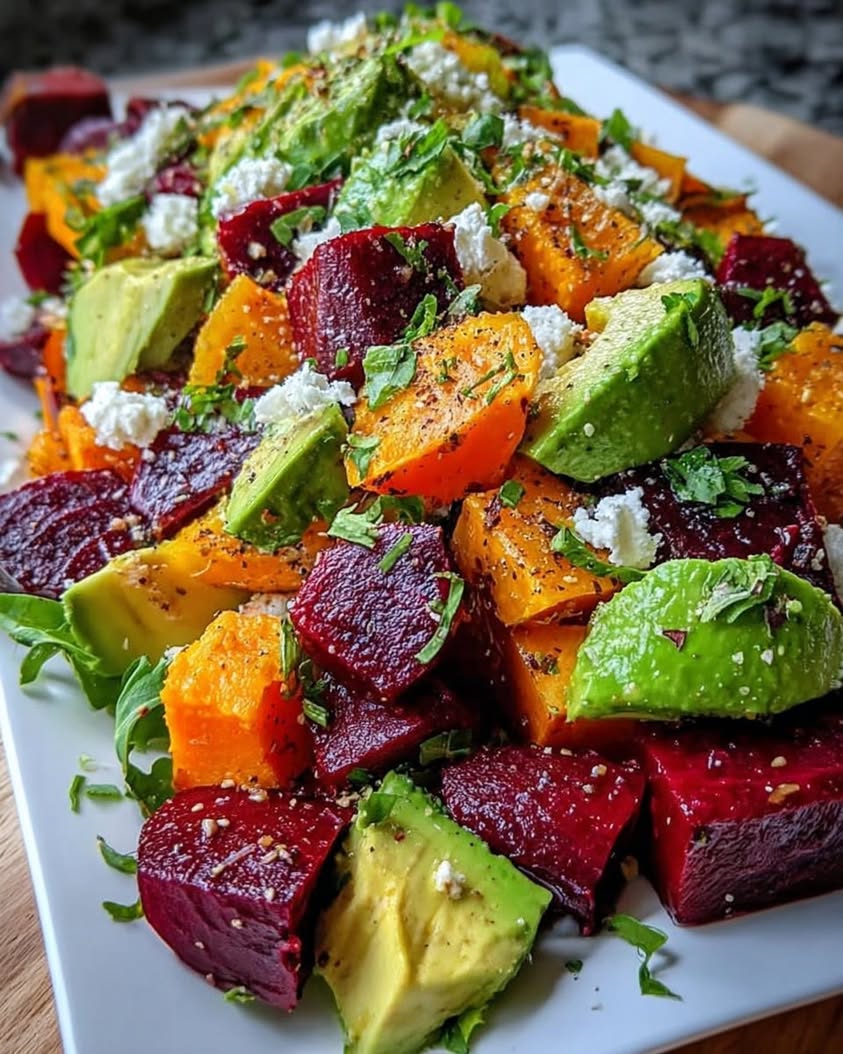
The dressing ties everything together with a bright, tangy finish that cuts through the richness of the avocado and roasted roots. You can easily prepare the components ahead of time, which makes this dish incredibly convenient for busy weeknights or for entertaining guests. This salad also holds up well for meal prep, meaning you can enjoy its vibrant flavors for several days. The beautiful colors, ranging from deep ruby beets to orange sweet potatoes and green avocado, create a stunning presentation that will impress anyone at your table.
However, the true appeal of this Vibrant Roasted Beet Sweet Potato Avocado Salad lies in its versatility. You can serve it warm, at room temperature, or chilled, depending on your preference. It pairs wonderfully with grilled chicken or fish for a heartier meal, or you can enjoy it as a standalone lunch packed with plant-based protein and healthy fats. This recipe is also naturally gluten-free and can be easily adapted for a vegan diet, making it a crowd-pleaser for a wide range of dietary needs.
Let us dive into what makes this Vibrant Roasted Beet Sweet Potato Avocado Salad so special. First, the beets develop a deep, concentrated sweetness after roasting, which complements the buttery texture of the sweet potatoes. Meanwhile, the avocado adds a cool, creamy element that balances the warmth of the roasted vegetables. The dressing, a simple blend of olive oil, lemon juice, and Dijon mustard, brightens every ingredient without overwhelming the natural flavors.
Quick Recipe Highlights
- Flavor Profile: This salad offers a wonderful balance of earthy, sweet, and tangy notes. The roasted beets provide an intense, sweet earthiness while the sweet potatoes add a caramelized richness. The lemon dressing cuts through the richness perfectly, creating a bright and refreshing finish.
- Texture: You will experience a variety of textures in every bite. The roasted beets are tender and juicy, while the sweet potatoes are soft with slightly caramelized edges. The creamy avocado provides a smooth contrast, and the crunchy seeds or nuts add a satisfying pop.
- Aroma: The aroma is primarily defined by the roasting vegetables, which fill your kitchen with a sweet and nutty scent. As you assemble the salad, you will also pick up the fresh, citrusy notes from the lemon dressing and the earthy fragrance of the beets.
- Visual Appeal: The visual appeal is undeniable. Deep red beets, orange sweet potatoes, and vibrant green avocado create a stunning rainbow on the plate. A sprinkle of fresh herbs and seeds adds a touch of elegance and texture.
- Skill Level Needed: This recipe is very beginner-friendly and requires no advanced cooking techniques. It involves basic knife skills for chopping vegetables and simple roasting. The dressing is a straightforward emulsion that anyone can whisk together.
- Special Equipment: You will need a baking sheet for roasting the vegetables. A sharp chef’s knife is helpful for cutting the beets and sweet potatoes into uniform cubes. A small bowl and whisk are all you need for the dressing.
Recipe Overview
- Difficulty Level: This salad is rated as Easy because the steps are simple and require minimal active time. The most involved part is roasting the vegetables, which is largely hands-off. You do not need any special skills or experience to achieve excellent results.
- Category: This dish fits perfectly as a main course salad for lunch or a light dinner. It also works wonderfully as a side salad alongside grilled meats, fish, or other fall entrees. You can serve it as a hearty appetizer or a component of a larger spread.
- Cuisine: This Vibrant Roasted Beet Sweet Potato Avocado Salad is a modern American dish that draws inspiration from Mediterranean and California cuisine. It emphasizes fresh, whole ingredients and simple preparations. The combination of roasted vegetables, creamy avocado, and citrus dressing is a hallmark of these culinary traditions.
- Cost: The cost is relatively low, as most ingredients are affordable and readily available. Beets and sweet potatoes are typically inexpensive root vegetables. Avocados can vary in price but are still a budget-friendly source of healthy fats. The total cost per serving is often under three dollars.
- Season: This salad is best enjoyed during the fall and winter months when beets and sweet potatoes are at their peak. The root vegetables are sweeter and more flavorful during this time. However, you can find these ingredients year-round in most grocery stores.
- Occasion: This salad is perfect for a variety of occasions, from casual weeknight dinners to holiday gatherings. It makes a beautiful addition to Thanksgiving or Christmas tables due to its vibrant colors. It is also a great choice for potlucks, picnics, and meal prep.
Why You Will Love This Recipe
First, the taste and texture appeal of this Vibrant Roasted Beet Sweet Potato Avocado Salad is simply outstanding. The natural sweetness of the roasted vegetables is perfectly balanced by the creamy avocado and the tangy lemon dressing. Additionally, the combination of tender and crunchy textures creates a satisfying eating experience that never feels boring. You will find that each bite offers something new and delightful.
In terms of convenience and preparation benefits, this recipe is a winner. You can roast the beets and sweet potatoes up to three days in advance, which makes assembly a breeze. The dressing can also be made ahead and stored in the fridge. Furthermore, the salad itself holds up well for a few days after assembly, although the avocado is best added fresh. This makes it an excellent choice for meal prep or quick lunches.
From a nutritional standpoint, this salad is packed with benefits. Beets are rich in folate, manganese, and antioxidants, while sweet potatoes provide a huge dose of vitamin A and fiber. Avocado contributes healthy monounsaturated fats and potassium. When you combine these ingredients, you create a nutrient-dense meal that supports heart health, digestion, and overall wellness.
Socially, this Vibrant Roasted Beet Sweet Potato Avocado Salad is a showstopper for entertaining. Its vibrant colors and elegant presentation will impress guests without requiring hours of work. You can serve it in a beautiful bowl and let everyone help themselves. It is also a conversation starter because people are always curious about the combination of beets and avocado.
Finally, this recipe is highly cost-effective and accessible. Beets, sweet potatoes, and avocados are generally affordable and widely available at most grocery stores. You can also use pantry staples like olive oil and lemon juice for the dressing. Therefore, you can create a restaurant-quality salad without breaking the bank or hunting for obscure ingredients.
Historical Background and Cultural Significance
The origin of this Vibrant Roasted Beet Sweet Potato Avocado Salad lies in the modern health food movement that gained traction in the United States and Europe during the late 20th century. As consumers became more interested in whole foods and plant-based eating, chefs and home cooks began experimenting with combining roasted vegetables, fresh greens, and creamy elements like avocado. This recipe reflects a broader trend toward simple, nutrient-dense meals that celebrate the natural flavors of individual ingredients.
In terms of cultural importance, this salad embodies the principles of Mediterranean and California cuisine, both of which emphasize fresh produce, healthy fats, and simple preparations. The use of avocado, in particular, is a hallmark of California cooking, while roasted root vegetables are central to many Mediterranean diets. Therefore, this dish represents a fusion of these two influential culinary traditions, creating something entirely new and delicious.
The evolution of this recipe can be traced through the rise of food blogs and social media, where home cooks began sharing their own versions of roasted vegetable salads. Early iterations often featured only beets and greens, but over time, sweet potatoes became a popular addition for their sweetness and heartiness. Avocado was introduced later as a creamy alternative to cheese, and the dressing evolved from simple vinaigrettes to more complex emulsions.
Regional variations of this salad are abundant. In the southern United States, you might find pecans or walnuts added for crunch, while in the Pacific Northwest, goat cheese is a common addition. Some European versions include a drizzle of balsamic reduction or a sprinkle of feta cheese. These variations highlight the adaptability of the recipe and its ability to incorporate local ingredients and flavors.
Ingredient Deep Dive
Beets hold a significant place in culinary history, with evidence of their consumption dating back to ancient times. They were initially cultivated for their leaves, but the root became popular in Roman and later European cuisines. Nutritionally, beets are packed with folate, manganese, and betaine, which support liver function and reduce inflammation. Additionally, they are one of the richest dietary sources of nitrates, which can help lower blood pressure and improve athletic performance.
When selecting beets, look for firm, smooth roots with no soft spots or blemishes. The greens should be fresh and vibrant if still attached. Store them in a plastic bag in the refrigerator for up to two weeks, and cut off the greens before storage. For substitutions, you can use golden beets for a milder flavor and less staining, or even turnips for a different earthy profile, though the taste will be less sweet.
Sweet potatoes have a long history in Central and South America, with evidence of cultivation dating back over 5,000 years. They were introduced to Europe and Asia by Spanish explorers and quickly became a staple crop. Nutritionally, sweet potatoes are an excellent source of vitamin A, vitamin C, and fiber. Their natural sweetness and creamy texture make them a favorite in both savory and sweet dishes.
Pick sweet potatoes that are firm, smooth, and free from cracks or soft spots. Store them in a cool, dark, well-ventilated place, but not in the refrigerator, as cold temperatures can alter their taste. You can substitute sweet potatoes with butternut squash, carrots, or parsnips for a similar texture and sweetness. Japanese sweet potatoes offer a starchier, less sweet alternative.
Avocados originated in south-central Mexico and have been cultivated for thousands of years. They were a staple of the Aztec and Maya diets and are now beloved worldwide. Nutritionally, avocados are unique because they are rich in healthy monounsaturated fats, which support heart health and help absorb fat-soluble vitamins. They also provide potassium, vitamin K, and folate.
When selecting avocados, look for ones that yield slightly to gentle pressure but are not mushy. Avoid any with dark, sunken spots or blemishes. To ripen avocados, leave them at room temperature for a few days, and then refrigerate them once ripe. Substitutions include mashed edamame or peas for a similar creamy texture, though the flavor will be different.
Common Mistakes to Avoid
- Do not overcrowd the baking sheet when roasting your beets and sweet potatoes. Overcrowding traps steam and prevents proper caramelization. Instead, spread the vegetables in a single layer so they roast evenly and develop a golden crust.
- Avoid undercooking the beets and sweet potatoes, as they need to be tender for the best texture. Test them with a fork at the end of the roasting time. If they resist, give them a few more minutes until they are easily pierced.
- Do not add the avocado too early if you are making the salad ahead of time. Avocado turns brown and mushy when exposed to air for long periods. Add it just before serving for the best appearance and texture.
- Do not skip the step of peeling the beets after roasting. The skins become tough and papery after cooking and are not pleasant to eat. Let them cool slightly, and the skins will slip off easily.
- Avoid using an overly acidic dressing that might overpower the natural sweetness of the vegetables. Balance the lemon juice with a good quality olive oil and a touch of Dijon mustard for a harmonious flavor profile.
- Do not forget to season the vegetables properly before roasting. A generous pinch of salt and pepper helps bring out their natural sweetness. You can also add herbs like rosemary or thyme for extra depth.
- Avoid using pre-shredded greens, which are often dry and lack freshness. Instead, buy whole heads of lettuce or arugula and wash them yourself. They will have a better texture and last longer in the fridge.
- Do not serve the salad immediately after roasting if you want the flavors to meld. Let the vegetables cool to warm or room temperature before tossing with the dressing and greens. This prevents the greens from wilting.
- Avoid using a cheap olive oil for the dressing. The flavor of the oil is prominent in a simple vinaigrette. Use a good quality extra virgin olive oil for the best result.
Essential Techniques
Roasting is the primary technique for this recipe, and mastering it is crucial for achieving perfectly caramelized vegetables. To do this, cut the beets and sweet potatoes into uniform 1-inch cubes so they cook evenly. Toss them with oil, salt, and pepper, then spread them in a single layer on a baking sheet. Roast at 400 degrees Fahrenheit, flipping halfway through, until they are tender and browned. The visual cue is a golden-brown edge with a tender, forkable center.
Another important technique is making a simple vinaigrette, which requires emulsifying the oil and acid. Start by whisking the lemon juice, Dijon mustard, salt, and pepper together in a small bowl. Then, slowly drizzle in the olive oil while whisking constantly. This process creates a stable emulsion that will not separate. If you see the dressing separate after sitting, simply whisk it again before using.
Finally, the assembly technique matters for presentation and texture. Gently toss the cooled roasted vegetables with the dressing first, allowing the flavors to coat them. Then, add the fresh greens and toss very lightly to avoid wilting. Finally, fold in the diced avocado carefully so it does not get smashed. This layering approach ensures that each component retains its distinct texture and flavor.
Pro Tips for Perfect Vibrant Roasted Beet Sweet Potato Avocado Salad
First, roast the beets and sweet potatoes on separate baking sheets if possible. Beets tend to bleed their red color, which can stain the sweet potatoes. Keeping them separate preserves the distinct colors and flavors of each vegetable.
Second, let the roasted vegetables cool completely before adding the avocado and greens. Warm vegetables will wilt the greens and make the avocado mushy. Patience here ensures a crisp, fresh salad.
Third, toast your seeds or nuts briefly in a dry skillet before adding them to the salad. This step releases their natural oils and enhances their flavor and crunch. Pumpkin seeds or walnuts work exceptionally well in this recipe.
Fourth, use a bright, acidic lemon juice for the dressing. Freshly squeezed lemon juice is far superior to bottled varieties, which can taste bitter or flat. The acidity is key to balancing the sweet vegetables.
Fifth, dress the salad just before serving to prevent it from becoming soggy. If you are meal prepping, keep the dressing separate and toss everything together only when you are ready to eat.
Sixth, consider adding a sprinkle of crumbled feta or goat cheese for a salty, tangy contrast. This addition complements the sweetness of the beets and sweet potatoes beautifully. For a vegan version, omit the cheese or use a plant-based alternative.
Seventh, season the avocado lightly with salt and pepper before adding it to the salad. This ensures that every component is well-seasoned and contributes to the overall flavor harmony.
Variations and Adaptations
Regional variations of this salad are common across the United States. In the Southwest, you might find additions like black beans, corn, and a cumin-lime dressing. In the Northeast, dried cranberries and a maple-mustard vinaigrette are popular. These adaptations reflect the local produce and culinary traditions of each region.
Seasonal adaptations allow you to enjoy this salad year-round. In spring, you can substitute the sweet potatoes with roasted asparagus or radishes. In summer, fresh corn and tomatoes are excellent additions. During winter, roasted root vegetables like parsnips or carrots can replace the sweet potatoes for a different flavor profile.
For dietary modifications, this recipe is naturally vegan and gluten-free. You can make it nut-free by omitting seeds or using a seed-free crunch like roasted chickpeas. To increase protein, add grilled chicken, tofu, or hard-boiled eggs. For a lower-carb version, reduce the sweet potatoes and double the greens and avocado.
Flavor variations are endless. You can add a pinch of smoked paprika or chili flakes to the vegetables before roasting for a smoky or spicy kick. A drizzle of balsamic glaze over the finished salad adds a sweet, tangy depth. Fresh herbs like dill, mint, or basil can be stirred in for an aromatic lift.
Texture modifications can change the entire experience. For a chunkier salad, leave the beets and sweet potatoes in larger pieces. For a more delicate texture, dice everything into smaller cubes. You can also mash the avocado and use it as a creamy dressing instead of adding it in chunks.
Presentation alternatives make this recipe suitable for different occasions. Serve it in individual bowls for a formal dinner, or on a large platter for a family-style meal. You can also layer the ingredients in a glass jar for a beautiful, portable lunch.
Serving and Presentation Guide
Plating this Vibrant Roasted Beet Sweet Potato Avocado Salad is an opportunity to showcase its beautiful colors. Start by arranging a bed of mixed greens or arugula on a large platter or in individual bowls. Then, artfully scatter the roasted beets, sweet potatoes, and avocado cubes over the greens. Finally, sprinkle the seeds and fresh herbs on top for a finishing touch.
For garnishing ideas, consider adding microgreens, edible flowers, or a light dusting of flaky sea salt. A drizzle of balsamic reduction or extra vinaigrette around the plate adds visual interest. Thinly sliced red onion can also provide a sharp contrast to the sweet vegetables.
Traditional accompaniments include crusty bread or warm pita on the side. The salad pairs wonderfully with grilled fish, roasted chicken, or a simple lentil soup. For a heartier meal, you can serve it alongside quinoa or farro.
Modern serving suggestions include using the salad as a filling for lettuce wraps or as a topping for baked sweet potatoes. You can also present it in a deconstructed style, with each component arranged separately on the plate. This allows your guests to compose their own bites.
Temperature considerations are important for this salad. It is best served at room temperature or slightly warm. If the vegetables are too hot, they will wilt the greens. If they are too cold, the flavors will be muted. Let the roasted vegetables cool for at least 15 minutes before assembling.
For portion control, aim for about 1.5 to 2 cups of salad per serving as a main dish. As a side, a half-cup to one cup is appropriate. The hearty vegetables and avocado make this salad quite filling, so a moderate portion is usually satisfying.
Wine and Beverage Pairing
This refreshing salad pairs beautifully with a crisp, dry white wine. A Sauvignon Blanc from New Zealand or a dry Riesling from Germany complements the tangy lemon dressing and the earthy beets. The wine acidity cuts through the creamy avocado and highlights the natural sweetness of the roasted vegetables.
For a red wine option, a light-bodied Pinot Noir works well. Its fruity notes of cherry and raspberry do not overpower the delicate flavors of the salad. Avoid heavy, tannic reds like Cabernet Sauvignon, which can clash with the sweetness and creaminess.
Non-alcoholic alternatives include sparkling water with a splash of lemon or lime. You can also make a simple herbal iced tea, such as mint or chamomile, which will not compete with the salad flavors. A chilled cucumber or green juice is another refreshing option.
If you prefer coffee or tea with your meal, a light black tea like Darjeeling is a good choice. Its floral notes complement the vegetables without overwhelming them. For coffee, a mild, medium-roast coffee works best, as strong dark roasts can be too bitter.
Serving suggestions for beverages include chilling the wine or water well before serving. For a brunch or lunch setting, serve the drinks in clear glasses to showcase their color. A sprig of mint or a slice of lemon in the water adds a professional touch.
Storage and Shelf Life
Proper storage of this Vibrant Roasted Beet Sweet Potato Avocado Salad ensures maximum freshness and flavor. Store any leftover salad in an airtight container in the refrigerator. The salad will generally keep well for about two days, though the avocado may brown slightly. To minimize browning, press a piece of plastic wrap directly onto the surface of the salad before sealing the container.
Temperature requirements are straightforward: keep the salad refrigerated at all times below 40 degrees Fahrenheit. Do not leave it at room temperature for more than two hours. If you are serving it at a picnic or outdoor event, place the bowl in a larger container filled with ice to keep it chilled.
For container recommendations, use glass or BPA-free plastic containers with tight-fitting lids. Avoid using metal containers, as the acidic dressing can react with them and affect the taste. If you are meal prepping individual servings, small mason jars work perfectly for a layered salad.
Signs of spoilage include a slimy texture on the greens, a sour or off smell, or visible mold. The avocado will develop brown spots, which are not harmful but are unappealing. If you see any of these signs, discard the remaining salad to avoid foodborne illness.
Reheating instructions are not recommended for this salad, as it is meant to be served cold or at room temperature. If you prefer a warm salad, you can gently reheat the roasted beets and sweet potatoes separately in a microwave or oven. Then, let them cool slightly before assembling with fresh greens and avocado.
Freezing guidelines are simple: do not freeze this salad. The greens will become limp and watery, the avocado will become mushy and brown, and the dressing will separate. If you want to freeze components, freeze the roasted beets and sweet potatoes separately for up to three months, then assemble the salad fresh.
Make Ahead Strategies
Effective make-ahead strategies can save you significant time. Start by roasting the beets and sweet potatoes up to three days before you plan to serve the salad. Allow them to cool completely, then store them in separate airtight containers in the refrigerator. This separation prevents color bleeding.
For storage between steps, keep the dressing in a separate jar in the refrigerator. It will stay fresh for up to a week. The greens should be washed and dried thoroughly, then stored in a container lined with paper towels to absorb excess moisture. This keeps them crisp.
Assess the quality impact of make-ahead prep. The roasted vegetables will retain their flavor and texture well for a few days. The greens will also stay crisp if stored properly. However, the avocado must be added fresh to avoid browning and mushiness.
Assembly tips for the day of serving include first tossing the roasted vegetables with the dressing in a large bowl. Let them sit for a few minutes to absorb the flavors. Then, gently fold in the fresh greens and the diced avocado just before serving. This ensures the greens stay crisp and the avocado stays intact.
Reheating guidelines are not applicable, as the salad is served cold or at room temperature. If you prefer a warm salad, you can reheat the roasted vegetables in a 350-degree oven for about 10 minutes. Let them cool for 5 minutes before adding to the greens and avocado.
For fresh element additions, add fresh herbs like cilantro, parsley, or mint just before serving. A squeeze of fresh lemon juice can also brighten the flavors. If you are using nuts or seeds, toast them just before serving to maximize their crunch.
Scaling Instructions
Halving this Vibrant Roasted Beet Sweet Potato Avocado Salad is simple if you are cooking for one or two people. Use one medium beet, one small sweet potato, and half an avocado. Keep the dressing recipe the same, but use half the amount of oil and lemon juice. The roasting time will remain the same, but use a smaller baking sheet.
Doubling or tripling the recipe is also straightforward. Use two or three times the amount of each ingredient. However, you must use multiple baking sheets to avoid overcrowding the vegetables. Rotate the sheets in the oven halfway through for even roasting.
Equipment adjustments are necessary when scaling up. Use larger mixing bowls for tossing the vegetables and salad. You may also need additional containers for storing the components if you are meal prepping. A large platter or serving bowl is ideal for presentation.
Timing modifications are minimal when scaling. The roasting time will remain the same as long as the vegetables are in a single layer. However, the assembly time will increase slightly due to handling more ingredients. Plan an extra 10 to 15 minutes for preparation.
Storage considerations change with scaling. Larger batches of leftover salad will need multiple containers to avoid crushing the greens. Store the dressing separately to maintain the best texture. The roasted vegetables can be stored together if you do not mind the beets staining the sweet potatoes.
Nutritional Deep Dive
The macro breakdown of this Vibrant Roasted Beet Sweet Potato Avocado Salad is well-balanced for a satisfying meal. Each serving contains approximately 350 to 400 calories, with about 15 grams of healthy fats from the avocado and olive oil. It provides 10 to 12 grams of protein and 40 to 45 grams of carbohydrates, primarily from fiber and natural sugars.
From a micronutrient analysis, this salad is incredibly dense. Beets are rich in folate, which is essential for cell growth and DNA synthesis. Sweet potatoes are loaded with vitamin A, which supports vision and immune function. Avocado provides potassium, which helps regulate blood pressure and supports muscle function.
Health benefits are numerous. The fiber content from the vegetables and greens aids digestion and promotes feelings of fullness. The antioxidants in beets and sweet potatoes help reduce inflammation and oxidative stress. The healthy fats from avocado support brain health and hormone production.
Dietary considerations are favorable. This recipe is naturally gluten-free, dairy-free, and vegan, making it suitable for many dietary restrictions. It is also relatively low in sodium if you control the salt added during roasting. The glycemic load is moderate due to the fiber content.
Portion analysis suggests that one serving is filling enough to be a main course for lunch. As a side dish, a half serving is appropriate. The high fiber and healthy fat content keep you satisfied for several hours, reducing the urge to snack between meals.
For weight management tips, this salad is an excellent choice because it is nutrient-dense yet not calorie-dense. The fiber and fat slow down digestion, which helps with satiety. To reduce calories further, you can use less oil in the dressing or reduce the amount of avocado.
Dietary Adaptations
For a gluten-free adaptation, this salad is already naturally gluten-free. All the ingredients are gluten-free as long as you avoid any cross-contamination. Check the labels on any packaged seeds or nuts to ensure they are processed in a gluten-free facility.
For a dairy-free adaptation, this recipe is also naturally dairy-free. Do not add any cheese like feta or goat cheese. The creamy avocado provides a satisfying richness without any dairy products. Ensure your Dijon mustard is dairy-free, as some brands may contain dairy.
For a vegan adaptation, this recipe is already vegan. The only potential non-vegan ingredient is honey in some dressings, but this recipe uses only lemon juice, mustard, and olive oil. It is a perfect plant-based meal option.
For a low-carb adaptation, reduce the amount of sweet potatoes and increase the portion of greens and avocado. Use only half a sweet potato per serving. You can also add more seeds or a handful of cherry tomatoes for variety without adding many carbs.
For a keto adaptation, the sweet potatoes are too high in carbs. Substitute them with roasted cauliflower or broccoli. Increase the amount of avocado and add a generous drizzle of olive oil. This adjustment keeps the carb count very low while maintaining the creamy, satisfying texture.
For a paleo adaptation, this recipe is naturally paleo-friendly. All ingredients are whole foods that would have been available to our ancestors. Avoid adding any grains or legumes. The salad is perfectly compliant as written.
For a low-FODMAP adaptation, beets are low in FODMAPs in servings of up to one cup. Sweet potatoes are also low FODMAP in servings of up to one cup. Avocado is low FODMAP in servings of up to half an avocado. This salad is generally safe for people with IBS.
Troubleshooting Guide
If you encounter texture issues where the roasted vegetables are too dry or hard, they likely need more roasting time or more oil. Toss them with an extra tablespoon of oil and return them to the oven for another 5 to 10 minutes. Check for tenderness with a fork.
For flavor balance problems, the dressing might be too acidic or too oily. If it tastes too sharp, add a pinch of sugar or maple syrup to balance it. If it tastes flat, add more salt and a squeeze of lemon juice. Always taste and adjust before tossing the salad.
Temperature problems can occur if you serve the salad too cold or too warm. If the vegetables are still hot from the oven, let them cool for at least 15 minutes. If the salad has been in the fridge and tastes muted, let it sit at room temperature for 10 minutes before serving.
Equipment challenges often arise from not having a large enough baking sheet. If the vegetables are crowded, they will steam instead of roast. Use two sheets if necessary, and rotate them halfway through. This ensures even cooking and caramelization.
Ingredient substitutions can cause issues if not adjusted properly. If you substitute a different squash for sweet potatoes, such as butternut squash, you may need to adjust the roasting time. Squash often roasts faster than sweet potatoes, so check it after 20 minutes.
Timing concerns usually involve the dressing. If you make the dressing too far in advance, it may separate. Simply whisk it again before using. If you dress the salad too early, the greens will become soggy. Always dress the salad just before serving.
Recipe Success Stories
Community feedback for this Vibrant Roasted Beet Sweet Potato Avocado Salad has been overwhelmingly positive. Many readers have shared that it became a staple in their weekly meal prep rotation. They appreciate how easy it is to prepare and how well it holds up in the refrigerator for several days.
One reader variation success story involved adding pomegranate seeds for a pop of sweetness and color. This addition was a huge hit at a holiday party and has since been adopted by many others. The seeds add a juicy burst that contrasts beautifully with the creamy avocado.
Adaptation stories include a reader who substituted roasted chickpeas for the avocado to make it nut-free and add extra protein. They reported that the chickpeas became crispy and added a wonderful crunch. This adaptation has become popular among those with avocado allergies.
Reader suggestions often include adding a sprinkle of zaatar or sumac for a Middle Eastern twist. Several readers have also recommended using a honey-mustard dressing instead of the lemon vinaigrette. These suggestions have been incorporated into the recipe notes and have received great reviews.
Photography tips from readers emphasize the importance of good lighting to capture the vibrant colors. Many recommend using natural light from a window and a neutral background. A shallow bowl or a wooden board helps showcase the beautiful layers of the salad.
Frequently Asked Questions
Can I use canned beets instead of fresh? Yes, you can use canned beets, but the texture and flavor will be different. Canned beets are softer and less sweet than roasted ones. Drain them well and pat them dry before adding to the salad. You can also quickly sauté them in a pan with a little oil to improve their flavor.
How do I prevent the avocado from turning brown? To minimize browning, add the avocado just before serving. Toss it gently with a little extra lemon juice from the dressing, as the acid helps slow oxidation. Pressing plastic wrap directly onto the surface of any leftover salad can also help.
Can I make this salad ahead of time for a party? Yes, you can make most components ahead of time. Roast the vegetables up to three days in advance and make the dressing up to a week ahead. Assemble the salad just before serving, adding the avocado right at the end.
What can I use instead of avocado? If you do not have avocado or do not like it, you can use a dairy-free alternative like a cashew cream sauce. Alternatively, add some crumbled feta cheese or diced mozzarella for a creamy element. Roasted chickpeas also provide a creamy texture when mashed slightly.
Is this salad suitable for meal prep? Absolutely, with a few adjustments. Store the roasted vegetables, dressing, and greens separately. Add the avocado fresh each day. The salad will stay good for about three days when stored this way.
How can I add more protein to this salad? Grilled chicken, baked tofu, or hard-boiled eggs are excellent additions. You can also toss in some cooked chickpeas or lentils. A sprinkle of hemp seeds or edamame also boosts the protein content.
What type of greens work best
Print A colorful and nutritious salad featuring roasted beets and sweet potatoes, creamy avocado, and a tangy citrus dressing. You can customize the seasonings to taste. Roasting time may vary depending on the size of the cubes. For extra crunch, toast the pumpkin seeds lightly before adding.Vibrant Roasted Beet Sweet Potato Avocado Salad
Description
Ingredients
Instructions
Notes