Tuscan-Inspired Creamy Ravioli with Spinach and Sun-Dried Tomatoes: A Delicious One-Pan Dinner
This Tuscan-Inspired Creamy Ravioli with Spinach and Sun-Dried Tomatoes is the weeknight dinner you have been waiting for. It brings together tender cheese ravioli, a luscious cream sauce, and the vibrant flavors of the Italian countryside. You get a restaurant-quality meal without spending hours in the kitchen. The best part is that everything cooks in a single pan, which means less cleanup and more time for you to relax.
Imagine twirling your fork around perfectly cooked ravioli coated in a velvety sauce. The sun-dried tomatoes add a sweet and tangy pop, while the fresh spinach wilts into the dish for a boost of color and nutrition. This recipe is incredibly forgiving and adaptable. You can use your favorite store-bought ravioli or make your own if you are feeling ambitious. Either way, the result is a comforting bowl of pasta that tastes like a warm hug.
The simplicity of this Tuscan-Inspired Creamy Ravioli with Spinach and Sun-Dried Tomatoes is what makes it so special. It relies on a handful of high-quality ingredients to create a sauce that is rich but not heavy. With just thirty minutes from start to finish, this dish is perfect for busy families, solo dinners, or impressing unexpected guests. It is a true celebration of Italian-inspired flavors made easy.
Quick Recipe Highlights
- Flavor Profile: This dish delivers a perfect balance of creamy, tangy, and savory. The Parmesan cheese adds a salty nuttiness while the sun-dried tomatoes offer a sweet and slightly acidic kick. Garlic and basil round out the profile with their aromatic notes, creating a deeply satisfying sauce.
- Texture: You will find a wonderful interplay of textures here. The ravioli is tender and slightly chewy, the spinach provides a soft bite, and the sun-dried tomatoes have a pleasant chewiness. The sauce itself is silky smooth, coating every piece of pasta beautifully.
- Aroma: When you start cooking the garlic and shallots in olive oil, you will immediately smell a sweet and savory scent. The addition of cream and Parmesan fills your kitchen with a rich, comforting fragrance. Fresh basil added at the end brings a bright, peppery finish to the air.
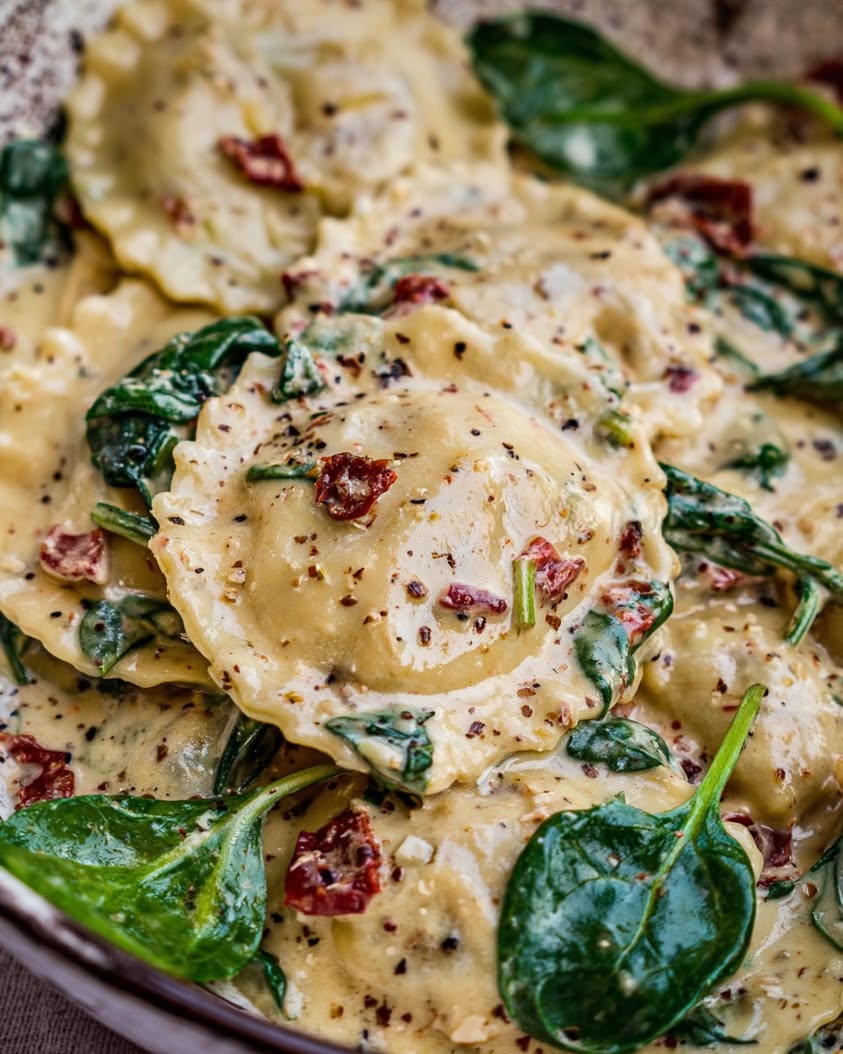
- Visual Appeal: This dish is a feast for the eyes with its contrasting colors. The bright green spinach is nestled next to the deep red of the sun-dried tomatoes. The creamy white sauce coats the golden pasta pillows, and a final sprinkle of red pepper flakes and basil adds a beautiful finishing touch.
- Skill Level Needed: This is a beginner-friendly recipe that even experienced cooks will love. There is no complicated technique required. You simply sauté aromatics, build the sauce, and simmer the ravioli until it is done. It is a straightforward process that builds confidence in the kitchen.
- Special Equipment: You will need a large skillet or a Dutch oven with a lid. A wooden spoon for stirring and a good chef’s knife are also essential. No special gadgets are required, which makes this recipe accessible to everyone.
Recipe Overview
- Difficulty Level: We have rated this as a beginner recipe because the steps are simple and the timing is forgiving. You do not need to worry about overcooking the ravioli because it simmers right in the sauce. The only real skill involves sautéing the aromatics until fragrant, which is easy to master. It is a fantastic starting point for anyone learning to cook creamy pasta dishes.
- Category: This dish falls under the main course category for dinner. It is hearty enough to stand alone but also pairs well with a simple salad or crusty bread. You could also serve it as a substantial side dish for a larger Italian-themed feast. It is incredibly versatile for any meal plan.
- Cuisine: This recipe is deeply inspired by the rustic cooking of Tuscany, a region in central Italy known for its simple, high-quality ingredients. Tuscan cuisine often features beans, bread, olive oil, and fresh vegetables. We have taken that philosophy and applied it to a creamy pasta dish that feels both authentic and modern.
- Cost: Making this Tuscan-Inspired Creamy Ravioli with Spinach and Sun-Dried Tomatoes is very affordable. The main expense is the ravioli and the Parmesan cheese. Sun-dried tomatoes and spinach are relatively inexpensive. Overall, you can feed a family of four for under twenty dollars, which is much cheaper than takeout.
- Season: While you can enjoy this dish year-round, it is especially comforting in the fall and winter months. The creamy sauce warms you up from the inside out. That said, you can easily lighten it up in the summer by adding more fresh vegetables like zucchini or cherry tomatoes.
- Occasion: This is a perfect meal for a busy weeknight when time is short. It is also elegant enough for a casual dinner party or a romantic date night at home. You can bring it to a potluck or serve it as a holiday side dish for a change of pace.
Why You’ll Love This Recipe
First and foremost, this recipe delivers an incredible taste and texture experience. The combination of creamy sauce, tender ravioli, and the chewy sweetness of sun-dried tomatoes is simply irresistible. Every bite offers a little bit of everything. The spinach adds a fresh, earthy note that cuts through the richness of the cream. It is a balanced and satisfying dish that will please even picky eaters.
Convenience is a major advantage of this Tuscan-Inspired Creamy Ravioli with Spinach and Sun-Dried Tomatoes. You only need one pan, which means minimal cleanup. The entire process takes just thirty minutes from start to finish. You do not need to boil the ravioli separately because it cooks directly in the sauce, absorbing all the flavor. This makes it a lifesaver on hectic weeknights when you want something homemade without the hassle.
Nutritionally, this dish has a lot to offer. You get a good dose of protein from the cheese ravioli and Parmesan. The spinach provides vitamins A, C, and K along with iron. Sun-dried tomatoes are packed with lycopene, a powerful antioxidant. By using whole-milk dairy, you also get a satisfying meal that will keep you full for hours. It is comfort food that happens to be good for you.
Socially and entertainment-wise, this dish is a star. It looks impressive when served with a sprinkle of red pepper flakes and fresh basil. Your guests will think you spent a long time in the kitchen. You can easily double the recipe for a crowd. It is a conversation starter because of its beautiful colors and rich aroma. It makes everyone feel special.
Finally, this recipe is incredibly cost-effective and uses accessible ingredients. You can find all of these items at any standard grocery store. The ingredients are not exotic or expensive. You can easily substitute the ravioli with a gluten-free or dairy-free option if needed. This makes it a reliable and economical choice for feeding your family or just yourself.
Historical Background and Cultural Significance
Ravioli itself has a long and storied history in Italian cuisine, dating back to the Middle Ages. The first known mention of ravioli appears in the writings of Francesco di Marco, a merchant from the 14th century. In those days, ravioli were often filled with leftover meats and vegetables, making them a practical and delicious way to use up ingredients. They were a food of the people, simple yet luxurious.
In Tuscany, the culinary tradition emphasizes simplicity and respect for the ingredient. Tuscan cooks rely on olive oil, fresh herbs, and seasonal produce. The creamy sauce in this recipe is a modern adaptation of classic Italian cooking techniques. Butter and cream were historically used in northern Italy, but the Tuscan version often uses a lighter touch. This recipe honors that tradition by keeping the sauce flavorful but not overwhelming.
The evolution of this recipe is a story of adaptation. As Italian immigrants brought their food to the United States, they adapted their recipes to local ingredients. The use of sun-dried tomatoes became popular in the 1980s and 1990s. Combining them with a creamy sauce and ravioli created a new American-Italian classic. This dish represents the beautiful fusion of tradition and innovation.
Regional variations of this dish exist across Italy. In the south, you might find ravioli in a simple tomato sauce. In the north, a butter and sage sauce is common. This Tuscan-inspired version takes the best of both worlds. It uses the richness of cream from the north and the vegetable-forward approach of Tuscany. It is a testament to the versatility of Italian cuisine and its ability to evolve while staying true to its roots.
Ingredient Deep Dive
Cheese Ravioli: This is the heart of the dish. Cheese ravioli has its origins in Emilia-Romagna and Lombardy, where ricotta and spinach fillings are traditional. Nutritionally, it provides carbohydrates for energy and protein from the cheese. When selecting ravioli, look for ones that are plump and not stuck together in the package. Store it in the refrigerator and use it by the expiration date. For a substitution, you can use tortellini, gnocchi, or even fresh pasta sheets cut into squares.
Sun-Dried Tomatoes: These little gems are actually a form of preserved tomato. They were originally created in Italy as a way to store the summer tomato harvest for winter. Sun-dried tomatoes are rich in umami and provide a concentrated sweetness. They are also a good source of fiber and antioxidants. Look for jars packed in oil with herbs, or buy dry-packed ones and rehydrate them. Store opened jars in the refrigerator. You can substitute with roasted red peppers or fresh cherry tomatoes if needed.
Spinach: Spinach is a leafy green that originated in Persia and traveled to Europe in the Middle Ages. It is incredibly nutritious, packed with iron, calcium, and vitamins. In this dish, it adds bulk and a beautiful green color. Choose fresh spinach with crisp, dark green leaves and no yellow spots. Store it in a plastic bag in the refrigerator with a paper towel to absorb moisture. You can substitute with kale or Swiss chard, but adjust the cooking time as they are tougher.
Heavy Cream: Cream is the backbone of the luxurious sauce. It has been a staple in European cooking for centuries, especially in French and Italian cuisines. It adds richness and body to the sauce. For this recipe, heavy cream or whipping cream works best because it thickens nicely. You can substitute with half-and-half for a lighter sauce, or use full-fat coconut milk for a dairy-free option. Store cream in the coldest part of your refrigerator.
Parmesan Cheese: True Parmigiano-Reggiano comes from specific regions in Italy. It is a hard, granular cheese with a nutty, salty flavor. It adds depth to the sauce and helps thicken it. Always buy a block and grate it yourself for the best flavor and meltability. Store it wrapped in parchment paper in the refrigerator. You can substitute with Pecorino Romano for a saltier taste, or use a good quality vegetarian alternative.
Garlic and Shallot: These aromatics form the flavor base of the dish. Garlic has been used for thousands of years in cooking and medicine. Shallots are milder than onions and add a subtle sweetness. Use fresh garlic cloves and firm shallots for the best flavor. Store them in a cool, dark, dry place. You can substitute shallot with a small yellow onion or even a leek. Do not skip the garlic, as it is essential.
Common Mistakes to Avoid
- Overcooking the ravioli is a frequent mistake. Ravioli simmers in the sauce for only 3-5 minutes, depending on the brand. If you cook it too long, it becomes mushy and falls apart. Watch the pasta closely and test it for doneness after three minutes.
- Using pre-grated Parmesan cheese is a common error. Pre-grated cheese contains anti-caking agents that prevent it from melting smoothly. This can result in a grainy sauce. Always grate your own Parmesan from a block for the best texture.
- Adding the spinach all at once can cause it to clump. Add the spinach in handfuls, allowing each batch to wilt before adding the next. This ensures even cooking and prevents a mushy pile of greens.
- Not salting the pasta water is a mistake many people make. Even though the ravioli cooks in the sauce, you still need to season the liquid. If you do not salt the water, the entire dish will taste flat. Season generously.
- Using low-fat cream or milk is a common substitution that fails. Low-fat dairy can curdle when simmered with acidic ingredients like sun-dried tomatoes. Stick to heavy cream for a stable, velvety sauce.
- Overcrowding the pan is a problem if you double the recipe. The ravioli needs space to cook evenly. Use a larger skillet or cook it in two batches to ensure everything cooks properly.
- Forgetting to reserve pasta water is a missed opportunity. The starchy pasta water helps loosen the sauce and makes it cling to the ravioli. Reserve a cup before draining, even if you do not think you will need it.
- Adding the sun-dried tomatoes too early can make them lose their texture. Add them near the end of cooking so they retain a pleasant chewiness. If you add them too soon, they become soft and mushy.
- Not tasting for seasoning before serving is a critical error. The cheese is salty, and the tomatoes are tangy. Taste your sauce before serving and adjust the salt and pepper accordingly.
- Letting the sauce boil aggressively is a mistake that breaks the emulsion. Keep the sauce at a gentle simmer, not a rolling boil. This prevents the cream from separating and becoming greasy.
Essential Techniques
Sweating Aromatics: This technique involves cooking the garlic and shallot in oil over low heat until they become soft and translucent. It is important because it releases their natural sugars and flavors without burning them. To master this, keep the heat on medium-low and stir frequently. The common pitfall is using high heat, which burns the garlic and makes it bitter. The visual cue is when the shallot turns a pale, golden color and the garlic is fragrant but not browned.
Building a Cream Sauce: This is a core technique for this dish. After sweating the aromatics, you add the cream and allow it to come to a gentle simmer. This allows the flavors to meld together. The key is to not let the cream boil too hard, as it can separate. Stir constantly with a wooden spoon to prevent a skin from forming on the surface. You will know the sauce is ready when it thickens slightly and coats the back of your spoon.
Simmering Ravioli in Sauce: Instead of boiling the ravioli separately, you cook it directly in the sauce. This infuses the pasta with flavor and thickens the sauce with starch. The important thing is to add the ravioli in a single layer. Cover the pan and let it simmer gently for 3-4 minutes. The visual cue is the ravioli puffing up slightly and becoming tender. Do not stir too vigorously, or the ravioli might break apart. Use a gentle shaking motion or a spatula to turn them.
Pro Tips for Perfect Tuscan-Inspired Creamy Ravioli with Spinach and Sun-Dried Tomatoes
Always use full-fat cream for the best consistency. Low-fat options will not thicken properly and might split. Believe me, the extra calories are worth it for a perfect sauce. Reserve a ladleful of pasta cooking water before you add the ravioli to the sauce. This starchy water can help loosen the sauce if it becomes too thick, and it helps the sauce stick to the pasta. If you want a little heat, add a pinch of red pepper flakes when sautéing the garlic. It adds a subtle warmth that enhances the other flavors.
Do not skip the fresh basil at the end. It adds a bright, peppery finish that cuts through the richness. If you can find it, use lemon basil for a citrusy twist. For the best texture, cut your sun-dried tomatoes into smaller pieces before adding them. This ensures that every bite has a little piece of tomato. If your sauce becomes too thick, stir in a splash of milk or chicken broth to thin it out. Remember, the sauce will continue to thicken as it sits.
Finally, let the dish rest for a minute or two after you turn off the heat. This allows the flavors to meld together and the sauce to settle. It also brings the temperature down slightly so you do not burn your mouth. Garnish with extra Parmesan and a drizzle of good olive oil right before serving. This adds a final layer of flavor and makes the dish look professional.
Variations and Adaptations
Regional variations of this dish can be found across Italy. In the north, you might add pancetta or bacon for a smoky flavor. In the south, they might use a spicy tomato sauce instead of cream. You can adapt the recipe to your own region by using local produce. For example, in California, you might add sliced avocado for a creamy texture. In the Midwest, you could add corn for sweetness. The possibilities are endless.
Seasonal adaptations are easy to implement. In the spring, use fresh peas and asparagus instead of spinach. In the fall, add roasted butternut squash or pumpkin for a hearty twist. In the winter, use kale or Swiss chard instead of spinach. In the summer, fresh cherry tomatoes can replace the sun-dried version for a lighter taste. Always adjust the cooking time based on the vegetables used.
Dietary modifications are also simple. To make this gluten-free, use gluten-free ravioli or substitute with gluten-free gnocchi. For a dairy-free version, use full-fat coconut cream and vegan Parmesan cheese. You can make this vegetarian-friendly by using a vegetable broth-based ravioli. For a lower-carb option, use zucchini noodles or shirataki noodles instead of ravioli. Each adaptation requires slight adjustments to the cooking time.
Flavor variations can change the entire character of the dish. Add a tablespoon of pesto for a burst of basil and nutty flavor. Stir in some roasted garlic for a sweeter, milder garlic taste. Add a pinch of nutmeg to the cream sauce for a warm, aromatic note. For a smoky flavor, use smoked paprika or add a touch of liquid smoke. You can also swap the Parmesan for pecorino for a saltier, sharper taste.
Texture modifications can make the dish more interesting. Add toasted pine nuts or walnuts for a crunchy contrast. Sprinkle breadcrumbs toasted in butter on top for a crisp coating. You can also use a mix of fresh and frozen spinach for different textures. The frozen spinach will be softer, while the fresh will have a brighter bite. Experiment with different combinations to find your favorite.
Presentation alternatives can elevate the dish for special occasions. Serve it in individual cast-iron skillets for a rustic look. Pour the sauce over the ravioli and broil it for a minute to create a golden crust. You can also serve it in a large shallow bowl and garnish with edible flowers. For a family-style dinner, serve it in a large pasta bowl with a sprinkling of parsley on top.
Serving and Presentation Guide
Plating techniques for this dish are simple but effective. Use tongs to twist a portion of ravioli into a neat nest in the center of the bowl. Spoon extra sauce over the top, making sure to get some sun-dried tomatoes and spinach on each serving. A small ladle works well for this purpose. Make sure the bowl is warm to keep the dish hot longer. A warm bowl makes a huge difference in the eating experience.
Garnishing ideas can really make the dish pop. A sprinkle of freshly cracked black pepper adds a visual and aromatic contrast. Fresh basil leaves placed on top look elegant and smell wonderful. A dusting of Parmesan cheese over the top creates a beautiful finish. For a pop of color, add a few whole sun-dried tomatoes or a slice of lemon on the side. Microgreens are another excellent option for a modern touch.
Traditional accompaniments include a simple green salad with a lemon vinaigrette. This helps cut through the richness of the creamy sauce. Crusty bread is also a classic choice for soaking up any leftover sauce. A glass of Chianti or a light red wine is a perfect beverage pairing. For a non-alcoholic option, try a sparkling water with lemon or a fresh fruit juice.
Modern serving suggestions involve creating a complete meal. You can serve this ravioli alongside grilled chicken or shrimp for extra protein. Roasted vegetables like asparagus or broccoli make a great side dish. For a lighter meal, serve smaller portions as an appetizer for a dinner party. The creamy sauce pairs wonderfully with a side of roasted potatoes or polenta.
Temperature considerations are crucial for this dish. Serve it immediately while the sauce is hot and the ravioli is tender. The sauce will thicken as it cools, so you might need to add a splash of milk or broth if reheating leftovers. Do not let the dish sit out at room temperature for more than two hours. For a make-ahead option, cool the dish completely before storing it in the refrigerator.
Portion control tips are helpful for meal planning. A standard serving is about one cup of cooked ravioli with sauce. This provides a satisfying and filling meal without overeating. If you serve it with a side salad, you can reduce the portion size to three-quarters of a cup. Use a kitchen scale if you want to be precise. This recipe yields four generous servings or six smaller ones.
Wine and Beverage Pairing
Wine pairings for this creamy dish should complement its richness. A Chianti Classico is a classic choice because its acidity cuts through the cream. A Pinot Grigio is another excellent option, offering a crisp, clean finish. For a bolder red, try a Sangiovese from Tuscany. It has earthy notes that match the sun-dried tomatoes beautifully. Serve the wine slightly chilled for white, or at room temperature for red.
Non-alcoholic alternatives can be just as satisfying. A sparkling water with a squeeze of lemon and a pinch of salt creates a refreshing palate cleanser. A chilled green tea with mint also pairs well, offering a subtle herbal note. For a mocktail, mix club soda with a splash of cranberry juice and a sprig of rosemary. The subtle tartness of the cranberry juice helps balance the creamy sauce.
Coffee and tea pairings are great for a post-dinner course. A medium-bodied coffee, like a Breakfast Blend, pairs nicely with the cheese in the dish. A chamomile tea offers a calming finish after a rich meal. For an iced option, try a cold brew with a splash of milk. Avoid heavily roasted coffees that can overwhelm the flavors.
Temperature considerations for beverages are important. Serve white wines and sparkling water well-chilled. Red wines should be at a cool room temperature, around 60 to 65 degrees Fahrenheit. Hot beverages should be served at a comfortable temperature to avoid burning your mouth. Always offer water as a neutral option for guests.
Serving suggestions for beverages include pouring the wine or mocktail into a stemmed glass. This allows the aromatics to be fully appreciated. Provide a coaster for each glass to protect your table. If you are serving a meal, offer the beverage before the food arrives so guests can sip while waiting. Remember to refill glasses as needed.
Storage and Shelf Life
Storage methods for this creamy dish require careful attention. Always store leftovers in an airtight container to prevent the pasta from drying out. Separate any large portions into smaller containers to cool faster. Do not leave the dish out for more than two hours. The creamy sauce can be susceptible to bacterial growth if left at room temperature for too long. When in doubt, throw it out.
Temperature requirements are simple but crucial. Store the container in the refrigerator at a temperature of 40 degrees Fahrenheit or below. Placing the container in the coldest part of the fridge, usually the back, is best. Avoid storing it in the door where temperatures fluctuate. This ensures the dish stays fresh for up to three to four days.
Container recommendations are important for maintaining quality. Use a glass or plastic container with a tight-fitting lid. Glass containers are better because they do not absorb odors or stains. If you are using plastic, make sure it is BPA-free. A container that is slightly too large is better than one that is too small, as it allows for even cooling.
Signs of spoilage are easy to spot. If the sauce has separated or looks watery, it might be spoiled. A sour or off smell is a clear indicator that the dish has gone bad. If you see any mold growing on the surface, discard the entire container immediately. Taste a small amount if you are unsure, but trust your nose.
Reheating instructions are key to reviving the dish. The best method is to reheat it gently on the stove in a saucepan over low heat. Add a splash of milk or chicken broth to loosen the sauce and stir frequently. Microwaving is faster but can make the ravioli rubbery. If you use the microwave, do it in thirty-second intervals and stir between each interval. Do not boil it vigorously, or the sauce will break.
Freezing guidelines are useful for long-term storage. While it is not recommended due to the cream-based sauce, you can freeze it. Cool the dish completely before transferring it to a freezer-safe bag. Remove as much air as possible before sealing. It will last for up to two months in the freezer. Thaw it in the refrigerator overnight before reheating. The texture might be slightly different, but the flavor will still be good.
Make Ahead Strategies
Prep timeline is essential for a stress-free dinner. You can chop the garlic and shallot up to two days in advance. Store them in an airtight container in the refrigerator. You can also measure out the cream and grate the Parmesan cheese ahead of time. This cuts your prep time down to just a few minutes on the day you plan to cook. Having everything ready makes the process smooth and enjoyable.
Storage between steps is important if you are prepping. Do not cook the sauce ahead of time, as it may separate or thicken too much. Instead, store the dry ingredients separately. Keep the cheese in the refrigerator and the cream in the coldest part of the fridge. The sun-dried tomatoes can be stored at room temperature if they are in oil. Assemble everything just before cooking for the best results.
Quality impact assessment is necessary when prepping. Making the sauce ahead of time will affect its texture. The cream might break or become grainy upon reheating. The ravioli itself will become mushy if cooked and stored. For the best quality, only make the sauce and cook the ravioli right before serving. The fresh spinach should also be added at the last minute to maintain its bright color and texture.
Assembly tips can help you get ahead. You can cook the ravioli in the sauce up to the point of adding the spinach. Then, cool the dish completely and store it in the refrigerator. When you are ready to serve, reheat it gently and add the fresh spinach. This approach ensures the ravioli stays tender and the spinach is perfectly wilted. However, the sauce may need a splash of milk to loosen it up.
Reheating guidelines are the same as for leftovers. Use a gentle heat to prevent the sauce from separating. Stir in a small amount of milk or broth to restore the creamy consistency. Do not microwave the dish if you can avoid it, as it can make the pasta tough. A quick stovetop reheat is always better. Taste the dish and adjust the seasoning before serving.
Fresh element additions can elevate the reheated dish. Add a handful of fresh spinach just before serving to bring back the bright green color. Sprinkle fresh basil or parsley on top for a burst of flavor. A final drizzle of good olive oil or a squeeze of lemon can also freshen up the dish. These simple additions can make the leftovers taste almost as good as the original.
Scaling Instructions
Halving the recipe is simple if you are cooking for two. Use half the amount of ravioli, cream, and cheese. The cooking time will be slightly shorter because there is less volume in the pan. Use a smaller skillet to ensure the sauce coats the ravioli properly. You might need to add a little less cream to maintain the right consistency. Taste and adjust the seasoning accordingly.
Doubling or tripling the recipe requires some planning. Use a very large skillet or a Dutch oven to accommodate the increased volume. Do not overcrowd the pan, as the ravioli needs space to cook evenly. You might need to cook the ravioli in batches if your pan is not large enough. The cooking time will increase slightly due to the larger volume of liquid. Stir gently to avoid breaking the pasta.
Equipment adjustments are necessary when scaling. For a doubled recipe, use a 12-inch or 14-inch skillet. For a tripled recipe, you might need a stockpot or a very large Dutch oven. A larger pan allows for even heat distribution and prevents sticking. Make sure your stove burner is large enough to heat the pan evenly. You might need to increase the cooking time by a few minutes.
Timing modifications are important when scaling up or down. For a smaller batch, start checking the ravioli for doneness after two minutes. For a larger batch, it might take five to six minutes. The sauce will also take longer to come to a simmer. Monitor the heat carefully to prevent burning. The sauce might thicken faster due to the increased starch from the pasta, so have extra cream or broth on hand.
Storage considerations change with larger batches. Store leftovers in multiple smaller containers for easier reheating. The larger the container, the longer it takes to cool, which can affect food safety. Label each container with the date so you know how long it has been stored. Use the leftovers within three to four days. Freeze any portions you do not plan to eat within that time.
Nutritional Deep Dive
Macro breakdown for a single serving of this dish is quite balanced. You get approximately 550 calories, with 25 grams of fat, 60 grams of carbohydrates, and 20 grams of protein. The fat comes from the cream and cheese, while the carbohydrates are from the pasta. The protein is from the dairy and the egg in the ravioli. This makes it a satisfying and filling meal. It provides enough energy to keep you going for several hours.
Micronutrient analysis reveals a good variety of vitamins and minerals. Spinach is a powerhouse of vitamin K, vitamin A, and folate. Sun-dried tomatoes are rich in lycopene and potassium. Dairy provides calcium and vitamin D. This dish contributes significantly to your daily intake of these essential nutrients. It is a tasty way to get your greens and dairy in one meal.
Health benefits are numerous. The lycopene from the sun-dried tomatoes has been linked to heart health and cancer prevention. The calcium from the dairy supports strong bones. The spinach provides antioxidants that reduce inflammation. The garlic supports immune function. Overall, this dish is a nutrient-dense option that supports overall health. It is a great choice for a balanced diet.
Dietary considerations are important for some people. This recipe contains gluten, dairy, and eggs, making it unsuitable for certain diets. However, it is naturally vegetarian and can be made gluten-free or dairy-free with simple substitutions. The fat content is moderate, so it can fit into a heart-healthy diet if consumed in moderation. Always consult with a healthcare professional for specific dietary advice.
Portion analysis helps with weight management. One serving of this dish provides a substantial amount of calories. If you are trying to lose weight, you can reduce the portion size or serve it with a large side of steamed vegetables. You can also use a leaner cream alternative or reduce the amount of cheese. Balancing this dish with lighter meals throughout the day is recommended.
Weight management tips include being mindful of your portion sizes. Use a smaller plate to make a serving look larger. Eat slowly and savor each bite to feel more satisfied. Drink a glass of water before your meal to help control your appetite. Pair this dish with a high-fiber salad to increase fullness. These simple strategies can help you enjoy this delicious meal without overindulging.
Dietary Adaptations
Gluten-free adaptation is straightforward. Simply use gluten-free ravioli made from rice flour or corn flour. The cooking time might be slightly different, so check the package instructions. The sauce itself is naturally gluten-free, so no changes are needed. Ensure that your sun-dried tomatoes and other ingredients are certified gluten-free to avoid cross-contamination. This adaptation works beautifully and tastes just as good.
Dairy-free adaptation requires a few key swaps. Use full-fat coconut cream or cashew cream instead of heavy cream. Replace the Parmesan cheese with a dairy-free alternative made from nuts or soy. Use a vegan butter or olive oil instead of regular butter. The sauce might be slightly different in texture but will still be rich and creamy. Coconut cream adds a subtle sweetness that pairs well with the tomatoes.
Vegan adaptation is similar to dairy-free but also requires a vegan ravioli. Look for ravioli filled with tofu or vegetables instead of cheese. Use a plant-based cream like oat cream or soy cream. Nutritional yeast can replace the Parmesan for a cheesy flavor. The dish will be completely plant-based without sacrificing taste. It is a crowd-pleasing option for vegan guests.
Low-carb adaptation is possible with some creativity. Use zucchini noodles or spaghetti squash instead of ravioli. Alternatively, use shirataki noodles or a low-carb pasta substitute. The sauce itself is low in carbs, so it works perfectly. You can add more spinach and sun-dried tomatoes to increase the volume. This adaptation is great for those following a keto or low-carb lifestyle.