Sweet Potato & Beet Stacks with Pesto, Burrata & Walnuts: A Showstopping Appetizer
Sweet Potato & Beet Stacks with Pesto, Burrata & Walnuts bring a restaurant-quality appetizer right into your home kitchen. This vibrant dish layers tender roasted sweet potato rounds with earthy beet slices, then crowns them with creamy burrata, bright basil pesto, and crunchy toasted walnuts. Moreover, the contrast of colors alone makes this appetizer a genuine showstopper on any table. Whether you serve these stacks at a holiday gathering or a casual weekend dinner, your guests will rave about the balanced flavors and stunning presentation.
If you love recipes that look impressive but stay simple to prepare, this one belongs in your regular rotation. The natural sweetness of the sweet potato pairs beautifully with the deep, earthy notes of roasted beets. Meanwhile, the pesto adds a fresh herbal kick, and the burrata delivers a luscious, milky richness that ties everything together. The walnuts contribute a satisfying crunch that keeps each bite interesting. In addition, this recipe accommodates many dietary needs with easy swaps, so nearly everyone at your table can enjoy it.
Perhaps the best part is how versatile these Sweet Potato & Beet Stacks with Pesto, Burrata & Walnuts become once you master the basic method. You can plate them as a starter, a side dish, or even a light vegetarian main course. Furthermore, the components store well, so you can prep ahead and assemble right before serving. As a result, this recipe fits both leisurely weekend cooking and busy holiday entertaining with equal ease. Let’s walk through everything you need to know to nail it on your first try.
Quick Recipe Highlights
- Flavor Profile: These stacks deliver a gorgeous balance of sweet, earthy, creamy, and herbal notes. The roasted sweet potato brings caramelized sweetness, while the beets add depth and a subtle tang. Pesto and burrata round things out with bright, savory, and rich layers that keep every bite exciting.
- Texture: You get a wonderful interplay of textures in every stack. The roasted vegetable rounds stay tender with slightly crisp edges, the burrata melts into a soft creaminess, and the walnuts add a crunchy finish. This contrast makes each bite feel dynamic and satisfying.
- Aroma: Roasting the sweet potatoes and beets fills your kitchen with warm, sweet, and earthy scents. Once you add the pesto, fresh basil and garlic notes lift the whole dish. Toasted walnuts contribute a nutty fragrance that signals the dish is ready to serve.
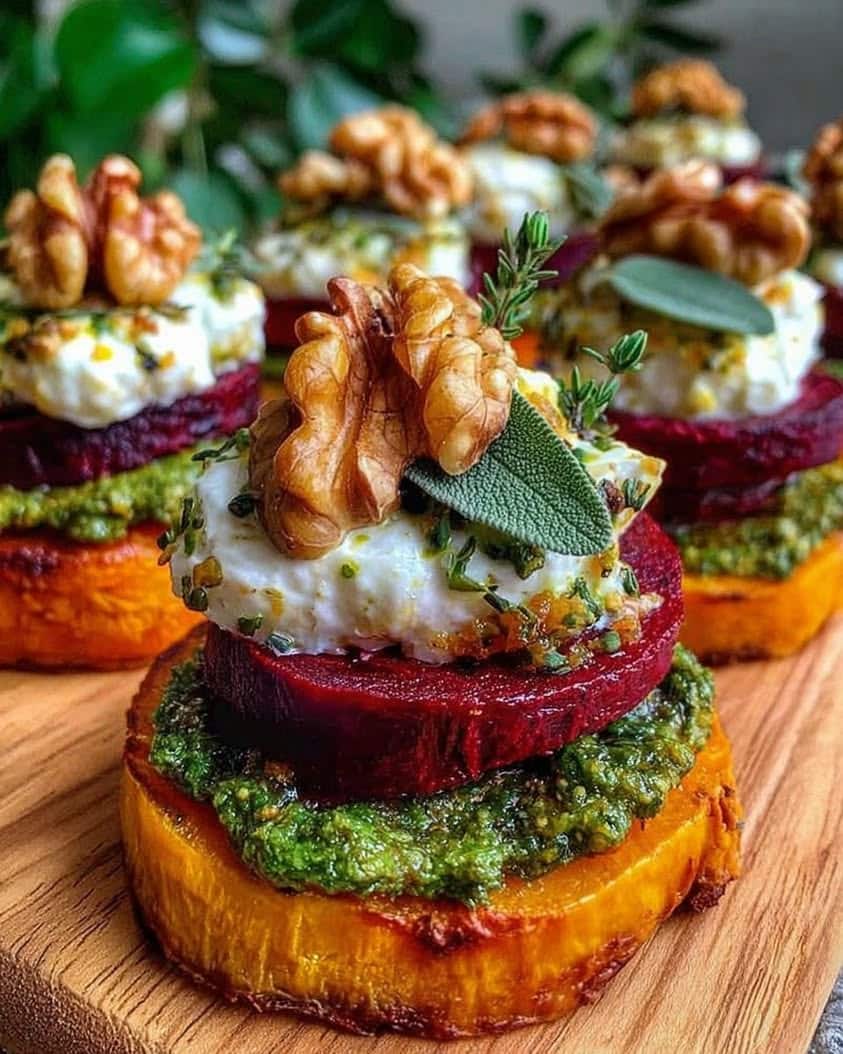
- Visual Appeal: The deep ruby red of the beets against the bright orange sweet potato creates a striking color contrast. Creamy white burrata, vivid green pesto, and golden-brown walnuts complete the picture. Stacked neatly, these appetizers look like something from a fine-dining menu.
- Skill Level Needed: This recipe suits beginners and experienced cooks alike. You mainly roast vegetables and assemble layers, so no advanced techniques are required. Knife skills for even slicing help, but the dish forgives minor imperfections.
- Special Equipment: You need a sharp chef’s knife, a sturdy cutting board, and two baking sheets for roasting. Parchment paper prevents sticking and makes cleanup easy. A small food processor helps with the pesto, though a blender or hand chopper works too.
Recipe Overview
- Difficulty Level: This recipe earns an Easy rating because it relies on roasting and layering rather than complex techniques. The oven does most of the heavy lifting, and assembly takes just minutes. Even a first-time cook can produce impressive results with basic attention to detail. The only real skill involved is slicing the vegetables evenly for consistent roasting.
- Category: These stacks work beautifully as an appetizer, a side dish, or a light vegetarian main. They shine on appetizer platters alongside other finger foods. Served with a hearty salad and crusty bread, they become a satisfying meatless dinner.
- Cuisine: This dish draws from modern American cooking with strong Mediterranean influences. The pesto and burrata nod to Italian traditions, while roasted root vegetables reflect farm-to-table American cuisine. Walnuts add a classic European touch that appears in many regional dishes. Together, these elements create a globally inspired plate.
- Cost: Expect to spend roughly twelve to eighteen dollars for six servings, depending on your region and season. Sweet potatoes and beets rank among the most affordable produce items. Burrata costs more than standard mozzarella, but a little goes a long way. Pesto made from scratch saves money, especially during basil season.
- Season: Fall and winter suit this recipe best because sweet potatoes and beets peak in cool months. The earthy, warming flavors feel cozy during the holidays. That said, you can make these stacks year-round since both vegetables stay available. Spring and summer versions benefit from fresh garden basil in the pesto.
- Occasion: These stacks excel at dinner parties, holiday spreads, and brunch buffets. They also work for casual gatherings where you want a dish that feels special. Because they look elegant, they suit romantic dinners and celebrations. Meanwhile, the simple method keeps them practical for weeknight cooking.
Why You’ll Love This Recipe
The taste and texture of these Sweet Potato & Beet Stacks with Pesto, Burrata & Walnuts win people over instantly. Sweet, earthy, creamy, and crunchy elements meet in a single bite, and the combination feels intentional rather than random. Roasting concentrates the natural sugars in both vegetables, which deepens their flavors. Then the burrata adds a cool, rich contrast that softens the roasted edges. Finally, the pesto and walnuts bring brightness and crunch, so nothing feels heavy or one-note. Honestly, few appetizers deliver this much complexity with so little effort.
Convenience and preparation benefits make this recipe a weeknight-friendly option too. You roast the vegetables on sheet pans, which means minimal hands-on work. While they cook, you whip up the pesto and toast the walnuts. Assembly takes only a few minutes once everything cools slightly. Additionally, you can roast the vegetables a day ahead and store them in the fridge. That flexibility makes entertaining far less stressful, since you can focus on your guests instead of last-minute cooking.
Nutritional advantages give this dish extra appeal for health-conscious eaters. Sweet potatoes deliver fiber, vitamin A, and antioxidants that support overall wellness. Beets contribute folate, manganese, and nitrates that promote healthy blood flow. Walnuts provide omega-3 fatty acids, which support heart and brain health. Burrata adds protein and calcium, while olive oil in the pesto supplies healthy fats. As a result, this appetizer offers real nourishment alongside its great taste.
Social and entertaining value sets these stacks apart from ordinary appetizers. Their tall, layered presentation sparks conversation the moment you set the platter down. Guests love building their own stacks if you set out the components buffet-style. Furthermore, the recipe scales easily for larger crowds without extra stress. You can also prepare a vegan version alongside the classic one to accommodate different diets. This inclusivity makes the dish a reliable choice for mixed groups.
Cost-effectiveness and accessibility round out the reasons to love this recipe. Sweet potatoes and beets cost very little, even when organic. Pantry staples like walnuts, olive oil, and garlic keep the shopping list short. If you grow basil at home, the pesto becomes nearly free during summer months. Compared to buying a similar appetizer at a restaurant, making these stacks at home saves significant money. Meanwhile, the impressive presentation makes guests feel pampered without any restaurant bill.
Historical Background and Cultural Significance
The origin story of this dish reflects modern culinary innovation rather than centuries-old tradition. Chefs in the early 2000s began stacking roasted vegetables to create elegant vegetarian appetizers. Sweet potatoes and beets, both native to the Americas and Europe respectively, became natural partners on these plates. The addition of burrata brought Italian influence, while pesto added another Mediterranean layer. Over time, home cooks adapted the restaurant concept into approachable recipes like this one.
Cultural importance surrounds each core ingredient in meaningful ways. Sweet potatoes hold deep significance in Indigenous American cuisine and remain a staple across the southern United States. Beets appear throughout Eastern European cooking, where borscht elevated them to iconic status. Pesto originated in Genoa, Italy, and became a global symbol of fresh basil cuisine. Burrata, born in Puglia, Italy, in the early twentieth century, represents Italian cheese-making artistry. Walnuts have sustained human diets for thousands of years across Persia, Europe, and North America.
The evolution of this recipe mirrors broader food trends toward vegetable-forward cooking. As plant-based eating gained popularity, cooks sought appetizers that felt substantial without meat. Roasted vegetable stacks filled that gap perfectly, offering color, texture, and nutrition. Food blogs and social media accelerated the spread of similar recipes during the 2010s. Today, variations appear in cookbooks, restaurants, and home kitchens worldwide. This particular combination has become a modern classic in vegetarian entertaining.
Regional variations show how adaptable this concept becomes across different food cultures. In the Mediterranean, cooks might swap burrata for feta and use tapenade instead of pesto. Middle Eastern versions could feature labneh, za’atar, and pistachios for a different flavor profile. In the American South, cooks sometimes add pecans and a drizzle of honey or hot sauce. Northern European adaptations may use goat cheese and dill. Each region leaves its fingerprint while keeping the core stacking concept intact.
Ingredient Deep Dive
Sweet potatoes anchor this recipe with their natural sweetness and vibrant orange flesh. These root vegetables originated in Central and South America and spread globally after European exploration. Nutritionally, they deliver massive amounts of vitamin A, plus fiber, potassium, and antioxidants like beta-carotene. When selecting sweet potatoes, look for firm, smooth skins without soft spots or sprouts. Store them in a cool, dark place rather than the refrigerator to preserve flavor and texture. If you need a substitute, butternut squash or carrots work reasonably well, though the flavor shifts noticeably.
Beets bring earthy depth and stunning ruby color to every stack. Humans have cultivated beets for thousands of years, and they played major roles in European and Mediterranean diets long before becoming trendy. They provide folate, manganese, potassium, and nitrates that support cardiovascular health. Choose beets that feel heavy for their size with smooth, unblemished skin. Cut off the greens before storing, then keep the roots in a cool, dark spot or the fridge crisper for several weeks. Golden beets or even turnips can replace red beets if you want a different look.
Pesto contributes bright herbal freshness that lifts the entire dish. Classic Genovese pesto combines basil, pine nuts, garlic, Parmesan, and olive oil, though this recipe works with any quality version. Basil offers antioxidants and anti-inflammatory compounds, while olive oil provides heart-healthy monounsaturated fats. When buying prepared pesto, check the label for real olive oil and minimal preservatives. Homemade pesto stays fresh in the fridge for about a week when covered with a thin layer of oil. For substitutions, try arugula pesto, sun-dried tomato pesto, or even a chimichurri-style sauce.
Burrata delivers the creamy, luxurious element that makes these stacks memorable. This Italian cheese starts as mozzarella and gets filled with stracciatella, a mixture of shredded curds and cream. Nutritionally, burrata offers protein, calcium, and fats that make the dish satisfying. Select burrata with a firm outer shell and no signs of leaking, and check the expiration date carefully since freshness matters. Keep it refrigerated and bring it to room temperature shortly before serving for the best texture. If burrata proves hard to find, fresh mozzarella or ricotta can stand in, though the creaminess will differ.
Walnuts add crunch, richness, and a subtle bitterness that balances the sweet elements. These tree nuts have nourished humans for millennia across Persia, Rome, and beyond. They rank among the best plant sources of omega-3 fatty acids, which support heart and brain health. Choose walnut halves that smell fresh and nutty, avoiding any that seem rancid or rubbery. Store walnuts in the refrigerator or freezer to prevent them from turning rancid quickly. Pecans, almonds, or pistachios offer excellent alternatives if you prefer a different nut.
Common Mistakes to Avoid
- Slicing the vegetables unevenly creates a major problem because thin pieces burn while thick pieces stay raw. Always aim for consistent quarter-inch rounds using a sharp knife or mandoline. Uniform slices roast at the same rate and stack neatly.
- Skipping the drying step after washing leads to steaming instead of roasting. Wet vegetables release moisture in the oven and never develop those caramelized edges. Pat everything thoroughly dry with clean kitchen towels before tossing in oil.
- Under-seasoning the vegetables makes the final dish taste flat despite the rich toppings. Salt draws out natural flavors and helps the vegetables caramelize properly. Season each layer generously before roasting, then taste and adjust afterward.
- Overcrowding the baking sheet traps steam and prevents browning. Give each slice breathing room and use two pans if necessary. Roasting in batches takes longer but delivers far better texture and flavor.
- Toasting the walnuts too long turns them bitter and unpleasant. Keep a close eye on them since nuts can go from perfectly toasted to burnt in under a minute. Toast them in a dry skillet over medium heat, stirring constantly until fragrant.
- Serving the burrata ice-cold mutes its creamy, delicate flavor. Let it sit at room temperature for about twenty minutes before assembling. This simple step transforms the texture and makes the cheese taste noticeably better.
- Assembling the stacks too far in advance causes the vegetables to release moisture and the stacks to slide. Build them just before serving, or keep components separate until the last moment. This keeps every layer distinct and prevents sogginess.
- Using stale or low-quality pesto drags down the entire dish. Taste your pesto before using it and adjust with salt, lemon, or extra olive oil as needed. Fresh homemade pesto makes the biggest difference if you have the time.
- Forgetting to peel the beets leaves tough, fibrous skin that ruins the texture. Roasting whole beets wrapped in foil makes peeling easy once they cool. The skins slip right off with a paper towel or your fingers.
- Neglecting to taste the final stack before serving means missed opportunities for balance. Try one complete stack and check the salt, acid, and creaminess levels. A squeeze of lemon or a pinch of flaky salt can elevate everything instantly.
Essential Techniques
Roasting vegetables properly forms the foundation of this entire recipe. High heat, around 425 degrees Fahrenheit, caramelizes natural sugars and creates deep flavor through the Maillard reaction. Master this technique by cutting uniform pieces, tossing them in enough oil to coat without pooling, and spreading them in a single layer. Common pitfalls include overcrowding the pan, using too little oil, and opening the oven too often. You will know the vegetables are ready when they turn golden at the edges and feel tender when pierced with a fork.
Toasting walnuts transforms their flavor from mild to richly nutty and enhances their crunch. This technique matters because raw walnuts taste somewhat flat and can feel chewy. Master it by heating a dry skillet over medium heat and stirring the nuts constantly for three to five minutes. Watch for a fragrant smell and slight color change as your visual cue. The biggest pitfall involves walking away, since nuts burn quickly and become bitter beyond rescue.
Making homemade pesto gives you control over freshness and flavor balance. The technique involves blending basil, nuts, garlic, and cheese, then streaming in olive oil until the mixture reaches your desired consistency. Master it by pulsing rather than running the processor continuously, which prevents overheating and bitterness. Common pitfalls include adding too much garlic, skimping on salt, and using dull or discolored basil leaves. The pesto is ready when it looks bright green, tastes vibrant, and coats the back of a spoon nicely.
Assembling the stacks requires a gentle hand and a clear plan. This technique matters because rough handling smashes the burrata and topples the layers. Master it by starting with the largest sweet potato slice as the base, then building upward with steady, centered placements. Use a small spoon to dollop the pesto and burrata rather than spreading, which keeps things neat. The finished stack should stand tall but stable, with visible layers of color and texture from every angle.
Pro Tips for Perfect Sweet Potato & Beet Stacks with Pesto, Burrata & Walnuts
Roast the beets a day ahead to save time and reduce stress on serving day. Their flavor actually improves overnight as the earthy notes mellow and deepen. Store them peeled and sliced in an airtight container in the fridge. Then simply warm them briefly or serve at room temperature when you assemble the stacks.
Use a mandoline slicer for perfectly uniform vegetable rounds if you own one. Consistent thickness guarantees even cooking and makes the stacks look professionally made. If you skip the mandoline, take your time with a sharp knife and measure a few slices against each other. A small kitchen ruler can help you stay on track.
Salt the sweet potato slices lightly before roasting to draw out excess moisture. This step encourages better browning and prevents the stacks from becoming soggy. Let them sit for ten minutes, then blot away the released liquid before tossing in oil. The difference in texture is well worth the extra few minutes.
Make the pesto with a mix of basil and a handful of spinach or arugula for extra nutrients. This trick boosts the vitamin content without changing the flavor much. The greens also help the pesto hold its bright color longer. Just adjust the salt and garlic to taste after blending.
Toast the walnuts in the same pan you used for roasting if it is still warm. The residual heat gently warms them without any risk of burning. Stir them for a minute or two until fragrant, then set aside to cool. This saves you from dirtying an extra skillet.
Bring the burrata to room temperature for at least twenty minutes before serving. Cold burrata feels rubbery and mutes its creamy, milky flavor. Letting it warm slightly makes it spread beautifully over the stacks. If your kitchen runs warm, cap the resting time at thirty minutes for food safety.
Add a drizzle of good-quality balsamic glaze right before serving for extra visual appeal. The dark, glossy lines contrast beautifully against the orange and red vegetables. The glaze also adds a tangy sweetness that complements the pesto. Look for a thick glaze rather than thin balsamic vinegar so it stays put.
Finish each stack with flaky sea salt and a crack of black pepper just before guests dig in. These final touches brighten all the flavors and add a bit of texture. Flaky salt, such as Maldon, dissolves pleasantly on the tongue. Skip the table salt here since the texture and flavor differ significantly.
Variations and Adaptations
Regional variations allow you to take these stacks in exciting new directions. A Greek-inspired version might swap burrata for whipped feta and use olive tapenade instead of pesto. For a Middle Eastern twist, try labneh, za’atar, and pistachios with a drizzle of pomegranate molasses. Southern American cooks sometimes add toasted pecans, crumbled goat cheese, and a touch of honey or hot sauce. Each adaptation keeps the stacking concept while introducing new flavor stories.
Seasonal adaptations keep this recipe fresh throughout the year. In spring, replace beets with roasted radishes or asparagus for a lighter feel. Summer versions shine with heirloom tomatoes layered alongside the sweet potato and a fresh basil oil instead of pesto. Fall calls for pumpkin or delicata squash rounds mixed with the beets. Winter versions benefit from a heartier pesto made with kale or walnuts instead of basil.
Dietary modifications make this dish accessible to nearly everyone at your table. Use a vegan pesto without Parmesan and swap burrata for cashew cream or a plant-based soft cheese. For a dairy-free version, whipped avocado with lemon and salt offers a creamy substitute. Gluten-free eaters already enjoy this recipe since it contains no grains. Low-carb and keto diners can reduce the sweet potato portion or swap in roasted zucchini rounds.
Flavor variations let you customize the profile to match your menu. Try a smoked paprika and cumin rub on the sweet potatoes for a warm, Southwestern feel. A harissa-spiked pesto adds heat and depth for spice lovers. Maple-glazed walnuts bring extra sweetness that pairs well with smoked cheeses. Citrus zest in the pesto brightens everything and cuts through the richness of the burrata.
Texture modifications help you fine-tune each bite. If you prefer extra crunch, roast the sweet potato slices a few minutes longer for crispier edges. Softer textures work better for some diners, so steam the beets instead of roasting them for a tender result. Crushed hazelnuts or toasted breadcrumbs add a different kind of crunch than walnuts. Whipped burrata, rather than whole, spreads more smoothly for a silkier mouthfeel.
Presentation alternatives let you serve the same flavors in fresh formats. Instead of stacking, arrange the components on a platter as a composed salad. Skewer smaller rounds for a passed appetizer that guests can eat with one hand. Layer everything on crostini for a bite-sized canape version. You can also turn the components into a grain bowl with farro or quinoa for a full meal.
Serving and Presentation Guide
Plating techniques elevate these stacks from tasty to truly impressive. Choose a flat platter or individual plates with plenty of white space to let the colors pop. Place each stack slightly off-center and vary the heights for visual interest. Drizzle pesto in a light zigzag across the plate rather than over the stack itself. A few scattered walnut pieces and basil leaves fill the empty spaces beautifully.
Garnishing ideas bring extra polish without much effort. Micro basil leaves or small basil sprigs look delicate and fresh on top. A dusting of lemon zest adds color and a bright aroma. Crumbled feta or shaved Parmesan can complement the burrata if you want extra cheese presence. Edible flowers work surprisingly well for spring and summer gatherings.
Traditional accompaniments include crusty bread, crostini, or warm flatbread for scooping. A simple arugula salad with lemon vinaigrette balances the richness of the burrata. Pickled red onions or quick-pickled shallots add acidity that cuts through the creamy elements. For a fuller meal, serve alongside roasted chicken or grilled fish.
Modern serving suggestions embrace the charcuterie board trend by arranging the stacks among other small bites. Place them next to olives, marinated artichokes, and cured meats for a stunning grazing table. A drizzle bar with pesto, balsamic glaze, and chili oil lets guests customize their stacks. This interactive approach works wonderfully for parties and casual gatherings.
Temperature considerations matter more than most people realize. Serve the roasted vegetables warm or at room temperature, never cold from the fridge. The burrata should sit at room temperature to release its creamy texture. If you must hold the dish, keep everything separate and assemble just before serving. This preserves the ideal contrast between warm vegetables and cool cheese.
Portion control tips help you plan for different events. For a passed appetizer, plan one stack per guest with a few extras. As a plated starter, two stacks per person feels generous. For a main course, serve three to four stacks alongside a hearty salad and bread. Adjust the vegetable slices accordingly and keep the ratio of toppings consistent.
Wine and Beverage Pairing
Wine pairings for these stacks should balance the sweet, earthy, and creamy elements. A crisp Sauvignon Blanc cuts through the burrata richness with bright acidity. For red wine lovers, a light Pinot Noir complements the earthy beets beautifully. A dry Rosé works especially well for warm-weather gatherings. Sparkling wine, such as Prosecco or Cava, adds festive energy and cleanses the palate between bites.
Non-alcoholic alternatives keep the experience just as special. Sparkling water with lemon and fresh basil feels refreshing and echoes the pesto flavors. A cucumber mint cooler offers a cooling contrast to the roasted vegetables. Kombucha, especially ginger or citrus flavors, brings fizzy brightness that pairs surprisingly well. Iced hibiscus tea adds tartness and a beautiful color to the table.
Coffee and tea pairings suit brunch or afternoon servings of this dish. A light roast coffee with citrus notes complements the earthy beets and nutty walnuts. Green tea, particularly a sencha or jasmine variety, offers herbal notes that mirror the pesto. Chai tea brings warm spices that enhance the sweet potato’s natural sweetness. Cold brew with a splash of oat milk makes an unexpectedly good match for casual gatherings.
Temperature considerations apply to beverages just as they do to food. Serve white wines well-chilled but not ice-cold to preserve their aromatics. Reds taste best slightly below room temperature for this dish. Sparkling wines should be cold but not freezing. Non-alcoholic options benefit from plenty of ice and fresh garnishes to feel festive.
Serving suggestions include offering two or three beverage options so guests can choose. Set up a small drink station with glassware, garnishes, and a written pairing guide. This thoughtful touch makes the event feel polished without extra work. If you serve cocktails, a basil smash or cucumber gimlet echoes the herbal notes in the pesto. A simple spritz with Aperol or elderflower also works beautifully.
Storage and Shelf Life
Storage methods differ for each component, so plan accordingly for best results. Roasted sweet potato and beet slices keep well in separate airtight containers in the refrigerator. Pesto stays fresh in a jar topped with a thin layer of olive oil to prevent browning. Burrata should remain in its original packaging until you plan to serve it. Walnuts store best in a sealed container away from strong odors.
Temperature requirements matter for food safety and quality. Keep roasted vegetables refrigerated at or below forty degrees Fahrenheit. Pesto also needs refrigeration and will last about a week when stored properly. Burrata should stay cold until twenty minutes before serving. Walnuts keep at room temperature for a few weeks but last much longer in the fridge or freezer.
Container recommendations help preserve texture and prevent flavor transfer. Use glass containers with tight-fitting lids for the vegetables to avoid staining from the beets. Small mason jars work perfectly for pesto. Keep walnuts in a sealed glass jar or freezer bag with the air pressed out. Avoid storing the components together, since moisture and flavors will mingle in undesirable ways.
Signs of spoilage vary by component, so check each one before using. Slimy or sour-smelling vegetables should be discarded immediately. Pesto that turns dark brown or develops an off smell has gone bad. Burrata past its expiration date or leaking milky liquid should not be served. Walnuts that taste bitter or smell like paint indicate rancidity and belong in the trash.
Reheating instructions for the roasted vegetables are simple and quick. Warm them in a 350-degree oven for five to seven minutes until heated through. Avoid the microwave, which makes them soggy and rubbery. If you prefer room temperature stacks, simply let the vegetables sit out for twenty minutes before assembling. Never reheat the burrata, since heat ruins its delicate texture.
Freezing guidelines apply mainly to the vegetables and walnuts. Roasted sweet potato and beet slices freeze well for up to three months when stored in freezer-safe bags. Thaw them overnight in the refrigerator before reheating. Walnuts freeze beautifully for up to a year. Pesto also freezes well in ice cube trays, which lets you thaw only what you need. Burrata should never be frozen.
Make Ahead Strategies
The prep timeline for this recipe can stretch across two days with no loss of quality. Roast the beets and sweet potatoes up to two days ahead and refrigerate them. Make the pesto a day ahead so the flavors meld and deepen. Toast the walnuts up to a week in advance and store them in an airtight container. This staggered approach keeps serving day relaxed and focused on assembly.
Storage between steps requires attention to prevent sogginess and flavor loss. Keep roasted vegetables in separate containers to avoid color bleeding from the beets. Layer them with parchment paper if stacking is necessary. Pesto should sit in the fridge with that protective oil layer on top. Walnuts stay crisp at room temperature or in the fridge. Burrata stays sealed until the last possible moment.
Quality impact assessment shows that most components hold up beautifully when prepped ahead. Roasted vegetables actually taste better the next day as flavors deepen. Pesto loses a bit of brightness after two days but remains delicious. Walnuts keep their crunch for weeks when stored properly. Only the burrata truly demands last-minute attention since its texture changes quickly once opened.
Assembly tips for serving day keep everything organized and efficient. Set out all components on a clean work surface before you start building. Use a small spoon or piping bag for the pesto to control the amount. Work quickly but gently, and place finished stacks on the serving platter as you go. If guests arrive early, they can watch the assembly and get excited about the meal.
Reheating guidelines for make-ahead vegetables are simple and quick. A brief warm-up in a 350-degree oven restores their texture and aroma. Avoid overheating, which dries them out and makes them tough. You can also serve them at room temperature if you prefer a more relaxed approach. Either way, the flavors remain vibrant and the stacks still impress.
Fresh element additions just before serving keep the dish feeling lively and current. Tear the burrata by hand for a rustic look rather than slicing it. Add fresh basil leaves, lemon zest, or a drizzle of good olive oil at the final moment. These small touches make prepped components taste freshly made. A crack of black pepper right before serving also brightens everything.
Scaling Instructions
Halving the recipe works easily when you cook for a smaller group. Use one large sweet potato and two medium beets, then reduce the pesto and burrata accordingly. Keep the same oven temperature and roasting time since the vegetable size does not change. You may need only one baking sheet, which actually improves browning. Leftover pesto keeps well and works beautifully on pasta or sandwiches later in the week.
Doubling or tripling the recipe for a crowd requires a bit of planning but stays manageable. Use multiple baking sheets and rotate them halfway through roasting for even cooking. Make the pesto in batches to avoid overloading your food processor. Buy burrata in larger containers or purchase several small balls for easier serving. Toasted walnuts can be prepared in a big batch and stored until needed.
Equipment adjustments matter when you scale up significantly. Two ovens or a convection setting help when you roast large quantities of vegetables. Extra sheet pans, parchment paper, and mixing bowls keep the process smooth. A larger platter or several smaller ones make serving easier. Consider borrowing or renting extra pieces if you host a very large event.
Timing modifications apply mostly to roasting when you cook multiple pans at once. Add a few minutes to the total cook time and rotate the pans halfway through for even browning. Keep an eye on the vegetables since oven hot spots vary. The pesto and assembly steps take roughly the same time regardless of quantity. Plan an extra ten to fifteen minutes for larger batches to be safe.
Storage considerations grow more important when you scale up. Use larger containers or multiple smaller ones to avoid crowding the vegetables. Keep the components refrigerated until serving time to maintain freshness. If you plan to transport the dish, pack each element separately and assemble on site. This approach protects the presentation and keeps textures intact.
Nutritional Deep Dive
The macro breakdown of these stacks offers a balanced profile for an appetizer. Each serving delivers roughly 320 calories, with about 40 grams of carbohydrates from the vegetables and pesto. Protein reaches about 12 grams thanks to the burrata and walnuts. Fat content hovers around 18 grams, mostly from the healthy monounsaturated fats in olive oil and the omega-3s in walnuts. This combination keeps you satisfied without feeling overly heavy.
Micronutrient analysis reveals impressive contributions from every ingredient. Sweet potatoes load you up with vitamin A, providing more than 200 percent of your daily needs per serving. Beets supply folate, manganese, and potassium that support many bodily functions. Walnuts contribute vitamin E, magnesium, and antioxidants. Burrata adds calcium and phosphorus for bone health. Together, these ingredients cover a wide range of essential nutrients.
Health benefits extend beyond basic nutrition into long-term wellness support. The fiber from sweet potatoes and beets promotes digestive health and steady blood sugar. Omega-3 fatty acids from walnuts support heart and brain function. Antioxidants in beets and basil fight inflammation and oxidative stress. The combination of nutrients makes this dish a genuinely nourishing choice, not just a pretty one.
Dietary considerations vary by individual needs, so read labels carefully. Those watching sodium should go easy on added salt since burrata and Parmesan contain natural sodium. People managing blood sugar should pair the stacks with protein and healthy fats to slow digestion. Anyone with tree nut allergies must skip the walnuts or substitute seeds. Dairy-sensitive eaters can choose plant-based alternatives as noted in the adaptations section.
Portion analysis helps you fit this dish into different eating plans. One stack works as a light appetizer at around 107 calories if you divide the recipe into eighteen small stacks. Two stacks make a reasonable side dish, while three to four become a satisfying vegetarian main. Adjust the pesto and burrata amounts to shift the Print
Sweet Potato & Beet Stacks with Pesto, Burrata & Walnuts
- Total Time: 45 minutes
- Yield: 4
Description
A vibrant and elegant vegetarian dish featuring roasted sweet potato and beet slices stacked with creamy burrata and pesto, topped with crunchy walnuts. Perfect as a main or side.
Ingredients
- 2 medium sweet potatoes, peeled and sliced into 1/4-inch rounds
- 2 medium beets, peeled and sliced into 1/4-inch rounds
- 2 tablespoons olive oil
- Salt and pepper, to taste
- 1 cup fresh basil leaves
- 1/4 cup grated Parmesan cheese
- 1/4 cup walnuts, plus extra for garnish
- 2 cloves garlic
- 1/2 cup extra-virgin olive oil
- 8 ounces burrata cheese
- Balsamic glaze, for drizzle (optional)
Instructions
- Preheat oven to 400°F (200°C). Toss sweet potato and beet slices with olive oil, salt, and pepper. Arrange in a single layer on baking sheets. Roast for 25-30 minutes, flipping halfway, until tender and slightly caramelized.
- In a food processor, combine basil, Parmesan, walnuts, and garlic. Pulse until finely chopped. With motor running, slowly drizzle in extra-virgin olive oil until smooth. Season with salt and pepper.
- To assemble, place a sweet potato slice on a plate, top with a beet slice, a spoonful of pesto, and a piece of burrata. Repeat layers to create a stack. Garnish with additional walnuts and a drizzle of balsamic glaze if desired.
Notes
You can customize the seasonings to taste.
- Prep Time: 15 minutes
- Cook Time: 30 minutes
- Method: Main
- Cuisine: American