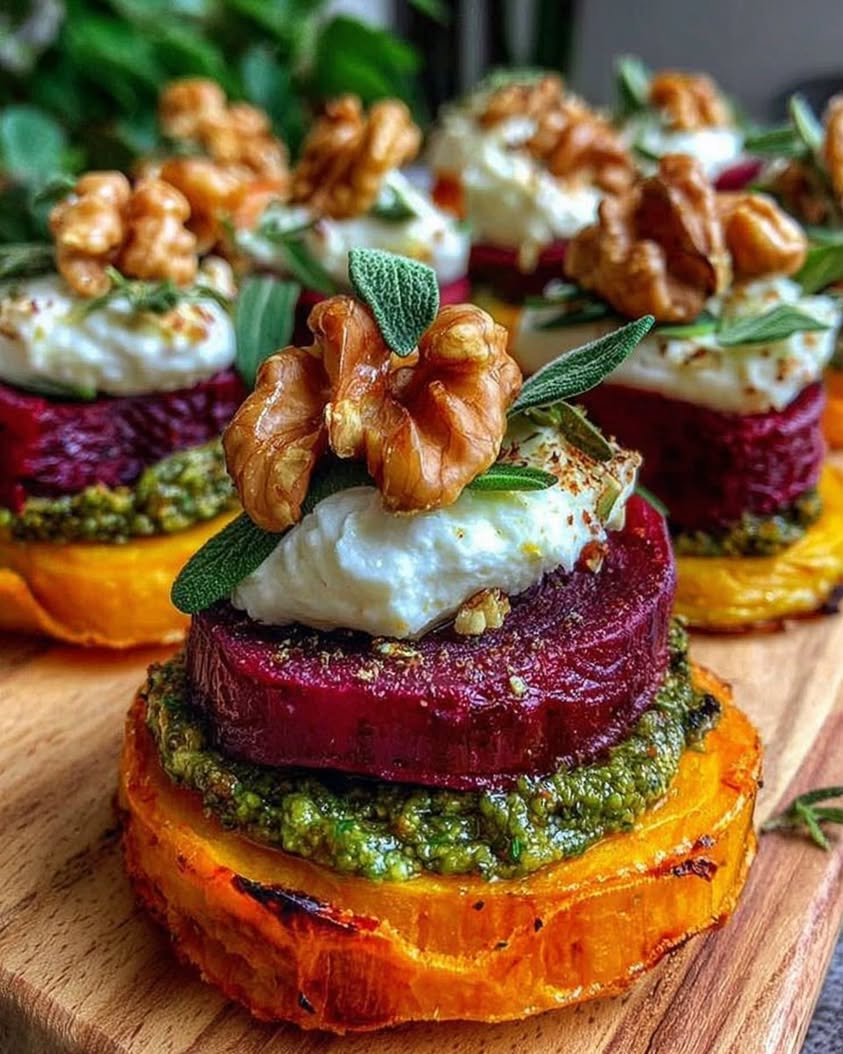
Sweet Potato and Beet Stacks with Pesto and Burrata Recipe: A Tower of Vibrant Flavor
Imagine a dish that is a feast for the eyes as much as it is for the palate. This Sweet Potato and Beet Stacks with Pesto and Burrata recipe delivers exactly that. It transforms humble root vegetables into an elegant, restaurant-worthy presentation. The earthy sweetness of roasted beets and sweet potatoes pairs magically with the creamy, luxurious burst of fresh burrata. Moreover, a vibrant basil pesto adds a herbaceous punch, while toasted walnuts provide the perfect crunchy finish. Consequently, every bite is a symphony of contrasting textures and harmonious flavors.
This recipe is perfect for anyone seeking to impress guests with minimal fuss. It leverages simple roasting techniques to draw out the natural sugars in the vegetables. Meanwhile, the assembly is creative yet straightforward, allowing for beautiful plating. Whether you need a stunning vegetarian main course or a spectacular side dish, these stacks fit the bill. They are naturally gluten-free and packed with nutrients, making them a wholesome choice. Ultimately, this dish proves that eating your vegetables can be the most exciting part of the meal.
The beauty of this Sweet Potato and Beet Stacks with Pesto and Burrata recipe lies in its versatility. You can serve it warm for a comforting dinner or at room temperature for an elegant appetizer. The colors are stunning, featuring deep ruby red and bright orange layers. Additionally, the green pesto and white cheese create a visually striking contrast. This dish is a celebration of seasonal produce at its finest. Therefore, it is ideal for holiday tables, dinner parties, or a special weeknight treat to elevate your routine.
Quick Recipe Highlights
- Flavor Profile: This dish masterfully balances earthy, sweet, creamy, and nutty notes. The roasted vegetables offer a deep, caramelized sweetness that contrasts with the tangy, fresh pesto. Meanwhile, the burrata adds a rich, milky flavor that ties all the elements together beautifully.
- Texture: You will experience a wonderful play of textures in every bite. The roasted vegetable slices are tender yet firm enough to stack. Subsequently, the creamy burrata provides a luscious, soft center, and the toasted walnuts add a essential crunchy contrast.
- Aroma: The aroma is incredibly inviting, starting with the earthy scent of roasting beets and sweet potatoes. Then, the fragrance of fresh basil from the pesto fills the kitchen. Finally, the nutty smell of toasting walnuts completes the sensory experience.
- Visual Appeal: This dish is a true showstopper on the plate. The vibrant red and orange stacks create a dramatic vertical presentation. Additionally, the green pesto drizzle and white burrata offer beautiful color pops that make the dish photograph perfectly.
- Skill Level Needed: This is an accessible recipe for most home cooks. It requires basic knife skills for slicing and simple roasting techniques. Furthermore, assembly is intuitive, making it a great recipe for building confidence in the kitchen.
- Special Equipment: You only need a few standard kitchen tools. A sharp knife and cutting board are essential for prepping the vegetables. Also, a baking sheet, parchment paper, and a small food processor or blender for the pesto will get the job done.
Recipe Overview
- Difficulty Level: We classify this Sweet Potato and Beet Stacks recipe as easy. The steps are sequential and simple, primarily involving roasting and assembling. There is no complex knife work or advanced cooking methods required. Consequently, even beginner cooks can achieve impressive results with careful attention to slicing thickness and roasting time.
- Category: This versatile dish fits multiple categories beautifully. It serves wonderfully as a vegetarian main course for lunch or dinner. Alternatively, it makes an elegant side dish or a substantial appetizer for a dinner party. The stacks are also perfect for brunch or a special occasion meal.
- Cuisine: While not tied to one specific tradition, this recipe draws inspiration from modern Californian and Mediterranean cuisines. It emphasizes fresh, high-quality produce, simple preparation, and beautiful presentation. The use of pesto and burrata nods directly to Italian culinary influences, creating a fusion-style dish.
- Cost: This is a moderately priced recipe that feels luxurious. Sweet potatoes and beets are typically affordable root vegetables. Burrata is the splurge ingredient, but a little goes a long way. Overall, you can create this impressive dish for a fraction of a restaurant price.
- Season: This recipe shines in the late fall and winter when root vegetables are at their peak. However, it works year-round thanks to the always-available sweet potato and beet. The fresh basil in the pesto makes it particularly lovely in the summer months as well.
- Occasion: These stacks are perfect for a romantic dinner, a holiday gathering like Thanksgiving or Christmas, or a dinner party where you want to impress. They are also excellent for a Meatless Monday celebration or a special weekend family meal.
Why You’ll Love This Recipe
First and foremost, the taste and texture appeal is undeniable. Each component of this Sweet Potato and Beet Stacks with Pesto and Burrata recipe brings something unique to the table. The sweet, caramelized vegetables meet the cool, creamy cheese in a perfect bite. Then, the aromatic pesto cuts through the richness with its herbal brightness. Finally, the crunchy walnuts add a satisfying finish that keeps you coming back for more. It is a complex flavor profile that feels both comforting and sophisticated.
Secondly, the convenience and preparation benefits are significant. Although the presentation looks chef-worthy, the process is straightforward. You can roast the vegetables ahead of time, and the pesto comes together in minutes in a food processor. Consequently, last-minute assembly is quick and stress-free. This makes the recipe ideal for entertaining, as you can do most of the work in advance. Therefore, you can spend time with your guests instead of being stuck in the kitchen.
Furthermore, the nutritional advantages are impressive. Sweet potatoes and beets are powerhouses of vitamins, minerals, and fiber. They support digestive health and provide sustained energy. The walnuts add healthy fats and protein, while the basil in the pesto offers antioxidants. This dish is a celebration of whole, nutrient-dense foods that make you feel good. It is a perfect example of how delicious and healthy can coexist on the same plate.
Additionally, the social and entertaining value is high. This is a dish that sparks conversation the moment you bring it to the table. Its stunning appearance shows your guests that you care about the details. Moreover, it caters beautifully to vegetarian diets without making others feel like they are missing out. It is a inclusive, impressive centerpiece that elevates any meal from ordinary to memorable.
Finally, the cost-effectiveness and accessibility are key benefits. You do not need expensive or hard-to-find ingredients to create this restaurant-quality dish. Most components are available at any well-stocked grocery store. By making it at home, you save significantly compared to ordering a similar dish at a restaurant. This recipe empowers you to create a luxurious dining experience in your own kitchen without breaking the bank.
Historical Background and Cultural Significance
The origin story of this specific stack recipe is modern, rooted in contemporary culinary trends that prioritize plant-based beauty and vertical presentation. However, its individual components have deep historical roots. The practice of roasting root vegetables like beets and sweet potatoes dates back centuries across many cultures, as it was a reliable preservation and cooking method. Meanwhile, pesto hails from Genoa, Italy, with recipes documented as far back as the 19th century. Burrata, a newer invention, was created in the Puglia region of Italy in the early 20th century as a way to use up mozzarella scraps.
Cultural importance is woven through each ingredient. Beets have been cultivated since ancient times, valued by Romans and later in Eastern European cuisines for soups like borscht. Sweet potatoes have a global history, crucial in African, Asian, and American diets. The act of stacking food has ceremonial significance in some cultures, representing abundance and careful craftsmanship. This recipe, therefore, is a fusion of these diverse culinary histories, brought together through a modern lens that celebrates ingredient integrity and visual art on the plate.
The evolution of the recipe follows the broader trend of vegetable-forward, fine dining presentation. Chefs began treating vegetables as the star, using techniques like precise roasting and elegant plating once reserved for proteins. The stack format became popular in the 1990s and 2000s as a way to add height and drama to a dish. This Sweet Potato and Beet Stacks recipe is a direct descendant of that movement, making gourmet, visually stunning vegetable cuisine accessible for the home cook. It represents a shift towards mindful eating and celebrating produce.
Regional variations are easy to imagine, showcasing the recipe’s adaptability. In the Mediterranean, one might use a sun-dried tomato pesto or add Kalamata olives. A Nordic version could incorporate dill and a creamy horseradish sauce instead of pesto. In the American South, a pecan garnish might replace walnuts, and a touch of maple could glaze the vegetables. The core concept of roasted root vegetable stacks is a fantastic canvas for global flavors, allowing cooks to incorporate local ingredients and personal taste preferences while maintaining the dish’s stunning structural appeal.
Ingredient Deep Dive
Sweet Potatoes: Cultivated for over 5,000 years, sweet potatoes are native to Central and South America and were a staple for ancient civilizations. They are packed with beta-carotene (which converts to Vitamin A), Vitamin C, and fiber. When selecting, choose firm potatoes with smooth, unblemished skin; avoid any with soft spots or signs of sprouting. Store them in a cool, dark, well-ventilated place—not the refrigerator, as cold temperatures can alter their texture and flavor. For substitutions, you could use butternut squash or carrots, though the cooking time and final sweetness will vary.
Beets: Beets have a history dating back to ancient Mediterranean and Middle Eastern cultures. They are an excellent source of folate, manganese, and dietary nitrates, which can support blood flow and athletic performance. Look for beets with firm, smooth skins and vibrant, crisp greens if attached—a sign of freshness. To store, trim the greens (if present) to about an inch and keep the roots in a plastic bag in the refrigerator crisper. Golden beets make a beautiful, less-staining alternative to red beets. Additionally, you could substitute with roasted parsnips or turnips for a different earthy flavor.
Burrata Cheese: Burrata, meaning “buttered” in Italian, was invented in the 1920s on a farm in Puglia. It is a fresh cheese consisting of a mozzarella pouch filled with soft stracciatella and cream. It provides protein and calcium but is higher in fat, so it is best enjoyed in moderation as a special treat. Select burrata that is stored in liquid and feels soft and supple. It is highly perishable and should be used by the date on the package, kept refrigerated. For a dairy-free version, a high-quality vegan mozzarella or a cashew-based cream can be used, though the texture will differ.
Basil Pesto: Traditional Genovese pesto is made with basil, pine nuts, garlic, Parmesan, and olive oil. Basil has been revered since ancient Greek times and contains antioxidants like flavonoids. Pine nuts are a good source of healthy fats and minerals. For the best flavor, use fresh, bright green basil leaves and high-quality extra virgin olive oil. Store homemade pesto in the refrigerator with a layer of oil on top to prevent browning. For a nut-free version, use sunflower seeds. For a dairy-free pesto, simply omit the Parmesan or use a nutritional yeast alternative.
Walnuts: Walnuts are among the oldest tree foods, with remnants found in Neolithic sites. They are renowned for their high content of alpha-linolenic acid, a plant-based omega-3 fatty acid. Choose walnuts that feel heavy for their size and are not rubbery; avoid any with a rancid smell. For longest shelf life, store them in an airtight container in the refrigerator or freezer due to their high oil content. Pecans, almonds, or pine nuts can be used as a substitute for a different but equally delicious crunchy garnish.
Common Mistakes to Avoid
- Cutting Vegetables Unevenly: Slices that are too thick will not cook through properly, while slices that are too thin may burn or become too soft to stack. Aim for consistent 1/4-inch thick rounds. Using a mandoline slicer can help achieve perfect uniformity, which is crucial for even cooking and stable stacks.
- Overcrowding the Baking Sheet: Placing vegetable slices too close together steams them instead of roasting them. You need space for hot air to circulate to achieve caramelization. Always use two baking sheets if necessary to give each slice its own space. This ensures they roast and brown properly rather than just softening.
- Using Cold Burrata: Serving burrata straight from the refrigerator mutes its creamy texture and flavor. For the best experience, let it sit at room temperature for 20-30 minutes before assembling the stacks. This allows the rich, creamy center to soften and become luxuriously spreadable, enhancing the overall mouthfeel of the dish.
- Blending Pesto Too Much: Over-processing the pesto in a blender or food processor can heat it up and turn it brown and bitter. Pulse the ingredients just until they are combined but still have a bit of texture. A slightly coarse pesto has a more vibrant flavor and a more appealing appearance than a completely smooth paste.
- Forgetting to Toast the Walnuts: Raw walnuts can have a slightly bitter, tannic flavor. Toasting them in a dry pan for a few minutes unlocks their nutty, rich aroma and improves their crunch. Always watch them closely, as they can burn quickly. This simple step adds a deep layer of flavor to the final garnish.
- Assembling Stacks While Vegetables Are Hot: If the vegetable slices are piping hot, they can melt the burrata too quickly and make the stacks wobbly. Let them cool for 5-10 minutes after roasting so they are warm but manageable. This makes assembly easier and helps the stacks hold their impressive shape on the plate.
- Salting Vegetables After Roasting: Salting sweet potatoes and beets before roasting draws out moisture and helps season them from the inside. If you only salt at the end, the seasoning sits on the surface. Lightly drizzle with oil and season with salt and pepper before they go in the oven for the best flavor penetration.
- Using Low-Quality Olive Oil: Since pesto is uncooked, the flavor of the olive oil is front and center. A bland or low-quality oil will result in a flat-tasting pesto. Invest in a good bottle of extra virgin olive oil for this component. The difference in flavor is dramatic and worth the splurge for this key element.
Essential Techniques
Uniform Slicing: This is the foundational technique for stable, evenly cooked stacks. Consistent thickness ensures all slices roast at the same rate, preventing some from being undercooked while others burn. Use a sharp chef’s knife and measure with your eyes, or employ a mandoline for guaranteed precision. The common pitfall is rushing this step; take your time. Success is visually clear: you should have a neat pile of similarly sized rounds.
Dry Roasting: Proper roasting is about driving off moisture to concentrate flavor and create caramelization, not steaming. Arranging slices in a single layer with space between them is non-negotiable. The hot oven air needs to circulate. The technique’s importance lies in developing deep, sweet flavors from the vegetables’ natural sugars. Watch for the edges to curl slightly and develop browned spots—this is your visual cue for perfect caramelization.
Pesto Emulsification: Creating a cohesive, creamy pesto involves slowly incorporating oil into the solid ingredients to form an emulsion. Pulse the basil, nuts, garlic, and cheese first, then slowly drizzle in the oil while the processor runs. This technique ensures the oil binds with the other components for a smooth sauce, not a separated, oily mess. The pitfall is adding all the oil at once. Success looks like a vibrant, spoonable paste that holds together.
Stack Assembly: Building a stable tower requires a steady hand and a logical order. Start with the sturdiest slice (usually sweet potato) as the base. Add a beet slice, then a small dollop of burrata and pesto as “mortar” before adding the next layer. The technique is important for presentation and ensuring each bite has all components. The common mistake is overloading with too much cheese, causing a collapse. A successful stack stands tall and allows the layers to be visible.
Pro Tips for Perfect Sweet Potato and Beet Stacks
First, use a mandoline slicer for perfectly even vegetable rounds. This guarantees uniform cooking and creates professional-looking, stable stacks. It is a small investment that pays off in presentation and texture.
Second, roast the beets and sweet potatoes on separate baking sheets if possible. Beets release more moisture and can sometimes stain the sweet potatoes. Keeping them separate ensures ideal roasting conditions for each vegetable.
Third, make your pesto with a mortar and pestle for the most authentic texture and flavor. The gentle crushing releases the basil’s oils differently than a blade, resulting in a more aromatic and nuanced sauce.
Fourth, lightly salt the vegetable slices on both sides before roasting. This draws out a bit of moisture, intensifying flavor and helping them crisp up slightly at the edges for better texture.
Fifth, let the roasted vegetables cool just until they are warm, not hot, before stacking. This prevents the burrata from melting into a puddle and keeps your stacks architecturally sound.
Sixth, garnish with microgreens or additional small basil leaves just before serving. This adds a fresh, green element and a restaurant-quality finish that makes the dish look even more special.
Seventh, drizzle the final plate with a high-quality balsamic glaze or reduction in addition to the pesto. The sweet-tart acidity provides another flavor dimension that complements the earthy vegetables and rich cheese beautifully.
Eighth, serve each stack on a small pool of the pesto thinned with a little extra olive oil or lemon juice. This creates a sauce on the plate that guests can drag each bite through, ensuring every mouthful is perfectly seasoned.
Variations and Adaptations
For regional variations, consider a Mexican-inspired stack with chipotle-lime pesto, queso fresco, and pepitas. A Greek version could feature a mint-oregano pesto, crumbled feta, and kalamata olives. These adaptations show how the basic structure can travel across flavor profiles while maintaining its stunning visual appeal.
Seasonal adaptations are simple and rewarding. In spring, use thin slices of asparagus and new potatoes. For summer, try zucchini and eggplant stacks with a sun-dried tomato pesto. This flexibility makes the recipe a year-round favorite that highlights the best produce each season has to offer.
Dietary modifications are straightforward. For a vegan version, use a dairy-free pesto (no cheese) and a cashew or almond-based “burrata” alternative. For a nut-free version, substitute sunflower seeds in the pesto and use toasted pumpkin seeds as the garnish. The recipe is naturally gluten-free, making it accessible to many dietary needs.
Flavor variations can come from changing the pesto base. Try arugula for a peppery kick, kale for a heartier green, or cilantro and lime for a bright, tropical twist. You can also mix roasted garlic or a pinch of chili flakes into the pesto for added depth or heat.
Texture modifications might include adding a layer of crispy fried shallots or breadcrumbs between the vegetable slices for extra crunch. Alternatively, for a smoother experience, you could blend the roasted vegetables into a spread and create a deconstructed stack on crostini.
Presentation alternatives are endless. Instead of vertical stacks, arrange the slices in a beautiful overlapping fan on the plate. You could also create a single, large “Napoleon” style stack to share family-style, or serve the components in a bowl as a warm roasted vegetable salad with burrata broken over the top.
Serving and Presentation Guide
Plating techniques start with choosing the right plate—a white or neutral-colored plate makes the vibrant colors pop. Place a small smear or pool of pesto on the plate first to anchor the stack. Then, carefully place your assembled stack slightly off-center for a more dynamic look. This creates visual interest and leaves room for additional garnishes.
Garnishing ideas go beyond the toasted walnuts. Consider a sprinkle of flaky sea salt, such as Maldon, for texture and a burst of salinity. Fresh herb sprigs like basil, thyme, or microgreens add color and freshness. A final drizzle of high-quality extra virgin olive oil or a balsamic reduction adds shine and flavor.
Traditional accompaniments might include a simple arugula salad dressed with lemon vinaigrette to cut through the richness. Crusty bread is essential for scooping up any leftover pesto and melted burrata on the plate. For a heartier meal, serve alongside a lentil salad or a white bean puree.
Modern serving suggestions could involve presenting the stacks as an appetizer on individual small plates. Alternatively, for a family-style meal, place all components on a large board and let everyone build their own stacks. This interactive approach is fun and engaging for guests.
Temperature considerations are key. The stacks are best served warm or at room temperature. If you must prepare them in advance, assemble just before serving to prevent the vegetables from making the burrata too warm and the stacks from becoming soggy. The pesto should always be at room temperature for optimal flavor.
Portion control tips are simple: one medium stack per person is perfect for an appetizer or side dish. For a main course, consider serving two stacks per person or adding a substantial side like a grain salad. The rich burrata makes this dish quite satisfying, so a little goes a long way.
Wine and Beverage Pairing
Wine pairings should complement the earthy vegetables, rich cheese, and herbal pesto. A crisp, unoaked white wine like a Sauvignon Blanc or Pinot Gris works beautifully; their acidity cuts through the creaminess of the burrata. For red wine lovers, a light-bodied, low-tannin red such as a Pinot Noir or Beaujolais will not overpower the dish. The key is to avoid heavily oaked or high-alcohol wines that could clash with the pesto’s garlic and basil notes.
Non-alcoholic alternatives can be just as sophisticated. A sparkling water with a twist of lemon or lime cleanses the palate between bites. For something more complex, try a basil-infused iced tea or a ginger-lemon kombucha, which echoes the herbal and bright flavors in the dish. A non-alcoholic sparkling cider also provides a pleasant, festive effervescence.
Coffee and tea pairings are excellent if serving this for brunch or a lunch. A medium-roast coffee with low acidity complements the sweet, earthy notes. For tea, consider a green tea like Sencha for its vegetal quality or a light herbal tea such as lemon verbena, which will not compete with the pesto’s strong flavors.
Temperature considerations are standard: serve white wines and non-alcoholic sparklers well-chilled. Red wines should be served slightly below room temperature. Iced teas and kombuchas should be cold but not ice-cold to allow their flavors to shine. Proper temperature ensures the beverage enhances the meal rather than distracting from it.
Serving suggestions include offering both a white and a red wine option if you have guests with different preferences. Always pour water generously throughout the meal. When serving non-alcoholic options, present them in elegant glassware to make the experience feel just as special as an alcoholic pairing.
Storage and Shelf Life
Storage methods depend on the component. Unassembled, roasted vegetable slices can be stored in an airtight container in the refrigerator for up to 3 days. Pesto should be stored in a jar with a thin layer of olive oil on top to prevent oxidation and will last 4-5 days. Burrata must be consumed by its “use-by” date and kept refrigerated in its liquid until the moment of assembly.
Temperature requirements are straightforward: everything must be refrigerated at or below 40°F (4°C). Do not leave assembled stacks at room temperature for more than two hours due to the dairy content. For best quality, bring components to cool room temperature before serving, but do not let them sit out for extended periods.
Container recommendations include glass containers for the roasted vegetables and pesto, as they do not retain odors. For the burrata, keep it in its original container. If you must store an assembled stack (not ideal), use a shallow container and do not stack them on top of each other to prevent crushing.
Signs of spoilage for the vegetables are sliminess or an off odor. Pesto will darken significantly and may develop a sour smell if spoiled. Burrata’s liquid will become cloudy, and the cheese itself may develop an ammonia-like smell or an overly sour taste. When in doubt, it is safest to discard the item.
Reheating instructions apply only to the roasted vegetables. Reheat them in a single layer on a baking sheet in a 350°F (175°C) oven for about 10 minutes, or until warmed through. Do not microwave, as this can make them rubbery. Never reheat pesto or burrata; add these fresh to the reheated vegetables.
Freezing guidelines are limited. You can freeze the pesto (without cheese added for best texture) for up to 3 months. Do not freeze the roasted vegetables, as they will become mushy upon thawing. Burrata cannot be frozen. Therefore, this is best enjoyed as a fresh-made dish.
Make Ahead Strategies
Prep timeline can stretch over two days. Day 1: Wash and slice the vegetables, store them in containers separated by parchment paper in the fridge. Make the pesto and store it. Toast the walnuts and store at room temperature. Day 2 (day of serving): Roast the vegetables, let them cool slightly, then assemble with the room-temperature burrata and pesto. This breaks up the work efficiently.
Storage between steps is crucial for quality. Keep sliced, raw vegetables in the fridge in sealed containers. Store pesto with its protective oil layer. Keep toasted walnuts in an airtight container at room temperature to maintain crunch. Only assemble the final stacks within an hour of serving for the best structural integrity and temperature contrast.
Quality impact assessment shows that pre-slicing vegetables has minimal impact. Making pesto ahead often improves flavor as it melds. The only element that must be absolutely fresh is the burrata, which should be opened just before assembly. Roasting vegetables ahead is possible, but they are best when freshly roasted and slightly warm.
Assembly tips for make-ahead involve having all your components lined up and ready. Use a small spoon or melon baller for the burrata to place it neatly. Have a piping bag or small zip-top bag with a corner cut off for neatly drizzling the pesto. This organization makes last-minute assembly quick, clean, and stress-free.
Reheating guidelines, if you roasted vegetables ahead, are as mentioned: a quick warm-up in the oven. Do not add the cheese until after reheating. If the pesto is too thick after refrigeration, let it come to room temperature and stir in a teaspoon of warm water or olive oil to loosen it to a drizzling consistency.
Fresh element additions are the final touch. Always add the burrata, the final pesto drizzle, the toasted walnuts, and any fresh herb garnish right before serving. This ensures the textures are perfect—the cheese is cool and creamy, the nuts are crunchy, and the herbs are bright and vibrant.
Scaling Instructions
Halving the recipe is simple for a romantic dinner for two. Use one medium sweet potato and one medium beet. You can still make a full batch of pesto and use the rest later in the week on pasta or sandwiches. Use a 4-ounce ball of burrata and scale the walnuts down by eye. Roasting time may be slightly less, so check for doneness a few minutes early.
Doubling or tripling for a crowd requires planning. You will likely need to roast the vegetables in multiple batches to avoid steaming. Use multiple baking sheets and rotate them in the oven. Consider making the pesto in batches as well, as most home food processors have a minimum capacity for proper emulsification. Buy individual small burrata balls for easier portioning.
Equipment adjustments when scaling up are important. You will need more baking sheets and potentially a second oven rack. Ensure you have a large enough serving platter or enough individual plates. For a large party, consider a buffet-style setup where guests assemble their own stacks from platters of components.
Timing modifications are minimal when scaling up, as roasting time per batch remains the same. The total active time increases because you are handling more volume. Build in extra time for roasting in batches and for assembly. It is often faster to assemble all stacks at once on a large tray before plating.
Storage considerations for large batches mean you may have more leftovers. Store components separately, not assembled. Leftover roasted vegetables can be repurposed into salads or grain bowls the next day. Leftover pesto is a versatile condiment. Plan your purchase of burrata carefully, as it does not keep long once opened.
Nutritional Deep Dive
Macro breakdown for one serving (one stack) is approximately: 350-400 calories, with a balance of healthy fats from the olive oil, nuts, and cheese, complex carbohydrates from the vegetables, and a moderate amount of protein from the burrata and walnuts. It is a satiating dish that provides sustained energy without a heavy, overly starchy feeling.
Micronutrient analysis reveals a wealth of vitamins and minerals. Sweet potatoes are exceptionally high in Vitamin A (as beta-carotene), vital for vision and immunity. Beets provide folate and manganese. Basil in the pesto offers Vitamin K and antioxidants. Walnuts contribute magnesium and plant-based omega-3s. Together, they create a nutrient-dense plate.
Health benefits are linked to the anti-inflammatory properties of the ingredients. The colors indicate phytonutrients: orange from beta-carotene and red from betalains in beets, both with antioxidant effects. The monounsaturated fats in olive oil support heart health. The fiber promotes gut health and helps regulate blood sugar response from the carbohydrates.
Dietary considerations are favorable: the dish is naturally gluten-free and vegetarian. It can be adapted to be vegan or nut-free as discussed. It is not low-carb, but the carbs are from high-fiber, nutrient-rich sources. Those watching sodium can reduce salt in the roasting step and use less Parmesan in the pesto.
Portion analysis shows that one stack is a satisfying serving for a side or appetizer. For a main course, complement it with a large green salad or a protein-rich side like lentils. The richness of the burrata means you likely will not need a second stack, aiding in natural portion control.
Weight management tips include being mindful of the amount of pesto and oil used, as these are calorie-dense. You can reduce oil in the pesto by adding a tablespoon of water. Using a lighter hand with the burrata and increasing the ratio of vegetables to cheese also creates a lighter version that is still delicious and satisfying.
Dietary Adaptations
Gluten-free: This recipe is naturally gluten-free as written. Simply ensure that any pre-made pesto you use does not contain hidden gluten (some brands might use fillers). All other components—vegetables, cheese, nuts, oil—are inherently safe for a gluten-free diet.
Dairy-free: To make this dairy-free, omit the Parmesan from the pesto (or use a nutritional yeast substitute) and replace the burrata. Use a high-quality vegan mozzarella-style cheese or a creamy alternative like a thick cashew cream. Check that all other ingredients are certified dairy-free if needed.
Vegan: Follow the dairy-free adaptations for the pesto and cheese. Additionally, ensure the pesto does not contain Parmesan. For the “burrata,” a cashew-based ricotta or a store-bought vegan burrata alternative works well. The walnuts and vegetables are naturally vegan, making this a satisfying plant-based centerpiece.
Low-carb/Keto: This recipe is not ideal for strict keto due to the carb content of sweet potatoes and beets. For a keto adaptation, replace the root vegetables with thick slices of roasted zucchini, eggplant, or portobello mushrooms. The pesto, walnuts, and burrata fit well within keto macros when paired with low-carb vegetables.
Paleo: To make it Paleo, omit the dairy. Use a pesto made without cheese (just basil, nuts, garlic, oil). Replace the burrata with sliced avocado or a dollop of homemade cashew cheese. Ensure all ingredients are whole, unprocessed foods as per Paleo guidelines.
Low-FODMAP: This requires several changes. Use only the green tops of scallions (instead of garlic) in the pesto. Replace the sweet potato with carrots, which are low-FODMAP in moderate servings. Limit the beet portion to about 2-3 slices per stack. Omit the walnuts or use a small amount of macadamia nuts. Use a lactose-free soft cheese instead of burrata.
Nut-free: Replace the walnuts in the garnish with toasted pumpkin seeds (pepitas) or sunflower seeds. For the pesto, use sunflower seeds or hemp seeds instead of pine nuts. Always check labels on pre-made pesto, as many contain tree nuts like pine nuts or walnuts.
Troubleshooting Guide
Vegetables are soggy, not roasted: This is almost always due to overcrowding on the pan. The slices steam in their own moisture. Solution: Print
Sweet Potato & Beet Stacks with Pesto, Burrata & Walnuts
- Total Time: 45 minutes
- Yield: 4
Description
A vibrant, layered vegetarian dish featuring roasted sweet potato and beet slices, creamy burrata, homemade basil pesto, and crunchy walnuts for a perfect balance of flavors and textures.
Ingredients
- 2 large sweet potatoes, peeled and sliced into 1/4-inch rounds
- 3 medium beets, peeled and sliced into 1/4-inch rounds
- 2 tablespoons olive oil
- Salt and black pepper to taste
- 1 cup fresh basil leaves
- 1/4 cup walnuts, plus extra for garnish
- 1/4 cup grated Parmesan cheese
- 1/4 cup olive oil
- 1 clove garlic
- 8 ounces burrata cheese
- Fresh basil leaves for garnish
Instructions
- Preheat oven to 400°F (200°C). Toss sweet potato and beet slices with 2 tablespoons olive oil, salt, and pepper. Arrange on baking sheets in a single layer and roast for 20-25 minutes until tender and slightly caramelized.
- While vegetables roast, make pesto: In a food processor, combine basil, 1/4 cup walnuts, Parmesan, 1/4 cup olive oil, garlic, and a pinch of salt. Blend until smooth.
- Assemble stacks: On a plate, layer alternating slices of roasted sweet potato and beet, drizzling pesto between layers. Top each stack with a portion of burrata.
- Garnish with extra walnuts and fresh basil leaves. Serve immediately.
Notes
You can customize the seasonings to taste.
- Prep Time: 15 minutes
- Cook Time: 30 minutes
- Method: Main
- Cuisine: American