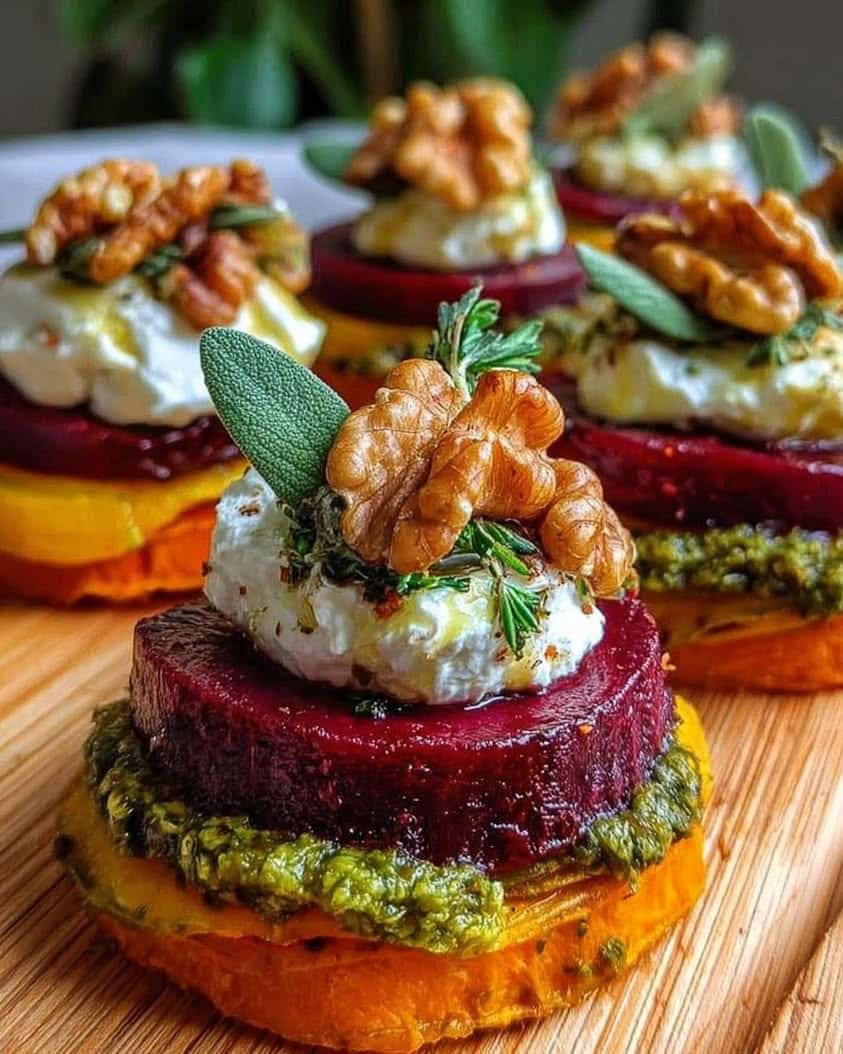
Sweet Potato & Beet Stacks with Pesto, Burrata & Walnuts: A Showstopping Appetizer
Sweet Potato & Beet Stacks with Pesto, Burrata & Walnuts bring restaurant-quality elegance straight to your home kitchen. Therefore, when you need a starter that looks impressive yet comes together without stress, this recipe delivers every single time. The natural sweetness of roasted sweet potato rounds balances beautifully against the earthy depth of roasted beets. Meanwhile, creamy burrata melts into every layer and adds a luxurious richness that guests always notice. A spoonful of vibrant basil pesto ties everything together, and toasted walnuts add the perfect crunch on top.
You will love how these Sweet Potato & Beet Stacks with Pesto, Burrata & Walnuts fit almost any menu. For instance, they work as a holiday appetizer, a dinner party first course, or even a light vegetarian lunch. The colors alone make them a centerpiece on any table. Deep ruby beets, golden-orange sweet potato, snowy white burrata, and bright green pesto create a stunning visual contrast. Additionally, the recipe uses simple pantry ingredients that you can find at any grocery store. As a result, you do not need specialty equipment or advanced culinary training to pull this off.
Beyond looks, these Sweet Potato & Beet Stacks with Pesto, Burrata & Walnuts deliver serious flavor payoff. The roasting process caramelizes the natural sugars in both the sweet potato and the beets. Consequently, each bite carries a subtle smokiness and deep sweetness. The pesto adds herbal brightness, while the burrata brings a cool, milky softness. Finally, the walnuts introduce a nutty, toasty finish that keeps you coming back for more. Whether you serve them warm or at room temperature, these stacks consistently earn rave reviews from family and friends.
Quick Recipe Highlights
- Flavor Profile: These sweet potato and beet stacks combine earthy, sweet, and creamy notes in perfect harmony. The pesto adds a fresh herbal kick, and the walnuts bring a subtle roasted richness. Every layer builds on the last for a balanced, satisfying taste.
- Texture: You get a tender, slightly caramelized bite from the roasted sweet potato and beet rounds. The burrata delivers a soft, pillowy creaminess that coats your palate. Toasted walnuts add a crisp, crunchy contrast that keeps the dish exciting.
- Aroma: Roasting the vegetables fills your kitchen with warm, sweet, and earthy fragrances. The basil pesto contributes a fresh, green scent that lifts the whole dish. Toasted walnuts release a nutty aroma that signals comfort and richness.
- Visual Appeal: The stacked presentation creates a striking vertical tower on each plate. Vibrant magenta beets contrast beautifully with orange sweet potato and white burrata. A drizzle of pesto and scattered walnuts finish the look with vibrant color.
- Skill Level Needed: This recipe suits home cooks with basic knife skills and oven experience. You only need to slice, roast, and assemble, so beginners can succeed easily. The biggest challenge involves slicing evenly, which improves with a sharp knife.
- Special Equipment: A sharp chef’s knife and a sturdy cutting board make slicing vegetables much easier. You also need two baking sheets and parchment paper for roasting. A small skillet helps toast the walnuts, though you can use the oven instead.
Recipe Overview
- Difficulty Level: This recipe earns an easy rating because it relies on simple roasting and layering techniques. You do not need advanced skills like knife work beyond basic slicing or sauce making from scratch. The oven does most of the heavy lifting, and assembly takes only minutes. As a result, even new cooks can serve an impressive dish on the first try.
- Category: These stacks function as an appetizer, a starter, or a light main course. You can serve them at brunch alongside eggs, or plate them for a vegetarian dinner. They also work beautifully as part of a tapas-style spread with other small plates.
- Cuisine: This recipe draws from modern American cooking with Mediterranean influences. The burrata and pesto nod to Italian traditions, while the roasted root vegetables reflect farm-to-table American style. Additionally, the stacking technique borrows from contemporary plating trends seen in upscale restaurants. Overall, it represents a fusion approach that feels both rustic and refined.
- Cost: The ingredients remain affordable, especially when beets and sweet potatoes are in season. Burrata costs more than regular mozzarella, but you only need a small amount. Walnuts and pesto add modest expense, and pantry staples like olive oil keep costs low. In total, you can feed six people for roughly the price of one restaurant appetizer.
- Season: Fall and winter showcase this recipe at its best because sweet potatoes and beets peak in flavor. However, you can make it year-round since both vegetables stay available in most stores. Cool-weather months feel ideal because the roasting process warms the kitchen and complements hearty menus.
- Occasion: Holidays like Thanksgiving, Christmas, and Easter welcome these stacks as a festive starter. Dinner parties, engagement celebrations, and potlucks also suit this recipe well. Additionally, a quiet date night at home becomes special when you plate these colorful towers.
Why You’ll Love This Recipe
The taste and texture of these Sweet Potato & Beet Stacks with Pesto, Burrata & Walnuts create an unforgettable experience. Sweet, earthy, creamy, and crunchy elements all meet in one bite. Therefore, your palate never gets bored because each layer brings something different. The roasted sweet potato offers a soft, caramelized sweetness that pairs naturally with the deep, mineral-rich flavor of beets. Meanwhile, the burrata adds a cool, milky luxury that melts slightly against the warm vegetables. Finally, the pesto and walnuts round out the profile with herbal brightness and nutty crunch. This combination consistently delights even picky eaters.
Convenience and preparation benefits make this recipe a weeknight-friendly option despite its elegant look. You can roast the vegetables ahead of time and assemble everything right before serving. Consequently, you avoid last-minute stress when guests arrive. The active prep time stays under thirty minutes, and the oven handles the rest. Additionally, the recipe uses just one sheet pan for roasting, which means less cleanup afterward. You also need only a handful of tools, so you do not have to dig through your kitchen for specialty gadgets.
Nutritional advantages give you another reason to love this dish. Sweet potatoes deliver beta-carotene, fiber, and vitamin C, which support immune health and digestion. Beets provide folate, manganese, and nitrates that may support healthy blood pressure. Walnuts contribute omega-3 fatty acids and antioxidants that benefit heart and brain health. Furthermore, the olive oil in the pesto offers healthy monounsaturated fats. As a result, you serve a dish that tastes indulgent while still nourishing your body.
Social and entertaining value sets this recipe apart from ordinary appetizers. The stacked presentation sparks conversation the moment you set plates on the table. Guests often ask how you made something so beautiful with so few ingredients. Therefore, it becomes a go-to for hostesses who want maximum impact with minimum fuss. You can also set up a build-your-own station, which encourages guests to interact and customize their stacks. This interactive element turns a simple appetizer into a memorable experience.
Cost-effectiveness and accessibility make this recipe practical for everyday cooking and special occasions alike. Sweet potatoes and beets rank among the most affordable vegetables at any grocery store. You can often find them at farmers markets for even less during peak season. The remaining ingredients, like pesto and walnuts, last a long time in the pantry or fridge. Consequently, you can stretch your grocery budget without sacrificing flavor or presentation. Overall, this recipe proves that elegant food does not require expensive ingredients.
Historical Background and Cultural Significance
The origin story of this dish combines several culinary traditions rather than tracing back to one specific region. Roasted root vegetables have sustained cultures across Europe, Africa, and the Americas for centuries. Beets and sweet potatoes both became staple crops because they store well through cold months. Additionally, the Italian tradition of pairing creamy cheese with vegetables inspired the burrata element. The stacking technique itself emerged from modern restaurant plating trends in the late twentieth century. Consequently, this recipe represents a contemporary creation built on time-tested foundations.
Cultural importance surrounds both beets and sweet potatoes in distinct ways. In Eastern Europe, beets symbolize prosperity and often appear on holiday tables in dishes like borscht. Meanwhile, sweet potatoes hold deep significance in Southern American cooking, where they star in pies, casseroles, and side dishes. The combination of these two vegetables bridges different food traditions and celebrates seasonal eating. Furthermore, burrata originated in the Puglia region of Italy, where cheesemakers craft it from cow’s milk and cream. As a result, this recipe honors multiple culinary heritages on one plate.
The evolution of this recipe reflects broader changes in how Americans cook and eat. During the farm-to-table movement of the 2000s, chefs began highlighting humble root vegetables in creative ways. Home cooks followed suit, and roasted vegetable dishes gained popularity on blogs and cooking shows. Additionally, the rise of vegetarian and flexitarian eating encouraged more people to build meals around produce. Consequently, recipes like these stacks became mainstream rather than niche. The combination of visual appeal and bold flavor made it a natural fit for social media sharing.
Regional variations appear in how different cooks approach similar dishes. In the American South, some versions swap burrata for pimento cheese and use pecans instead of walnuts. Californian cooks might add avocado and drizzle with citrus vinaigrette for a lighter twist. Meanwhile, Italian-inspired versions lean into aged balsamic and shaved Parmesan. Additionally, Mediterranean cooks might incorporate labneh or feta in place of burrata. These variations show how one basic concept adapts to local ingredients and tastes.
Ingredient Deep Dive
Sweet potatoes anchor this recipe with their natural sweetness and vibrant orange color. These root vegetables originated in Central and South America and spread worldwide through trade routes. Today, they play a central role in cuisines from Japan to the American South. Nutritionally, sweet potatoes deliver high levels of beta-carotene, vitamin A, and fiber. When selecting sweet potatoes, look for firm, smooth skin without soft spots or sprouts. Store them in a cool, dark place for up to two weeks, but avoid refrigeration because cold temperatures alter their texture. If you need a substitute, butternut squash or pumpkin work well in a pinch.
Culturally, sweet potatoes carry symbolic weight in many traditions. In the American South, they represent resilience and comfort, appearing at holiday tables for generations. Okinawan cooks prize purple sweet potatoes for their striking color and dense texture. Because they roast beautifully, sweet potatoes suit this recipe’s layered format. Additionally, their natural sugars caramelize during roasting, which deepens the overall flavor. For best results, choose sweet potatoes that feel heavy for their size because they contain more moisture and sweetness.
Beets bring earthy complexity and stunning color to these stacks. Humans have cultivated beets for thousands of years, first for their greens and later for their roots. The Romans and Greeks valued beets for both food and medicine. Additionally, beets became a crucial sugar source in Europe during the nineteenth century. Today, they appear in salads, soups, and juices worldwide. When buying beets, select ones with firm roots and fresh, unwilted greens if attached. Store beets in the refrigerator, wrapped loosely, for up to three weeks. If you want a substitute, try parsnips, carrots, or turnips for a similar roasted effect.
Nutritionally, beets pack folate, manganese, potassium, and dietary nitrates. These compounds support cardiovascular health and may improve blood flow. The pigments that give beets their color, called betalains, also provide antioxidant benefits. Therefore, adding beets to your diet supports overall wellness in delicious ways. For this recipe, roasting beets concentrates their sweetness and softens their texture. As a result, they layer perfectly with the other ingredients.
Burrata delivers the creamy, luxurious element that makes these stacks feel indulgent. This Italian cheese originated in Puglia during the early twentieth century as a way to use leftover mozzarella scraps. Cheesemakers fill a mozzarella shell with stracciatella, a mixture of shredded curds and cream. Consequently, burrata offers a uniquely soft, spreadable texture that regular mozzarella cannot match. When selecting burrata, check the expiration date and choose one packed in liquid for freshness. Store it in the refrigerator and bring it to room temperature before serving. If you cannot find burrata, fresh mozzarella or whipped ricotta make suitable alternatives.
Basil pesto contributes herbal brightness and a vivid green color that lifts the entire dish. Pesto originated in Genoa, Italy, where cooks combine basil, garlic, pine nuts, Parmesan, and olive oil. Traditionally, they grind the ingredients with a mortar and pestle, though modern cooks use food processors. Nutritionally, basil offers vitamins A and K, while olive oil provides healthy fats. When buying pesto, look for brands with simple ingredients and no added sugars. You can store homemade or store-bought pesto in the refrigerator for up to a week. For a substitute, try chimichurri, gremolata, or arugula pesto.
Walnuts add crunch and a toasty, nutty flavor that completes these stacks. These tree nuts have nourished humans for thousands of years, with origins tracing to ancient Persia. Today, California produces most of the walnuts consumed in the United States. Nutritionally, walnuts stand out for their omega-3 fatty acid content, which supports heart and brain health. When selecting walnuts, choose halves or pieces that smell fresh and nutty, not bitter or musty. Store them in an airtight container in the refrigerator or freezer to prevent rancidity. If you prefer, pecans, hazelnuts, or almonds work as substitutes.
Common Mistakes to Avoid
- Slicing the vegetables too thick prevents even roasting and makes stacking difficult. Aim for rounds about a quarter-inch thick so they cook through and hold their shape. Additionally, thin slices layer more neatly and look more elegant on the plate.
- Roasting sweet potatoes and beets together on one pan causes uneven cooking because beets take longer. Always use separate pans or stagger the cooking times. Consequently, each vegetable reaches its ideal texture without turning mushy or underdone.
- Skipping the olive oil and seasoning leaves the vegetables bland and dry. Toss every slice with enough oil to coat, then season generously with salt and pepper. This step builds flavor from the very beginning.
- Using cold burrata straight from the fridge mutes its creamy texture and flavor. Let it sit at room temperature for about twenty minutes before assembling. As a result, it spreads more easily and tastes richer.
- Overcrowding the baking sheet steams the vegetables instead of roasting them. Give each slice breathing room so the edges caramelize properly. Therefore, work in batches if your pans are small.
- Toasting walnuts too long in the skillet creates a bitter, burnt taste. Keep the heat low and stir constantly for two to three minutes. Once they smell nutty, remove them from the pan immediately.
- Assembling the stacks too far in advance makes them soggy and limp. Build them just before serving so the textures stay crisp and appealing. You can roast and store components ahead, but assemble at the last moment.
- Forgetting to pat the roasted beets dry after cooking causes excess moisture on the plate. Blot them gently with a paper towel before stacking. This small step keeps the presentation clean and professional.
- Using a dull knife squashes the sweet potato and beet slices instead of cutting cleanly. Sharpen your knife before starting, or use a mandoline for uniform rounds. Consequently, your stacks look neater and cook more evenly.
- Under-seasoning the burrata layer leaves the dish flat. Add a pinch of flaky salt and a crack of black pepper to the cheese before stacking. This simple touch elevates the entire bite.
Essential Techniques
Roasting vegetables properly forms the foundation of this recipe. When you roast at a high temperature, the natural sugars in sweet potatoes and beets caramelize, which creates deep flavor and appealing color. Set your oven to 425 degrees Fahrenheit and use parchment paper to prevent sticking. Additionally, preheat fully before adding the pans so the vegetables sear on contact. Watch for visual cues like golden edges on the sweet potato and slightly wrinkled skins on the beets. If the vegetables steam instead of brown, your oven likely needs more time to preheat or your pan is overcrowded.
Slicing evenly ensures that every piece cooks at the same rate and stacks neatly. A sharp chef’s knife or a mandoline helps you achieve consistent quarter-inch rounds. Hold the vegetable steady and cut with a smooth, downward motion rather than sawing back and forth. Consequently, you avoid jagged edges and uneven thickness. If you notice some slices are thicker, group them together on the pan and check them first during roasting. Even slicing also makes the final stacks look polished and professional.
Toasting walnuts unlocks their full flavor and removes any raw bitterness. You can toast them in a dry skillet over medium-low heat or in the oven on a sheet pan. Stir frequently and watch closely because nuts burn quickly once they start to brown. The visual cue for success is a slightly darker color and a fragrant, nutty smell. Remove them from the heat immediately and transfer to a cool plate so they stop cooking. This technique takes only a few minutes but makes a big difference in the final dish.
Layering the stacks requires a gentle hand and a bit of patience. Start with the largest sweet potato round as the base for stability. Then add a beet slice, a spoonful of pesto, and a piece of burrata. Repeat the layers until you reach the desired height, usually two to three layers. Consequently, the stack holds together better when you press each layer down lightly. If a stack wobbles, use a smaller round on top to balance it. With practice, you will assemble each stack in seconds.
Pro Tips for Perfect Sweet Potato & Beet Stacks
Choose sweet potatoes and beets that are similar in diameter so the layers align neatly. Uniform sizing creates a stable, attractive stack that does not topple. Therefore, take a moment to sort through the produce bin and pick matching sizes.
Roast the beets first because they take longer than sweet potatoes. Give them a head start of about ten to fifteen minutes. Consequently, both vegetables finish cooking at the same time and reach ideal tenderness.
Pat the roasted vegetable slices dry with paper towels before assembling. Excess oil or moisture makes the stacks slippery and causes them to slide apart. This quick step keeps everything tidy and secure.
Bring the burrata to room temperature before you begin assembling. Warm burrata spreads more easily and tastes creamier. Additionally, it drapes over the layers beautifully rather than clumping.
Add a pinch of flaky sea salt on top of each finished stack right before serving. The crunchy salt crystals add texture and pop against the creamy cheese. Consequently, the flavors taste brighter and more defined.
Use a small offset spatula or a spoon to drizzle pesto neatly over each stack. This tool gives you control and prevents messy pools of sauce on the plate. As a result, your presentation looks clean and intentional.
Serve the stacks on a chilled plate if you want the burrata to stay cool and firm. A cold plate slows the melting process and keeps the textures distinct. Therefore, this trick works especially well in warm weather.
To make assembly faster for a crowd, set up a station with all components in bowls. Guests can then build their own stacks, which adds fun and saves you time. This approach also accommodates different dietary preferences.
Variations and Adaptations
Regional variations offer endless ways to reinterpret these stacks. For a Southern twist, swap the burrata for pimento cheese and use toasted pecans instead of walnuts. Meanwhile, a Californian version might feature avocado slices and a drizzle of lime crema. Italian-inspired cooks could add aged balsamic reduction and shaved Parmigiano-Reggiano. Additionally, a Mediterranean adaptation might use labneh, olives, and za’atar. Each variation preserves the core concept while introducing new flavors and textures.
Seasonal adaptations keep this recipe fresh throughout the year. In spring, substitute roasted radishes or asparagus for the beets and add fresh mint to the pesto. During summer, use grilled zucchini and tomatoes with a lemon-basil dressing. Fall brings a natural fit with the original recipe, but you can also add roasted apples or pears. In winter, try parsnips or rutabaga alongside the sweet potato. Consequently, you never grow tired of the same flavors.
Dietary modifications make this recipe accessible to more people. To make it vegan, replace the burrata with cashew cream or a plant-based mozzarella. For a dairy-free version, use whipped avocado or a almond-based ricotta. If you follow a gluten-free diet, the recipe already qualifies as long as your pesto contains no breadcrumbs. Additionally, a nut-free version can use sunflower seeds or crispy chickpeas in place of walnuts.
Flavor variations let you customize the pesto and seasonings to your taste. Try arugula pesto for a peppery kick, or sun-dried tomato pesto for a richer, sweeter note. Cilantro-lime pesto brings a vibrant, zesty flavor that pairs well with sweet potato. Additionally, you can add smoked paprika or cumin to the roasted vegetables for warmth. Each tweak creates a completely different taste experience while keeping the same structure.
Texture modifications help you adjust the dish to your preferences. If you want extra crunch, add toasted pepitas or crispy shallots on top. For a softer bite, roast the vegetables a few minutes longer until they become very tender. You can also puree the beets into a spread for a smoother mouthfeel. Meanwhile, keeping the walnuts roughly chopped preserves their crunch and adds visual interest.
Presentation alternatives suit different occasions and skill levels. Instead of tall stacks, arrange the components in a flat layer on a platter for a family-style approach. You can also skewer the layers with a toothpick for easy grabbing at parties. For a more elegant look, use a ring mold to shape the layers into perfect cylinders. Additionally, serving the stacks on individual spoons makes a chic passed appetizer.
Serving and Presentation Guide
Plating techniques matter because these stacks deserve a thoughtful presentation. Place each stack slightly off-center on a white or neutral plate to let the colors shine. Then drizzle a thin circle of pesto around the base for a restaurant-style touch. Additionally, scatter a few walnut pieces and small basil leaves nearby. Consequently, the plate looks composed and inviting rather than cluttered.
Garnishing ideas can elevate the visual appeal even further. A sprinkle of flaky sea salt and cracked black pepper adds texture and elegance. Microgreens or small basil leaves provide a fresh green accent. You can also add a few edible flowers for a celebratory touch. Furthermore, a light drizzle of balsamic glaze creates a striking contrast against the white plate.
Traditional accompaniments include crusty bread, crostini, or warm focaccia. These allow guests to scoop up any extra pesto or burrata left on the plate. A simple arugula salad with lemon vinaigrette balances the richness of the cheese. Additionally, roasted garlic or caramelized onions make excellent side additions.
Modern serving suggestions encourage creativity and personal style. Try serving the stacks on a charcuterie board alongside cured meats and olives. You can also plate them as part of a grain bowl with farro or quinoa. For a brunch spread, pair them with poached eggs and hollandaise. Consequently, the recipe adapts to whatever meal or theme you have in mind.
Temperature considerations affect how the dish tastes and feels. These stacks taste best when the roasted vegetables are warm and the burrata is cool. This contrast creates a pleasant sensory experience. If you must hold them, keep the components separate and assemble just before serving. Therefore, you preserve the ideal temperature balance.
Portion control tips help you plan for different group sizes. One stack per person works well as an appetizer, while two or three make a light meal. For a buffet, offer smaller, one-bite versions using toothpicks. Additionally, you can pre-portion the components into small bowls for a self-serve station.
Wine and Beverage Pairing
Wine pairings can enhance the flavors of these Sweet Potato & Beet Stacks with Pesto, Burrata & Walnuts. A crisp Sauvignon Blanc offers bright acidity that cuts through the creamy burrata. Alternatively, a dry Rosé brings red fruit notes that complement the earthy beets. For red wine lovers, a light Pinot Noir works beautifully without overpowering the dish. Additionally, a sparkling Prosecco adds festive bubbles that lift the herbal pesto notes.
Non-alcoholic alternatives ensure everyone at the table has a great pairing. Sparkling water with lemon or lime provides refreshing carbonation that cleanses the palate. A cucumber-mint cooler adds a cooling herbal element that echoes the pesto. Meanwhile, a beet and orange juice blend reinforces the earthy-sweet flavor profile. Consequently, non-drinkers still enjoy a thoughtful, elevated beverage.
Coffee and tea pairings may seem unusual, but they work with this dish. A light green tea, such as sencha, complements the herbal pesto and creamy cheese. Jasmine tea adds floral notes that enhance the sweetness of the roasted vegetables. If you prefer coffee, a mild blonde roast avoids competing with the food. Therefore, you can serve these stacks at any time of day with a suitable drink.
Temperature considerations apply to beverages as well as food. Serve white wines and sparkling options well-chilled for maximum refreshment. Red wines taste best slightly below room temperature to keep them lively. Additionally, iced teas and coolers should be served very cold to balance the warm vegetables.
Serving suggestions include offering a choice of two beverages so guests feel catered to. Set up a small drink station with wine glasses and non-alcoholic options. You can also pair each course with a specific drink for a more curated experience. As a result, the meal feels intentional and polished from start to finish.
Storage and Shelf Life
Storage methods vary depending on whether you store components separately or as assembled stacks. Always store the roasted sweet potato and beet slices in separate airtight containers. Keep the burrata in its original liquid and the pesto in a sealed jar. Consequently, each element maintains its ideal texture and flavor for longer.
Temperature requirements matter for food safety and quality. Refrigerate all components at 40 degrees Fahrenheit or below. The roasted vegetables keep for up to four days, while the burrata should be eaten within two to three days of opening. Additionally, keep the pesto refrigerated and use it within one week.
Container recommendations include glass containers with tight-fitting lids for the vegetables. Glass does not retain odors or stain from the beets, which is a major advantage. For the burrata, keep it in its original packaging or transfer it to a bowl with its liquid. Pesto stores best in a small jar with a thin layer of olive oil on top to prevent browning.
Signs of spoilage include sliminess on the vegetables, sour smells from the burrata, or mold on the pesto. If any component looks or smells off, discard it immediately. The walnuts should smell nutty, not bitter or rancid. As a result, you protect yourself and your guests from foodborne illness.
Reheating instructions focus on the roasted vegetables only. Warm them in a 350-degree oven for about five to seven minutes, or until heated through. Avoid microwaving because it makes the edges rubbery and uneven. Meanwhile, keep the burrata and pesto at room temperature and add them after reheating.
Freezing guidelines apply mainly to the roasted vegetables and walnuts. Freeze the sweet potato and beet slices in a single layer on a sheet pan, then transfer to freezer bags. They keep for up to three months. Thaw overnight in the refrigerator and reheat in the oven. Do not freeze burrata or pesto, as both lose their texture and flavor.
Make Ahead Strategies
Prep timeline planning makes entertaining much easier. You can roast the sweet potatoes and beets up to three days in advance and refrigerate them. Toast the walnuts a week ahead and store them in an airtight container. Additionally, make or buy the pesto up to five days before serving. This staggered approach spreads the work across several days.
Storage between steps keeps each component fresh and ready to use. Keep the roasted vegetables in separate containers so the beet color does not bleed onto the sweet potato. Store the walnuts at room temperature and the pesto in the fridge. Meanwhile, leave the burrata in its packaging until about twenty minutes before assembly.
Quality impact assessment helps you decide what to prep ahead and what to leave fresh. Roasted vegetables hold up beautifully and often taste even better the next day. Pesto maintains its flavor for several days, though the color may darken slightly. Burrata, however, tastes best when fresh, so buy it close to serving day.
Assembly tips for make-ahead situations include keeping all components separate until the last moment. Set up a station with bowls of each ingredient and let guests or family assemble their own stacks. This approach keeps textures ideal and reduces your workload. Consequently, you enjoy the party instead of fussing in the kitchen.
Reheating guidelines for prepped components remain simple. Warm the roasted vegetables in the oven at 350 degrees for five to seven minutes. Avoid overheating because the burrata will melt too quickly once added. Additionally, bring the pesto to room temperature for easier drizzling.
Fresh element additions right before serving boost flavor and texture. Add fresh basil leaves, a squeeze of lemon, or a sprinkle of flaky salt at the last minute. These small touches make the dish taste newly made even if you prepped ahead. Therefore, your guests never know the difference.
Scaling Instructions
Halving the recipe works well for smaller households or intimate dinners. Use one large sweet potato and two medium beets, and reduce the burrata to four ounces. Keep the pesto and walnuts at half the original amount. Additionally, use a smaller baking sheet to avoid overcrowding.
Doubling or tripling the recipe requires planning for oven space and assembly time. Use multiple baking sheets and rotate them halfway through roasting for even cooking. You may need to extend the roasting time slightly because a crowded oven loses heat. Additionally, set up a larger assembly station to handle the increased volume.
Equipment adjustments matter when you scale up or down. For a double batch, use two or three sheet pans and work in batches if needed. A larger platter or multiple plates help with serving. Meanwhile, a mandoline becomes even more valuable because it speeds up slicing significantly.
Timing modifications apply mainly to roasting and assembly. Larger batches take longer to roast because the oven has more to heat. Add five to ten minutes as needed and check doneness with a fork. Assembly time also increases, so allow extra minutes before serving.
Storage considerations change with larger quantities. You need more containers and more refrigerator space. Label each container with the date so you use the oldest components first. Consequently, you avoid waste and keep everything organized.
Nutritional Deep Dive
The macro breakdown of these stacks shows a balanced profile. Each serving provides roughly 320 calories, 18 grams of fat, 30 grams of carbohydrates, and 10 grams of protein. The fat comes primarily from the burrata, walnuts, and olive oil in the pesto. Carbohydrates come from the sweet potato and beets, which offer complex, slow-digesting energy. Meanwhile, the protein mainly comes from the cheese and nuts.
Micronutrient analysis reveals impressive vitamin and mineral content. Sweet potatoes deliver over 400 percent of your daily vitamin A needs in one serving. Beets contribute folate, manganese, and potassium. Additionally, walnuts provide vitamin E and omega-3 fatty acids. The basil in the pesto adds vitamin K and small amounts of iron and calcium.
Health benefits from these ingredients support overall wellness. The fiber in sweet potatoes and beets promotes digestive health and helps you feel full. Omega-3 fatty acids from walnuts support heart and brain function. Furthermore, the antioxidants in beets and basil help combat inflammation. Consequently, this dish nourishes your body while satisfying your taste buds.
Dietary considerations include the fact that this recipe suits vegetarian diets naturally. It also fits gluten-free eating if you choose a gluten-free pesto. However, it contains dairy, so it does not suit vegan or lactose-free diets without modifications. Additionally, people watching their sodium intake should moderate the added salt.
Portion analysis shows that one stack makes a reasonable appetizer portion. Two stacks serve as a light meal with about 640 calories. For a heartier dinner, pair two stacks with a grain side and a green salad. Therefore, you can adjust portions based on your hunger and dietary goals.
Weight management tips focus on the satisfying nature of this dish. The combination of fiber, protein, and healthy fats keeps you full for hours. As a result, you are less likely to snack between meals. Additionally, the vibrant flavors make healthy eating feel like a treat rather than a chore.
Dietary Adaptations
Gluten-free preparation requires only minor adjustments. The recipe is naturally gluten-free as long as your pesto and any added ingredients contain no wheat. Check labels on store-bought pesto because some brands add breadcrumbs. Additionally, verify that Print
Sweet Potato & Beet Stacks with Pesto, Burrata & Walnuts
- Total Time: 45 minutes
- Yield: 4
Description
A vibrant vegetarian dish featuring roasted sweet potato and beet slices layered with creamy burrata, fresh pesto, and crunchy walnuts. Perfect as an appetizer or light main course.
Ingredients
- 2 medium sweet potatoes, sliced into 1/4-inch rounds
- 2 medium beets, sliced into 1/4-inch rounds
- 2 tablespoons olive oil
- Salt and pepper to taste
- 1 cup fresh basil leaves
- 1/4 cup pine nuts
- 1 garlic clove
- 1/2 cup extra-virgin olive oil
- 1/4 cup grated Parmesan cheese
- 8 ounces burrata cheese
- 1/2 cup chopped walnuts, toasted
- Balsamic glaze for drizzling (optional)
Instructions
- Preheat oven to 400°F (200°C). Line a baking sheet with parchment paper.
- Toss sweet potato and beet slices with olive oil, salt, and pepper. Arrange in a single layer on the baking sheet.
- Roast for 25-30 minutes, flipping halfway, until tender and slightly caramelized. Remove from oven and let cool slightly.
- Meanwhile, make the pesto: In a food processor, combine basil, pine nuts, garlic, and Parmesan. Pulse while slowly adding extra-virgin olive oil until smooth. Season with salt and pepper.
- To assemble, place a sweet potato slice on a plate, top with a beet slice, a dollop of pesto, and a piece of burrata. Repeat layers to form a stack. Repeat with remaining ingredients.
- Drizzle with balsamic glaze if desired and sprinkle with toasted walnuts. Serve immediately.
Notes
You can customize the seasonings to taste. For a vegan version, omit the burrata and use a cashew cream or extra pesto.
- Prep Time: 15 minutes
- Cook Time: 30 minutes
- Method: Main
- Cuisine: American