Stuffed Sweet Potatoes with Spinach, Mushroom, Feta & Rosemary: A Hearty and Healthy Main Dish
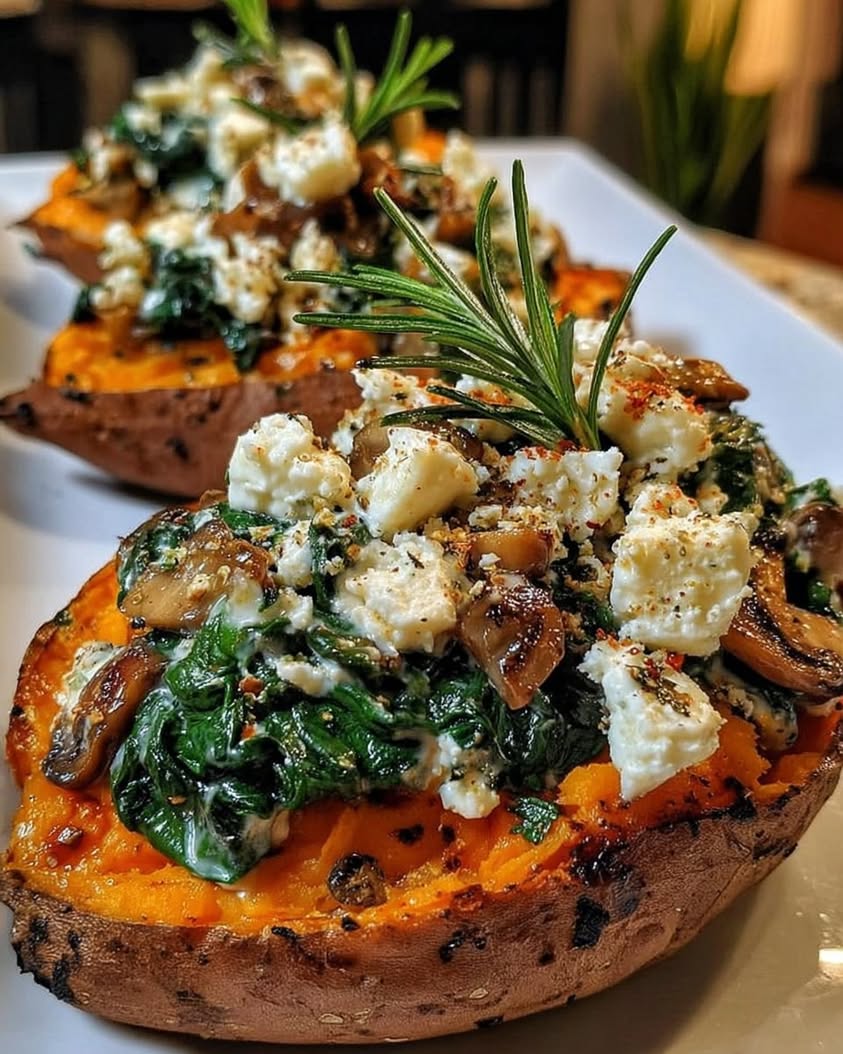
You are about to discover a recipe that transforms humble sweet potatoes into a show-stopping centerpiece. These Stuffed Sweet Potatoes with Spinach, Mushroom, Feta & Rosemary drizzled with Lemon Garlic Yogurt Sauce offer a perfect balance of earthy flavors, creamy textures, and bright, tangy notes. The first bite reveals a soft, caramelized sweet potato skin that gives way to a luscious filling of savory mushrooms, wilted spinach, and salty feta cheese. The aromatic rosemary infuses the entire dish with a woodsy, pine-like fragrance that feels both comforting and sophisticated.
Moreover, the Lemon Garlic Yogurt Sauce acts as a finishing touch that ties everything together. Its cool, tangy creaminess cuts through the richness of the roasted sweet potato and the savory stuffing, creating a harmonious flavor experience. Whether you are looking for a satisfying weeknight dinner or an impressive dish for guests, this recipe delivers on every front. It is naturally gluten-free, packed with nutrients, and surprisingly simple to prepare. You will find that the combination of roasted sweet potato, sautéed greens, and crumbled feta feels like a complete meal that nourishes both body and soul.
Furthermore, this recipe is highly adaptable to different dietary needs. The spinach and mushroom filling provides a hearty, plant-based core that can easily be made vegan by omitting the feta or substituting it. The sweet potato itself is a nutritional powerhouse, loaded with fiber, vitamin A, and potassium. As a result, these stuffed sweet potatoes are not just delicious; they are a smart choice for anyone wanting to eat well without sacrificing flavor. From the moment you pull them from the oven until the final drizzle of sauce, this dish promises to become a staple in your home kitchen.
Prep Time: 20 mins
Cook Time: 45 mins
Total Time: 65 mins
Servings: 4
Difficulty: Easy
Quick Recipe Highlights
- Flavor Profile: The dominant flavors include earthy roasted sweet potato, savory sautéed mushrooms, mild fresh spinach, and briny feta cheese. Fresh rosemary adds an aromatic woodsy note, while the Lemon Garlic Yogurt Sauce provides a bright, tangy counterbalance. The overall taste is deeply satisfying without being overly heavy.
- Texture: You get a wonderful contrast between the tender, fluffy interior of the roasted sweet potato and its slightly chewy skin. The mushroom and spinach filling offers a soft, juicy bite, and the crumbled feta adds small pockets of creamy saltiness. The cool yogurt sauce brings a smooth, velvety finish.
- Aroma: The fragrance of roasting sweet potatoes fills your kitchen with a sweet, nutty scent. As you sauté the garlic and mushrooms, a savory, earthy aroma develops. Fresh rosemary releases its piney notes, and the final dish carries a hint of lemon from the sauce, making it irresistible.
- Visual Appeal: The bright orange flesh of the sweet potato contrasts beautifully with the deep green spinach, golden-brown mushrooms, and white crumbles of feta. A drizzle of pale, creamy yogurt sauce over the top adds an elegant finish. This dish is vibrant and inviting on any plate.
- Skill Level Needed: This recipe is accessible to beginner and intermediate cooks. You need basic knife skills for chopping vegetables and the ability to monitor roasting times. Sautéing the filling is straightforward, and assembling the stuffed potatoes requires no special techniques. It is a forgiving recipe that rewards careful timing.
- Special Equipment: You need a large baking sheet for roasting the sweet potatoes and a medium skillet for sautéing the mushrooms and spinach. A small bowl for mixing the yogurt sauce is helpful. A sharp chef’s knife and a sturdy fork or potato masher will make preparation easier.
Recipe Overview
- Difficulty Level: The difficulty level is Easy because the recipe involves basic roasting and sautéing techniques. There are no complex steps like making a roux or tempering eggs. The ingredients are straightforward, and the assembly is simple. Most home cooks can follow this recipe without feeling overwhelmed.
- Category: This recipe fits into the main course category, but it also works well as a hearty side dish or a satisfying vegetarian entree. It can be served for lunch or dinner and pairs nicely with a simple green salad. The stuffed sweet potatoes are complete enough to stand alone as a meal.
- Cuisine: The cuisine draws inspiration from Mediterranean flavors, particularly Greek and Eastern Mediterranean traditions. The use of feta, olive oil, lemon, and garlic reflects classic Greek cooking. The combination of roasted vegetables with fresh herbs is a hallmark of this culinary region.
- Cost: This dish is budget-friendly. Sweet potatoes and spinach are inexpensive staples. Mushrooms are affordable, and feta cheese adds a touch of luxury without breaking the bank. The yogurt sauce uses common pantry ingredients. You can easily serve four people for under fifteen dollars.
- Season: This recipe is perfect for fall and winter when sweet potatoes are at their peak. The warming, comforting nature of the dish suits cooler weather. However, it can be enjoyed year-round, especially if you adjust the accompaniments to suit the season.
- Occasion: These stuffed sweet potatoes are ideal for casual weeknight dinners, meal prep lunches, or even a cozy dinner party. They present beautifully, making them suitable for holiday tables or potluck gatherings. The individual servings make portion control easy.
Why You’ll Love This Recipe
First and foremost, the taste is absolutely delightful. The natural sweetness of the roasted potato complements the savory, umami-rich mushrooms and the salty bite of feta cheese. The lemon garlic sauce adds a refreshing tang that brightens every forkful. You get a complex flavor profile that feels gourmet but comes together with minimal effort. The textures are equally pleasing, with the creamy potato interior contrasting with the tender filling and smooth sauce.
In terms of convenience, this recipe is a winner. You can roast the sweet potatoes ahead of time and assemble the filling when you are ready to eat. The entire cooking process takes just over an hour, but much of that time is hands-off while the potatoes roast. The ingredient list is short and uses items you might already have in your pantry. Cleanup is also simple since you only need a baking sheet and a single skillet.
From a nutritional standpoint, this dish offers a wealth of benefits. Sweet potatoes are rich in beta-carotene, vitamin C, and dietary fiber, which support eye health and digestion. Spinach provides iron and calcium, while mushrooms offer B vitamins and antioxidants. Feta adds a moderate amount of protein and calcium. The yogurt sauce contributes probiotics for gut health. This meal is naturally gluten-free and can be adapted to vegetarian or dairy-free diets easily.
Moreover, this recipe shines when it comes to entertaining guests. The individual stuffed potatoes look impressive on a serving platter. You can customize the filling based on your guests’ preferences or dietary restrictions. The dish holds well at room temperature, making it perfect for buffets or potluck events. Guests will appreciate the thoughtful combination of flavors and the beautiful presentation. It is a conversation starter that feels special without requiring hours of labor.
Finally, the cost-effectiveness of these stuffed sweet potatoes cannot be overstated. A few affordable ingredients come together to create a satisfying meal that feels luxurious. You can easily scale the recipe up or down without breaking the budget. Using seasonal produce keeps costs low and flavor high. This is the kind of recipe that fits into a weekly rotation because it is both economical and delicious.
Historical Background and Cultural Significance
The origin of stuffing vegetables has deep roots in Mediterranean cuisine. Ancient cooks in Greece and the Middle East filled eggplants, peppers, and grape leaves with rice, herbs, and minced meat. This technique allowed them to use leftover ingredients and stretch meals further. Sweet potatoes, though native to the Americas, were introduced to Europe and the Mediterranean region after the Columbian Exchange. They were quickly adopted into local culinary traditions because of their versatility and sweet flavor.
Cultural importance stems from the Mediterranean philosophy of using fresh, seasonal ingredients. Stuffed vegetables, known as “gemista” in Greek cooking, represent a celebration of the harvest. Families would gather to prepare large batches of stuffed vegetables, sharing the work and the meal. This communal aspect remains central to the dish’s identity. It is a recipe that fosters connection and warmth at the table.
Over time, the evolution of this recipe has incorporated global influences. Modern chefs and home cooks have experimented with different fillings, including spinach, mushrooms, and various cheeses. The addition of feta reflects the strong Greek cheese-making tradition, while the use of rosemary nods to Italian and French herb gardens. The yogurt sauce, inspired by Middle Eastern and Indian condiments, adds a contemporary twist. This recipe is a living example of how culinary traditions adapt and grow.
Regional variations of stuffed sweet potatoes can be found in many cultures. In the American South, sweet potatoes are often stuffed with pecans, marshmallows, or brown sugar for a sweet side dish. Caribbean versions might include black beans, plantains, and spicy seasonings. Mediterranean-inspired versions, like this one, emphasize savory herbs, cheese, and vegetables. Each region brings its own flavor profile, showcasing the sweet potato’s remarkable adaptability across cuisines.
Ingredient Deep Dive
Sweet Potatoes: Sweet potatoes hold cultural significance in many parts of the world. In the Americas, they have been cultivated for thousands of years. They are a symbol of nourishment and abundance. Nutritionally, they are packed with fiber, vitamin A, and antioxidants. When selecting sweet potatoes, look for firm, unblemished specimens with smooth skin. Avoid any that feel soft or have sprouts. Store them in a cool, dark place for up to two weeks. You can substitute yams or even regular potatoes if needed.
Spinach: Spinach has a long history dating back to ancient Persia. It spread along trade routes to Europe and became a staple in many cuisines. It is rich in iron, calcium, and vitamin K. Choose fresh spinach with crisp, dark green leaves and no signs of wilting. Store it in a plastic bag in the refrigerator for up to five days. If you need a substitute, kale, Swiss chard, or arugula work well, though they will alter the flavor and texture slightly.
Mushrooms: Mushrooms have been used in cooking for centuries, prized for their umami flavor. They are low in calories and a good source of B vitamins, selenium, and potassium. For this recipe, cremini or baby bella mushrooms are excellent because they have a firm texture and deep flavor. Select mushrooms that are firm and dry with closed caps. Store them in a paper bag in the refrigerator. If mushrooms are unavailable, you can substitute chopped zucchini or eggplant.
Feta Cheese: Feta cheese originates from Greece and is made from sheep’s milk or a mixture of sheep and goat milk. It is a brined cheese with a tangy, salty flavor. Feta adds a distinct Mediterranean touch. Look for feta stored in brine for the best texture and taste. It crumbles easily and melts slightly when heated. For a dairy-free version, use crumbled tofu or a plant-based feta alternative.
Rosemary: Rosemary is an aromatic herb native to the Mediterranean region. It has been used in cooking, medicine, and ritual for centuries. Its strong, pine-like flavor pairs beautifully with roasted vegetables and lamb. Use fresh rosemary when possible for the best aroma. If you must use dried, reduce the amount by half. Store fresh rosemary in a damp paper towel in the refrigerator. Thyme, oregano, or marjoram can be used as substitutes.
Lemon Garlic Yogurt Sauce: This sauce is a modern take on traditional Middle Eastern yogurt sauces. Greek yogurt provides a thick, creamy base rich in protein and probiotics. Lemon juice adds brightness and acidity, while garlic gives a pungent, savory kick. Use plain whole milk or 2% Greek yogurt for the best consistency. Store the sauce in an airtight container in the refrigerator for up to three days. It also works as a dip for vegetables or a dressing for salads.
Common Mistakes to Avoid
- Under-roasting the sweet potatoes: If the potatoes are not fully cooked, the filling will not be as creamy. Make sure they are fork-tender before stuffing. This usually takes about 40-45 minutes at 400 degrees Fahrenheit.
- Overfilling the potatoes: Piling too much filling can make the potatoes difficult to eat and cause them to collapse. Use a moderate amount and press it gently into the cavity.
- Skipping the salt for the mushrooms: Mushrooms release a lot of water when cooked. If you do not season them adequately, they can become soggy. Add salt early to help them brown properly.
- Using pre-shredded feta: Pre-crumbled feta often contains anti-caking agents that affect texture. Always buy a block of feta and crumble it yourself for the best flavor and creaminess.
- Overcooking the spinach: Spinach wilts very quickly. If you cook it too long, it becomes mushy and loses its vibrant color. Add it at the end of the sauté and cook just until it wilts.
- Forgetting to dry the mushrooms: Wet mushrooms will steam rather than brown. Clean them with a dry brush or a damp paper towel instead of rinsing them under water.
- Making the sauce too runny: If you add too much lemon juice, the yogurt sauce will become thin. Start with one tablespoon and adjust from there. The sauce should be thick enough to drizzle without spreading too much.
- Not preheating the oven: A hot oven is essential for roasting sweet potatoes properly. Place the potatoes in the oven only after it has reached the correct temperature to ensure even cooking.
- Mashing the potato too much: When you scoop out the potato flesh, leave a thin layer inside the skin to maintain its structure. Over-mashing can create a puree that is too soft to hold the filling.
- Skipping the resting time: After roasting, let the potatoes cool for a few minutes before handling. This prevents burning and helps the filling stay in place.
Essential Techniques
Roasting Sweet Potatoes: Roasting brings out the natural sugars in sweet potatoes, creating a caramelized exterior and a fluffy interior. To master this, scrub the potatoes clean and prick them several times with a fork to allow steam to escape. Rub them lightly with olive oil and place them directly on the oven rack or a baking sheet. Roast at 400 degrees Fahrenheit for 40-45 minutes, or until they yield easily when squeezed. A common pitfall is cutting the potatoes before roasting, which can cause them to dry out. The visual cue for doneness is a slight wrinkling of the skin and a soft, yielding texture when pierced with a fork.
Sautéing Mushrooms: Sautéing mushrooms correctly develops their deep, savory umami flavor. Begin by heating a skillet over medium-high heat and adding a tablespoon of olive oil. Add the mushrooms in a single layer without overcrowding the pan. Let them cook undisturbed for 3-4 minutes to develop a golden-brown crust on one side. Then stir and continue cooking until they release their moisture and it evaporates. A common mistake is salting the mushrooms too early, which draws out water and prevents browning. The visual cue for success is a deep golden color and a shrunken, concentrated appearance.
Washing and Wilting Spinach: Spinach wilts dramatically when heated, so it is important to handle it gently. Wash the leaves thoroughly to remove any grit, then dry them well. Add the spinach to the skillet after the mushrooms have finished cooking. Stir constantly for about 2 minutes until the leaves are just wilted and bright green. Overcooking will lead to a slimy texture and faded color. The visual cue is when the volume reduces by about three-quarters and the leaves are tender but not mushy.
Making Lemon Garlic Yogurt Sauce: This sauce is simple but requires careful balance. Combine plain Greek yogurt, freshly squeezed lemon juice, minced garlic, and a pinch of salt in a small bowl. Whisk until smooth and creamy. The key is to use room-temperature yogurt to prevent the sauce from separating. If the sauce is too thick, add a teaspoon of cold water to thin it out. The taste cues are a bright acidity from lemon, a mild garlic kick, and a smooth, tangy finish. Taste and adjust seasonings as needed.
Assembling the Stuffed Potatoes: Once the potatoes are cool enough to handle, cut a slit lengthwise along the top of each one. Use a spoon to gently scoop out the flesh, leaving a 1/4-inch border inside the skin. Mash the scooped potato lightly with a fork, then mix it with the sauteed spinach and mushroom filling. Stuff this mixture back into the potato skins and top with crumbled feta. A common pitfall is over-mixing, which turns the filling into a paste. The visual cue is a nicely domed top with visible pieces of mushroom and spinach.
Pro Tips for Perfect Stuffed Sweet Potatoes
Choose sweet potatoes that are similar in size and shape for even cooking. This ensures all the potatoes finish roasting at the same time. If you have a mix of sizes, check the smaller ones earlier and remove them as needed.
For extra flavor, add a pinch of red pepper flakes to the mushroom saute. The subtle heat enhances the sweet potato’s natural sweetness without overwhelming the dish. Adjust the amount to your tolerance level.
Toast the feta briefly under the broiler after stuffing the potatoes. This gives the cheese a golden, slightly crispy top that adds texture and visual appeal. Watch it closely to prevent burning.
Let the yogurt sauce sit for at least 10 minutes before serving. This allows the garlic flavor to mellow and meld with the lemon and yogurt. The result is a smoother, more cohesive sauce.
Use a sharp vegetable peeler or a small paring knife to remove any eyes or blemishes from the sweet potatoes before roasting. This prevents tough spots in the final dish.
If you want to save time, you can microwave the sweet potatoes for 5-7 minutes before roasting. This reduces the oven time by about 15 minutes. Just finish them in the oven to get the caramelized exterior.
Double the yogurt sauce recipe because it is fantastic on other dishes too. Use it as a dressing for grain bowls, a dip for roasted vegetables, or a sauce for grilled chicken or fish.
Garnish each stuffed potato with a small sprig of fresh rosemary before serving. This adds a beautiful, aromatic touch that signals the herb’s presence in the dish.
Variations and Adaptations
Regional Variations: In Greek cuisine, you might add chopped Kalamata olives or capers to the filling for extra brininess. A Middle Eastern version could include ground lamb or beef cooked with cinnamon and allspice. Indian-inspired variations might incorporate garam masala, turmeric, and cilantro. Each regional twist brings its own identity to the base recipe.
Seasonal Adaptations: In the spring, substitute the spinach with tender pea shoots or watercress. Summer calls for roasted bell peppers and zucchini in the filling. Fall and winter are perfect for adding roasted butternut squash or apples for sweetness. Adjust the herbs accordingly, using mint in summer or sage in winter.
Dietary Modifications: To make this recipe vegan, omit the feta cheese and use a plant-based yogurt for the sauce. Add a handful of toasted pine nuts or walnuts for richness. For a low-carb version, use cauliflower in place of the sweet potato flesh, or serve the filling over a bed of greens.
Flavor Variations: Experiment with different herbs such as thyme, oregano, or smoked paprika. Add a tablespoon of balsamic vinegar to the mushrooms for depth. Incorporate roasted garlic cloves into the filling for a mellow sweetness. A splash of white wine can deglaze the pan and add complexity.
Texture Modifications: For a crunchier texture, add toasted breadcrumbs or crushed almonds on top before broiling. You can also stir in cooked quinoa or farro for a more substantial filling. If you prefer a softer texture, mash the sweet potato more thoroughly and fold in extra olive oil.
Presentation Alternatives: Instead of stuffing the potatoes whole, you can slice them into rounds and top each round with the filling. This creates an elegant appetizer or side dish. Alternatively, serve the filling in a hollowed-out sweet potato boat, or layer it in a gratin dish for a family-style meal.
Serving and Presentation Guide
For plating, place each stuffed sweet potato on a warm plate with the cut side facing up. Drizzle the yogurt sauce in a zigzag pattern over the top. This creates a visually appealing, restaurant-quality look. If you prefer, serve the sauce on the side so guests can add it themselves.
Garnish with fresh rosemary sprigs, a sprinkle of extra feta, and a crack of black pepper. A few toasted pine nuts or pumpkin seeds add a nice crunch. Chopped fresh parsley or chives also work well for a burst of green color.
Traditional accompaniments include a simple Greek salad with cucumbers, tomatoes, and red onion. A side of roasted broccoli or green beans complements the dish nicely. For a heartier meal, serve with warm pita bread or a crusty baguette.
Modern serving suggestions involve pairing the stuffed potatoes with a grain like quinoa or farro. A side of roasted chickpeas or a dollop of hummus adds protein. You can also serve them as part of a mezze platter alongside other small dishes.
Temperature considerations are important. Serve the potatoes hot from the oven, but allow them to rest for 3-5 minutes after broiling to set the filling. The yogurt sauce should be cool or at room temperature to contrast with the hot potatoes. This temperature contrast enhances the eating experience.
Portion control tips: One large stuffed potato per person is usually sufficient for a main course. For a side dish, half a potato per person is appropriate. If you serve multiple accompaniments, adjust the portion size accordingly. Leftovers store beautifully for lunch the next day.
Wine and Beverage Pairing
For wine pairings, a crisp, unoaked Sauvignon Blanc from New Zealand or France is an excellent choice. Its citrus and grassy notes complement the lemony yogurt sauce and the earthy mushrooms. A dry Riesling from Germany also works, as its slight sweetness balances the savory elements.
If you prefer red wine, a light-bodied Pinot Noir from Oregon or Burgundy is ideal. Its subtle red fruit flavors and low tannins will not overpower the dish. A young, unoaked Tempranillo from Spain also pairs beautifully with the rosemary and feta.
Non-alcoholic alternatives include sparkling water with a squeeze of lemon or lime. A cucumber-mint cooler or a ginger and turmeric tonic provides a refreshing, palate-cleansing option. For a warm beverage, try a cup of herbal tea like chamomile or peppermint.
Coffee and tea pairings are also viable. A light-roast coffee with floral notes can accompany the meal nicely. Black tea, especially a Ceylon or Darjeeling, with its mild astringency, cuts through the richness. Chai tea with its warming spices is another excellent match.
Temperature considerations are key. Serve white wines and sparkling water well-chilled. Red wine should be slightly cool, around 60-65 degrees Fahrenheit. For non-alcoholic drinks, serve over ice for refreshment or warm for comfort. Always consider your guests’ preferences.
Serving suggestions include offering a small glass of wine alongside the meal. Alternatively, set up a beverage station with options for guests to choose their own. For a dinner party, you can pair each course with a different drink, starting with a crisp white and finishing with a light red.
Storage and Shelf Life
Store leftover stuffed sweet potatoes in an airtight container in the refrigerator. They will stay fresh for up to 4 days. Keep the yogurt sauce separate to prevent the potatoes from becoming soggy. If you have already added the sauce, the potatoes are still safe to eat but will have a softer texture.
Temperature requirements are standard for cooked vegetables. Keep them at or below 40 degrees Fahrenheit. Do not leave them at room temperature for more than 2 hours. When reheating, bring them to an internal temperature of 165 degrees Fahrenheit to ensure safety.
Container recommendations include glass or BPA-free plastic containers with tight-fitting lids. Avoid using aluminum foil for long-term storage, as it can react with the acidity of the tomatoes or lemon. For best results, use a container that is just large enough to hold the potatoes without crushing them.
Signs of spoilage include an off, sour smell, visible mold, or a slimy texture on the surface. The filling may develop a grayish color if it has been stored too long. When in doubt, throw it out. It is better to be safe than risk foodborne illness.
Reheating instructions: Preheat your oven to 350 degrees Fahrenheit. Place the stuffed potatoes on a baking sheet and cover them loosely with foil. Heat for 15-20 minutes or until warmed through. You can also use a microwave, but this will soften the skin and filling more. For the best texture, use the oven.
Freezing guidelines: You can freeze the stuffed potatoes before or after baking. For best results, freeze them on a baking sheet until solid, then transfer to a freezer-safe bag. They will keep for up to 3 months. Thaw in the refrigerator overnight before reheating. The yogurt sauce should not be frozen as it will separate upon thawing.
Make Ahead Strategies
Prep timeline: You can roast the sweet potatoes up to 2 days in advance. Let them cool completely, then store them in the refrigerator. You can also prepare the mushroom and spinach filling up to 2 days ahead. Sauté the mushrooms and spinach, cool, and refrigerate in a sealed container.
Storage between steps: Keep the roasted potatoes and the filling separate until you are ready to assemble. This prevents the potatoes from absorbing excess moisture. The yogurt sauce can be made up to 3 days ahead. Stir it well before serving to recombine any separated liquid.
Quality impact assessment: The overall quality remains high when you make the components ahead. The potatoes may lose a slight amount of crispness on the skin, but this is minor. The filling flavors actually deepen and meld together overnight, resulting in a more cohesive dish.
Assembly tips: When you are ready to assemble, reheat the roasted potatoes in a 350-degree oven for 10 minutes to warm them through. Reheat the filling in a skillet over medium heat, adding a splash of water or olive oil if it seems dry. Then stuff and top with feta and broil as directed.
Reheating guidelines: If you assemble the potatoes completely ahead of time, bake them at 350 degrees Fahrenheit for 15-20 minutes to recrisp the skin and warm the filling. Avoid microwaving, as this can make the skin rubbery. Add the yogurt sauce just before serving for the freshest taste.
Fresh element additions: For the best presentation, add a final drizzle of fresh yogurt sauce, a sprinkle of fresh feta, and a few fresh rosemary leaves just before serving. This restores the bright, vibrant flavors that can diminish during storage.
Scaling Instructions
Halving the recipe: To make 2 servings, simply use 2 sweet potatoes and halve all other ingredients. The cooking times remain the same, but check the potatoes for doneness 5 minutes earlier. The filling will cook faster in a smaller skillet. Adjust seasonings to taste.
Doubling or tripling: For larger batches, use 8 or 12 sweet potatoes. You may need to use two baking sheets to avoid overcrowding. Rotate the sheets halfway through roasting for even cooking. Use a larger skillet or two skillets to cook the filling. The timing remains largely unchanged, but the filling may take slightly longer to sauté due to increased volume.
Equipment adjustments: If you double the recipe, a 12-inch skillet works well. For tripling, use a large saute pan or a dutch oven. You may need to cook the mushrooms in batches to ensure they brown properly. Have extra baking sheets on hand for roasting the potatoes.
Timing modifications: When scaling up, the potatoes will not crowd each other on the baking sheet, so roasting time stays the same. However, if you use two sheets stacked on different racks, swap them halfway through for even heat distribution. The filling may take 2-3 extra minutes to come together.
Storage considerations: Larger batches produce more leftovers. Plan for adequate refrigerator space. The assembled potatoes can be stored for up to 4 days. For large gatherings, consider making the components ahead and assembling just before serving to save oven space.
Nutritional Deep Dive
Macro breakdown: Each serving of one stuffed sweet potato provides approximately 350-400 calories, depending on the exact ingredients and portion size. It contains about 12 grams of protein from the spinach, feta, and yogurt. Carbohydrates come primarily from the sweet potato, adding around 45 grams of carbs, with a significant portion as fiber. Fat content is about 15 grams, mostly from olive oil, feta, and the yogurt sauce.
Micronutrient analysis: Sweet potatoes are an excellent source of vitamin A, providing over 400% of the daily value in one serving. They also offer significant amounts of vitamin C, potassium, and manganese. Spinach adds iron, calcium, and vitamin K. Mushrooms contribute B vitamins, selenium, and copper. Feta adds calcium and phosphorus. The yogurt sauce provides probiotics and a small amount of calcium.
Health benefits: The fiber in sweet potatoes promotes digestive health and helps maintain stable blood sugar levels. Vitamin A supports vision and immune function. The combination of spinach and mushrooms provides antioxidants that combat oxidative stress. The probiotics in yogurt support gut health. This meal is nutrient-dense and supports overall wellness.
Dietary considerations: This recipe is naturally gluten-free and vegetarian. It can be made vegan with simple substitutions. It is relatively low in saturated fat, especially if you use low-fat feta or reduce the cheese. The carbohydrate content is moderate, making it suitable for most diets, but those on strict low-carb plans may need to adjust other meals.
Portion analysis: One stuffed potato is a satisfying portion for a main course. It provides about one-third of the daily recommended fiber intake for an adult. The protein content is modest, so you might want to pair it with a side of grilled chicken or chickpeas for a higher-protein meal. The fat content is moderate and comes from healthy sources.
Weight management tips: The high fiber and water content of sweet potatoes and spinach promote fullness. The protein from feta and yogurt helps stabilize appetite. This dish is relatively low in calories for its volume, making it a good choice for weight management. Avoid adding excessive oil or cheese to keep calories in check.
Dietary Adaptations
Gluten-free: This recipe is naturally gluten-free as written. Ensure that any broth or seasoning blends you use are certified gluten-free. Always check labels on feta and yogurt, though they are typically gluten-free. Serve with quinoa or rice for a complete meal.
Dairy-free: Omit the feta cheese and use a dairy-free yogurt alternative for the sauce. Vegan feta made from tofu or nuts can replicate the salty flavor. Ensure the yogurt is plain and unsweetened. Coconut yogurt works well, but it adds a slight coconut flavor that may change the profile.
Vegan: Follow the dairy-free adaptations and also use a plant-based butter or oil for sautéing. You can add a tablespoon of nutritional yeast to the filling for a cheesy flavor. Smoked tofu or tempeh crumbles can replace the feta’s texture. The dish remains satisfying and flavorful.
Low-carb: Replace the sweet potato with a smaller portion of roasted cauliflower or spaghetti squash. Use the filling as a topping for a bed of arugula or mixed greens. The yogurt sauce can be used as a dressing. This version reduces the carbohydrate content significantly.
Keto: Similar to low-carb, but use even less sweet potato or omit it entirely. Focus on the mushroom and spinach filling. Increase the fat content by adding extra olive oil or avocado. Top with more feta. This makes a keto-friendly side dish or light main course.
Paleo: Omit the feta cheese and use a dairy-free yogurt made from coconut or almonds. Ensure the yogurt has no added sugars or starches. Use ghee or coconut oil instead of butter. This adaptation stays within paleo guidelines while preserving the core flavors.
Low-FODMAP: Omit the garlic in the yogurt sauce and replace it with garlic-infused olive oil. Use the green parts of spring onions instead of regular onions if they appear in the filling. Feta is low in lactose and usually tolerated in small amounts. Test your tolerance and adjust accordingly.
Troubleshooting Guide
Texture issues: If the sweet potato flesh is too dry, you over-roasted it. Next time, check for doneness 5 minutes earlier. If already dry, mix in a tablespoon of olive oil or yogurt to the filling before stuffing. For overly moist filling, sauté the mushrooms longer to evaporate more water.
Flavor balance: If the dish tastes too sweet, add a squeeze of lemon or a splash of vinegar to the filling. If it is too salty, the feta may be over-seasoned. Rinse the feta briefly under cold water before crumbling. If it lacks depth, add more rosemary or a pinch of smoked paprika.
Temperature problems: If the center of the potato is cold while the outside is hot, you did not roast it long enough. Always check the thickest part with a fork. For reheating, use the oven instead of the microwave to heat more evenly. Cover with foil to prevent drying.
Equipment challenges: If you do not have a baking sheet, use a large cast-iron skillet or a stoneware dish. A potato masher works well for mashing the sweet potato. If you lack a skillet for sautéing, a saucepan will do, though it may Print
Stuffed Sweet Potatoes with Spinach, Mushroom, Feta & Rosemary Drizzled with Lemon Garlic Yogurt Sauce
- Total Time: 60 minutes
- Yield: 4
Description
Roasted sweet potatoes are stuffed with a savory mixture of sautéed spinach, mushrooms, and feta cheese, seasoned with fresh rosemary, and finished with a bright lemon garlic yogurt sauce.
Ingredients
- 4 medium sweet potatoes, scrubbed
- 2 tablespoons olive oil, divided
- 8 oz mushrooms, sliced
- 3 cups fresh spinach
- 2 cloves garlic, minced
- 1 teaspoon fresh rosemary, chopped
- 4 oz feta cheese, crumbled
- Salt and black pepper to taste
- 1/2 cup plain Greek yogurt
- 1 tablespoon lemon juice
- 1 clove garlic, minced (for sauce)
Instructions
- Preheat oven to 400°F (200°C). Prick sweet potatoes with a fork and rub with 1 tablespoon olive oil. Place on a baking sheet and roast for 45-60 minutes until tender.
- While potatoes roast, heat remaining 1 tablespoon olive oil in a large skillet over medium heat. Add mushrooms and cook until golden, about 5 minutes.
- Add spinach and 2 minced garlic cloves to skillet. Cook until spinach wilts, about 2 minutes. Stir in rosemary, season with salt and pepper, then remove from heat and mix in feta cheese.
- Make the sauce: In a small bowl, combine Greek yogurt, lemon juice, and remaining minced garlic. Stir until smooth; season with a pinch of salt.
- Once sweet potatoes are cool enough to handle, slice each open lengthwise and fluff the flesh with a fork. Divide the mushroom-spinach mixture among the potatoes.
- Drizzle the lemon garlic yogurt sauce over the stuffed potatoes and serve warm.
Notes
You can customize the seasonings to taste. For a vegan option, omit the feta and use a plant-based yogurt sauce.
- Prep Time: 15 minutes
- Cook Time: 45 minutes
- Method: Main
- Cuisine: Mediterranean