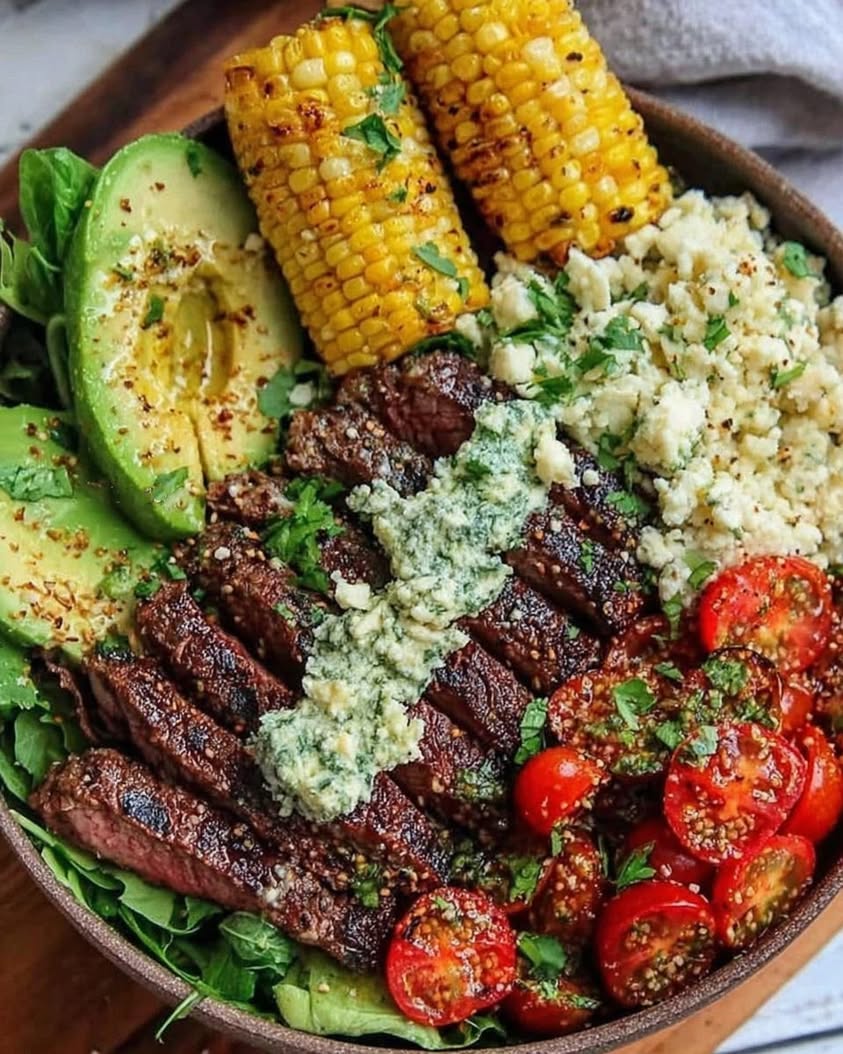
Steak Avocado and Roasted Corn Bowl with Cilantro Cream Sauce Recipe: A Bold and Fresh Summer Meal
Imagine slicing into a perfectly seared steak, the juices mingling with creamy avocado and sweet, smoky roasted corn. This Steak Avocado and Roasted Corn Bowl with Cilantro Cream Sauce recipe delivers exactly that experience. It combines hearty protein with fresh produce and a tangy, herbaceous sauce that ties everything together. You get a complete meal in a single bowl, making it ideal for busy weeknights or relaxed weekend gatherings. The flavors are bold yet balanced, and the preparation is straightforward enough for any home cook.
The magic of this dish lies in its contrasts. The warm, savory steak meets the cool, buttery avocado. The charred corn adds a pop of sweetness and texture. Then, the cilantro cream sauce brings a bright, zesty finish that brightens every bite. This recipe is not just about eating; it is about savoring a combination that feels both indulgent and nourishing. You will find that it quickly becomes a staple in your dinner rotation because it satisfies cravings for something satisfying and fresh.
What makes this Steak Avocado and Roasted Corn Bowl with Cilantro Cream Sauce recipe stand out is its versatility. You can easily adapt it to what you have on hand or to suit your dietary preferences. Perhaps you want to swap the steak for chicken or tofu. Maybe you want to add black beans or a sprinkle of cheese. The core remains the same: a delicious, colorful bowl that feels like a celebration. Every component works together to create a memorable meal that tastes as good as it looks.
Quick Recipe Highlights
- Flavor Profile: This bowl delivers a symphony of savory, smoky, and tangy notes. The steak provides a rich, beefy foundation. Roasted corn adds a charred sweetness. The cilantro cream sauce contributes a bright, herby punch with a hint of lime. Each element complements the others without overpowering.
- Texture: Expect a delightful variety of textures in every forkful. The steak is tender and juicy with a crisp sear. The avocado offers a creamy, smooth contrast. Roasted corn kernels provide a slight chew and pop. The sauce is velvety and cohesive. This combination keeps your palate engaged from start to finish.
- Aroma: The scent of this dish is deeply inviting. As you sear the steak, you will smell a rich, caramelized crust. Roasting corn fills your kitchen with a sweet, toasty fragrance. Fresh cilantro and lime in the sauce release bright, citrusy notes. These aromas blend to create an appetizing preview of the meal.
- Visual Appeal: This bowl is a feast for the eyes with its vibrant colors. The deep brown of the steak contrasts with the bright green of avocado and cilantro. Golden, charred corn kernels add warmth. A drizzle of white cream sauce ties it together. The final presentation looks restaurant-quality and appetizing.
- Skill Level Needed: This recipe is accessible for beginner cooks. The techniques involve basic searing, roasting, and mixing. You do not need advanced knife skills or complex methods. Following the steps carefully ensures success. It is a confidence-building dish for those new to cooking steak or making sauces.
- Special Equipment: You need a few standard kitchen tools. A cast-iron skillet or heavy-bottomed pan works best for searing steak. A baking sheet is required for roasting corn. A blender or food processor helps create a smooth cilantro cream sauce. A sharp knife and cutting board are essential for prep.
Recipe Overview
- Difficulty Level: I classify this as an easy recipe because it uses straightforward techniques. You sear a steak, roast corn, and blend a sauce. There are no complicated steps like braising or tempering. Even novice cooks can manage the timing. The main challenge is getting the steak to your preferred doneness, which a meat thermometer solves easily.
- Category: This dish belongs to the bowl meal category, which is popular for its convenience and balance. It can serve as a main course for lunch or dinner. You can also classify it as a modern American fusion recipe. It combines elements of Tex-Mex with classic steakhouse flavors. The format makes it perfect for meal prep or casual entertaining.
- Cuisine: The inspiration draws from American and Southwestern culinary traditions. The use of grilled steak and roasted corn echoes classic American cookouts. The cilantro cream sauce adds a fresh, Mexican-inspired twist. Avocado is a staple in both cuisines. This fusion creates a harmonious blend that feels familiar yet exciting.
- Cost: This recipe is moderately priced, depending on your steak selection. A good cut like sirloin or flank steak costs more than ground beef but less than ribeye. Avocados and fresh cilantro are generally affordable. Corn is inexpensive when in season. The overall cost per serving is reasonable, especially compared to restaurant bowls of similar quality.
- Season: This bowl shines during late summer and early fall when corn is at its peak. Sweet, fresh corn roasts beautifully and adds maximum flavor. However, you can enjoy it year-round using frozen corn. Avocados are available all year. The bright, fresh flavors make it a great choice for warmer months. It also works well as a lighter winter meal.
- Occasion: This recipe suits many occasions. It is perfect for a quick weeknight dinner when you want something satisfying. It also impresses guests at a casual dinner party or summer barbecue. You can serve it for a healthy post-workout meal. The bowl format is great for family-style dining where everyone builds their own plate.
Why You Will Love This Recipe
The taste and texture combination is genuinely addictive. The juicy steak offers a savory richness that forms the backbone of the bowl. Creamy avocado provides a cooling, buttery element that balances the charred corn. The cilantro cream sauce adds a tangy, herbaceous finish that brightens everything. Each bite delivers a new flavor profile. You will appreciate how the components work together without competing. This harmony makes every mouthful satisfying and interesting. You will find yourself craving this balanced combination again and again.
Convenience is a major factor in this recipe appeal. The entire meal comes together in about 35 minutes. You can prep the sauce and corn while the steak rests. The cooking process involves simple steps that do not require constant attention. Cleanup is minimal since you use only a few pans. This efficiency makes it a go-to choice for busy evenings. You get a restaurant-quality meal without spending hours in the kitchen.
Nutritionally, this bowl packs a powerful punch. Steak provides high-quality protein, iron, and B vitamins. Avocado offers healthy monounsaturated fats and fiber. Corn contributes complex carbohydrates and antioxidants. The cilantro cream sauce, made with Greek yogurt or sour cream, adds calcium and probiotics. This combination keeps you full and energized. You get a balanced meal that supports muscle repair and overall health. You can feel good about serving this nourishing dish to your family.
This recipe also excels for social gatherings. The bowl format allows everyone to customize their serving. You can set up a toppings bar with extra avocado, salsa, or cheese. Guests enjoy building their own meal. The vibrant presentation looks impressive on a buffet table. It is a conversation starter. The flavors appeal to a wide range of palates, making it a crowd-pleaser. You will receive compliments and requests for the recipe.
Cost-effectiveness adds to its appeal. Using affordable cuts like flank or skirt steak keeps the price down. Corn and avocados are budget-friendly when in season. The sauce uses common pantry ingredients. A single batch serves four people generously. Leftovers are easy to repurpose into tacos or salads. You get substantial value for your grocery dollar. This recipe proves that eating well does not require spending a lot.
Historical Background and Cultural Significance
Bowl meals have ancient roots across many cultures. People have combined proteins, grains, and vegetables in bowls for centuries. In Asia, rice bowls with meat and vegetables date back thousands of years. In Latin America, similar concepts appear in dishes like burrito bowls and ceviche. The modern grain bowl trend emerged in the United States during the health food movement of the 1970s. It gained popularity as a convenient, customizable meal format. This recipe draws on that tradition while adding a Southwestern flair.
Steak has a long history in American cuisine as a symbol of prosperity and celebration. Cattle ranching became central to American culture in the 19th century. Grilling steak over an open fire is a classic cooking method. Corn, native to the Americas, has been a staple for thousands of years. Indigenous peoples cultivated it and used it in countless dishes. Avocado also originates from Central America and was cultivated by ancient civilizations. Combining these ingredients reflects a fusion of culinary traditions.
The cilantro cream sauce represents a modern adaptation of traditional Mexican crema. Crema is a cultured cream used as a condiment in many Mexican dishes. Adding cilantro and lime creates a fresh, herbal version. This sauce ties the bowl together, adding moisture and flavor. It reflects the trend of incorporating bright, acidic elements into hearty meals. The sauce has become popular in fusion cuisine because of its versatility. It works with tacos, grilled meats, and grain bowls.
Regional variations of this bowl exist across the United States. In the Southwest, you might see the addition of black beans, pico de gallo, or cotija cheese. In California, cooks often add kale or roasted vegetables. Some versions use grilled chicken or shrimp instead of steak. The core concept remains consistent: a balanced bowl with protein, fat, and vegetables. This adaptability demonstrates why the recipe resonates with so many home cooks. It is a canvas for personal expression.
Ingredient Deep Dive
Steak is the centerpiece of this dish. It has been a symbol of American cooking since the late 1800s when cattle ranching expanded. Nutritionally, steak provides complete protein, zinc, and vitamin B12. Choose a cut like flank, sirloin, or skirt steak for best results. Look for bright red color with some marbling. Store it in the coldest part of your refrigerator and use it within three days. For substitutions, you can use chicken breast, portobello mushrooms, or firm tofu. Each option will change the flavor profile but deliver satisfying results.
Avocado adds creaminess and healthy fats. It originated in Central America and has been cultivated for over 5,000 years. Avocados are rich in monounsaturated fats, potassium, and fiber. Select avocados that yield slightly to gentle pressure without being mushy. Store unripe avocados at room temperature and ripe ones in the refrigerator. If you cannot find avocados, you can substitute hummus or a mashed banana for creaminess, though the flavor will differ significantly. For a lower-fat option, try cooked zucchini.
Corn brings sweetness and texture to the bowl. It is a grain that Native Americans domesticated thousands of years ago. Corn provides fiber, B vitamins, and antioxidants like lutein. Fresh corn on the cob is best during summer months. Look for bright green husks and plump kernels. You can substitute frozen corn that has been thawed and roasted. Canned corn works in a pinch, but it lacks the charred flavor. For a variation, try grilled pineapple for a similar sweetness.
Cilantro is essential for the sauce and garnish. It is an herb used widely in Mexican, Indian, and Asian cuisines. It contains vitamins A, C, and K, plus antioxidants. Choose bunches with bright green leaves and no yellowing. Store cilantro in a glass of water with a plastic bag over the top in the refrigerator. If you dislike cilantro, you can substitute parsley, basil, or mint. Each herb will change the sauce character. Cilantro lime crema is a classic pairing for steak bowls.
Greek yogurt or sour cream forms the base of the sauce. Both provide tanginess and creaminess. Greek yogurt offers more protein and probiotics. Sour cream has a richer flavor and higher fat content. Choose full-fat versions for the best texture. You can use vegan sour cream or coconut yogurt for a dairy-free option. Lime juice and zest add acidity and brightness. Use fresh limes for the best flavor. Bottled juice lacks the same vibrancy.
Common Mistakes to Avoid
- Overcooking the steak is the most frequent error. Use a meat thermometer to achieve your desired doneness. Medium-rare is 130-135 degrees Fahrenheit. Remove the steak from heat when it is five degrees below your target, as it will continue cooking while resting.
- Not letting the steak rest after cooking causes juices to run out. You should let it rest for five to ten minutes before slicing. This allows the juices to redistribute. Slicing too early results in dry meat.
- Slicing the steak against the grain is crucial for tenderness. Steak has long muscle fibers. Cutting perpendicular to these fibers shortens them. This makes each bite easier to chew.
- Using underripe avocados leads to a hard, flavorless texture. The avocado should yield slightly when pressed. Avoid avocados that feel rock hard. You can speed ripening by placing them in a paper bag with a banana.
- Not roasting corn long enough prevents it from developing a char. The char adds smoky flavor. Roast until kernels are golden brown with black spots. This takes about 15-20 minutes at 400 degrees Fahrenheit.
- Overblending the cilantro cream sauce can make it watery. Blend just until smooth. Overprocessing breaks down the herbs too much. You want a creamy consistency with small flecks of cilantro visible.
- Skipping the lime juice in the sauce makes it flat. Acidity brightens the entire dish. It balances the richness of steak and avocado. Do not omit it.
- Using low-fat dairy in the sauce can cause it to curdle. Full-fat yogurt or sour cream creates a stable emulsion. Low-fat versions separate when blended. This affects texture and appearance.
Essential Techniques
Perfecting the steak sear is critical for flavor. Start with a hot pan, preferably cast iron. You want the pan smoking slightly before adding oil. Pat the steak dry with paper towels to remove moisture. Season generously with salt and pepper. Place the steak in the pan and do not move it for three to four minutes. This creates a deep brown crust. Flip once and cook to your desired temperature. Let it rest before slicing. Visual cues include a golden-brown crust and juices that run clear when cut.
Roasting corn enhances its natural sweetness. Arrange corn kernels in a single layer on a baking sheet. Toss them with a little oil and salt. Roast at 400 degrees Fahrenheit for 15-20 minutes. Stir halfway through for even cooking. Look for kernels that are golden and slightly charred at the edges. This method is easier than grilling corn on the cob. The high heat caramelizes the sugars, creating a deeper flavor. You can also use an air fryer for similar results in less time.
Making a smooth cilantro cream sauce requires attention to emulsification. Start with room temperature yogurt or sour cream. Add fresh cilantro, lime juice, and a pinch of salt. Blend on low speed initially to break down the herbs. Increase speed and blend until the sauce is creamy and pale green. Stop before the mixture becomes too thin. The final sauce should coat the back of a spoon. If it is too thick, add a tablespoon of water. If it is too thin, add more yogurt and blend briefly.
Assembling the bowl properly enhances the eating experience. Start with a base if using grains, or go straight to the main components. Arrange sliced steak in the center. Add avocado slices on one side. Pile roasted corn on another side. Drizzle the cilantro cream sauce over everything. Garnish with fresh cilantro leaves and a lime wedge. This arrangement creates visual appeal and ensures every bite includes all elements. Serve immediately while the steak is warm.
Pro Tips for Perfect Steak Avocado and Roasted Corn Bowl with Cilantro Cream Sauce Recipe
Season the steak at least 30 minutes before cooking. This gives the salt time to penetrate the meat. It improves flavor and helps create a better crust. Pat the steak dry again just before adding it to the pan.
Use a high smoke point oil for searing. Avocado oil or canola oil works well. Olive oil can burn and create bitter flavors. Heat the oil until it shimmers before adding the steak.
Do not overcrowd the pan when searing. If you cook multiple steaks, do them in batches. Overcrowding lowers the pan temperature and steams the meat instead of searing it. This prevents browning.
Add a pat of butter to the pan during the last minute of cooking. Baste the steak with the melted butter. This adds richness and a nutty flavor. Be careful not to burn the butter.
Toast the corn with a pinch of chili powder or smoked paprika. This adds another layer of flavor. It complements the smoky char. Start with a small amount and adjust to taste.
Make the cilantro cream sauce a few hours ahead of time. The flavors meld and deepen. Store it in the refrigerator. Stir or blend again briefly before serving. This saves time during assembly.
Slice the avocado just before serving to prevent browning. Squeeze a little extra lime juice over it. This slows oxidation. Arrange the slices on the bowl immediately after cutting.
Warm the bowls before serving. Cold bowls can cool the steak quickly. Place bowls in a low oven or microwave for a few seconds. This keeps the meal hot longer.
Variations and Adaptations
Regional variations of this bowl are easy to explore. For a Tex-Mex version, add black beans, pico de gallo, and crumbled cotija cheese. Include a squeeze of fresh lime and a dollop of salsa verde. This version is heartier and more like a loaded burrito bowl. You can also serve it with warm tortillas on the side.
Seasonal adaptations keep the recipe relevant year-round. In summer, use fresh sweet corn and heirloom tomatoes. In fall, swap corn for roasted butternut squash or sweet potatoes. Add a sprinkle of pumpkin seeds for crunch. In winter, use roasted red peppers and canned corn. Each season brings new flavors that complement the base recipe.
Dietary modifications make this bowl accessible to everyone. For a gluten-free version, ensure all ingredients are certified gluten-free. The recipe is naturally gluten-free. For dairy-free, use coconut yogurt or vegan sour cream in the sauce. For a vegan version, replace steak with grilled portobello mushrooms or seasoned tofu. Use a plant-based protein that mimics the heartiness of steak.
Flavor variations can completely transform the dish. Try a chimichurri sauce instead of cilantro cream. Chimichurri uses parsley, oregano, garlic, and vinegar. It offers a different herbaceous profile. You can also use a chili-lime dressing for a spicier kick. Experiment with different spice blends for the steak, like cumin, coriander, or chipotle powder.
Texture modifications allow you to customize the mouthfeel. Add crunchy elements like toasted pepitas, crumbled tortilla chips, or crispy fried onions. Include a grain base like quinoa, rice, or farro for more bulk. Each addition changes the texture profile. You can also puree some of the corn to create a thicker, saucier base.
Presentation alternatives make the dish suitable for different occasions. Serve the components family-style on a large platter. Let guests assemble their own bowls. For a more formal presentation, plate each component separately in neat rows. Use a squeeze bottle for the sauce to create artistic drizzles. Add edible flowers for a special touch.
Serving and Presentation Guide
Plating techniques elevate the visual appeal of this bowl. Start with a wide, shallow bowl. Place a small mound of rice or greens in the center if using. Fan the steak slices over one half of the bowl. Arrange avocado slices neatly on the other half. Pile roasted corn in between. Drizzle the cilantro cream sauce in a zigzag pattern across the top. This arrangement ensures every element is visible and accessible.
Garnishing ideas add the final touches. Sprinkle fresh cilantro leaves over the top. Add a pinch of flaky sea salt for crunch. Place a lime wedge on the rim of the bowl. You can also add thinly sliced radishes for color or pickled red onions for acidity. A sprinkle of toasted sesame seeds or pepitas adds texture and visual contrast.
Traditional accompaniments enhance the meal. Serve warm tortillas or crusty bread on the side. A simple side salad with a vinaigrette complements the richness. You can also offer extra sauce on the table. Black beans or refried beans make a hearty addition. Each accompaniment turns the bowl into a more substantial meal.
Modern serving suggestions keep the dish fresh. Serve the components in a lettuce wrap for a low-carb option. Use a large platter for a taco bar setup. Offer the sauce in a small pitcher for self-service. You can also prepare individual mason jar salads for meal prep. Layer the ingredients for a portable lunch.
Temperature considerations are important for the best experience. Serve the steak warm but not hot. The avocado should be cool. The sauce should be chilled. This temperature contrast creates an interesting sensory experience. Serve the bowl immediately after assembly. Do not let it sit, as the avocado will brown and the steak will dry out.
Portion control tips help with healthy eating. Use about 4-6 ounces of steak per person. Half an avocado per serving is usually enough. Corn contributes about half a cup per person. The sauce should be about two tablespoons per serving. Adjust according to appetite and dietary needs.
Wine and Beverage Pairing
Wine pairings for this dish should balance the bold flavors. A medium-bodied red wine like Malbec or Zinfandel works well. The fruitiness complements the charred corn and steak. A Cabernet Sauvignon is also a classic choice. It provides enough structure to match the beefy flavor. For white wine lovers, a Sauvignon Blanc offers herbal notes that echo the cilantro. A dry rosé is another versatile option.
Non-alcoholic alternatives are equally enjoyable. A sparkling water with lime and a pinch of salt cleanses the palate. Iced tea with mint or hibiscus provides a refreshing contrast. Horchata, a Mexican rice drink, adds creaminess that mirrors the sauce. You can also try a virgin margarita with fresh lime juice and agave syrup.
Coffee and tea pairings work for brunch or lunch. A light roast coffee with citrus notes complements the lime in the sauce. A Mexican hot chocolate with cinnamon adds warmth. Iced green tea with mint is a refreshing choice. Avoid heavily spiced teas that might clash with the cilantro.
Temperature considerations for beverages are important. Serve red wine slightly below room temperature, around 60-65 degrees Fahrenheit. White wine and rosé should be chilled to 45-50 degrees. Non-alcoholic drinks should be well-iced. Serve coffee hot or iced depending on the season.
Serving suggestions enhance the pairing experience. Pour wine into appropriate glassware. Use stemless glasses for casual settings. Offer a drink station where guests can mix their own beverages. Label each option so guests know what they are drinking. Provide coasters to protect surfaces.
Storage and Shelf Life
Proper storage methods extend the life of your leftovers. Store each component separately in airtight containers. The steak will stay fresh for three to four days in the refrigerator. Avocado should be stored with the pit intact to slow browning. Corn will last three to four days. The sauce keeps for about five days.
Temperature requirements are crucial for food safety. Keep all leftovers at 40 degrees Fahrenheit or below. Do not leave the bowl at room temperature for more than two hours. If you are serving outdoors, use ice packs to keep everything cold. Reheat only the steak and corn, not the avocado or sauce.
Container recommendations help maintain quality. Use glass containers with tight-fitting lids. They do not absorb odors like plastic. For the sauce, use a small jar or container. For the avocado, wrap it tightly in plastic wrap with the pit. This prevents browning. For the steak, slice it just before reheating, not before storage.
Signs of spoilage indicate when to discard food. The steak will develop a sour smell or slimy texture. Avocado will turn brown and mushy. Corn will become moldy or smell off. The sauce may separate or develop a sour odor. Do not taste-test if you suspect spoilage. When in doubt, throw it out.
Reheating instructions keep leftover quality high. Reheat steak in a hot skillet with a little oil for one to two minutes per side. Reheat corn in the same skillet or microwave. Do not reheat the avocado. Add fresh avocado slices when serving leftovers. The sauce does not need reheating.
Freezing guidelines allow for longer storage. Cooked steak freezes well for up to three months. Wrap it tightly in plastic wrap and foil. Roasted corn freezes well for up to six months. The sauce does not freeze well due to the dairy content. Avocado does not freeze well. Freeze only components you can later reheat or use in other dishes.
Make Ahead Strategies
Prep timeline planning streamlines the cooking process. You can make the sauce up to three days in advance. Store it in the refrigerator. You can also roast the corn a day ahead. Reheat it just before serving. Marinate the steak the night before for deeper flavor. The actual cooking takes only 20 minutes, so last-minute prep is minimal.
Storage between steps maintains freshness. Keep the sauce in a sealed jar. Store the roasted corn in a container with a tight lid. Keep the steak in its marinade in the refrigerator. Do not slice the steak until you are ready to serve. Slice the avocado just before serving to prevent browning.
Quality impact assessment helps you decide what to make ahead. The sauce improves with time as flavors meld. Roasted corn loses some crispness but retains flavor. Marinated steak becomes more tender. Avocado cannot be prepared ahead without browning. Slice it just before serving for best results.
Assembly tips ensure a smooth final step. Have all components ready before you start assembling. Warm the corn and steak while slicing the avocado. Arrange the bowls in an assembly line. Drizzle sauce just before serving. This keeps everything fresh and visually appealing.
Reheating guidelines for made-ahead components are simple. Reheat corn in a dry skillet over medium heat for three to four minutes. Reheat steak in a hot skillet with a little oil for one minute per side. Do not microwave steak, as it can become tough. The sauce should be served cold or at room temperature.
Fresh element additions brighten the final dish. Add fresh cilantro leaves right before serving. Squeeze fresh lime juice over the assembled bowl. Add a sprinkle of sea salt or chili flakes. These small touches make the dish feel freshly made. They elevate the flavor profile significantly.
Scaling Instructions
Halving the recipe is straightforward for smaller households. Use one steak instead of two. Use half an avocado and half the corn. The sauce recipe scales down easily. Use one small handful of cilantro and half the yogurt. Cooking time for the steak remains the same. Roasting time for the corn might decrease slightly due to less surface area.
Doubling or tripling the recipe for larger groups requires some adjustments. Use a larger pan for searing steak, or work in batches. You may need two baking sheets for the corn. The sauce can be doubled in a standard blender. Ensure you have enough serving bowls and space. Timing for cooking increases only slightly.
Equipment adjustments prevent overcrowding. Use a 12-inch skillet for two steaks. For four steaks, use two pans. You can also sear steak on a grill or grill pan. For corn, use two baking sheets placed on separate racks. Rotate them halfway through cooking. This ensures even roasting.
Timing modifications help manage large batches. Sear steaks one at a time to maintain pan temperature. Keep cooked steaks warm in a low oven while you finish the rest. Roast corn in a single layer. If you crowd the pan, increase roasting time by five minutes. Stir more frequently.
Storage considerations for larger batches are important. Store components separately to maintain quality. Use large containers for the sauce and corn. Wrap individual steaks separately. Assemble bowls just before serving. Leftovers from a large batch can be used for lunches.
Nutritional Deep Dive
Macro breakdown shows this bowl is well-balanced. A typical serving contains around 35-40 grams of protein from the steak. Avocado adds about 15 grams of healthy fat. Corn provides approximately 30 grams of complex carbohydrates. The sauce contributes a small amount of fat and protein. This balance supports muscle repair and sustained energy levels.
Micronutrient analysis reveals key vitamins and minerals. Steak provides iron, zinc, and B vitamins, particularly B12. Avocado offers potassium, vitamin K, and folate. Corn supplies magnesium, phosphorus, and vitamin C. Cilantro adds vitamin A and antioxidants. This combination supports immune function, bone health, and energy metabolism.
Health benefits extend beyond basic nutrition. The protein in steak helps maintain muscle mass. The healthy fats in avocado support heart health and brain function. Corn provides fiber that aids digestion. The sauce, made with yogurt, contains probiotics that support gut health. Together, these components create a meal that is both satisfying and nourishing.
Dietary considerations make this dish suitable for many plans. It is naturally gluten-free and low in added sugars. It fits well into a balanced diet for weight management. The high protein and fat content promote satiety. You can adjust portion sizes to meet specific calorie goals. The recipe is also appropriate for a low-carb or moderate-carb diet.
Portion analysis helps with meal planning. A serving size of about 6 ounces of steak is standard. Half an avocado is a typical serving. Half a cup of corn is appropriate. Two tablespoons of sauce is sufficient. This provides around 500-600 calories per serving, depending on the steak cut and yogurt type. Adjust as needed for your dietary goals.
Weight management tips include controlling portion sizes and preparation methods. Use leaner cuts of steak like sirloin or top round. Reduce the sauce amount to cut calories. Increase the proportion of corn or add leafy greens for more volume. Avoid adding extra fats during cooking. The recipe already provides enough flavor without additional oil.
Dietary Adaptations
Gluten-free adaption is already inherent in this recipe. All ingredients are naturally gluten-free. Ensure that the yogurt or sour cream you use is certified gluten-free if you have celiac disease. Check labels on any spice blends you add. The recipe is safe for a gluten-free diet without modifications.
Dairy-free adaptation requires a simple swap. Replace Greek yogurt or sour cream with a plant-based alternative. Coconut yogurt or cashew cream create a similar consistency. Use unsweetened versions to avoid added sugar. Blend with cilantro and lime as usual. The sauce will be slightly different but still delicious.
Vegan adaptation replaces the steak and dairy. Use grilled portobello mushrooms for a meaty texture. Marinate them in soy sauce, garlic, and oil. Grilled or roasted tofu works well too. For the sauce, use vegan yogurt or a creamy cashew-lime dressing. Add black beans for extra protein. The bowl remains hearty and satisfying.
Low-carb adaptation focuses on reducing carbs. Omit the corn or replace it with roasted cauliflower florets. Increase the portion of steak and avocado. Use a low-carb yogurt for the sauce. Add extra greens like arugula or spinach. This version keeps the flavor profile while reducing carbohydrate content.
Keto adaptation aligns with very low-carb requirements. Use a fattier cut of steak like ribeye. Increase the avocado amount. Replace corn with roasted zucchini or bell peppers. Use full-fat sour cream for the sauce. Add a sprinkle of cheese if desired. This version provides high fat and moderate protein with minimal carbs.
Paleo adaptation removes grains and dairy. Use a paleo-friendly steak like grass-fed beef. The corn is acceptable in small amounts on Paleo, but you can omit it. Use a dairy-free sauce made from avocado, lime, and cilantro. Add extra vegetables like roasted bell peppers. This version sticks to whole food ingredients.
Low-FODMAP adaptation requires specific swaps. Use garlic-free yogurt or lactose-free sour cream for the sauce. Avoid high-FODMAP vegetables. The corn is low-FODMAP in small amounts. Avocado is safe in half-avocado servings. Use a gluten-free steak marinade without garlic or onion. This version supports digestive health.
Other specific diets can accommodate this recipe. For a low-sodium diet, use reduced-salt seasonings and yogurt. For a heart-healthy diet, use lean steak and avocado in moderation. For a pregnancy diet, ensure steak is cooked to a safe internal temperature. The recipe is versatile enough to adapt to many nutritional needs.
Troubleshooting Guide
Texture issues with the steak often result from overcooking or under-resting. Use a meat thermometer for precision. Let the steak rest for the full five to ten minutes. If the steak is tough, slice it thinner against the grain. For tender results, always cut against the grain.
Flavor balance problems occur when one element dominates. If the dish tastes flat, add more lime juice or salt to the sauce. If it tastes too rich, add more lime or a splash of vinegar. If it tastes too sour, add a pinch of sugar. Balance Print
Steak, Avocado, and Roasted Corn Bowl with Cilantro Cream Sauce
- Total Time: 40 minutes
- Yield: 4
Description
A hearty and flavorful bowl featuring tender steak, creamy avocado, sweet roasted corn, and a zesty cilantro cream sauce. Perfect for a satisfying and healthy meal.
Ingredients
- 1 lb flank steak or sirloin, thinly sliced
- 2 ripe avocados, sliced
- 2 cups corn kernels (fresh or frozen, thawed)
- 1 tablespoon olive oil
- 1 teaspoon paprika
- 1 teaspoon garlic powder
- Salt and pepper to taste
- 1/2 cup plain Greek yogurt
- 1/4 cup fresh cilantro, chopped
- 1 clove garlic, minced
- Juice of 1 lime
- 1 tablespoon honey
- 4 cups baby spinach or mixed greens
- 1 cup cherry tomatoes, halved
- 1/2 cup crumbled queso fresco or feta cheese
Instructions
- Preheat oven to 400°F (200°C). Spread corn kernels on a baking sheet, drizzle with olive oil, season with salt and pepper, and roast for 15-20 minutes until lightly charred and tender.
- In a small bowl, combine Greek yogurt, chopped cilantro, minced garlic, lime juice, honey, salt, and pepper. Mix well to create the cilantro cream sauce. Set aside.
- Season sliced steak with paprika, garlic powder, salt, and pepper. Heat a skillet or grill pan over medium-high heat and cook steak slices for 3-4 minutes per side until desired doneness. Let rest for 5 minutes.
- Assemble bowls: divide baby spinach or mixed greens among serving bowls. Top with sliced avocado, roasted corn, cherry tomatoes, and cooked steak.
- Drizzle cilantro cream sauce over each bowl and finish with crumbled queso fresco or feta cheese. Serve immediately.
Notes
You can customize the seasonings to taste. For extra heat, add a pinch of cayenne or chipotle powder to the steak seasoning.
- Prep Time: 15 minutes
- Cook Time: 25 minutes
- Method: Main
- Cuisine: American