Juicy Spinach Garlic Meatballs Stuffed with Mozzarella Recipe: A Perfect Weeknight Dinner
There is something deeply satisfying about a meatball that surprises you from the inside. Our Juicy Spinach Garlic Meatballs Stuffed with Mozzarella Recipe does exactly that, and it does it with flair. Imagine biting into a perfectly seasoned sphere of ground meat, only to discover a molten core of creamy mozzarella cheese. The combination of vibrant spinach and pungent garlic infuses every bite with aromatic flavor, making these meatballs a standout dish for any home cook.
These spinach garlic meatballs are not just about flavor but also about texture and comfort. The exterior browns beautifully in the oven or on the stovetop, creating a slight crust that gives way to a tender interior. Each meatball is a self-contained meal, packed with protein and vegetables. You can serve them over spaghetti, nestled in a sub roll, or simply on their own with a side of marinara sauce for dipping. This recipe transforms simple ingredients into a special dinner that feels both indulgent and wholesome.
We designed this recipe to be approachable for home cooks of all skill levels. The process is straightforward, but the result is impressive. You will learn how to mix the meat mixture correctly to avoid dense meatballs, how to encase the cheese so it stays inside during cooking, and how to achieve that perfect balance of flavors. By the end of this guide, you will feel confident making these meatballs for a family dinner, a game day snack, or a cozy meal prep option for the week ahead.
Quick Recipe Highlights
- Flavor Profile: This recipe delivers a rich, savory taste with prominent garlic notes and the earthy sweetness of spinach. The mozzarella adds a mild, milky flavor that balances the robust seasonings. Each bite offers a burst of umami from the meat and cheese combination.
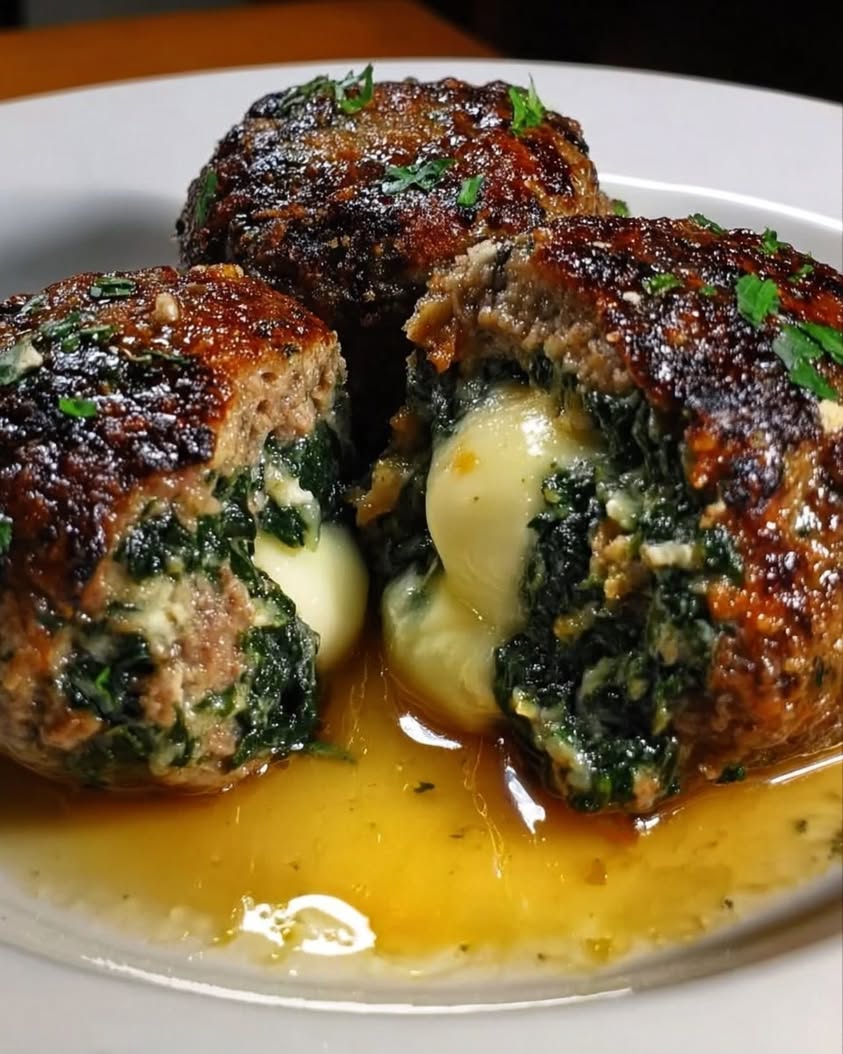
- Texture: The texture is a wonderful contrast between the caramelized crust on the outside and the soft, juicy interior. The melted mozzarella creates a stringy, gooey center that pulls apart beautifully. The spinach adds a subtle tenderness without making the meatballs feel wet or mushy.
- Aroma: When these meatballs cook, your kitchen fills with an irresistible aroma. The garlic becomes sweet and nutty as it sautés, blending with the herbs and the sizzling meat. The final scent is warm, inviting, and distinctly Italian-American comfort food.
- Visual Appeal: These meatballs are a feast for the eyes. They have a deep golden-brown exterior with flecks of green from the spinach. When you cut one open, the bright white cheese oozes out, creating a stunning contrast against the dark meat.
- Skill Level Needed: You will need basic cooking skills like mixing ingredients and forming meatballs. The most critical step is sealing the cheese inside, which requires a bit of practice but is easily mastered. This recipe is perfect for confident beginners and intermediate cooks.
- Special Equipment: You will need a large mixing bowl, a baking sheet or large skillet, and a small cookie scoop for consistent sizing. A food processor helps chop the spinach finely, but you can also chop it by hand. No specialty equipment is required.
Recipe Overview
- Difficulty Level: This recipe receives a medium difficulty rating due to the technique required for stuffing the meatballs. Wrapping the meat around the cheese cube and sealing it completely prevents leakage during cooking. Once you understand the process, the difficulty drops significantly, making it a manageable project for a weeknight dinner.
- Category: These meatballs fit perfectly into the main dish category, especially when served with pasta or crusty bread. They also work well as a hearty appetizer for parties or a protein-packed snack. You can easily incorporate them into a meal prep routine.
- Cuisine: The flavor profile draws heavily from Italian culinary traditions, but it also reflects American home cooking. The combination of spinach, garlic, and mozzarella is a classic trio found in many Italian-American dishes. This recipe feels both authentic and accessible to a modern palate.
- Cost: Ground meat, spinach, garlic, and mozzarella are all budget-friendly ingredients. The total cost for this recipe is quite low, especially considering it makes a large batch. Using frozen spinach and store-brand cheese keeps the cost even lower without sacrificing quality.
- Season: These meatballs are a fantastic option for any season of the year. In the colder months, they provide a warming, comforting meal. During warmer months, you can serve them with a light salad or zucchini noodles to keep things fresh.
- Occasion: This recipe shines at casual dinners, family gatherings, and potluck events. They are also a wonderful choice for game day parties where hearty finger foods are welcome. You can even serve them as a main course for a low-key holiday meal.
Why You Will Love This Recipe
First and foremost, the taste of these spinach garlic meatballs is absolutely irresistible. The garlic infuses the meat with a pungent, savory depth that is mellowed by the sweetness of the cooked spinach. The mozzarella center adds a luxurious creaminess that elevates the entire experience. Every bite delivers a complex flavor profile that makes ordinary meatballs feel gourmet. You will find yourself reaching for seconds before you finish your first serving.
The convenience of this recipe is another major selling point. You can prepare the meatball mixture ahead of time and refrigerate it until you are ready to cook. The actual hands-on time is short, and the baking process is mostly hands-off. This makes the Juicy Spinach Garlic Meatballs Stuffed with Mozzarella Recipe perfect for busy weeknights when you want a homemade meal without spending hours in the kitchen. Cleanup is also quick and simple.
Nutritionally, these meatballs offer a balanced meal option. The ground meat provides high-quality protein and essential iron, while the spinach adds fiber, vitamins A and C, and antioxidants. The mozzarella contributes calcium and protein, making this a filling and satisfying dish. You can feel good about serving this meal to your family because it packs real nutritional value into a delicious package.
For social and entertaining value, these meatballs are a guaranteed crowd-pleaser. They look impressive on a platter with a side of marinara sauce. Guests will be delighted by the hidden cheese center when they take their first bite. The recipe is easy to scale up for larger gatherings, and it holds well in a slow cooker for parties. You will earn a reputation as a skilled home cook when you serve these beauties.
Finally, this recipe is incredibly cost-effective and uses accessible ingredients. Ground beef, pork, or a blend works perfectly, and the other components are pantry staples. The mozzarella cheese is inexpensive, and spinach is affordable whether fresh or frozen. You can make a large batch of these spinach garlic meatballs for a fraction of the cost of takeout or restaurant meals. This makes the recipe a smart choice for families on a budget.
Historical Background and Cultural Significance
Meatballs in various forms have existed for centuries across many cultures. The idea of combining ground meat with fillers and seasonings is a universal culinary concept. In Italy, the dish called polpette refers to small meatballs that are often lighter and smaller than the American version. They are traditionally served without pasta, as a second course or in soup. The Italian immigrants who came to the United States adapted these recipes to use larger amounts of meat and incorporated them into hearty sauce dishes, giving birth to the classic spaghetti and meatballs we know today.
The addition of spinach and garlic to meatballs has a strong history in Mediterranean cooking. Spinach is a staple green that appears in countless Italian dishes, from stuffed pastas to side vegetables. Garlic is a foundational aromatic in southern Italian cuisine, prized for its bold flavor and health benefits. Combining these two ingredients with ground meat creates a flavor profile that is both rustic and sophisticated. The stuffed mozzarella center is a more modern innovation, adding an element of surprise and luxury.
The evolution of this specific recipe reflects a broader trend toward ingredient experimentation in home cooking. Cookbooks and food blogs have popularized the concept of stuffed meatballs as a way to add excitement to a familiar dish. The Juicy Spinach Garlic Meatballs Stuffed with Mozzarella Recipe builds on this trend by incorporating vegetables into the meat mixture, making it a more balanced meal. Home cooks have embraced these variations because they offer a simple way to elevate a classic dish.
Regional variations of stuffed meatballs exist around the world. In Sweden, meatballs are often served with lingonberry jam and creamy gravy. Middle Eastern kofta meatballs use spices like cumin and coriander. In the American South, meatballs might be smothered in a rich gravy. This recipe takes its inspiration from Italian-American cuisine, but it is versatile enough to be adapted with different cheese stuffings or herb combinations. The core technique of sealing the cheese inside the meat remains the same across all adaptations.
Ingredient Deep Dive
Ground Meat: The choice of ground meat significantly impacts the flavor and texture of your meatballs. A blend of ground beef and pork offers the best balance of flavor and fat content, resulting in juicy, tender meatballs. Beef provides a robust, savory taste, while pork adds moisture and a subtle sweetness. Ground chicken or turkey also works, but you will need to add a little olive oil or grated zucchini to prevent them from drying out. For the best results, choose meat with a fat content between 15 and 20 percent.
When selecting ground meat, look for packages that are cold and have a vibrant, fresh color. Avoid any meat that looks gray or has a strong odor. You can store ground meat in the refrigerator for one to two days before cooking. If you are not using it immediately, freeze it in a sealed package for up to three months. Thaw frozen meat in the refrigerator overnight for the best texture and safety. You can also use a blend of veal, beef, and pork for a traditional Italian-style meatball.
Spinach: Spinach adds a mild, earthy flavor and a boost of nutrition to these meatballs. Fresh spinach has a tender texture that blends easily into the meat mixture. Frozen spinach is a convenient alternative, but you must thaw it completely and squeeze out all the excess water to prevent soggy meatballs. Spinach is rich in iron, calcium, and vitamins A and C, making it a smart addition to your dinner. The green flecks also create a beautiful visual contrast in the finished meatballs.
To prepare fresh spinach for this recipe, wash it thoroughly and remove any thick stems. You can chop it finely with a knife or pulse it a few times in a food processor. For frozen spinach, thaw it in the refrigerator or microwave, then wrap it in a clean kitchen towel and squeeze hard to remove as much liquid as possible. This step is crucial for maintaining the right texture in your meatballs. Store fresh spinach in a produce bag in the crisper drawer for up to a week.
Garlic: Garlic is the aromatic backbone of this recipe, providing a pungent, savory flavor that permeates the entire meatball. Fresh garlic cloves are far superior to pre-minced garlic in a jar, as they offer a brighter, more complex flavor. When minced and sautéed briefly, garlic becomes sweet and nutty. When mixed raw into the meat, it retains its sharp, spicy kick. For this recipe, we use a generous amount of garlic to ensure the flavor shines through the meat and cheese.
To select the best garlic, look for firm, plump bulbs with tight, unbroken skin. Avoid any cloves that are soft, shriveled, or sprouting green shoots. Store garlic in a cool, dark, dry place with good air circulation. It can last for several months under ideal conditions. You can mince garlic with a chef’s knife or a garlic press for finer pieces. If you are sensitive to the flavor, you can roast the garlic first to mellow its intensity. Roasted garlic adds a sweet, buttery taste to the meatballs.
Mozzarella: The mozzarella cheese is the star of the show, creating that irresistible, gooey center. Low-moisture mozzarella is the best choice for stuffing meatballs because it melts well without becoming watery. Fresh mozzarella balls, like bocconcini, also work but they release more moisture during cooking, which can make the meatballs soggy. You can cut the mozzarella into small cubes or use pearl-sized mozzarella balls for even distribution. The cheese adds a mild, milky flavor that contrasts beautifully with the savory meat.
When you buy mozzarella, check the expiration date and look for a smooth, moist surface. Store it in the refrigerator in its original brine or liquid for fresh mozzarella, or tightly wrapped for low-moisture blocks. Shredded mozzarella is not ideal for stuffing because it can melt too quickly and leak out. Instead, cut a block into uniform cubes to ensure each meatball gets an equal amount of cheese. You can also experiment with other cheeses like provolone, fontina, or even a spicy pepper jack.
Breadcrumbs and Eggs: Breadcrumbs and eggs act as binders, holding the meatball mixture together and preventing it from falling apart during cooking. Plain breadcrumbs are traditional, but panko breadcrumbs create a lighter, airier texture. The eggs add moisture and help the ingredients bind into a cohesive mixture. You can use gluten-free breadcrumbs or crushed pork rinds to make the recipe low-carb. The ratio of binders to meat is important for achieving the perfect meatball texture that is tender but not mushy.
For the best results, use fresh breadcrumbs made from day-old bread for a softer texture. Store-bought dried breadcrumbs are convenient and work perfectly well. You can also substitute the breadcrumbs with rolled oats or crushed crackers in a pinch. When mixing the eggs and breadcrumbs into the meat, work gently and avoid overmixing. Overworking the mixture can make the meatballs dense and tough. You want to combine the ingredients until they just come together.
Parmesan Cheese: Parmesan adds a salty, nutty, umami flavor that enhances the overall taste of the spinach garlic meatballs. Grate a block of Parmesan right before using it for the best flavor and texture. Pre-grated cheese often contains anti-caking agents that prevent it from melting smoothly. Parmesan is widely used in Italian cooking for its ability to deepen savory flavors. It also helps bind the mixture and adds a touch of richness.
When you buy Parmesan, look for authentic Parmigiano Reggiano or Grana Padano for the most complex flavor. Store the cheese wrapped in wax paper and then in a plastic bag in the refrigerator. It will stay fresh for several weeks. You can also freeze Parmesan if you have a large block. In this recipe, the Parmesan works in harmony with the garlic and spinach to create a layered flavor profile.
Common Mistakes to Avoid
- Not squeezing the moisture from the spinach. If you use frozen spinach and fail to squeeze out the water, your meatball mixture will be too wet. This leads to meatballs that fall apart during cooking or become mushy. Take the time to wring out every drop of liquid using a clean towel.
- Overmixing the meatball mixture. When you combine the ingredients, handle them gently. Overmixing develops the protein in the meat, resulting in dense, tough meatballs. Mix just until the ingredients are evenly distributed, then stop.
- Using cold meat directly from the refrigerator. Cold meat is harder to work with and does not form together as nicely. Let the ground meat sit at room temperature for about 15 minutes before mixing. This makes it easier to shape the meatballs and helps them cook more evenly.
- Not sealing the cheese properly. If the mozzarella cube is not completely encased in meat, it will leak out during cooking. Make sure the cheese is fully covered with no gaps. Pinch the seams firmly to seal the meatball completely.
- Making the meatballs too large. Oversized meatballs take longer to cook and may burn on the outside before the center is done. Aim for uniform, golf-ball-sized meatballs to ensure even cooking. Use a cookie scoop for consistency.
- Cooking the meatballs on too high heat. High heat can cause the outside to burn while the inside remains raw. Cook the meatballs over medium heat to achieve a golden-brown crust without scorching the exterior. If baking, use a moderate oven temperature.
- Skipping the chilling step before cooking. Chilling the formed meatballs for 15 to 20 minutes in the refrigerator helps them hold their shape. This step is especially important if you are pan-frying the meatballs to prevent them from falling apart.
- Using low-quality cheese. The cheese is a key component, so using a cheap, rubbery mozzarella will disappoint. Invest in a good block of low-moisture mozzarella for the best melting texture and flavor. The quality of the cheese makes a noticeable difference.
- Not sautéeing the garlic and spinach first. While you can add raw garlic to the mixture, sautéeing it briefly with the spinach mellows the flavor and removes any bitterness. This step also reduces the moisture content of the spinach, preventing soggy meatballs.
- Overcrowding the pan. If you crowd the meatballs in the skillet or baking sheet, they will steam instead of brown. Leave space between each meatball for proper air circulation. Cook them in batches if necessary to achieve a beautiful crust.
Essential Techniques
Sautéeing the Spinach and Garlic: This technique is crucial for developing the flavor base of the meatballs. Start by heating a small amount of olive oil in a skillet over medium heat. Add the minced garlic and cook for about 30 seconds until fragrant. Then add the spinach and cook, stirring frequently, until it wilts and any liquid evaporates. This process removes excess moisture and deepens the flavor. You will know the spinach is ready when it has reduced significantly and looks dry. Let the mixture cool completely before adding it to the meat.
Stuffing the Meatballs: The technique for stuffing cheese inside the meatballs requires a delicate touch. First, flatten a portion of the meat mixture into a disc in your palm. Place a cube of mozzarella in the center of the disc. Then bring the edges of the meat up and over the cheese, pressing gently to seal all seams. Roll the meatball between your palms until it is smooth and round. The key is to make sure no cheese is exposed, as any opening will allow the cheese to leak out during cooking. You can test one by gently squeezing it to check for weak spots.
Chilling Before Cooking: Chilling the formed meatballs is a simple but transformative technique. After you shape all the meatballs, place them on a baking sheet lined with parchment paper and refrigerate for at least 15 to 20 minutes. This helps the fat in the meat solidify slightly, which makes the meatballs firmer and less likely to fall apart when you cook them. It also helps the meatball hold its round shape better during the initial stages of cooking. This step is especially important if you are pan-frying the meatballs.
Baking or Pan-Frying: You have two excellent options for cooking these spinach garlic meatballs. Baking is hands-off and produces evenly cooked meatballs with a nice crust. Preheat your oven to 400 degrees Fahrenheit and place the meatballs on a lined baking sheet. Bake for 18 to 22 minutes, turning once halfway through. Pan-frying creates a deeper, more caramelized crust. Heat a skillet with a thin layer of oil over medium heat and cook the meatballs, turning occasionally, until they are browned on all sides and cooked through. This usually takes 10 to 12 minutes.
Pro Tips for Perfect Juicy Spinach Garlic Meatballs Stuffed with Mozzarella Recipe
To ensure your meatballs stay juicy, do not overwork the meat mixture. Overmixing activates the protein in the meat, which can make the finished meatballs dense and tough. Gently combine the ingredients with your hands until they just come together, then stop. The mixture should feel cohesive but not stiff.
Use a small cookie scoop to portion your meatballs. This tool ensures that every meatball is the same size, which promotes even cooking. Uniform meatballs also look more professional on the plate. If you do not have a scoop, use a measuring spoon to portion out the mixture.
When you stuff the cheese, make sure each cube is completely encased in meat. A common mistake is leaving a thin spot that can burst open during cooking. Pinch the seams firmly and roll the meatball smoothly to ensure a secure seal. If you see any cheese peeking through, cover it with a little extra meat.
Do not skip the step of chilling the meatballs before cooking. This short rest in the refrigerator firms up the meat and helps the meatballs hold their shape. It also allows the flavors to meld together slightly. Even 10 minutes of chilling makes a difference in the final texture.
If you are baking the meatballs, line your baking sheet with parchment paper for easy cleanup. The parchment paper prevents sticking and makes removing the meatballs simple. You can also use a silicone baking mat for the same purpose. Avoid greasing the pan directly, as it can cause the meatballs to slide around.
For the most flavorful meatballs, let the meatball mixture rest in the refrigerator for 30 minutes after mixing. This resting period allows the breadcrumbs to absorb moisture and the flavors to meld together. You can prepare the mixture a day in advance for even better flavor development.
If your meatballs are browning too quickly on the outside but are not cooked through, finish them in the oven. Transfer the seared meatballs to a baking sheet and bake at 375 degrees Fahrenheit for an additional 10 minutes. This method gives you the best of both worlds: a crispy crust and a perfectly cooked center.
Always taste test your meatball mixture before forming all the meatballs. Cook a small patty in a skillet and taste it to check the seasoning. You can then adjust the salt, pepper, or herbs before committing to the whole batch. This simple step prevents underseasoned meatballs.
Variations and Adaptations
Regional Variations: These spinach garlic meatballs can be adapted to reflect different regional flavors. For a Southern Italian twist, add a pinch of red pepper flakes to the meat mixture for a subtle heat. In the style of Abruzzo, incorporate a bit of chopped pecorino cheese alongside the mozzarella. You can also take inspiration from Greek cuisine by adding fresh oregano and feta cheese to the filling.
Seasonal Adaptations: During spring and summer, you can use fresh herbs like basil, parsley, and mint in the meatball mixture. In the fall and winter, try adding finely chopped mushrooms for an earthy, umami depth. You can also substitute the spinach with kale or Swiss chard for a heartier green. Seasonal vegetables like roasted bell peppers or sundried tomatoes add a burst of sweetness.
Dietary Modifications: Make this recipe gluten-free by using gluten-free breadcrumbs or crushed pork rinds. For a dairy-free version, use a plant-based mozzarella alternative and check your breadcrumbs are dairy-free. You can also replace the egg with a flax egg for a binding agent. The Juicy Spinach Garlic Meatballs Stuffed with Mozzarella Recipe adapts well to these substitutions.
Flavor Variations: The flavor profile can be customized to your liking. For a smoky taste, replace half the ground beef with ground pork and add a teaspoon of smoked paprika. For a more herb-forward meatball, double the parsley and add fresh basil and oregano. You can also add a tablespoon of tomato paste to the mixture for a richer, more savory flavor.
Texture Modifications: For a lighter, more delicate texture, use panko breadcrumbs instead of regular ones. For a denser, more traditional meatball, use dry breadcrumbs and reduce the egg to a single yolk. You can also add a tablespoon of heavy cream to the mixture for extra moisture. Incorporating finely grated zucchini adds moisture and tenderness without changing the flavor.
Presentation Alternatives: Instead of serving these meatballs with pasta, try them over creamy polenta or mashed potatoes. You can also serve them as an appetizer on toothpicks with a side of marinara sauce. For a low-carb option, serve the meatballs over zucchini noodles or spaghetti squash. They also make an excellent filling for a meatball sub sandwich.
Serving and Presentation Guide
For a family-style presentation, arrange the meatballs on a large platter and spoon a rich marinara sauce over the top. Garnish with fresh basil leaves and a generous sprinkle of grated Parmesan cheese. The red sauce against the brown meatballs creates a visually appealing contrast that looks inviting. Place the platter in the center of the table so everyone can help themselves.
Garnishing ideas extend beyond basil and Parmesan. Try a drizzle of high-quality olive oil just before serving to add a glossy finish and a fruity flavor. A sprinkle of fresh parsley adds a pop of green and a fresh taste. You can also add a few cracks of black pepper over the top for a finishing touch. Serve with crusty bread to soak up any extra sauce.
Traditional accompaniments for these meatballs include spaghetti, linguine, or any long pasta. The sauce coats the pasta perfectly, and the meatballs sit proudly on top. You can also serve them with a side of roasted vegetables like broccoli or asparagus. A simple salad with a lemon vinaigrette provides a bright, acidic contrast to the rich meatballs.
Modern serving suggestions include placing the meatballs over a bed of creamy polenta. The soft polenta absorbs the sauce and complements the texture of the meatballs. Another contemporary idea is to serve them in a lettuce wrap for a gluten-free, low-carb option. You can also slice the meatballs and add them to a grain bowl with quinoa or farro.
Temperature considerations are important for the best eating experience. Serve the meatballs hot off the stove or oven for the best cheese pull. If you are entertaining, keep them warm in a slow cooker on the low setting with a little sauce. Do not let them sit out for more than two hours to maintain food safety and optimal texture.
Portion control tips help you serve consistent amounts. For a main dish, plan for three to four meatballs per person. As an appetizer, two meatballs per person is usually sufficient. Use a kitchen scale if you want precise portions for meal prep. This recipe is easy to scale up or down based on your needs.
Wine and Beverage Pairing
A medium-bodied red wine is a classic pairing for these spinach garlic meatballs. A Chianti Classico offers bright acidity and red fruit flavors that cut through the richness of the meat and cheese. A Sangiovese or Montepulciano dAbruzzo also works beautifully, complementing the garlic and herbs. For a fuller-bodied option, try a Merlot or a Zinfandel that can stand up to the savory flavors.
If you prefer white wine, a dry, oaked Chardonnay can work well with the creamy mozzarella. The wine toasty notes pair nicely with the caramelized exterior of the meatballs. An Italian Pinot Grigio offers a lighter, crisper alternative that does not overpower the dish. For a sparkling option, a dry Prosecco cleanses the palate between bites.
Non-alcoholic alternatives are just as satisfying. A sparkling water with a squeeze of lemon or lime provides a refreshing contrast to the rich meatballs. An iced tea with mint also works, especially during warmer months. For a warming option, try a glass of sparkling apple cider or a homemade lemonade with a touch of rosemary.
Temperature considerations for your beverages are simple. Serve red wine slightly below room temperature, around 60 to 65 degrees Fahrenheit. White wine and sparkling wine should be well-chilled. Non-alcoholic drinks are best served over ice. The contrast between the warm meatballs and a cold beverage enhances the dining experience.
Serving suggestions for wine include decanting red wines about 30 minutes before serving to let them breathe. Use appropriate glassware to enhance the aroma and flavor. For a dinner party, offer both a red and a white option to accommodate your guests preferences. Always provide water on the table for hydration.
Storage and Shelf Life
To store leftover meatballs, allow them to cool completely to room temperature. Place them in an airtight container and refrigerate within two hours of cooking. Properly stored, cooked meatballs will last for three to four days in the refrigerator. Layer them with parchment paper if stacking to prevent them from sticking together.
Temperature requirements are critical for food safety. Your refrigerator should be set to 40 degrees Fahrenheit or below. Do not leave the meatballs out at room temperature for more than two hours, as this increases the risk of bacterial growth. If you are transporting them for a party, use an insulated container or a cooler.
Container recommendations focus on airtight seals. Glass containers with locking lids are excellent for storing meatballs because they do not absorb odors. Plastic containers also work well, but make sure they are BPA-free. Avoid using aluminum foil for long-term storage, as it can react with the tomato sauce and affect the flavor.
Signs of spoilage to watch for include a sour smell, a slimy texture, or any mold growth. If you notice any of these signs, discard the meatballs immediately. Do not taste them if you suspect spoilage. When in doubt, throw it out to avoid foodborne illness.
Reheating instructions help you enjoy leftovers without drying them out. The best method is to reheat the meatballs in a skillet with a splash of water or sauce over medium-low heat. Cover the skillet with a lid to trap steam and heat them through gently. You can also microwave them on a plate covered with a damp paper towel for one to two minutes. Oven reheating at 350 degrees Fahrenheit for 10 minutes also works well.
Freezing guidelines make this recipe excellent for meal prep. Cooked meatballs freeze beautifully for up to three months. Place them on a baking sheet in a single layer and freeze until solid. Then transfer them to a freezer-safe bag or container. Label the container with the date for easy reference. Reheat frozen meatballs directly from the freezer in a sauce or in the oven.
Make Ahead Strategies
Your prep timeline for this recipe is flexible. You can prepare the spinach and garlic mixture up to two days in advance and store it in the refrigerator. The meatball mixture can also be assembled a day ahead and kept covered in the fridge. This makes the final cooking step quick and easy on a busy evening.
Storage between steps requires careful wrapping. If you make the spinach mixture ahead, cool it completely before transferring it to an airtight container. For the uncooked meatball mixture, shape the meatballs but do not cook them. Place them on a parchment-lined baking sheet, cover with plastic wrap, and refrigerate for up to 24 hours. You can also freeze the uncooked meatballs on a baking sheet, then transfer to a freezer bag.
Quality impact assessment shows that make-ahead meatballs are often more flavorful. The resting time allows the spices and aromatics to meld more deeply into the meat. The texture remains excellent if the meatballs are properly sealed and stored. Chilling the meatballs also helps them hold their shape better during cooking.
Assembly tips for make-ahead success include shaping the meatballs and placing them on a baking sheet without touching. This prevents them from sticking together. If you are freezing them, do not thaw them before cooking. You can cook frozen meatballs directly from the freezer, adding a few extra minutes to the cooking time.
Reheating guidelines for cooked, make-ahead meatballs are straightforward. Simmer them in your favorite marinara sauce for about 10 minutes until heated through. This method rehydrates the meatballs and adds extra flavor. Alternatively, reheat them in the oven at 350 degrees Fahrenheit for 10 to 12 minutes.
Fresh element additions to make-ahead meatballs include tossing in a handful of fresh herbs just before serving. Add a squeeze of lemon juice or a drizzle of olive oil to brighten the flavors. You can also prepare a fresh salad or steamed vegetables to serve alongside the reheated meatballs. This creates a meal that feels freshly made.
Scaling Instructions
Halving the recipe is a simple process. Divide all the ingredients by two, including the eggs. For the egg, beat it first and then measure out half of it. You can also use a single egg yolk if you want to avoid waste. The cooking time will remain about the same, but check for doneness a few minutes early.
Doubling or tripling the recipe is straightforward for a crowd. Use a large mixing bowl to combine the ingredients, or work in batches if your bowl is not big enough. The cooking time may increase slightly if you are baking multiple trays because of the oven load. Rotate the baking sheets halfway through cooking for even results.
Equipment adjustments are necessary when scaling up. You will need multiple baking sheets or a large roasting pan to accommodate the meatballs. A stand mixer with a paddle attachment can help mix larger batches without overworking your hands. Make sure you have enough refrigerator space to chill the meatballs before cooking.
Timing modifications for doubled recipes include allowing more time for chilling. The meatballs will take longer to chill in a large batch because of the increased mass. Bake or fry the meatballs in batches to avoid overcrowding. This ensures each meatball gets a nice crust and cooks evenly.
Storage considerations for scaled recipes are important. Cooked meatballs can be stored in multiple containers to avoid stacking and crushing. Freeze extra batches in portions that suit your needs. Label each container with the date and the quantity for easy meal planning later.
Nutritional Deep Dive
The macro breakdown Print
Spinach Garlic Meatballs Stuffed with Mozzarella
- Total Time: 45 minutes
- Yield: 4
Description
Juicy, flavorful meatballs packed with spinach and garlic, with a gooey mozzarella center. Perfect as an appetizer or served over pasta.
Ingredients
- 1 pound ground beef (or ground turkey)
- 1 cup fresh spinach, chopped
- 3 cloves garlic, minced
- 1/2 cup grated Parmesan cheese
- 1/4 cup breadcrumbs
- 1 large egg
- 1 teaspoon salt
- 1/2 teaspoon black pepper
- 1 teaspoon Italian seasoning
- 4 ounces fresh mozzarella cheese, cut into 12 small cubes
- 2 tablespoons olive oil
Instructions
- Preheat the oven to 400°F (200°C).
- In a large bowl, combine the ground meat, chopped spinach, minced garlic, Parmesan cheese, breadcrumbs, egg, salt, pepper, and Italian seasoning. Mix until just combined.
- Take about 2 tablespoons of the mixture and flatten it in your palm. Place a cube of mozzarella in the center and wrap the meat around it, forming a ball. Repeat with remaining mixture and cheese.
- Heat olive oil in an oven-safe skillet over medium-high heat. Add the meatballs and brown on all sides, about 2-3 minutes per side.
- Transfer the skillet to the oven and bake for 15-20 minutes, or until meatballs are cooked through and cheese is melted.
- Serve warm, optionally with marinara sauce or as desired.
Notes
You can customize the seasonings to taste. For a spicier version, add red pepper flakes.
- Prep Time: 15 minutes
- Cook Time: 30 minutes
- Method: Main
- Cuisine: Italian-American