Gluten-Free Spinach and Feta Quiche with Sweet Potato Crust Recipe: A Naturally Wholesome Twist on a Classic Dish
You are about to discover your new favorite way to enjoy a savory, satisfying meal that happens to be entirely gluten-free. This Gluten-Free Spinach and Feta Quiche with Sweet Potato Crust recipe transforms a traditional French classic into a nutrient-dense, flavorful experience. Instead of relying on a heavy, flour-based pastry, this recipe uses thin slices of roasted sweet potato to create a sturdy, slightly sweet foundation that pairs beautifully with the savory filling. The result is a dish that feels both indulgent and incredibly healthy at the same time.
Imagine cutting into a slice of warm quiche and seeing a perfectly set, creamy custard filled with tender spinach and salty feta cheese. The aroma of eggs, garlic, and nutmeg fills your kitchen, promising comfort and satisfaction. This Gluten-Free Spinach and Feta Quiche with Sweet Potato Crust recipe delivers on that promise with every single bite. You get a beautiful golden top, a flavorful middle, and a unique crust that adds texture and a subtle natural sweetness. It is perfect for a leisurely weekend brunch, a light weeknight dinner, or even a meal prep staple for the week ahead.
What truly sets this recipe apart is its versatility and how approachable it is for home cooks. You do not need any special pastry skills or a rolling pin. The sweet potato crust comes together simply by layering rounds of roasted potato in a pie dish. Furthermore, this version of the quiche is naturally packed with vitamins from the greens and the root vegetable. It is a fantastic way to enjoy a classic dish while adhering to a gluten-free diet or simply looking to add more whole foods to your table. Let us walk through every step to ensure your gluten-free quiche turns out perfectly creamy and flavorful.
Quick Recipe Highlights
- Flavor Profile: This gluten-free quiche delivers a perfect balance of earthy, creamy, and salty flavors. The sweet potato crust adds a subtle caramelized sweetness that contrasts beautifully with the savory custard. Feta cheese provides a tangy, salty punch, while the spinach offers a mild, fresh green note.
- Texture: You will experience a wonderful textural journey in every bite. The sweet potato crust is tender yet firm, holding its shape without becoming mushy. The filling is incredibly smooth and creamy, punctuated by the slightly grainy texture of the feta cheese and the soft leaves of wilted spinach.
- Aroma: As the quiche bakes, your kitchen will fill with the comforting scent of roasted sweet potato and baked eggs. The garlic and onion in the filling create a savory base aroma, while a hint of nutmeg adds a warm, slightly sweet spice note. The overall scent is inviting and promises a hearty meal.
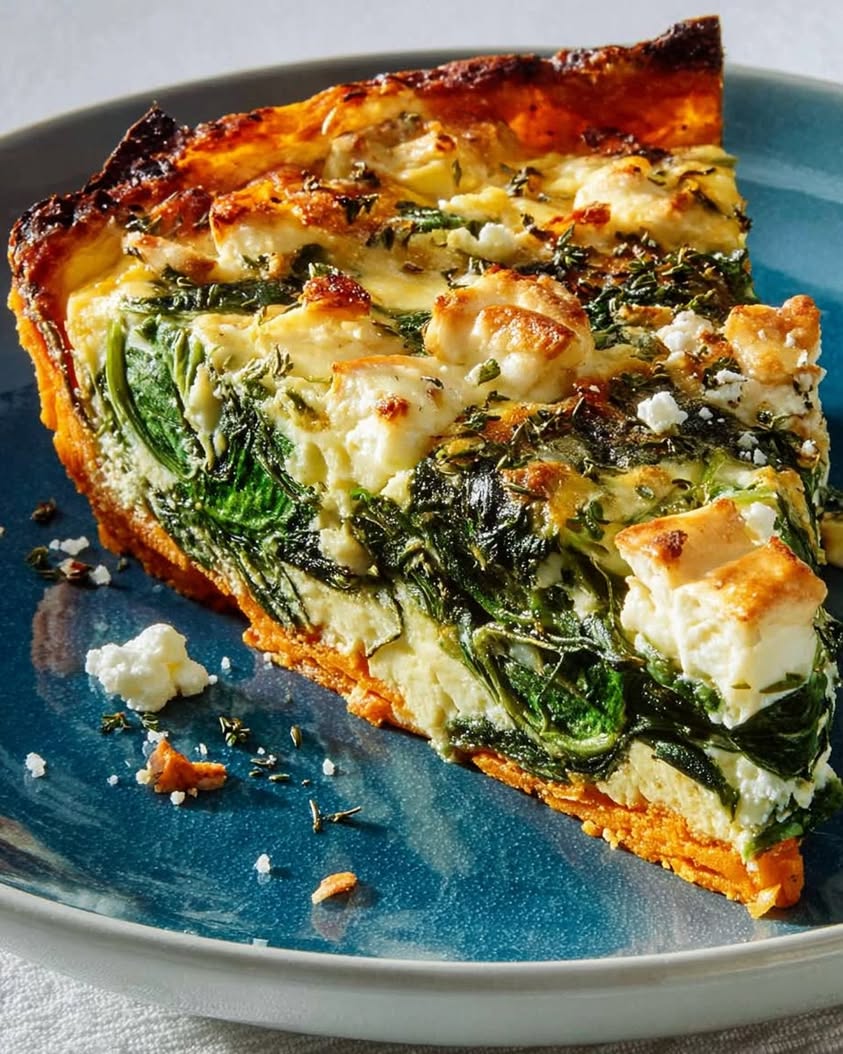
- Visual Appeal: This gluten-free spinach and feta quiche is a showstopper. The top is a beautiful golden brown, often with small peaks and valleys from the custard. You can see flecks of green spinach and white feta cheese throughout. The sweet potato crust forms a vibrant orange border that is both rustic and elegant.
- Skill Level Needed: You do not need to be an experienced baker to master this recipe. It requires basic skills like chopping vegetables, whisking eggs, and roasting sweet potatoes. The most important step is ensuring the custard is properly set, but our guide will walk you through the visual cues to watch for. This is a great confidence-building recipe for beginner cooks.
- Special Equipment: You will need a standard 9-inch pie dish or a tart pan with removable bottom for easy serving. A sharp knife or mandoline is helpful for slicing the sweet potatoes into even rounds. A large mixing bowl, whisk, and a skillet for wilting the spinach are also essential.
Recipe Overview
- Difficulty Level: We rate this recipe as Easy because it avoids the tricky steps associated with traditional pastry crusts. You do not need to chill dough, roll it out, or worry about it shrinking. The method consists of layering roasted potato slices and pouring a whisked custard. The primary challenge is timing the pre-roasting of the sweet potatoes to ensure they are tender before adding the liquid filling. However, this step is very forgiving and simple to execute.
- Category: This dish fits perfectly into several meal categories. It is an excellent brunch option, served warm or at room temperature with a fresh side salad. It also works wonderfully as a light dinner, paired with a bowl of soup. Because it holds up well, it is a great choice for meal prep, providing healthy lunches for several days. It can also be served as an appetizer cut into small wedges.
- Cuisine: While the quiche is a quintessential French dish, this version draws inspiration from modern, health-conscious American cooking. The use of sweet potato as a base nods to Southwestern and Southern cuisines where the root vegetable is a staple. The combination of spinach and feta is a classic Greek flavor profile. This recipe is a beautiful fusion of culinary traditions, adapted for contemporary dietary needs.
- Cost: This recipe is quite budget-friendly. The primary ingredients are eggs, a bag of spinach, a block of feta cheese, and a few sweet potatoes. These are all affordable and readily available at any grocery store. Milk or cream is used for the custard, which is another low-cost staple. The total cost for a dish serving eight people is likely under $15, making it a fantastic value.
- Season: You can enjoy this quiche year-round, but it is especially wonderful in the fall and winter. Sweet potatoes are at their peak during these cooler months, offering maximum sweetness and flavor. The hearty, warming nature of the custard and crust is perfect for a cozy autumn brunch or a comforting winter dinner. In spring and summer, you can serve it with a fresh tomato and basil salad.
- Occasion: This versatile dish is suitable for numerous occasions. It is a guaranteed hit at holiday brunches like Easter or Mother’s Day. It also makes a lovely dish for potlucks, as it travels well and can be served at room temperature. For a quiet night in, it is a satisfying and simple dinner. It is elegant enough for a casual get-together yet simple enough for a Tuesday evening meal.
Why You Will Love This Recipe
First and foremost, the taste and texture of this Gluten-Free Spinach and Feta Quiche with Sweet Potato Crust recipe is truly outstanding. The creamy, rich custard is a perfect canvas for the salty feta and savory spinach. The sweet potato crust is not just a substitute; it is a feature. Its natural sweetness complements the savory elements in a way that a plain pastry crust never could. You get a satisfying bite that is both decadent and incredibly fresh.
The convenience of this recipe is another major draw. There is no finicky dough to roll out or blind bake. You simply par-cook the sweet potato slices in the oven, whisk the filling, and bake everything together. Furthermore, this quiche is a dream for meal prepping. It stores beautifully in the refrigerator for several days and tastes just as good reheated as it did fresh. You can make it on a Sunday evening and have a quick, healthy breakfast or lunch ready to grab all week long.
From a nutritional standpoint, this recipe is a powerhouse. You are getting a healthy dose of vitamin A and fiber from the sweet potato crust. The eggs provide high-quality protein and choline. Spinach is loaded with iron and antioxidants. Moreover, this recipe is naturally lower in carbohydrates than a traditional pastry quiche. This makes it an excellent option for anyone following a gluten-free diet for medical reasons or personal preference. It is a meal that tastes indulgent while fueling your body properly.
This quiche also shines in its social and entertaining value. It is a beautiful, impressive dish that looks like you spent hours in the kitchen. Because it is so simple to prepare, you can focus on your guests instead of being stuck cooking. It can be made ahead and served at room temperature, eliminating the stress of last-minute timing. Your friends and family will appreciate the incredible flavor and will never guess that it is also a healthier, gluten-free alternative.
Finally, the cost-effectiveness and accessibility of the ingredients make this a recipe you will turn to again and again. You do not need any specialty gluten-free flours or expensive imported cheeses. Everything can be found at your local supermarket for a very reasonable price. This recipe proves that eating gluten-free does not have to be expensive or complicated. It is an approachable, delicious, and smart choice for any home cook looking to create a memorable meal.
Historical Background and Cultural Significance
The quiche as we know it originated in the medieval German kingdom of Lothringen, which the French later called Lorraine. The original “quiche Lorraine” was an open-faced tart with a bread dough crust and a filling of eggs, cream, and smoked bacon. It was a humble, rustic dish created to use simple, available ingredients. Over centuries, it became a staple of French cuisine, evolving from a regional specialty to a globally recognized classic. The transition from a bread crust to the now-common pâte brisée or pâte feuilletée happened later, as French pastry techniques became more refined.
The cultural importance of the quiche cannot be overstated. In France, a good quiche is a symbol of home cooking and comfort. It is found in every boulangerie and patisserie, often served as a quick lunch with a green salad. Its popularity spread to the United Kingdom and the United States in the mid-20th century, where it became a staple of elegant brunches and ladies’ luncheons. The quiche Lorraine and its many variations, including the famous quiche florentine (with spinach), represent adaptability and the joy of simple, wholesome food.
This specific recipe represents a modern evolution driven by dietary needs and health consciousness. The traditional wheat flour crust was a barrier for many people with celiac disease or gluten sensitivities. Creative home cooks and chefs began experimenting with gluten-free alternatives. The sweet potato crust emerged as a brilliant solution. It not only removed the gluten but also added significant nutritional value and a unique flavor profile. This evolution showcases how classic dishes can be reimagined without losing their soul.
Regional variations of the quiche are plentiful. In the Alsace region, you will find a version with caramelized onions. In Switzerland, a quiche can be filled with Gruyère cheese and ham. Our American-inspired version with the sweet potato crust and feta cheese pays homage to the dish’s adaptability. It takes the foundational concept of a savory custard in a crust and marries it with the flavors of the American Southwest and Mediterranean traditions. This recipe is a testament to the quiche’s enduring legacy of innovation and cultural fusion.
Ingredient Deep Dive
Sweet Potatoes: Sweet potatoes have a rich cultural history originating in Central and South America, where they have been cultivated for over 5,000 years. They traveled the globe with explorers and became a staple in many cuisines. Nutritionally, they are a superstar, packed with beta-carotene (which converts to vitamin A), vitamin C, fiber, and potassium. For this quiche, look for medium, firm sweet potatoes with unblemished skin. Store them in a cool, dark, and dry place, but not in the refrigerator. For a slightly nuttier flavor, consider using Japanese sweet potatoes, but classic orange-fleshed varieties work perfectly.
Spinach: Spinach is believed to have originated in ancient Persia and later spread to Europe and Asia. It became a favorite of Catherine de Medici, who demanded it be served at every meal, giving rise to dishes “a la Florentine.” This leafy green is an incredible source of iron, calcium, vitamin K, and antioxidants. When selecting fresh spinach, look for bright, crisp leaves without any signs of wilting or yellowing. Store it in a plastic bag in the refrigerator and use it within a few days. You can use frozen spinach for convenience, but be sure to thaw and squeeze out all the excess water thoroughly before adding it to the filling.
Feta Cheese: Feta is a brined curd white cheese with a long history in Greece, where it has been produced for thousands of years. It is made from sheep’s milk or a mixture of sheep and goat’s milk. Its tangy, salty flavor is the perfect counterpoint to the sweet crust and creamy custard. Nutritionally, feta is a good source of calcium and protein, and it is lower in fat than many other cheeses. When shopping, buy feta in a block rather than pre-crumbled for better flavor and texture. Store it in its brine in the refrigerator to keep it fresh. For a different profile, you can substitute goat cheese or a mild, crumbly ricotta salata.
Eggs: Eggs are the foundation of any quiche. They provide structure, richness, and a velvety texture. Culturally, eggs are a symbol of life and rebirth across many traditions. They are a concentrated source of high-quality protein, choline, and riboflavin. For the best quiche, use large, fresh eggs. The freshness of an egg affects how well the custard sets. Store eggs in their original carton in the main body of the refrigerator, not in the door. For a richer custard, you can substitute some of the whole eggs with additional egg yolks. Pasture-raised eggs will often have a deeper orange yolk and a richer flavor.
Milk or Heavy Cream: The liquid component of the custard determines its richness. Heavy cream will create a very decadent, silky quiche. Whole milk will yield a lighter, more delicate texture. A combination of half milk and half cream is a happy medium. The history of using dairy in custards goes back to ancient Rome. Nutritionally, dairy provides calcium and vitamin D. Always use full-fat dairy for the best texture, as low-fat options can make the custard watery. Store milk and cream in the coldest part of your refrigerator and use them before the expiration date.
Common Mistakes to Avoid
- Not pre-roasting the sweet potatoes thoroughly. If you skip this step or undercook them, the sweet potato slices will release excess water into the custard during baking. This will result in a soggy crust and a watery filling. You need the potatoes to be fork-tender before you pour the egg mixture over them.
- Overfilling the pie dish with custard. The quiche puffs up slightly as it bakes and then settles. If you fill the dish to the brim, the custard will overflow and make a mess. Leave at least a quarter inch of space between the top of the filling and the rim of the dish.
- Not wilting the spinach down fully. Fresh spinach has a very high water content. If you add uncooked spinach to the custard, it will release all that water during baking and create a watery quiche. You must cook the spinach in a hot skillet with a little oil until it is fully wilted and all the liquid has evaporated.
- Overbaking the quiche. This is the most common mistake. An overbaked quiche becomes dry, rubbery, and cracks on the surface. The custard should be just set with a slight jiggle in the center when you remove it from the oven. It will continue to cook and set from residual heat as it cools.
- Cutting into the quiche while it is still too hot. Patience is a virtue here. If you slice into the quiche immediately after baking, the custard is too fragile and will fall apart. You must allow it to cool for at least 15 to 20 minutes so the proteins can relax and set into a firm, sliceable texture.
- Using a very thin pie dish. A dark, thin metal pan can cause the bottom of the sweet potato crust to burn before the custard is set. A glass or ceramic pie dish is ideal because it heats evenly and slowly, allowing the potatoes to cook through without scorching.
- Not properly seasoning the custard. The eggs and milk need a good amount of salt and pepper. The feta cheese adds saltiness, but it is not enough to season the entire dish. Taste your egg mixture before pouring it in and adjust the seasoning generously.
- Adding cold eggs and milk to the warm potatoes. This can cause the custard to cook unevenly. It is best to let your eggs and milk come to room temperature before whisking them together. This ensures a smooth, even bake.
Essential Techniques
Mastering the custard is the most critical technique for this quiche. The custard is simply a mixture of eggs and dairy, but its success depends on even cooking and proper ratios. You must whisk the eggs thoroughly but gently to avoid incorporating too much air, which can cause the quiche to puff up and then collapse. The standard ratio is one large egg to about a half cup of dairy. Use a liquid measuring cup to ensure accuracy. When you pour the custard over the spinach and feta, it should flow around the ingredients without being so thin that it all sinks to the bottom.
The technique of pre-cooking the sweet potato crust is also essential. You are essentially creating a barrier between the wet custard and the starch. To do this, slice the sweet potatoes into uniform, thin rounds, about an eighth of an inch thick. A mandoline is the best tool for this job. Toss the slices with a little oil, salt, and pepper. Arrange them in a single layer overlapping on a baking sheet and roast for about 15 minutes. This par-cooking removes some of the moisture and starts the sweetening process. Then, line your pie dish with these slices, overlapping them to form a complete seal. This ensures your crust is cooked through and flavorful.
Finally, learning to check for doneness is a vital skill. Visual cues are your best friend. The edges of the quiche should be puffed and golden brown. The center should be set but still have a slight, gentle jiggle, like a firm Jell-O. If you insert a knife into the center, it should come out mostly clean, with a little bit of moisture. The internal temperature should register between 170 and 175 degrees Fahrenheit on an instant-read thermometer. Remember that the quiche will continue to set as it cools, so it is better to pull it out a minute early than a minute late.
Pro Tips for Perfect Gluten-Free Spinach and Feta Quiche with Sweet Potato Crust
For the best results, salt your spinach after wilting it. This step helps draw out even more residual moisture. After you have cooked the spinach down, season it with a pinch of salt and press it gently in a colander with a spoon to remove any last drops of water. Dry spinach is the secret to a non-watery filling.
Consider adding a pinch of nutmeg to your custard. A small amount of freshly grated nutmeg is a classic addition to spinach and egg dishes. It adds a warm, slightly sweet, and aromatic depth that you cannot quite identify but definitely notice when missing. It enhances the earthy flavor of the spinach beautifully.
Blend your custard with a hand blender for ultimate smoothness. If you want a perfectly silky, professional texture, place your eggs, milk, cream, salt, and pepper in a large measuring cup and use an immersion blender to combine them. This method eliminates any streaks of egg white and creates a perfectly homogenous mixture.
Let your quiche rest in the oven after turning it off. Once the quiche is set, turn off the oven and crack the door open. Allow the quiche to sit in the cooling oven for about 10 to 15 minutes. This gentle, gradual cooling helps prevent the top from cracking. This simple trick is often used by professional bakers.
Do not skip lining the pie dish with the sweet potatoes. When you arrange the sweet potato slices in the dish, make sure they slightly overlap and cover the entire bottom and sides completely. Any gaps will allow the liquid custard to seep under the crust, making it soft and difficult to remove from the dish.
Variations and Adaptations
For a Mediterranean-inspired variation, add a generous handful of halved cherry tomatoes and black olives to the filling along with the spinach. You could also substitute the feta with crumbled goat cheese or halloumi for a different salty, creamy texture. To make it a heartier meal, add cooked, crumbled Italian sausage or diced and cooked bacon. Just be sure to brown the meat first and drain off any excess fat before adding it to the egg mixture.
For a seasonal adaptation in the spring, swap the spinach for a mixture of asparagus tips and fresh peas. You would need to blanch the asparagus briefly before adding it to the filling. In the summer, use a combination of zucchini, sun-dried tomatoes, and fresh basil. This will create a lighter, brighter flavor profile. During the fall, you can add roasted butternut squash or mushrooms to the sweet potato crust for an earthier taste.
Dietary modifications are easy to implement. To make this recipe dairy-free, use a high-quality vegan feta and unsweetened plant-based milk, such as oat milk or full-fat coconut milk from a can. The custard will be slightly different but still delicious. For a lower-fat option, use skim milk and reduce the amount of cheese. You can also replace some of the eggs with egg whites. For a low-carb version, you can use a thinner layer of sweet potato or try a crust made from pressed, shredded cauliflower.
Serving and Presentation Guide
Plating this gluten-free quiche beautifully is simple. Use a sharp, non-serrated knife to create clean slices. For each serving, cut a wedge and use a pie server to lift it onto a plate. Wipe the knife clean between cuts to ensure neat edges. Serve the wedges slightly warm or at room temperature on a plain white plate to make the orange, green, and yellow colors pop. A simple drizzle of balsamic glaze over the plate adds a professional and elegant touch.
Garnishing is where you can get creative. A small handful of fresh microgreens or a sprinkle of chopped fresh chives on top of the wedge adds a burst of freshness and color. A few toasted pine nuts or pumpkin seeds provide a wonderful textural crunch and are visually appealing. For a burst of brightness, a few thin slices of fresh cherry tomato or a small dollop of pesto on the side complements the flavors perfectly. Keep the garnish simple to let the quiche shine.
Traditional accompaniments are a simple side salad. A fresh green salad with a light lemon vinaigrette is the classic pairing. The acidity of the dressing cuts through the richness of the custard. You can also serve it alongside a bowl of chilled tomato soup for a delightful contrast of temperatures. For a more filling meal, add some roasted new potatoes or a crusty gluten-free baguette. The quiche is versatile enough to be the star of the plate or part of a larger spread.
Wine and Beverage Pairing
When it comes to wine, this quiche pairs beautifully with a crisp, dry white wine. A classic Sauvignon Blanc with its herbaceous notes is an excellent match for the spinach and feta. An unoaked Chardonnay, like a Chablis, offers a clean, mineral finish that complements the creamy custard. For a bit more fruit, a dry Riesling or a Pinot Grigio are also wonderful choices. The key is to choose a wine with good acidity to balance the richness of the eggs and cheese.
For non-alcoholic options, consider a sparkling water with a squeeze of lemon or lime. The bubbles and acidity help to cleanse the palate. A tall glass of iced green tea with mint is a refreshing and light pairing. For a warmer drink, a well-brewed Earl Grey tea with its hint of bergamot is sophisticated and pairs nicely with the savory herbs. A simple, high-quality apple cider, either cold or warm, is a fantastic fall pairing that highlights the sweet potato crust.
The ideal serving temperature for a white wine is about 45 to 50 degrees Fahrenheit. Serve it in a standard white wine glass to allow the aromas to concentrate. For the quiche, it is best served warm, not piping hot. Allow it to rest for about 20 minutes after baking. If you are serving it at room temperature, it is still delicious and often easier for a brunch buffet. The flavors meld together nicely as it cools.
Storage and Shelf Life
Proper storage is key to keeping your quiche fresh. Once the quiche has cooled completely to room temperature, cover it tightly with plastic wrap or transfer it to an airtight container. You can also wrap individual slices in plastic wrap for easy grab-and-go lunches. Store the quiche in the refrigerator. It will keep well for up to four days. The flavor often improves after a day as the ingredients meld together.
The temperature of your refrigerator is important. Keep it at or below 40 degrees Fahrenheit to prevent bacterial growth. Do not leave the quiche out at room temperature for more than two hours. If you are serving it at a brunch, consider placing the platter on a bed of ice or using a warming tray to keep it at a safe temperature. When you are ready to eat the leftovers, avoid the microwave if possible, as it can make the crust soggy.
For reheating, the oven is your best friend. Preheat your oven to 325 degrees Fahrenheit. Place the quiche or individual slices on a baking sheet and heat for about 10 to 15 minutes, or until warmed through. This method helps restore the crispness of the sweet potato crust. You can also reheat it in an air fryer at 300 degrees Fahrenheit for about five to seven minutes. If you are in a hurry, a microwave will work, but the texture will be softer. Watch for signs of spoilage like an off smell, mold, or a slimy texture on the spinach.
Make Ahead Strategies
This recipe is perfect for making ahead of time. Your best strategy is to prep the components individually. You can roast the sweet potato slices and wilt the spinach up to two days in advance. Store them in separate airtight containers in the refrigerator. On the day you plan to bake, simply line the pie dish with the potatoes, sprinkle with the spinach and feta, and pour the freshly whisked custard on top. This breaks the work into manageable chunks.
You can also fully assemble the quiche and bake it one day ahead. Let it cool completely, then cover it tightly and store it in the refrigerator overnight. The next day, you can serve it cold or reheat it. This is an excellent strategy for a big holiday meal. The quality of the quiche is not negatively affected by sitting overnight; in fact, the flavors often deepen. Just be sure to let it come to room temperature for about 15 minutes before reheating.
Another excellent make-ahead method is to freeze the fully baked and cooled quiche. Wrap it very tightly in a layer of plastic wrap, followed by a layer of aluminum foil. It will keep well in the freezer for up to two months. To serve, thaw it overnight in the refrigerator and then reheat it in a 325-degree oven for about 20 minutes. The sweet potato crust holds up remarkably well to this process. Fresh elements, like a green salad, should always be added right before serving.
Scaling Instructions
Halving this recipe is very straightforward. Simply use a smaller pie dish, such as a 6-inch or a mini quiche pan. Cut all the ingredients in half. You will need about one medium sweet potato. The prep time will be slightly less, but the baking time will also need to be reduced. Start checking for doneness around the 25-minute mark. The same visual cues apply: a set edge and a slight jiggle in the center. Mini quiches are great for individual servings.
Doubling or tripling the recipe is also simple, but you will need multiple pie dishes. Do not try to use one very large dish, as the custard will not cook evenly. For a standard double batch, use two 9-inch pie dishes. You can roast all the sweet potato slices on one or two baking sheets, but be careful not to overcrowd them. The custard can be whisked together in one large bowl and then divided evenly between the dishes. The baking time for a double batch is the same as for a single batch.
When scaling up, you need to pay close attention to your equipment. A standard home oven can typically hold two pie dishes side by side on the middle rack. If you are making a triple batch, you may need to stagger the dishes on different racks. This will require rotating the pans halfway through baking to ensure even cooking. Your prep time will increase significantly, but the active hands-on time per batch remains the same. Consider making the custard in two separate bowls if whisking a large volume becomes difficult.
Nutritional Deep Dive
Each serving of this Gluten-Free Spinach and Feta Quiche provides a balanced mix of macronutrients. You will get a healthy dose of protein from the eggs and cheese, which helps with satiety. The fat content comes primarily from the eggs and cheese, contributing to the creamy texture and keeping you feeling full. The carbohydrates are largely complex carbs from the sweet potato, providing steady energy. The overall ratio makes it a perfectly balanced meal suitable for breakfast, lunch, or dinner.
Looking at the micronutrient profile, this quiche is a vitamin powerhouse. The sweet potato is an exceptional source of vitamin A, essential for eye health and immune function. The spinach provides iron, magnesium, and vitamin K. The eggs offer choline, crucial for brain health. Feta cheese contributes calcium for strong bones. This is not just empty calories; it is a nutrient-dense meal that supports your overall wellness. A serving provides a significant percentage of your daily needs for several key vitamins and minerals.
This recipe also offers significant health benefits if you are watching your carbohydrate intake. Compared to a traditional quiche made with a white flour crust, this version is substantially lower in total carbohydrates and higher in fiber. The fiber from the sweet potato helps regulate blood sugar levels and promotes digestive health. It is a great option for those managing their weight or blood sugar. The high protein content also helps to regulate appetite, making it easier to avoid snacking between meals.
Dietary Adaptations
Gluten-Free: This recipe is already naturally gluten-free as written, provided you check that all your ingredients, especially spices and any pre-shredded cheese, are certified gluten-free to avoid cross-contamination. It is a safe and delicious option for those with celiac disease.
Dairy-Free: To make this dairy-free, replace the feta cheese with a high-quality vegan feta alternative. For the milk component, use an unsweetened, full-fat plant milk like oat milk or a canned coconut cream. The texture will be slightly different, but the result is still very enjoyable. Be aware that vegan cheese may not melt in the same way.
Low-Carb: For a lower-carb version, you can significantly reduce the amount of sweet potato. Use a thinner layer of slices to create a lighter crust, or skip the crust entirely and bake the filling in a well-greased dish. You can also replace the sweet potato with a crust made from shredded, pressed and roasted zucchini or cauliflower.
Keto: The keto version requires a complete crust overhaul. Replace the sweet potato crust with a keto-friendly crust made from almond flour, butter, and an egg. Significantly reduce the amount of dairy milk or cream used in the custard and increase the amount of full-fat cream cheese to maintain the fat content. Replace the feta with a high-fat cheese like cheddar or Gruyère.
Troubleshooting Guide
If your quiche has a watery texture, the most likely culprit is excess moisture from the spinach. You need to wilt the spinach thoroughly and then press out as much liquid as possible. Another reason could be that the sweet potatoes were not roasted long enough to dry them out. Ensure your potatoes are fork-tender before assembly. Overbaking can also cause curdling, though a water quiche is usually an undercooking or moisture issue.
If the edges of your sweet potato crust are burning, you are likely using a dark metal pan or your oven runs hot. Try using a glass or ceramic pie dish instead. You can also cover the edges of the crust with strips of aluminum foil or a pie crust shield halfway through baking. Reduce your oven temperature by 25 degrees if you consistently have this issue. Conversely, if the center is still liquid but the top is too brown, you should tent the entire dish with foil.
If the crust sticks to the pie dish, you likely did not grease the dish well enough. Even though the sweet potatoes contain oil, you should still spray the dish with a non-stick cooking spray or grease it with butter. Letting the quiche cool completely before slicing also helps the crust pull away from the sides. If you use a tart pan with a removable bottom, the risk of sticking is significantly reduced, and you can remove the ring before slicing.
Recipe Success Stories
PrintSpinach & Feta Quiche with Sweet Potato Crust
- Total Time: 45 minutes
- Yield: 6
Description
A savory and nutritious quiche featuring a crispy sweet potato crust, creamy spinach filling, and tangy feta cheese. Perfect for breakfast, brunch, or a light dinner.
Ingredients
- 2 medium sweet potatoes, peeled and thinly sliced
- 1 tablespoon olive oil
- 1/2 teaspoon salt
- 1/4 teaspoon black pepper
- 1 tablespoon butter
- 1 small onion, diced
- 2 cloves garlic, minced
- 5 ounces fresh spinach
- 4 large eggs
- 1 cup milk
- 1/2 cup crumbled feta cheese
- 1/4 cup grated Parmesan cheese
- 1/4 teaspoon nutmeg
- Salt and pepper to taste
Instructions
- Preheat oven to 400°F (200°C). Grease a 9-inch pie dish.
- Arrange sweet potato slices in overlapping circles to form a crust, brushing each layer with olive oil and seasoning with salt and pepper.
- Bake the crust for 20-25 minutes until slightly softened and edges begin to brown. Remove and reduce oven temperature to 375°F (190°C).
- In a skillet over medium heat, melt butter and sauté onion until translucent, about 5 minutes. Add garlic and cook 1 minute more.
- Add spinach and cook until wilted, about 3 minutes. Drain any excess liquid and let cool slightly.
- In a bowl, whisk eggs, milk, nutmeg, salt, and pepper. Stir in feta and Parmesan cheese, then fold in spinach mixture.
- Pour filling into baked crust and smooth top. Bake for 30-35 minutes until center is set and top is golden brown.
- Let cool for 10 minutes before slicing and serving.
Notes
You can customize the seasonings to taste. For a dairy-free option, use plant-based milk and omit cheeses or use vegan alternatives.
- Prep Time: 15 minutes
- Cook Time: 30 minutes
- Method: Main
- Cuisine: American