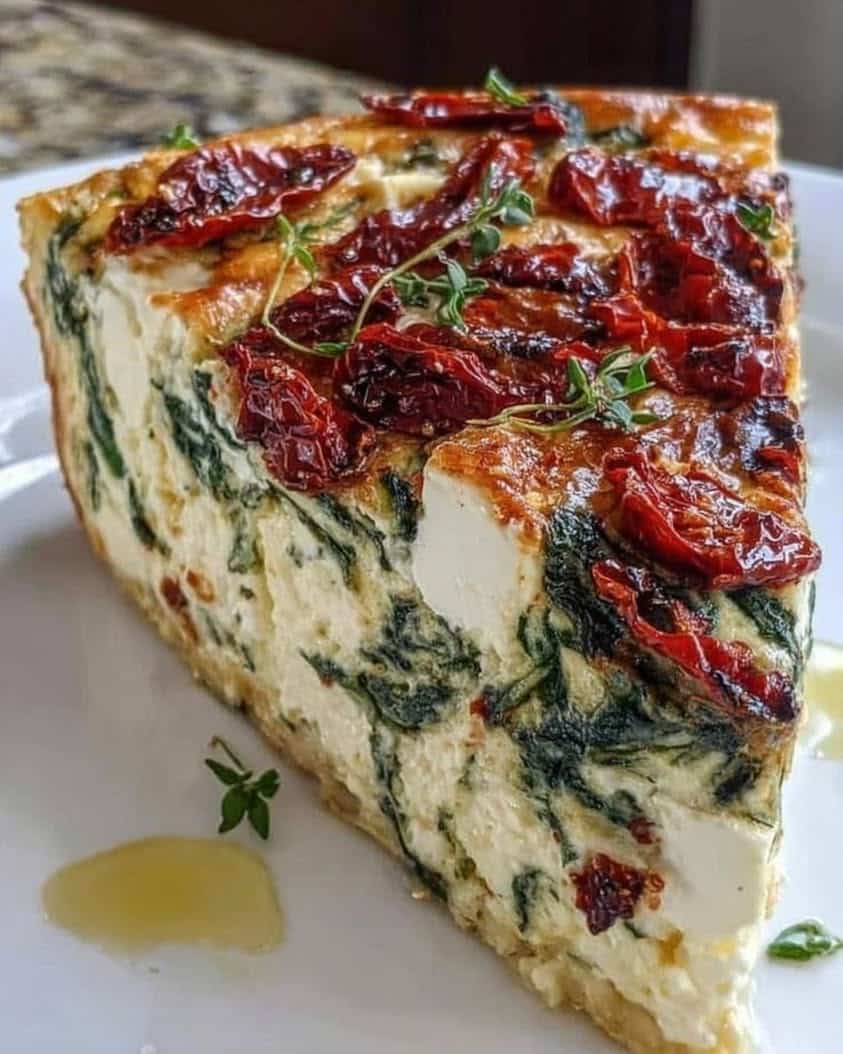
The Ultimate Crustless Quiche with Spinach, Sun-Dried Tomato, and Feta: An Engaging Guide to a Perfect Breakfast
There are certain dishes that effortlessly bridge the gap between a hearty breakfast, a light lunch, and a satisfying dinner. The Ultimate Crustless Quiche with Spinach, Sun-Dried Tomato, and Feta is precisely that kind of culinary chameleon. This recipe creates a golden, tender, and protein-packed egg bake that delivers a burst of Mediterranean flavor in every single slice. Therefore, if you have been searching for a gluten-free, low-carb, and fuss-free meal that does not compromise on taste, this quiche is your new best friend in the kitchen.
You will fall in love with the beautiful marriage of savory sun-dried tomatoes, creamy and tangy feta cheese, and the earthy freshness of wilted spinach. Furthermore, this quiche is incredibly forgiving and customizable, making it perfect for busy weeknights or leisurely weekend brunches. Because it skips the traditional pastry crust, you save time and unnecessary carbs, allowing the rich egg custard to shine. Consequently, this dish proves that you do not need a pie crust to achieve a spectacular, restaurant-quality result that will impress your entire family.
With the right techniques, you will get a perfectly set center with slightly crispy, golden edges. Moreover, this quiche is baked to perfection in a simple pie dish, making cleanup a breeze. Therefore, let us dive into this comprehensive guide that covers everything from ingredient selection to storage, ensuring your Ultimate Crustless Quiche with Spinach, Sun-Dried Tomato, and Feta turns out flawless every single time. Indeed, this is not just a recipe; it is an experience in simple, wholesome cooking.
Before we get started, let us clarify that this is the Ultimate Crustless Quiche with Spinach, Sun-Dried Tomato, and Feta. This specific combination has been tested and refined to ensure that the flavors meld together seamlessly while keeping the texture light and custardy. Additionally, the recipe is naturally vegetarian and gluten-free, so it fits into many dietary lifestyles. As you proceed, you will notice that the instructions are designed to build your confidence, whether you are a novice cook or a seasoned home chef.
Quick Recipe Highlights
- Flavor Profile: The flavor is a delightful symphony of savory and tangy notes. The sun-dried tomatoes bring a concentrated, sweet-tart umami kick, while the feta provides a salty, briny creaminess. Consequently, the spinach adds a subtle earthy undertone that balances everything out perfectly.
- Texture: This quiche has a beautiful, silky custard texture that is both firm and creamy. Additionally, the edges become delightfully browned and slightly crispy, offering a pleasant contrast to the soft center. The chunks of feta and tomato pieces add a lovely, varied mouthfeel.
- Aroma: As this bakes in the oven, your kitchen will fill with an irresistible aroma that hints at garlic, herbs, and melted cheese. The combination of eggs with these ingredients creates a comforting, homey scent that makes everyone hungry.
- Visual Appeal: This quiche is a feast for the eyes, with vibrant green spinach leaves interspersed with deep red tomato pieces and white thatches of feta. Furthermore, the golden brown top surface is dotted with these colorful gems, making it an Insta-worthy dish that looks as good as it tastes.
- Skill Level Needed: Even if you have never made a quiche before, this recipe is forgiving and straightforward. Because it is crustless, there is no finicky pastry dough to roll or blind bake. Therefore, this is a perfect beginner recipe that yields professional-looking results.
- Special Equipment: You only need a standard 9-inch pie dish or a similarly sized tart pan. Additionally, a large skillet for sautéing the spinach and a mixing bowl for whisking the eggs are essential. Moreover, measuring cups and spoons will help you get the ratios right.
Recipe Overview
- Difficulty Level: This recipe is rated as easy, primarily because the technique involves simple whisking and baking methods. Since there is no crust to prepare or pre-bake, the risk of failure is quite low. Moreover, the ingredients are straightforward and easy to handle, making this an ideal dish for a relaxed Sunday morning.
- Category: This dish fits perfectly into the categories of breakfast, brunch, and light dinner. Furthermore, it works superbly as a make-ahead lunch option for the week. Because it is served warm or at room temperature, it is versatile enough to be packed for picnics or potlucks.
- Cuisine: Although quiche is a classic French creation, this version draws heavy inspiration from Mediterranean cuisine. The use of feta, sun-dried tomatoes, and olive oil nods to Greek and Italian culinary traditions. Therefore, this recipe represents a beautiful fusion of European flavors that complement each other wonderfully.
- Cost: On average, this dish is very Cost-Effective. Staples like eggs and spinach are inexpensive, and even the feta and sun-dried tomatoes are affordable for the quantity they yield. Consequently, you can feed a family of six for less than the cost of takeout. It is a budget-friendly gourmet meal that does not sacrifice quality.
- Season: While you can enjoy this quiche year-round, it is especially delightful in the spring and summer months when fresh spinach is at its peak. However, the sun-dried tomatoes and feta provide a robust flavor that makes it perfect for cozy fall or winter brunches as well. Therefore, it is a versatile dish for any season.
- Occasion: This quiche is fantastic for hosting guests because it is elegant but low-effort. Moreover, it is a welcome addition to Easter brunch, Mother’s Day gatherings, or even a simple weekday dinner. Because it can be made in advance, it is also great for holiday mornings when you want to spend time with family.
Why You Will Love This Recipe
Primarily, the allure of this quiche lies in its incredible taste and satisfying texture. The rich, velvety egg base is infused with the intense, deep flavors of sun-dried tomatoes. Meanwhile, the salty feta cheese melts into creamy pockets throughout the bake, creating delightful bursts of flavor. Additionally, the sautéed spinach adds a moist, tender element that prevents the dish from becoming too dry or rubbery. In summary, every forkful is a balanced bite of savory, tangy, and earthy goodness that will keep you coming back for seconds.
Beyond taste, the convenience factor here is unbeatable. Unlike traditional quiches that require a complex pastry shell, this crustless version saves you significant time and effort. There is no chilling dough, rolling, or crimping involved. Instead, you can have all the ingredients mixed and ready for the oven in under twenty minutes. Consequently, this makes the Ultimate Crustless Quiche with Spinach, Sun-Dried Tomato, and Feta an ideal option for busy weeknight dinners. Additionally, it is a fantastic meal-prep item, as it slices beautifully and stores well for several days in the refrigerator.
Nutritionally, this quiche is a powerhouse. First, it is packed with high-quality protein from the eggs and feta, which helps you stay full and energized for hours. Second, the spinach delivers a substantial dose of iron, vitamins A and K, and antioxidants. Third, healthy fats from the eggs and olive oil support brain function and satiety. Because it is naturally low in carbohydrates, this dish fits seamlessly into keto and low-carb diets. Therefore, this recipe proves that healthy eating can be delicious and satisfying without boring you with bland flavors.
From an entertaining perspective, this dish is a crowd-pleaser that never fails to impress. Its vibrant colors and elegant presentation make it look like you spent hours in the kitchen, even when you did not. Moreover, because it can be served warm, at room temperature, or even slightly chilled, it offers flexibility for buffets and outdoor events. That said, it holds its shape beautifully when sliced, so you can present neat wedges on a platter for a polished look. Therefore, it is a stress-free choice for hosting a brunch or a light dinner party with friends.
Finally, this recipe is incredibly economical and accessible. All the ingredients are readily available at any mainstream grocery store without a special trip to a gourmet market. Additionally, the cost per serving is remarkably low, especially when compared to dining out. Since the ingredients are simple and mundane, this is a great way to utilize staples you likely already have on hand, like eggs and onions. Hence, you can create a gourmet meal from the comfort of your home without breaking the bank or spending excessive time shopping.
Historical Background and Cultural Significance
The origin of the quiche can be traced back to the historic region of Lothringen, which is now known as Lorraine in France. However, the original “Lorraine” quiche was not the fancy egg and cream pie we know today. Instead, it was a simple open-faced tart made with bread dough and filled with egg custard and local ingredients. Therefore, the modern quiche is an evolution of a humble peasant dish that eventually gained popularity in French haute cuisine. Indeed, the word “quiche” itself is derived from the German word “kuchen,” meaning cake, which highlights its Germanic roots.
Culturally, the quiche has become a symbol of French culinary elegance, often associated with sophisticated brunches and refined dining. Moreover, it represents the French philosophy of making a delicious meal from simple, high-quality ingredients. Consequently, as the dish spread globally, it underwent many transformations, leading to different regional variations. This specific version, which incorporates Mediterranean ingredients like feta and sun-dried tomatoes, is a perfect example of how classic French technique can be adapted to feature other cultural flavors.
The evolution of the crustless quiche is particularly interesting, as it moves away from the traditional pastry foundation. This adaptation likely emerged from dietary health trends, specifically the need for gluten-free and low-carb alternatives. Furthermore, removing the crust simplifies the preparation process, making quiche more accessible to beginner cooks. Therefore, the crustless quiche is not just a fad but a practical modification that maintains the essence of the original dish while catering to modern nutritional needs. The Ultimate Crustless Quiche with Spinach, Sun-Dried Tomato, and Feta is a testament to this evolution.
Regional variations of quiche are vast and diverse, with different countries adding their own local twists. For example, a classic French quiche might include ham and gruyère, while a Spanish “tarta de verduras” might feature roasted peppers and zucchini. In the Mediterranean region, ingredients like olives, artichokes, and various cheeses are popular additions. Thus, our featured recipe is a fusion of these ideas, placing the sun-dried tomato and feta at the forefront, which are staples in Italian and Greek pantries. Hence, this dish embodies the global spirit of culinary sharing and innovation.
Ingredient Deep Dive
Eggs: The egg is the backbone of any quiche, providing structure, moisture, and richness. In this context, eggs are deeply tied to the cultural heritage of breakfast and brunch dishes worldwide. Nutritionally, they are a fantastic source of complete protein, choline, and various B vitamins. When selecting eggs, you should look for fresh ones with clean, uncracked shells, and for the best flavor, opt for pasture-raised varieties. To store them, keep them in their original carton in the coldest part of the refrigerator, and they will last for several weeks. If you run out, you can substitute each egg with a quarter-cup of egg substitute or a flax egg for a vegan option.
Spinach: Fresh spinach is the star green in this recipe, wilted down to tender perfection. Historically, spinach has been cherished since ancient times, especially in Persian and Mediterranean cuisines, where it was prized for its health benefits. In fact, spinach is packed with iron, calcium, and folate, not to mention phytonutrients that support vision and skin health. When buying fresh spinach, choose leaves that are bright green, crisp, and free from yellowing or slimy spots. Therefore, to keep it fresh, store it in a plastic bag with a paper towel in the fridge for up to five days. Alternatively, you can swap fresh spinach for kale or Swiss chard, though you will need to adjust the cooking time to ensure they are tender.
Sun-Dried Tomatoes: These chewy, intensely flavored gems are made by dehydrating ripe tomatoes, concentrating their sweetness and umami. Culturally, sun-drying tomatoes is a traditional preservation method used in Mediterranean regions like Italy and Greece for centuries. Moreover, they are rich in lycopene, an antioxidant, and they bring a depth of flavor that fresh tomatoes cannot replicate. When selecting sun-dried tomatoes, you can find them dry in a bag or packed in oil in a jar. For this quiche, the oil-packed ones are softer and more succulent, but the dry ones can be rehydrated in warm water. Store both varieties in a cool, dark place or the fridge per the package directions.
Feta Cheese: Feta is a brined curd white cheese that hails from Greece and is a cornerstone of Mediterranean gastronomy. It is traditionally made from sheep’s milk, or a mixture of sheep and goat’s milk, giving it a tangy and salty flavor profile. This cheese provides calcium, protein, and conjugated linoleic acid. To choose the best feta, look for blocks that are stored in brine rather than pre-crumbled tubs, as they have a superior texture and taste. Once opened, keep it submerged in brine or a light salt solution and refrigerate, where it will keep for a few weeks. As a substitute, you can use goat cheese, ricotta salata, or a firm aged feta alternative for a similar effect.
Heavy Cream (or Milk substitute): The liquid dairy in a quiche creates the signature silky custard texture. While heavy cream yields the richest results, you can use half-and-half or whole milk for a lighter version. This ingredient is essential because it balances the eggs and dilutes their protein concentration, preventing a rubbery texture. In terms of nutrition, it adds fat and fat-soluble vitamins, which help you absorb the vitamins from the spinach. Store dairy products in the refrigerator, and always use them before the expiration date for the best flavor. For a dairy-free alternative, you can use canned coconut milk or a rich unsweetened nut milk, understanding that the texture will be slightly different but still delicious.
Common Mistakes to Avoid
- Overcooking the Quiche: This is the most common mistake, resulting in a dry, rubbery texture. You should bake the quiche just until the center is set but still has a slight jiggle. To check for doneness, insert a knife near the center; if it comes out clean but the custard does not look watery, it is done. Consequently, you should trust your oven and take it out on time.
- Not Draining the Spinach: If you sauté the spinach, it releases a lot of water, and if this moisture is not squeezed out, the quiche will become watery and fail to set properly. Therefore, after cooking the spinach, be sure to press it firmly against the skillet to extract the excess liquid. Alternatively, you can give it a quick chop and wring it out in a clean kitchen towel.
- Skipping the Pre-seasoning: Sun-dried tomatoes and feta are naturally salty, so you must be cautious when adding additional salt. Many people forget this and end up with an overly salty dish. Hence, you should mix your custard and taste it before baking to assess the seasoning, adding only a pinch of salt or perhaps none at all.
- Using Cold Ingredients: If you add cold eggs and cream to a hot pan the mixture can seize, but if you use cold ingredients in a cold dish, the bake time will increase. More importantly, letting your eggs and dairy come to room temperature ensures they emulsify properly. Therefore, try to plan ahead and take them out of the fridge 20 minutes early.
- Not Rubbing the Pan with Fat: Even though this is a crustless quiche, you still need a well-greased pie dish. If you forget to butter it, the egg will stick to the pan, and the quiche will be impossible to slice cleanly. Therefore, generously grease the dish with butter, cooking spray, or olive oil before adding the filling.
- Chopping Ingredients Too Large: Large chunks of sun-dried tomatoes or big ribbons of spinach can make the quiche bulky and hard to slice. Moreover, they might sink to the bottom or disrupt the custard. Thus, you should chop the tomatoes and leafy greens into smaller, uniform pieces so they distribute evenly.
- Opening the Oven Door Frequently: Peeking inside the oven drops the temperature and can cause the quiche to deflate or cook unevenly. Moreover, the rush of cold air can make the eggs curdle. Therefore, use the oven light and wait until the minimum baking time has passed before you even consider opening the door.
- Folding in the Mix-ins Wrong: Overmixing the batter can knock the air out of your whisked eggs, leading to a flat, dense quiche. Consequently, when you add the spinach, tomatoes, and feta, fold them in gently with a spatula just until combined. You should not beat the mixture after the ingredients are added.
- Baking at Too High a Temperature: A very hot oven will cause the edges to brown too quickly while the center remains raw. Moreover, high heat can make the proteins in the eggs tighten and squeeze out moisture. Therefore, stick to a moderate temp of 350°F to ensure a gentle, even bake.
- Ignoring the Resting Time: Cutting into a quiche right out of the oven will cause it to fall apart and lose its structure. The custard needs time to settle and firm up as it cools. Hence, allow it to rest for at least 10 to 15 minutes before slicing, so the layers hold together for a neat presentation.
Essential Techniques
Whisking the Custard: The foundation of any great quiche is a smooth, airy custard. To master this, you must whisk the eggs thoroughly until they are frothy and uniform in color. This step incorporates air, which helps create a light texture during baking. A simple pitfall is under-whisking, which leaves streaks of egg white; thus, whisk for a solid 30 to 60 seconds. After baking, a visual cue of success is a custard that is not rubbery when you press it with a fork, and the top looks slightly glossy.
Sautéing the Vegetables: Cooking the spinach correctly is crucial to avoid a soggy mess. First, heat a little olive oil in a skillet over medium heat, then add the spinach in batches. You should toss it constantly until it wilts, which happens in a matter of minutes. After that, you must remove the pan from the heat and let it cool. To master this, ensure you do not crowd the pan, or the spinach will steam rather than sauté, resulting in less flavor. A visual cue for success is that the spinach has shrunk considerably and is dimmed in color.
Layering Ingredients: The order in which you assemble the quiche affects the final texture and appearance, even if the technique is simple. First, you place the solid mix-ins, like spinach and tomatoes, into the greased pie dish, distributing them evenly. Consequently, this ensures no one gets a slice without the good bits. After that, you pour the egg mixture over the top. Finally, you scatter the feta last so it retains its shape and does not sink. This simple layering technique guarantees an even distribution of all the elements for a perfect slice every time.
Gauging Doneness: Knowing when your quiche is perfectly baked is an essential skill. You should bake it until the edges are set and slightly puffed, but the center jiggles faintly when you shake the pan. Furthermore, a knife inserted into the center should come out clean, not coated in wet egg. Thus, you should rely on these checks rather than a strict timer, as ovens vary. If the top is browning too quickly, you can tent it loosely with foil to prevent burning while the center finishes cooking.
Pro Tips for Perfect Ultimate Crustless Quiche with Spinach, Sun-Dried Tomato, and Feta
Tip 1: Always pre-cook watery vegetables like spinach to remove excess moisture. This cannot be overstated because it directly impacts the structure of the quiche. Therefore, take the extra few minutes to sauté the spinach and press out the liquid thoroughly.
Tip 2: Do not skip greasing your pie dish. Even a non-stick surface can be tricky with egg. Hence, use a generous amount of butter or a high quality non-stick spray to ensure a clean release for beautiful slices.
Tip 3: For the fluffiest quiche, let your eggs and cream come to room temperature before whisking. This simple step allows the egg protein to bind with the liquid more efficiently. Therefore, remove them from the fridge about 20 minutes before you begin cooking.
Tip 4: If you are using sun-dried tomatoes packed in oil, you can use a tablespoon of that oil to sauté the spinach. This will infuse the entire dish with extra layers of tomato flavor. Consequently, this trick adds depth without any additional effort.
Tip 5: Use a glass or ceramic pie dish rather than a dark metal one. The dark metal can cause the bottom to brown unevenly and the edges to over-cook. Therefore, a light colored dish conducts heat more gently and produces a more uniform result.
Tip 6: For the smoothest custard, push the egg mixture through a fine mesh sieve before pouring it into the baking dish. While it is an extra step, this catches any stray bits of congealed egg protein. Consequently, your quiche will be silkier and more polished.
Tip 7: Do not be tempted to add too much cream. The ratio should be about one part dairy to one part egg by volume. Therefore, using eight eggs and one cup of cream will give you the perfect set and creaminess without being too heavy.
Tip 8: Always let the quiche rest after baking. This is non-negotiable for a clean slice. The custard continues to cook and firm up, so if you slice it immediately, it will be runny. Thus, patience is a virtue you must practice with this dish.
Variations and Adaptations
Regional Variations: While the Mediterranean pairing of feta and sun-dried tomatoes is classic, you can explore other flavor profiles. For instance, you can try a Greek twist by adding marinated artichokes, kalamata olives, and a sprinkle of oregano for an extra herby punch. Alternatively, for a taste of Tuscany, you could use ricotta and roasted red peppers, omitting the spinach for a different texture. Therefore, do not be afraid to play with flavors based on what you have in your pantry, creating your personalized regional adaptation.
Seasonal Adaptations: This quiche is lovely in summer with fresh tomatoes and basil, but it also makes a great winter comfort meal. In the fall, you can swap the spinach for finely chopped kale and add some sautéed mushrooms for umami richness. For spring, you could incorporate fresh asparagus, peas, and a dollop of pesto for a burst of green freshness. Hence, this is a versatile framework that celebrates the best of what each season has to offer in terms of fresh produce.
Dietary Modifications: This recipe is naturally gluten-free and low-carb, but you can adjust it further to suit other diets. For a lower fat version, use egg whites instead of whole eggs for half of the total eggs, or substitute the heavy cream with low-fat milk. For a dairy-free diet, skip the feta and use a plant-based feta alternative, and replace the heavy cream with full-fat coconut milk. Additionally, for a high-protein version, you could add chopped cooked chicken sausage or turkey bacon for a savory, filling boost.
Flavor Variations: You have unlimited possibilities for customizing the flavor. For instance, adding a pinch of red pepper flakes will give it a gentle kick, while a teaspoon of dried oregano will enhance its Italian character. You could also sauté a shallot with the spinach for a more savory underpinning. Moreover, you could sprinkle a cup of shredded sharp cheddar or gruyère cheese into the custard for a richer taste. Therefore, feel free to adjust the seasonings to match your family’s palates.
Texture Modifications: To add an extra crunch, you can sprinkle some toasted panko breadcrumbs over the top before baking, or add some crispy fried onions over the top for the last few minutes. If you want a denser texture, add a bit of cottage cheese, which will melt into the custard. For a fluffier, more cake-like texture, you might separate the eggs, whip the whites, and fold them in gently, although this changes the classic quiche texture profile. Hence, you can tailor the consistency to your liking.
Presentation Alternatives: While a whole quiche is great for sharing, you can also make individual portions in a muffin tin for a grab-and-go breakfast option. Consequently, this is a brilliant method for meal prepping, as the mini-quiches are perfectly portion-controlled and easy to store. Furthermore, you can bake the mixture in a tart shell or a small ramekins, adding an elegant touch for a dinner party. Alternatively, you can serve it in wedges from the pan it is baked in, keeping it rustic and homely.
Serving and Presentation Guide
Plating Techniques: To serve, ensure the quiche has rested and then slice it into even wedges using a sharp, non-serrated knife. Use a pie server to lift each slice onto the plate, keeping the layers tidy. For an elegant touch, serve on a warmed plate to keep the quiche warm for longer. Consequently, this will keep your dinner on hold, but the food will taste better. A simple neat slice with all the ingredients visible makes the dish look far more attractive.
Garnishing Ideas: A simple sprinkle of freshly cracked black pepper and a few flakes of sea salt add a pleasant finish. Moreover, scattering some fresh herbs, such as chopped chives, dill, or basil, on top adds a pop of color and a hint of freshness. A light drizzle of high-quality extra virgin olive oil or a balsamic glaze around the plate can elevate the dish from homey to chic. Furthermore, a small side of mixed greens with a lemony vinaigrette is a classic accompaniment that cuts through the richness of the quiche.
Traditional Accompaniments: In French bistros, quiche is often served with a simple green salad and a crusty baguette. In our version, you can serve it alongside a fresh tomato and cucumber salad to echo the Mediterranean flavors. Additionally, a bowl of fresh berries or melon slices makes a sweet and refreshing brunch pairing. For a heartier meal, you could serve it with roasted potatoes, though this increases the carbs. Therefore, choose your sides based on the balance of heaviness you want.
Modern Serving Suggestions: For a modern, social media worthy presentation, serve the quiche on a wooden charcuterie board, with the quiche as the centerpiece. Additionally, you can use cookie cutters to create fun round shapes or stars from the quiche slices for a whimsical brunch spread. You might also crumble some extra feta over the top before serving for a more pronounced flavor. Moreover, transferring it to a stylish, rustic ceramic dish can mask any imperfections and make it look intentional.
Temperature Considerations: Quiche is delicious served warm, at room temperature, or even lightly chilled. If serving warm, let it cool for 15 minutes to set. For a picnic, you can let it cool completely and transport it in its baking dish. Therefore, room temperature is often best, as it brings out the flavor of the cheese and the tomatoes without being too steaming hot. If you prefer it warm, you can reheat individual slices in the microwave or oven until just heated through.
Portion Control Tips: For a brunch, one sixth of the pie is a standard serving size. When slicing, use a knife with a thin blade and wipe it clean between cuts for neat wedges. Therefore, you can get clean slices that make the portions look generous. For diet control, you can cut the quiche into 8 smaller slices, particularly if you have multiple sides. Furthermore, when serving, use a spatula to carefully place the slices on the plates without disturbing the interior layers.
Wine and Beverage Pairing
Wine Pairings: For white wine lovers, a crisp Sauvignon Blanc with its herbaceous notes will beautifully complement the spinach and tomato flavors. Alternatively, a dry, citrusy Pinot Grigio serves as a lovely high-acid counterpoint to the salty feta. If you prefer red wine, a light-bodied, fruity Pinot Noir is light enough to not overpower the delicate custard, and its earthy notes pair wonderfully with the vegetables. Thus, you should serve the wine well chilled for whites or at a cool room temperature for reds.
Non-Alcoholic Alternatives: A sparkling water with a squeeze of lemon or lime is a refreshing, palate-cleansing drink that can stand up to the rich quiche. Additionally, a tall glass of freshly squeezed orange juice or a vibrant grapefruit spritzer adds a tart sweetness that cuts through the heaviness. For a more elegant brunch, you could serve a homemade lemon mocktail or iced green tea infused with mint. Consequently, you do not have to sacrifice the celebratory feel when you choose a non-alcoholic option.
Tea and Coffee Pairings: For a weekend brunch, a light loose leaf green tea, like jasmine, offers a subtle floral note that works well with the eggs. An earl grey tea, which has a distinctive bergamot flavor, also pairs beautifully with the fresh ingredients. On the other hand, a smooth, medium-roast black coffee provides a robust contrast to the creamy texture and tangy feta. Therefore, you can choose your warm beverage based on whether you want something delicate or bold to balance the meal.
Temperature Considerations: If you choose to serve wine, whites should be chilled to about 45-50°F for maximum crispness. Sparkling wines are best served even colder, around 40°F. For the coffee, it should be served hot, around 150-160°F, to warm the palate. Consequently, thinking about the drink temperature will elevate your meal, making the entire brunch experience feel more curated and thoughtful.
Serving Suggestions: A float of fresh berries or a small slice of cucumber in your water adds a touch of elegance. Furthermore, you can provide a splash of cream alongside the coffee for those who like a richer cup. When hosting, you should pour the drinks into nice glasses to enhance the overall atmosphere. Consequently, these little details make a simple meal at home feel like a special occasion you would enjoy at a fine cafe.
Storage and Shelf Life
Storage Methods: To store your leftovers, let the quiche cool completely to room temperature or it will create condensation inside your storage container. Once cooled, you can place it in an airtight container or wrap it tightly in plastic wrap, being sure to cover all edges. This protects it from absorbing other odors in the refrigerator. Hence, you can store the quiche in the fridge for up to four days without a significant loss of quality, though it is best eaten within two or three days for optimal flavor and texture.
Temperature Requirements: Because the quiche contains eggs and dairy, you must refrigerate it within two hours of cooking, or even sooner on a warm day. The temperature in your refrigerator should be set below 40°F to keep the food safe from bacterial growth. Therefore, do not leave it out overnight on the counter, as this is a food safety hazard. For serving again, you can eat it directly from the fridge as a cold dish, or reheat it to your desired temperature in the oven or microwave.
Container Recommendations: Ideally, choose a glass container with a tight-fitting lid, as it does not retain odors like some plastics can. However, a sturdy plastic container is also acceptable if it is airtight. For individual slices, you can wrap them in foil and place them in a zip-top freezer bag if you plan to freeze them. Consequently, using the right container extends the shelf life and keeps the flavor pure. A whole qu Print
Spinach, Sun-Dried Tomato & Feta Crustless Quiche
- Total Time: 45 minutes
- Yield: 6
Description
A savory and satisfying crustless quiche packed with fresh spinach, tangy sun-dried tomatoes, and creamy feta cheese. Perfect for breakfast, brunch, or a light dinner, this gluten-free dish is easy to make and full of flavor.
Ingredients
- 1 tablespoon olive oil
- 1 small onion, diced
- 2 cloves garlic, minced
- 5 ounces fresh spinach
- 1/2 cup sun-dried tomatoes (oil-packed), drained and chopped
- 6 large eggs
- 1/2 cup heavy cream
- 1/2 cup crumbled feta cheese
- 1/4 cup grated Parmesan cheese
- 1/2 teaspoon salt
- 1/4 teaspoon black pepper
- 1/4 teaspoon dried oregano
Instructions
- Preheat oven to 375°F (190°C). Grease a 9-inch pie dish or tart pan with butter or cooking spray.
- In a large skillet, heat olive oil over medium heat. Add onion and cook until softened, about 3 minutes. Add garlic and cook for 1 minute until fragrant.
- Add spinach to the skillet and cook until wilted, about 2-3 minutes. Remove from heat and let cool slightly. Squeeze out excess moisture if necessary.
- In a large bowl, whisk together eggs, heavy cream, salt, pepper, and oregano. Stir in the cooked spinach mixture, sun-dried tomatoes, feta cheese, and Parmesan cheese until well combined.
- Pour the mixture into the prepared pie dish and spread evenly.
- Bake for 25-30 minutes, or until the quiche is set in the center and lightly golden on top. A knife inserted in the center should come out clean.
- Let cool for 5 minutes before slicing and serving.
Notes
You can customize the seasonings to taste. Serve with a side salad for a complete meal.
- Prep Time: 15 minutes
- Cook Time: 30 minutes
- Method: Main
- Cuisine: American