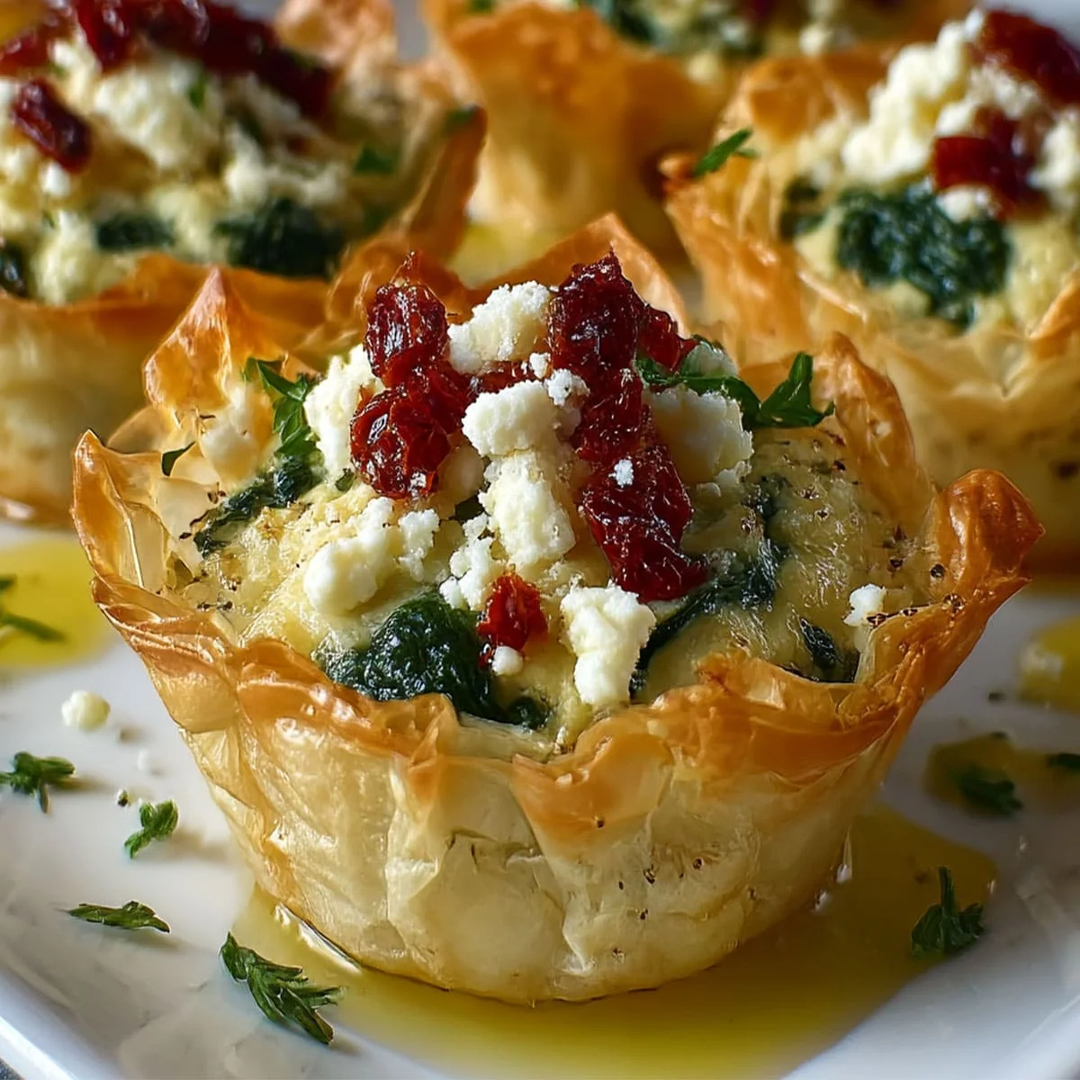
Easy Spanakopita Bites with Spinach, Feta, and Sun-Dried Tomato
Imagine a perfect party appetizer that disappears from the tray in minutes. These easy spanakopita bites deliver exactly that experience. They combine the classic flavors of Greek spinach pie in a fun, handheld format. Each bite features a crispy, golden shell that shatters to reveal a warm, savory filling. The filling itself is a delightful mix of creamy feta cheese, tender spinach, and tangy sun-dried tomatoes.
Consequently, this recipe simplifies traditional spanakopita without sacrificing any authentic taste. You use convenient frozen spinach and pre-made phyllo cups, which cuts down on prep time dramatically. Moreover, the addition of sun-dried tomatoes introduces a sweet and intense pop of flavor that beautifully complements the salty feta. Ultimately, these little bites are a guaranteed crowd-pleaser for any gathering, from casual game nights to elegant holiday parties.
Furthermore, the aroma that fills your kitchen while these bake is absolutely irresistible. It’s a warm, savory scent of butter, herbs, and melting cheese that promises something delicious. The visual appeal is equally impressive, with flaky, golden-brown pastry cups cradling the vibrant green and white filling. In short, these easy spanakopita bites are a foolproof recipe that delivers maximum flavor with minimal effort.
Quick Recipe Highlights
- Flavor Profile: These bites offer a harmonious balance of salty, creamy feta and earthy spinach. The sun-dried tomatoes add a crucial note of sweetness and tanginess, while fresh dill and onion provide an aromatic, herby backbone. Every flavor component works together to create a complex and satisfying taste.
- Texture: The experience begins with the satisfying, flaky crunch of the baked phyllo pastry. Then, you encounter the soft, creamy interior filling where the spinach is tender and the feta is luxuriously rich. This contrast between the crispy shell and soft center is what makes these appetizers so addictive.
- Aroma: While baking, the scent of butter toasting from the phyllo dough fills the air. This is complemented by the savory smell of sautéed onions and the distinct, fresh fragrance of dill. The overall aroma is warm, inviting, and unmistakably reminiscent of Mediterranean cuisine.
- Visual Appeal: The golden-brown, ruffled edges of the phyllo cups are visually enticing. Inside, the filling showcases specks of vibrant green spinach, white feta crumbles, and deep red sun-dried tomatoes. This colorful presentation makes them look as good as they taste on any serving platter.
- Skill Level Needed: This is a beginner-friendly recipe designed for home cooks of all levels. The most technical step is properly thawing and draining the spinach. Otherwise, the process involves simple mixing and spooning, making it an excellent introduction to working with phyllo pastry.
- Special Equipment: You need only basic kitchen tools: a mixing bowl, a skillet for sautéing, and a baking sheet. A box of pre-formed frozen phyllo cups is the key convenience item, eliminating the need to handle delicate sheets of phyllo dough. No special pastry skills are required.
Recipe Overview
- Difficulty Level: We rate this recipe as “Easy” because it utilizes significant shortcuts. Traditionally, making spanakopita from scratch involves layering buttered sheets of fragile phyllo dough, which can be tricky. This version uses pre-baked phyllo cups, removing that technical hurdle entirely. The filling preparation involves simple cooking and mixing steps that most novice cooks can execute with confidence.
- Category: These bites fit perfectly into the appetizer and snack categories. They are ideal for finger food at parties, potlucks, or as a pre-dinner treat. Additionally, they can serve as a light lunch or brunch item when paired with a simple salad. Their versatility makes them a valuable addition to any entertaining repertoire.
- Cuisine: This recipe is firmly rooted in Greek cuisine, drawing direct inspiration from the classic spanakopita pie. The core ingredients—spinach, feta cheese, dill, and phyllo dough—are staples of Greek cooking. The sun-dried tomato addition is a modern twist that respects the flavor profile while adding a new dimension.
- Cost: This is a very cost-effective recipe to prepare. Frozen spinach and basic aromatics like onion are inexpensive. A block of feta cheese and a jar of sun-dried tomatoes offer good value as they are used sparingly but deliver big flavor. The pre-made phyllo cups are a modest investment that saves considerable time.
- Season: While excellent year-round, these bites feel particularly fitting in the spring and summer. Fresh dill is more abundant then, and the flavors pair wonderfully with outdoor entertaining. Conversely, they also bring a taste of sunshine to fall and winter holiday tables, making them a versatile seasonal choice.
- Occasion: These are the ultimate party appetizer for any occasion. They are perfect for holiday gatherings, birthday parties, book clubs, or game day spreads. Furthermore, they make an impressive yet easy offering for a potluck where transportability is key. Simply put, they are suitable for any event that calls for delicious, shareable food.
Why You’ll Love This Recipe
First and foremost, you will adore the incredible taste and texture of these easy spanakopita bites. The combination of crispy, buttery phyllo with the warm, savory filling is utterly irresistible. Each mouthful delivers a symphony of flavors: the saltiness of the feta, the earthiness of the spinach, the herbal note of dill, and the sweet-tangy punch from the sun-dried tomatoes. This complexity makes them far more interesting than typical party snacks, yet the familiar Mediterranean profile is universally appealing. Guests will constantly ask you for the recipe after just one bite.
Secondly, the convenience factor of this recipe is a major win. By starting with frozen phyllo cups, you bypass the most intimidating part of traditional spanakopita-making. There is no need to wrestle with thin, tear-prone sheets of dough or brush on layers of butter. The filling comes together in one skillet and one bowl with minimal chopping. Consequently, you can prepare a stunning, homemade appetizer in under an hour, with most of that time being hands-off baking. This efficiency is a game-changer for busy hosts who want to impress without stress.
From a nutritional perspective, these bites offer some definite advantages. Spinach is packed with iron, vitamins A and C, and fiber. Feta cheese provides protein and calcium, though it is wise to enjoy it in moderation due to its salt content. Using olive oil for sautéing adds heart-healthy fats. While they are a treat, they incorporate more vegetables and nutrients than many other fried or cheese-heavy appetizers. You can feel good about serving them alongside other balanced options.
Moreover, the social and entertaining value of this dish is exceptionally high. Food that is easy to eat while standing and conversing is essential for a good party. These bite-sized portions are perfectly designed for that purpose. They look elegant and abundant on a platter, signaling to your guests that you care about the details. Their make-ahead potential means you can spend more time with your friends and less time in the kitchen after they arrive. They foster a warm, welcoming atmosphere.
Finally, the cost-effectiveness and accessibility of the ingredients make this recipe a keeper. You do not need any rare or expensive components. Most items are pantry staples or easily found at any standard grocery store. This affordability means you can double the batch for a large crowd without breaking the bank. Essentially, you achieve gourmet-quality results with very humble, easy-to-source ingredients. That is the hallmark of a truly great and reliable recipe.
Historical Background and Cultural Significance
The story of spanakopita begins in the heart of Greek culinary tradition. While its exact origins are not meticulously documented, it evolved from the ancient practice of baking greens and herbs between layers of dough. Historically, pies of this nature were practical solutions for preserving and transporting meals. The phyllo dough itself has roots stretching back to the kitchens of the Ottoman Empire, where skilled bakers perfected the art of creating paper-thin pastry sheets. Over centuries, this technique became a cornerstone of Greek baking, giving rise to various “pita” dishes filled with meat, cheese, or vegetables.
Culturally, spanakopita holds a place of honor in Greece. It is a ubiquitous presence in bakeries, served as a hearty snack or light meal. Families often prepare large trays for gatherings and celebrations, symbolizing hospitality and shared sustenance. The dish is deeply connected to the Mediterranean diet’s emphasis on fresh, local ingredients: greens, cheese, and olive oil. Making spanakopita is considered a culinary skill passed down through generations, with each family boasting its own slight variation on the classic recipe.
The evolution of the recipe showcases adaptation and ingenuity. Traditional versions in different regions of Greece might include other greens like chard or leeks alongside or instead of spinach. The cheese could vary from feta to a local myzithra or kefalotyri. The modern twist of adding sun-dried tomatoes, as in our easy spanakopita bites, reflects a contemporary global pantry. It incorporates an ingredient beloved in Italian cuisine, demonstrating how food traditions can beautifully cross-pollinate while staying true to their core identity.
Regional variations of spanakopita are fascinating. On the island of Crete, they might add the wild green “vlita” (amaranth). In some mainland areas, a touch of mint is used along with dill. The shape also varies: it can be a large pie cut into squares, individual triangular parcels (spanakopitakia), or spiral-shaped coils. Our bite-sized version using pre-formed cups is a distinctly modern, convenience-driven adaptation designed for easy entertaining. It respects the traditional flavor profile while reimagining the form for today’s lifestyle, ensuring this ancient dish remains relevant and beloved.
Ingredient Deep Dive
Frozen Chopped Spinach: Spinach is the star green of this dish, valued for its mild flavor and nutritional density. Cultivated for centuries, it traveled from Persia to Europe and became a staple in many cuisines. It is rich in iron, vitamins A, C, and K, and antioxidants. For this recipe, frozen spinach is ideal because it is pre-chopped, pre-washed, and retains its nutrients well. The key is to thaw it completely and then squeeze out every bit of excess water using a clean kitchen towel or your hands. This step is non-negotiable; watery spinach will make the filling soggy. If you must substitute, you can use an equal amount of finely chopped fresh spinach that has been wilted and thoroughly drained.
Feta Cheese: This brined white cheese is synonymous with Greek cuisine. Made traditionally from sheep’s milk or a sheep-goat blend, it has a tangy, salty flavor and crumbly texture. It provides the creamy, rich element in the filling. Feta is a good source of protein and calcium. When selecting feta, look for a block stored in brine for the best flavor and texture; pre-crumbled feta often contains anti-caking agents and can be drier. For a milder taste, you can rinse the block briefly under cold water before crumbling. If you need a substitute, ricotta salata or a firm goat cheese can work, though the flavor profile will shift.
Sun-Dried Tomatoes: These are not traditional in classic spanakopita but add a wonderful sweet and intense umami punch. Tomatoes are dried to concentrate their sugars and flavors, creating a chewy, potent ingredient. They are rich in lycopene, an antioxidant. For this recipe, use sun-dried tomatoes packed in oil for the best texture and flavor; you can use a little of the oil for sautéing the onions. If you only have dry-packed tomatoes, rehydrate them in hot water for 10 minutes before chopping. Finely mince them to ensure they distribute evenly throughout the filling.
Phyllo Dough Cups: These are the ultimate shortcut. Phyllo (or filo) means “leaf” in Greek, referring to the dough’s incredibly thin layers. Making it from scratch is a labor-intensive art. Pre-baked frozen phyllo cups save immense time and effort. They are typically made with wheat flour, water, and a little oil or butter. When baked, the layers puff and become shatteringly crisp. You can find them in the freezer aisle near other pastry items. Do not thaw them before filling; add the filling to the frozen cups and bake as directed. This helps the pastry stay crisp.
Fresh Dill: This feathery herb is essential for authentic Greek flavor. Dill has a bright, slightly anise-like flavor that cuts through the richness of the cheese. It’s a good source of vitamin C and manganese. Always use fresh dill for this recipe, as dried dill lacks the vibrant punch. Look for bright green, perky fronds. You can substitute with a smaller amount of fresh mint for a different but still authentic Greek herbal note.
Common Mistakes to Avoid
- Not Draining the Spinach Enough: This is the number one error. Frozen spinach holds a tremendous amount of water. If you skip the thorough squeezing step, that water will leak into the filling during baking. Consequently, you will end up with soggy phyllo cups and a watery, bland filling. Take the time to squeeze it until it feels very dry and compact.
- Using Pre-Crumbled Feta: While convenient, pre-crumbled feta is often coated with powders to prevent clumping. This can make the cheese dry and alter the melting quality. For the creamiest texture and best flavor, always buy a block of feta in brine and crumble it yourself just before adding it to the mix.
- Overfilling the Phyllo Cups: It’s tempting to heap the filling high, but phyllo cups have limited capacity. Overfilling can cause the filling to spill over and burn on the baking sheet during cooking. More importantly, it can weigh down the delicate pastry, preventing it from staying crisp. A level tablespoon per cup is usually perfect.
- Thawing the Phyllo Cups Before Filling: You might think thawing them first is helpful, but it’s not. Fill the cups while they are still frozen straight from the freezer. Placing cold filling on a thawed, room-temperature cup can make the pastry soggy. The frozen cup goes directly into the hot oven, which helps the layers puff and crisp perfectly.
- Skipping the Onion Sauté: Simply mixing raw onion into the filling will result in a harsh, crunchy bite. Sautéing the onion until soft and translucent is a crucial step. This process caramelizes the natural sugars, mellows the sharp flavor, and blends the onion seamlessly into the creamy filling. Do not rush this step.
- Using Dried Dill Instead of Fresh: The flavor of dried dill is weak and hay-like compared to its fresh counterpart. Fresh dill provides a necessary bright, grassy note that balances the salty cheese. If you absolutely cannot find fresh dill, fresh parsley or a touch of mint would be a better substitute than dried dill.
- Under-seasoning the Filling: Feta is salty, but the spinach and other ingredients are not. Taste the filling mixture before adding the egg. Remember, you cannot season it after baking. It should taste robust and flavorful on its own. Add a pinch of black pepper and perhaps a tiny squeeze of lemon juice to brighten it up.
- Baking on the Wrong Oven Rack: Placing the baking sheet too high or too low can lead to uneven cooking. For the best results, bake your easy spanakopita bites in the center of the oven. This ensures the heat circulates evenly, browning the pastry cups perfectly without burning the bottoms or leaving the tops pale.
Essential Techniques
Thoroughly Draining Spinach: This technique is paramount for success. After thawing the spinach, place it in the center of a clean, lint-free kitchen towel or several layers of strong paper towels. Gather the edges of the towel to form a pouch. Then, twist the pouch tightly over the sink, applying strong, steady pressure. You will be amazed at how much liquid releases. Continue twisting until no more water drips out and the spinach ball feels very dry and compact. This removes excess moisture that would otherwise steam the pastry from the inside, ensuring a crisp shell and concentrated flavor.
Sautéing Aromatics: Properly sautéing the onion is about developing flavor, not just cooking it. Heat your olive oil over medium heat until it shimmers. Add the diced onion and cook, stirring occasionally, until it becomes soft, translucent, and just barely starting to turn golden at the edges. This process, which takes about 5-7 minutes, softens the onion’s cell structure and caramelizes its natural sugars. The result is a sweet, mellow flavor base that integrates perfectly into the filling instead of standing out as a raw, crunchy element.
Folding in the Egg: The egg acts as a binder, holding the filling together so it doesn’t crumble when bitten. The key is to avoid scrambling the egg. First, ensure your spinach and onion mixture has cooled slightly after sautéing. If it’s too hot, it will cook the egg on contact. Beat the egg in a small bowl, then add it to the filling mixture. Use a folding motion with a spatula to incorporate it evenly throughout. This gentle technique ensures the egg distributes without being overworked, resulting in a cohesive but still light filling.
Pro Tips for Perfect Easy Spanakopita Bites
First, for the absolute crispiest phyllo cups, place the filled baking sheet on the center oven rack. Halfway through the baking time, rotate the pan 180 degrees. This promotes even browning and heat distribution, especially if your oven has hot spots. The cups should be a deep, golden brown when done.
Second, let the sautéed onion and garlic cool for at least 10 minutes before mixing them with the feta and egg. Adding hot ingredients to the cheese can cause it to melt prematurely and make the filling greasy. Cooling them first keeps the feta’s texture intact.
Third, use a small cookie scoop or a tablespoon measure to portion the filling into the phyllo cups. This ensures each bite is uniform in size, which leads to consistent cooking. It also keeps the process neat and much faster than using two spoons.
Fourth, if your sun-dried tomatoes are packed in oil, use a tablespoon of that flavorful oil to sauté the onions instead of plain olive oil. This simple trick infuses the entire filling with an extra layer of rich, tomatoey essence.
Fifth, for a beautiful finishing touch and extra flavor, lightly brush the tops of the filled phyllo cups with a little melted butter or olive oil before baking. This encourages an even richer golden color and adds a subtle sheen.
Sixth, always taste your filling before the final assembly. Since feta saltiness varies, you may need to add a small pinch of salt or a crack of black pepper. Remember, you cannot adjust seasoning after baking.
Seventh, if you need to make multiple batches, keep the unused phyllo cups in the freezer until the moment you fill them. Do not let the entire box sit out on the counter, as the cups can thaw and lose their crisp-baking potential.
Eighth, for easy cleanup, line your baking sheet with parchment paper or a silicone baking mat. Any filling that might bubble over will not stick to the pan, and you won’t have to scrub baked-on cheese later.
Variations and Adaptations
Regional Variations: To explore authentic Greek regional twists, consider adding a quarter cup of finely chopped fresh mint along with the dill, which is common in some areas. Alternatively, for a Cretan influence, you could mix in a handful of chopped wild greens or use a combination of spinach and Swiss chard. Some traditional recipes also include a sprinkle of nutmeg or allspice in the filling for warmth.
Seasonal Adaptations: In the spring, incorporate a handful of fresh peas or chopped asparagus tips into the filling. During summer, add a tablespoon of finely chopped fresh oregano or basil. For a fall version, sauté some finely chopped mushrooms with the onions, or add a pinch of smoked paprika. Winter calls for heartier herbs like a touch of thyme.
Dietary Modifications: For a gluten-free version, seek out gluten-free phyllo pastry (available in some specialty stores) and form your own cups in a mini muffin tin, or use gluten-free cracker crumbs as a base. To make it dairy-free, substitute the feta with a firm, crumbly vegan cheese alternative made from almonds or tofu, and use olive oil instead of butter for any brushing.
Flavor Variations: Introduce different cheeses, such as ricotta mixed with the feta for extra creaminess, or grated kefalotyri for a sharper bite. For a meaty addition, stir in two tablespoons of finely chopped cooked bacon or pancetta. A teaspoon of lemon zest added to the filling can provide a wonderful bright, citrusy note that cuts through the richness.
Texture Modifications: If you prefer a smoother filling, you can pulse the mixture a few times in a food processor before adding the egg. For added crunch, mix in a tablespoon of toasted pine nuts or chopped walnuts. To make the bites even richer, place a tiny cube of cream cheese in the bottom of each phyllo cup before adding the spinach mixture.
Presentation Alternatives: Instead of using pre-made cups, you can create your own cups by cutting sheets of phyllo dough into squares, brushing them with butter, and pressing them into a mini muffin tin. For a more rustic look, create free-form triangles by placing a spoonful of filling on a small sheet of phyllo, folding it over, and sealing the edges.
Serving and Presentation Guide
Plating Techniques: Arrange the warm easy spanakopita bites on a simple, elegant platter. Avoid crowding them; space allows steam to escape so they stay crisp. Use a tiered stand for a dramatic effect at a party, placing them on different levels. For a more rustic look, serve them directly on a wooden board or a slab of slate. Always provide small napkins or cocktail plates nearby, as they are finger food but can have flaky crumbs.
Garnishing Ideas: A light garnish elevates the visual appeal instantly. Sprinkle the platter with a few whole fresh dill fronds or finely chopped parsley. For a pop of color and flavor, add a small bowl of extra sun-dried tomatoes or Kalamata olives on the side. A light dusting of paprika or a drizzle of high-quality olive oil just before serving adds sophistication.
Traditional Accompaniments: In Greece, spanakopita is often served with a simple Greek salad of tomatoes, cucumber, red onion, and olives. A bowl of tzatziki sauce for dipping is a classic and refreshing pairing. For a more substantial spread, include other meze like dolmades (stuffed grape leaves), hummus, and grilled octopus or lamb meatballs.
Modern Serving Suggestions: For a brunch offering, pair these bites with a frittata and a fruit salad. At a cocktail party, serve them alongside other Mediterranean-inspired canapés like crostini with whipped feta or mini lamb sliders. They also make an excellent passed hors d’oeuvre on a tray with a small dollop of yogurt-dill sauce on top of each.
Temperature Considerations: These bites are best served warm, when the phyllo is at its crispiest and the cheese is softly melted. However, they are also perfectly tasty at room temperature, making them ideal for buffets. Avoid covering them tightly with plastic wrap while warm, as the trapped steam will soften the pastry. If you must keep them warm for a short period, place them in a single layer on a cooling rack set over a baking sheet in a low-temperature oven.
Portion Control Tips: A standard recipe yielding 24 bites is perfect for 6-8 people as an appetizer, assuming 3-4 pieces per person. For a larger crowd where these are one of many options, plan for 2 pieces per guest. If serving as a main component of a light meal or brunch alongside a salad, 5-6 bites per person is appropriate.
Wine and Beverage Pairing
Wine Pairings: The salty, creamy feta and earthy spinach call for wines with good acidity to cleanse the palate. A crisp, dry Greek white like Assyrtiko is the perfect authentic match—its citrus and mineral notes cut through the richness beautifully. Alternatively, a Sauvignon Blanc with its grassy, herbal character complements the dill and spinach. For a red option, choose a light-bodied, low-tannin wine like a Beaujolais or a Greek Xinomavro rosé, which won’t overpower the flavors.
Non-Alcoholic Alternatives: Sparkling water with a squeeze of lemon or lime is always a refreshing choice. For something more crafted, try a minty iced herbal tea or a cucumber-lemonade. A tart pomegranate spritzer (pomegranate juice mixed with club soda) mirrors the fruity acidity that pairs well with the dish and adds a festive touch.
Coffee/Tea Pairings: While not a typical pairing for the appetizer itself, if serving these at a brunch, a medium-roast coffee with low acidity works well. For tea, consider a green tea like Sencha, which has vegetal notes that echo the spinach, or a floral herbal tea like chamomile for a post-meal option.
Temperature Considerations: White and rosé wines should be served well-chilled, around 45-50°F (7-10°C). Sparkling non-alcoholic drinks should be ice-cold. This coolness provides a delightful contrast to the warm, savory bites. Avoid serving room-temperature soft drinks, as they can taste overly sweet and flabby against the savory filling.
Serving Suggestions: Offer a variety of beverages to cater to different preferences. Set up a small beverage station with a chilled bottle of Assyrtiko, a pitcher of mint-infused water, and a carafe of iced tea. Provide clear glassware to showcase the drinks’ colors, enhancing the overall visual appeal of your spread.
Storage and Shelf Life
Storage Methods: Once completely cooled to room temperature, store leftover easy spanakopita bites in a single layer in an airtight container. If you must stack them, place a sheet of parchment paper between layers to prevent them from sticking together and getting soggy. Do not cover them while still warm, as the condensation will ruin the crispy phyllo.
Temperature Requirements: Store the container in the refrigerator for up to 3 days. The filling contains dairy and egg, so room temperature storage is not safe for extended periods. For longer storage, freezing is the best option (see below). The refrigerator’s cold, dry environment helps preserve the texture and safety of the bites.
Container Recommendations: A shallow, rectangular glass or plastic container with a tight-fitting lid is ideal. Alternatively, you can use a storage plate tightly wrapped with plastic wrap, though this is less secure. The goal is to minimize air exposure, which can dry out the filling and make the pastry stale.
Signs of Spoilage: Discard the bites if you notice any off odors, such as a sour or unpleasant smell. Visible mold growth is an obvious sign. If the phyllo has become unpleasantly soggy or the filling has developed an unusual texture, it’s best to err on the side of caution and not consume them.
Reheating Instructions: To restore crispness, reheat in a preheated 350°F (175°C) oven or toaster oven for 5-8 minutes. Avoid the microwave, as it will turn the phyllo rubbery and soggy. The oven method will warm the filling through and re-crisp the exterior beautifully. Air fryers also work excellently for reheating at 320°F (160°C) for 3-4 minutes.
Freezing Guidelines: These bites freeze remarkably well. Arrange the completely cooled bites in a single layer on a baking sheet and freeze until solid (about 2 hours). Then, transfer the frozen bites to a freezer-safe bag or container, removing as much air as possible. They can be frozen for up to 2 months. Bake from frozen, adding a few extra minutes to the cooking time, until hot and crisp.
Make Ahead Strategies
Prep Timeline: You can prepare the entire filling up to 24 hours in advance. Simply follow the recipe through the step of mixing all filling ingredients (including the egg). Transfer the mixture to an airtight container and refrigerate. When ready to bake, give the filling a quick stir, then fill the frozen phyllo cups and proceed. This allows the flavors to meld beautifully overnight.
Storage Between Steps: If making the filling ahead, ensure it is covered tightly with plastic wrap pressed directly onto the surface to prevent it from drying out or absorbing other refrigerator odors. Keep the frozen phyllo cups in their original packaging in the freezer until you are ready to assemble. This separation maintains the quality of both components.
Quality Impact Assessment: Making the filling ahead often improves the final product. The salt from the feta has time to draw out a little more moisture from the spinach, which you can drain off before assembling. The flavors of the dill, garlic, and sun-dried tomato also have time to permeate the entire mixture, resulting in a more cohesive and deeper flavor profile.
Assembly Tips: For the freshest result, assemble the cups just before baking. If you must assemble them hours ahead, keep the filled, unbaked cups on a baking sheet, covered loosely with plastic wrap, in the refrigerator. Do not leave assembled cups at room temperature, as the moisture from the filling will start to soften the frozen pastry.
Reheating Guidelines: If you bake the bites completely ahead of time and need to reheat them, use the oven method described in the storage section. For a large batch, reheat on a wire rack set over a baking sheet to allow air circulation on all sides, ensuring they crisp evenly instead of steaming on the bottom.
Fresh Element Additions: If you make the filling ahead, consider adding a final fresh garnish after reheating to brighten the dish. A small sprinkle of extra fresh dill or a tiny squeeze of lemon juice over the warm bites just before serving can revive the flavors and add a vibrant, fresh note that might have mellowed during storage.
Scaling Instructions
Halving the Recipe: Halving this recipe is straightforward. Use half of every ingredient. A standard 10-ounce box of frozen spinach can be tricky; thaw the entire box, squeeze it dry, and then measure out half by weight or volume. You will likely have about 1 to 1.5 cups of squeezed spinach. Use half of that. You may end up with a partial package of phyllo cups; simply reseal the bag tightly and return it to the freezer for future use. Baking time may be slightly reduced, so start checking for doneness a few minutes early.
Doubling or Tripling: Doubling or tripling is excellent for large parties. Multiply all ingredients accordingly. The most important consideration is oven space. Bake in batches on multiple racks, rotating the sheets top-to-bottom and front-to-back halfway through baking to ensure even browning. Do not overcrowd the oven, as this will lower the temperature and create steam, leading to soggy pastry. If you have a convection oven, use it, as the fan will promote even browning and allow you to bake more at once.
Equipment Adjustments: When scaling up, you will need more baking sheets. Ensure they are of good quality and not warped, which can cause uneven baking. If you only have two sheets but are making a triple batch, have a third cooling rack ready. As soon as one batch comes out, transfer the bites to the rack to cool, and immediately reuse the hot sheet for the next batch (no need to wash it in between).
Timing Modifications: The prep time will increase linearly when you scale up. However, the baking time per batch remains the same. Factor in the time needed to assemble all the cups and the staggered baking of batches. For a large event, consider baking all batches the day before and reheating them in a hot oven for 5 minutes just before serving to restore crispness.
Storage Considerations: A larger batch means more leftovers. Plan your storage containers in advance. It’s often easier to freeze portions of the baked bites immediately after they cool if you know you won’t consume them all within a few days. This locks in freshness and gives you a ready-made appetizer for a future, smaller gathering.
Nutritional Deep Dive
Macro Breakdown: A typical easy spanakopita bite provides a balance of macronutrients. The phyllo dough and olive oil contribute carbohydrates and fats, primarily in the form of complex carbs from the flour and monounsaturated fats from the oil. The feta cheese and egg provide protein and additional fat, including saturated fat from the dairy. The spinach adds minimal calories but contributes fiber and bulk. Overall, it’s a energy-dense food best enjoyed in moderation as part of a varied diet.
Micronutrient Analysis: These bites are a notable source of several micronutrients. Spinach delivers a significant amount of vitamin K, essential for blood clotting and bone health, as well as vitamin A for vision and immune function. Feta cheese is rich in calcium Print
Mini Spinach-Feta Spanakopita Bites
- Total Time: 45 minutes
- Yield: 4
Description
Crispy, flaky little bites filled with spinach, creamy feta, and a pop of sun-dried tomato—basically spanakopita in a fun, bite-sized form.
Ingredients
- 1 package (10 oz) frozen chopped spinach, thawed and squeezed dry
- 1 cup crumbled feta cheese
- 1/4 cup chopped sun-dried tomatoes (oil-packed, drained)
- 2 green onions, finely sliced
- 1 large egg, lightly beaten
- 1 tablespoon fresh dill, chopped
- 1/2 teaspoon garlic powder
- Salt and black pepper to taste
- 1 package (16 oz) phyllo dough, thawed
- 1/2 cup unsalted butter, melted
Instructions
- Preheat oven to 375°F (190°C). Line a baking sheet with parchment paper.
- In a mixing bowl, combine spinach, feta, sun-dried tomatoes, green onions, egg, dill, garlic powder, salt, and pepper. Mix until well combined.
- Unroll phyllo dough and cover with a damp towel to prevent drying. Working quickly, place one sheet of phyllo on a clean surface and brush lightly with melted butter. Layer another sheet on top and brush again. Repeat for a total of 4 sheets.
- Cut the layered phyllo into 12 equal rectangles. Place a heaping teaspoon of the spinach-feta mixture in the center of each rectangle. Fold the phyllo over the filling to form a small triangle or rectangle, sealing edges with a bit of butter.
- Arrange the bites on the prepared baking sheet. Brush the tops with remaining melted butter.
- Bake for 18-22 minutes, or until golden brown and crispy. Let cool slightly before serving.
Notes
You can customize the seasonings to taste.
- Prep Time: 15 minutes
- Cook Time: 30 minutes
- Method: Appetizer
- Cuisine: Greek