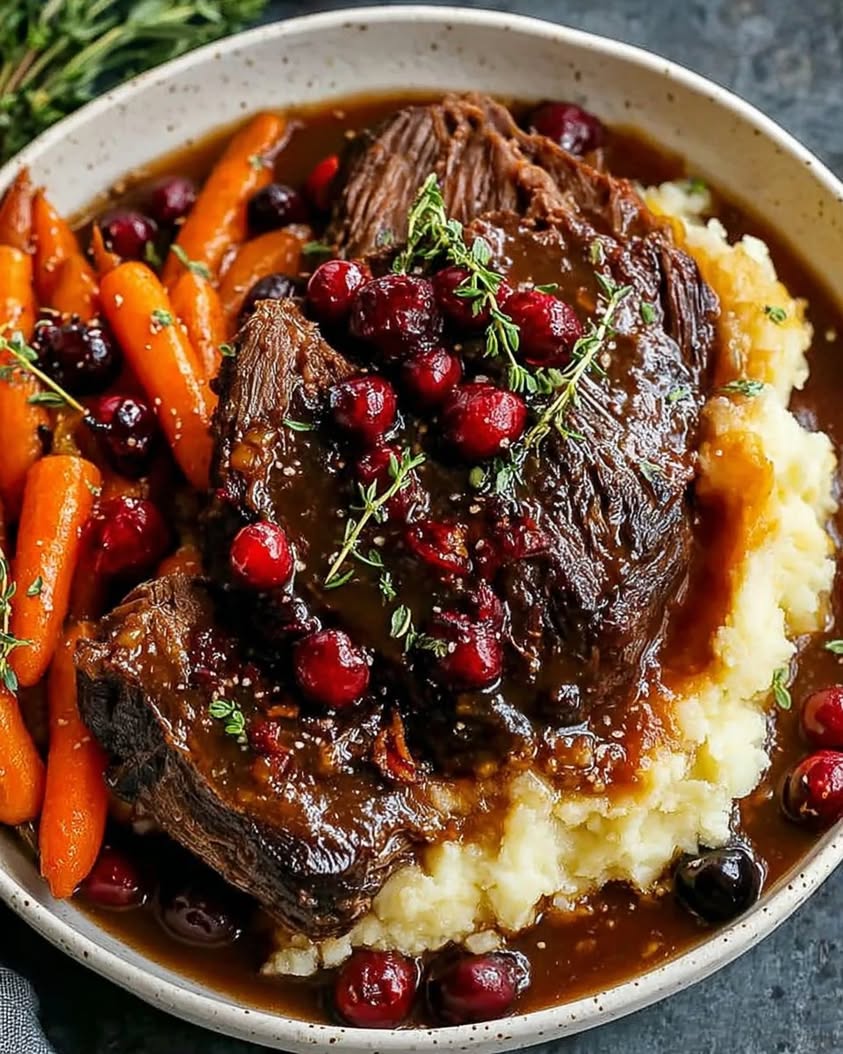
Slow-Braised Beef Roast with Cranberry Balsamic Glaze: The Ultimate Winter Comfort Dish
The aroma of a slow-braised beef roast filling your kitchen is one of the most comforting experiences in home cooking. This slow-braised beef roast with cranberry balsamic glaze combines the deep, savory richness of perfectly cooked beef with the bright, tangy sweetness of cranberries and the complex acidity of aged balsamic vinegar. Every bite delivers a symphony of flavors that evolve as you chew, from the initial burst of tart fruit to the lingering, savory finish of tender beef. This is a dish designed for special occasions, yet it requires surprisingly little hands-on effort once you understand the key techniques.
The beauty of this recipe lies in its simplicity and the incredible depth of flavor achieved through the slow cooking process. As the beef simmers in a mixture of aromatic vegetables, herbs, and broth, it transforms from a tough cut into fork-tender perfection. The cranberry balsamic glaze adds a stunning glossy finish and a sweet-sour counterpoint that cuts through the richness of the meat, creating a balanced and unforgettable main course. Whether you are hosting a holiday dinner, a Sunday family gathering, or simply craving a meal that feels like a warm hug, this slow-braised beef roast with cranberry balsamic glaze is your go-to recipe.
This recipe also offers incredible flexibility. You can prepare the braise a day ahead, which actually improves the flavor, and then simply reheat and glaze before serving. The leftovers, if you have any, are even more delicious the next day in sandwiches, tacos, or over creamy polenta. By following the detailed steps and pro tips provided, you will master this slow-braised beef roast with cranberry balsamic glaze and impress everyone at your table.
Quick Recipe Highlights
- Flavor Profile: This dish delivers a spectacular balance of savory, sweet, tart, and umami. The beef provides deep, meaty richness, while the cranberry balsamic glaze offers a bright, fruity tang that lingers pleasantly. Subtle notes of garlic, thyme, and rosemary from the braising liquid round out the profile.
- Texture: Expect a truly satisfying contrast in textures. The beef is incredibly tender, flaking apart with gentle pressure from a fork. The glaze adds a sticky, slightly syrupy coating on the surface, while any remaining vegetables offer soft, melt-in-your-mouth bites.
- Aroma: Your kitchen will be filled with an intoxicating aroma as this slow-braised beef roast with cranberry balsamic glaze cooks. The initial sear of the beef creates a deep, savory scent. As it braises, the fragrance of herbs, garlic, shallots, and warming spices blends beautifully with the sweet-tart notes of the cranberry balsamic mixture.
- Visual Appeal: The final presentation is restaurant-worthy. You will see a deeply browned, glossy roast sitting on a platter, with a beautiful, rich garnet-colored glaze coating every surface. A garnish of fresh herbs and whole cranberries provides a pop of color and freshness against the dark, luxurious beef.
- Skill Level Needed: This recipe is perfect for intermediate home cooks but is also accessible to ambitious beginners. The techniques involved, searing and braising, are fundamental and forgiving. The main requirement is patience, as the long cooking time is crucial for achieving the perfect tenderness and flavor development.
- Special Equipment: You need a heavy-bottomed, oven-safe pot with a tight-fitting lid, such as a Dutch oven. A meat thermometer is highly recommended to ensure the beef reaches the ideal internal temperature for pulling apart. You will also need a large skillet for searing the meat and a medium saucepan for preparing the glaze.
Recipe Overview
- Difficulty Level: We assign this recipe a medium difficulty level because it requires a bit of planning and patience. The individual steps are straightforward, but timing the sear, the long braise, and the glaze preparation is key. However, you do not need advanced knife skills or complex plating techniques to achieve a fantastic result.
- Category: This dish fits perfectly into several meal categories. It is a quintessential main course for Sunday dinners or holiday feasts like Christmas, Thanksgiving, or New Year’s Eve. It also works beautifully as a special-occasion dinner party centerpiece or a comforting, hearty weeknight meal when you want something truly memorable.
- Cuisine: While the technique of braising is universal, this specific combination draws inspiration from classic French cuisine (the braise) and American harvest traditions (the cranberries). It also incorporates a touch of Italian influence through the balsamic vinegar. The result is a fusion-style dish that feels both familiar and exciting.
- Cost: This is a relatively cost-effective main course, especially when you consider the impressive results. The beef chuck or brisket used is one of the more affordable cuts. Cranberries are inexpensive, especially in season. The remaining ingredients, like broth, wine, herbs, and balsamic vinegar, are pantry staples. The overall cost is much lower than a prime rib roast but equally impressive.
- Season: This slow-braised beef roast with cranberry balsamic glaze is undeniably a fall and winter recipe. It is perfect for cozy, colder months when a long-simmered, warming meal is most appealing. The cranberries are in peak season from October through December, making it a natural choice for holiday celebrations.
- Occasion: This dish is designed for occasions that call for a stunning, no-fuss centerpiece. It is ideal for Thanksgiving or Christmas dinners, where it can serve as an alternative or complement to turkey or ham. It is also a fantastic choice for a weekend dinner party, a celebratory birthday meal, or a cozy night in when you want to make something truly special.
Why You Will Love This Recipe
The most compelling reason to make this slow-braised beef roast with cranberry balsamic glaze is the incredible taste and texture. The long, slow cooking time works magic on a tough cut of meat, transforming it into a melt-in-your-mouth experience. The fat and connective tissues break down completely, enriching the braising liquid and coating every shred of beef with a luxurious, savory flavor. The cranberry balsamic glaze adds a unique, sophisticated twist. It is not overly sweet; instead, it provides a bright, acidic counterpoint that elevates the entire dish, preventing it from feeling heavy. Each bite offers a perfect harmony of deep, savory richness and bright, fruity tang.
Beyond the amazing flavor, this recipe offers exceptional convenience for the home cook. The hands-on time is relatively short, mostly involving searing the beef and preparing the initial braising base. Once you place the pot in the oven, your job is essentially done. You can walk away, tend to other dishes, or simply relax while the oven does all the work. Furthermore, this slow-braised beef roast with cranberry balsamic glaze is a perfect make-ahead meal. It tastes even better the next day, so you can prepare it entirely a day in advance and simply reheat and glaze it before serving. This makes it an incredibly stress-free option for holiday entertaining.
From a nutritional perspective, this recipe provides a substantial and balanced meal. Beef is an excellent source of high-quality protein, iron, zinc, and B vitamins, all essential for energy and overall health. The cranberries are packed with antioxidants and vitamin C. By braising the beef, you are using a leaner cooking method that requires minimal added fat, focusing on natural juices and flavors. You can easily control the sodium content by using low-sodium broth. This makes the dish a satisfying and nourishing choice for a hearty dinner, especially when served with plenty of vegetables or a fresh green salad.
This slow-braised beef roast with cranberry balsamic glaze also excels as a social and entertaining dish. It is a showstopper that will impress your guests without requiring you to spend the entire party in the kitchen. The presentation is stunning, and the aroma alone will build anticipation. You can serve it directly from the Dutch oven for a rustic, family-style meal, or slice it and plate it elegantly for a more formal affair. It naturally inspires conversation and complements a wide variety of side dishes, making it a very versatile centerpiece. It is the kind of meal that brings people together, creating warm memories around the dinner table.
Finally, this recipe is incredibly cost-effective and accessible. Using an inexpensive cut of beef like chuck roast means you can produce a luxurious-tasting meal without breaking the bank. The cranberries and balsamic vinegar are affordable ingredients that add a ton of flavor. Most of the other components are common pantry items. This recipe proves that you do not need expensive ingredients or complicated techniques to create a dish that tastes like it came from a high-end restaurant. It is a testament to the power of simple, high-quality ingredients and the patient art of slow cooking. You will feel a great sense of accomplishment knowing you created such a beautiful, delicious meal for a fraction of the cost.
Historical Background and Cultural Significance
The technique of braising is an ancient cooking method with roots in many cultures around the world, from the French daube to the Italian stracotto to the American pot roast. The principle is simple: sear a tough cut of meat to build flavor, then cook it slowly in a small amount of liquid in a covered pot. This process, which has been used for centuries, effectively tenderizes cheap, tough cuts of meat by breaking down collagen into rich, unctuous gelatin. The slow-braised beef roast is a direct descendant of these traditional cooking practices, representing a classic example of turning humble ingredients into a luxurious feast. The slow-cooked pot roast became a staple in American households, particularly in the 20th century, valued for its convenience and affordability.
The combination of beef with cranberries is a more modern innovation, reflecting the fusion of different culinary traditions. Cranberries are native to North America and have been a staple in Native American cuisine for centuries, used for both food and medicine. They were a key ingredient in early American settlers’ cooking. Pairing the tart, slightly bitter berry with sweet balsamic vinegar and savory beef creates a unique flavor profile that bridges European braising techniques with New World ingredients. This dish is a wonderful example of how familiar, time-tested cooking methods can be updated with new, exciting flavor combinations to create something entirely new and delicious.
The addition of balsamic vinegar, originally from Modena, Italy, further illustrates the evolution of this recipe. Balsamic vinegar, aged for months or years in wooden barrels, provides a complex sweetness and acidity that deepens and enriches the cranberry glaze. Its use in a traditional American pot roast symbolizes how global culinary influences are constantly being integrated into home cooking. This dish is not a traditional recipe from any one culture; rather, it is a product of our modern interconnected world, where home cooks feel empowered to experiment with ingredients from around the globe. This slow-braised beef roast with cranberry balsamic glaze represents the best of modern home cooking: creative, accessible, and deeply satisfying.
While there is no single, official origin story for this exact recipe, it has gained significant popularity in recent years, particularly in food blogs and magazines focused on seasonal, holiday cooking. It is often featured as an alternative to roasted turkey or ham for Thanksgiving and Christmas dinners. Its visual appeal, combined with its forgiving nature, has made it a favorite among home cooks who want a beautiful, impressive main course that allows them to enjoy time with their guests. The cranberry balsamic glaze, in particular, has become a signature element, elevating the simple pot roast into a dish worthy of a special celebration. This dish is a perfect reflection of how home cooking continues to evolve and innovate.
Ingredient Deep Dive
Beef chuck roast is the heart and soul of this slow-braised beef roast with cranberry balsamic glaze. This cut comes from the shoulder of the cow and is well-marbled with fat and connective tissue. Culturally, chuck roast has been a staple in American cooking for generations, known for its rich flavor and budget-friendly price. Its high collagen content is what makes it perfect for braising. As it cooks low and slow, the collagen melts into gelatin, which enriches the braising liquid and creates an incredibly tender, pull-apart texture. Nutritionally, chuck roast is a fantastic source of protein, iron, zinc, and B vitamins, providing a nourishing base for the dish. When selecting a chuck roast, look for one that is well-marbled with thin lines of fat running through it, and choose a piece that is uniform in thickness for even cooking. Store it in the refrigerator and use it within 3 to 5 days, or freeze it for up to 3 months. A good substitute is beef brisket or top round, but note that brisket is also excellent for braising, while top round is leaner and may require slightly less cooking time to avoid drying out.
Cranberries are the other star ingredient, lending the dish its signature tart-sweet flavor and beautiful color. These small, bright red berries are native to North America and have a rich cultural history, having been used by Native Americans for food, dye, and medicine long before European settlers arrived. They are harvested in the fall and are a quintessential symbol of Thanksgiving and winter holidays. Cranberries are packed with antioxidants, particularly proanthocyanidins, which are known for their ability to support urinary tract health and fight inflammation. They also contain vitamin C and fiber. For this recipe, fresh or frozen cranberries work beautifully. When selecting fresh cranberries, look for firm, plump berries that are a vibrant red color. They can be stored in the refrigerator for several weeks or in the freezer for up to a year. If you cannot find cranberries, you can substitute them with dried cranberries (rehydrated in warm water) or even tart cherries. However, the fresh fruit provides a much brighter, more authentic flavor.
Balsamic vinegar is the crucial element that transforms a simple pot roast into a sophisticated glaze. A high-quality, aged balsamic vinegar from Modena, Italy, is made from concentrated grape must and is aged in wooden barrels for a minimum of 12 years. This aging process gives it a complex, sweet, and syrupy consistency with a deep, balanced acidity. Culturally, balsamic vinegar is a protected treasure of Italy, used as a finishing touch for everything from strawberries to grilled meats. For this recipe, you do not need the most expensive aged balsamic, but avoid using cheap commercial varieties that are often just vinegar thickened with caramel coloring. A good quality, medium-aged balsamic will provide the perfect balance of sweet and tangy. Store balsamic vinegar in a cool, dark place and it will last for years. If you need a substitute, you can use a combination of apple cider vinegar and a touch of maple syrup, though the result will lack the same depth of flavor.
Shallots and garlic provide the aromatic foundation for the braise. Shallots are a member of the allium family, similar to onions but with a milder, sweeter, and more delicate flavor. They caramelize beautifully and add a subtle, sophisticated note to the braising liquid. Garlic adds its pungent, savory punch, which mellows and sweetens as it cooks. Together, they create a classic base for many braised dishes. Nutritionally, both shallots and garlic are rich in antioxidants and compounds known for their immune-boosting and anti-inflammatory properties. When selecting shallots, choose firm, dry bulbs with a papery skin. Store them in a cool, dark, well-ventilated area. Garlic should also be firm and dry. If you are out of shallots, you can substitute them with a small yellow onion. Garlic from a jar is acceptable in a pinch, but fresh garlic is always best for flavor.
Fresh herbs like thyme and rosemary are essential for building the savory, aromatic profile of the braise. Thyme offers a subtle, earthy, and slightly minty flavor, while rosemary provides a more robust, pine-like, and aromatic note. Both herbs are foundational to French and Mediterranean cooking and pair exceptionally well with beef. They not only add flavor but also contribute antioxidants and other beneficial compounds. For this recipe, sprigs of fresh herbs are ideal because they infuse the liquid during the long cooking time and are then easily removed. When selecting fresh herbs, look for bright, perky leaves with no signs of wilting or browning. Store them in a damp paper towel in a sealed bag in the refrigerator. You can substitute dried herbs (use about one-third the amount), but fresh herbs provide a brighter, more aromatic flavor. Beef broth serves as the main braising liquid. It provides a savory base that becomes enriched with the flavors of the meat, shallots, herbs, and cranberries. Using a good quality, low-sodium beef broth allows you to control the final salt level of the dish.
Common Mistakes to Avoid
- One of the most common mistakes is skipping the searing step. Searing the beef is not optional; it is crucial for developing the deep, savory flavor of the final dish through the Maillard reaction. A properly browned crust creates a much more complex and rich taste than simply boiling the meat.
- Another frequent error is using a cut of beef that is too lean. Cuts like sirloin tip or eye of round will become dry and tough when braised for a long time. You need a well-marbled, collagen-rich cut like chuck roast or brisket to achieve that fork-tender, succulent texture.
- Rushing the braising process is a major pitfall. This slow-braised beef roast with cranberry balsamic glaze requires a low and slow approach. If you cook it at too high a temperature, the meat will be tough, and the liquids will evaporate before the collagen has time to break down. Be patient and cook it at 300 degrees fahrenheit.
- Do not open the lid of the Dutch oven too often during cooking. Every time you open the lid, you release valuable heat and steam, which extends the cooking time and can cause the meat to dry out. Trust the process and resist the urge to check on it constantly.
- Forgetting to deglaze the pan after searing is a missed opportunity for flavor. After you remove the beef, add a splash of broth or wine to the hot pot and scrape up all the browned bits stuck to the bottom. Those bits are pure flavor, and they should be incorporated into the braising liquid.
- Failing to properly season the beef is a common oversight. You must season the beef generously with salt and pepper before searing. This is the first and most important layer of seasoning, and it is essential for building a well-balanced flavor profile.
- Adding the cranberries and balsamic vinegar too early is a frequent mistake. The acid in the vinegar and the tartness of the cranberries can slow down the tenderizing process if added at the start. It is best to add them later in the cooking process or to make the glaze separately to preserve their bright flavor.
- Not letting the beef rest after cooking is a crucial step many people skip. Once you remove the roast from the oven, let it rest in the liquid for at least 15-20 minutes. This allows the juices to redistribute throughout the meat, resulting in a much more moist and flavorful final dish.
- Submerging the beef completely in the braising liquid is another error. The liquid should only come about a third to halfway up the sides of the roast. The top of the meat should be exposed to the steam in the pot, which allows it to brown on top while the bottom braises. Over-submerging it can lead to a watery, less flavorful result.
- Finally, do not skip the step of skimming the fat from the braising liquid. While braising creates a rich, flavorful liquid, it also renders a fair amount of fat from the beef. Skimming this fat off before making the glaze or serving ensures a cleaner, more refined taste and a more appealing texture.
Essential Techniques
Mastering the sear is the first and most critical technique for this recipe. The sear is not just about changing the color of the meat; it is about creating a deeply flavorful crust through the Maillard reaction, a chemical reaction between amino acids and reducing sugars that occurs at high heat. To master it, pat the beef very dry with paper towels to remove surface moisture. This is the number one secret to a great crust. Then, heat a high-smoke-point oil like canola or avocado oil in your Dutch oven over medium-high heat until it shimmers. Carefully place the seasoned roast in the hot oil and do not move it for 3-4 minutes per side. You want it to make a satisfying sizzling sound. The common pitfall is moving the meat too soon, which prevents a proper crust from forming. The visual cue for success is a deep, dark mahogany brown crust on every surface of the roast.
The technique of braising itself is the heart of this dish. Braising is a combination cooking method that uses both dry and wet heat. First, you sear the meat (dry heat), then you cook it slowly in a covered pot with a small amount of liquid (moist heat). The key is to create a flavorful, humid environment inside the pot. To master it, after searing, you add your aromatics, deglaze the pot, return the beef, and add your broth. The liquid should come about a third to halfway up the sides of the roast, not submerge it. Cover the pot tightly, place it in a preheated 300 degrees fahrenheit oven, and let it cook undisturbed for 2.5 to 3.5 hours. The common pitfall is lifting the lid repeatedly, which releases steam and heat. The visual cue for doneness is that the meat should be fork-tender, meaning a fork can be inserted and twisted with almost no resistance.
Preparing the cranberry balsamic glaze is a simple yet sophisticated technique that elevates the entire dish. The goal is to create a thick, syrupy, sweet-tart sauce that will beautifully coat the shredded beef. To master it, after the beef is braised, you remove it from the pot and let it rest. You then strain the braising liquid into a saucepan, simmering it to reduce and concentrate the flavors. In a separate skillet, you combine fresh or frozen cranberries with a splash of balsamic vinegar and a touch of brown sugar or honey. You cook this for about 7-10 minutes until the cranberries begin to pop and release their juices. Then, you combine this mixture with the reduced braising liquid, stirring well. The common pitfall is not reducing the braising liquid enough, resulting in a watery, thin sauce. The visual cue for the glaze is that it should coat the back of a spoon and slowly run off, leaving a clear trail.
Pro Tips for Perfect Slow-Braised Beef Roast with Cranberry Balsamic Glaze
For the most flavorful sear, always pat the beef dry with paper towels before seasoning. Surface moisture is the enemy of a good crust, and a dry surface ensures that you get a beautiful, deep brown sear that builds the foundation of flavor for the entire dish.
When you sear the beef, make sure your Dutch oven is hot enough. The oil should shimmer and almost smoke before you add the meat. You want to hear a loud sizzle when the beef hits the pan. If it does not sizzle, the pan is not hot enough, and you will not get a proper sear.
Do not overcrowd the pot. If you are making a very large roast, it is perfectly fine to sear it in batches. If you crowd the pan, the temperature drops, and the meat will steam instead of sear, preventing a good crust from forming.
After you sear the beef and remove it from the pot, do not skip the deglazing step. Pour a splash of the beef broth into the hot pot and use a wooden spoon to scrape up all the browned bits from the bottom. Those bits are concentrated flavor and are essential for a rich, complex braising liquid.
For the most tender results, use a meat thermometer. The internal temperature of the beef should reach about 200-205 degrees fahrenheit when it is fully braised and ready to be pulled apart. This is the temperature at which the collagen has fully broken down into gelatin.
When you make the cranberry balsamic glaze, cook the cranberries just until they start to pop. You want them to burst and release their juices, but not to completely disintegrate. A few whole berries in the final glaze provide a beautiful visual contrast and a burst of fresh, tart flavor.
For an even deeper flavor, prepare the braise a day in advance. After the beef is fully cooked, let it cool completely, then refrigerate it in the braising liquid. The next day, you can easily skim the solidified fat from the top. This step intensifies and melds the flavors beautifully. Simply reheat the beef in the oven, then proceed with the glaze.
Finally, always let the beef rest after braising and before shredding it. This is a critical step that many people skip. Letting the meat rest in the liquid for 15-20 minutes allows the juices to redistribute throughout the meat, ensuring every bite is moist, tender, and full of flavor.
Variations and Adaptations
For a regional variation, consider a Southwestern twist on this slow-braised beef roast with cranberry balsamic glaze. Replace the cranberries with dried ancho chilies or chipotle peppers in adobo sauce, and swap the balsamic vinegar for a combination of apple cider vinegar and a touch of maple syrup. Add ground cumin, smoked paprika, and a bit of cinnamon to the braising liquid. The result is a smoky, spicy, and slightly sweet dish that pairs beautifully with warm tortillas or cilantro-lime rice. This adaptation offers a completely different flavor profile while using the same braising technique.
A seasonal adaptation that works wonderfully in the summer is to replace the cranberries with fresh blackberries or raspberries. These berries have a similar tartness and will create a beautiful, deep purple glaze. You can also add a splash of red wine, like a fruity Zinfandel, to the braising liquid for extra depth. Serve this version with a light, fresh salad and crusty bread to soak up the luxurious sauce. It is a fantastic way to use peak-season summer berries and keep the dish feeling fresh and vibrant even during warmer months.
For a dietary modification, you can easily make this recipe gluten-free. Simply ensure that the beef broth you use is certified gluten-free, as many broths can contain added gluten. The rest of the ingredients are naturally gluten-free. Serve the braised beef with gluten-free pasta, creamy polenta, or roasted potatoes. This adaptation is incredibly simple and does not compromise any of the flavor or texture of the original dish. Just be sure to check the labels of any store-bought ingredients, such as balsamic vinegar, to confirm they are gluten-free.
A flavorful variation is to incorporate a blend of warming spices into the braising liquid. Add a cinnamon stick, a star anise, and a few cloves to the pot along with the shallots and garlic. These spices will infuse the beef and the liquid with a subtle, aromatic warmth that pairs beautifully with the cranberry balsamic glaze. This adaptation is particularly wonderful for holiday gatherings, as the spices evoke a sense of festive cheer. Be sure to remove the whole spices before serving, or use a spice bag for easy removal.
For a texture modification, you can shred the beef more or less finely depending on your preference. For a rustic, chunky texture, simply pull the beef apart into large, thick shreds. For a more refined, pulled-pork style, use two forks to shred the beef into very fine pieces. The glaze will coat either texture beautifully. You can also choose to serve the beef as a whole, sliced roast instead of shredded. If you prefer slices, let the roast cool slightly, then slice it against the grain before serving. The glaze can be drizzled over the sliced roast.
A presentation alternative is to serve the slow-braised beef roast with cranberry balsamic glaze in individual portions. Instead of placing the whole roast on a platter, you can pile the shredded beef and glaze onto separate plates or shallow bowls. This makes for a more elegant, restaurant-style presentation. You can further elevate the presentation by serving the beef over a bed of creamy mashed potatoes, a scoop of polenta, or a handful of lightly dressed arugula. A final drizzle of glaze and a few fresh cranberries or a sprig of rosemary complete the dish.
Serving and Presentation Guide
The most common and satisfying way to serve this dish is family-style on a large platter. Place the shredded or sliced beef in the center, then generously spoon the cranberry balsamic glaze over the top, letting it cascade down the sides. Arrange a border of fresh herbs, like rosemary and thyme, around the beef. You can also scatter a handful of fresh or frozen cranberries for a beautiful pop of color. This presentation is rustic, inviting, and encourages everyone to help themselves. It is perfect for a casual dinner party or a holiday gathering where you want the food to be the centerpiece of the table.
For a more formal, modern presentation, plate individual portions. Start by placing a generous spoonful of creamy mashed potatoes or a scoop of soft polenta in the center of each plate. Then, pile a mound of the shredded beef on top. Drizzle the cranberry balsamic glaze around the base of the mound, creating an artistic swoop or a pool of sauce. Garnish each plate with a small sprig of fresh rosemary, a few whole cranberries, and a pinch of flaky sea salt. This plating technique is visually stunning and elevates the dish for a special occasion. The contrast of textures and colors creates a truly memorable first impression.
When it comes to garnishing, simplicity is key to letting the main ingredients shine. Fresh herbs are your best friend. A few sprigs of rosemary and thyme add a beautiful color and a fragrant aroma. Whole fresh cranberries provide a bright red pop that echoes the glaze. A sprinkle of flaky sea salt, like Maldon, just before serving adds a wonderful crunchy texture and a final burst of flavor. For a touch of elegance, you can also add a few thin shavings of Parmesan cheese, though this is entirely optional. Avoid overwhelming the dish with too many garnishes; keep it clean and focused.
Traditional accompaniments for a slow-braised beef roast are classic for a reason. Creamy mashed potatoes are the most beloved side dish, as they perfectly absorb the rich, savory braising liquid and the sweet-tart glaze. Crusty bread, such as a baguette or sourdough, is essential for sopping up every last drop of the delicious sauce. Roasted root vegetables, like carrots, parsnips, and potatoes, make a hearty and flavorful companion. A simple steamed green vegetable, like green beans or asparagus, provides a nice color and freshness. Finally, a bright, acidic salad with a simple vinaigrette can help cut through the richness of the beef.
Modern serving suggestions can add a creative twist to this classic dish. Consider serving the shredded beef on top of creamy soft polenta or cheesy grits. Another modern approach is to pile the beef onto a bed of arugula or mixed greens dressed with a light vinaigrette. For a fun, casual meal, serve the beef in slider buns or soft tacos with a dollop of creme fraiche and some pickled red onions. The versatility of this slow-braised beef roast with cranberry balsamic glaze makes it a wonderful base for many different types of meals, from elegant dinners to casual weeknight suppers.
Temperature is a critical factor for serving this dish. The beef should be served hot, not lukewarm. The resting period after braising is vital, but the final reheat should fully bring the meat up to serving temperature. The glaze should also be served hot, as it is much more fluid and visually appealing when warm. If you are serving the dish family-style, you can keep it warm on a low-heat platter or in a slow cooker until ready to serve. For individual plates, reheat the beef in a saucepan with a bit of broth, then assemble the final dish. Serving at the correct temperature ensures the best flavor and texture.
Wine and Beverage Pairing
For a red wine pairing, a well-structured, fruit-forward red is the ideal companion for this slow-braised beef roast with cranberry balsamic glaze. A Zinfandel, particularly one from California, offers notes of blackberry, cherry, and a hint of spice that will complement the cranberry glaze beautifully. Its fruitiness can stand up to the tartness of the cranberries without being overwhelmed. A Syrah or a Shiraz from Australia also works wonderfully, providing a bold, peppery finish that cuts through the richness of the beef. Another excellent choice is a Pinot Noir from Oregon or California, which offers a lighter body but still has enough fruit and acidity to balance the dish. The key is to choose a wine that has both fruit and enough structure to match the savory, rich flavors of the braised beef.
If you prefer a white wine, a full-bodied, oaked Chardonnay is a surprisingly good match. The buttery, vanilla notes from the oak aging can stand up to the richness of the beef, while the wine’s natural acidity will cut through the fat and refresh the palate. Look for a Chardonnay from California or Australia that has undergone malolactic fermentation. A richer, dry Riesling from Alsace or Austria also works well, as its high acidity and subtle fruit sweetness can balance the tartness of the cranberries and the savory depth of the meat. Avoid very light, crisp white wines like Sauvignon Blanc, which can be overpowered by the dish’s intense flavors.
For a non-alcoholic alternative, a sparkling water with a splash of pomegranate or cranberry juice is a refreshing and festive choice. The bubbles help cleanse the palate, and the tart fruit flavor echoes the cranberry in the glaze. A high-quality, non-alcoholic mulled cider or a spiced apple cider is another fantastic option, especially during the fall and winter months. The warm spices like cinnamon and clove in the cider will complement the savory and sweet notes of the dish beautifully. Simply serve it warm in a mug for a cozy, festive beverage.
A well-brewed coffee or a strong, hot tea can also be a wonderful pairing, particularly after the meal. A dark roast coffee with notes of chocolate and caramel can provide a lovely contrast to the sweet-tart finish Print
Slow-Braised Beef Roast with Cranberry Balsamic Glaze
- Total Time: 3 hours 15 minutes
- Yield: 6
Description
A tender, slow-braised beef roast with a sweet and tangy cranberry balsamic glaze, perfect for a hearty family dinner.
Ingredients
- 3 lbs beef chuck roast
- Salt and black pepper to taste
- 2 tablespoons olive oil
- 1 cup dried cranberries
- 1/2 cup balsamic vinegar
- 1/4 cup brown sugar
- 1 cup beef broth
- 2 sprigs fresh rosemary
- 3 cloves garlic, minced
Instructions
- Season the beef roast generously with salt and pepper.
- Heat olive oil in a large heavy-bottomed pot over medium-high heat. Sear the roast on all sides until deeply browned, about 4 minutes per side.
- In a small bowl, combine dried cranberries, balsamic vinegar, and brown sugar. Let sit for 5 minutes.
- Pour the cranberry mixture into the pot with the roast. Add beef broth, rosemary sprigs, and minced garlic.
- Bring to a simmer, then reduce heat to low, cover, and cook for 2.5 to 3 hours until the beef is fork-tender.
- Remove the roast and set aside. Skim excess fat from the sauce, then simmer uncovered for 10 minutes to thicken into a glaze.
- Slice the roast against the grain and drizzle with the cranberry balsamic glaze before serving.
Notes
You can customize the seasonings to taste. For extra depth, add a splash of red wine along with the broth.
- Prep Time: 15 minutes
- Cook Time: 3 hours
- Method: Main
- Cuisine: American