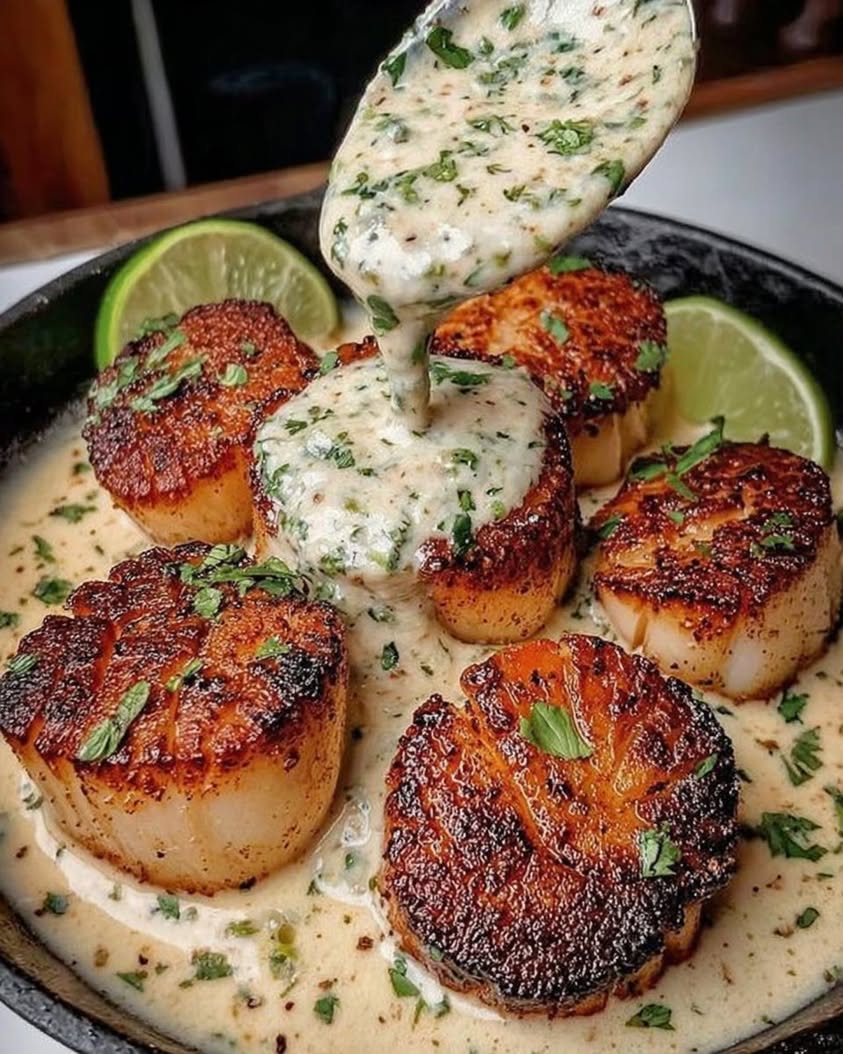
Sizzling Scallops with Zesty Lime Cilantro Sauce: A Quick Gourmet Dinner Recipe
Imagine perfectly seared scallops arriving at your table with a golden crust and a tender, buttery center. This Sizzling Scallops with Zesty Lime Cilantro Sauce recipe delivers restaurant-quality results in under twenty minutes. You can create a gourmet dinner that impresses guests without spending hours in the kitchen. The combination of sweet, briny scallops with a bright, herbaceous sauce creates a memorable dining experience.
The lime cilantro sauce adds a refreshing contrast to the rich sea scallops. Fresh cilantro, tangy lime juice, and a hint of garlic come together in a vibrant sauce that elevates every bite. This quick recipe transforms simple ingredients into a sophisticated meal. You can serve these scallops as an elegant appetizer or a main course with simple sides.
Cooking scallops at home can feel intimidating, but this recipe breaks down every step for you. You will learn how to achieve that perfect sear and create a balanced sauce every time. The technique requires attention but rewards you with incredible flavor. This Sizzling Scallops with Zesty Lime Cilantro Sauce recipe is your gateway to confident seafood cooking.
Quick Recipe Highlights
- Flavor Profile: Sweet and briny scallops pair with a tangy, herbaceous sauce. The lime adds brightness while cilantro provides fresh, grassy notes. A touch of garlic and olive oil rounds out the flavor perfectly.
- Texture: You get a crisp, caramelized exterior on each scallop. The inside remains tender and almost creamy. The sauce adds a smooth, light coating that complements the scallops without overwhelming them.
- Aroma: The kitchen fills with the scent of sizzling butter and seafood. Fresh lime and cilantro add a clean, zesty fragrance. Garlic contributes a warm, savory note that signals a delicious meal is coming.
- Visual Appeal: Golden-brown scallops contrast beautifully with bright green sauce. A sprinkle of fresh cilantro and a lime wedge add color and elegance. The presentation looks sophisticated with minimal effort.
- Skill Level Needed: This recipe requires basic pan-searing techniques. You need to watch for the perfect golden crust without overcooking. Anyone comfortable with medium heat cooking can master this dish.
- Special Equipment: A heavy-bottomed skillet works best for even heat distribution. You will need a sharp knife for mincing garlic and chopping cilantro. A small bowl for mixing the sauce completes your tool set.
Recipe Overview
- Difficulty Level: I rate this recipe as medium difficulty because scallops cook quickly and can become rubbery if overdone. You need to manage your timing carefully between searing and preparing the sauce. The technique is straightforward but requires your full attention for the best results.
- Category: This dish works as a show-stopping appetizer for dinner parties. It also serves beautifully as a light main course when paired with rice or salad. You can even use these scallops as a topping for pasta or grain bowls.
- Cuisine: The recipe draws inspiration from coastal Mexican and Latin American flavors. The combination of lime and cilantro appears frequently in these culinary traditions. This version adapts those bright flavors for a quick, accessible weeknight dinner.
- Cost: Sea scallops are the most expensive ingredient, but you can find good deals at seafood counters. The remaining ingredients cost very little and are pantry staples. This meal costs significantly less than ordering scallops at a restaurant.
- Season: Scallops are available year-round in most markets. The bright, citrusy sauce makes this dish especially appealing in spring and summer. You can enjoy it any time you crave a light, fresh seafood meal.
- Occasion: This recipe is perfect for date nights, anniversaries, or impressing dinner guests. It also works for a quick, satisfying dinner after a busy day. The elegant presentation makes any meal feel special.
Why You’ll Love This Recipe
The taste and texture of perfectly cooked scallops are simply unmatched. Each bite offers a crisp, golden exterior that gives way to a sweet, tender center. The zesty lime cilantro sauce cuts through the richness with bright, fresh acidity. You get a complex flavor profile that tastes like a chef-made dish. The combination of textures keeps every mouthful interesting and satisfying.
Convenience makes this recipe a winner for busy home cooks. You need only ten minutes of prep and ten minutes of cooking time. The ingredient list is short and most items are easy to find. You can go from pantry to plate in under half an hour. This means you can enjoy a gourmet dinner even on hectic weeknights.
Nutritionally, scallops offer impressive benefits for a lean protein source. They provide high-quality protein with very few calories and fat. Scallops are rich in vitamin B12, selenium, and omega-3 fatty acids. The lime and cilantro add antioxidants and vitamin C without extra calories. This meal supports a healthy diet without sacrificing flavor.
Serving these scallops at a gathering creates a memorable social experience. Guests will be impressed by the elegant presentation and complex flavors. You can prepare most elements ahead and sear the scallops just before serving. This allows you to spend time with your guests instead of hiding in the kitchen. The dish naturally sparks conversation about where you learned the recipe.
Cost-effectiveness matters when you want gourmet flavors without breaking the bank. While scallops are pricier than chicken, a pound serves four people generously. The sauce ingredients cost less than a dollar combined. Compared to restaurant prices, you save significant money while enjoying higher quality. You can control the sourcing and freshness of every ingredient.
Historical Background and Cultural Significance
Scallop fishing has a long history along coastal communities worldwide. Native Americans and early settlers harvested scallops from Atlantic waters for centuries. These bivalves were a staple food source for many coastal tribes. The tradition continues today in fishing towns from Maine to Florida.
In Latin American cuisine, lime and cilantro form a classic flavor combination. These ingredients appear in ceviches, salsas, and marinades throughout Mexico and Central America. The bright, acidic notes complement seafood perfectly. This recipe honors that tradition while adapting it for a quick pan-seared preparation.
The evolution of searing scallops as a fine dining technique emerged in modern restaurant kitchens. Chefs discovered that high heat creates a caramelized crust while keeping the interior tender. This method transformed scallops from a simple seafood into a gourmet ingredient. Home cooks can now replicate this technique with the right guidance.
Regional variations of scallop preparations exist around the world. French cuisine offers scallops in cream sauces. Japanese preparations feature scallops in sushi or grilled with soy. Caribbean versions use citrus and herbs similar to this recipe. Each culture brings unique flavors to this versatile ingredient.
Ingredient Deep Dive
Sea scallops are the star of this recipe and understanding them helps you choose well. These large scallops come from the sea and have a sweet, delicate flavor. Bay scallops are smaller and sweeter but cook much faster. Look for scallops labeled dry which means they have no added preservatives. Wet scallops contain sodium tripolyphosphate and will not sear properly. Always smell scallops before buying they should smell like the ocean not fishy.
Scallops provide impressive nutritional benefits beyond their delicious taste. They are an excellent source of lean protein with about 20 grams per serving. Scallops contain high levels of vitamin B12 which supports nerve health. The selenium in scallops acts as a powerful antioxidant. Omega-3 fatty acids in scallops support heart and brain health. These nutrients make scallops a smart choice for a balanced diet.
Fresh cilantro adds brightness and complexity to the sauce. Look for cilantro with vibrant green leaves and no yellowing. The stems are also flavorful and can be chopped finely for the sauce. Store cilantro upright in a glass of water with a plastic bag over the top. This keeps it fresh for up to a week in the refrigerator.
Lime juice provides the essential acidity that balances the rich scallops. Fresh lime juice tastes much brighter than bottled versions. Roll the lime on the counter before juicing to release more juice. You can substitute lemon juice but the flavor profile will change slightly. The zest adds extra citrus oil that enhances the sauce further.
Common Mistakes to Avoid
- Buying wet scallops is the most common mistake home cooks make. Wet scallops contain added water and chemicals that prevent browning. You will end up with steamed rather than seared scallops. Always look for dry scallops at the seafood counter for best results.
- Overcooking scallops turns them rubbery and tough. Scallops cook very quickly and need only a few minutes per side. Watch for a golden crust and opaque center. Remove them from the heat immediately when done.
- Not drying scallops thoroughly before cooking prevents a good sear. Moisture on the surface creates steam instead of browning. Pat each scallop dry with paper towels before seasoning. This step makes a dramatic difference in the final result.
- Crowding the pan causes scallops to steam instead of sear. You need space between each scallop for heat to circulate. Cook in batches if necessary to avoid overcrowding. The extra time is worth the superior texture you achieve.
- Using cold scallops straight from the refrigerator leads to uneven cooking. Let scallops sit at room temperature for ten minutes before cooking. This allows them to cook more evenly throughout. Cold scallops also have a harder time developing a good crust.
- Moving scallops too early in the cooking process prevents proper browning. The scallops will release easily from the pan when they are ready. Trying to flip them too soon tears the crust. Be patient and let the heat do its work.
- Skipping the resting step after cooking ruins your hard work. Scallops need a minute to rest before serving. This allows the juices to redistribute throughout the meat. Cutting into them immediately releases all those precious juices.
- Using low quality olive oil for the sauce affects the final flavor. The sauce has few ingredients so each one matters. Use a good extra virgin olive oil for the best taste. The oil should taste fresh and fruity not rancid.
Essential Techniques
Properly drying scallops is the foundation of successful searing. Use paper towels to press gently on each scallop removing surface moisture. This step removes the steam barrier that prevents browning. The drier the surface the better the crust you will achieve. Let the scallops sit on a paper towel for a few minutes after patting.
Getting the pan hot enough is critical for the perfect sear. Heat your skillet over medium-high heat until it is smoking slightly. Add oil and butter and let them heat until the butter stops foaming. The scallops should sizzle immediately when they hit the pan. If they do not sizzle the pan is not hot enough.
Learning to identify the perfect doneness takes practice but has clear visual cues. The scallop should have a deep golden crust on each side. The center should be opaque and slightly firm to the touch. Overcooked scallops become white all the way through and feel rubbery. The ideal scallop is just cooked through with a slight translucency in the center.
Creating a balanced vinaigrette for the sauce requires proper emulsification. Whisk the lime juice and garlic together first before adding oil. Add the oil slowly while whisking constantly to create an emulsion. The sauce should look smooth and slightly thickened. Fresh cilantro stirred in at the end keeps its bright color and flavor.
Pro Tips for Perfect Sizzling Scallops with Zesty Lime Cilantro Sauce
Always remove the small side muscle from each scallop before cooking. This tough piece of tissue attaches the scallop to its shell. It becomes chewy and unpleasant when cooked. Simply pinch it between your fingers and pull it away.
Season scallops generously with salt and pepper just before they hit the pan. Salting too early draws out moisture and prevents browning. The salt should be applied immediately before cooking for best results. Freshly ground black pepper adds warmth and depth to the flavor.
Use a combination of butter and oil for the best sear and flavor. Oil raises the smoke point so the butter does not burn. Butter adds rich flavor that oil alone cannot provide. The mixture allows you to achieve that perfect golden crust.
Resist the urge to flip scallops more than once during cooking. One flip is all you need for even cooking on both sides. Constantly moving the scallops prevents the crust from forming properly. Trust the process and let them cook undisturbed.
Make the sauce while the scallops rest after cooking. The scallops need only a minute to rest before serving. Fresh sauce should be made right before serving for the brightest flavor. This timing ensures both elements are at their peak.
Serve the scallops immediately on warm plates for the best experience. Cold plates cause the scallops to cool down too quickly. Warm plates keep the food at the ideal temperature throughout the meal. This small step makes a noticeable difference in quality.
Variations and Adaptations
Regional variations of this dish appear in coastal cuisines around the world. In the Caribbean, cooks add minced habanero for heat and mango for sweetness. Mediterranean versions use lemon, oregano, and capers instead of lime and cilantro. Asian-inspired adaptations include ginger, soy sauce, and sesame oil. Each variation brings unique flavors while respecting the core technique.
Seasonal adaptations allow you to enjoy this recipe year-round. In summer, add fresh corn kernels or diced avocado to the sauce. Fall versions can include roasted butternut squash puree as a base. Winter adaptations might use blood oranges instead of limes for deeper flavor. Spring brings fresh herbs like mint or basil as additions to the sauce.
Dietary modifications make this recipe accessible for various eating plans. For a dairy-free version, simply omit the butter and use all olive oil. The recipe is naturally gluten-free with no modifications needed. Low-carb dieters can serve the scallops over cauliflower rice. Keto followers will appreciate the healthy fats from olive oil.
Flavor variations let you customize the dish to your preferences. Add a pinch of red pepper flakes for heat in the sauce. Substitute lemon for lime and basil for cilantro for a different profile. Include a teaspoon of honey or agave for a touch of sweetness. Experiment with different citrus fruits like orange or grapefruit.
Serving and Presentation Guide
Plating scallops elegantly requires attention to arrangement and balance. Place three to four scallops in a slight arc on the plate. Drizzle the lime cilantro sauce around rather than over the scallops. This keeps the crust crisp while still providing sauce with each bite. Leave negative space on the plate for a professional look.
Garnishing adds visual appeal and flavor complexity to the finished dish. Sprinkle fresh cilantro leaves over the scallops for color contrast. Add thin lime slices or zest for a pop of yellow. A crack of black pepper on top finishes the presentation. Edible flowers make an impressive garnish for special occasions.
Traditional accompaniments include simple sides that complement without competing. A light green salad with citrus vinaigrette works beautifully. Steamed rice or quinoa absorbs the extra sauce perfectly. Grilled asparagus or roasted vegetables add color and nutrients. Crusty bread is ideal for sopping up every drop of sauce.
Modern serving suggestions offer creative ways to enjoy this dish. Serve the scallops over creamy polenta for a hearty meal. Arrange them on a bed of arugula for a lighter option. Use them as a topping for pasta tossed with olive oil and garlic. Serve them as tacos with the sauce as a dressing for a fun twist.
Wine and Beverage Pairing
White wines with good acidity pair wonderfully with this dish. A crisp Sauvignon Blanc from New Zealand complements the lime notes perfectly. Unoaked Chardonnay offers enough body for the scallops without overpowering them. Albariño from Spain brings citrus and mineral notes that match the sauce. The acidity in these wines cuts through the richness of the scallops.
Non-alcoholic alternatives provide refreshing options for all guests. Sparkling water with a squeeze of lime mimics the citrus notes in the sauce. Iced green tea with mint offers a clean, herbal accompaniment. Limeade or lemonade made with fresh citrus is a natural pairing. These beverages keep the meal bright and refreshing.
Temperature considerations matter for beverage service with this dish. White wines should be served chilled but not ice cold. Overly cold wine numbs the taste buds and hides flavors. Aim for about 45 degrees Fahrenheit for white wine service. Sparkling water should be well chilled for maximum refreshment.
Storage and Shelf Life
Proper storage of cooked scallops extends their life for leftovers. Place cooled scallops in an airtight container in the refrigerator. They will keep for up to two days at optimal quality. The texture will soften upon reheating so enjoy them fresh when possible. Store the sauce separately to prevent the scallops from becoming soggy.
Temperature requirements for seafood storage are critical for safety. Keep scallops at 40 degrees Fahrenheit or below at all times. Do not leave cooked scallops at room temperature for more than two hours. If serving outdoors in warm weather reduce that time to one hour. Always err on the side of caution with seafood storage.
Container recommendations help maintain the best quality during storage. Glass containers work better than plastic for preventing odor absorption. Choose a container that fits the scallops snugly with minimal air space. Press plastic wrap directly onto the surface before sealing. This prevents oxidation and keeps the scallops fresher longer.
Reheating instructions help restore some of the original texture and flavor. The microwave will make scallops rubbery so avoid it if possible. Reheat in a hot skillet with a little butter for thirty seconds per side. The oven at 350 degrees Fahrenheit works for larger quantities. Watch carefully because reheated scallops cook even faster than fresh ones.
Make Ahead Strategies
Planning ahead makes this recipe even more convenient for entertaining. You can prepare the lime cilantro sauce up to two days in advance. Store it in the refrigerator and bring to room temperature before serving. Chop the cilantro and garlic and store them separately. Measure out the oil and lime juice so they are ready to go.
Storage between steps requires careful planning to maintain quality. Prepare the sauce completely and store it in an airtight jar. Pat the scallops dry and arrange them on a paper towel lined plate. Cover the plate with plastic wrap and refrigerate until cooking time. This setup means you are only five minutes away from dinner.
Quality impact assessment helps you decide what to make ahead. The sauce actually improves after sitting overnight as flavors meld together. Scallops must be cooked fresh for the best texture and appearance. Prepped ingredients lose no quality when stored properly. This balance of fresh cooking and prepared elements works perfectly.
Scaling Instructions
Halving this recipe works well for a romantic dinner for two. Use half the scallops and reduce the sauce ingredients by half. Cooking time remains the same because you maintain the same pan temperature. The only adjustment is to use a smaller skillet to prevent overcrowding. The recipe scales down seamlessly without any issues.
Doubling or tripling the recipe for a party requires some adjustments. You will need to cook the scallops in multiple batches to avoid crowding. The sauce can be doubled easily using the same ratios. Consider using two skillets simultaneously to speed up the cooking process. Preheat both pans before starting to maintain consistent timing.
Equipment adjustments become necessary when scaling up this recipe. A large cast iron skillet holds about eight scallops comfortably. For sixteen scallops you need either two skillets or a very large pan. The sauce can be made in any size bowl with the same whisking technique. Plan your equipment based on the number of servings you need.
Nutritional Deep Dive
The macro breakdown of this dish makes it a balanced meal option. Each serving provides approximately 25 grams of high-quality protein. The fat content comes primarily from heart-healthy olive oil and butter. Carbohydrates are minimal from the lime juice and cilantro. This makes the dish suitable for low-carb and ketogenic diets.
Micronutrient analysis reveals impressive nutritional density in scallops. One serving provides over 100 percent of your daily vitamin B12 needs. Selenium levels are significant supporting thyroid function and immunity. Zinc and magnesium are present in meaningful amounts. These trace minerals are often lacking in modern diets.
Health benefits extend beyond basic nutrition with regular seafood consumption. Omega-3 fatty acids support brain health and reduce inflammation. The protein helps maintain muscle mass and supports metabolism. Vitamin B12 is crucial for energy production and nerve function. Eating seafood twice per week is recommended for optimal health.
Portion analysis helps you fit this dish into a balanced diet. Three to four large scallops make an appropriate serving size. The sauce adds minimal calories while boosting flavor and nutrition. Pairing with vegetables increases fiber and volume without many calories. This meal fits well into most calorie budgets for weight management.
Dietary Adaptations
Gluten-free dieters can enjoy this recipe without any modifications. The recipe contains no wheat, flour, or gluten-containing ingredients. Always check your ingredients labels for hidden gluten sources. The simple preparation means cross-contamination is easily avoided. This makes it a safe and delicious option for gluten-free meals.
Dairy-free adaptations require only one simple substitution. Replace the butter with additional olive oil or a dairy-free butter alternative. The flavor profile changes slightly but remains delicious. Coconut oil can also work and adds a subtle tropical note. The sauce itself contains no dairy so it remains unchanged.
Vegan versions of this dish replace scallops with plant-based alternatives. Large mushrooms like king oyster mushrooms mimic the scallop texture. Hearts of palm also work well when sliced into scallop-sized pieces. The searing technique works similarly for these substitutes. The sauce remains vegan as written with olive oil instead of butter.
Low-carb and keto dieters will find this recipe fits perfectly into their plans. Each serving contains minimal carbohydrates primarily from lime juice. The fat content from olive oil supports ketogenic macros. Serve over cauliflower rice or zucchini noodles to stay low-carb. This meal satisfies cravings without derailing dietary goals.
Troubleshooting Guide
Texture issues with scallops usually stem from cooking technique problems. If your scallops are rubbery you likely overcooked them. Cook for less time in the future and watch for visual cues. If they are not browning your pan was not hot enough. Adjust your heat and make sure scallops are thoroughly dried.
Flavor balance problems in the sauce can be corrected easily. If the sauce tastes too acidic add a pinch of sugar to balance it. If it lacks brightness add more fresh lime juice gradually. Too much garlic can overwhelm the delicate scallop flavor. Start with less garlic and add more to taste.
Temperature problems during cooking affect the final result significantly. If the pan cools down between batches let it reheat fully before continuing. Cold scallops straight from the fridge cool down the pan too much. Allow scallops to come to room temperature for even cooking. Use an instant read thermometer if you are unsure about doneness.
Equipment challenges can be overcome with simple adjustments. If you do not have a heavy skillet use the heaviest pan you own. Non-stick pans work but will not develop the same crust. Cast iron and stainless steel perform best for searing scallops. Make sure your pan is large enough to avoid overcrowding.
Recipe Success Stories
Community feedback on this recipe has been overwhelmingly positive from home cooks. One reader shared that she made this dish for her anniversary dinner. Her husband declared it the best meal she had ever made. She appreciated how simple the instructions were to follow. The recipe gave her confidence to cook scallops regularly now.
Variation successes show the versatility of this basic technique. A reader in Florida added local Key lime juice for a regional twist. Another cook substituted the cilantro with fresh mint from her garden. Both variations received rave reviews from their dinner guests. These adaptations prove the recipe serves as a foundation for creativity.
Adaptation stories highlight how the recipe fits different lifestyles. A busy mother of three made this dish in under twenty minutes on a weeknight. Her children who usually avoid seafood asked for seconds of the scallops. She now keeps frozen scallops on hand for quick gourmet meals. The recipe became a regular in her weekly dinner rotation.
Frequently Asked Questions
Can I use frozen scallops for this recipe? Yes, frozen scallops work well if you thaw them properly. Thaw them overnight in the refrigerator for best results. Pat them dry thoroughly before cooking because frozen scallops release more moisture. The texture will be slightly different but still delicious.
How do I know when scallops are done cooking? Look for a golden brown crust on each side. The center should be opaque with just a hint of translucency. The scallop should feel slightly firm when pressed but not hard. An instant read thermometer should read 125 degrees Fahrenheit. Overcooking turns them rubbery so err on the side of caution.
What can I substitute for cilantro if I hate it? Fresh parsley makes an excellent substitute with a milder flavor. Basil offers a sweeter, more aromatic alternative. Mint provides a fresh, cooling element that works with lime. You can also simply omit the herb and increase the lime zest instead.
Can I make the sauce ahead of time? Yes, the sauce can be made up to two days in advance. Store it in an airtight container in the refrigerator. Bring it to room temperature before serving for the best flavor. Add the cilantro fresh just before serving to maintain its bright color.
What size scallops should I buy for this recipe? Look for large sea scallops about one to two inches in diameter. They are sometimes labeled U10 which means under ten per pound. These larger scallops are easier to sear properly. Bay scallops are too small and will overcook before developing a crust.
How do I prevent scallops from sticking to the pan? Make sure the pan is hot enough before adding the scallops. Use enough oil and butter to coat the pan surface. Do not move the scallops until they release naturally. A well-seasoned cast iron pan or quality stainless steel works best.
Can I grill scallops instead of pan-searing them? Yes, grilling scallops adds a wonderful smoky flavor. Use a grill basket or skewers to prevent them from falling through. Grill over high heat for two to three minutes per side. The same sauce works beautifully with grilled scallops.
What sides go best with this dish? Light sides that do not compete with the scallops work best. A simple arugula salad with lemon vinaigrette is perfect. Steamed rice or quinoa absorbs the extra sauce. Roasted asparagus or green beans add color and nutrients.
Is this recipe suitable for beginners? This recipe is accessible for confident beginners who follow instructions carefully. The key is understanding the importance of drying scallops and hot pan. Beginners should read the tips section thoroughly before starting. The recipe rewards attention to detail with impressive results.
How should I store leftover scallops? Place leftover scallops in an airtight container in the refrigerator. They will keep for up to two days but are best eaten fresh. Reheat gently in a skillet to avoid rubbery texture. The sauce can be stored separately and used within two days.
Can I add other seafood to this dish? Shrimp or firm white fish work well alongside the scallops. Cook shrimp first since they take a minute longer than scallops. Fish fillets need different cooking times so add them separately. The sauce complements any mild seafood beautifully.
Why did my scallops turn out watery? Wet scallops are the most common cause of watery results. They contain added water and chemicals that prevent browning. Always buy dry scallops for the best searing results. Thoroughly drying even dry scallops before cooking is essential.
Additional Resources
Related recipes on this site expand your seafood cooking repertoire. Try our Lemon Garlic Shrimp for another quick weeknight seafood option. The Pan Seared Salmon with Dill Sauce uses similar techniques. Our Cilantro Lime Dressing works perfectly for salads and tacos. Each recipe builds on the skills you learn here.
Technique guides help you master fundamental cooking methods. Our guide to achieving the perfect pan sear covers all proteins. The how to cook seafood properly resource answers common questions. Understanding heat management transforms your home cooking. These guides complement the skills needed for this scallop recipe.
Ingredient information provides deeper knowledge about what you cook. Learn how to select the freshest seafood at your market. Understand the difference between wild and farmed scallops. Our guide to citrus fruits explains how to choose and store limes. Knowledgeable shoppers make better ingredient choices for superior results.
Equipment recommendations help you set up your kitchen for success. A good cast iron skillet is worth the investment for searing. Quality knives make prep work faster and safer. Our recommended kitchen tools guide covers essential equipment. Investing in proper tools makes cooking more enjoyable and consistent.
PrintSizzling Scallops with Zesty Lime Cilantro Sauce
- Total Time: 25 minutes
- Yield: 4
Description
Pan-seared scallops with a bright and tangy lime cilantro sauce, perfect for a light yet indulgent main course.
Ingredients
- 1 lb large sea scallops, patted dry
- 2 tbsp olive oil
- 2 tbsp unsalted butter
- 1/4 cup fresh lime juice
- 1/4 cup chopped fresh cilantro
- 2 cloves garlic, minced
- 1 tsp lime zest
- Salt and pepper to taste
- 1/4 cup chicken or vegetable broth
- 1 tbsp honey
Instructions
- Season scallops with salt and pepper on both sides.
- Heat olive oil in a large skillet over high heat until shimmering.
- Add scallops in a single layer and sear for 2-3 minutes per side until golden brown. Remove and set aside.
- Reduce heat to medium and add butter, garlic, and lime zest. Cook for 30 seconds.
- Stir in lime juice, broth, and honey. Simmer for 2 minutes until slightly thickened.
- Stir in cilantro and return scallops to the pan. Toss gently to coat.
- Serve immediately over rice or with crusty bread.
Notes
You can customize the seasonings to taste.
- Prep Time: 15 minutes
- Cook Time: 10 minutes
- Method: Main
- Cuisine: American