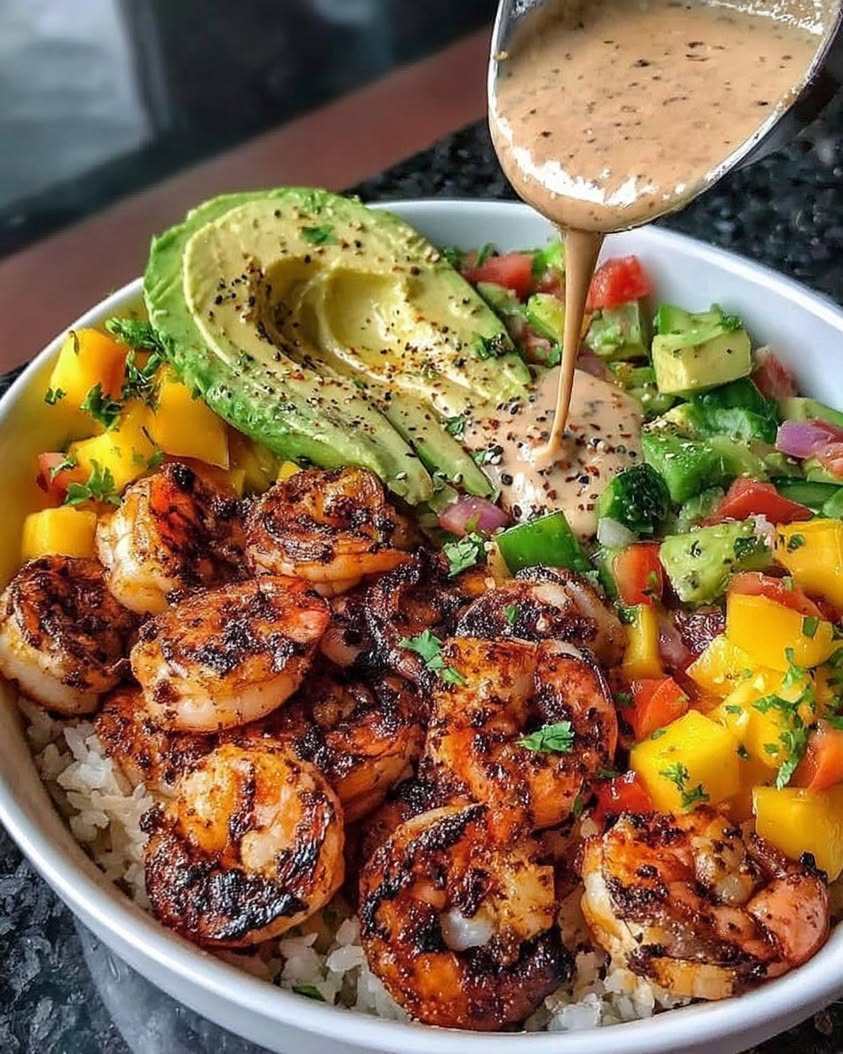
Zesty Shrimp and Avocado Bowls with Mango Salsa: A Tropical Weeknight Wonder
Imagine a meal that transports you to a sunny beach with every bite. This recipe for Zesty Shrimp and Avocado Bowls with Mango Salsa does exactly that. It combines succulent, perfectly seasoned shrimp with creamy avocado and a vibrant, sweet-and-spicy mango salsa. Ultimately, it is a celebration of fresh, bright flavors that come together in under thirty minutes. Consequently, it is the perfect answer for busy weeknights when you crave something healthy yet incredibly satisfying.
The magic of these Zesty Shrimp and Avocado Bowls lies in the harmony of textures and tastes. You get the juicy pop of the shrimp, the buttery smoothness of ripe avocado, and the crisp freshness of the mango salsa. Additionally, a drizzle of lime-chili sauce ties everything together with a tangy, slightly spicy kick. This dish is not just a meal; it is a colorful, edible work of art that will brighten your dinner table. Moreover, it is naturally gluten-free and packed with lean protein and healthy fats, making it a nutritious choice for any diet.
Furthermore, this recipe is incredibly versatile. You can serve it over a bed of cilantro-lime rice, quinoa, or even a simple green salad. It is a fantastic option for meal prep, as the components store beautifully. Whether you are cooking for a family dinner or impressing guests, these bowls deliver restaurant-quality flavor with minimal effort. In short, if you are looking for a light, flavorful, and quick dinner recipe, these Zesty Shrimp and Avocado Bowls with Mango Salsa are your new go-to.
Quick Recipe Highlights
- Flavor Profile: This dish offers a perfect balance of sweet, savory, spicy, and tangy notes. The shrimp is seasoned with smoky paprika and garlic, while the mango salsa brings natural sweetness. Finally, the lime-chili sauce adds a sharp, citrusy heat that elevates every component.
- Texture: You will enjoy a delightful contrast of textures in every bite. The shrimp provides a firm, juicy chew, while the avocado contributes a luxurious creaminess. Meanwhile, the diced mango, red onion, and cilantro in the salsa offer a refreshing, crisp crunch.
- Aroma: As you cook, the kitchen fills with the irresistible scent of garlic and spices sizzling with the shrimp. The fresh aroma of chopped cilantro and lime zest from the salsa immediately signals a fresh, healthy meal. It is an olfactory promise of the bright flavors to come.
- Visual Appeal: This bowl is a feast for the eyes with its stunning color palette. You have the pink of the shrimp, deep green of the avocado, and brilliant orange and red of the mango salsa. Consequently, the presentation is vibrant and inviting, making it perfect for social media or a dinner party.
- Skill Level Needed: This is a beginner-friendly recipe that requires only basic knife skills for chopping and simple sautéing techniques. There is no complicated cooking process or special equipment required. Therefore, even novice cooks can achieve impressive, delicious results with confidence.
- Special Equipment: You only need a good chef’s knife, a cutting board, a mixing bowl, and a large skillet. A microplane for zesting the lime is helpful but not essential. Ultimately, this recipe is designed for everyday kitchens without any fancy gadgets.
Recipe Overview
- Difficulty Level: We rate this recipe as “Easy” because it involves straightforward techniques like chopping, mixing, and sautéing. The steps are sequential and simple, with minimal multitasking required. Furthermore, there is no precision baking or complex sauce reductions, making it accessible for cooks of all levels. The most important skill is timing the shrimp so it does not overcook.
- Category: This dish falls squarely into the healthy dinner and quick meal categories. It is also an excellent option for lunch meal prep and fits into gluten-free and pescatarian diets. Because it is so adaptable, you can easily modify it to be low-carb or dairy-free as needed.
- Cuisine: While not authentically tied to one region, the recipe draws inspiration from coastal and tropical cuisines, particularly those of the Caribbean and Baja California. The use of shrimp, avocado, lime, and chili is common in these sun-drenched culinary traditions. It is a modern, fusion-style bowl that celebrates global flavors.
- Cost: This is a moderately priced meal, with shrimp being the primary cost driver. Avocados and mangoes can vary in price based on season and location. However, you can balance the cost by using frozen shrimp and buying mangoes when they are in season. Overall, it is more affordable than dining out for a similar seafood dish.
- Season: This recipe shines brightest in late spring and summer when mangoes are at their peak sweetness and avocados are plentiful. Nevertheless, thanks to global markets, you can make it year-round. It is especially appealing on warm evenings when you desire a light, refreshing meal.
- Occasion: These bowls are perfect for casual weeknight dinners, healthy lunch prep, or a light al fresco meal. They are also impressive enough for a casual dinner party with friends. You can easily double or triple the recipe to feed a crowd without stress.
Why You’ll Love This Recipe
First and foremost, the taste and texture appeal is undeniable. Each component of these Zesty Shrimp and Avocado Bowls with Mango Salsa plays a specific role. The shrimp delivers a savory, umami-rich base, while the mango salsa cuts through with acidity and sweetness. Meanwhile, the creamy avocado acts as a perfect foil, mellowing the sharper flavors. Every forkful is a complex and satisfying experience that feels both indulgent and wholesome. You will love how the bright, fresh flavors wake up your palate.
Next, consider the sheer convenience and preparation benefits. This entire meal comes together in about thirty minutes from start to finish. The prep work is simple chopping and mixing, and the cooking time for the shrimp is mere minutes. Because the components are prepared separately, you can easily delegate tasks if cooking with family. Furthermore, it creates minimal mess, with only one skillet to wash. This efficiency makes it an ideal choice for defeating the “what’s for dinner” dilemma on a busy night.
Additionally, the nutritional advantages are significant. Shrimp is an excellent source of lean protein and important minerals like iodine and selenium. Avocado provides heart-healthy monounsaturated fats and fiber, which aid in satiety. Mango is rich in vitamins A and C, powerful antioxidants. Together, they create a balanced meal that supports energy levels and overall health. This dish is naturally low in refined carbohydrates and can be adapted to fit various dietary goals, from weight management to clean eating.
Moreover, the social and entertaining value is high. These bowls are visually stunning, making them perfect for sharing on social media or serving to guests. They offer a “build-your-own-bowl” element that is fun and interactive for diners. You can set out the components separately and let everyone assemble their perfect combination. Consequently, it takes the pressure off the host and creates a memorable, engaging dining experience. It is a guaranteed conversation starter.
Finally, the cost-effectiveness and accessibility are major wins. While seafood can seem pricey, shrimp is often more affordable than other options like salmon or scallops. You can use frozen, peeled, and deveined shrimp to save both money and time. The other ingredients—lime, cilantro, onion—are pantry staples or inexpensive produce items. By making this Zesty Shrimp and Avocado Bowls with Mango Salsa at home, you save a considerable amount compared to ordering a similar dish at a restaurant. It is a gourmet-tasting meal on a sensible budget.
Historical Background and Cultural Significance
The concept of the “bowl meal” has ancient roots, but its modern iteration is a fusion of global influences. While this specific recipe for Zesty Shrimp and Avocado Bowls with Mango Salsa is a contemporary creation, its components tell a rich story. Shrimp has been a staple protein in coastal communities worldwide for millennia, from the Gulf of Mexico to the South China Sea. Avocados, native to south-central Mexico, have been cultivated for over 5,000 years. The combination reflects a modern, health-conscious approach to eating that prioritizes fresh, whole foods in a convenient format.
Culturally, the dish draws significant inspiration from the ceviche and seafood traditions of Latin America. The use of lime juice, chili, cilantro, and raw onion in the salsa is a direct nod to Peruvian and Mexican salsas and ceviches. In these cuisines, the acid from citrus “cooks” the seafood, though our recipe uses heat for the shrimp. The idea of pairing seafood with sweet fruit, like mango, is also common in Caribbean and Southeast Asian cooking. This recipe respectfully borrows these iconic flavor pairings and presents them in an accessible, bowl-based format.
The evolution of this recipe is tied to the rise of the “healthy bowl” trend in the 2010s. As consumers sought meals that were Instagram-worthy, nutritious, and customizable, chefs and home cooks began layering proteins, grains, and vegetables in a single dish. The Zesty Shrimp and Avocado Bowl is a product of this trend, maximizing flavor and nutrition while minimizing complexity. It represents a shift away from heavy, processed foods toward vibrant, ingredient-driven cooking. It is a meal designed for the way we live and eat today.
Regional variations of this concept are endless. In Hawaii, you might find a similar bowl with a teriyaki glaze and pineapple. In Thailand, the flavors would shift toward lemongrass, fish sauce, and Thai basil. The beauty of the bowl format is its adaptability. Our version with mango salsa and lime-chili sauce leans into a Baja California or Coastal Mexican vibe. You can easily tweak the seasoning or salsa ingredients to reflect your own culinary heritage or preferences, making it a truly personal dish.
Ingredient Deep Dive
Shrimp: Shrimp is one of the world’s most popular seafoods, prized for its sweet, delicate flavor and quick cooking time. Nutritionally, it is a powerhouse of lean protein, providing all nine essential amino acids with very little fat. It is also an excellent source of selenium, a crucial antioxidant, and iodine, which supports thyroid health. When selecting shrimp, look for firm, translucent flesh with a mild sea smell. For sustainability, choose wild-caught or responsibly farmed shrimp certified by organizations like the Marine Stewardship Council. You can substitute with large scallops or even firm tofu for a vegetarian version.
Avocado: The avocado, technically a berry, originated in Mexico and has been a dietary staple for indigenous cultures for centuries. It is uniquely rich in monounsaturated fats, particularly oleic acid, which is linked to reduced inflammation and improved heart health. A single avocado also provides nearly 10 grams of fiber. Select avocados that are slightly soft to the touch near the stem; avoid those with dark, sunken spots. To speed ripening, place them in a paper bag with a banana. Once cut, store with the pit and a squeeze of lime juice to prevent browning. For a substitute, try cooked, mashed chickpeas for a different texture.
Mango: Known as the “king of fruits” in many parts of the world, mangoes have been cultivated in South Asia for over 4,000 years. They are bursting with vitamins C and A, which support immune function and eye health. The enzymes in mangoes, like amylase, can aid digestion. Choose mangoes that are fragrant and yield slightly to gentle pressure. The skin color is not always a reliable indicator of ripeness. To store, keep unripe mangoes at room temperature and move them to the fridge once ripe to slow further ripening. Peaches or nectarines make a good seasonal substitute.
Lime: Limes are a cornerstone of tropical and Mexican cuisine, valued for their intense acidity and aromatic zest. They are an excellent source of vitamin C and contain compounds called limonoids, which may have anticancer properties. The juice provides the essential tang in our lime-chili sauce and salsa. When buying limes, select ones that feel heavy for their size, indicating juiciness. You can roll them firmly on the counter before juicing to maximize yield. Store limes at room temperature for a week or in the refrigerator for longer. In a pinch, lemon juice can be used, though the flavor profile will be slightly different.
Cilantro: Cilantro, the leaves of the coriander plant, is a herb that inspires strong opinions but is essential to many global cuisines. It contains antioxidants and may help detoxify heavy metals from the body. For those with the genetic trait that makes cilantro taste soapy, flat-leaf parsley is the best substitute, offering a fresh green note without the polarizing flavor. To store cilantro, trim the stems and place the bunch in a jar of water in the fridge, loosely covered with a bag. It will stay crisp for over a week. Always add fresh cilantro just before serving to maintain its vibrant flavor and color.
Common Mistakes to Avoid
- Overcooking the Shrimp: This is the most common error. Shrimp cooks incredibly fast and turns from tender to rubbery in moments. Cook just until they are opaque and form a loose “C” shape, then immediately remove them from the heat. They will continue to cook slightly from residual heat.
- Using Unripe Avocado or Mango: The success of this bowl relies on the creamy texture of ripe avocado and the sweet pop of ripe mango. An unripe avocado will be hard and flavorless, while an unripe mango will be tart and fibrous. Plan ahead and allow your fruit to ripen properly.
- Neglecting to Pat the Shrimp Dry: If you toss wet shrimp into the hot skillet, they will steam instead of sear. This prevents the development of flavorful browning. Always pat shrimp thoroughly dry with paper towels before seasoning and cooking.
- Making the Salsa Too Far in Advance: While the flavors meld nicely, making the mango salsa more than 2-3 hours ahead can cause the mango to become mushy and the onions to overpower the dish. For the best texture, prepare it just before or while the shrimp cooks.
- Forgetting to Taste and Adjust the Sauce: The lime-chili sauce should have a balanced kick. Always taste it before drizzling. You may need an extra pinch of salt, a squeeze more lime, or a touch more honey to balance the acidity to your preference.
- Cutting the Avocado Too Early: Avocado browns quickly when exposed to air. Slice or dice your avocado at the very last moment, right before assembling the bowls. A squeeze of lime juice over the top also helps slow oxidation.
- Crowding the Skillet: Adding too many shrimp to the pan at once lowers the temperature and causes them to release liquid. They will then boil in their own juices. Cook in batches if necessary to ensure each shrimp gets proper contact with the hot surface.
- Using Bottled Lime Juice: The fresh, bright flavor of freshly squeezed lime juice is irreplaceable in both the salsa and the sauce. Bottled juice often has a stale, metallic taste that will dull the entire dish. Always use fresh citrus for the best results.
Essential Techniques
Properly Searing Shrimp: Achieving a perfect sear on shrimp is crucial for flavor development. First, ensure your shrimp are very dry. Next, heat your skillet over medium-high heat until it is properly hot before adding oil. Then, add the shrimp in a single layer without overcrowding. Let them cook undisturbed for about 1-2 minutes to develop a golden crust before flipping. The visual cue for success is a slight caramelization on the surface and the shrimp curling into a plump “C” shape. The common pitfall is moving them around too much, which prevents browning.
Dicing Mango for Salsa: Dicing a mango neatly maximizes yield and ensures even pieces in your salsa. First, slice off the two fleshy cheeks on either side of the flat pit. Then, score the flesh in a crosshatch pattern without cutting through the skin. Finally, push the skin inward to turn it inside out and slice off the cubes. The goal is uniform, bite-sized pieces that will mix well with the other salsa ingredients. A common mistake is trying to cut around the irregular pit, which is wasteful and dangerous. Use the pit section for smoothies.
Emulsifying the Lime-Chili Sauce: A well-emulsified sauce is smooth and cohesive, not separated. The key is to slowly whisk the oil into the acid and other ingredients, creating a stable suspension. You can also place all ingredients in a small jar with a tight lid and shake vigorously until combined. The technique is important because it ensures every drizzle delivers a consistent burst of all the flavors—tangy lime, spicy chili, and rich oil. If your sauce separates, simply whisk or shake it again before use.
Balancing Flavors in the Salsa: A great salsa has a balance of sweet, acid, heat, and salt. After mixing your mango, onion, cilantro, and lime, always taste it. Is it too sweet? Add a bit more lime juice or finely minced jalapeño. Is it too sharp? Add a pinch of sugar or a bit more diced mango. This final adjustment step is what transforms a good salsa into a phenomenal one. It should taste bright and exciting on its own.
Pro Tips for Perfect Zesty Shrimp and Avocado Bowls
Marinate the Shrimp Briefly: For even more flavor, toss your dried shrimp with the spices (paprika, garlic powder, salt) and a teaspoon of oil. Let them sit for 10-15 minutes before cooking. This allows the seasonings to adhere better and penetrate slightly.
Chill Your Serving Bowls: For a truly refreshing experience, place your empty serving bowls in the freezer for 10 minutes before assembling. This keeps the ingredients cool and crisp, especially if you are serving the dish on a warm day.
Add a Textural Element: Consider sprinkling toasted pepitas (pumpkin seeds), crushed tortilla chips, or crispy fried shallots on top of the assembled bowls. This adds a wonderful crunch that contrasts beautifully with the creamy avocado and soft shrimp.
Use the Shrimp Shells: If you bought shell-on shrimp and peeled them yourself, do not discard the shells. Sauté them in a little oil, then add water and simmer for 20 minutes to make a quick shrimp stock. You can use this stock to cook rice or quinoa for the bowl base, infusing it with incredible seafood flavor.
Control the Heat Precisely: The spice level can be easily managed. For a mild dish, remove the seeds and ribs from the jalapeño before mincing. For more heat, include the seeds or add a pinch of cayenne pepper to the shrimp seasoning.
Prep in Stages for Meal Prep: When preparing these bowls for lunches, store the components separately. Keep the cooked shrimp, the mango salsa, the sliced avocado (with lime juice), and the sauce in their own containers. Assemble just before eating to prevent sogginess.
Garnish with Herb Flowers: If your cilantro has gone to flower, do not despair! Cilantro flowers are edible and have a delicate, herbaceous flavor. Use them as a beautiful and tasty garnish on top of the finished bowls.
Variations and Adaptations
Regional Variations: To take your bowl on a world tour, simply adjust the seasonings. For a Thai-inspired version, season the shrimp with lemongrass paste and coat them in a sauce of lime juice, fish sauce, and a touch of sugar. Swap the mango salsa for a cucumber salad. For a Mediterranean twist, use oregano and lemon on the shrimp, and make a salsa with diced cucumber, tomato, red onion, and kalamata olives.
Seasonal Adaptations: When mangoes are out of season, you can use other fruits. In summer, try a peach and corn salsa. In fall, a roasted sweet potato and pomegranate salsa works wonderfully. For winter, a citrus salsa with segments of orange and grapefruit brings a bright note. The key is maintaining the balance of sweet and acidic components.
Dietary Modifications: For a vegan version, replace the shrimp with seasoned, roasted chickpeas or crispy baked tofu cubes. Use agave syrup instead of honey in the lime sauce. To make it Whole30 or Paleo, ensure your spices have no additives and use compliant hot sauce. For a low-carb or keto version, serve the mixture over a bed of cauliflower rice or simply on a large lettuce leaf as a “taco salad.”
Flavor Variations: Experiment with different spice blends on the shrimp. Cajun seasoning, Old Bay, or a simple chipotle powder can completely change the profile. For the sauce, try using orange juice instead of half the lime for a sweeter citrus note, or add a teaspoon of toasted sesame oil for depth.
Texture Modifications: If you prefer a smoother component, turn the avocado into a quick crema by blending it with lime juice, cilantro, and a little water until drizzle-able. For more crunch, add thinly sliced radishes or jicama sticks to the bowl. You can also use grilled shrimp instead of sautéed for a smoky char.
Presentation Alternatives: Instead of a deconstructed bowl, chop the shrimp and mix everything together for a hearty shrimp and mango avocado salad. Alternatively, serve the mixture in endive spears or butter lettuce cups for a elegant, handheld appetizer. You can also layer the ingredients in a large glass jar for a portable, Instagram-friendly lunch.
Serving and Presentation Guide
Plating Techniques: Start with your base—whether it is rice, quinoa, or greens—and create a slight well in the center. Arrange the shrimp neatly in one section, fan out the avocado slices in another, and spoon the mango salsa into a third. This “triangular” plating is visually appealing and allows the colors to shine. Avoid piling everything into a monochromatic mound.
Garnishing Ideas: A final garnish adds a professional touch. A sprinkle of finely chopped cilantro or thinly sliced green onion is classic. For color, add a few edible flowers or a twist of lime peel. A final drizzle of the lime-chili sauce in a zigzag pattern over the top makes the dish look finished and appetizing.
Traditional Accompaniments: In its inspired cuisine, this dish might be served with warm corn tortillas on the side for making tacos. A side of black beans or a simple cabbage slaw dressed with lime would also be traditional and complementary. These sides round out the meal and add more fiber.
Modern Serving Suggestions: For a fun, interactive meal, serve all the components in separate bowls with a stack of tortilla chips for scooping. This turns dinner into a DIY nacho or tostada party. You could also serve it in a hollowed-out pineapple half for a dramatic tropical presentation at a summer gathering.
Temperature Considerations: This dish is best served with the shrimp warm or at room temperature and the salsa and avocado cold. The contrast is delightful. If you must prep ahead, let the cooked shrimp cool slightly before refrigerating, and assemble just before serving to maintain the ideal temperature contrast.
Portion Control Tips: This recipe is naturally well-portioned, but you can easily adjust. For a lighter meal, increase the volume of leafy greens as a base and use slightly less rice. For a more substantial meal, add an extra half-avocado per bowl or include a side of black beans. Listen to your hunger cues when assembling.
Wine and Beverage Pairing
Wine Pairings: The bright acidity and slight spice in these Zesty Shrimp and Avocado Bowls call for wines with good acidity and a touch of sweetness. A classic pairing is a German Riesling (Kabinett or Spätlese) whose sweetness balances the heat and its acidity matches the lime. A New Zealand Sauvignon Blanc, with its grapefruit and grassy notes, is another excellent choice. For a rosé, opt for a dry Provençal style with crisp minerality.
Non-Alcoholic Alternatives: A sparkling water with a wedge of lime is always refreshing. For something more special, try a ginger beer—its spicy-sweet profile complements the dish beautifully. A homemade agua fresca, blending watermelon or cucumber with lime and a hint of mint, would be a perfect thematic match. Iced hibiscus tea (agua de jamaica) offers a tart, cranberry-like flavor that cuts through the richness of the avocado.
Coffee/Tea Pairings: While not a typical dinner pairing, if serving this for lunch, a lightly roasted iced coffee with a hint of citrus notes would be lovely. For tea, a green tea like Sencha or a herbal lemongrass tea would complement the Asian-inspired flavor elements without overpowering the delicate shrimp.
Temperature Considerations: All beverages should be served well-chilled. The dish is fresh and vibrant, so warm drinks would clash. Even the white wine and rosé should be properly chilled, around 45-50°F (7-10°C), to provide a refreshing counterpoint to the food.
Serving Suggestions: Serve wine in standard white wine glasses to allow the aromas to develop. For non-alcoholic options, use tall, ice-filled glasses garnished with herbs or citrus slices. Presentation of the drink is part of the overall experience, making the meal feel more special and complete.
Storage and Shelf Life
Storage Methods: Store all components separately in airtight containers in the refrigerator. Place the cooked shrimp in one container, the mango salsa in another, and store the avocado (sprinkled with lime juice and tightly wrapped) separately. The lime-chili sauce can be kept in a small jar. This prevents cross-contamination of flavors and textures, which is crucial for maintaining quality.
Temperature Requirements: All components must be refrigerated at or below 40°F (4°C). Do not leave the assembled bowls or any ingredient containing shrimp or avocado at room temperature for more than two hours. Bacteria grow rapidly in the “danger zone” between 40°F and 140°F.
Container Recommendations: Use glass containers with tight-fitting lids for best results. Glass does not absorb odors and allows you to see the contents. For the avocado, press a piece of plastic wrap directly onto the surface before sealing the container to limit air exposure.
Signs of Spoilage: Discard the shrimp if it develops a strong, ammonia-like odor or a slimy texture. The mango salsa is likely spoiled if it becomes excessively watery or develops an off smell. Avocado will darken significantly and may develop mold or an off taste when spoiled. When in doubt, throw it out.
Reheating Instructions: Only reheat the shrimp component. Gently warm it in a skillet over low heat with a tiny splash of water or broth to prevent drying out. You can also microwave it in 15-second intervals until just warmed through. Do not reheat the avocado or salsa; add them cold to the reheated shrimp.
Freezing Guidelines: Freezing is not recommended for this dish. The cooked shrimp can become rubbery upon thawing, and the avocado and mango salsa will turn mushy and watery. The fresh textures are a key part of the experience, so this recipe is best enjoyed fresh or refrigerated for a short period.
Make Ahead Strategies
Prep Timeline: You can prep most components 1 day in advance. The lime-chili sauce can be made 2-3 days ahead and stored in the fridge. The mango salsa can be chopped and mixed the morning of, but drain any excess liquid before serving. The shrimp seasoning mix (dry spices) can be measured out in advance. Cook the shrimp and slice the avocado the day you plan to eat for the best quality.
Storage Between Steps: Keep prepped ingredients in their designated containers in the fridge. If you must pre-cook the shrimp, let them cool completely on a plate before transferring to a container to prevent condensation from making them soggy. Store the sliced red onion for the salsa in a small bowl of cold water in the fridge to crisp it and mellow its bite.
Quality Impact Assessment: Making the salsa too far in advance leads to a loss of texture as the salt draws water from the mango. Pre-cooked shrimp will be slightly less juicy than fresh-cooked but are still acceptable for meal prep. Avocado must be cut fresh to avoid browning. The sauce holds up very well.
Assembly Tips: For the freshest result, assemble bowls just before serving. If packing for lunch, use a multi-compartment container or small jars to keep ingredients separate until you are ready to eat. Pour the sauce into a tiny container and drizzle it on at the last minute to keep the base from getting soggy.
Reheating Guidelines: As noted, only reheat the shrimp gently. For a cold lunch option, you can skip reheating altogether and enjoy the shrimp chilled. The flavors will still be delicious, though the texture of the shrimp will be firmer.
Fresh Element Additions: Always add the final garnishes—like a extra sprinkle of fresh cilantro, a lime wedge, or a last drizzle of sauce—right before serving. This adds a burst of fresh aroma and visual appeal that makes the dish look freshly made.
Scaling Instructions
Halving the Recipe: Halving is straightforward for a meal for two. Simply divide all ingredient quantities by two. Use a medium skillet instead of a large one for the shrimp. The cooking time may reduce slightly, so watch the shrimp closely. The salsa and sauce will be easier to mix in smaller bowls.
Doubling or Tripling: For a crowd, doubling or tripling works well. Use the largest skillet you have or cook the shrimp in multiple batches to avoid steaming. You may need to mix the salsa in a very large bowl. Consider setting up a buffet line with all components in separate dishes for easy assembly.
Equipment Adjustments: Scaling up requires larger mixing bowls, a bigger skillet, and more prep space. If cooking shrimp in batches, have a warm oven (200°F) ready to hold the cooked shrimp on a baking sheet while you finish subsequent batches. This keeps them warm without continuing to cook.
Timing Modifications: Prep time will increase linearly as you chop more ingredients. Cooking time for the shrimp will only increase if you must cook in batches. Factor this in when planning your meal timeline. It is often efficient to have one person prepping salsa while another manages the shrimp batches.
Storage Considerations: Leftovers from a scaled-up batch should be stored with the same separation principles. You will simply have more containers. Label them with the date to keep track of freshness. Remember that a larger quantity of food in the fridge may take longer to cool; spread hot items like cooked shrimp in a shallow layer to cool quickly before refrigerating.
Nutritional Deep Dive
Macro Breakdown: One serving of these Zesty Shrimp and Avocado Bowls (without a rice base) provides an excellent balance of macronutrients. You get approximately 25-30 grams of high-quality protein from the shrimp, essential for muscle repair and satiety. The healthy fats, primarily from the avocado, contribute 15-20 grams, supporting hormone health and nutrient absorption. Carbohydrates are primarily from the mango and vegetables, offering around 20-25 grams of natural sugars and fiber, which provide sustained energy without a blood sugar spike.
Micronutrient Analysis: This dish is a micronutrient powerhouse. Shrimp provides selenium, vitamin B12, and iodine. Avocado delivers vitamin K, folate, and potassium. Mango is rich in vitamins A and C. The lime juice adds more vitamin C, while the cilantro and onions contribute antioxidants like quercetin. Together, they support immune function, vision, bone health, and cardiovascular health in a single, delicious meal.
Health Benefits: The combination of lean protein, healthy fats, and fiber promotes stable blood sugar levels and prolonged fullness, aiding in weight management. The anti-inflammatory properties of the fats and antioxidants can help reduce chronic disease risk. The dish is also naturally low in sodium if you control the added salt, making it heart-friendly. It is a perfect example of how eating for health can also be an indulgent sensory experience.
Dietary Considerations: This recipe is naturally gluten-free and dairy-free. It fits into pescatarian, Mediterranean, and Whole30 (with approved hot sauce) dietary patterns. It is not suitable for a shellfish allergy, but the framework can be adapted. For those watching carbohydrates, the bowl without rice is a great low-carb option.
Portion Analysis: The recipe as written creates four satisfying servings. The portion size is designed to be filling without being excessive. If you are very active, you may wish to add a larger base of complex carbs like brown rice. If you are less active, the portion as-is is perfectly adequate for a main meal.
Weight Management Tips: To make this dish even more weight-conscious, use cooking spray instead of oil for the shrimp and increase the volume of non-starchy vegetables. You could add a large handful of spinach or arugula to each bowl. Be mindful of the portion of avocado—half an avocado per serving is a healthy amount of fat. The protein and fiber will keep you full for hours.
Dietary Adaptations
Gl
Print A vibrant and healthy bowl featuring juicy shrimp, creamy avocado, fresh mango salsa, and a zesty lime-chili sauce, perfect for a light and flavorful meal. You can customize the seasonings to taste.Shrimp and Avocado Bowls with Mango Salsa & Lime-Chili Sauce
Description
Ingredients
Instructions
Notes