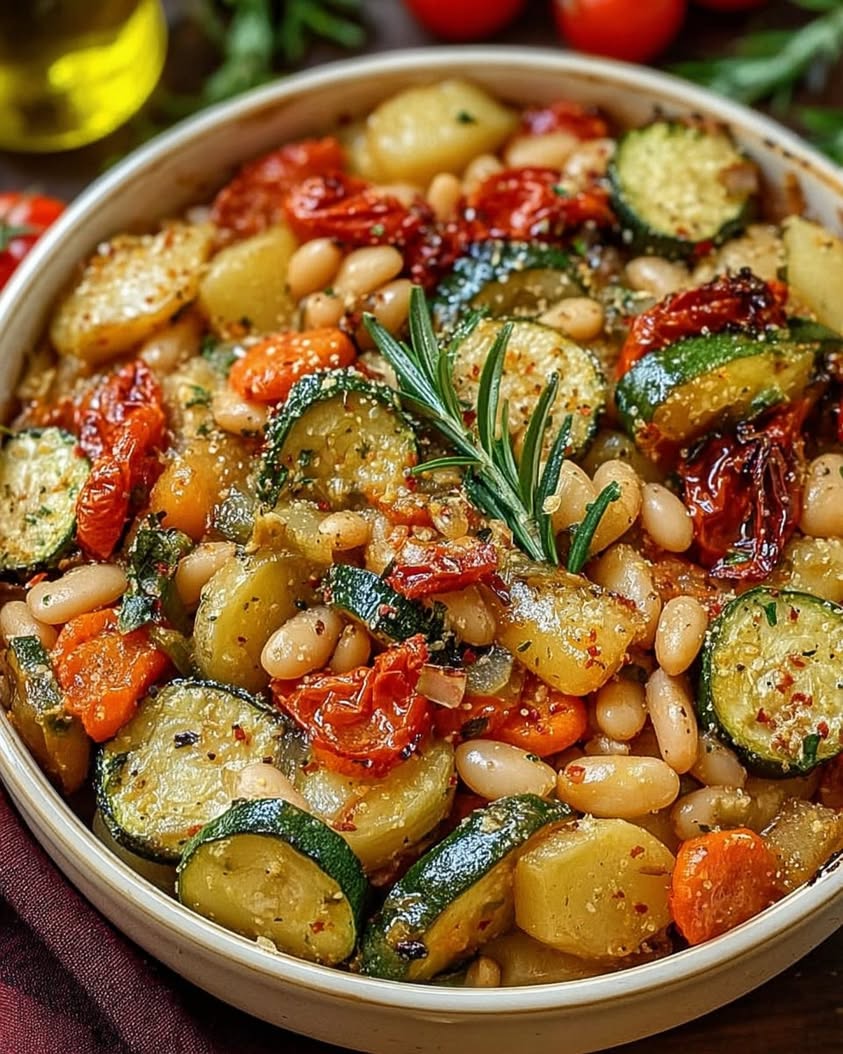
Rustic Roasted Vegetable Bake with Cannellini Beans: A Hearty One-Pan Dinner
There is something incredibly grounding about a meal that comes together in a single pan. This Rustic Roasted Vegetable Bake with Cannellini Beans embodies comfort, simplicity, and robust flavor. You will find that the vegetables caramelize beautifully, while the beans soak up all the herbed juices. As the aroma fills your kitchen, you will know you created something special. This dish is a celebration of farmers market finds and pantry staples, proving that you do not need complicated techniques for an extraordinary dinner. It delivers a satisfying, nutrient-dense meal that pleases both plant-based eaters and meat lovers alike. The first forkful reveals tender, sweet onions, smoky peppers, and creamy beans in every bite.
When you make this Rustic Roasted Vegetable Bake with Cannellini Beans, you embrace a flexible and forgiving recipe. You can swap in whatever vegetables look best. The cannellini beans provide a creamy texture and a boost of plant-based protein. They also help the dish feel hearty without weighing you down. You will notice the flavors deepen as the vegetables roast and the edges char slightly. This process concentrates natural sugars and adds a subtle smokiness. You can serve this bake as a main course with crusty bread or as a side dish alongside roasted chicken or fish. Either way, it adapts to your needs. The entire process moves smoothly from cutting board to oven to table with minimal mess and maximum reward.
This recipe respects your time and your palate. It requires only basic knife skills and a willingness to let the oven do the hard work. You can prepare it on a busy weeknight or for a relaxed weekend gathering. The colors are stunning: deep reds, bright oranges, and rich greens against the white beans. You will feel proud to bring this dish to the table. And because it tastes even better the next day, you can enjoy leftovers for lunch without any guilt. This Rustic Roasted Vegetable Bake with Cannellini Beans quickly becomes a staple in your rotation. It highlights how a few simple ingredients, treated with care, can create a memorable meal.
Quick Recipe Highlights
- Flavor Profile: Savory and herbaceous with a natural sweetness from roasted vegetables. The cannellini beans add a mild, nutty undertone that balances the acidity of tomatoes. A hint of garlic and fresh rosemary ties everything together beautifully.
- Texture: Tender-crisp vegetables contrast with the creamy, soft beans. The edges of the vegetables become slightly caramelized and chewy. The overall mouthfeel is satisfying and hearty without being heavy.
- Aroma: The fragrance of roasted garlic and herbs fills your kitchen first. As the vegetables cook, a sweet, earthy scent develops. The combination of olive oil and balsamic vinegar adds a rich, inviting note.
- Visual Appeal: A colorful mosaic of roasted bell peppers, zucchini, red onion, and cherry tomatoes. The white cannellini beans peek through the vegetable medley, creating a beautiful contrast. A sprinkle of fresh herbs on top adds a final touch of green.
- Skill Level Needed: This recipe welcomes beginners. It requires basic chopping and a single roasting step. Even if you are new to cooking, you can achieve great results with confidence.
- Special Equipment: A large sheet pan or a 9×13-inch baking dish works perfectly. You also need a sharp chef knife and a cutting board. No specialty gadgets are required.
Recipe Overview
- Difficulty Level: This dish is rated easy because it involves straightforward techniques. You only need to chop vegetables, toss them with oil and herbs, and roast them. The recipe does not require any stove-top monitoring or complex timing. It is nearly impossible to overthink or overcook.
- Category: This recipe fits perfectly as a main dish for a vegetarian dinner. It also works as a substantial side dish for grilled meats or fish. You can serve it warm or at room temperature for a buffet-style meal.
- Cuisine: The inspiration comes from rustic Italian and Mediterranean cooking traditions. These cuisines emphasize fresh vegetables, olive oil, herbs, and beans. The dish captures the essence of a simple family-style meal common in Tuscany and the Amalfi coast.
- Cost: The ingredients are budget-friendly, especially if you use seasonal produce. Canned cannellini beans cost very little. A single batch costs around ten to twelve dollars and feeds six people generously.
- Season: This dish shines in late summer and early fall when tomatoes, zucchini, and peppers are abundant. It also works well in colder months using root vegetables like butternut squash and carrots. You can adapt it to any season with simple substitutions.
- Occasion: Perfect for a Sunday family dinner, a potluck, or a meal prep session. It also serves as an impressive yet effortless dish for holiday gatherings. Its rustic presentation makes it suitable for casual and semi-formal occasions.
Why You Will Love This Recipe
The taste and texture combination in this Rustic Roasted Vegetable Bake with Cannellini Beans is absolutely addictive. The roasting process transforms ordinary vegetables into deeply flavored, caramelized morsels. It also concentrates the natural sugars, creating a pleasant sweetness. The cannellini beans add a creamy counterpoint that absorbs the herbed oil. Every forkful delivers a mix of soft beans and slightly firm vegetables. You will appreciate how the flavors meld together without any single ingredient overpowering the others. This balance makes the dish feel both familiar and exciting.
Convenience is a major reason to love this recipe. After a quick prep, you simply slide the pan into the oven. There is no stirring, no flipping, and no standing over a hot stove. The hands-off cooking method frees you to relax or prepare other parts of your meal. Cleanup is equally easy because only one pan gets dirty. This efficiency makes the recipe a lifesaver on busy weeknights when you crave a home-cooked meal but lack time. You can also double the recipe easily for meal prep, and it stores well in the fridge for days.
Nutritionally, this dish is a powerhouse. It delivers a generous amount of fiber from the vegetables and beans, which supports digestion and long-lasting fullness. The cannellini beans provide plant-based protein for muscle repair. The vegetables contribute a wide range of vitamins and antioxidants, including vitamin C from the bell peppers and lycopene from the tomatoes. You get healthy fats from the olive oil, which supports heart health. This meal feels indulgent but aligns perfectly with a balanced diet. You can feel good about serving it to your family.
Socially, this bake shines as a crowd-pleaser. Its vibrant colors and rich aroma draw people to the table. Guests appreciate a dish that looks and tastes impressive but does not require last-minute fuss. You can prepare it ahead of time and reheat it just before serving. It pairs well with crusty bread, a green salad, or a simple pasta. It also accommodates various dietary preferences easily. Most people do not even miss the meat. This versatility makes it a go-to choice for dinner parties and holiday celebrations.
Cost-effectiveness and accessibility are critical advantages here. All the ingredients are available at any grocery store, and many are kitchen staples. Canned cannellini beans cost under two dollars per can. Vegetables are often on sale, especially during peak season. You can also use produce from your own garden or a local farmers market. This dish stretches a small budget into a satisfying meal for six. It proves that eating well does not require expensive ingredients. You waste less food because you can use up any leftover vegetables you have on hand.
Historical Background and Cultural Significance
This style of roasted vegetable and bean dish traces its roots to the rural kitchens of central Italy. In Tuscany, cooks developed a tradition of using simple, seasonal ingredients to create filling meals. The concept of a one-pan bake reflects the frugality of peasant cooking and the importance of slow-roasting to develop deep flavor. Cannellini beans, in particular, have a long history in Italian cuisine. They were originally cultivated in the Americas and brought to Europe by explorers. Over time, they became a staple protein source in Italian households. This dish honors that history by combining beans with vegetables in a humble yet elegant way.
In Italy, this style of dish is called a forno or al forno, meaning baked in the oven. The technique allows vegetables to retain their moisture while concentrating their flavor. It also frees the cook to focus on other tasks. In many Italian homes, Sunday dinner centers around a big roasting pan filled with whatever vegetables are in season. This tradition emphasizes community and shared enjoyment. The dish also aligns with the Mediterranean diet, which UNESCO recognizes for its health benefits and cultural importance. It represents a way of eating that prioritizes whole foods and mindful preparation.
The evolution of this recipe has been shaped by global influences and modern convenience. Today, cooks worldwide have embraced the one-pan roasting method because of its simplicity and flavor. The addition of balsamic vinegar, for example, reflects a northern Italian touch. Some variations include fresh herbs like thyme or oregano, depending on regional availability. Canned beans have made the dish even more accessible. They replaced the labor-intensive process of soaking and cooking dried beans. Despite these changes, the spirit of the dish remains unchanged: a celebration of quality ingredients and patience.
Regional variations of this roasted vegetable bake appear across Europe and beyond. In Provence, a similar dish called ratatouille features eggplant, zucchini, and tomatoes cooked slowly. In Spain, they add chickpeas and smoked paprika. In the Middle East, cooks use tahini and pomegranate molasses for a tangy twist. Each culture adapts the principle of roasting vegetables with legumes to its own pantry. This global resonance shows how versatile and universally appealing the concept is. The Rustic Roasted Vegetable Bake with Cannellini Beans is a contemporary interpretation that respects tradition while embracing modern tastes.
Ingredient Deep Dive
Cannellini beans are the star ingredient in this dish. These white kidney beans are originally from Italy and have a creamy, buttery texture. They are a key component of Tuscan cuisine and appear in classic dishes like minestrone and ribollita. Nutritionally, they are excellent for heart health. They provide high amounts of fiber, protein, and folate. They also contain iron and magnesium, which support energy production and muscle function. When shopping for canned cannellini beans, look for low-sodium varieties. Rinse them thoroughly before use to remove excess salt. You can store unopened cans in your pantry for up to a year. Once opened, transfer the beans to an airtight container and refrigerate them for up to three days. If you prefer dried beans, soak them overnight and cook them until tender before using.
Bell peppers add sweetness and color to the bake. Red and yellow peppers are especially sweet when roasted. They contain high levels of vitamin C, which supports immune health. They also provide vitamin A and antioxidants like beta-carotene. When selecting bell peppers, look for firm, shiny skin with no wrinkles or soft spots. You can store them in the refrigerator crisper drawer for up to a week. For substitution, you can use poblano or cubanelle peppers for a milder heat. Roasting enhances their natural sugars and makes them even more delicious.
Zucchini provides a tender texture and mild flavor that blends well with other vegetables. It is a summer squash that is low in calories but high in water content. It also offers a good amount of vitamin C, potassium, and manganese. Select zucchini that are firm and heavy for their size with glossy skin. Avoid ones with soft spots or blemishes. Store them in the refrigerator for up to five days. If zucchini is not available, you can substitute yellow squash or eggplant. Both will roast well and absorb the flavors of the dish.
Red onion adds a mild sharpness that mellows during roasting. Onions are a foundational ingredient in many cuisines. They are rich in quercetin, a powerful antioxidant that supports heart health. They also provide prebiotic fiber that feeds beneficial gut bacteria. Look for onions that feel heavy and have papery, dry skins. Store them in a cool, dark place for up to a month. For a sweeter flavor, you can use Vidalia or Walla Walla onions. Shallots are also a good substitute.
Cherry tomatoes burst during roasting, releasing their juices and creating a natural sauce. They are packed with lycopene, a potent antioxidant linked to reduced cancer risk. They also provide vitamin A and C. Choose tomatoes that are firm and bright red with a sweet aroma. Keep them at room temperature for best flavor. Do not refrigerate them, as it can make them mealy. Alternatively, you can use grape tomatoes or Roma tomatoes cut into chunks.
Garlic infuses the entire dish with its pungent aroma. When roasted, garlic becomes sweet and mellow. It offers numerous health benefits, including immune system support and anti-inflammatory properties. Use fresh cloves rather than pre-minced jarred garlic for the best flavor. Store whole heads of garlic in a cool, dry place for several weeks. You can also use whole cloves that roast alongside the vegetables. The roasted cloves become soft and spreadable.
Fresh herbs like rosemary and thyme provide an earthy, aromatic backbone. They contain essential oils that add depth and complexity. Rosemary is native to the Mediterranean and pairs beautifully with roasted vegetables. Thyme offers a slightly lemony, minty note. Use fresh herbs whenever possible, as dried herbs lack the same potency. Chop the leaves finely to release their oils. You can also use dried herbs by reducing the quantity by half. Store fresh herbs wrapped in a damp paper towel in the refrigerator.
Olive oil is the fat that helps vegetables caramelize and brown. It also carries the flavors of the herbs throughout the dish. Use extra-virgin olive oil for the best taste. It provides healthy monounsaturated fats and antioxidants. The oil also helps the body absorb fat-soluble vitamins from the vegetables. Do not skimp on the oil, as dry vegetables will not brown properly. Store olive oil in a dark, cool place to prevent it from becoming rancid.
Common Mistakes to Avoid
- Not drying the vegetables after washing them can lead to steaming instead of roasting. Excess moisture prevents browning and creates a soggy texture. Pat each piece dry with a clean towel before tossing with oil.
- Crowding the pan is a frequent error. When vegetables overlap, they trap steam and do not caramelize properly. Use a large enough pan so the vegetables sit in a single layer with a little space between each piece.
- Cutting vegetables into uneven sizes causes inconsistent cooking. Some pieces will burn while others remain raw. Aim for uniform chunks, about one to one-and-a-half inches in size.
- Using too little oil results in dry, pale vegetables. The oil is essential for browning and flavor. Use the amount specified in the recipe, and toss the vegetables thoroughly to coat every piece.
- Neglecting to season adequately will make the dish taste flat. Salt helps draw out moisture and enhances flavor. Season the vegetables evenly before roasting and taste and adjust at the end.
- Forgetting to rinse canned cannellini beans adds unnecessary salt and a metallic taste. Rinse them under cool running water and drain them well before adding them to the pan.
- Opening the oven door too often lets heat escape. This can extend cooking time and prevent proper browning. Trust the timer and resist the urge to peek frequently.
- Not preheating the oven causes uneven cooking. The vegetables need a hot oven to start browning immediately. Allow the oven to fully reach the target temperature before putting the pan in.
- Using stale or old herbs diminishes the flavors. Fresh herbs are best, but if you use dried, check their potency by rubbing them between your fingers first. Replace dried herbs every six months.
- Overcooking the beans makes them mushy or splits them. Add the beans halfway through the roasting time so they heat through without breaking down completely.
Essential Techniques
Proper chopping technique is fundamental to this dish. You need to cut all vegetables into similar-sized pieces to ensure even cooking. A uniform one-inch dice allows the vegetables to roast at the same rate. Use a sharp chef knife for clean cuts, and keep your fingers tucked safely away from the blade. The onion should be cut into wedges, not rings, so they hold their shape during roasting. Taking the time to chop evenly is a small investment that pays off in texture and appearance.
Tossing the vegetables with oil and seasoning requires attention. Use your hands or a large spoon to distribute the oil and herbs evenly. Every piece should glisten with oil. This step is crucial for browning, as the oil conducts heat to the surfaces. It also helps the salt and herbs adhere to the vegetables. Once tossed, spread the vegetables in a single layer on the pan. Do not pile them up. If necessary, use two pans to avoid overcrowding. The goal is maximum surface area contact with the hot pan.
Roasting at the correct temperature and for the right duration is key. A high-temperature oven around 400 degrees Fahrenheit ensures the vegetables caramelize well. Too low, and they will steam. Too high, and they may burn before the interiors are tender. The cooking time varies slightly based on the size of your cuts and your oven. You should check for doneness at the minimum time and add more minutes if needed. Visual cues include deep golden brown edges and tender easily pierced vegetables.
Adding the cannellini beans at the right moment prevents them from overcooking. Toss them into the pan during the last fifteen minutes of roasting. This allows them to heat through and absorb some of the pan juices without falling apart. Stir them gently to coat with the oil and herbs. If you add them at the start, they will become mushy and may burst. The texture should be creamy but intact when you serve the dish.
Pro Tips for Perfect Rustic Roasted Vegetable Bake with Cannellini Beans
Use a rimmed sheet pan instead of a glass baking dish. The metal heats up faster and promotes better browning. The rim catches any juices and prevents messes. You can also use a cast-iron skillet for an even heat distribution.
Cut the vegetables in large, bold pieces. Smaller pieces tend to shrink and burn before the larger ones cook. One-inch chunks give you a pleasing bite and maintain their structure. The larger surface area also allows for better caramelization.
Add a splash of balsamic vinegar halfway through roasting. This adds a subtle tanginess and helps the vegetables develop a deep, rich color. Just drizzle it over the pan and toss gently to avoid breaking the beans.
Let the dish rest for five minutes after removing it from the oven. This allows the juices to redistribute and the flavors to settle. It also prevents burns from hot oil. The resting time improves the overall eating experience.
Sprinkle fresh herbs and a pinch of flaky sea salt over the finished dish just before serving. This adds a burst of freshness and a textural contrast. The heat from the vegetables will lightly wilt the herbs, releasing their aroma.
If you prefer a bit of heat, add a pinch of red pepper flakes along with the herbs. The spice complements the sweetness of the roasted vegetables nicely. You can also serve the dish with a dollop of pesto or a squeeze of lemon for extra brightness.
Variations and Adaptations
Regional variations can transform this dish into a completely different experience. For a Greek twist, add Kalamata olives, crumbled feta cheese, and dried oregano. For a North African version, include cumin, coriander, and a touch of harissa paste. You can also swap the cannellini beans for chickpeas or black-eyed peas. Each choice changes the flavor profile while keeping the core concept intact.
Seasonal adaptations allow you to use what is freshest. In the spring, incorporate asparagus, radishes, and new potatoes. In the fall, use butternut squash, Brussels sprouts, and apples. In the winter, root vegetables like parsnips, turnips, and carrots work beautifully. The cooking times may adjust based on the density of the vegetables you choose. Harder vegetables like squash need a head start in the oven.
Dietary modifications are easy with this recipe. To make it oil-free, use vegetable broth or water for tossing the vegetables and use parchment paper. To reduce sodium, use no-salt-added canned beans and skip the extra salt in the seasoning. You can also substitute the beans with lentils for a different texture. The dish is already gluten-free and vegan as written.
Flavor variations can change the entire character of the dish. For a smoky flavor, use smoked paprika or chipotle powder. For an herby flavor, increase the amount of rosemary and add fresh sage. For an umami boost, stir in a tablespoon of miso paste dissolved in a little warm water before roasting. A sprinkle of toasted nuts or seeds on top adds crunch.
Texture modifications can suit different preferences. If you enjoy a crispier texture, roast the vegetables for a few extra minutes without the beans. If you prefer a softer, stew-like consistency, add a half cup of vegetable broth to the pan and cover it with foil for the first twenty minutes. Remove the foil for the last twenty minutes to allow browning.
Presentation alternatives can elevate the dish for special occasions. Serve the bake in a shallow wooden bowl for a rustic look. Garnish with microgreens or edible flowers for elegance. You can also layer the vegetables and beans on a large platter with a drizzle of balsamic glaze or a swirl of basil oil. The same flavors arranged differently impress guests.
Serving and Presentation Guide
Plating techniques focus on simplicity and color. Spoon the bake onto a large platter or into a shallow serving bowl. Allow the vegetables to tumble naturally rather than stacking them. This creates an inviting, abundant look. You can also serve individual portions by using a large cookie scoop for even servings. The colors should be the main focus, so avoid heavy garnishes that hide the vegetables.
Garnishing ideas include a sprinkle of fresh parsley, basil, or chives. A light grating of lemon zest adds a fresh note. Toasted pine nuts or slivered almonds provide texture and richness. A drizzle of high-quality extra virgin olive oil right before serving adds shine and flavor. The garnish should enhance rather than overwhelm the dish.
Traditional accompaniments include crusty bread for sopping up the juices. A side of polenta or couscous makes the meal more substantial. A simple green salad with a lemon vinaigrette balances the richness. You can also serve it with a side of sautéed greens like spinach or kale for extra nutrition.
Modern serving suggestions involve pairing the bake with a grain bowl. Serve it over quinoa, farro, or brown rice for a complete meal. You can also use it as a filling for tacos or wraps, adding a dollop of yogurt or avocado. The versatility makes it a great component for various modern bowl-style dishes.
Temperature considerations matter for the best experience. Serve the bake hot from the oven, but allow it to rest for a few minutes. It also tastes delicious at room temperature, which makes it ideal for picnics and buffets. If you serve it cold, add a splash of olive oil and a squeeze of lemon to refresh the flavors.
Portion control tips keep the meal balanced. One serving equals about one and a half cups. Use the vegetables as the base and the beans as the protein. The fiber and protein content make it very filling, so you may need less than you think. Serve with a side salad to round out the meal with additional greens.
Wine and Beverage Pairing
Wine pairings for this dish are straightforward. A light to medium-bodied red wine like a Pinot Noir or a Chianti Classico works well. The acidity of the wine complements the tomatoes and the earthy flavors. A lighter red also does not overpower the vegetables. For a white wine choice, a crisp Sauvignon Blanc or a dry Vermentino matches the herbal notes. The wine should be chilled but not ice cold.
Non-alcoholic alternatives include a sparkling water with a splash of pomegranate juice. This adds a touch of sweetness and acidity that mirrors the wine pairing. You can also serve an herbal iced tea like hibiscus or mint. These drinks refresh the palate between bites. A simple lemonade with fresh herbs also works.
Coffee and tea pairings are less common but can be delightful. A light-bodied black tea like Darjeeling or a green tea with jasmine notes complements the dish. The floral and vegetal tones in the tea match the roasted vegetables. If you prefer coffee, a medium roast with bright acidity balances the savory flavors. Avoid dark roasts that might taste too bitter.
Temperature considerations for beverages are important. Serve white wines well chilled, around 45 to 50 degrees Fahrenheit. Red wines should be slightly cool, around 55 to 60 degrees. Non-alcoholic drinks should be iced or at least cool. This contrast with the hot food enhances the dining experience. Always have a pitcher of cold water on the table.
Storage and Shelf Life
Storage methods for leftovers require an airtight container. Allow the bake to cool to room temperature before storing it. Do not leave it out for more than two hours. Refrigerated leftovers maintain their quality for up to four days. The flavors continue to meld, and the dish often tastes even better the next day. You can also store it on the counter for a few hours if you plan to finish it the same day.
Temperature requirements for storage are critical. Keep the dish at 40 degrees Fahrenheit or below in the refrigerator. If you plan to keep it longer, consider freezing it. The vegetables may soften slightly after thawing, but the taste remains excellent. Do not leave the dish in a warm car or on a counter for extended periods.
Container recommendations include glass or plastic containers with tight-fitting lids. Avoid metal containers, as they can react with the acidic tomatoes. If you use a zip-top bag, remove as much air as possible before sealing. The container should be large enough that the bake is not pressed down, which can cause sogginess.
Signs of spoilage are easy to detect. A sour or off smell indicates that the dish has gone bad. Visible mold or a slimy texture on the vegetables are clear signs. If you notice any of these, discard the dish immediately. Trust your senses, and when in doubt, throw it out.
Reheating instructions should maintain the texture. The best method is to reheat in the oven at 350 degrees Fahrenheit for ten to fifteen minutes. The microwave works, but it can make the vegetables soggy. If using the microwave, cover the dish with a damp paper towel to add moisture. Stir halfway through heating to ensure even temperature.
Freezing guidelines allow you to store the dish for longer. Place the cooled bake in a freezer-safe container. It will keep well for up to three months. Thaw it overnight in the refrigerator before reheating. Do not freeze the dish if it contains fresh herbs, as they become limp and lose flavor. Add fresh herbs after reheating.
Make Ahead Strategies
Prep timeline planning makes the day of cooking easier. You can chop all the vegetables up to two days in advance. Store them in separate containers or a large bag in the refrigerator. You can also mix the oil, herbs, and garlic together in a jar and keep it at room temperature. The beans can be rinsed and drained a day ahead and kept covered in the fridge.
Storage between steps requires some care. If you prep the vegetables early, pat them dry again before roasting. They may release moisture as they sit. The oil mixture can be made up to a week ahead and stored in the pantry. Do not toss the vegetables with the oil until you are ready to roast, as they can become soggy.
Quality impact assessment shows that prepping ahead does not hurt the flavor. In fact, the flavors seem to deepen and meld more completely. The texture of the vegetables remains excellent as long as they are not pre-cut too far in advance. Two days is the sweet spot for texture and freshness.
Assembly tips streamline the process. On the day you cook, remove the prepped vegetables from the fridge and let them come to room temperature for about 15 minutes. Then toss them with the oil and herbs and spread them on the pan. This reduces the overall time from fridge to oven and prevents the pan from cooling down the oven.
Reheating guidelines for make-ahead leftovers are simple. If you baked the dish the day before, reheat it in the oven to restore the texture. The microwave is convenient but will make the vegetables softer. If you plan to serve the dish at a party, you can reheat it in a slow cooker on low heat for an hour.
Fresh element additions elevate the reheated dish. Just before serving, sprinkle fresh herbs, a squeeze of lemon, or a drizzle of extra virgin olive oil. This brightens the flavors and adds a fresh note. You can also stir in a handful of fresh spinach or arugula to add a green element that wilts slightly from the warmth.
Scaling Instructions
Halving the recipe is straightforward. Use half the amount of each ingredient. Cook the dish in a smaller baking dish or a quarter-sheet pan to ensure proper browning. The cooking time might reduce by five to ten minutes because of the smaller volume. Check for doneness earlier than the full recipe suggests.
Doubling or tripling the recipe requires a larger pan or multiple pans. Use two or three sheet pans, arranging them on separate oven racks. Rotate the pans halfway through the cooking time to ensure even browning. The cooking time may increase by five to ten minutes because of the larger volume. The vegetables still need to be in a single layer to caramelize properly.
Equipment adjustments are necessary for larger batches. If you use a single large roasting pan, be careful not to overcrowd the vegetables. The pan should be at least 12 by 16 inches for a double batch. If the vegetables seem crowded, use two pans. The heat circulates better with two pans than one full pan.
Timing modifications for scaled batches are important. A larger batch may need an extra ten to fifteen minutes in the oven. Check the vegetables for tenderness and color. The beans should be added later, so adjust the timeline accordingly. Always use an oven thermometer to verify the actual temperature, as ovens can fluctuate.
Storage considerations for large batches involve proper cooling. Spread the cooked bake in a thin layer on a clean sheet pan to cool quickly. Then transfer it to multiple containers for refrigeration or freezing. This prevents the dish from spending too long in the temperature danger zone. Large batches can be reheated in portions as needed.
Nutritional Deep Dive
Macro breakdown shows a balanced meal. Each serving contains approximately 18 grams of protein, which comes from the cannellini beans and vegetables. The carbohydrates are primarily complex, averaging 45 grams per serving, with 12 grams of fiber. The fat content is about 15 grams, mostly from the olive oil, which is heart-healthy monounsaturated fat. This macro profile supports sustained energy and satiety.
Micronutrient analysis reveals an impressive array of vitamins. Bell peppers provide over 150 percent of the daily value for vitamin C per serving. The tomatoes offer lycopene, a powerful antioxidant. Onions and garlic give quercetin and allicin, which have anti-inflammatory properties. The beans supply folate, iron, and magnesium, essential for blood health and muscle function.
Health benefits extend beyond basic nutrition. The high fiber content supports digestive health and helps regulate blood sugar levels. The antioxidants in the vegetables combat oxidative stress and may reduce the risk of chronic diseases. The combination of plant protein and fiber promotes a feeling of fullness, which aids in weight management. The dish is naturally low in saturated fat and free of cholesterol.
Dietary considerations make this recipe versatile. It is naturally vegan and gluten-free. It contains no dairy, eggs, or common allergens besides those in the optional garnish. It is also suitable for a low-fat diet if you reduce the olive oil slightly. The dish works well for a low-sodium diet if you use no-salt-added beans and season sparingly.
Portion analysis helps you understand your intake. One serving, approximately one and a half cups, has around 280 calories. This makes it a satisfying main course. If you serve it as a side, a half-cup portion has roughly 90 calories. The calorie density is low, allowing you to eat a large volume without overdoing it. The high water content in the vegetables adds volume.
Weight management tips include using this dish as a meal prep staple. The fiber and protein keep you full for hours, reducing the temptation to snack. Pair it with a green salad to increase the volume without adding many calories. Avoid adding excessive oil or salt during preparation. The natural flavors are strong enough to satisfy your taste buds.
Dietary Adaptations
Gluten-free adaptation is unnecessary because this dish contains no gluten. All the vegetables, beans, and oil are naturally gluten-free. However, ensure that any store-bought broth or seasoning blends you use are certified gluten-free. The dish is safe for people with celiac disease or gluten sensitivity.
Dairy-free adaptation is also inherent in the recipe. There is no cheese or cream included. If you want a creamy element, you can add a dollop of dairy-free yogurt or a cashew cream sauce. The dish is already fully dairy-free and suitable for those who avoid dairy.
Vegan adaptation is perfect as written. The dish uses only plant-based ingredients. No animal products are used. It is an excellent option for vegans and vegetarians. The beans provide complete protein when paired with whole grains.
Low-carb adaptation requires a substitution for the beans. The cannellini beans are higher in carbohydrates. You can replace them with extra vegetables like cauliflower or mushrooms. Alternatively, use green lentils, which have Print
Rustic Roasted Vegetable Bake with Cannellini Beans
- Total Time: 1 hour
- Yield: 4
Description
A hearty and flavorful one-dish meal featuring roasted seasonal vegetables and creamy cannellini beans, finished with a golden, herbed crust.
Ingredients
- 2 cups cubed butternut squash
- 1 cup sliced red bell pepper
- 1 cup chopped red onion
- 2 cups chopped kale (stems removed)
- 1 can (15 oz) cannellini beans, drained and rinsed
- 3 tablespoons olive oil
- 1 teaspoon dried thyme
- 1 teaspoon dried rosemary
- 1/2 teaspoon salt
- 1/4 teaspoon black pepper
- 3 cloves garlic, minced
- 1/2 cup vegetable broth
- 1/4 cup grated Parmesan cheese (optional)
Instructions
- Preheat oven to 400°F (200°C).
- In a large bowl, combine butternut squash, red bell pepper, red onion, and kale. Add olive oil, thyme, rosemary, salt, pepper, and garlic; toss well.
- Spread the vegetables in a single layer on a large baking sheet. Roast for 25–30 minutes, stirring halfway, until tender and slightly charred.
- Transfer roasted vegetables to a 9×13-inch baking dish. Stir in cannellini beans and vegetable broth. Sprinkle Parmesan cheese on top if using.
- Bake for an additional 15 minutes until bubbly and top is golden. Let rest 5 minutes before serving.
Notes
You can customize the seasonings to taste. Add other vegetables like zucchini or eggplant. For a vegan version, omit Parmesan or use nutritional yeast.
- Prep Time: 15 minutes
- Cook Time: 45 minutes
- Method: Main
- Cuisine: American