Rustic Roasted Vegetable Bake with Cannellini Beans: A Hearty One-Pan Dinner
This Rustic Roasted Vegetable Bake with Cannellini Beans is the ultimate comfort food for a busy weeknight. Imagine the earthy aroma of roasted root vegetables mingling with the creamy richness of cannellini beans, all while a hint of garlic and thyme fills your kitchen. This simple, one-pan dish transforms humble ingredients into a deeply satisfying meal that feels both nourishing and indulgent.
As the vegetables caramelize in the oven, they develop a natural sweetness that perfectly balances the savory notes of the beans and herbs. Each bite offers a delightful contrast of textures, from the tender, almost buttery softness of the roasted squash to the firm, creamy pop of the cannellini beans. It is a symphony of flavors that proves healthy eating does not have to be boring or complicated.
This Rustic Roasted Vegetable Bake with Cannellini Beans is a perfect solution for those evenings when you want a hearty dinner without spending hours in the kitchen. With minimal prep work and a hands-off roasting time, it is a meal that practically cooks itself. Let the oven do the work while you relax, knowing a vibrant, delicious, and deeply satisfying dinner is waiting for you.
Quick Recipe Highlights
- Flavor Profile: This dish delivers a rich, savory base with a subtle, caramelized sweetness from the roasted vegetables. The garlic and herbs add a fragrant, earthy depth, while the cannellini beans provide a mild, nutty backdrop that soaks up all the delicious juices.
- Texture: You get a wonderful interplay of textures: tender, caramelized vegetables with crispy edges, soft and creamy cannellini beans, and a slightly chewy, roasted finish on the outer edges of the bake. It is hearty and substantial without being heavy.
- Aroma: The kitchen fills with a warm, inviting aroma of roasting garlic, sweet onions, and woody herbs like rosemary and thyme. As the vegetables brown, a nutty, almost toasty scent emerges, promising a deeply flavorful meal.
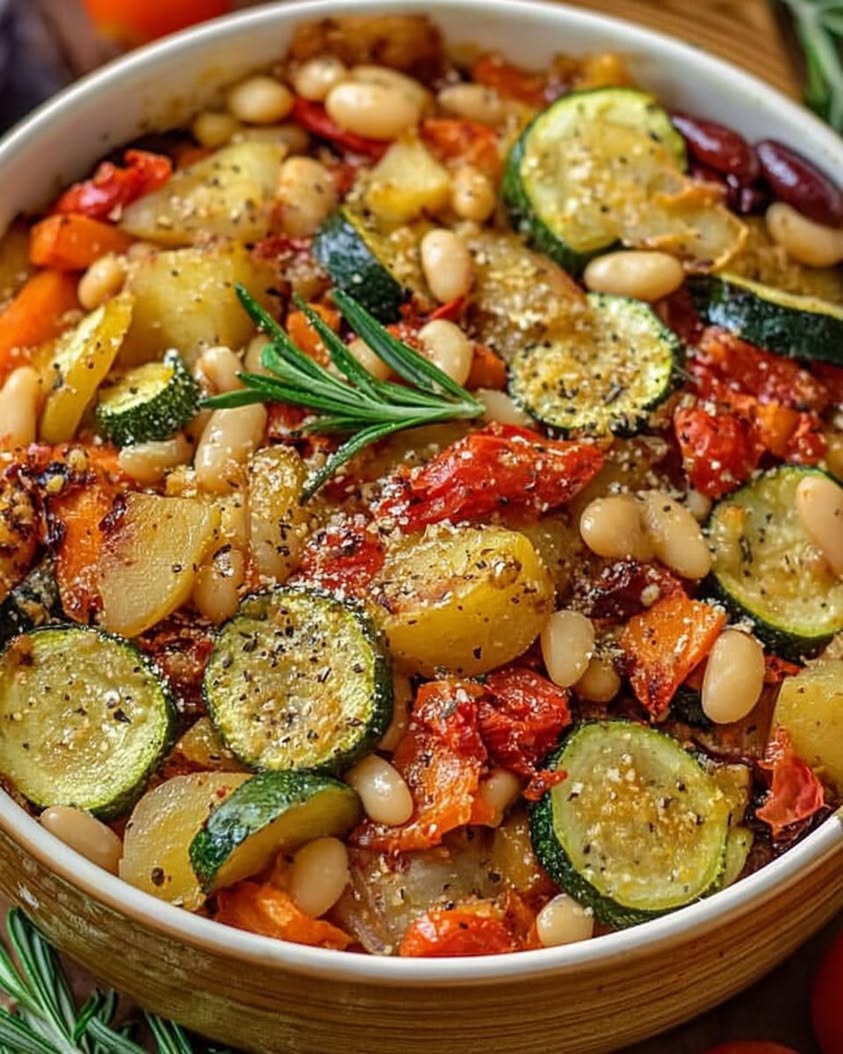
- Visual Appeal: The visual appeal is stunning, with a vibrant medley of deep orange carrots, golden butternut squash, red onions, and the pale, creamy white of the cannellini beans. A sprinkle of fresh herbs adds a final touch of green for a beautiful, rustic presentation straight out of the pan.
- Skill Level Needed: You need no advanced cooking skills to make this dish. It is incredibly beginner-friendly, relying on basic knife skills for chopping vegetables and simple oven timing. The recipe is forgiving and easy to master on the first try.
- Special Equipment: You need a large rimmed baking sheet or a 9×13 inch baking dish. A sharp chef’s knife and a cutting board are essential for prepping the vegetables. A spatula or wooden spoon is useful for turning the ingredients.
Recipe Overview
- Difficulty Level: This recipe is rated as Easy because it involves straightforward, basic cooking techniques. You chop vegetables, toss them with oil and seasoning, and let the oven roast them to perfection. There are no complex steps, precise temperature controls, or special culinary skills required, making it accessible for cooks of all levels.
- Category: This Rustic Roasted Vegetable Bake with Cannellini Beans falls into the categories of a main course, a side dish, or a meal prep staple. It is a complete vegetarian dinner when served as is, but it also works beautifully as a hearty side alongside roasted chicken or fish.
- Cuisine: The cuisine is a modern take on rustic Mediterranean and European farmhouse cooking. It draws inspiration from the tradition of roasting seasonal vegetables with legumes and herbs, a common practice in Italian and French home kitchens. The simplicity and reliance on quality produce are hallmarks of this culinary style.
- Cost: This dish is highly cost-effective as it uses affordable, readily available ingredients. Seasonal vegetables, canned cannellini beans, and basic pantry herbs are all budget-friendly. For a family of four, the total cost is generally under $15, making it an excellent option for low-cost, nutritious meals.
- Season: You can enjoy this bake year-round, but it is particularly wonderful in the fall and winter. These seasons offer the best root vegetables like butternut squash, sweet potatoes, and parsnips, which become naturally sweeter and more flavorful. In the summer, you can adapt it with zucchini, bell peppers, and eggplant.
- Occasion: This recipe is perfect for a cozy weeknight family dinner, a potluck, or a simple holiday side dish. It is also an excellent choice for meal prepping, as it stores well and tastes even better the next day. It is a reliable, low-stress dish for entertaining or feeding a crowd.
Why You’ll Love This Recipe
First and foremost, the taste and texture of this Rustic Roasted Vegetable Bake with Cannellini Beans are simply irresistible. The high heat of the oven creates a beautiful caramelization on the vegetables, bringing out their natural sugars and creating a deep, savory flavor profile. Then, the creamy cannellini beans add a soft, rich counterpoint to the roasted edges of the veggies, making each spoonful a wonderful mix of textures.
Furthermore, the convenience is unmatched. You toss everything on a single sheet pan, pop it in the oven, and spend the next 40 minutes doing something else. The hands-on preparation takes only about 15 minutes, which is mostly just chopping vegetables. This makes it a perfect weeknight savior when you are tired and hungry but still want a homemade, healthy meal.
From a nutritional standpoint, this dish is a powerhouse. It is packed with fiber from the cannellini beans and the variety of vegetables, which promotes digestive health and keeps you feeling full and satisfied. You also get a fantastic dose of vitamins A and C from the squash and carrots, along with plant-based protein and iron from the beans, creating a well-rounded, nutrient-dense meal.
Moreover, this recipe has incredible social value. It is a gorgeous dish to bring to a dinner party or a holiday gathering. Its vibrant colors and rustic appeal make a stunning centerpiece, and it naturally pairs well with many other dishes. Most importantly, it caters to a wide range of dietary needs, as it is naturally vegetarian, vegan, and gluten-free, ensuring you have something delicious for everyone at the table.
Finally, the cost-effectiveness and accessibility of this recipe are hard to beat. You can find all the ingredients at any standard grocery store for a very modest price. Canned cannellini beans are a pantry staple that costs around a dollar, and root vegetables are regularly on sale. This Rustic Roasted Vegetable Bake with Cannellini Beans proves that you do not need expensive or exotic ingredients to create a meal that feels special and luxurious.
Historical Background and Cultural Significance
The roots of this Rustic Roasted Vegetable Bake with Cannellini Beans lie in the ancient traditions of peasant cooking across the Mediterranean. For centuries, rural families relied on a simple combination of what they could grow in their gardens and legumes that could be dried and stored for winter. The process of roasting vegetables over an open fire or in a wood-fired oven was a fundamental cooking method, creating hearty, warming meals that were both nutritious and economical.
Cannellini beans themselves have a deep history in Italian cuisine, particularly in the central and northern regions of Tuscany and Lombardy. They are often called the poor man’s meat because they provided a cheap and accessible source of protein for the population. They were a staple ingredient in minestrone, ribollita, and various stews, usually combined with seasonal vegetables and herbs, much like our modern bake.
The evolution of this dish is a story of simplification and adaptation. Originally, these ingredients would have been slow-cooked in a clay pot or cast-iron cauldron for hours. With the advent of the modern oven, we can achieve a similar depth of flavor in a much shorter time. The “bake” format, where the beans are added to the roasted vegetables, is a contemporary innovation that creates a cohesive, saucy casserole without much extra work.
Today, regional variations of this concept are found worldwide. In Provence, you find a similar dish called Tian, where vegetables are sliced thinly and layered before baking. In the Middle East, a dish like lubya is made with green beans and tomatoes, though the roasting technique differs. This particular interpretation of a Rustic Roasted Vegetable Bake with Cannellini Beans is a celebration of global culinary principles, respecting the past while embracing the efficiency of a modern one-pan meal.
Ingredient Deep Dive
Cannellini Beans: These creamy white kidney beans have a rich cultural history in Italian cuisine, where they have been a staple protein source for centuries. They are celebrated for their mild, nutty flavor and their ability to absorb the flavors of whatever they are cooked with. Nutritionally, they are an excellent source of plant-based protein, dietary fiber for heart health and digestion, and minerals like iron and magnesium. When selecting canned cannellini beans, look for cans without dents or rust. For the best texture, choose low-sodium or no-salt-added versions to control the salt level in the dish. Store unopened cans in a cool, dark pantry. A simple substitution for cannellini beans is great northern beans or navy beans, as they share a similar size and creamy texture.
Butternut Squash: This winter squash is a quintessential fall vegetable with a sweet, nutty flavor that intensifies beautifully during roasting. Its vibrant orange flesh is a testament to its high beta-carotene content, which the body converts into vitamin A for healthy vision and immune function. When selecting a butternut squash, choose one that feels heavy for its size with a firm, smooth, tan skin free of soft spots. You can store it whole in a cool, dark place for up to a month. For the best roast, peel it with a sharp vegetable peeler and scoop out the seeds before cubing. If you are short on time, you can substitute with pre-cut butternut squash from the grocery store, or use sweet potatoes or carrots for a similar sweetness and texture.
Red Onion: Red onions provide a beautiful pop of color and a milder, slightly sweeter flavor than yellow or white onions, especially after caramelizing in the oven. They are packed with antioxidants, particularly quercetin, which has anti-inflammatory properties. When shopping, look for onions that are firm and have dry, papery skins with no signs of sprouting or mold. Store them in a cool, dry, well-ventilated area away from potatoes. For this recipe, you can use yellow or sweet onions if you prefer a more traditional flavor. To add a slightly different texture, you can also use shallots, which are smaller and have a more delicate, garlic-like taste.
Carrots: Carrots bring a natural, earthy sweetness and a vibrant orange color that pairs perfectly with the other root vegetables in this bake. They are famously rich in beta-carotene, fiber, vitamin K1, and antioxidants. For the best flavor and texture, choose medium-sized carrots that are firm and smooth, without any cracks or limpness. You can store them in the refrigerator in a plastic bag for several weeks. You do not need to peel them if they are organic and well-scrubbed, as the skin contains extra nutrients. For a variation, you can use parsnips, which are paler and have a more distinct, peppery-sweet flavor, or you can use rainbow carrots for a more colorful presentation.
Garlic: Garlic is an aromatic powerhouse that transforms from pungent raw cloves into soft, sweet, and nutty morsels when roasted whole. It is prized for its health benefits, including allicin, a compound known for its immune-boosting and antibacterial properties. When buying garlic, choose firm, plump heads with tight, unbroken skins. Store it in a cool, dark, well-ventilated place, but not in the refrigerator. For this bake, using whole, unpeeled cloves is a game-changer, as they roast gently and develop a creamy, spreadable interior. You can also use peeled cloves, but they might caramelize faster. A good substitution is to use a head of garlic, cut in half horizontally, and roast it alongside the vegetables.
Fresh Herbs (Rosemary and Thyme): These woody herbs are the soul of this Mediterranean-style roast, infusing the dish with a piney, earthy, and slightly floral aroma. Rosemary and thyme are packed with antioxidants and have antimicrobial properties. For the freshest herbs, look for vibrant, perky sprigs without any yellowing or wilting. To store them, place them in a glass of water in the refrigerator, loosely covering the tops with a plastic bag. For this recipe, fresh herbs are highly recommended for their superior flavor, but you can use dried herbs in a pinch, using a 1:3 ratio (1 teaspoon dried for every 1 tablespoon fresh). The scent of these herbs roasting is what makes this dish so inviting.
Common Mistakes to Avoid
- Overcrowding the baking sheet is a common error. If you pile the vegetables on top of each other, they will steam instead of roast, preventing that beautiful, caramelized color. You should spread the vegetables in a single, even layer with a little space around each piece.
- Cutting the vegetables into uneven sizes will lead to uneven cooking. Some pieces will burn while others remain hard. For the best results, you need to cut all the vegetables into uniform 1-inch cubes so they cook at the same rate.
- Skipping the preheating of the oven can ruin the texture. A hot oven is critical for creating a sear on the vegetables. If you put them into a cold oven, they will slowly cook and turn mushy instead of achieving those crispy, golden-brown edges.
- Not using enough oil is a frequent mistake. Oil helps conduct heat and promotes caramelization. Without enough oil, the vegetables will dry out and burn before they are tender. You need to ensure every piece is lightly but thoroughly coated.
- Failing to season adequately will result in a bland dish. Vegetables can be surprisingly dense and need enough salt. Do not shy away from salting them generously before roasting, as this helps to draw out moisture and concentrate the flavor.
- Adding the beans too early is a mistake to avoid. If you add the cannellini beans at the very beginning, they can become mushy and break down in the pan. You should wait until the vegetables are almost fully roasted, then stir them in for the final 10 minutes to heat through.
- Forgetting to stir the vegetables halfway through is a common oversight. Turning them with a spatula ensures they brown evenly on all sides and do not stick to the pan. This simple action makes a significant difference in the final texture.
- Using canned beans without rinsing them can make the dish too salty and the sauce too starchy. You must always drain and rinse your canned cannellini beans thoroughly under cold water before adding them to the dish to remove the excess sodium and viscous liquid.
Essential Techniques
Proper Vegetable Preparation: This is the most important technique for a successful bake. You must practice uniform cutting. Start by peeling the butternut squash and carrots, then cut them into flat planks. From these planks, cut into strips, and then into 1-inch cubes. You should aim to cut the red onion into similarly sized wedges. This consistency is critical because it ensures that every piece of vegetable cooks at the same rate. A common pitfall is cutting the squash too large or the onion too small. A visual cue for success is that all pieces look roughly the same size. This step lays the foundation for even caramelization and a perfect texture throughout the dish.
The Art of Seasoning and Tossing: Before the vegetables go into the oven, you need to season and toss them correctly. In a large bowl, combine your cubed vegetables and the whole garlic cloves. Drizzle with a generous amount of olive oil, then sprinkle with a good pinch of kosher salt, black pepper, and your fresh rosemary and thyme leaves. Use your hands to toss everything together, ensuring that every surface is coated with oil and seasoning. Why is this step so important? The oil is the conductor of heat, and the salt helps to break down the fibers and draw out moisture for caramelization. A common mistake is using a bowl that is too small, making it impossible to toss effectively. You know you have done it right when the vegetables glisten and are evenly speckled with seasoning.
Mastering the Roasting Process: The key to perfect roasting is managing heat and space. Spread the seasoned vegetables in a single, even layer on a large, rimmed baking sheet. Do not crowd them. They need a little breathing room so the hot air can circulate and create steam, which then evaporates and allows for browning. You will roast them at 425 degrees Fahrenheit. Halfway through the cooking time, after about 20 minutes, you need to pull the pan out and use a spatula to toss the vegetables. This ensures even browning. The visual cue for success is that the vegetables are tender when pierced with a fork, and the edges are golden brown and crispy. After this stage, you stir in the rinsed cannellini beans and return the pan to the oven for the final 10 minutes.
Pro Tips for Perfect Rustic Roasted Vegetable Bake with Cannellini Beans
For a deeper, more complex flavor, try roasting your vegetables on a preheated baking sheet. Place your baking sheet in the oven while it heats up, then carefully add the oiled and seasoned vegetables. This creates an immediate sear. Tossing the vegetables with a tablespoon of balsamic vinegar before roasting adds a tangy sweetness that intensifies the caramelization. It is a small step that makes a big difference. Do not be afraid to use a generous amount of garlic. Roasting whole, unpeeled cloves creates soft, sweet gems of garlic that you can squeeze out at the table. They add a creamy, nutty depth to the finished dish.
If you find your vegetables are roasting too quickly on the bottom, you can line your baking sheet with parchment paper for easier cleanup and more even cooking. For a slightly crispier result, avoid using parchment and roast directly on the metal pan. Remember, the residual heat of the pan is your friend. After you add the beans and turn off the oven, let the dish sit in the warm oven for 5 minutes before serving. This allows all the flavors to meld together beautifully. To add a final touch of freshness, finish the baked dish with a squeeze of fresh lemon juice and a sprinkle of fresh parsley before serving. This brightens the entire dish and cuts through the richness of the olive oil.
Variations and Adaptations
Regional Variations: You can give this dish a different regional character. For a Greek twist, add Kalamata olives, oregano, and a sprinkle of feta cheese in the last 5 minutes of baking. For a Moroccan flair, toss the vegetables with cumin, coriander, cinnamon, and a pinch of cayenne pepper, then add chickpeas instead of cannellini beans and a handful of dried apricots for a sweet-savory profile.
Seasonal Adaptations: This recipe is wonderfully flexible with the seasons. In the spring, use asparagus, new potatoes, and fava beans. In the summer, swap out the root vegetables for zucchini, bell peppers, cherry tomatoes, and eggplant, cooking them for a shorter time. In the fall, stick with the classic butternut squash, but add Brussels sprouts and parsnips for a heartier texture.
Dietary Modifications: This recipe is already naturally vegan and gluten-free. To make it low-FODMAP, you can omit the garlic and onion, and use a garlic-infused oil instead. For a lower-carb version, you can reduce the amount of carrots and butternut squash and add more non-starchy vegetables like cauliflower, broccoli, or bell peppers.
Flavor Variations: You can easily change the flavor profile. Add a teaspoon of smoked paprika for a smoky depth. Or, toss the vegetables with a tablespoon of balsamic glaze for a tangy sweetness. A sprinkle of red pepper flakes adds a gentle heat. For a more savory, umami flavor, you can add a splash of tamari or soy sauce along with the olive oil.
Texture Modifications: If you prefer a softer, saucier dish, you can add a 14-ounce can of diced tomatoes along with the beans. For a crunchier texture, toss a handful of pine nuts or chopped walnuts onto the baking sheet during the last 5 minutes of cooking. To make the dish creamier, you can mash a portion of the beans with a fork and stir them back into the bake before serving.
Presentation Alternatives: Instead of serving it from the baking sheet, you can spoon the finished bake into a beautiful, shallow serving bowl. For a more elegant presentation, you can slice the butternut squash and carrots into larger, coin-shaped slices instead of cubes. This creates a visually striking, layered look when arranged in the dish.
Serving and Presentation Guide
For a beautiful plating, serve this Rustic Roasted Vegetable Bake with Cannellini Beans directly on a large, warm platter or in a wide, shallow bowl. The mixed colors of the vegetables create a natural, vibrant presentation. A simple garnish of fresh parsley or basil leaves and a final drizzle of high-quality extra virgin olive oil elevates the dish from simple to spectacular. You should also offer lemon wedges on the side for squeezing.
A wonderful garnish idea is to scatter a handful of toasted panko breadcrumbs infused with lemon zest and garlic over the top just before serving. This adds a wonderful crunchy contrast to the tender vegetables. Another excellent option is to crumble some vegan or dairy feta cheese over the top for a salty, creamy finish. Fresh herbs like rosemary or thyme sprigs add a final touch of color and aroma.
Traditional accompaniments for this type of roast include a simple green salad with a sharp vinaigrette, which cuts through the richness of the olive oil. Crusty bread is also a must for soaking up the delicious pan juices. For a more substantial meal, you can serve it alongside a piece of grilled fish or roasted chicken.
For a modern serving suggestion, try spooning the bake over a bed of creamy polenta or quinoa. This turns it into a more filling main course. You can also serve it inside a halved and roasted acorn squash for a stunning, individual presentation. The temperature is best served hot out of the oven, but it is also delicious at room temperature, making it perfect for picnics or buffet tables.
Portion control is simple with this one-pan dish. A generous serving of about 1.5 to 2 cups is perfectly satisfying as a main course. As a side dish, a 1-cup portion is sufficient. The beauty of this recipe is that it is very satiating due to its high fiber content, so people tend to feel full with a normal serving size.
Wine and Beverage Pairing
This Rustic Roasted Vegetable Bake with Cannellini Beans is a versatile dish when it comes to wine pairing. The earthy notes of the roasted vegetables and the creamy texture of the beans call for a medium-bodied red wine. A fantastic choice is a Dolcetto from Italy, which has soft tannins and flavors of black cherry and licorice that complement the sweetness of the squash. Alternatively, a chilled Beaujolais or a Pinot Noir will also work beautifully.
For white wine lovers, you want something with enough body to stand up to the vegetables but not too oaky. A full-bodied white like a Roussanne or a Marsanne would be excellent. Another wonderful option is a dry Riesling or a Chenin Blanc, which have a natural acidity that cuts through the oil and refreshes the palate. A Viognier with its floral notes and stone fruit flavors is a lovely pairing as well.
For non-alcoholic alternatives, a simple sparkling water with a splash of pomegranate or cranberry juice is a festive and refreshing choice. The tartness of the juice mirrors the acid in the wine and brightens the dish. A good quality alcohol-free Sauvignon Blanc can also provide the necessary crispness and herbaceousness to pair with the thyme.
If you are considering tea or coffee, a robust, unsweetened iced tea with a squeeze of lemon would be a nice, clean palate cleanser. A warm mug of chamomile or rooibos tea with its honey-like sweetness can complement the caramelized vegetables without overpowering them. For a dinner party, serving the dish slightly warm with a chilled glass of dry rosé is a classic and crowd-pleasing choice.
When serving, ensure your beverage is served at the appropriate temperature. Red wines should be slightly cool, around 55-60 degrees Fahrenheit. White wines and rosés should be well-chilled. This attention to detail makes the entire dining experience more enjoyable and respectful of the flavors you have worked hard to create.
Storage and Shelf Life
Storing your leftover Rustic Roasted Vegetable Bake with Cannellini Beans is straightforward. You need to allow the dish to cool completely to room temperature before storing it. This usually takes about 30 minutes. If you store it while it is still hot, it will create condensation inside the container, which can make the vegetables soggy and promote bacterial growth. Once cool, transfer the bake to an airtight container.
For temperature requirements, you should always store leftovers in the refrigerator at or below 40 degrees Fahrenheit. The bake will maintain its best quality for 3 to 4 days when stored properly. If you leave it out at room temperature for more than 2 hours, you should discard it to be safe. The high moisture content from the vegetables can be a breeding ground for bacteria.
When it comes to container recommendations, glass or ceramic containers with tight-fitting lids are the best choices. They do not absorb odors or stains like plastic can, and they are safe for reheating if you plan to use a microwave or oven. If you must use plastic, ensure it is BPA-free. Avoid using aluminum foil or open bowls, as the food will dry out and pick up flavors from the fridge.
Signs of spoilage are easy to spot. If you notice a sour or off smell, any visible mold, or a slimy texture on the vegetables or beans, you should discard the entire batch. The beans in particular can become the first to spoil if the dish is stored too long. Rely on your senses; if anything seems off, it is better to be safe.
To reheat, you have a few good options. The oven method is best for restoring some of the original texture. Spread the leftovers on a baking sheet and warm them at 350 degrees Fahrenheit for 10-15 minutes. The microwave is the fastest method, but it can make the vegetables a bit mushy. If using the microwave, heat on medium power in 30-second intervals until warm.
Freezing is an option, but it comes with some textural changes. Because of the high water content in vegetables, they can become soft and watery after thawing. If you choose to freeze it, place the cooled bake in a freezer-safe zip-top bag or container. It will last for up to 3 months. To thaw, move it to the refrigerator overnight and reheat using the oven method for the best results.
Make Ahead Strategies
Prep timeline can make this an even easier weeknight meal. You can chop all the vegetables and store them separately in airtight bags in the refrigerator up to 2 days in advance. You should wait to toss them with oil and herbs until you are ready to roast, as the salt can draw out moisture over time. You can also rinse and drain your cannellini beans up to a day ahead.
Storage between steps is very important. If you have prepped vegetables, store each type in its own bag to prevent the onion from perfuming the squash. The raw garlic cloves can be stored with the vegetables, but keep the herbs in a separate, damp paper towel inside a bag to keep them fresh. The rinsed beans should be stored in a covered bowl in the fridge.
The quality impact of making this dish ahead is generally positive. In fact, the flavors actually meld and deepen overnight, making the leftovers taste even better. The only potential downside is that the vegetables will lose a bit of their initial crispness. However, the creamy beans and tender vegetables are still incredibly delicious the next day.
For assembly tips after prepping, you can toss all the vegetables with oil, herbs, and seasoning the night before. Spread them evenly on the baking sheet, cover it with plastic wrap, and store it in the refrigerator. The next day, you simply need to remove the plastic and put the pan straight into the preheated oven. This makes the process incredibly streamlined.
When reheating a make-ahead dish, you should avoid the microwave if you want to preserve any texture. Instead, reheat it in a 350-degree oven for about 15 minutes, covered with foil so it does not dry out. If you are adding any fresh elements, like a squeeze of lemon or fresh herbs, always add them after reheating to maintain their bright flavor.
Fresh element additions are best done at the last moment. If you anticipate leftovers, only garnish the portion you are serving immediately. The fresh parsley, lemon juice, and any cheese should be added just before serving. This ensures that the make-ahead portion remains fresh and can be transformed into a completely new meal with new garnishes when you reheat it.
Scaling Instructions
Halving this Rustic Roasted Vegetable Bake with Cannellini Beans is very simple for a smaller household. You need to reduce all the ingredients by half. Use 1 medium butternut squash, 1 large carrot, 1 half of a large red onion, and one 15-ounce can of cannellini beans. The seasoning and oil should also be halved. Importantly, you should use a smaller baking sheet, such as a quarter-sheet pan, to ensure the vegetables are still spread in a single layer.
Doubling or tripling the recipe for a crowd is just as easy. You will need to double or triple each ingredient quantity. The most critical factor here is to avoid overcrowding. You will likely need two or even three large, rimmed baking sheets to keep the vegetables in a single layer. If you pile them onto one pan, they will steam instead of roast.
Equipment adjustments are necessary when scaling. When using multiple pans, you should rotate them in the oven. Place one on the top rack and one on the bottom rack. Halfway through the cooking time, swap the pans and also rotate them front to back. This ensures even heat distribution. If your oven has a convection setting, using it will help circulate the heat more evenly across multiple pans.
Timing modifications are also needed when scaling. A larger volume of vegetables may take a few extra minutes to become tender, while smaller batches may cook a little faster. Always rely on visual cues, such as browning and tenderness with a fork, rather than an exact timer. The key is to check the vegetables a few minutes early to avoid burning.
Storage considerations become more important when you have a large batch. You should allow the bake to cool completely before storing it in large, shallow containers. This allows it to cool down faster and more safely than in a deep container. If you plan to freeze a large portion, divide it into smaller, meal-sized portions for easier thawing and reheating later.
Nutritional Deep Dive
This Rustic Roasted Vegetable Bake with Cannellini Beans offers a fantastic macronutrient profile for a healthy, balanced meal. Each serving is rich in complex carbohydrates from the vegetables and beans, which provide sustained energy without the blood sugar spike of refined carbs. The cannellini beans are a significant source of plant-based protein, with about 15 grams per cup, and the olive oil provides heart-healthy monounsaturated fats that aid in nutrient absorption.
For a micronutrient analysis, this dish is a powerhouse. The butternut squash and carrots are exceptional sources of beta-carotene, which the body converts into Vitamin A for eye health, immune function, and skin integrity. The red onions and garlic contain quercetin and allicin, powerful antioxidants with anti-inflammatory properties. Additionally, the cannellini beans provide a substantial amount of iron, magnesium, and folate, which are vital for energy production and cell growth.
The health benefits are substantial. The high fiber content from the beans and vegetables promotes digestive regularity and helps maintain a healthy gut microbiome. This fiber also helps to lower cholesterol levels and regulate blood sugar, reducing the risk of heart disease and type 2 diabetes. The abundance of antioxidants helps combat oxidative stress and inflammation in the body, supporting long-term health.
Dietary considerations are generally positive, as this recipe is naturally vegan, vegetarian, and gluten-free. It is also relatively low in saturated fat and free of cholesterol. For those on a low-sodium diet, using no-salt-added cannellini Print
Rustic Roasted Vegetable Bake with Cannellini Beans
- Total Time: 60 minutes
- Yield: 4
Description
A hearty and flavorful one-dish meal featuring roasted seasonal vegetables and creamy cannellini beans, baked to perfection with a crispy herb topping.
Ingredients
- 2 cups diced zucchini
- 2 cups diced yellow squash
- 1 cup diced red bell pepper
- 1 cup diced eggplant
- 1 large onion, chopped
- 4 cloves garlic, minced
- 3 tablespoons olive oil
- 1 teaspoon dried thyme
- 1 teaspoon dried rosemary
- 1/2 teaspoon salt
- 1/4 teaspoon black pepper
- 1 can (15 oz) cannellini beans, drained and rinsed
- 1 cup crushed tomatoes
- 1/2 cup vegetable broth
- 1/4 cup grated Parmesan cheese (optional)
- 2 tablespoons chopped fresh parsley
Instructions
- Preheat oven to 400°F (200°C).
- In a large bowl, combine zucchini, yellow squash, bell pepper, eggplant, onion, and garlic. Drizzle with olive oil and sprinkle with thyme, rosemary, salt, and black pepper. Toss to coat evenly.
- Spread the seasoned vegetables in a single layer on a large baking sheet. Roast for 20 minutes, stirring halfway through, until tender and lightly browned.
- In a 9×13 inch baking dish, combine the roasted vegetables, cannellini beans, crushed tomatoes, and vegetable broth. Stir gently to mix.
- Place the baking dish in the oven and bake for 25 minutes, until bubbly and heated through.
- If desired, sprinkle grated Parmesan cheese on top during the last 5 minutes of baking. Garnish with fresh parsley before serving.
Notes
You can customize the seasonings to taste. Feel free to add other vegetables like cherry tomatoes or mushrooms. For a vegan version, omit the Parmesan cheese.
- Prep Time: 15 minutes
- Cook Time: 45 minutes
- Method: Main
- Cuisine: Mediterranean