Roasted Veggie and Hummus Bowl: The Ultimate Healthy Bowl Recipe
Let me share with you the secret to a meal that feels like a warm hug on a busy weeknight. This Roasted Veggie and Hummus Bowl: The Ultimate Healthy Bowl Recipe combines the earthy sweetness of caramelized vegetables with the creamy, tangy goodness of homemade hummus. When you bite into a perfectly roasted sweet potato wedge, you get that soft, almost buttery interior that contrasts beautifully with the crisp, slightly charred edge. The hummus, meanwhile, adds a velvety smoothness that ties everything together, making each spoonful a little moment of joy.
I designed this roasted veggie bowl to be your go-to solution when you want something satisfying without spending hours in the kitchen. The vegetables roast away in the oven, freeing you up to whip together a quick lemon-tahini dressing or simply relax. You will find that the combination of chickpeas, roasted broccoli, and bell peppers creates a rainbow on your plate that is as nourishing as it is beautiful. This is the kind of healthy bowl recipe that makes you feel good from the inside out, and I promise you will make it again and again.
What makes this particular roasted veggie bowl stand out is the balance of textures and flavors. The vegetables get a hint of smokiness from the high heat, which pairs beautifully with the bright, fresh herbs you sprinkle on top. You can customize it with whatever vegetables you have on hand, making it a perfect clean-out-the-fridge meal. Whether you are serving it for a quick lunch or a family dinner, this bowl delivers on taste, nutrition, and sheer comfort.
Quick Recipe Highlights
- Flavor Profile: The flavor profile is a beautiful dance between the smoky, caramelized vegetables and the bright, tangy hummus. You will taste the subtle sweetness of roasted red peppers alongside the nutty notes of toasted sesame seeds, with a final pop of acidity from a squeeze of lemon. The combination creates a savory bowl that is deeply satisfying without being heavy.
- Texture: Every bite offers a delightful contrast of textures. You get the crunchy edges of roasted chickpeas, the tender flesh of roasted sweet potatoes, and the creamy smoothness of the hummus. The fresh cucumber adds a cool, crisp element, while the warm grains or greens provide a soft, chewy base.
- Aroma: As the vegetables roast, your kitchen will fill with the irresistible aroma of garlic and herbs mingling with the natural sugars of the vegetables. The scent is warm, earthy, and slightly sweet, promising a meal that is both grounding and uplifting. A final sprinkle of fresh parsley adds a bright, grassy note that completes the olfactory experience.
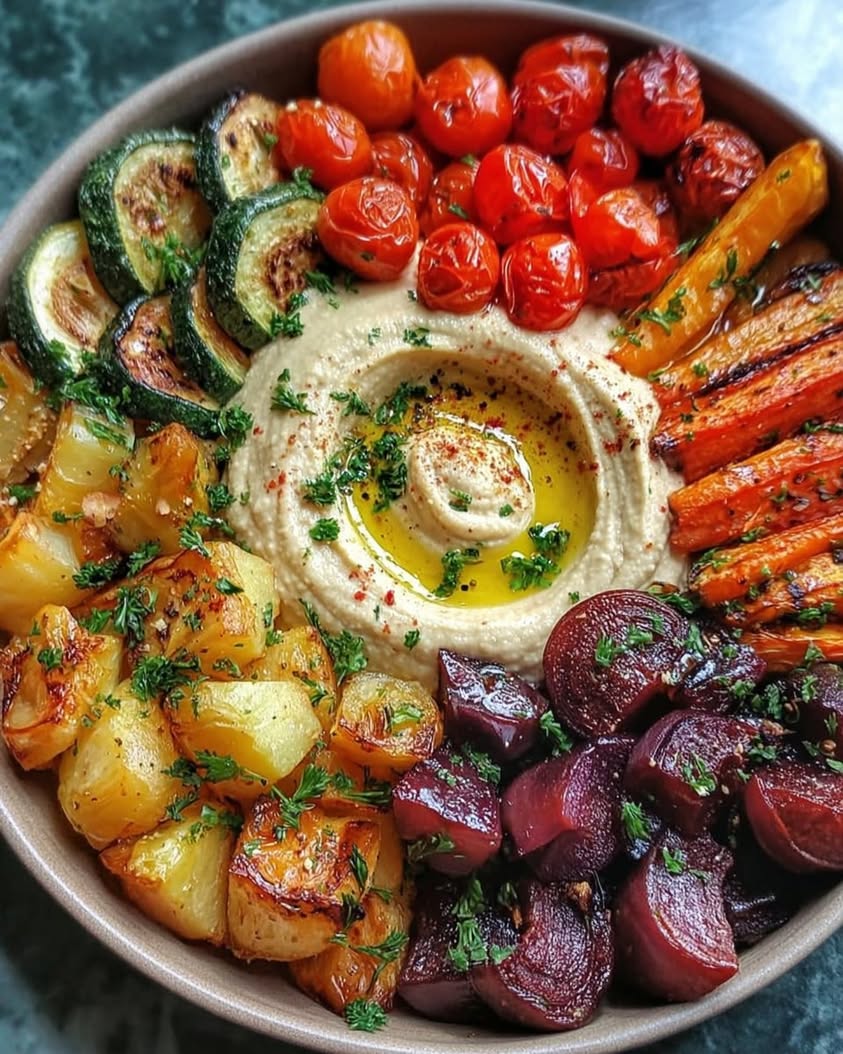
- Visual Appeal: This bowl is a visual feast of colors, with deep orange sweet potatoes, vibrant green broccoli, bright red bell peppers, and golden chickpeas all nestled against a creamy beige hummus base. The contrast of colors makes it incredibly appetizing, and a final drizzle of olive oil adds a glossy sheen that looks professional and inviting.
- Skill Level Needed: This recipe is perfect for beginners and experienced cooks alike. The techniques are straightforward, involving basic chopping and roasting skills. If you can chop vegetables and set a timer, you can absolutely master this healthy bowl recipe on your first try.
- Special Equipment: You will need a large baking sheet for roasting the vegetables and a food processor or high-speed blender to make the hummus. A sharp chef’s knife and a cutting board are essential for prepping your produce. A small bowl for mixing the dressing is also helpful.
Recipe Overview
- Difficulty Level: I classify this roasted veggie bowl as easy because it requires no complicated techniques or hard-to-find ingredients. The most challenging part is timing the vegetables so they all come out of the oven at the same time, but even that is simple with a little planning. This recipe builds confidence in the kitchen, making it a great starting point for anyone new to cooking from scratch.
- Category: This dish fits perfectly into several meal categories. It works wonderfully as a hearty main course for lunch or dinner, especially when you want a plant-based meal that feels substantial. You can also serve it as a side dish alongside grilled chicken or fish, or portion it into smaller bowls for a healthy appetizer at a gathering.
- Cuisine: The roasted veggie bowl draws inspiration from Mediterranean and Middle Eastern culinary traditions, where hummus and roasted vegetables are staples. The use of tahini, chickpeas, and warm spices like cumin and paprika connects it directly to those rich food cultures. This recipe honors those traditions while making the flavors accessible and familiar to a modern American palate.
- Cost: This is a very budget-friendly meal, especially if you buy your vegetables in season. A bag of carrots, a head of broccoli, and a can of chickpeas will cost you just a few dollars. The ingredients for homemade hummus, like tahini and canned chickpeas, are also affordable and have a long shelf life. You can easily make this entire bowl for under ten dollars, feeding a family of four for very little money.
- Season: While you can enjoy this bowl year-round, it truly shines in the fall and winter months when root vegetables are at their peak. The warm, roasting process is comforting on a cold day, and the bright colors provide a welcome burst of sunshine. However, in the summer, you can easily swap in seasonal vegetables like zucchini, eggplant, or summer squash for an equally delicious version.
- Occasion: This bowl is incredibly versatile for any occasion. It is perfect for a quick and healthy weeknight dinner when you are short on time but still want something homemade. It also makes a fantastic meal-prep option for lunches throughout the week, and it is impressive enough to serve to guests when you want to show off without a lot of stress.
Why You Will Love This Recipe
The taste and texture of this roasted veggie bowl are what truly sets it apart. When you take your first bite, you experience the deep, concentrated sweetness of the roasted vegetables, which is a result of the natural sugars caramelizing in the oven. This sweetness is perfectly balanced by the tangy, savory hummus, creating a flavor profile that is both complex and comforting. The variety of textures keeps each bite interesting, from the creamy hummus to the crunchy chickpeas and the tender vegetables, making it a meal you will genuinely crave.
Convenience is a huge part of why this recipe has become a staple in my kitchen. You do a little bit of prep work, tossing the veggies with oil and spices, and then the oven does the heavy lifting. This gives you thirty minutes of hands-off time to prepare the hummus, set the table, or just relax. The clean-up is also a breeze, especially if you line your baking sheet with parchment paper. This is a perfect example of a healthy bowl recipe that fits seamlessly into a busy lifestyle.
From a nutritional standpoint, this bowl is packed with goodness. You get a wide range of vitamins and minerals from the colorful vegetables, including vitamin C from the bell peppers and beta-carotene from the sweet potatoes. The chickpeas and hummus provide a solid source of plant-based protein and fiber, which helps keep you full and satisfied. The healthy fats from the olive oil and tahini support nutrient absorption and add a richness that makes the meal feel indulgent.
When it comes to social and entertaining value, this bowl is a star. Because your guests can customize their own bowls with different toppings and extra hummus, it creates an interactive and fun dining experience. You can set up a bowl bar with all the fixings and let everyone build their own perfect meal. It caters to a variety of dietary needs effortlessly, making it a stress-free option when you are hosting friends with different eating preferences.
Finally, this recipe is incredibly cost-effective and uses easily accessible ingredients. You do not need any exotic spices or expensive superfoods. Everything you need can be found at your local grocery store for a reasonable price. This makes it an excellent choice for anyone looking to eat healthy without breaking the bank, proving that nutritious food does not have to be a luxury.
Historical Background and Cultural Significance
The concept of the grain bowl, which this roasted veggie bowl exemplifies, has ancient roots in various cultures around the world. From the Buddha bowls of Asian cuisine to the hearty grain and legume combinations of the Mediterranean, the idea of combining vegetables, starches, and protein in a single dish is timeless. In Middle Eastern countries, the combination of hummus, roasted vegetables, and flatbread has been a staple for centuries, emphasizing the use of simple, fresh ingredients to create nourishing meals.
Hummus itself holds a deep cultural significance in countries like Lebanon, Israel, Palestine, and Egypt, where it is more than just a dip; it is a symbol of hospitality and shared meals. Families have passed down their hummus recipes through generations, with each household boasting its own secret twist. The hummus in this roasted veggie bowl connects you directly to that rich tradition, transforming a simple spread into the creamy foundation of a complete meal.
The evolution of the modern roasted veggie bowl reflects a global shift towards plant-forward eating. Chefs and home cooks alike began experimenting with new ways to make vegetables the star of the plate, rather than just a side dish. This recipe draws inspiration from that movement, combining the traditional technique of roasting with the ancient practice of pairing legumes and grains. The result is a dish that feels both modern and deeply rooted in culinary history.
Regional variations of this concept are endless. In the American Southwest, you might find bowls topped with roasted corn, black beans, and a chipotle dressing. In Japan, a similar bowl might feature roasted sweet potatoes, edamame, and a miso-tahini sauce. This flexibility is what makes the healthy bowl recipe so enduring. It adapts to local ingredients and tastes, proving that the core idea of a balanced, satisfying bowl is a universal one.
Ingredient Deep Dive
Chickpeas: Chickpeas, also known as garbanzo beans, have been a dietary staple in the Middle East and India for thousands of years. They are incredibly versatile, used in everything from hummus and curries to salads and stews. Nutritionally, chickpeas are a powerhouse, offering a strong dose of protein and fiber that supports digestion and keeps blood sugar levels stable. When selecting chickpeas for the roasted version, look for dry or canned beans that are firm and unblemished. Canned chickpeas are perfectly fine for convenience, but be sure to drain and rinse them thoroughly to remove excess sodium. For storage, keep dried chickpeas in a cool, dark place, and transfer opened canned chickpeas to an airtight container in the refrigerator. If you do not have chickpeas, you can easily substitute with white beans or even cubes of firm tofu for a different texture.
Sweet Potatoes: Sweet potatoes have a rich history in Central and South America, where they have been cultivated for over five thousand years. They are packed with beta-carotene, which your body converts into vitamin A, supporting healthy vision and immune function. When you choose sweet potatoes for your roasted veggie bowl, look for ones that are firm, smooth, and free of soft spots or cracks. The deeper the orange color, the higher the beta-carotene content. Store them in a cool, dark, and well-ventilated place, but never in the refrigerator, as the cold can alter their flavor. If you want to switch things up, you can use regular potatoes, carrots, or parsnips in their place.
Tahini: Tahini is a paste made from toasted sesame seeds, and it is a cornerstone of Middle Eastern and Mediterranean cooking. It requires the simple technique of grinding the seeds into a smooth, oily paste, which has been done for centuries. Nutritionally, tahini is rich in healthy fats, calcium, and antioxidants, making it a heart-healthy addition to any meal. When purchasing tahini, look for one that is well-stirred and has a smooth, pourable consistency, as the oil can separate. Store it in a cool, dark place after opening, and give it a good stir before each use. If you do not have tahini, you can use almond butter or sunflower seed butter for a similar creamy texture, though the flavor will change.
Broccoli: Broccoli is a cruciferous vegetable that has been cultivated for over two thousand years, originating in the Mediterranean region. It is a nutritional superstar, loaded with vitamin C, vitamin K, and fiber, and it contains compounds that are believed to have cancer-fighting properties. When selecting broccoli, look for tight, dark green florets and firm stalks. Avoid any heads with yellowing or wilting flowers. Broccoli should be stored in a plastic bag in the refrigerator and used within a few days for the best flavor and texture. Broccoli florets roast beautifully, becoming tender and slightly charred. You can substitute it with cauliflower, Brussels sprouts, or asparagus if you prefer.
Common Mistakes to Avoid
- Overcrowding the baking sheet: When you put too many vegetables on the tray, they steam instead of roasting. This leads to soggy, pale vegetables instead of those beautiful caramelized edges. Always spread the vegetables in a single layer with a little space around each piece.
- Using wet vegetables: Adding vegetables straight from a rinse without drying them thoroughly will prevent browning. Excess moisture creates steam, which inhibits the Maillard reaction that gives roasted veggies their deep color and flavor. Pat your vegetables completely dry with a clean kitchen towel.
- Skipping the oil toss: A proper coating of oil is essential for even roasting and crispiness. If you skip the oil, your vegetables will dry out and burn on the outside before they cook through on the inside. Make sure each piece is lightly but evenly coated.
- Not seasoning early enough: Salt and pepper should be added before roasting to draw out moisture and enhance flavor. Adding salt only at the end will result in a less evenly seasoned bowl. Season generously but not heavily.
- Over-blending the hummus: While you want a smooth hummus, blending it for too long can make it warm and grainy as the blades heat up. Blend just until smooth, and add ice water at the end to keep it cool and creamy.
- Forgetting to stir the hummus: A well-stirred hummus is key to a smooth consistency. The tahini and oil separate during storage, so always give your hummus a good mix before using it, whether it is store-bought or homemade.
- Cutting vegetables unevenly: Pieces of different sizes will cook at different rates. Large pieces will be undercooked while smaller ones burn. Take the time to chop everything into uniform, bite-sized pieces for even cooking.
- Skipping the resting time: Letting the roasted vegetables rest for a few minutes after they come out of the oven allows the juices to redistribute. If you serve them immediately, they can be watery and less flavorful. A short rest makes a big difference.
Essential Techniques
The most important technique in this roasted veggie bowl is proper roasting, which involves high heat and adequate spacing. You want to set your oven to a temperature between 400 and 425 degrees Fahrenheit to encourage caramelization without burning. The surface of the vegetables needs direct contact with the hot air of the oven, so spreading them out on the baking sheet in a single layer is crucial. Overcrowding creates steam, which keeps the temperature low and prevents browning. A visual cue for success is when the vegetables are golden brown on the edges and tender all the way through when pierced with a fork. The common pitfall is checking on them too often, which lets out heat and extends cooking time.
Making hummus from scratch is another foundational technique, and it relies on the emulsification of tahini and lemon juice. You start by blending the tahini with lemon juice and a little cold water until it becomes thick and pale, which is called a tahini sauce. This step is essential because it creates a creamy base that prevents the hummus from tasting grainy. Then, you add the chickpeas, garlic, and salt, blending again until perfectly smooth. The key to a light, fluffy hummus is adding ice water at the very end, which aerates the mixture. A visual cue for success is a smooth, satiny texture that slides off a spoon without being runny.
The technique of preparing your vegetables is equally important, starting with proper washing and drying. Washing removes any dirt or pesticides, but drying is the critical step that many cooks overlook. Use a clean salad spinner or a kitchen towel to remove as much moisture as possible. After drying, you toss the vegetables with oil and spices, ensuring each piece is lightly coated. This coating helps the heat transfer directly to the surface of the vegetable. A common pitfall is using too much oil, which can make the vegetables greasy instead of crispy. The visual cue for a properly prepped vegetable is a light, even sheen with no pools of oil in the bowl.
Pro Tips for Perfect Roasted Veggie and Hummus Bowl
One of my best tips is to roast your chickpeas separately from the vegetables because they need a little less time. Adding them to the pan for the last fifteen minutes of cooking will give them a crunchy exterior without burning. This simple adjustment makes a huge difference in texture, giving you perfectly crispy chickpeas every time.
For the creamiest hummus, you should reserve a bit of the liquid from the chickpea can and add it slowly while blending. This aquafaba adds extra creaminess and helps the hummus whip up beautifully. If you are using dried chickpeas, cook them until they are very soft, then use the cooking liquid for the same effect.
Do not be afraid to crank the heat on your oven. Roasting at a high temperature like 425 degrees Fahrenheit is what creates those deeply caramelized spots that are full of flavor. The exterior gets crispy and concentrated, while the inside stays tender and sweet. Keep an eye on your vegetables to prevent burning, but do not open the oven door too often.
Season each component of the bowl individually for the best flavor. Season the vegetables with salt, pepper, and your chosen spices before roasting. Season the hummus with salt, cumin, and a pinch of paprika. Finally, season the assembled bowl with a sprinkle of flaky sea salt and a drizzle of extra virgin olive oil right before serving for a final touch of brightness.
Let your vegetables cool slightly on the baking sheet before transferring them to the bowl. This allows the steam to escape, which helps them maintain their crispy texture. If you pile them into a serving dish immediately, they can steam themselves and become soft. Patience is key for the perfect texture.
For an extra layer of flavor, add a splash of balsamic vinegar to the roasting pan during the last five minutes of cooking. The vinegar reduces and glazes the vegetables, adding a tangy, sweet finish that complements the hummus beautifully. This is a simple upgrade that will make your bowl taste restaurant-quality.
Variations and Adaptations
Regional variations of this healthy bowl recipe are exciting to explore. You can adopt a Mediterranean twist by adding roasted eggplant, zucchini, and bell peppers, then topping everything with crumbled feta cheese and kalamata olives. A Greek salad-style bowl would include cucumber, tomato, red onion, and a drizzle of tzatziki sauce. For a North African flair, you might season the vegetables with harissa paste and top the bowl with preserved lemon and fresh mint. Each region brings its unique spice blend and fresh ingredients, transforming the base recipe into a completely new experience.
Seasonal adaptations ensure you enjoy this roasted veggie bowl all year long. In the spring, use asparagus, artichoke hearts, and fresh peas. Summer calls for zucchini, corn, and cherry tomatoes, which you can roast briefly to intensify their sweetness. Autumn is the perfect time for butternut squash, Brussels sprouts, and sage. Winter offers the best root vegetables like parsnips, turnips, and carrots, which become incredibly sweet when roasted. The heart of the recipe remains the same, only the vegetables change with the season.
Dietary modifications make this recipe accessible to everyone. It is already naturally vegan and gluten-free, making it a safe choice for a wide range of diets. For a lower-carb version, you can skip the grains and double up on the vegetables and chickpeas. For a nut-free version, simply ensure your tahini does not contain any nut cross-contamination and use sunflower seed butter instead of any nut-based ingredient. For a soy-free version, this recipe is already soy-free in its base form, but always check the labels on store-bought tahini if you have severe allergies.
Flavor variations are limited only by your imagination. You can swap the classic cumin and coriander for a smoky chipotle seasoning to create a southwestern flavor profile. Alternatively, use a curry powder blend with turmeric and garam masala for an Indian-inspired bowl. For a more herb-forward version, skip the spice blend and toss the vegetables with fresh rosemary, thyme, and garlic. Each combination creates a distinct personality for your bowl.
Texture modifications can also change the entire experience. For a crunchier bowl, top it with toasted pumpkin seeds, almonds, or crispy fried onions. For a softer, creamier bowl, add a spoonful of avocado or a drizzle of extra tahini sauce. For a grain bowl that is more substantial, use farro or freekeh instead of quinoa or rice. These small tweaks allow you to customize the mouthfeel to exactly what you are craving.
Presentation alternatives can elevate your bowl for a dinner party. Instead of a bowl, consider serving the components on a large platter, family-style, allowing everyone to build their own plate. You can also serve the hummus as a base smear on a flatbread, then pile the vegetables on top for a more rustic, handheld meal. A deconstructed bowl looks stunning and invites interaction at the table.
Serving and Presentation Guide
Plating this roasted veggie bowl is all about creating height and visual interest. Start by spooning a generous base of hummus into the bottom of a wide, shallow bowl. Use the back of a spoon to create a swoop or a well in the center, which catches the vegetables and dressing. Then, arrange the warm roasted vegetables in small piles around the hummus, alternating colors for the best effect. Place the roasted chickpeas on top for a crunchy crown, and finish with a sprinkle of fresh herbs and a drizzle of olive oil.
Garnishing ideas are where you can really shine. Fresh parsley, cilantro, or mint adds a pop of green and a fresh, bright flavor. A sprinkle of smoked paprika or sumac adds a beautiful color and a subtle, smoky tartness. A few toasted sesame seeds or pumpkin seeds provide a nutty crunch. Edible flowers like nasturtiums or pansies add a touch of elegance if you are serving this for a special occasion. The right garnish transforms a simple bowl into a work of art.
Traditional accompaniments for a Mediterranean-style bowl include warm pita bread or flatbread for scooping. A side of hot sauce or a sprinkle of red pepper flakes adds heat for those who enjoy it. A simple lemon wedge on the side allows everyone to add a final squeeze of acidity to their own bowl. These additions make the meal feel complete and interactive.
Modern serving suggestions involve serving the bowl with a side of microgreens or a simple arugula salad dressed with lemon juice. You could also serve it with a side of roasted vegetables for an even more substantial meal. For a lighter option, serve the bowl in a lettuce cup or on a bed of fresh spinach. The possibilities are endless.
Temperature considerations are important for the best eating experience. The hummus should be at room temperature, not cold from the refrigerator, to allow its flavors to shine. The roasted vegetables should be served warm, straight from the oven, or reheated gently. The fresh toppings like cucumber or tomatoes should be cold and crisp. This contrast in temperatures makes each bite more interesting.
Portion control tips help you serve the right amount. A good rule of thumb is to use about half a cup of hummus per person, a generous cup of roasted vegetables, and a quarter cup of chickpeas. The bowl should be full but not overflowing. If you are serving it as a main course, this portion is typically enough for a satisfying meal. As a side, you can reduce the portions by half.
Wine and Beverage Pairing
Wine pairings for this roasted veggie bowl can elevate the entire meal. A crisp, unoaked Sauvignon Blanc is an excellent choice, as its acidity and herbaceous notes will complement the richness of the hummus and the sweetness of the roasted vegetables. A dry rosé also works beautifully, offering a balance between the fruitiness that matches the roasted flavors and the acidity that cuts through the creaminess. For a red wine, try a light-bodied Pinot Noir with earthy undertones that will not overpower the vegetables.
Non-alcoholic alternatives are plentiful and delicious. A sparkling water with a squeeze of lime or a splash of pomegranate juice provides a refreshing, palate-cleansing counterpoint. A chilled hibiscus iced tea offers a floral, slightly tart flavor that pairs well with the savory components. For a more grounded option, a strong, cold-brewed mint tea is incredibly soothing and complements the earthy notes of the dish.
Coffee and tea pairings are also an option, especially if you are serving this bowl for a light dinner or lunch. A cup of green tea with its grassy, slightly astringent flavor can cut through the richness of the hummus. A glass of iced chai latte, with its warming spices like cardamom and cinnamon, can echo the spices in your roasted vegetables. For a cozy winter meal, a cup of hot herbal tea with lemon and ginger is a wonderful companion.
Temperature considerations for your beverages are straightforward. For a cold, refreshing drink on a warm day, choose a chilled Sauvignon Blanc or a sparkling water. For a colder evening, a room-temperature Pinot Noir or a hot cup of tea can be more comforting. Always consider the season and the temperature of the food when selecting a beverage. Serving a hot dish with a cold drink can be a pleasant contrast.
Serving suggestions for beverages include having them on the table before the meal starts so guests can sip while they build their bowls. For a party, consider setting up a small beverage station with a few options. A simple pitcher of infused water with cucumber and mint is always a hit and pairs perfectly with the fresh flavors of the bowl.
Storage and Shelf Life
Proper storage methods are essential to keep your roasted veggie bowl fresh. The components are best stored separately to maintain their individual textures. Place the roasted vegetables in an airtight container lined with a paper towel to absorb excess moisture. Store the hummus in a separate airtight container, pressing a piece of plastic wrap directly onto its surface to prevent a skin from forming. Keep the chickpeas and any fresh toppings in their own containers as well.
Temperature requirements are clear for food safety. All components should be cooled to room temperature within two hours of cooking before you transfer them to the refrigerator. The refrigerator temperature should be set to 40 degrees Fahrenheit or below. The hummus and roasted vegetables will keep well for three to four days when stored correctly. Fresh toppings like cucumber and herbs should be used within one to two days for the best quality.
Container recommendations focus on airtight solutions. Glass containers are ideal because they do not absorb odors and are easy to clean. For the hummus, a container with a tight-fitting lid is important to prevent it from drying out. For roasted vegetables, a container that is not completely full allows a little bit of air circulation, which helps them stay crispier. Avoid using metal containers with acidic foods like the tahini-based hummus.
Signs of spoilage are important to recognize. If the hummus develops an off smell, a sour taste, or visible mold on its surface, you should discard it immediately. Roasted vegetables will become soft and may develop a sour smell if they have spoiled. Fresh herbs will become limp, slimy, or discolored. Use your senses of smell and sight to determine the freshness of your ingredients.
Reheating instructions are crucial for enjoying leftovers. The best way to reheat the roasted vegetables is in the oven or an air fryer to restore their crispy edges. Spread them on a baking sheet and warm them at 350 degrees Fahrenheit for about five to seven minutes. You can also reheat them in a skillet over medium heat. The hummus should be brought to room temperature or slightly warmed, but avoid microwaving it, which can make it grainy.
Freezing guidelines are helpful for long-term storage. The hummus freezes surprisingly well for up to three months. Thaw it in the refrigerator overnight and stir well before serving. Roasted vegetables do not freeze well because their high water content makes them mushy upon thawing. It is best to make a fresh batch of vegetables and chickpeas when you need them.
Make Ahead Strategies
An effective prep timeline makes this a perfect meal-prep recipe. Up to three days ahead, you can wash and chop all your vegetables and store them in separate bags in the refrigerator. You can also make the hummus two days in advance and store it in the fridge. The day you plan to serve, you can roast the vegetables and chickpeas, which takes only about thirty minutes of hands-on time. This strategy allows you to enjoy a fresh, warm meal with very little effort on a busy day.
Storage between steps is critical for maintaining quality. Chopped vegetables should be stored in airtight containers or resealable bags with a paper towel to absorb excess moisture. The hummus should be stored in an airtight container with plastic wrap pressed onto its surface. Cooked chickpeas can be stored in the fridge in a covered bowl. Each component needs a specific environment to stay fresh and flavorful during the time between prep and final assembly.
Quality impact assessment of making ahead is generally positive. The hummus often tastes better after a day in the fridge, as the flavors meld together beautifully. The roasted vegetables, while best fresh, are still very tasty when reheated properly. The only quality loss is in the texture of the vegetables, which may be slightly softer than immediately after roasting. Fresh toppings like herbs should always be added just before serving to maintain their bright flavor and color.
Assembly tips for make-ahead success are simple. Keep the bed of greens or grains separate from the warm components until you are ready to serve. If you assemble everything ahead of time, the vegetables will make the greens soggy. It only takes a minute to warm the vegetables and spoon them over the hummus and greens. This last-minute assembly ensures a perfect bowl every time.
Reheating guidelines for make-ahead bowls are important to follow. The best method is to reheat the vegetables individually, not in a microwave, which makes them soft. A toaster oven or air fryer works wonders for restoring their crispiness. The hummus should be served at room temperature, so take it out of the fridge about thirty minutes before serving. Fresh elements like cucumber or tomatoes should be added cold right before serving for a refreshing crunch.
Fresh element additions at serving time elevate the dish. A squeeze of fresh lemon juice, a drizzle of high-quality olive oil, and a sprinkle of fresh herbs should always be done at the last minute. These elements add brightness and life to a meal that was prepped ahead. Do not skip these final touches, as they make the biggest difference in taste and presentation.
Scaling Instructions
Halving the recipe is straightforward and works well for smaller households. Simply use half the amount of each ingredient, but keep the roasting time and temperature the same. You will need a smaller baking sheet to prevent overcrowding. If you are making a half-batch of hummus, a small food processor may be necessary to achieve a smooth blend. The cooking times for the vegetables will remain similar, but you should check for doneness a few minutes early.
Doubling or tripling the recipe for a crowd requires some planning. You will need to use multiple baking sheets to ensure the vegetables are in a single layer. Place the baking sheets on different racks in the oven and rotate them halfway through cooking for even browning. The hummus can be doubled easily in a larger food processor or blender. You may need to blend it in batches if your equipment is not large enough.
Equipment adjustments for larger batches are necessary. A single batch of vegetables fits comfortably on one half-sheet pan. For a double batch, you will need two pans. For a triple batch, you might need three pans or a commercial-sized sheet pan. The same goes for the hummus, as a standard food processor has a maximum capacity of about six to eight cups of ingredients.
Timing modifications for scaled recipes are minor but important. For a double batch of vegetables, the total cooking time may increase by five to ten minutes because of the larger volume of food in the oven. However, because you are roasting in multiple pans, the time may remain the same if you rotate them. The hummus does not require any timing changes, as you simply blend until smooth.
Storage considerations for larger batches are all about space. You will need more containers for the vegetables and hummus. The leftovers should always be cooled to room temperature before storing them in the refrigerator. If you have made a massive batch, consider freezing the hummus in smaller portions for later use. The roasted vegetables should be consumed within a few days, so plan accordingly.