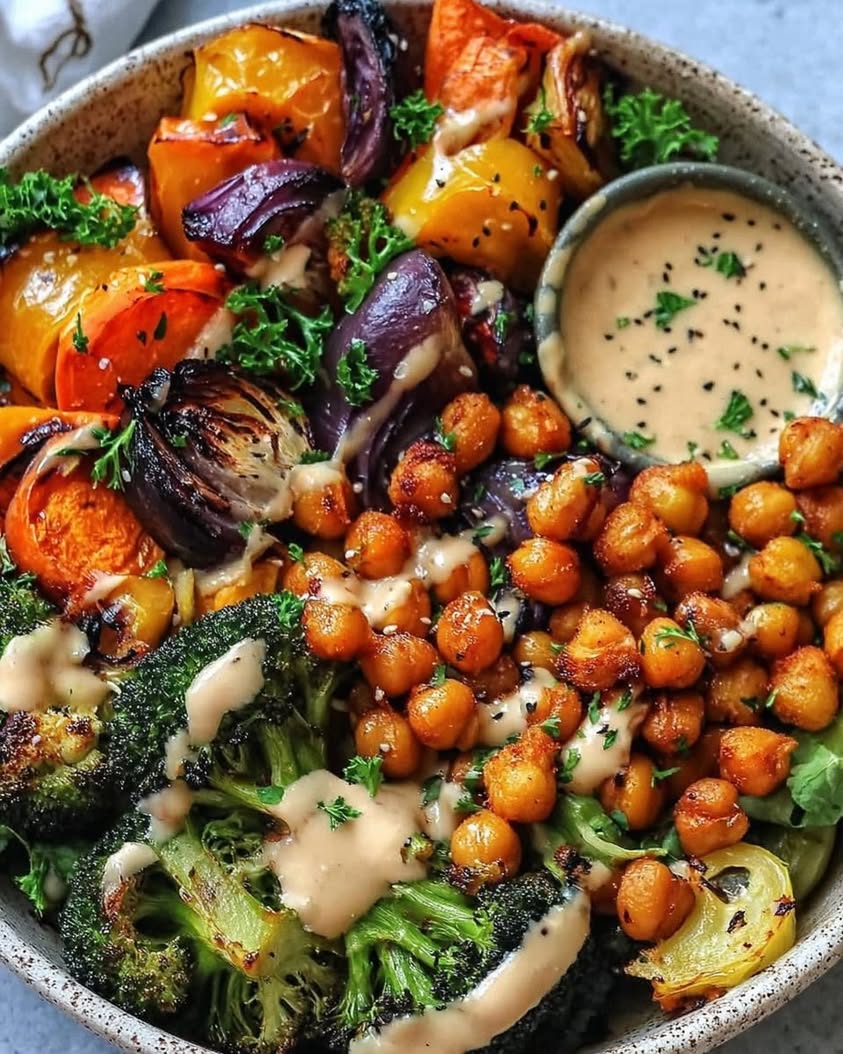
Roasted Veggie and Chickpea Bowls with Maple Dijon Tahini Recipe: A Bowl of Comforting Goodness
This Roasted Veggie and Chickpea Bowls with Maple Dijon Tahini Recipe is exactly what you need for a healthy, satisfying weeknight dinner. Imagine tender sweet potatoes, earthy beets, and crispy chickpeas all drizzled with a creamy, tangy-sweet dressing. The magic happens when the vegetables caramelize in the oven, developing a deep, rich flavor that pairs perfectly with the nutty tahini sauce.
You can easily prep all the ingredients in one sheet pan, which makes cleanup a breeze. The combination of roasted vegetables and protein-packed chickpeas creates a hearty meal that will leave you feeling full and energized. Furthermore, the Maple Dijon dressing brings everything together with its perfect balance of sweetness and tang.
When you take that first bite, you will taste the smoky sweetness of the roasted vegetables mixed with the crunchy, spiced chickpeas. The creamy, cool tahini dressing adds a luxurious finish that makes this bowl feel decadent yet wholesome. Therefore, this Roasted Veggie and Chickpea Bowls with Maple Dijon Tahini Recipe is a true crowd-pleaser for any home cook.
Quick Recipe Highlights
- Flavor Profile: This bowl offers a wonderful combination of sweet, savory, and tangy flavors. The natural sweetness of the roasted vegetables pairs beautifully with the savory, spiced chickpeas, and the Maple Dijon dressing adds a delightful tanginess.
- Texture: You get a fantastic mix of textures with each bite. The roasted vegetables are tender and soft, the chickpeas are perfectly crispy, and the dressing is smooth and creamy, which adds a wonderful contrast.
- Aroma: The kitchen will fill with the warm, inviting aroma of roasting vegetables and spices. The scent of caramelizing sweet potatoes and earthy cumin creates a comforting and appetizing atmosphere.
- Visual Appeal: The bowl is a vibrant canvas of colors, featuring the deep orange of sweet potatoes, the rich red of beets, the green of fresh herbs, and the golden brown of the chickpeas. The creamy dressing adds a final touch of elegance.
- Skill Level Needed: This recipe is perfect for beginner and experienced cooks alike. There are no complicated techniques to master; it simply requires basic chopping and roasting skills.
- Special Equipment: You only need a sheet pan, a mixing bowl, and a small jar for the dressing. This makes the recipe incredibly accessible and easy to prepare.
Recipe Overview
- Difficulty Level: We rate this recipe as easy because the process is straightforward and involves no advanced cooking methods. The steps are simple to follow, and you can multitask easily by roasting the vegetables while you prepare the dressing. Even a novice cook will find this recipe approachable and successful.
- Category: This versatile dish is perfect for a main course dinner, a satisfying lunch, or even a hearty meal-prep option. You can serve it as a grain bowl with rice or quinoa, or enjoy it on its own for a lighter meal.
- Cuisine: While the bowl concept is modern and globally inspired, the flavors draw heavily from Middle Eastern and Mediterranean traditions. The use of tahini, cumin, and paprika speaks to these cuisines, while the maple syrup adds a distinctly American twist. This fusion creates a unique and delicious flavor profile.
- Cost: This bowl is very budget-friendly. The main ingredients, such as sweet potatoes, beets, and chickpeas, are inexpensive and widely available. The tahini and maple syrup are slightly more of an investment, but you will have them on hand for future recipes. Overall, this is an affordable meal for any family.
- Season: This recipe is perfect for fall and winter when root vegetables are at their peak. The warm, roasted flavors are incredibly comforting during the colder months. However, you can easily adapt it for spring and summer by using seasonal produce like zucchini, bell peppers, or asparagus.
- Occasion: These bowls are perfect for casual family dinners, quick weeknight meals, and healthy meal prep. They are also impressive enough to serve to guests for a simple yet elegant lunch or dinner. The colorful presentation makes them a hit at any gathering.
Why You Will Love This Recipe
The taste and texture appeal of this bowl is unmatched. You get a delightful symphony of flavors with every forkful. The sweet potatoes become caramelized and soft, the beets offer an earthy sweetness, and the chickpeas provide a satisfying crunch, all complemented by the creamy, complex dressing. This combination is so delicious that you will forget you are eating a meal packed with vegetables and plant-based protein.
Convenience is a major factor in why this recipe is a winner. You only need one sheet pan for the vegetables and chickpeas, which means less mess and faster cleanup. In addition, the dressing is made in a jar, so you just shake it up. This efficiency makes it an ideal choice for busy weeknights when you want a wholesome meal without spending hours in the kitchen.
The nutritional advantages are a huge benefit. This meal is loaded with fiber from the chickpeas and vegetables, which keeps you feeling full and supports digestive health. You also get a hefty dose of vitamins A and C from the sweet potatoes and beets, as well as healthy fats from the olive oil and tahini. It is a balanced, nutrient-dense meal that supports your overall wellness.
From a social and entertaining perspective, these bowls are a fantastic choice. You can set up a bowl bar and let your guests customize their own meals. They can choose their base, add their favorite toppings, and drizzle the dressing to their liking. This interactive approach makes dinner more fun and ensures everyone gets exactly what they want.
Finally, this recipe is cost-effective and uses accessible ingredients. You can find everything you need at any standard grocery store without breaking the bank. Furthermore, you can easily swap in whatever vegetables you have on hand, making it a great way to use up leftover produce. This adaptability makes it a sustainable and budget-friendly meal choice.
Historical Background and Cultural Significance
The concept of a bowl meal, where various components are served together in a single bowl, has roots in many ancient cultures. In Korea, you have bibimbap, and in Japan, you have donburi. These dishes all showcase the idea of a complete, balanced meal presented beautifully in one vessel. Our Roasted Veggie and Chickpea Bowls with Maple Dijon Tahini Recipe draws inspiration from this global tradition, but with a flavor profile that is distinctly modern and fusion.
The cultural importance of the bowl meal lies in its ability to create a balanced, wholesome plate. It encourages the consumption of a variety of food groups in a single sitting. In many cultures, this style of eating represents comfort, community, and resourcefulness, as it allows you to use up leftover ingredients and create something new and delicious. This recipe particularly highlights the value of plant-based eating, which is a growing trend in Western cuisine.
This specific recipe has evolved from the popular grain bowl trend that emerged in the United States over the last decade. People began seeking out healthier, more customizable alternatives to traditional sandwiches and salads. The addition of tahini, a staple of Middle Eastern cuisine, and maple syrup, a classic American sweetener, represents a beautiful evolution, where global flavors blend to create something entirely new and approachable for the home cook.
Regional variations of this bowl are endless. In the southern United States, you might find black-eyed peas and collard greens. On the West Coast, you might see avocado and quinoa. Mediterranean versions use feta cheese and olives. The beauty of the Roasted Veggie and Chickpea Bowls with Maple Dijon Tahini Recipe is its flexibility; you can easily adapt it to incorporate the flavors of your favorite cuisine, making it a universal dish that everyone can enjoy.
Ingredient Deep Dive
Sweet potatoes are the star of this dish. They have a fascinating history, originating in Central and South America thousands of years ago. They are a nutritional powerhouse, packed with beta-carotene, which your body converts into vitamin A, supporting eye health and immune function. When selecting sweet potatoes, look for firm, smooth-skinned potatoes without any soft spots or cracks. Store them in a cool, dark, well-ventilated place, and never refrigerate them, as cold temperatures can alter their flavor. For substitution, you can use carrots, butternut squash, or regular potatoes.
Chickpeas, also known as garbanzo beans, are a staple legume that has been cultivated for over 7,500 years in the Middle East. They are an incredible source of plant-based protein and fiber, which helps regulate blood sugar and promotes satiety. When buying canned chickpeas, look for low-sodium options and always rinse them thoroughly to remove excess sodium and improve their texture. For storage, keep unopened cans in a cool pantry, and transfer leftover cooked chickpeas to an airtight container in the fridge. You can substitute chickpeas with lentils, white beans, or cubed firm tofu for a different texture.
Tahini is a paste made from toasted, ground sesame seeds and is a cornerstone of Mediterranean and Middle Eastern cooking. It is rich in healthy unsaturated fats, calcium, and magnesium. For the best flavor, always look for tahini that is made from 100% sesame seeds, without any added oils or preservatives. Once opened, store tahini in the refrigerator to prevent the oil from separating and to keep it fresh for longer. If you do not have tahini, you can make a similar dressing using sunflower seed butter or almond butter, but the flavor will be different.
Maple syrup is a natural sweetener made from the sap of maple trees, primarily harvested in the northeastern United States and Canada. It provides a distinct, complex sweetness that is less processed than refined sugar. It also contains antioxidants and minerals like zinc and manganese. When buying maple syrup, choose 100% pure maple syrup, and avoid pancake syrups that are often flavored corn syrup. Store pure maple syrup in the refrigerator after opening to prevent mold from forming. You can substitute it with honey, agave nectar, or a date syrup for a similar sweetness.
Dijon mustard is a smooth, creamy mustard made from brown or black mustard seeds and white wine. It adds a tangy, sharp flavor that cuts through the richness of the tahini and maple syrup in the dressing. It is a classic condiment in French cuisine and helps to emulsify the dressing, giving it a creamy texture. When selecting Dijon mustard, look for brands that use real ingredients and avoid those with artificial flavors. It has a very long shelf life when stored in the refrigerator. For a substitute, you can use whole grain mustard, spicy brown mustard, or a pinch of mustard powder mixed with vinegar.
Common Mistakes to Avoid
- Overcrowding the baking sheet: This is a common mistake that results in steamed, rather than roasted, vegetables. When vegetables are too close together, they release moisture and never caramelize properly.
- Not drying the chickpeas: Wet chickpeas will not get crispy in the oven. After rinsing them, be sure to pat them very dry with a clean kitchen towel or paper towels to remove all excess moisture.
- Cutting vegetables into uneven sizes: When your vegetable pieces are different sizes, some will burn while others remain undercooked. Aim for uniform, bite-sized cubes so everything roasts evenly.
- Forgetting to season the vegetables: Simply tossing vegetables with oil is not enough. Be generous with salt, pepper, and your desired spices. Seasoning is crucial for bringing out their natural flavors.
- Making the dressing too early: Tahini-based dressings can thicken significantly when refrigerated. It is best to make the dressing just before you are ready to serve the bowls.
- Not tasting the dressing before serving: You must taste your dressing and adjust the seasonings. It may need a pinch more salt, a squeeze of lemon, or a touch more maple syrup to balance the flavors perfectly.
- Skipping the resting time: After roasting, letting the vegetables rest on the baking sheet for a few minutes allows them to finish cooking and makes them easier to handle without falling apart.
- Using a dull knife: A dull knife makes cutting vegetables more difficult and dangerous. It can also cause vegetables to tear unevenly. Use a sharp chef’s knife for clean, even cuts.
- Adding dressing to the entire bowl at once: If you are meal prepping, keep the dressing separate and add it only when you are ready to eat. This prevents the vegetables from becoming soggy.
- Ignoring the oven temperature: Ensure your oven is fully preheated to the correct temperature. If your oven runs hot or cold, it can dramatically affect the roasting time and texture of the vegetables.
Essential Techniques
Roasting is the primary technique in this recipe. The key to successful roasting is high heat, typically around 400 to 425 degrees Fahrenheit. This high temperature encourages the Maillard reaction, which is the chemical process that creates those delicious brown, caramelized bits on the vegetables. To master this, make sure your oven is fully preheated and your vegetables are in a single layer on the sheet pan. The visual cue for success is when the edges of the vegetables are golden brown and slightly crispy.
Properly drying the chickpeas is a simple but essential technique. Wet chickpeas steam instead of roasting, leading to a soft, unappealing texture. After draining and rinsing them, spread them on a clean kitchen towel and gently pat them dry. You can even let them air dry for a few minutes. This step ensures that the oil and spices stick to the chickpeas, allowing them to become wonderfully crunchy in the oven. The visual cue is when the chickpeas are dry to the touch and no longer shiny with excess water.
Making an emulsion for the dressing is a valuable skill. In this recipe, the Dijon mustard acts as an emulsifier, helping the oil and vinegar-based ingredients blend together into a creamy, stable sauce. To make the dressing, combine all ingredients in a jar and shake vigorously. The mustard and maple syrup help to bind the water and oil components. If your dressing separates over time, just give it another good shake. The visual cue for a successful emulsion is a thick, uniform, and creamy dressing that does not separate immediately.
Seasoning in layers is a technique that builds depth of flavor. You start by tossing the vegetables with salt, pepper, and oil before roasting. Then, you season the chickpeas with a different spice blend. Finally, the dressing provides another layer of flavor. This multi-step approach ensures every component of the bowl is flavorful on its own, creating a more complex and delicious final dish. The visual cue is seeing the spices evenly coating all the ingredients, creating a vibrant and appetizing appearance.
Pro Tips for Perfect Roasted Veggie and Chickpea Bowls
First, use high-quality olive oil for roasting. Not only does it help with browning, but it also adds a rich, fruity flavor that enhances the vegetables. A good extra-virgin olive oil is worth the investment for this recipe. Second, give your vegetables enough space on the sheet pan. If they are crowded, they will steam. Use two sheet pans if necessary to ensure a single, even layer.
Third, do not skip the step of flipping your vegetables halfway through roasting. This ensures even cooking and browning on all sides. Use a spatula to gently turn them over after 15 minutes. Fourth, for extra crispy chickpeas, toss them with a little bit of cornstarch before adding the oil and spices. This simple trick helps create an incredibly crunchy exterior that stays crisp longer.
Fifth, let your roasted vegetables cool for a few minutes on the baking sheet. This helps them firm up and makes them easier to transfer to the bowl without breaking. Sixth, make the dressing while the vegetables are roasting. This saves time and allows the flavors to meld together. Seventh, always taste your dressing before drizzling it on the bowl. You may want to adjust the sweetness or acidity to your personal preference.
Eighth, add a fresh element to the bowl for contrast. A handful of fresh arugula, some chopped parsley, or a squeeze of lemon juice over the top can brighten the entire dish. Ninth, for a heartier bowl, serve it over a bed of cooked quinoa, farro, or brown rice. This adds extra fiber and makes the meal even more filling. Tenth, if you are making this for meal prep, store the components separately to maintain the best texture throughout the week.
Variations and Adaptations
For a Mediterranean-inspired variation, swap the beets for roasted eggplant and zucchini. Add a generous sprinkle of crumbled feta cheese, some Kalamata olives, and a handful of fresh mint. The creamy feta will complement the tangy tahini dressing beautifully. This version brings a more pronounced briny and herby flavor to the bowl.
To adapt this for an autumn meal, use roasted butternut squash, Brussels sprouts, and apples. The sweetness of the squash and apples pairs wonderfully with the maple in the dressing, while the Brussels sprouts add a slightly bitter, nutty flavor. This seasonal adaptation is perfect for a cozy fall dinner and uses produce that is readily available during those months.
For a gluten-free version, this recipe is naturally gluten-free as written. However, if you plan to serve it over a grain, be sure to choose a certified gluten-free option like quinoa or rice. Always double-check that your Dijon mustard and other condiments are also certified gluten-free to avoid any cross-contamination.
For a different flavor profile, try a spicy harissa version. Mix a tablespoon of harissa paste into the chickpeas before roasting for a smoky, fiery kick. The heat from the harissa pairs incredibly well with the sweet, creamy tahini dressing. This adaptation is fantastic for those who enjoy a little bit of spice in their meals.
If you prefer a softer texture, you can steam the vegetables before roasting them. Par-steaming them for 5 minutes will reduce the overall roasting time and result in a much more tender interior. This technique is especially helpful for denser vegetables like carrots and beets, ensuring they are perfectly cooked through without burning on the outside.
Serving and Presentation Guide
For plating, start with a generous base of your chosen grain, such as fluffy quinoa or hearty farro. Then, arrange the roasted vegetables and chickpeas artfully on top, grouping them in separate piles for a vibrant, composed look. This presentation makes the bowl look more visually appealing and allows each element to shine.
Garnish the bowl with a sprinkle of fresh herbs like parsley, cilantro, or dill. A few toasted pumpkin seeds or sesame seeds add a wonderful crunch and visual interest. Finally, a light drizzle of the Maple Dijon dressing on top, with a small extra bowl on the side, gives a professional touch and lets your guests add more dressing as they desire.
Traditionally, these bowls are served warm, as the roasted vegetables are at their peak flavor straight from the oven. However, they are also delicious at room temperature, making them perfect for packed lunches or picnics. You can serve them immediately with a dollop of Greek yogurt or a sprinkle of crumbled goat cheese for added creaminess. For a modern twist, consider adding a soft-boiled egg on top for extra protein.
For portion control, aim for about one cup of roasted vegetables and half a cup of chickpeas per serving. If you are using a grain base, you can use a similar amount. This ratio creates a well-balanced meal that is satisfying without being overly heavy. Adjust the amounts based on your personal hunger levels and dietary needs.
Wine and Beverage Pairing
A crisp, unoaked Chardonnay or a dry Riesling pairs beautifully with the creamy, tangy dressing and sweet roasted vegetables. The acidity in these wines helps cut through the richness of the tahini, while their subtle fruit notes complement the caramelized vegetables. A Sauvignon Blanc is also an excellent choice, especially with its herbaceous undertones.
For a non-alcoholic option, a sparkling water with a squeeze of lemon or lime is perfect. The bubbles cleanse your palate between bites, and the citrus brightens the overall flavor of the bowl. Alternatively, a glass of iced green tea with a hint of mint provides a refreshing, healthy companion that will not overpower the dish.
If you prefer red wine, a light-bodied Pinot Noir or a Beaujolais Nouveau are good choices. Their lower tannins and bright fruit flavors will not clash with the earthiness of the beets and chickpeas. Serve the wine slightly chilled, especially if you are enjoying the bowl at room temperature.
For coffee or tea, a light, floral oolong tea or a classic chamomile tea is a wonderful way to end the meal. The delicate flavors of these teas do not compete with the main dish. Avoid very heavy or bitter teas, as they can clash with the sweetness of the dressing. A simple, warm herbal tea is the perfect palate cleanser.
Storage and Shelf Life
Store the roasted vegetables and chickpeas separately in airtight containers in the refrigerator. They will keep for up to four days. The dressing should also be stored in a sealed jar in the fridge, where it will remain fresh for up to a week. This method best preserves the texture of each component.
The ideal temperature for storage is your standard refrigerator setting, which is around 37 to 40 degrees Fahrenheit. Do not leave the cooked ingredients out at room temperature for more than two hours to ensure food safety. Always let them cool completely before sealing them in containers to prevent condensation, which can make them soggy.
Use glass or BPA-free plastic containers with tight-fitting lids. For the dressing, a glass jar is best because it does not absorb odors or stains. Avoid using metal containers for the dressing, as the acidity can react with the metal and alter the flavor.
Signs of spoilage include a sour smell, a slimy texture on the vegetables, or any visible mold. If the dressing develops an off odor or separates in a way that shaking cannot fix, it is time to discard it. Always trust your senses when checking for food safety.
To reheat the vegetables and chickpeas, spread them on a baking sheet and warm them in a 350-degree Fahrenheit oven for about 10 minutes. This will help restore some of their crispiness. You can also reheat them in a skillet on the stovetop. Avoid using the microwave, as it will make them soggy and unappealing.
Freezing is not recommended for this recipe, as the vegetables will become mushy upon thawing. The chickpeas will also lose their crunchy texture. It is best to enjoy these bowls fresh or within a few days of preparation for the best quality and taste.
Make Ahead Strategies
You can prepare the components of this bowl up to two days in advance. Roast the vegetables and chickpeas as directed, then cool and store them separately in the refrigerator. This makes assembly on the day of serving incredibly fast. You just need to bring everything to room temperature or reheat it.
During the prep timeline, you can also make the dressing up to a week ahead. Store it in a jar in the fridge, and give it a good shake before using. The flavors actually meld and improve over time. This makes the dressing a great make-ahead component.
When storing between steps, keep the dressing and the dry components completely separate. Do not add the dressing to the bowl until you are ready to eat, as the vegetables will absorb the liquid and become soft. This is the most important rule for maintaining quality.
The quality impact of making these bowls ahead is minimal if you follow the storage guidelines. The roasted vegetables will still be delicious, though they may lose a bit of their initial crispiness. The chickpeas might also soften slightly. However, the overall flavor remains fantastic.
For assembly on the day of serving, if you are reheating, do so in the oven for the best texture. If you are serving them cold, simply let them sit at room temperature for 10 minutes to take the chill off. Then, add your fresh elements like greens and herbs, and finish with the dressing.
To add fresh elements after storage, consider adding a handful of fresh arugula or spinach, some cherry tomatoes, or a squeeze of lemon juice. These fresh additions will brighten up the bowl and add a new layer of texture and flavor that was lost during storage.
Scaling Instructions
To halve this recipe, simply cut all ingredient amounts in half. You will need a smaller baking sheet, but be sure not to overcrowd the vegetables. The roasting time should remain about the same, but check for doneness a few minutes early. This is perfect for a single serving or a smaller household.
For doubling or tripling the recipe, you will need two or three large baking sheets. It is important to avoid overcrowding, even when scaling up. Use multiple oven racks and rotate the pans halfway through the roasting time to ensure even cooking. The timing may increase slightly because of the larger volume of food.
Equipment adjustments are crucial when scaling. You might need larger mixing bowls to toss the vegetables with oil and spices. Make sure your food processor or blender, if using one for a larger batch of dressing, is large enough to handle the volume. A standard sheet pan can only hold so much.
Timing modifications will occur. When roasting a larger batch, the vegetables may take a bit longer because they release more moisture. Keep a close eye on them and look for the visual cues of browning and tenderness. The chickpeas may also need an extra 5 minutes to achieve the desired crunchiness.
Storage considerations for a doubled batch are simple. Use larger airtight containers or divide the components into multiple containers. The dressing can be stored in a large jar. The shelf life remains the same, but you have more food to eat, so you must plan accordingly to consume it before it spoils.
Nutritional Deep Dive
This bowl is an excellent source of complex carbohydrates and dietary fiber. The sweet potatoes and chickpeas provide slow-release energy, which helps maintain stable blood sugar levels and keeps you feeling full for hours. The fiber content also promotes healthy digestion and regularity. This makes it a perfect meal for sustained energy.
You will also get a significant amount of plant-based protein from the chickpeas. Combined with the healthy fats from the tahini and olive oil, this creates a well-balanced macronutrient profile. The protein helps with muscle repair and satiety, while the healthy fats support brain function and nutrient absorption.
The micronutrient analysis is impressive. Sweet potatoes are loaded with vitamin A, which is crucial for eye health and immunity. Beets provide folate, manganese, and potassium. Chickpeas are rich in iron and magnesium. The tahini dressing adds calcium and copper. This is a nutrient-dense meal that supports overall health.
Health benefits include reduced inflammation due to the antioxidants found in the vegetables and olive oil. The fiber helps lower cholesterol and improves heart health. The combination of nutrients supports a healthy immune system. This meal is a fantastic choice for anyone looking to eat a more balanced, plant-forward diet.
For dietary considerations, this meal is naturally vegan, gluten-free, and dairy-free. It is low in saturated fat and has no added refined sugar when using pure maple syrup. It is also a great source of energy for athletes or anyone with an active lifestyle. The portions are well-calibrated for a satisfying main course.
For weight management, the high fiber and protein content promotes satiety, which helps prevent overeating. The healthy fats also contribute to feelings of fullness. The meal is calorie-dense in a healthy way, providing plenty of nutrients without empty calories. This makes it an excellent choice for a weight-loss or maintenance plan.
Dietary Adaptations
This recipe is naturally gluten-free, making it a safe and delicious option for those with celiac disease or a gluten sensitivity. Simply ensure you are using certified gluten-free ingredients, especially if you are serving it with a grain like quinoa. The dressing is made without any flour or wheat-based products, so it is perfectly safe.
This bowl is naturally dairy-free, as written. The creamy texture comes entirely from the tahini dressing, which is made from ground sesame seeds. There is no need for any dairy substitutes, making this a perfect choice for anyone avoiding milk, cheese, or other dairy products. The recipe is completely plant-based.
This is a vegan recipe by default. There are no animal products whatsoever in the ingredients list. The chickpeas provide the protein, the vegetables provide the bulk, and the dressing provides the fat and flavor. It is a fantastic option for vegans looking for a hearty, satisfying meal that is also full of flavor.
For a low-carb version, replace the sweet potatoes with lower-carb vegetables like cauliflower, broccoli, or zucchini. You can also skip the chickpeas to reduce the carbohydrate content further. The dressing is naturally low in carbs if you use a sugar-free maple syrup alternative or reduce the amount of maple syrup used.
For a keto-friendly adaptation, focus on high-fat, low-carb vegetables like cauliflower, avocado, and leafy greens. Increase the amount of olive oil and tahini in the dressing to boost the fat content. You can also add some toasted nuts or seeds for extra fat and crunch. The chickpeas should be omitted or used in very small amounts due to their carbohydrate content.
For a paleo-friendly version, omit the chickpeas, as legumes are not allowed on the standard paleo diet. Replace them with additional roasted vegetables or some grilled chicken. The dressing is paleo-friendly with its use of tahini, olive oil, and maple syrup. This adaptation keeps the core concept of a roasted vegetable bowl intact.
Troubleshooting Guide
If your vegetables are not browning, your oven temperature might be too low, or you are overcrowding the baking sheet. Increase the heat to 425 degrees Fahrenheit or use two sheet pans to give them more space. You can also try broiling them for the last 2 minutes of cooking, but watch them carefully to prevent burning.
If your dressing is too thick, it is a common issue with tahini. Simply add warm water, one tablespoon at a time, and whisk vigorously until it reaches your desired consistency. The warm water helps to loosen the tahini without breaking the emulsion. You can also add a little extra lemon juice for more tang.
If your chickpeas are not getting crispy, they were likely not dried thoroughly before roasting. Next time, pat them very dry and toss them with a small amount of cornstarch before adding oil. Also, make sure they are in a single layer on the baking sheet and not touching each other. This allows for maximum air circulation.
If your dressing tastes too bitter, it is likely due to the tahini. Some brands of tahini can be very bitter. Try adding an extra tablespoon of maple syrup or a pinch of salt to balance the flavor. You can also blend in a small clove of garlic for extra depth. If it is still too bitter, you may need to start with a different brand.
If your beets are staining everything, it is a common issue. Toss beets in their own bowl with oil and spices before adding them to the sheet pan. This prevents the red pigment from bleeding onto the sweet potatoes. You can also line your baking sheet with parchment paper for easier cleanup.
If your vegetables are burning on the bottom but are not cooked through, your oven temperature is likely too high. Lower the heat to 375 or 400 degrees Fahrenheit and roast them for a longer time. This allows the inside to cook through before the outside gets too dark. Use an oven thermometer to ensure accuracy.
Recipe Success Stories
Many home cooks have shared their success with this Roasted Veggie and Chickpea Bowls with Maple Dijon Tahini Recipe. One reader named Sarah said the bowl was a game-changer for her meal prep. She loved how easy it was to make a large batch on Sunday and have healthy lunches ready for the entire week. She particularly enjoyed the dressing, which she now keeps on hand for other salads.
A community member named Mark tried a variation by adding spicy chorizo to the bowl for his family. He said the smokiness of the sausage paired perfectly with the sweet potatoes and the tangy dressing. This adaptation was a huge hit with his kids, who normally are not big fans of vegetables. It shows how flexible the recipe is for different palates.
Another reader, Emily, adapted the recipe for a potluck by serving all the components separately in a bowl bar. She said it was a huge success because everyone could build their own bowl. The colors were beautiful, and the dressing was a showstopper. She received many compliments and requests for the recipe. This is a great example of the recipe’s social entertainment value.
A reader named David added a southwest twist by using black beans instead of chickpeas and adding corn and avocado. He said the combination was fresh and vibrant, and the dressing worked beautifully with the new flavors. He Print
Roasted Veggie & Chickpea Bowls with Maple Dijon Tahini Dressing
- Total Time: 45 minutes
- Yield: 4
Description
A hearty and flavorful bowl featuring caramelized roasted vegetables and crispy chickpeas, drizzled with a creamy maple Dijon tahini dressing. Perfect for a satisfying and healthy meal.
Ingredients
- 1 medium sweet potato, peeled and cubed
- 1 red bell pepper, chopped
- 1 zucchini, chopped
- 1 red onion, chopped
- 1 can (15 oz) chickpeas, drained and rinsed
- 2 tablespoons olive oil
- 1 teaspoon smoked paprika
- 1/2 teaspoon garlic powder
- Salt and black pepper to taste
- 4 cups cooked quinoa or mixed greens
- For the dressing: 1/4 cup tahini
- 2 tablespoons maple syrup
- 1 tablespoon Dijon mustard
- 2 tablespoons lemon juice
- 2-3 tablespoons water (to thin)
- Salt to taste
Instructions
- Preheat oven to 400°F (200°C). Line a baking sheet with parchment paper.
- In a large bowl, combine sweet potato, bell pepper, zucchini, red onion, and chickpeas. Drizzle with olive oil, and sprinkle with smoked paprika, garlic powder, salt, and pepper. Toss to coat evenly.
- Spread the vegetables and chickpeas in a single layer on the prepared baking sheet. Roast for 25-30 minutes, stirring halfway through, until vegetables are tender and chickpeas are slightly crispy.
- While roasting, make the dressing: In a small bowl, whisk together tahini, maple syrup, Dijon mustard, and lemon juice. Add water a tablespoon at a time until the dressing reaches a pourable consistency. Season with salt to taste.
- Assemble the bowls: Divide the cooked quinoa or mixed greens among four bowls. Top with the roasted vegetables and chickpeas. Drizzle generously with the maple Dijon tahini dressing.
- Serve immediately, optionally garnished with fresh herbs like parsley or cilantro.
Notes
You can customize the seasonings to taste. For extra protein, add grilled chicken or tofu. The dressing can be made ahead and stored in the fridge for up to a week.
- Prep Time: 15 minutes
- Cook Time: 30 minutes
- Method: Main
- Cuisine: American