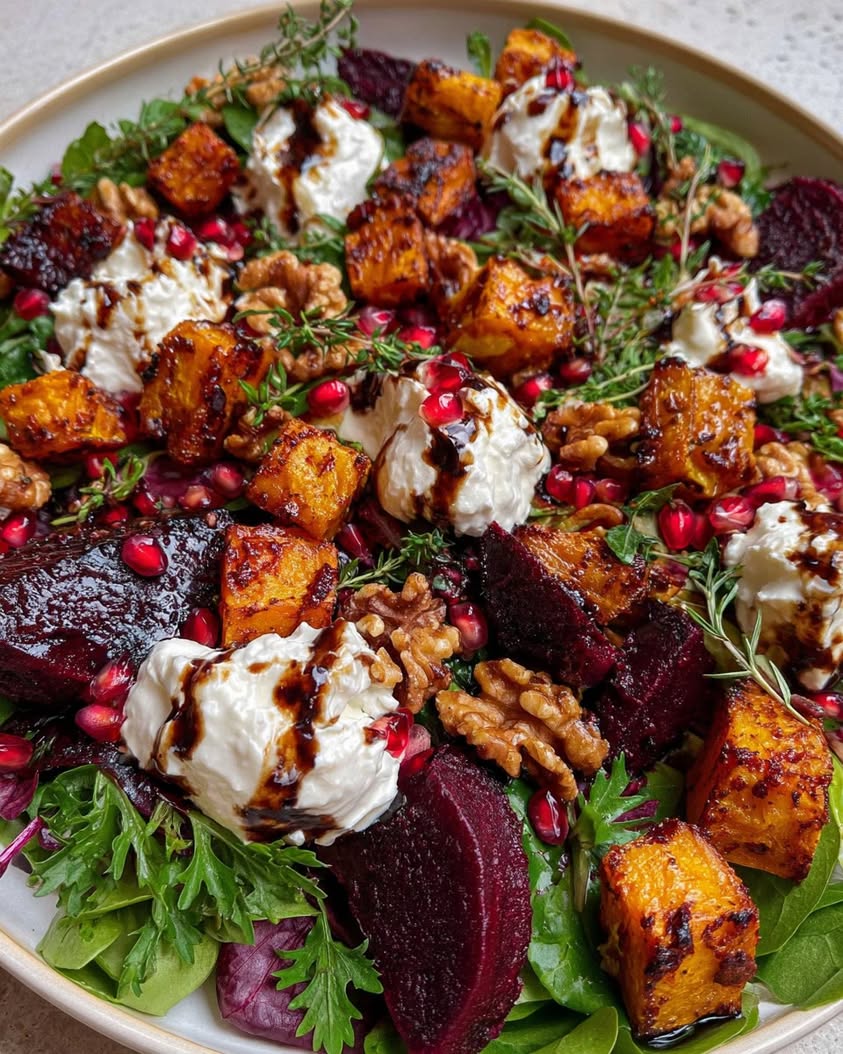
Roasted Pumpkin and Beetroot Salad with Creamy Goat Cheese: A Rustic Autumn Classic
This Roasted Pumpkin and Beetroot Salad with Creamy Goat Cheese brings the warmth of autumn straight to your table. Therefore, when the air turns crisp and the leaves start to fall, you will crave something hearty yet fresh. The natural sweetness of roasted pumpkin meets the earthy depth of beetroot. Meanwhile, creamy goat cheese adds a tangy richness that ties everything together. As a result, this salad feels both comforting and elegant. In addition, a simple maple vinaigrette brightens each bite with just the right amount of acidity. Consequently, you get a dish that works as a weeknight side or a holiday centerpiece.
Furthermore, this roasted pumpkin and beetroot salad with creamy goat cheese requires only ten everyday ingredients. You likely already have most of them in your pantry. Moreover, the oven does most of the work, so you can focus on other tasks. While the vegetables roast, you can whip up the dressing and toast the nuts. Subsequently, the whole dish comes together in under an hour. Even better, it looks stunning on a platter without any fussy plating techniques. Additionally, the contrast of orange pumpkin and deep red beetroot creates a visual feast. Thus, your guests will think you spent hours in the kitchen.
Interestingly, this salad also happens to be naturally gluten free and packed with nutrients. Both pumpkin and beetroot deliver fiber, vitamin A, and antioxidants. Meanwhile, goat cheese provides protein and calcium. As a result, you can feel good about serving this dish to family and friends. However, the true magic lies in the balance of flavors and textures. Roasted vegetables bring caramelized sweetness, while the dressing adds zing. Then, crunchy pepitas and creamy cheese complete the experience. Consequently, this roasted pumpkin and beetroot salad with creamy goat cheese will become a staple in your seasonal rotation.
Quick Recipe Highlights
- Flavor Profile: This salad balances sweet, earthy, tangy, and savory notes. Roasted pumpkin and beetroot bring natural caramelized sweetness. Meanwhile, creamy goat cheese adds a bright tang that cuts through the richness.
- Texture: You get tender, soft roasted vegetables alongside crisp baby greens. Moreover, toasted pepitas deliver a satisfying crunch. Then, the creamy goat cheese adds a smooth, luxurious mouthfeel.
- Aroma: The kitchen fills with the warm scent of roasting pumpkin and earthy beetroot. Additionally, cinnamon and nutmeg in the dressing add cozy spice notes. As a result, the aroma alone makes your mouth water.
- Visual Appeal: Deep ruby beetroot and vibrant orange pumpkin create a striking contrast. Furthermore, white goat cheese crumbles and green arugula add pops of color. Thus, the salad looks gorgeous on any table.
- Skill Level Needed: This recipe suits beginners and experienced cooks alike. Essentially, you need basic knife skills and an oven. Therefore, even a novice can nail this dish on the first try.
- Special Equipment: You will need a large sheet pan and a small jar for shaking the dressing. Additionally, a good chef’s knife makes cubing the vegetables easier. However, you can use a whisk and bowl if you do not have a jar.
Recipe Overview
- Difficulty Level: This recipe earns an easy rating because it uses simple techniques. Roasting and assembling require no advanced culinary training. Moreover, the dressing comes together in a jar with a quick shake. Consequently, anyone can make this dish with confidence.
- Category: This salad works as a side dish, appetizer, or light main course. Furthermore, you can serve it as part of a holiday spread or a casual lunch. Additionally, it pairs well with roasted meats, soups, or crusty bread.
- Cuisine: This recipe draws from modern American farm-to-table cooking. It also borrows from Mediterranean traditions of roasting vegetables and pairing them with cheese. Meanwhile, the maple vinaigrette adds a distinctly North American touch. As a result, it feels both familiar and sophisticated.
- Cost: You can make this salad for about twelve to fifteen dollars total. The most expensive item is the goat cheese, which costs around four to five dollars. However, pumpkin and beetroot remain affordable, especially in autumn. Thus, it delivers excellent value for a crowd-pleasing dish.
- Season: Autumn and winter are the ideal seasons for this recipe. During these months, pumpkin and beetroot reach peak sweetness and flavor. Moreover, the warm, spiced notes complement cooler weather. However, you can find decent ingredients year round at most grocery stores.
- Occasion: This salad shines at Thanksgiving, Christmas, and harvest gatherings. Additionally, it works beautifully for dinner parties, potlucks, and Sunday suppers. Meanwhile, you can serve it at casual weeknight meals without any stress. Consequently, it fits almost any occasion.
Why You’ll Love This Recipe
First and foremost, the taste and texture of this roasted pumpkin and beetroot salad with creamy goat cheese will win you over instantly. The pumpkin turns tender and sweet after roasting, while the beetroot develops a deep, earthy richness. Meanwhile, the creamy goat cheese adds a tangy contrast that brightens every bite. Additionally, the maple vinaigrette ties all the flavors together with a hint of sweetness and acidity. Then, the toasted pepitas provide a crunch that keeps each forkful exciting. As a result, you get a dish that satisfies on every level.
Secondly, this recipe offers incredible convenience for busy home cooks. You only need one sheet pan and a small jar for the dressing. Furthermore, the oven handles the hardest part while you prep the remaining elements. Moreover, you can roast the vegetables ahead of time and assemble the salad later. As a result, it fits seamlessly into a hectic schedule. Additionally, cleanup takes just minutes because you use minimal equipment. Thus, you spend less time scrubbing and more time enjoying your meal.
Thirdly, the nutritional profile of this salad makes it a smart choice for health-conscious eaters. Pumpkin delivers a hefty dose of vitamin A and fiber, which supports eye health and digestion. Meanwhile, beetroot provides folate, manganese, and antioxidants that promote heart health. Additionally, goat cheese offers protein and calcium without overwhelming your system. Furthermore, the olive oil in the dressing supplies healthy monounsaturated fats. Consequently, you nourish your body while treating your taste buds.
Fourthly, this dish shines as a social and entertaining centerpiece. Its vibrant colors and elegant presentation impress guests without requiring professional plating skills. Moreover, you can serve it family style on a large platter, which encourages sharing. Additionally, the recipe scales easily for larger gatherings. Meanwhile, guests with gluten sensitivities can enjoy it without worry. As a result, you can confidently bring this salad to any potluck or holiday dinner.
Finally, this roasted pumpkin and beetroot salad with creamy goat cheese proves remarkably cost effective. Root vegetables and squash remain among the most affordable produce items, especially in fall. Furthermore, a little goat cheese goes a long way because its bold flavor spreads across the whole dish. Additionally, pepitas and greens cost very little per serving. Moreover, you can substitute items based on what you already have on hand. Thus, you create a restaurant quality dish on a modest budget.
Historical Background and Cultural Significance
The practice of roasting pumpkin and beetroot dates back centuries across Europe and the Americas. Indigenous peoples in North America cultivated squash long before European settlers arrived. Meanwhile, beetroot gained popularity in Eastern Europe and the Mediterranean region. Additionally, roasting these vegetables over open fires was a common preservation and cooking method. As a result, the combination of sweet squash and earthy roots became a natural pairing in many traditional cuisines.
Culturally, beetroot holds a special place in Eastern European cooking, especially in borscht and pickled preparations. Meanwhile, pumpkin features prominently in American holiday traditions, from pumpkin pie to roasted sides. Furthermore, Mediterranean cultures have long paired roasted vegetables with fresh cheeses like chevre. Consequently, this salad represents a beautiful fusion of these culinary traditions. It honors old world techniques while embracing modern flavor combinations.
The evolution of this recipe reflects broader trends in farm to table dining. During the late twentieth century, chefs began celebrating seasonal produce with minimal intervention. Moreover, the rise of farmers markets encouraged home cooks to explore root vegetables beyond basic preparations. Additionally, the popularity of salads as main courses opened the door for heartier combinations. As a result, roasted pumpkin and beetroot salad with creamy goat cheese emerged as a modern classic.
Regional variations of this salad appear across the United States and beyond. In New England, cooks often add dried cranberries and walnuts for a festive touch. Meanwhile, California versions might include avocado and citrus segments. Furthermore, Australian cooks frequently pair roasted pumpkin with feta and pine nuts. Additionally, French chefs might use chevre and a Dijon vinaigrette. Consequently, you can adapt this dish to reflect your own regional tastes and available ingredients.
Ingredient Deep Dive
Pumpkin serves as the heart of this roasted pumpkin and beetroot salad with creamy goat cheese. Historically, pumpkins originated in Central America and spread worldwide after European exploration. Furthermore, they belong to the squash family, which includes zucchini and butternut squash. Nutritionally, pumpkin delivers massive amounts of beta carotene, which your body converts to vitamin A. Moreover, it provides fiber, vitamin C, and potassium. When selecting a pumpkin, choose a small sugar pumpkin rather than a large carving variety. Additionally, look for a firm, heavy squash with no soft spots. You can store whole pumpkin in a cool, dark place for up to two months. Once cut, refrigerate the pieces in an airtight container for up to five days. If you cannot find pumpkin, substitute butternut squash or acorn squash with excellent results.
Beetroot brings a dramatic color and earthy flavor to this roasted pumpkin and beetroot salad with creamy goat cheese. These root vegetables originated in the Mediterranean region and spread throughout Europe and Asia. Additionally, ancient Romans and Greeks cultivated beets for both food and medicine. Nutritionally, beetroot offers folate, manganese, and nitrates that support blood pressure and exercise performance. Furthermore, the deep red pigment contains antioxidants called betalains. When buying beetroot, select firm, smooth roots with intact stems. Moreover, smaller beets tend to be sweeter and more tender. You can store raw beets in the refrigerator for up to three weeks. Once roasted, keep them in an airtight container for five days. If you want to avoid staining your hands, wear gloves while peeling. For a milder flavor, try golden beets instead of red ones.
Goat cheese, often called chevre, provides the creamy element in this roasted pumpkin and beetroot salad with creamy goat cheese. This cheese originated in France, where farmers have made it for centuries. Furthermore, its tangy flavor comes from the natural acidity of goat milk. Nutritionally, goat cheese contains protein, calcium, and healthy fats. Moreover, it tends to be easier to digest than cow milk cheese for some people. When selecting goat cheese, look for a fresh, soft log or crumbles with a clean, milky smell. Additionally, avoid any cheese that looks dry or crumbly beyond normal texture. You can store goat cheese in the refrigerator for up to two weeks. For a substitute, try feta, ricotta salata, or even cream cheese mixed with lemon juice.
Baby arugula adds a peppery bite that balances the sweetness of the roasted vegetables. This leafy green originated in the Mediterranean and has grown popular worldwide. Furthermore, arugula belongs to the brassica family, along with broccoli and kale. Nutritionally, it provides vitamins A, C, and K, plus calcium and folate. When buying arugula, choose bright green leaves with no yellowing or wilting. Moreover, you can store it in the refrigerator wrapped in a paper towel inside a plastic bag. Use it within three days for the best flavor. If you dislike arugula, substitute baby spinach, mixed greens, or watercress.
Pepitas, or hulled pumpkin seeds, deliver a satisfying crunch to this salad. These seeds have a long history in Mexican and Native American cuisine. Furthermore, they provide magnesium, zinc, and healthy fats. When purchasing pepitas, look for raw, unsalted seeds and toast them yourself for the best flavor. Additionally, store them in an airtight container in a cool, dark place for up to three months. For a substitute, try sunflower seeds, chopped walnuts, or sliced almonds.
Common Mistakes to Avoid
- Cutting the vegetables into uneven pieces leads to uneven roasting. Therefore, take time to cube the pumpkin and beetroot into similar sized chunks. As a result, everything cooks at the same rate.
- Overcrowding the sheet pan causes the vegetables to steam instead of roast. Consequently, you lose the caramelized edges that make this dish special. Instead, use two pans if necessary.
- Under seasoning the vegetables before roasting results in a bland salad. Therefore, toss the pumpkin and beetroot with salt, pepper, and oil before they hit the oven. Additionally, taste a piece after roasting and adjust as needed.
- Skipping the toasting step for pepitas means you miss out on deeper flavor. Consequently, take five minutes to toast them in a dry skillet. Moreover, watch them closely because they burn quickly.
- Dressing the salad too early makes the greens soggy. Therefore, add the vinaigrette just before serving. As a result, the arugula stays crisp and fresh.
- Using cold goat cheese straight from the fridge makes it hard to crumble. Consequently, let it sit at room temperature for fifteen minutes. Then, it breaks apart beautifully.
- Roasting beetroot and pumpkin at the same temperature works fine, but beetroot takes longer. Therefore, cut beetroot into smaller pieces or give it a head start. As a result, both vegetables finish at the same time.
- Forgetting to taste the dressing before pouring it over the salad leads to imbalance. Consequently, dip a leaf of arugula into the vinaigrette and adjust the seasoning. Moreover, add more maple syrup if it tastes too acidic.
- Discarding the beetroot stems and leaves wastes a perfectly good ingredient. Therefore, saute them with garlic and olive oil for a quick side dish. As a result, you get two meals from one bunch.
- Letting the salad sit at room temperature for hours invites food safety issues. Consequently, refrigerate leftovers within two hours of serving. Moreover, keep the dressing separate if you plan to store it.
Essential Techniques
Roasting vegetables properly forms the foundation of this roasted pumpkin and beetroot salad with creamy goat cheese. When you roast at a high temperature, the natural sugars in pumpkin and beetroot caramelize. Moreover, this process creates deep flavor and appealing browning. To master roasting, preheat your oven to four hundred degrees Fahrenheit. Then, toss the cubed vegetables with olive oil, salt, and pepper. Spread them in a single layer on a parchment lined sheet pan. Furthermore, avoid stirring too often because that prevents browning. Instead, flip the pieces once halfway through cooking. You will know they are ready when a fork slides in easily and the edges look golden. Common pitfalls include using too low a temperature or overcrowding the pan. Consequently, you end up with steamed vegetables rather than roasted ones. Visual cues for success include shiny, caramelized edges and a rich, nutty aroma.
Toasting nuts and seeds elevates their flavor and adds textural contrast. When you toast pepitas in a dry skillet over medium heat, their oils release and intensify. Consequently, they taste richer and crunchier than raw seeds. To master this technique, place the seeds in a single layer and stir frequently. Furthermore, watch for the moment they start to pop and smell nutty. Then, remove them from the heat immediately and transfer to a plate. Common pitfalls include walking away and burning the seeds. Additionally, using high heat causes the outside to burn before the inside toasts. Visual cues for success include a light golden color and a fragrant aroma.
Making a balanced vinaigrette requires understanding the ratio of oil to acid. Generally, a three to one ratio of oil to vinegar works well. However, this maple vinaigrette uses slightly more vinegar to cut through the richness of the cheese. To master emulsification, combine all ingredients in a jar and shake vigorously. Moreover, the mustard helps bind the oil and vinegar together. Common pitfalls include adding oil too quickly when whisking by hand. Additionally, forgetting to taste and adjust the seasoning leads to a flat dressing. Visual cues for success include a smooth, slightly thickened consistency that coats the back of a spoon.
Pro Tips for Perfect Roasted Pumpkin and Beetroot Salad with Creamy Goat Cheese
- Choose a sugar pumpkin or kabocha squash for the sweetest, most creamy results. These varieties have denser flesh and less water than carving pumpkins. As a result, they roast beautifully without turning mushy.
- Roast the beetroot separately if you want to keep the pumpkin bright orange. Otherwise, the beet juices will stain the pumpkin and turn everything pink. However, a little staining adds rustic charm if you do not mind.
- Let the roasted vegetables cool to room temperature before assembling the salad. This step prevents the arugula from wilting on contact. Moreover, the flavors meld together beautifully at room temperature.
- Toast the pepitas in a dry skillet with a pinch of salt and a drizzle of maple syrup. This trick turns ordinary seeds into a sweet and salty treat. Consequently, they add an extra layer of flavor to the salad.
- Use a vegetable peeler to create thin ribbons of raw beetroot for garnish. These ribbons add a delicate crunch and a stunning visual element. Furthermore, they require no cooking and take just seconds to make.
- Crumble the goat cheese with your fingers rather than cutting it with a knife. This approach creates irregular, rustic pieces that look more appealing. Additionally, the cheese distributes more evenly throughout the salad.
- Dress the salad in a large bowl and toss gently with your hands. Using your hands gives you better control and prevents bruising the greens. Then, transfer to a serving platter for a beautiful presentation.
- Add a squeeze of fresh lemon juice to the dressing for an extra bright note. The acidity cuts through the richness of the goat cheese and roasted vegetables. As a result, every bite tastes fresh and vibrant.
Variations and Adaptations
Regional variations of this roasted pumpkin and beetroot salad with creamy goat cheese reflect local ingredients and traditions. For example, in the American South, cooks might add candied pecans and a drizzle of sorghum syrup. Meanwhile, in the Southwest, a sprinkle of chili powder and cotija cheese replaces the goat cheese. Furthermore, Mediterranean versions often include olives, red onion, and a lemon oregano dressing. Additionally, Australian cooks favor roasted pumpkin with feta, pine nuts, and baby spinach. Consequently, you can travel the world through this salad by simply swapping a few ingredients.
Seasonal adaptations allow you to enjoy this salad year round with the best produce available. In spring, substitute roasted asparagus and radishes for the pumpkin and beetroot. Meanwhile, summer calls for grilled zucchini, corn, and cherry tomatoes. Furthermore, autumn brings the classic combination of pumpkin and beetroot at its peak. Additionally, winter welcomes hearty additions like roasted Brussels sprouts and sweet potatoes. As a result, you never tire of this salad because it evolves with the seasons.
Dietary modifications make this roasted pumpkin and beetroot salad with creamy goat cheese accessible to almost everyone. For a dairy free version, omit the goat cheese or use a plant based alternative like cashew cheese. Meanwhile, vegans can skip the cheese entirely and add extra toasted seeds for protein. Furthermore, a low carb or keto adaptation works well since pumpkin and beetroot contain moderate carbs. Additionally, for a paleo friendly version, use maple syrup sparingly or substitute with honey. Consequently, you can serve this salad to guests with various dietary needs.
Flavor variations let you customize the salad to your taste preferences. For a smoky twist, add a teaspoon of smoked paprika to the roasting oil. Meanwhile, a spicy version benefits from a pinch of cayenne pepper in the dressing. Furthermore, a citrus forward variation uses orange juice and zest in place of maple syrup. Additionally, an herbaceous adaptation includes fresh thyme and rosemary tossed with the vegetables before roasting. As a result, you can create a new salad every time you make it.
Texture modifications help you adjust the salad to suit different preferences. If you prefer a softer salad, roast the vegetables until very tender and skip the pepitas. Meanwhile, for extra crunch, add broken pita chips or crispy chickpeas. Furthermore, a creamy texture comes from adding a dollop of Greek yogurt or labneh. Additionally, a chewy element like dried cranberries or raisins adds interesting contrast. Consequently, you can make this salad as soft or as crunchy as you like.
Presentation alternatives allow you to serve this roasted pumpkin and beetroot salad with creamy goat cheese in creative ways. Instead of a platter, layer the ingredients in a large shallow bowl for a family style look. Meanwhile, individual plates with arranged components create an elegant plated appetizer. Furthermore, you can stuff the salad into pita pockets or wrap it in flatbread for a handheld meal. Additionally, serving the salad on a bed of warm grains like farro or quinoa turns it into a hearty main course. As a result, you can adapt the presentation to any occasion.
Serving and Presentation Guide
Plating techniques can transform this rustic salad into a stunning centerpiece. Start by spreading a layer of arugula across a large platter or shallow bowl. Then, arrange the roasted pumpkin and beetroot in an alternating pattern for visual interest. Furthermore, scatter the goat cheese crumbles and pepitas over the top. Additionally, drizzle the maple vinaigrette in a zigzag motion just before serving. As a result, the salad looks like a work of art with minimal effort.
Garnishing ideas elevate the visual appeal of this roasted pumpkin and beetroot salad with creamy goat cheese. Fresh herbs like parsley, chives, or mint add a pop of green. Meanwhile, a sprinkle of flaky sea salt and cracked black pepper adds texture and flavor. Furthermore, thin slices of raw apple or pear provide a crisp, sweet contrast. Additionally, a few edible flowers like nasturtiums or violas create a restaurant quality finish. Consequently, your guests will admire the presentation before they even take a bite.
Traditional accompaniments for this salad include crusty sourdough bread and a generous spread of butter. Additionally, a bowl of warm soup like tomato bisque or butternut squash pairs beautifully. Meanwhile, roasted chicken or pork tenderloin turns the salad into a complete meal. Furthermore, a cheese board with crackers and grapes rounds out the spread for entertaining. As a result, you can build an entire menu around this versatile dish.
Modern serving suggestions include layering the salad over warm grains for a hearty bowl meal. Try farro, quinoa, or wild rice as a base. Moreover, add a poached egg on top for a brunch worthy presentation. Additionally, serve the salad in endive leaves as elegant appetizer bites. Furthermore, a wrap or pita pocket makes a portable lunch option. Consequently, this salad adapts to contemporary dining trends with ease.
Temperature considerations play a key role in how this salad tastes and feels. Serving the roasted vegetables slightly warm brings out their sweetness and aroma. Meanwhile, room temperature allows the flavors to meld and the cheese to soften. Furthermore, cold salad works well for picnics and make ahead lunches. Additionally, avoid serving the salad piping hot because it wilts the greens. As a result, aim for warm or room temperature for the best experience.
Portion control tips help you serve this roasted pumpkin and beetroot salad with creamy goat cheese appropriately. As a side dish, plan for about one and a half cups per person. Meanwhile, as a main course, increase the portion to two and a half cups. Furthermore, when serving as an appetizer, one cup per guest works well. Additionally, keep extra dressing on the side so guests can add more if they like. Consequently, everyone gets the perfect amount.
Wine and Beverage Pairing
Wine pairings for this roasted pumpkin and beetroot salad with creamy goat cheese focus on bright, acidic wines that balance the earthy sweetness. A Sauvignon Blanc from New Zealand offers grapefruit and herb notes that complement the goat cheese. Meanwhile, a dry Riesling from Germany brings a touch of sweetness that mirrors the roasted pumpkin. Furthermore, a light Pinot Noir provides red fruit flavors and low tannins that pair beautifully with beetroot. Additionally, a sparkling wine like Prosecco or Cava adds festive bubbles and cuts through the richness. As a result, you have several excellent options for any occasion.
Non alcoholic alternatives ensure everyone can enjoy a thoughtful pairing with this salad. Sparkling water with a splash of cranberry juice and lime offers refreshing acidity. Meanwhile, a ginger beer or ginger ale provides a spicy kick that complements the earthy vegetables. Furthermore, unsweetened iced tea with lemon delivers a crisp, clean finish. Additionally, a apple cider or pear cider brings seasonal sweetness without alcohol. Consequently, you can raise a glass regardless of your drinking preferences.
Coffee and tea pairings might seem unusual for salad, but they can work beautifully. A light roast coffee with citrus notes complements the maple vinaigrette. Meanwhile, a green tea like sencha offers grassy, fresh flavors that echo the arugula. Furthermore, a chai tea with cinnamon and clove enhances the warm spices in the dressing. Additionally, a hibiscus tea provides tartness that mirrors the goat cheese tang. As a result, you can enjoy this salad with your favorite warm beverage.
Temperature considerations for beverages matter when serving this roasted pumpkin and beetroot salad with creamy goat cheese. White wines and sparkling options should be well chilled for maximum refreshment. Meanwhile, light reds taste best slightly below room temperature. Furthermore, non alcoholic drinks benefit from plenty of ice and a fresh garnish. Additionally, warm tea or coffee should be served hot but not scalding. Consequently, the right temperature enhances the overall dining experience.
Serving suggestions for beverages include offering a small tasting flight of wines. This approach lets guests explore different pairings with the salad. Moreover, set up a self serve drink station with a few options and clear labels. Additionally, provide elegant glassware and cloth napkins to elevate the experience. Furthermore, a pitcher of infused water with lemon and herbs keeps things simple and refreshing. As a result, your guests feel pampered and cared for.
Storage and Shelf Life
Storage methods for this roasted pumpkin and beetroot salad with creamy goat cheese depend on whether you have dressed the salad. If undressed, store the roasted vegetables, greens, cheese, and pepitas separately. Furthermore, this separation keeps each component at its best. Meanwhile, if already dressed, transfer the salad to an airtight container and refrigerate. Additionally, place a paper towel over the top before sealing to absorb excess moisture. Consequently, the salad stays fresh for a day or two.
Temperature requirements for storing this salad are straightforward. Keep all components in the refrigerator at or below forty degrees Fahrenheit. Moreover, do not leave the salad at room temperature for more than two hours. Additionally, if the room is warm, reduce that time to one hour. Furthermore, the roasted vegetables can sit out slightly longer than the greens, but safety should always come first. As a result, proper temperature control prevents foodborne illness.
Container recommendations for optimal storage include glass containers with tight fitting lids. Glass does not absorb odors or stain from beetroot, which is a major advantage. Meanwhile, for the greens, use a container lined with a paper towel and leave the lid slightly ajar. Furthermore, for the dressing, a small mason jar with a screw top lid works perfectly. Additionally, for the cheese, wrap it in parchment paper and then place it in a plastic bag. Consequently, each ingredient gets the ideal environment.
Signs of spoilage to watch for include wilting or slimy greens, which indicate bacterial growth. Moreover, if the roasted vegetables develop an off smell or mold, discard them immediately. Additionally, the goat cheese should smell clean and milky, not sour or ammonia like. Furthermore, the dressing should look uniform, not separated with cloudy particles. As a result, you can safely determine when to toss leftovers.
Reheating instructions for this salad are minimal because it tastes best cold or at room temperature. However, if you prefer warm roasted vegetables, spread them on a sheet pan and heat at three hundred fifty degrees for five to seven minutes. Meanwhile, avoid microwaving because it makes the vegetables soggy. Furthermore, do not reheat the greens or cheese. Additionally, add fresh arugula and cheese after reheating the vegetables. Consequently, you get the best of both worlds.
Freezing guidelines for this roasted pumpkin and beetroot salad with creamy goat cheese are limited. You can freeze the roasted vegetables for up to three months in a freezer safe bag. However, the texture will soften significantly upon thawing. Moreover, do not freeze the greens, dressing, or cheese because they do not hold up well. Additionally, thaw frozen vegetables in the refrigerator overnight and use them in a new preparation like a soup or frittata. As a result, you minimize waste while enjoying the salad fresh whenever possible.
Make Ahead Strategies
Prep timeline for making this salad ahead starts with roasting the vegetables up to three days in advance. Furthermore, cool them completely before storing in an airtight container in the refrigerator. Meanwhile, make the dressing up to a week ahead and keep it in a jar in the fridge. Additionally, toast the pepitas up to five days ahead and store them at room temperature. As a result, assembly on the day of serving takes just five minutes.
Storage between steps requires careful separation to maintain quality. Keep the roasted vegetables in one container and the dressing in another. Moreover, store the arugula in its own bag with a paper towel. Additionally, keep the goat cheese wrapped separately. Furthermore, do not combine any elements until you are ready to serve. Consequently, each component stays at its peak freshness.
Quality impact assessment for make ahead preparation shows minimal loss when done correctly. The roasted vegetables actually improve in flavor after a day as the spices meld. Meanwhile, the dressing tastes better after the flavors marry overnight. Additionally, the pepitas stay crunchy if stored properly. However, the arugula loses some crispness after a few days. As a result, plan to use the greens within two days of purchase.
Assembly tips for the day of serving include bringing the roasted vegetables to room temperature. Then, arrange the arugula on a platter and top with the vegetables. Furthermore, crumble the goat cheese over the top and sprinkle with pepitas. Additionally, shake the dressing well and drizzle it over the salad. Consequently, you have a stunning dish ready in minutes.
Reheating guidelines for make ahead salad are simple because you likely will not need to reheat anything. If you prefer warm vegetables, gently warm them in a skillet over medium heat. Meanwhile, avoid overheating because it can make the pumpkin mushy. Furthermore, add the fresh elements after warming the vegetables. Additionally, taste and adjust the seasoning before serving. As a result, the salad tastes freshly made.
Fresh element additions on serving day elevate the make ahead salad. Add a handful of fresh arugula or baby spinach for a pop of green. Moreover, scatter pomegranate arils or dried cranberries for sweetness and color. Furthermore, a squeeze of fresh lemon juice brightens the entire dish. Additionally, a sprinkle of fresh herbs like parsley or mint adds aroma. Consequently, no one will guess you made it ahead.
Scaling Instructions
Halving this roasted pumpkin and beetroot salad with creamy goat cheese works easily for smaller households. Simply use half of each ingredient and roast on a smaller sheet pan. Furthermore, reduce the dressing ingredients by half and shake in a smaller jar. Meanwhile, keep the oven temperature the same but check for doneness a few minutes earlier. Additionally, you may not need the full amount of arugula. As a result, you enjoy the salad without leftovers.
Doubling or tripling the recipe requires a few adjustments for best results. Use two or three sheet pans to avoid overcrowding the vegetables. Moreover, roast in batches if your oven cannot fit multiple pans at once. Furthermore, make the dressing in a larger jar or whisk it in a bowl. Additionally, increase the amount of arugula and pepitas proportionally. Consequently, you can feed a crowd without sacrificing quality.
Equipment adjustments for larger batches include using a commercial size sheet pan if available. Otherwise, work with what you have and roast in shifts. Moreover, a larger salad bowl makes tossing easier when making a big batch. Furthermore, consider using tongs to toss the salad gently. Additionally, have extra serving platters ready for transport. As a result, you stay organized and efficient.
Timing modifications for scaled recipes depend on your oven capacity. When doubling, expect the total time to increase by ten to fifteen minutes if using multiple pans. Meanwhile, if roasting in batches, add thirty minutes to the overall process. Furthermore, keep the vegetables in a warm oven until ready to assemble. Additionally, do not dress the salad until just before serving. Consequently, the final dish tastes perfect.
Storage considerations for scaled batches require ample containers. Use multiple airtight containers for the roasted vegetables. Moreover, store the dressing in a large jar with a tight lid. Furthermore, keep the greens in a large bag or container with paper towels. Additionally, label everything with dates to track freshness. As a result, you can manage the larger quantity with ease.
Nutritional Deep Dive
The macro breakdown of this roasted pumpkin and beetroot salad with creamy goat cheese reveals a well balanced dish. Each serving provides approximately three hundred twenty calories. Furthermore, you get about twelve grams of protein, mostly from the goat cheese and pepitas. Meanwhile, fat content sits around eighteen grams, primarily from olive oil and cheese. Additionally, carbohydrates total about twenty eight grams, with six grams of fiber. As a result, this salad fits into a variety of eating plans.
Micronutrient analysis shows impressive levels of several key vitamins and minerals. Pumpkin delivers over two hundred percent of your daily vitamin A needs in one serving. Meanwhile, beetroot provides folate, manganese, and potassium. Furthermore, goat cheese contributes calcium and phosphorus for bone health. Additionally, pepitas offer magnesium, zinc, and iron. Consequently, this salad supports everything from vision to immune function.
PrintRoasted Pumpkin and Beetroot Salad with Creamy Goat Cheese
- Total Time: 45 minutes
- Yield: 4
Description
A vibrant and hearty salad featuring sweet roasted pumpkin and earthy beetroot, topped with creamy goat cheese, crunchy walnuts, and a drizzle of balsamic vinaigrette. Perfect for a fall or winter meal.
Ingredients
- 500g pumpkin, peeled and cut into 1-inch cubes
- 2 medium beetroots, peeled and cut into 1-inch cubes
- 2 tablespoons olive oil
- Salt and pepper to taste
- 100g goat cheese, crumbled
- 50g walnuts, roughly chopped
- 4 cups mixed salad greens (arugula, spinach, or baby kale)
- 2 tablespoons balsamic vinegar
- 3 tablespoons extra-virgin olive oil
- 1 teaspoon honey
- 1 teaspoon Dijon mustard
- Salt and pepper to taste
Instructions
- Preheat oven to 400°F (200°C). Line a baking sheet with parchment paper.
- In a large bowl, toss pumpkin and beetroot cubes with 2 tablespoons olive oil, salt, and pepper. Spread evenly on the prepared baking sheet.
- Roast for 25-30 minutes, or until vegetables are tender and slightly caramelized, stirring halfway through. Remove from oven and let cool slightly.
- In a small bowl, whisk together balsamic vinegar, extra-virgin olive oil, honey, Dijon mustard, salt, and pepper to make the vinaigrette.
- In a large salad bowl, combine mixed greens, roasted pumpkin, and beetroot. Drizzle with vinaigrette and toss gently.
- Top with crumbled goat cheese and chopped walnuts. Serve immediately.
Notes
You can customize the seasonings to taste. For added crunch, toast the walnuts in a dry skillet for 2-3 minutes before adding. If you prefer a warmer salad, serve the roasted vegetables slightly warm over the greens.
- Prep Time: 15 minutes
- Cook Time: 30 minutes
- Method: Salad
- Cuisine: American