Caramelized Harvest Vegetables with Feta, Pecans & Cranberry-Honey Glaze: A Showstopping Side Dish
If you want a side dish that steals the show at every table, this Caramelized Harvest Vegetables with Feta, Pecans & Cranberry-Honey Glaze delivers in every possible way. Imagine tender cubes of butternut squash and Yukon potatoes turning golden at the edges while carrots soften into sweet ribbons and broccoli florets crisp up in the oven. Then picture a warm cranberry-honey glaze drizzled over the whole pan, followed by a shower of salty feta crumbles and toasted pecans that add crunch to every bite. This is the kind of recipe that makes people ask for seconds before they finish their first plate.
The magic of Caramelized Harvest Vegetables with Feta, Pecans & Cranberry-Honey Glaze comes from the way roasting concentrates natural sugars and deepens flavor. As the vegetables caramelize, they develop a rich, nutty sweetness that pairs beautifully with the tangy cranberry-honey glaze. The feta brings a creamy, salty contrast, and the pecans contribute a buttery crunch that ties everything together. Whether you serve this at a holiday gathering or a casual weeknight dinner, the result feels both comforting and elevated at the same time.
You do not need special culinary training to pull off Caramelized Harvest Vegetables with Feta, Pecans & Cranberry-Honey Glaze. The oven does most of the heavy lifting, and the glaze comes together on the stovetop in under five minutes. Because the recipe uses simple, affordable ingredients that you can find at any grocery store, it fits easily into your weekly rotation. This dish also travels well to potlucks and family dinners, so you can count on it as a reliable crowd-pleaser for years to come.
Quick Recipe Highlights
- Flavor Profile: The Caramelized Harvest Vegetables with Feta, Pecans & Cranberry-Honey Glaze blend sweet, savory, and tangy notes in perfect balance. Roasting brings out the natural sugars in the squash, carrots, and potatoes, while the cranberry-honey glaze adds a bright tartness that cuts through the richness. The feta and pecans round everything out with a salty, buttery finish.
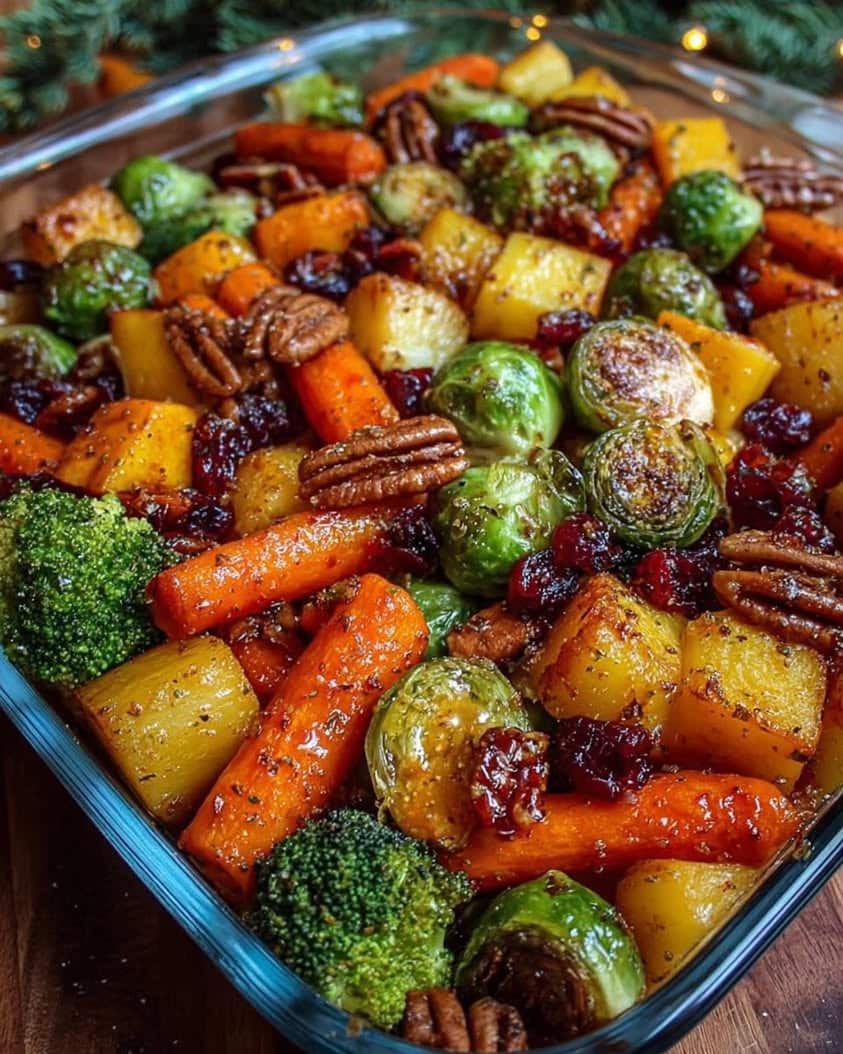
- Texture: You get a wonderful mix of textures in every bite of these Caramelized Harvest Vegetables. The squash and potatoes turn creamy and tender inside with slightly crisp caramelized edges, the broccoli retains a pleasant bite, and the pecans deliver a satisfying crunch. Crumbled feta adds a soft, crumbly contrast that keeps the dish interesting from the first forkful to the last.
- Aroma: As these Caramelized Harvest Vegetables roast, your kitchen fills with the warm, nutty scent of browning butter and caramelizing sugars. The cranberry-honey glaze releases a fruity, tangy aroma that mingles with the earthy vegetables, and the toasted pecans add a deep, toasty note. It is the kind of smell that draws everyone into the kitchen before the dish even hits the table.
- Visual Appeal: This recipe for Caramelized Harvest Vegetables with Feta, Pecans & Cranberry-Honey Glaze looks as stunning as it tastes. The deep orange squash, bright green broccoli, and golden potatoes create a vibrant mosaic on the platter, while the ruby-red glaze and white feta crumbles add jewel-like contrast. Scattered pecans finish the presentation with an rustic, artisanal touch that photographs beautifully.
- Skill Level Needed: These Caramelized Harvest Vegetables suit cooks of any experience level because the technique relies on basic knife skills and oven roasting. If you can chop vegetables into even pieces and stir a glaze on the stove, you can master this dish on your first attempt. The recipe forgives small mistakes, so beginners can build confidence while seasoned cooks can focus on presentation.
- Special Equipment: You need a large rimmed baking sheet to give these Caramelized Harvest Vegetables enough room to roast evenly without steaming. A small saucepan handles the cranberry-honey glaze, and a good chef’s knife makes quick work of the butternut squash and carrots. A silicone spatula and a serving platter complete the setup, and none of these tools require a large investment.
Recipe Overview
- Difficulty Level: These Caramelized Harvest Vegetables with Feta, Pecans & Cranberry-Honey Glaze earn an easy rating because the oven handles the bulk of the cooking. The only real technique involves cutting vegetables into uniform pieces so they roast at the same rate. The glaze takes four to five minutes on the stovetop, and assembling the final dish requires nothing more than sprinkling and drizzling. Anyone who can follow simple timing instructions can succeed here.
- Category: This dish works as a standout side dish, a vegetarian main course when paired with grains, or a holiday table centerpiece. These Caramelized Harvest Vegetables also shine as a potluck contribution or a meal-prep component for the week. Because the recipe covers vegetables, fruit, nuts, and dairy, it bridges several categories on a single plate.
- Cuisine: These Caramelized Harvest Vegetables with Feta, Pecans & Cranberry-Honey Glaze draw inspiration from American harvest cooking with Mediterranean accents. The feta and olive-oil roasting approach nods to Greek and Middle Eastern traditions, while the cranberry-honey glaze reflects New England flavors. Pecans bring a Southern touch, and the combination creates a modern American dish that feels both familiar and fresh. The result is a flexible recipe that fits into many culinary traditions.
- Cost: These Caramelized Harvest Vegetables cost roughly twelve to fifteen dollars to prepare for eight servings, which breaks down to under two dollars per plate. Butternut squash, carrots, broccoli, and Yukon potatoes are among the most affordable produce items at any market. Feta, pecans, and honey add a few dollars, but a little goes a long way, so the dish stays budget-friendly for feeding a crowd.
- Season: Fall and winter highlight these Caramelized Harvest Vegetables because squash, carrots, and cranberries reach peak sweetness during those months. The warm, comforting flavors suit cool-weather gatherings and holiday tables perfectly. You can make the dish year-round, but the ingredients taste best and cost least during the autumn and winter harvest.
- Occasion: These Caramelized Harvest Vegetables with Feta, Pecans & Cranberry-Honey Glaze fit Thanksgiving, Christmas, Easter, and Sunday suppers with equal ease. The recipe also works for casual potlucks, dinner parties, and meal-prep Sundays because it holds up well and reheats beautifully. Serve it whenever you want a side dish that feels celebratory without requiring hours of work.
Why You’ll Love This Recipe
The taste and texture of these Caramelized Harvest Vegetables with Feta, Pecans & Cranberry-Honey Glaze hit every note your palate craves. Sweet caramelized edges from the roasted squash and carrots balance the tangy cranberry-honey glaze, while the salty feta keeps the sweetness in check. Toasted pecans deliver a buttery crunch that contrasts with the creamy Yukon potatoes and tender broccoli. Every bite offers something new, and that variety keeps people coming back for more.
Convenience makes these Caramelized Harvest Vegetables a weeknight hero as well as a holiday star. You chop the vegetables, toss them with oil and seasoning, and let the oven do the work while you handle other tasks. The glaze takes five minutes on the stove, and the final assembly requires no special skill. Cleanup stays minimal because you use one sheet pan and one small saucepan, which means more time at the table and less time at the sink.
Nutrition gives these Caramelized Harvest Vegetables with Feta, Pecans & Cranberry-Honey Glaze serious bragging rights. Butternut squash delivers vitamin A and fiber, carrots add beta-carotene, and broccoli brings vitamin C and antioxidants. Yukon potatoes contribute potassium, pecans supply healthy fats, and feta offers calcium and protein. The honey and cranberries add natural sweetness without refined sugar, so you can feel good about serving this dish to family and guests alike.
Social and entertaining value sets these Caramelized Harvest Vegetables apart from ordinary side dishes. The platter looks impressive enough for a holiday spread, yet the recipe scales easily for larger crowds. Guests with vegetarian, gluten-free, or nut-free needs can enjoy the dish with minor adjustments, which makes hosting simpler. When you bring these Caramelized Harvest Vegetables with Feta, Pecans & Cranberry-Honey Glaze to a potluck, expect requests for the recipe before dessert arrives.
Cost-effectiveness keeps these Caramelized Harvest Vegetables in your regular rotation. The main ingredients are budget-friendly staples that go on sale often, especially during fall and winter. You can stretch the dish further by serving it over rice, quinoa, or farro, which turns a side into a satisfying main course. Compared with store-bought prepared sides, this homemade version delivers more flavor and better nutrition for a fraction of the price.
Historical Background and Cultural Significance
Roasted root vegetables have anchored American harvest tables for centuries, and these Caramelized Harvest Vegetables with Feta, Pecans & Cranberry-Honey Glaze continue that tradition with a modern twist. Indigenous communities across North America cultivated squash, beans, and corn as part of the Three Sisters agricultural system long before European settlers arrived. Early colonial cooks adopted squash and pumpkin into their own fall menus, and the practice of roasting them with fat and sweeteners became a seasonal staple throughout New England.
Cranberries hold deep cultural importance in the northeastern United States, where Native American tribes used them for food, medicine, and dye. The Wampanoag people introduced cranberries to English settlers, and by the early nineteenth century, commercial cultivation had taken root in Massachusetts and New Jersey. The cranberry-honey glaze in these Caramelized Harvest Vegetables draws directly from that heritage and gives the dish a distinctly American identity that resonates with holiday traditions.
The recipe evolved as home cooks began combining roasted vegetables with cheese and nuts for added richness and texture. Feta entered American kitchens through Greek and Mediterranean immigration waves in the twentieth century, and it quickly became a favorite for balancing sweet roasted produce. Pecans, native to the southern United States and northern Mexico, added a buttery crunch that complemented the softer vegetables. Together, these ingredients created a layered dish that reflects the country’s diverse culinary influences.
Regional variations of these Caramelized Harvest Vegetables appear across the country today. New England cooks lean into the cranberry and maple flavors, while Southern versions often use pecans and a touch of brown sugar. Mediterranean-inspired cooks might swap feta for goat cheese or add rosemary and thyme. Whatever the variation, the core idea remains the same: roasted vegetables, a sweet-tangy glaze, and a salty, crunchy finish that makes the dish memorable.
Ingredient Deep Dive
Butternut squash forms the heart of these Caramelized Harvest Vegetables and brings natural sweetness, vibrant color, and a creamy texture to the pan. Native to North America, squash has fed communities for thousands of years and remains a symbol of the fall harvest. Nutritionally, butternut squash delivers impressive amounts of vitamin A, vitamin C, potassium, and fiber, all with very few calories. When you shop, look for squash with a matte, unblemished skin and a heavy feel for its size, which signals dense, ripe flesh. Store whole squash in a cool, dry place for up to three months, but refrigerate cut pieces in a sealed container for up to five days. If you cannot find butternut, acorn, delicata, or kabocha squash all work beautifully in this recipe.
Carrots add color, sweetness, and structure to these Caramelized Harvest Vegetables, and their history stretches back thousands of years to Central Asia. Originally purple and yellow, carrots only became orange through Dutch breeding in the seventeenth century. They provide beta-carotene, fiber, and antioxidants that support eye health and immunity. Choose firm carrots with bright color and smooth skin, and avoid any that feel rubbery or show signs of sprouting. Store carrots in the crisper drawer wrapped loosely in a plastic bag for several weeks. If you prefer, parsnips or sweet potatoes can replace carrots with equally delicious results.
Broccoli contributes bright green color and a pleasant bite to these Caramelized Harvest Vegetables, and it has been cultivated in the Mediterranean region since ancient Roman times. This cruciferous vegetable packs vitamin C, vitamin K, folate, and fiber, along with compounds linked to cancer prevention. Select broccoli with tight, dark green florets and firm stalks, and skip any heads that look yellowed or wilted. Keep broccoli in the refrigerator in a perforated bag for up to a week. Cauliflower or Brussels sprouts make excellent substitutes if you want to change the texture profile.
Yukon potatoes give these Caramelized Harvest Vegetables a buttery, creamy base that balances the sweeter vegetables. Named for Canada’s Yukon region, this variety became popular in the late twentieth century for its golden flesh and smooth texture. Yukon potatoes supply potassium, vitamin C, and complex carbohydrates that provide lasting energy. Look for firm, smooth potatoes without green spots or sprouts, and store them in a cool, dark place away from onions. Red potatoes or baby gold potatoes work as easy swaps when Yukon varieties are unavailable.
Feta cheese brings salty, tangy richness to these Caramelized Harvest Vegetables and traces its origins to Greece, where it has been made for centuries. Traditional feta uses sheep’s milk or a blend of sheep and goat milk, which gives it a distinctive briny flavor. It provides calcium, protein, and probiotics that support bone health and digestion. Buy feta packed in brine for the best flavor and texture, and keep it refrigerated in its brine for up to two weeks after opening. Goat cheese, cotija, or a mild blue cheese can stand in for feta if you want a different flavor profile.
Pecans add buttery crunch and Southern charm to these Caramelized Harvest Vegetables, and they are the only major tree nut native to North America. Indigenous communities relied on pecans for centuries before commercial orchards spread across Georgia, Texas, and Mexico. Pecans deliver healthy monounsaturated fats, vitamin E, and antioxidants that support heart health. Choose pecans that feel heavy and smell nutty, and avoid any that seem shriveled or rancid. Store them in an airtight container in the freezer for up to a year. Walnuts or almonds can replace pecans if needed, though the flavor will shift slightly.
Cranberries and honey create the signature glaze for these Caramelized Harvest Vegetables and bring bright tartness balanced by floral sweetness. Cranberries have grown in North American bogs for thousands of years and remain a beloved fall ingredient. They supply vitamin C, fiber, and antioxidants, while honey adds natural sweetness and antimicrobial properties. Choose fresh cranberries that feel firm and have shiny skins, and refrigerate them for up to a month. Raw honey works best for flavor, though maple syrup can substitute for a vegan version. Dried cranberries also work in a pinch when fresh ones are out of season.
Common Mistakes to Avoid
- Crowding the pan is the most common mistake with these Caramelized Harvest Vegetables, because overcrowding traps steam and prevents browning. Spread the vegetables in a single layer with space between pieces so the heat circulates freely. Use two sheet pans if necessary, and rotate them halfway through roasting for even caramelization.
- Cutting vegetables into uneven sizes causes some pieces to burn while others stay raw in these Caramelized Harvest Vegetables. Aim for uniform one-inch cubes across the squash, potatoes, and carrots so everything finishes at the same time. Take an extra minute with the knife, and you will avoid disappointing texture differences on the plate.
- Adding the glaze too early causes the honey and cranberries to burn before the vegetables finish roasting in these Caramelized Harvest Vegetables. Wait until the vegetables are nearly tender, then drizzle the glaze and return the pan to the oven for the final few minutes. This timing keeps the glaze glossy instead of scorched.
- Skipping the preheat leaves these Caramelized Harvest Vegetables roasting at the wrong temperature and produces pale, soft results. Preheat the oven fully to 425 degrees Fahrenheit before the pan goes in, and give it at least fifteen minutes to reach temperature. A hot oven creates the caramelized edges that define this dish.
- Under-seasoning is a frequent issue with these Caramelized Harvest Vegetables because people fear oversalting. Season the vegetables in layers with salt and pepper before roasting, then taste and adjust after adding the feta. The cheese adds saltiness, so balance the final dish before serving.
- Overcooking broccoli turns these Caramelized Harvest Vegetables mushy and dull in color. Add the broccoli to the pan partway through roasting so it spends less time in the oven than the denser squash and potatoes. Check for bright green color and a tender-crisp bite as your cue to remove the pan.
- Using wet vegetables prevents browning in these Caramelized Harvest Vegetables because moisture creates steam instead of caramelization. Pat the vegetables dry with paper towels after washing and before tossing with oil. Dry surfaces are the secret to golden, crispy edges.
- Forgetting to toast the pecans leaves these Caramelized Harvest Vegetables with a flat, raw nut flavor instead of a rich, buttery one. Toast the pecans in a dry skillet over medium heat for three to four minutes, or in the oven alongside the vegetables for the final five minutes. Watch them closely because nuts burn quickly.
- Making the glaze too far in advance causes it to thicken and crystallize before you need it in these Caramelized Harvest Vegetables. Prepare the glaze while the vegetables roast, and keep it warm over low heat until ready to drizzle. Fresh glaze coats the vegetables evenly and looks glossy on the platter.
- Serving the dish cold mutes the flavors of these Caramelized Harvest Vegetables and makes the feta and pecans less appealing. Plate the dish while the vegetables are still warm so the feta softens slightly and the glaze stays fluid. Warm serving temperature brings out the best in every ingredient.
Essential Techniques
Even chopping is the foundation of successful Caramelized Harvest Vegetables because uniform pieces roast at the same rate. Cut the squash, potatoes, and carrots into one-inch cubes, and separate the broccoli into similar-sized florets. This step matters because uneven pieces create a mix of burnt and undercooked bites that ruin the texture. Master the technique by cutting flat sides first to stabilize the vegetable, then cube steadily with a sharp chef’s knife. Visual cues include pieces that look roughly the same size when spread on the pan, and a good practice is to sort any oversized pieces onto the outer edges where heat runs hotter.
Proper oil coating ensures these Caramelized Harvest Vegetables brown instead of steam during roasting. Toss the vegetables with enough olive oil to give every piece a light, even sheen, which usually means two to three tablespoons for a large sheet pan. This technique matters because oil conducts heat and helps the surface caramelize. Master it by drizzling oil gradually and tossing with your hands or a spatula until no dry patches remain. Visual cues include a glossy but not greasy surface, and a common pitfall is over-oiling, which makes the vegetables soggy and smoking in the oven.
High-heat roasting creates the signature caramelization in these Caramelized Harvest Vegetables and develops deep, sweet flavor. Set the oven to 425 degrees Fahrenheit and place the rack in the center position for even browning. This technique matters because lower temperatures produce pale, soft vegetables without the golden edges that define the dish. Master it by preheating fully and avoiding the temptation to open the oven door frequently, which releases heat. Visual cues include edges that turn golden brown and a nutty aroma, with a pitfall being a cold oven that leaves everything limp.
Making the cranberry-honey glaze requires gentle simmering to balance tartness and sweetness in these Caramelized Harvest Vegetables. Combine fresh cranberries, honey, and a splash of water in a small saucepan over medium heat, then simmer until the berries burst and the mixture thickens slightly. This technique matters because the glaze needs body to cling to the vegetables without turning into syrup. Master it by stirring frequently and mashing the berries with a spoon to release their pectin. Visual cues include a glossy, spoon-coating consistency, and a common pitfall is boiling too hard, which scorches the honey.
Toasting pecans unlocks their full flavor in these Caramelized Harvest Vegetables and adds a layer of warmth that raw nuts cannot match. Toast them in a dry skillet over medium heat for three to four minutes, stirring constantly, or in the oven for five minutes at 350 degrees Fahrenheit. This technique matters because toasting transforms the natural oils and creates a deeper, butterier taste. Master it by watching closely and removing the nuts as soon as they smell fragrant. Visual cues include a slightly darker color and a nutty aroma, and a pitfall is walking away, since pecans burn in seconds.
Pro Tips for Perfect Caramelized Harvest Vegetables
Use a heavy-duty rimmed baking sheet for these Caramelized Harvest Vegetables because thin pans warp at high heat and create hot spots. A sturdy aluminum or stainless steel pan distributes heat evenly and produces consistent caramelization across the surface. Avoid glass dishes for this recipe, since they can crack under the high temperature and do not brown vegetables as effectively.
Cut the butternut squash into pieces slightly smaller than the potatoes and carrots because squash cooks faster in these Caramelized Harvest Vegetables. This small adjustment prevents the squash from turning to mush before the denser vegetables finish roasting. A quick visual check at the twenty-minute mark helps you confirm that everything is cooking at the right pace.
Toss the broccoli with oil separately and add it to the pan at the twenty-minute mark when making these Caramelized Harvest Vegetables. Broccoli needs less time in the oven than squash and potatoes, and this staggered timing keeps it bright green and tender-crisp. If you add everything at once, the broccoli overcooks and loses its texture.
Warm the honey slightly before mixing the glaze for these Caramelized Harvest Vegetables so it combines smoothly with the cranberries. Room-temperature or cold honey clumps and takes longer to melt into the berry juices. Ten seconds in the microwave or a minute in a warm saucepan makes the process quick and even.
Reserve a few toasted pecans and a pinch of feta to scatter on top of these Caramelized Harvest Vegetables right before serving. This final flourish creates a fresh, photogenic finish and adds a burst of texture on the surface of the dish. Presentation matters, and this small step takes only a few seconds.
Use a fish spatula or thin metal spatula to turn these Caramelized Harvest Vegetables during roasting so the caramelized edges stay intact. Thick spatulas crush delicate squash cubes and smear the glaze. Gentle turning preserves the beautiful golden crusts that make this dish look and taste impressive.
Let the finished Caramelized Harvest Vegetables rest for five minutes before adding the feta so the cheese softens slightly without melting completely. This short rest lets the glaze set and makes the dish easier to plate. It also allows the flavors to mingle and intensifies the overall taste.
Double the glaze recipe when making these Caramelized Harvest Vegetables for a crowd because extra glaze makes the dish more festive and ensures every serving gets a generous drizzle. Store leftover glaze in the refrigerator for up to a week and reheat it gently before using. Extra glaze also tastes wonderful drizzled over roasted pork or chicken.
Variations and Adaptations
Regional variations of these Caramelized Harvest Vegetables reflect local produce and flavor traditions across the country. New England cooks often increase the cranberry content and add a drizzle of maple syrup for deeper sweetness. Southern versions lean on pecans and a pinch of brown sugar in the glaze, while Mediterranean-inspired cooks swap feta for goat cheese and add rosemary or thyme to the roasting pan. Each variation keeps the core concept intact while introducing a distinct regional personality.
Seasonal adaptations keep these Caramelized Harvest Vegetables relevant year-round by swapping produce based on availability. In spring, substitute asparagus and radishes for broccoli and potatoes, and use fresh berries in the glaze. Summer versions work well with zucchini, bell peppers, and cherry tomatoes, while winter calls for parsnips, rutabaga, and delicata squash. Adjust roasting times based on the density of the vegetables you choose.
Dietary modifications make these Caramelized Harvest Vegetables accessible to nearly everyone at the table. For vegan versions, replace honey with maple syrup and omit the feta or use a dairy-free cheese alternative. Gluten-free diners can enjoy the dish as written since it contains no wheat products. Nut-free guests need only omit the pecans or substitute toasted sunflower seeds for a similar crunch.
Flavor variations let you reinvent these Caramelized Harvest Vegetables with global inspirations. Add cumin and smoked paprika for a Southwestern twist, or incorporate curry powder and cilantro for an Indian-inspired version. A Moroccan approach uses ras el hanout, dried apricots, and pistachios, while a classic French version features herbes de Provence and goat cheese. Each variation takes the base recipe in an exciting new direction.
Texture modifications help you customize these Caramelized Harvest Vegetables to your preferences. For a crispier finish, roast the vegetables five extra minutes at the end and broil briefly, watching carefully to avoid burning. For a softer, more comforting texture, cover the pan with foil during the last ten minutes of roasting. Adjust the nut and cheese amounts to increase or decrease the crunch factor.
Presentation alternatives make these Caramelized Harvest Vegetables suitable for any table setting. Serve them on a rustic wooden board for a farmhouse feel, or arrange them in a shallow ceramic dish for a more elegant look. Individual ramekins work well for plated dinners, while a large cast iron skillet creates a dramatic centerpiece. The dish looks beautiful however you choose to present it.
Serving and Presentation Guide
Plating techniques elevate these Caramelized Harvest Vegetables from a simple side to a showpiece dish. Spread the vegetables across a large platter in a single layer so each piece stays visible and the colors pop. Group similar colors loosely rather than mixing everything together, which creates visual interest and lets guests see the individual components. Drizzle the glaze in thin ribbons across the top rather than pouring it in a puddle, and finish with feta and pecans scattered by hand for a natural look.
Garnishing ideas for these Caramelized Harvest Vegetables add freshness and visual appeal without extra effort. A sprinkle of fresh thyme, rosemary, or parsley brings a bright green contrast to the warm tones of the vegetables. Pomegranate seeds can replace or complement the cranberries for a jeweled look, and a few flaky sea salt crystals add sparkle. Microgreens or edible flowers create an elegant finish for holiday tables.
Traditional accompaniments for these Caramelized Harvest Vegetables include roasted turkey, glazed ham, and herb-roasted chicken, which all pair beautifully with the sweet-tangy glaze. Serve the dish alongside mashed potatoes, stuffing, and green beans for a complete holiday spread. For a vegetarian meal, pair it with wild rice pilaf, quinoa, or crusty bread to round out the plate.
Modern serving suggestions for these Caramelized Harvest Vegetables include using them as a grain bowl topping or folding them into a warm farro salad. Layer the vegetables over whipped ricotta or hummus for an elegant appetizer, or tuck them into a wrap with greens and a drizzle of tahini. The dish also shines as a brunch side with eggs and toast for a savory weekend meal.
Temperature considerations matter when serving these Caramelized Harvest Vegetables because they taste best warm from the oven. If the dish sits out at a buffet, it stays pleasant at room temperature for up to an hour. Reheat leftovers in a hot oven for five to seven minutes rather than the microwave to preserve texture and revive the caramelized edges.
Portion control tips help you manage servings of these Caramelized Harvest Vegetables when feeding a crowd. Plan for about one cup per person as a side dish, or one and a half cups for a vegetarian main course. Use a serving spoon rather than tongs to scoop up a bit of everything, including the glaze, feta, and pecans, so each plate gets a balanced portion.
Wine and Beverage Pairing
Wine pairings for these Caramelized Harvest Vegetables with Feta, Pecans & Cranberry-Honey Glaze focus on balance between sweetness and acidity. A crisp Sauvignon Blanc cuts through the richness of the feta and complements the tangy cranberries, while an off-dry Riesling mirrors the honey without overpowering the roasted vegetables. For red wine lovers, a light Pinot Noir brings fruit flavors that work well with the squash and pecans. A dry rosé offers a versatile middle ground that suits any holiday table.
Non-alcoholic alternatives for these Caramelized Harvest Vegetables include sparkling apple cider, cranberry spritzer, and unsweetened iced tea. A cranberry-rosemary mocktail echoes the flavors in the glaze and feels festive without alcohol. Sparkling water with a squeeze of orange and a sprig of thyme refreshes the palate between bites. For a cozy option, a cup of chamomile tea complements the warm roasted flavors beautifully.
Coffee and tea pairings can extend these Caramelized Harvest Vegetables into a brunch or afternoon gathering. A light roast coffee with citrus notes balances the sweetness of the glaze, while an Earl Grey tea adds bergamot complexity that pairs nicely with cranberry. Green tea offers a clean finish that does not compete with the dish. For dessert afterwards, a Chai tea or spiced coffee mirrors the warm autumn flavors.
Temperature considerations for serving beverages with these Caramelized Harvest Vegetables matter for the overall dining experience. White wines should be served well chilled at around 45 to 50 degrees Fahrenheit to keep their crisp acidity, while reds taste best at 60 to 65 degrees. Sparkling drinks should stay cold in an ice bucket, and hot beverages should arrive at a comfortable sipping temperature. Match the beverage temperature to the warm, comforting nature of the dish for the best pairing experience.
Serving suggestions for these Caramelized Harvest Vegetables include offering a beverage station with several options so guests can choose what they enjoy. Set out wine glasses, water glasses, and mugs so people can serve themselves without interrupting the meal. Chill white wines and sparkling drinks ahead of time, and keep a pitcher of water with lemon on the table. Attentive beverage service makes the meal feel polished and welcoming.
Storage and Shelf Life
Storage methods for these Caramelized Harvest Vegetables determine how well they hold up after the meal. Transfer leftovers to an airtight container within two hours of cooking and refrigerate immediately. Keep the feta and pecans stored separately if possible, because they lose their texture when mixed with the moist vegetables. Adding them fresh before reheating preserves the contrast that makes the dish so appealing.
Temperature requirements for storing these Caramelized Harvest Vegetables stay simple: keep everything refrigerated at 40 degrees Fahrenheit or below. Do not leave the dish at room temperature for more than two hours, and in hot weather limit that to one hour. A consistent refrigerator temperature prevents bacterial growth and keeps the vegetables safe for several days.
Container recommendations for these Caramelized Harvest Vegetables include glass containers with tight-fitting lids for the best flavor retention. Glass does not absorb odors or stains, and it reheats evenly without leaching chemicals. If you use plastic, choose BPA-free containers designed for food storage, and avoid stacking heavy items on top. Label the container with the date so you know exactly how long the dish has been in the fridge.
Signs of spoilage in these Caramelized Harvest Vegetables include sour smells, slimy textures, and visible mold growth on the feta or vegetables. Any off-color or off-odor should prompt you to discard the dish rather than risk illness. Do not taste leftovers that look questionable, and when in doubt, throw them out. Proper storage prevents most spoilage issues.
Reheating instructions for these Caramelized Harvest Vegetables call for an oven at 350 degrees Fahrenheit for eight to ten minutes on a sheet pan. The oven restores the caramelized edges better than the microwave, which can make the vegetables soggy. Add fresh feta and pecans after reheating, and drizzle a little extra glaze if you have it. Stir gently to avoid breaking the squash cubes.
Freezing guidelines for these Caramelized Harvest Vegetables help you save leftovers for later. Freeze the vegetables without the feta and pecans in a freezer-safe container for up to three months. Thaw overnight in the refrigerator, then reheat in a hot oven for the best texture. Fresh feta and toasted pecans added after reheating bring the dish back to life.
Make Ahead Strategies
Prep timeline strategies make these Caramelized Harvest Vegetables easy to fit into a busy schedule. Chop the squash, carrots, potatoes, and broccoli up to two days ahead and refrigerate in separate containers. Make the cranberry-honey glaze up to a week in advance and store it in a jar in the fridge. On the day of serving, you only need to toss, roast, and assemble, cutting the active time to about twenty minutes.
Storage between steps keeps these Caramelized Harvest Vegetables fresh and ready for final assembly. If you chop the vegetables early, pat them dry and store them in sealed containers to prevent sogginess. Keep the glaze covered and warm before serving, and toast the pecans no more than a day ahead to maintain their crunch. These small organizational steps make the cooking process smooth and stress-free.
Quality impact assessment for these Caramelized Harvest Vegetables shows that most components hold up well when prepared ahead. The vegetables taste nearly as good roasted a day in advance and reheated, and the glaze actually improves after the flavors marry overnight. The only element that loses quality is the toasted pecans, which soften over time. Keep those fresh for the best results.
Assembly tips for make-ahead versions of these Caramelized Harvest Vegetables focus on layering. Reheat the roasted vegetables on a sheet pan for eight to ten minutes, then transfer to a platter and drizzle with warmed glaze. Add fresh feta, toasted pecans, and any herbs Print
Caramelized Butternut Squash, Carrots, Broccoli & Yukon Potatoes with Feta, Pecans & Cranberry-Honey Glaze
- Total Time: 45 minutes
- Yield: 4
Description
Roasted vegetables caramelized to perfection, topped with tangy feta, crunchy pecans, and a sweet-tart cranberry-honey glaze. A colorful and flavorful side dish or light main.
Ingredients
- 2 cups butternut squash, peeled and cubed (1-inch pieces)
- 2 cups carrots, peeled and cut into 1-inch chunks
- 2 cups broccoli florets
- 2 cups Yukon gold potatoes, cut into 1-inch cubes
- 3 tablespoons olive oil
- 1 teaspoon salt
- 1/2 teaspoon black pepper
- 1/2 cup crumbled feta cheese
- 1/2 cup pecan halves, toasted
- 1/4 cup dried cranberries
- 2 tablespoons honey
- 1 tablespoon balsamic vinegar
- 1 teaspoon Dijon mustard
- 1/4 teaspoon salt (for glaze)
- 1/8 teaspoon black pepper (for glaze)
Instructions
- Preheat oven to 425°F (220°C). Line a large baking sheet with parchment paper.
- In a large bowl, toss butternut squash, carrots, broccoli, and potatoes with olive oil, salt, and pepper until evenly coated.
- Spread vegetables in a single layer on the prepared baking sheet. Roast for 25-30 minutes, stirring halfway, until tender and caramelized.
- While vegetables roast, prepare the glaze: In a small saucepan, combine honey, balsamic vinegar, Dijon mustard, salt, and pepper. Cook over low heat, stirring, until heated through and slightly thickened, about 2-3 minutes. Remove from heat.
- In a small bowl, combine feta, pecans, and dried cranberries.
- Transfer roasted vegetables to a serving platter. Drizzle with cranberry-honey glaze and sprinkle with feta-pecan-cranberry mixture.
- Serve warm.
Notes
You can customize the seasonings to taste.
- Prep Time: 15 minutes
- Cook Time: 30 minutes
- Method: Side Dish
- Cuisine: American