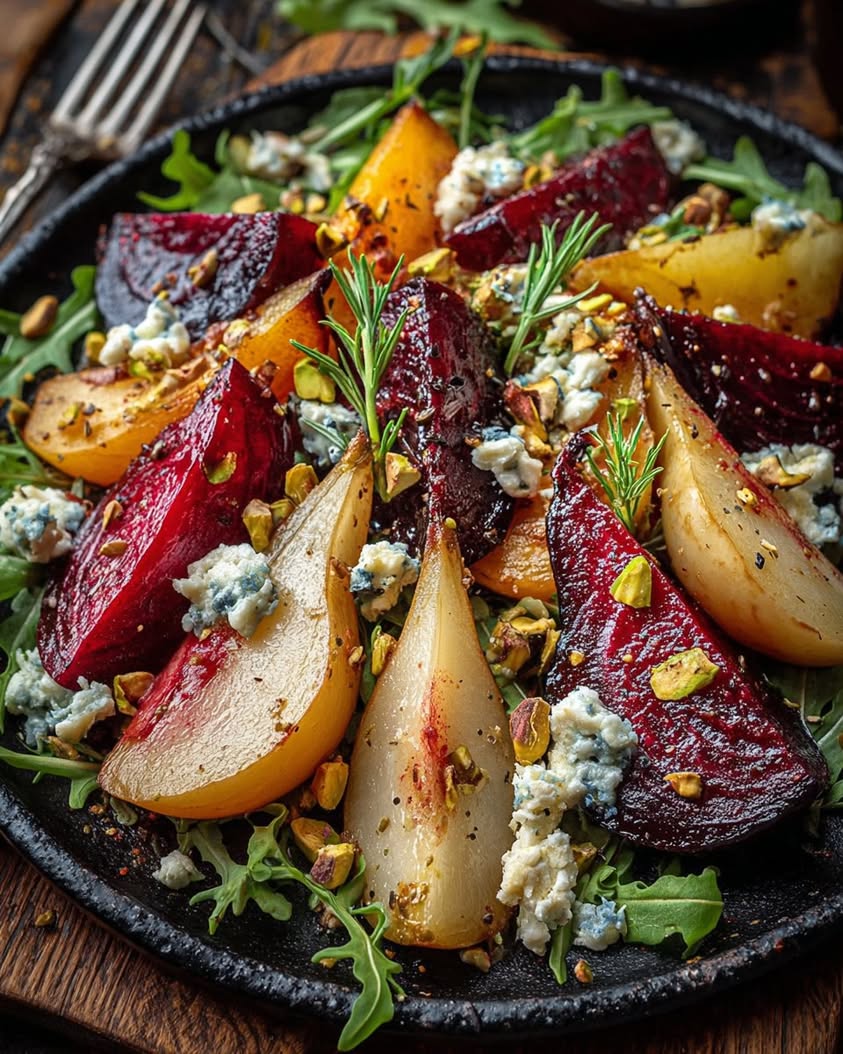
Roasted Beet and Caramelized Pear Salad with Feta and Pistachios: A Sweet and Savory Fall Masterpiece
Imagine a dish that balances the earthy depth of roasted beets with the bright, caramelized sweetness of pears and the salty tang of creamy feta. This Roasted Beet and Caramelized Pear Salad with Feta and Pistachios delivers exactly that kind of harmony. It is a celebration of fall flavors, yet it feels light and refreshing enough for any season. Whether you are hosting a dinner party or looking for a show-stopping side dish, this salad brings vibrant color and complex taste to your table. The combination of textures, from the crunchy pistachios to the tender roasted vegetables, makes every bite a new experience.
This isn’t just another green salad. It is a composed dish where each ingredient plays a starring role. The beets become incredibly sweet and tender after roasting, while the pears develop a gorgeous golden caramelization that adds a touch of decadence. Crumbled feta provides a creamy, salty contrast, and toasted pistachios offer a satisfying crunch. Tossed with a simple tangy vinaigrette, this Roasted Beet and Caramelized Pear Salad with Feta and Pistachios is more than a meal; it is an experience. You will find yourself making it again and again, especially when you want to impress without spending hours in the kitchen.
The color alone is enough to make you hungry. Deep magenta from the beets meets the warm gold of the pears, all dotted with bright white feta and green pistachios. It is a visual feast that invites you to dig in. The aroma fills your kitchen with notes of roasting roots and sweet fruit, promising a delicious payoff. This salad works beautifully as a main course for lunch or a hearty side for grilled meats and roasted chicken. It is versatile, beautiful, and packed with nutrients. Let me show you how easy it is to create this restaurant-worthy salad at home.
Quick Recipe Highlights
- Flavor Profile: The taste of this salad is a masterclass in balance. Earthy roasted beets meet sweet, caramelized pears, while salty feta and tangy vinaigrette cut through the richness. The pistachios add a nutty, buttery finish that ties everything together perfectly.
- Texture: You get a wonderful variety of textures in every forkful. The beets are tender and almost creamy, while the pears have a soft, jammy texture from caramelizing. Crunchy pistachios contrast with the creamy feta, providing a dynamic mouthfeel that keeps things interesting.
- Aroma: As the beets and pears roast, your kitchen fills with a sweet, earthy scent that is deeply comforting. The balsamic reduction adds a rich, tangy note, and the fresh herbs, if you choose to add them, provide a bright, clean finish.
- Visual Appeal: This salad is a visual showstopper. The deep red beets, golden pears, and white feta create a stunning color palette. The green pistachios and any fresh herbs add pops of vibrant color, making the dish look as good as it tastes.
- Skill Level Needed: This recipe is perfect for beginner and intermediate cooks alike. The techniques are straightforward: roasting and caramelizing. The key is patience with the caramelization process, but the steps are simple and the results are extremely forgiving.
- Special Equipment: You will need a baking sheet for roasting the beets and a non-stick skillet for caramelizing the pears. A good vegetable peeler and a sharp knife are helpful for preparing the beets. No specialized gadgets are required.
Recipe Overview
- Difficulty Level: I rate this recipe as easy because the cooking methods are fundamental. Roasting vegetables is a set-it-and-forget-it process. Caramelizing fruit requires a little attention, but it is not difficult. The assembly is simple. Even a new cook can achieve beautiful results with this Roasted Beet and Caramelized Pear Salad with Feta and Pistachios.
- Category: This dish sits comfortably in the salad category, but it also works wonderfully as a side dish or a vegetarian main course. It is hearty enough to stand alone, yet it pairs perfectly with proteins. Its versatility makes it a fantastic addition to any meal plan.
- Cuisine: The roots of this dish are modern American, drawing inspiration from Mediterranean traditions. The use of beets, feta, and pistachios nods to Greek and Middle Eastern cuisine, while the caramelized pears add a touch of French-influenced elegance. It is a global fusion on one plate.
- Cost: The ingredients for this salad are moderately priced. Beets and pears are affordable seasonal produce. Feta cheese and pistachios are the more expensive items, but a little goes a long way. Overall, this is a budget-friendly recipe that feels luxurious.
- Season: This salad is perfect for fall and winter when beets and pears are at their peak. The warm, roasted flavors are incredibly comforting in cooler months. However, you can enjoy it year-round by using in-season pears and beets from the grocery store.
- Occasion: This salad is ideal for holiday dinners, Thanksgiving, and Christmas feasts. It also shines at dinner parties, potlucks, or a fancy weekend lunch. It is elegant enough for company but simple enough for a weeknight treat.
Why You Will Love This Recipe
The first reason you will adore this Roasted Beet and Caramelized Pear Salad with Feta and Pistachios is the incredible taste and texture combination. The sweetness of the caramelized pears pairs perfectly with the earthy beets. The salty feta and crunchy pistachios add a savory, nutty finish. It is a symphony of flavors that hits every note. The soft, tender vegetables contrast with the crisp nuts and creamy cheese. This creates an exciting and satisfying mouthfeel with every single bite. You will find yourself going back for more just to experience that perfect balance again.
Convenience is another major win here. The recipe uses simple, straightforward techniques that anyone can master. Roasting the beets takes a little time, but it is mostly hands-off. You can even roast them a day ahead to make assembly even faster. The caramelized pears come together in about ten minutes. This means you can have a stunning, complex-tasting salad on the table with very little active cooking time. It is the perfect recipe for a busy weeknight when you still want something special, or for entertaining when you want to spend time with your guests instead of slaving over the stove.
Nutritionally, this salad is a powerhouse. Beets are packed with fiber, folate, and antioxidants that support heart health and reduce inflammation. Pears provide vitamin C and more fiber, aiding digestion. Feta cheese offers calcium and protein, while pistachios contribute healthy fats and plant-based protein. This is a meal that tastes indulgent but is actually incredibly good for you. It is a guilt-free way to enjoy rich, satisfying flavors. You can feel great about serving this to your family because it is loaded with ingredients that nourish both the body and the soul.
Socially, this salad is a superstar. It is the kind of dish that draws compliments and requests for the recipe. The vibrant colors and elegant presentation make it a centerpiece on any buffet table. It is a conversation starter. People are naturally drawn to its beauty and complexity. Serving this at a gathering makes you look like a culinary genius, even though it was simple to prepare. It is a reliable crowd-pleaser that works for a variety of dietary preferences, making it a safe and impressive choice for potlucks, holiday feasts, and dinner parties.
Finally, this Roasted Beet and Caramelized Pear Salad with Feta and Pistachios is incredibly cost-effective and accessible. The main ingredients are common produce items you can find in any grocery store. Beets are usually very inexpensive, especially when they are in season. Pears are also affordable. Feta and pistachios are the priciest parts, but you only need a small amount of each to make a big impact. This recipe proves that you do not need expensive, hard-to-find ingredients to create a truly memorable dish. It is proof that simple, high-quality ingredients are all you need for culinary magic.
Historical Background and Cultural Significance
The use of beets in salads has a long and storied history, particularly in Eastern European and Mediterranean cuisines. In countries like Russia and Poland, beet salads are a staple, often featuring cooked beets, sour cream, and herbs. The Mediterranean tradition, especially in Greece, includes salads with beets, feta cheese, and olive oil. This specific combination has traveled across the world and been adapted by modern chefs. Our recipe draws heavily from this tradition, using the earthy beet as a base and pairing it with salty, creamy feta for a classic flavor profile.
Pears, on the other hand, have a rich history in European cuisine, particularly in France and Italy. Caramelizing fruit was a technique developed to enhance natural sweetness and create a richer, more complex flavor. This method became popular in the 19th century with the rise of haute cuisine. Combining caramelized pears with savory ingredients like cheese and nuts is a more modern innovation. It reflects a contemporary desire to blur the lines between sweet and savory dishes. This recipe honors that innovation by bringing the sweet, buttery pear into a savory salad context.
The evolution of the Waldorf salad in the early 20th century also influenced this dish. The Waldorf salad, with its apples, celery, and walnuts, established the concept of a fruit and nut salad in American cuisine. Over time, chefs began experimenting with different fruits, nuts, and cheeses. This led to the creation of countless variations, including the one we are making today. The Roasted Beet and Caramelized Pear Salad with Feta and Pistachios is a direct descendant of that inventive spirit, taking the core idea of a composed salad and elevating it with roasted vegetables and caramelized fruit.
Regional variations of this salad are endless. In the American South, you might see pecans used instead of pistachios. In the Pacific Northwest, local blue cheese might replace the feta. Some versions add arugula for a peppery kick, while others include cranberries for extra tartness and color. The Mediterranean version often uses grilled halloumi instead of feta. This recipe is a beautiful template that invites personalization. The core concept of roasted beets, sweet fruit, salty cheese, and crunchy nuts is a timeless combination that works across many culinary traditions and personal tastes.
Ingredient Deep Dive
Beets have been cultivated for thousands of years, originally for their leaves, and later for their roots. Ancient Romans used them for medicinal purposes. They are deeply connected to Eastern European cuisine, where they are used in borscht and various salads. Nutritionally, beets are a superfood. They are rich in folate, manganese, and betalains, which are powerful antioxidants. These compounds support liver health, reduce inflammation, and can even improve athletic performance due to their high nitrate content. When selecting beets, look for firm, smooth roots with fresh, green leaves still attached if possible. The leaves are also edible and delicious. Store beets in a plastic bag in the refrigerator for up to two weeks. If you are looking for a substitute, golden beets or even sweet potatoes work beautifully. Golden beets have a milder, sweeter flavor and will not stain your hands or cutting board red.
Pears are a symbol of abundance and longevity in many cultures, particularly in China. They have been enjoyed for centuries in Europe and Asia. There are thousands of pear varieties, each with a unique texture and sweetness. For caramelizing, you want a pear that holds its shape well. Bosc or Anjou pears are excellent choices. Bartlett pears can also work but may become softer. Nutritionally, pears are an excellent source of dietary fiber and vitamin C. They support digestive health and boost your immune system. When choosing pears, look for ones that yield slightly to gentle pressure near the stem. Store firm pears at room temperature to ripen, then move them to the refrigerator to extend their life. If you cannot find pears, you can substitute apples, such as Honeycrisp or Fuji. They will caramelize similarly and provide a different, yet equally delicious, sweetness.
Feta cheese is a brined curd white cheese with a tangy, salty flavor. It is a cornerstone of Greek cuisine and has been made for over 6,000 years. It is traditionally made from sheep’s milk or a mixture of sheep’s and goat’s milk. The brining process gives feta its characteristic crumbly texture and salty taste. Nutritionally, feta is a good source of calcium and protein, but it is lower in fat than many other cheeses. When selecting feta, look for blocks stored in brine, as they have the best flavor and texture. Avoid pre-crumbled feta, as it tends to be drier and less flavorful. Store feta in its brine in the refrigerator for up to a month. For a dairy-free alternative, use a high-quality vegan feta or crumbled firm tofu that has been marinated in lemon juice, salt, and herbs. Another great substitute is goat cheese, which is creamier and slightly tangy.
Pistachios have a rich history that dates back to the Middle East and Central Asia. They are one of the oldest flowering nut trees, with evidence of their consumption stretching back 9,000 years. In many cultures, they are a symbol of wealth and health. Nutritionally, pistachios are a powerhouse. They are packed with protein, fiber, healthy monounsaturated fats, and antioxidants like lutein and zeaxanthin, which support eye health. They also contain vitamin B6, which is important for brain function. When selecting pistachios, look for shells that are slightly open, indicating maturity. The kernels should be green and plump. Store them in an airtight container in a cool, dark place for up to three months, or in the freezer for longer storage. If you do not have pistachios, you can substitute walnuts, pecans, or almonds. Toasting them before use enhances their flavor and crunch.
Balsamic Vinegar is a staple of Italian cuisine, specifically from the Modena and Reggio Emilia regions. Traditional balsamic vinegar is aged for years in wooden barrels, developing a complex, sweet-sour flavor with a syrupy consistency. It is made from cooked grape must. This deep, rich vinegar is perfect for a vinaigrette or for reducing into a glaze. It adds a tangy sweetness that balances the earthy beets and salty feta. When choosing balsamic vinegar, look for one labeled “Aceto Balsamico di Modena” for an authentic product. The younger vinegars are sharper and more acidic, while aged ones are sweeter and thicker. Store it in a cool, dark place. A great substitute is a combination of apple cider vinegar and a touch of maple syrup or honey. You can also use a high-quality red wine vinegar.
Common Mistakes to Avoid
- Not peeling the beets thoroughly is a mistake. Beet skin can be tough and fibrous. Always peel them completely after roasting, when the skin slips off easily. This ensures a pleasant, tender texture in every bite of your salad.
- Overcrowding the baking sheet for the beets is another issue. If the beets are too close together, they will steam instead of roast. This prevents caramelization and results in a watery texture. Give them enough space so they can brown and concentrate their sugars.
- Caramelizing the pears over too high heat is a common error. High heat will burn the sugars before the pears have a chance to soften. Use medium heat and be patient. You want a deep golden color, not blackened edges. This takes about 4-5 minutes per side.
- Using unripe pears is a problem. Unripe pears are hard and lack sweetness. They will not caramelize properly and will have a grainy texture. Make sure your pears are ripe but still firm. They should yield slightly to pressure at the stem.
- Dressing the salad too early is a mistake. If you dress the salad ahead of time, the beets will bleed their red color into the pears and feta, turning everything pink. It will still taste good, but it loses its beautiful, distinct color contrast. Always dress right before serving.
- Forgetting to toast the pistachios is a missed opportunity. Toasting nuts releases their essential oils and deepens their flavor. It adds a wonderful warmth and crunch that raw pistachios lack. Just a few minutes in a dry pan or oven makes a big difference.
- Skipping the step of cooling the beets and pears is not ideal. You do not want to add hot ingredients to the greens, as they will wilt the lettuce and make the whole salad warm and limp. Let them cool to room temperature before assembling.
- Using pre-shredded feta cheese is a common shortcut that impacts flavor. Pre-crumbled feta is often dry and lacks the creamy, tangy punch of feta stored in brine. It also contains anti-caking agents. Always buy a block of feta and crumble it yourself for the best taste and texture.
Essential Techniques
Roasting Beets is a foundational technique that transforms a dense root vegetable into a tender, sweet ingredient. The dry heat of the oven concentrates the natural sugars, creating an almost candy-like sweetness. To master it, wrap each beet individually in aluminum foil after drizzling with a little oil. This steams them gently while they roast, ensuring even cooking. A common pitfall is undercooking them. They are done when a fork slides in easily with no resistance. The visual cue is when the skin starts to wrinkle and pull away from the flesh. This process takes about 45-60 minutes depending on the size of your beets.
Caramelizing Fruit is a simple but precise technique that adds a deep, complex sweetness. The key is to use a heavy-bottomed pan, preferably non-stick or cast iron, to ensure even heat distribution. You need a little butter or oil to start the process. The sugar in the fruit starts to break down and brown at around 320 degrees Fahrenheit. The most common pitfall is moving the pears too soon. You need to let them sit undisturbed for several minutes so a proper crust can form. The visual cue is a deep golden-brown color on the cut side. The smell of caramelizing sugar is unmistakable, sweet and nutty. Do not be tempted to flip them too early.
Making a Simple Vinaigrette is a crucial skill for any salad. The basic ratio is three parts oil to one part acid. You whisk them together until emulsified. For this salad, a balsamic vinaigrette works perfectly. The key is to use good quality ingredients. Start with a strong base of balsamic vinegar and a touch of Dijon mustard, which helps stabilize the emulsion. Then, slowly drizzle in the olive oil while whisking constantly. A common pitfall is adding the oil too quickly, which will cause the vinaigrette to separate. The visual cue is a smooth, slightly thickened dressing that clings to the whisk. Season it with salt and pepper to taste.
Toasting Nuts is a quick process that unlocks the full flavor potential of your pistachios. Heat a dry skillet over medium heat. Add the nuts and stir constantly for 2-3 minutes. The natural oils in the nuts will warm up and release their aroma. The most common pitfall is walking away, as nuts can go from perfectly toasted to burnt very quickly. The visual cue is a slight deepening of color and a glossy sheen from the released oils. You will also smell a rich, nutty aroma when they are ready. Immediately transfer them to a plate to stop the cooking process.
Pro Tips for Perfect Roasted Beet and Caramelized Pear Salad with Feta and Pistachios
For the best flavor, roast the beets a day ahead of time and refrigerate them. They are easier to peel when cold and keep their vibrant color better. Let them come to room temperature before adding to the salad.
When caramelizing the pears, slice them to a uniform thickness, about half an inch. This ensures they cook evenly. If some slices are thinner, they will burn before the thicker ones are done.
Do not skip the step of patting the beets dry after peeling. Excess moisture will dilute your vinaigrette and make the salad watery. A quick pat with a paper towel solves this.
To prevent the feta from breaking apart too much when mixing, add it gently to the bowl last and give a few light tosses. Or, simply sprinkle it on top after plating for a cleaner look.
If you are making this salad for a crowd, assemble all the components separately and let guests build their own plates. This prevents the colors from bleeding and keeps everything looking fresh and beautiful.
Use a high-quality aged balsamic vinegar for the vinaigrette. It is thicker, sweeter, and more complex than standard balsamic, which makes a huge difference in the final taste of the salad.
For an extra touch of elegance, drizzle a balsamic reduction over the finished salad. You can make this by simmering balsamic vinegar until it reduces by half and becomes syrupy. It adds a beautiful glaze and intense flavor.
Variations and Adaptations
Regional Variations of this salad are plentiful and fun to explore. In the American Southwest, you could use crumbled cotija cheese instead of feta and add roasted pepitas for crunch. A Mediterranean version could include Kalamata olives, sun-dried tomatoes, and a sprinkle of oregano. For a French twist, use goat cheese and toasted walnuts, and swap the balsamic for a champagne vinaigrette. Each regional adaptation brings its own unique character to the base recipe.
Seasonal Adaptations are a wonderful way to use what is fresh. In the summer, try using grilled peaches or nectarines in place of the pears. You can also grill the beets for a smoky flavor. In the spring, fresh strawberries and a light lemon vinaigrette would be delightful. In the winter, you can use roasted butternut squash or sweet potatoes alongside the beets. The orange hue of the squash complements the deep red of the beets beautifully.
Dietary Modifications make this salad accessible to everyone. For a dairy-free version, omit the feta and add a creamy avocado or some toasted pepitas for texture. A vegan adaptation can use a high-quality vegan feta or a simple tofu-based crumble marinated in lemon and salt. For a low-carb or keto-friendly option, reduce the amount of pears or use a smaller quantity, and increase the amount of pistachios and feta. This keeps the flavor profile intact while reducing sugar content.
Flavor Variations allow you to customize the taste to your preference. Add a handful of fresh arugula for a peppery bite. Stir in some fresh mint or basil for a bright, herbaceous note. A pinch of red pepper flakes in the vinaigrette will add a gentle heat. For a sweeter variation, add dried cranberries or pomegranate arils. For a tangier profile, use a lemon and herb vinaigrette instead of balsamic.
Texture Modifications can change the whole experience of the salad. If you want it to be more substantial, add a bed of cooked quinoa or farro to the base. For a creamier element, substitute the feta with burrata cheese or a dollop of goat cheese spread. For extra crunch, add some thinly sliced fennel or celery root. If you prefer a softer texture, you can roast the pears alongside the beets instead of caramelizing them in a pan.
Presentation Alternatives can make this dish feel like a completely new creation. For an elegant starter, serve the salad in individual bowls on a bed of microgreens. For a family-style meal, arrange the ingredients in rows on a large platter, creating a colorful stripe effect. You can also present it in a deconstructed format, placing the beets, pears, feta, and pistachios in separate bowls and letting everyone build their own plate.
Serving and Presentation Guide
Plating Techniques for this salad can elevate it from a simple side to a stunning centerpiece. For a classic approach, toss all ingredients gently in a large bowl and serve family-style. For a more refined look, arrange a bed of mixed greens on individual plates. Then, artfully place the roasted beet slices and caramelized pear slices on top. Crumble the feta over everything and finish with a generous sprinkle of toasted pistachios. This layered presentation allows each component to shine.
Garnishing Ideas can add the final touch of perfection. A drizzle of balsamic reduction creates beautiful, glossy streaks across the plate. Fresh herbs like mint, basil, or chives add a pop of green and a burst of fresh flavor. A light sprinkling of flaky sea salt, such as Maldon, will enhance the sweet and salty contrast beautifully. Edible flowers, like nasturtiums or pansies, are a stunning and edible garnish for special occasions.
Traditional Accompaniments pair wonderfully with this salad. It is a perfect side dish for roasted chicken, grilled steak, or seared salmon. It also complements hearty grain bowls and works as a topping for flatbreads. For a complete vegetarian meal, serve it alongside a rich soup, like tomato basil or roasted butternut squash soup. The acidity of the salad cuts through the richness of these comfort foods.
Modern Serving Suggestions keep this recipe fresh and current. You can incorporate the salad into a wrap or pita for a quick lunch. Use it as a topping for crostini for an elegant appetizer. The components are also excellent in a grain bowl with farro or freekeh. For a lighter main course, simply double the portion size and serve it with a side of crusty bread.
Temperature Considerations are important for the best eating experience. The salad is best served at room temperature. The roasted beets and caramelized pears should be cool to the touch, not hot, so they do not wilt the greens. The greens should be crisp and cold from the refrigerator. This contrast between cool greens and room-temperature vegetables is part of the salad’s charm.
Portion Control Tips help you serve the right amount. As a side dish, this recipe generously serves four people. As a main course, it will serve two to three. If you are serving it as part of a larger meal, you can stretch it to six servings by adding more greens or a bed of quinoa. The key is to maintain the balance of all the flavors and textures.
Wine and Beverage Pairing
Wine Pairings for this salad are delightful and varied. The earthy sweetness of the beets and pears calls for a wine with similar notes. A dry Riesling from the Finger Lakes or Germany is a classic choice. Its crisp acidity cuts through the richness. A Pinot Gris from Oregon or Alsace also works beautifully. For red wine lovers, a light-bodied Pinot Noir or a Beaujolais from France is perfect. Their fruity, low-tannin profiles complement the salad without overpowering it.
Non-Alcoholic Alternatives are just as delicious. A sparkling water with a splash of pomegranate juice and a squeeze of lime provides a refreshing, festive option. A high-quality sparkling apple cider or pear cider is another excellent choice. Its sweetness mirrors the caramelized pears beautifully. For a sophisticated mocktail, try a rosemary and grapefruit soda. The herbal notes play well with the earthy beets.
Coffee and Tea Pairings can be surprising but wonderful. A cup of Earl Grey tea, with its bergamot and citrus notes, is a fantastic match. It bridges the gap between the sweet and savory elements of the dish. A light, floral green tea, like jasmine, also works well. If you prefer coffee, a light roast with fruity and floral notes is the best choice. Avoid dark roasts, which can be too bitter and clash with the sweetness of the salad.
Temperature Considerations for your beverages matter. Serve white wines, sparkling wines, and non-alcoholic drinks well-chilled. This provides a refreshing counterpoint to the room-temperature salad. Red wines, like Pinot Noir, should be served slightly cool, around 55 degrees Fahrenheit. This keeps them fresh and prevents them from feeling heavy.
Serving Suggestions for beverages can enhance the experience. Set up a small drink station with the wine, a decanter of water, and a pitcher of the mocktail. This encourages guests to help themselves. If you are serving the salad as a starter, a glass of sparkling wine is a wonderful way to begin. It cleanses the palate and prepares it for the complex flavors to come.
Storage and Shelf Life
Storage Methods are key to keeping your leftovers fresh. Store the undressed salad components separately from the greens. Place the roasted beets, caramelized pears, feta, and pistachios in separate airtight containers. Keep the greens in a separate container lined with a paper towel to absorb moisture. This prevents them from getting soggy.
Temperature Requirements are straightforward. All components should be stored in the refrigerator at or below 40 degrees Fahrenheit. The vinaigrette can be stored at room temperature if it will be used within a few hours, but it is best kept in the fridge for longer storage. Bring it to room temperature and shake before using.
Container Recommendations include glass or BPA-free plastic containers. Glass is ideal because it does not absorb odors or stains. Use shallow containers for the greens to prevent them from being crushed. Wide-mouth jars are perfect for the vinaigrette. Make sure each container is sealed tightly to prevent the food from drying out or absorbing other flavors from the fridge.
Signs of Spoilage are easy to spot. The greens will become wilted, slimy, or develop a bad odor. The beets may become slimy or develop mold. The pears will become mushy and may ferment, giving off an alcoholic smell. The feta will become dry or develop mold if not stored in its brine. Always check for these signs before eating leftovers.
Reheating Instructions are not typically needed for this salad, as it is served cold or at room temperature. However, if you want to warm the beets and pears, you can gently reheat them in a skillet over low heat or in a microwave. Do not reheat the greens or the feta. Always assemble the salad with fresh greens after reheating the other components.
Freezing Guidelines are limited. You can freeze the roasted beets after they are peeled and sliced. Place them in a single layer on a baking sheet to flash freeze, then transfer to a freezer bag. They will keep for up to three months. Do not freeze the pears, feta, greens, or vinaigrette. The texture of the greens and pears will be destroyed upon thawing.
Make Ahead Strategies
Prep Timeline is your best friend for stress-free entertaining. Up to three days before serving, roast and peel the beets. Store them in an airtight container in the fridge. Up to two days before, make the vinaigrette and store it in a jar. Up to one day before, wash and dry the greens and store them in a bag with a paper towel. On the day of serving, caramelize the pears and toast the pistachios.
Storage Between Steps keeps everything fresh. Keep the roasted beets in their container in the fridge. Store the vinaigrette at room temperature if possible, as the olive oil can solidify in the fridge. The greens need air circulation, so a loosely sealed produce bag works best. The pears should be eaten the same day they are caramelized for the best texture.
Quality Impact Assessment is generally positive with this recipe. The beets and vinaigrette actually improve in flavor after a day or two as the ingredients meld together. The greens remain crisp if stored properly. The pears, however, are at their best when freshly caramelized. They will lose their crunch and become softer over time.
Assembly Tips for make-ahead success are simple. Keep all components in the fridge until about 20 minutes before serving. This allows them to come to room temperature. Just before serving, toss the greens with a small amount of vinaigrette, then top with the beets, pears, feta, and pistachios. Drizzle a little more vinaigrette over the top.
Reheating Guidelines are minimal. If you need to rewarm the beets or pears after refrigeration, do so gently in a skillet over low heat. You just want to take the chill off, not cook them again. Overheating will make the pears mushy. Serve the greens cold, so the salad has a nice temperature contrast.
Fresh Element Additions can revive leftovers. If you are serving the salad the next day, add a handful of fresh arugula or spinach to the bowl. A sprinkle of fresh herbs, like parsley or mint, will also brighten the flavors. A fresh squeeze of lemon juice can help wake up the dressing and the other ingredients.